About this episode
Life Kit is made possible by:
Follow us on Instagram: @nprlifekit
Sign up for our newsletter here.
Have an episode idea or feedback you want to share? Email us at [email protected]
Support public media with NPR+ and enjoy perks for over 25 podcasts like this one. This show’s perks include sponsor-free listening and convenient playlists of popular help topics like personal finance, getting healthy, and more. Learn more at plus.npr.org.
See pcm.adswizz.com for information about our collection and use of personal data for sponsorship and to manage your podcast sponsorship preferences.
NPR Privacy Policy
Get every episode summarized
Each time Life Kit publishes, we email you a written briefing from the transcript — the topics, who appeared, and any specific claims, with the ad reads skipped.
Email me new episodesFree for 3 shows. No card needed.
Hosts & guests

Transcript ready
286 searchable segments. Every word is indexed and playable.
Full transcript
Life Kit — Feeling insecure? Try this memory-update exercise. Machine-transcribed; use the interactive transcript above to jump the player to any line.
This message comes from Charles Schwab with their original podcast, Choisology. Choisology is a show about the psychology and economics behind people's decisions. Download the latest episode and subscribe at Schwab.com slash podcast. I'm so happy that I get to pick you up. I'm so happy to be here. I'm so happy to get to spend time with you. You know, I want you to know that even though your mom is late, that she loves you and she wishes that she could be here. And she thinks that doing this extra job is a way that she could love you better. I want you to know that you will always belong, first and foremost to me, that you'll always belong here, and that you are so beloved to me. Hey, it's Mary El Segara.
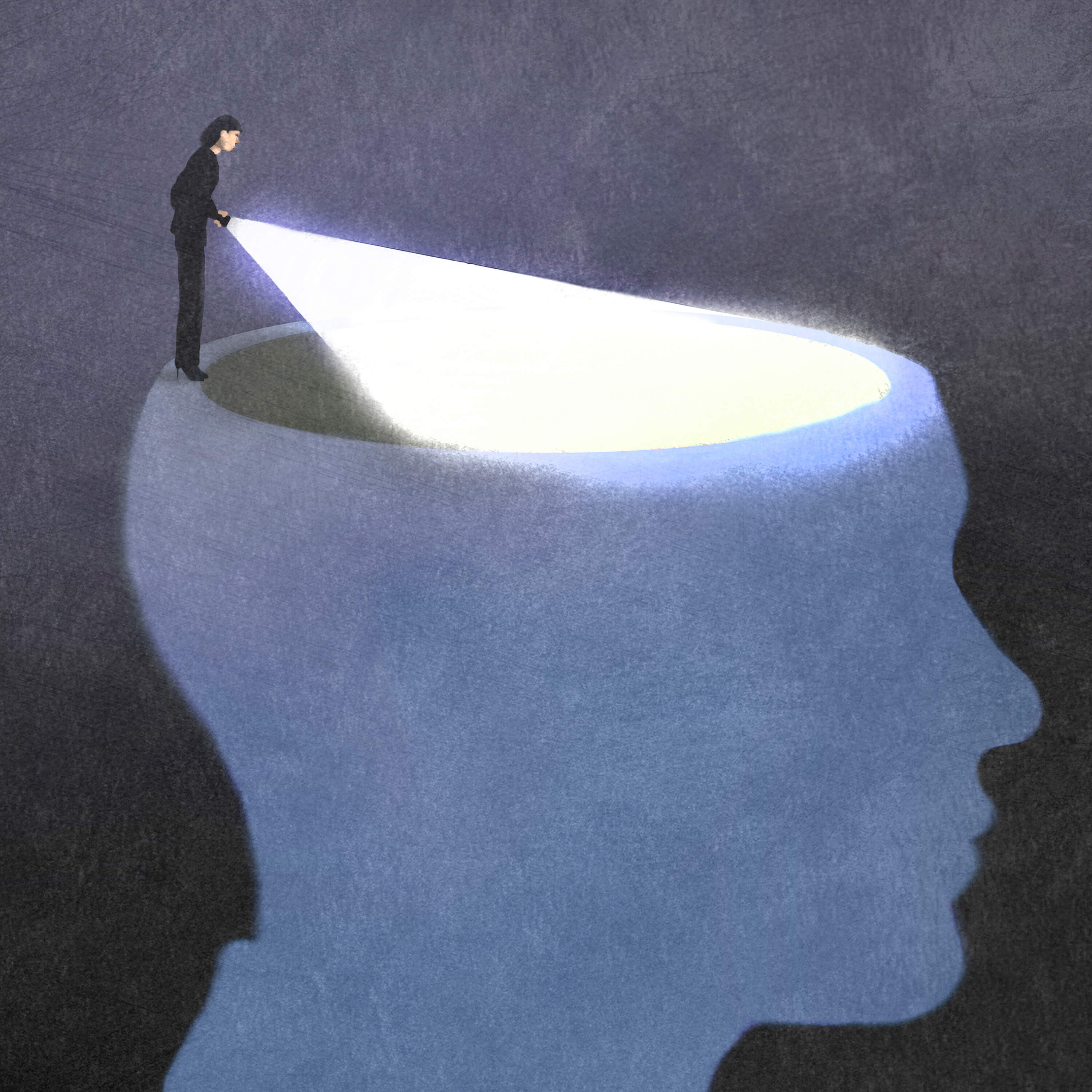
They're listening to LifeKit from NPR. And that was Marissa Franco, psychologist, and author of the book Worth, the new science of self-esteem and secure attachment. You just heard us doing an exercise in memory reconsolidation. The underlying theory is that when we recall a memory in a new context, we have the opportunity to update it. And Marissa says that can help us become more secure and improve our self-esteem. Researchers say memories are the database of self-esteem. And so you've had negative experiences of rejection, harm, abuse, perhaps. And the thing about memories is they don't just record the past, they predict the future. So a part of you thinks that this is going to happen again, you know, if someone is going to abandon me, just like my parent might have, in a way, your body's recreating those past experiences in the present, based off your memories, and is literally triggering the same body state for you now. But we can update those memories, so they're not undermining us and hurting our relationships.
When you return to a memory, and you envision yourself intervening as an adult and saying you're safe, and I care about you, and I'm never going to leave you, right? When you do that, it can be quite transformative, and that leads to higher self-esteem, less symptoms of trauma, and also changes in the hippocampus, which is the part of our brain where our memories are stored. On this episode of LifeKit, we'll walk through this memory reconcilitation exercise, teach you how to do it at home. And Marissa says, these exercises are worth doing, because our self-esteem affects everything in our lives. All the beauties of life slip off of you when you have lower self-esteem. You can experience great success and still feel like a failure, you can find great love and still feel unlovable, and so your ability to actually internalize the good is disrupted by your own sense of self. And so I think if we're able to feel good about ourselves, ultimately we are able to receive all the good
happening in our lives more deeply. This message comes from Wayfair. With more than 20 million verified five-star reviews, shop thousands of products confidently, for every style, budget, and season, from bed and bath to decor to home improvement, transform your space with pieces that hold up to real life. Join Wayfair rewards today and get 5% back on every purchase. Head to Wayfair.com or shop the Wayfair app for all things home. That's w-a-y-f-a-i-r.com. Up first from NPR News is your way to slow down a fast-moving world and make sense of it, which is just what tech leaders say they need right now. One of the big stories this week is that tech leaders say they want to slow down AI development. Also, the latest fighting in the Middle East could push oil prices even higher. Start your day with what you need to know on up first. Listen, on the NPR app or wherever you get your podcasts. Let's talk about memory reconsolidation. So basically like you said, it's that researchers have found that we can update
and transform our memories and that can make us feel more worthy. Yes, yes. Okay. Is this a process or an exercise that people can walk through on their own? I think it will depend on the memory. First of all, it has to be what's called an open memory. So when a memory is what's called open, it still triggers emotion in us. It still affects how we feel. It still affects how we see ourselves and the world around us. We might try to avoid that memory, not look at it. Versus a closed memory where we have closure. Like it actually is in the past. It no longer shapes how we're living in the present. Open memories are almost like they're still happening now, right? When I describe perhaps an anxiously attached person and their boss gives them negative feedback and they're having such a strong reaction, they feel so bad. Like they hate themselves. They're a failure, right? That's an example of an open memory perhaps shaping your experience of the present moment. You're not truly living in the present when you have a memory that's not closed in this way. But then in the context of open memories, right? There's some that we might make a shutdown that we might dread that are so scary.
And in that case, we might want to go through some of these exercises with our therapist. But there's other, honestly, myriote that are quite benign. And I say benign because they sound benign because when we're kids, we're taking in reality a lot more personally. And we don't have resources in the same way. And so one of the memories that I reconsolidated was the experience of being a kid whose mom would show up late to soccer practice. But when I go back to that memory, I can viscerally experience how I felt ashamed and I felt embarrassed and I felt different from everyone else. And I felt like I couldn't depend on people and I felt powerless over the situation, right? Like you can often be surprised how small things can actually land really big for you, particularly when they happen in childhood. Take away one. Choose a memory for this exercise. It should be one that's open, meaning it still hurts. If you're into attachment styles and you know you're feeling anxiously attached, you might choose a memory where you felt abandoned. If you want to work on avoidant attachment, you might look at a memory where someone
shut you down emotionally or where you felt betrayed. And your memory might be something that seems like it's not a big deal. What matters is that it affects you. So you want to think of a memory that seems to still be affecting you. A memory that still triggers some sort of emotion. It might make you sad. It might make you angry. It might make you anxious. It might make you upset. And another feature of these open memories is that you don't necessarily have meaning. You don't understand why it happened. You don't feel like it made your life better at the end of the day, right? It doesn't feel like there's much silver linings around this memory. And so looking back and trying to figure out, okay, what are those memories that still kind of neglect me a little bit, right? It still kind of hurts when I look back at them. Those are some of the memories that might still be open and affecting your sense of worth now. And Mary, I want to go one step deeper with this, which is that it's ultimately more about changing emotion than changing a memory.
There's a study on self-esteem and what predicted whether people's self-esteem changed at the end of therapy. And the number one factor was how much emotion that they expressed. And so the problem in these memories is that the emotion is not fully processed. You haven't fully moved through the emotion. And so it continues to shape how you perceive yourself and how you perceive the world. And so it's about looking back at these memories and giving yourself a sort of catharsis and allowing those feelings to move through you more so that they don't continue to shape your sense of self right now. So Marissa and I walked through this memory reconciliation exercise from her book. She recalled a childhood memory that she's actually reconciledated before. Her mom showing up late to pick her up from soccer practice. The exercise in the book lists some questions like, what does this memory say about you as a person? What does it say about the world in general? I think I just felt some shame at that time. Yeah. And then what does it say about the world in general?
That I can't necessarily trust or rely on people, but also like if I am upset that nothing's going to change right because this was about my mom's work. Now close your eyes and focus on the memory. Describe it in the present tense, making it as vivid as possible. What do you see smell, hear, taste, touch, and feel? So I'm walking to the parking lot beside the green soccer field. And my coach is waiting and I also see his daughter with some of her friends that are there. And they're hanging out because they're all going to go hang out together. But I am there because I am alone and I am waiting for my parent kind of off to the side. And lonely. So take away two. Recall the memory as it is and describe it. Next, picture your current self intervening in the memory.
Your current self should take an action that changes how the events unfolded for your younger self for the better. And while you do describe this in the present tense, again, thinking about what you see smell, hear, taste, touch, and feel. Okay. I picture my current self showing up before my mom gets there. Adult me looks so excited to see younger me. Adult me gives younger me a hug and says, oh my gosh, I'm so happy that I get to pick you up. I'm so happy to be here. I'm so happy to get to spend time with you. You know, I want you to know that even though your mom is late, that she loves you. And she wishes that she could be here. And she thinks that doing this extra job is a way that she could love you better. I want you to know that you will always belong, first and foremost to me, that you'll always belong here and that you are so beloved to me. So you're being that safe adult who you could have used in that moment.
Exactly. Next, you want to focus on the new emotions that this action elicits. How does younger you feel differently? Do you feel warmer? Does your jaw feel less tight? Does your chest feel more open? I feel at ease and I feel happy. I feel a certain glow and I feel less burdened by my own pain, I guess. Like it maybe felt like before the pain was at the center of everything and all that I'm focused on. But now it almost feels like I'm like reorienting and like curious about the world again because it's behind me. I feel more confident and I feel connected. I don't feel alone anymore and I feel good about myself. That's take away three. To intervene in the moment as your current self and take note of how that feels. And then as your younger self, ask for any more reassurance or assistance that you need from your current self and provide that reassurance. My younger self wants to know that my older self will be there every day and it won't just be
today and things won't go back to normal and my older self will just be consistent and maybe brings next. And then providing that reassurance, I'm picturing my older self telling my younger self, I'm here, I will always be here. You don't have to worry. You can always come to me when you're hurt and you're alone, I care and I will always care because you are my priority and you are beloved to me. So write down the ways or tell me the ways that the updated memory impacts you. What does it say about you as a person now? What does it say about the world in general? I feel more like I just feel more valued, I feel more happy, I feel lighter, I feel more enthusiastic, less afraid, more bold, I feel more like myself, I guess.
It feels like I have more of a life force. Like I just am more of a dynamic person, more fulfilled. And what it makes me see about the world in general is that it allows me to see the good in the world, I think, to not evaluate things based off of the negativity, eclipsing everything good about it. And it allows me to feel like as I walk through this world, people will be walking beside me and I can have a felt sense of staying connected to other people. After the break, we talk about what comes after this exercise and why you can return to it again and again. One thing I wonder about this is like, if going back to your childhood self and providing the reassurance that you needed, if that reinforces that you can only rely on yourself, you know. I think why this exercise could be helpful is because of the ways that our memory shape how we perceive reality. Often even if people do show up for us, we don't have a felt sense that they are,
right? Or we pick out the one way they didn't show up perfectly and that's what we're left with. And I talk about this in the book that when people have low self esteem, they're with a partner that loves them too much, the season too positively, they're less intimate with that partner because that love doesn't match their own sense of how they see themselves. And that discordance feels like an identity crisis, it feels like they're being misunderstood. And there's this way that unworthiness can manifest as an inability to accept love from other people. It can filter out love from other people because it's like this doesn't match how I see myself. And so hopefully there would be more of a symbiosis between these two things that when we work on our sense of self, when we feel worthier, we are in fact able to accept more love and care and support from other people without feeling like they don't mean it, without feeling like I'm a burden, without feeling like they're trying to get me to depend on them so then I'm ultimately going to get let down. And so what I hope is that through doing this active memory reconciliation again, it just opens us up to be willing to take the risks of being able to rely on people more
because I ultimately think it's people that feel like they matter that are more willing to ask for what they need. Yeah, I wonder what can we expect to feel after we do this memory reconciliation exercise? I think there's a catharsis feeling, there's a joy for me, there's a sense of waking up or possibility when a memory has continued to affect your sense of reality for so long, it's almost hard to experience yourself differently. And so it's almost like the sense of like you're opening your eyes in the springtime that you're like, oh my gosh, I'm noticing all of these new things around me like I'm just having a different felt experience of the world around me when you're able to reconcile in a memory that's weighing on you. Is this something that people should keep doing over time or like how often do you recommend that you reconciledate your memories? Yes, there's a lot of exercise in the book. I'm doing one form of them like literally every day.
Okay. In the mornings when I wake up and you know I have to do a 10 minute kind of going inward because it's a practice, right? Like treating your internal world like it matters whether it's your past world that's still affecting your present or in the current moment, right? Things that affecting you and actually spending time and exploring that is a practice, right? And so for me, it's a practice of being like, okay, was there anything about the day before that like triggered me? And if so, how can I offer myself care? And it could be through like an exercise like this or an exercise that's more about going straight into the emotions of the experience and doing something like telling myself what I need to hear because I'm anxious, because I felt sad, because I felt upset and feeling the effects of my body as I do that, it's kind of like a short-hand memory reconciliation in a way until I am starting to have a different felt emotion inside of me. Take away four. You can keep coming back to memory reconsolidation exercises. You can even
reconsolidate the same memory multiple times if it still hurts. There might be something younger you is waiting to hear. Marissa, thank you so much. Thank you. All right, y'all, it's time to recap. Take away one. Choose a memory for this exercise. It should be one that's open, meaning it still hurts. And you can do this exercise on your own, but you might want to try it with a friend, or if you have deep trauma or mental health diagnosis, do it with a therapist. Take away two. Recall the memory and describe it in the present tense, making it as vivid as possible, using your five senses, and your emotions. Also ask your younger self, what does this memory say about you as a person, and what does it say about the world in general? Take away three. Intervene in the memory as your current self and take note of how that feels. As your younger self, ask for any more reassurance or assistance that you might need, and provide it. And then write down the ways that this updated memory impacts you.
What does it say about you as a person now? What does it say about the world in general? And take away four. Do this again. You can even reconsolidate the same memory multiple times if it's still hurts. That's our show. Before we go, do you ever find yourself saying to a friend, you know, I heard on LifeKit. First of all, thank you for talking us up. And second, why don't you tell a new friend about us? Go ahead, send them an episode now. Thank you. This episode of LifeKit was produced by Lenin Sherburn. Our digital editor is Malika Grieb, and our visuals editor is CJ Ricalon. Megan Cain is our senior supervising editor, and Lauren Gonzalez is our executive producer. Our production team also includes Andy Tagle, Claremora Schneider, Margaret Serrino, and Sylvie Douglas. Fact checking by Andrea Lopez Grusado. Engineering support comes from Sinalofredo. I'm Mary El Segara. Thanks for listening. This message comes from Granger. For the ones who get it done, Granger offers the professional
grade products you need to get the job done. With fast delivery and access to technical product experts, ready to help you meet any challenge. Call, click Granger.com, or just stop by. This message comes from Capital One. Capital One offers checking accounts with no fees or minimums. What's in your wallet? Terms apply. See CapitalOne.com slash bank guy for details. Capital One in a member FDIC.
More episodes
More from Life Kit

Quitting is sometimes the right decision. Here's how to know when to walk away
Life Kit

How to jumpstart your child's financial future
Life Kit

Want more intimacy in your relationships? Conflict could help
Life Kit

Boost your mood in 15 minutes
Life Kit