Loading...
leisureautomotive
Fixed Ops Friday w/ Garry Keyser, Matt Norris, Kevin Proctor | Daily Dealer Live
About this Episode
Today's show features:
- Garry Keyser, President of L. B. Smith Lincoln
- Matt Norris, Fixed Ops Director at Bozard Ford
- Kevin Proctor, Service and Parts Director at Classic Chevrolet
This episode is brought to you by:
Great America – Planning a new service lane, collision center, or showroom refresh? GreatAmerica finances dealership build‑outs and remodels—including service equipment, collision & repair, body & paint, EVSE, car wash, signage, and software. Our fast credit decisions keep projects on schedule, while flexible financing structures are designed to support growth, efficiency, and long‑term ROI—without tying up cash needed for inventory, staffing, or daily operations. Visit https://carguymedia.com/4l4uK13 to learn more!
Check out Car Dealership Guy’s stuff:
CDG Circles ➤ https://cdgcircles.com/
CDG News ➤ https://news.dealershipguy.com/
CDG Jobs ➤ https://jobs.dealershipguy.com/
CDG Recruiting ➤ https://www.cdgrecruiting.com/
My Socials:
X ➤ https://www.twitter.com/GuyDealership
Instagram ➤ https://www.instagram.com/cardealershipguy/
TikTok ➤ https://www.tiktok.com/@guydealership
LinkedIn ➤ https://www.linkedin.com/company/cardealershipguy/
Threads ➤ https://www.threads.net/@cardealershipguy
Facebook ➤ https://www.facebook.com/profile.php?id=100077402857683
Everything else ➤ dealershipguy.com
Hosts & Guests

Transcript
We're doing better as a result of social media presence.
It doesn't do those three things, then it's on the chopping block.
It's in return on investment discussion.
Hey everybody, welcome back to another episode of the Daily Dealer Live.
I'm your host, Sam Darken.
Thanks for choosing to be here with us on this Friday, the 6th of March.
And hey everybody, welcome to Fixed Ups Fridays.
We know the smartest operators in the country are quietly shifting their strategy right now.
It's not about selling more cars, although that's part of it.
It's about owning the service lane while automotive debates EVs, tariffs and shrieking
front end grosses.
The very best stores in all automotive are building technician pipelines, commercial service
operations and service lanes that actually generate inventory because here's the truth.
Most of us don't want to fully admit.
The biggest profit opportunity in dealerships today in March of 2026, it's not the showroom.
It's Fixed Ups.
And today we've got three operators on the show today proving exactly how they're doing
it.
Let's get into it.
And first, today's auto industry headlines.
Today in the news, we are leading with an update on Scout Motors.
Just days after two Volkswagen dealers filed a class action lawsuit alleging Scouts direct
to consumer model violates dealer franchise agreements.
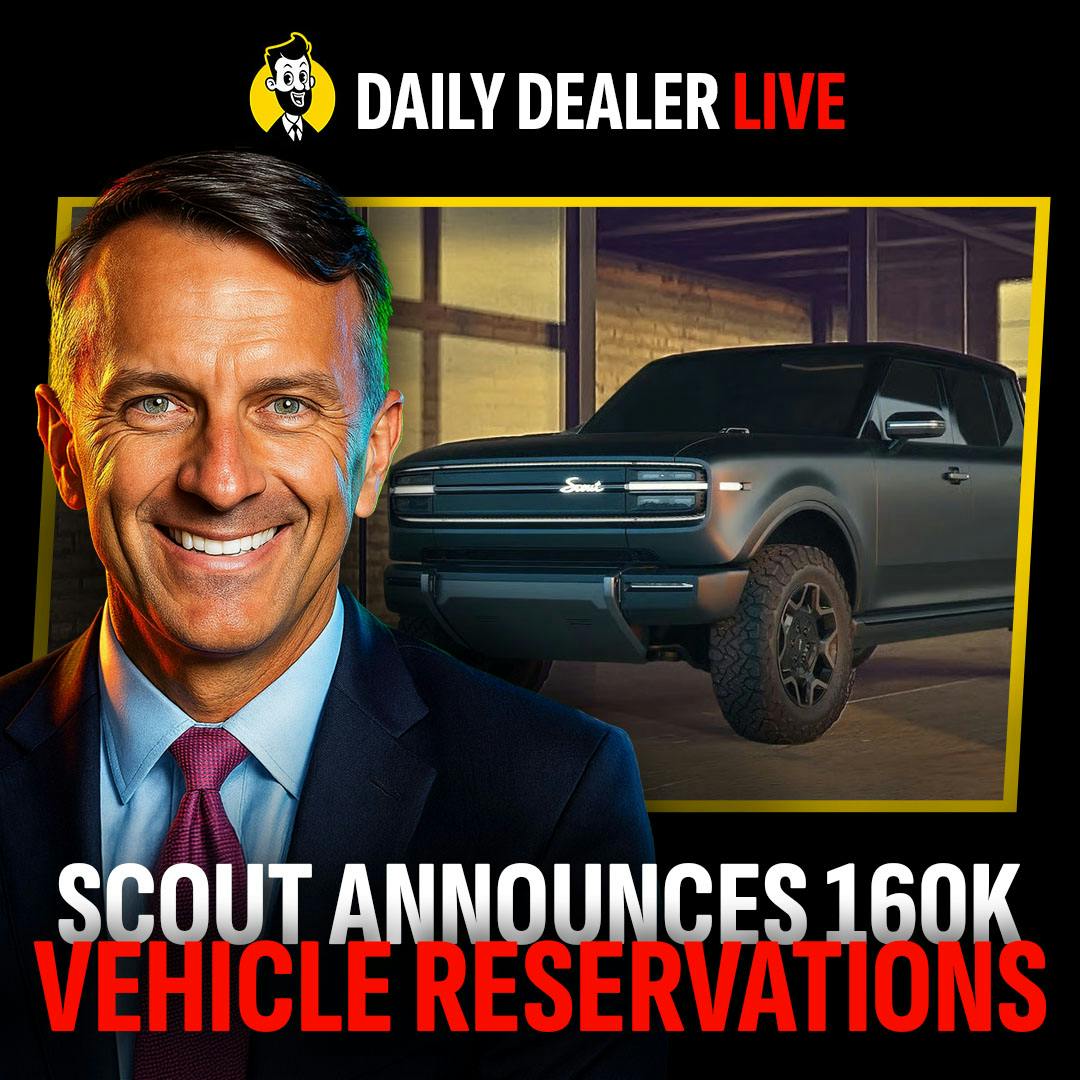
Scout announced it has surpassed 160,000 vehicle reservations for its Terra pickup and traveler
SUV.
That's at least 16 million bucks collected at $100 a pop, a figure that is similar to
the one cited in lawsuit as evidence that Scout is already transacting directly with consumers
bypassing the dealer network entirely.
Scout has emphasized that those are reservations.
They're not sales and that customers can cancel still dealers aren't buying that distinction
and with Scout's CEO projecting deliveries of said reservations out to 2028, this legal
battle has plenty of runway left.
If you want to hear more about the battle, go to our show Wednesday where we interviewed
the attorney who's representing the two dealers in a class action suit in which he says
Puditive, the Puditive suit allows all dealers to join as they proceed forward.
So you can check that out from Wednesday.
Next up today from one big used car headline to another general Motors is consolidating
its certified pre-owned business under a single platform called CarBravo.
Effective June 2nd, all certified used Chevrolet, Buick and GMC vehicles will move under
the CarBravo umbrella, making it GM sole CPO program for those three brands in the United
States.
Cadillac, however, will keep its own separate program.
But the move GM says is designed to simplify the buying experience and give more dealers
a cleaner, nationally branded way to merchandise certified in inventory.
And as a personal aside, I love what GM is doing right now.
The head of GM came on to the car dealership guys show Daily Deal Alive from NADA.
Their discipline in inventory production is very cool and I think dealers are well served
to give them a little bit of flexibility as they move forward with this venture.
Either way, it's hard not to read.
This is a direct shot at Carvano, which sold nearly 600,000 units last year and is gunning
for three million, three million units this year.
So perhaps to Chevy as they compete with Carvano.
All right.
Next up today, before we go, let's run through the buy sell wire straight off the CDG buy
sell tracker.
It's been an active, it's been an active wire for the past few days.
First Lithia closed on toilet of Galatin, just north of Nashville on March 2nd.
That's picking up its fourth Tennessee store from the stumble automotive from stumble
automotive.
March.
Lithia CEO says the group is continuing to target high growth markets and the deal brings
their total acquired US annual revenue to get this 225 million bucks so far down in the
southeast.
Tamar and Gulf Coast, a division of Canon motor company added three mobile Alibaba stores
from car lock automotive, Audi mobile, Volkswagen mobile, and Volvo cars mobile.
That deal closed February 23rd and pushes Canon motor's footprint to nearly 40 rooftops
across Louisiana, Mississippi, and Alabama.
And finally, a feel good one to close on.
Frank Mastravito of Mastravito Auto Group fulfilled a childhood dream, purchasing a Chevy
store on commercial drive in Yorkville, New York from lead car.
He now owns two dealerships on the same strip he pointed to as then a 12-year-old telling
his parents one day all on those stores props to him for making that dream come true and
part of the American dream auto, the auto industry is as always for the bicell tracker head
to CDG bicell dot com and we love our CDG bicell dot com tracker buzz jingle.
We love it.
And that folks is a wrap on today's industry headlines and welcome everybody to Fixed
Ops Friday.
Well, it's Fixed Ops Friday.
If it's Friday, it's Fixed Ops Friday, which means today's the day we get to dive deep
into the service drive into the fixed operations.
We've got three incredible operators joining us today first up.
We've got and actually as a reminder before we go into this, I'm a little off my normal
flow today.
First up today, let's go to the chat.
Remember, you can push your comments anywhere across CDG platforms, we're streaming across
all Cardiolorship guide platforms.
Our own Michelle says, let's go Fixed Ops Friday.
Paul Solzman excited for my Fixed Ops Friday education session.
Thanks for watching Paul Solzman, Hannah Farmer, happy Fixed Ops Friday and Ed Roberts.
Thanks God.
Thank God it's Fixed Ops Friday.
Ed, we appreciate you.
And you've got a little skin in the game with today's show.
So first up, we're going to go to Gary Kaiser, president of LB Smith Ford Lincoln.
Gary, welcome to the show.
Hey Sam, thanks for having me.
We appreciate you being here.
Hey, for those that don't know you, tell us a little bit about yourself and what you
do there at LB Smith Ford Lincoln.
So currently I'm the president, general manager of LB Smith Ford Lincoln.
It'll take me all day probably to tell you the whole journey.
But as a young kid, 16 years old, I got into a little bit of a line in the road.
And I had to decide if I was going to go to an ROTC boot camp or find a job.
And my teacher found me a job at LB Smith.
And it's the best thing that ever happened to me.
You know, you find a family and our owners, you know, the Jordans have believed in me.
And I have allowed me to do every job from, you know,
when I started on a lot to attack to a service advisor, to a service manager, the whole way
up through.
And it's been a great ride.
So Gary, what would you say to those in the auto industry that say, hey, this industry's
changing.
And really, what was the American dream, which means somebody could come in at a young
age like you did and realize in a little bit of potential?
What would you say to that person that says, hey, the American dream and automotive is dead?
Is it dead or is it still thriving, Gary?
Oh, no, it's thriving.
I still sit in interviews and hire young, you know, young lads that are looking for jobs
and they start on the lot or in quick lane or one of our departments.
And the next thing you know, they're selling cars and it's just once you get into this
industry, there's so many, so many different careers under one rooftop.
And it's just so exciting.
Yeah.
Well, it's FixObs Friday.
You recently shared, you've got a new mantra at your auto group for 2026.
Share with us that mantra and how it came to be.
So we, it's so exciting, you know, for us right now, we opened a Ford Pro Elite 33,000
square foot 26 base, I mean, extra large base for the commercial world, grew that commercial
business so much that we had to, you know, build a building and FixObs has always been
our backbone.
And we just, we love FixObs, we crush FixObs and this year with moving so much gross
out of our main shop, you know, we had to figure out FixObs again.
And I thought, how am I going to, how are we going to do this in our FixObs meeting?
So we got 2026 is the year.
So we, we named it 2026 made t-shirts for all of that, you know, because this is the year
of FixObs.
I mean, this is FixObs is 2026 and we got to figure it out, you know.
2026, I think that's a great rally cry for the entire auto industry.
In fact, I have a personal ask, will you send me, I'll pay you, I'll send you a check,
I want one of those shirts, I want a 2026 shirt from, from, you guys there.
Yeah, so I mean, they wear it on the weekends, they're just to remind them that, you
know, just not here, we still got our easy path is now something we got to recreate.
So that Ford Pro Elite Commercial Service Center, that's a major commitment.
That's a big financial investment.
What made you decide this was the right strategic move in 2026?
So we've been working on it for a couple of years and our business, our commercial business
just grew out of control, you know, and these commercial accounts, there's no one's taking
care of them, you know, they're waiting, that's their offices and that's their toolboxes
and they're sitting on lots and not getting repaired, right?
So if you can turn them fast, it's, it's low hanging fruit.
I mean, the commercial world doesn't really, you know, monitor the price of the repair,
they monitor the time of the repair.
So we, go ahead.
What, why is it such an unmet need?
Why did it pop up almost out of nowhere that created this opportunity?
Well, capitalizing them.
It didn't pop up out of nowhere.
We had a vision, you know, we had a vision probably in 2018 that this is what we wanted
to chase, right?
So one of my foreman's and myself, we sat at sheets, wall, wall, rudders every morning
at 5.30 and we would write down everyone that was getting fuel that day and then we would
go visit them and say, look, all we want is your warning work.
We know we know John's doing or whoever's doing your repairs, right?
Let's give us our chance at your warning work.
And then we're going to pick it up and deliver it, right?
So this was before Ford even had picked up and delivery and mobile and all that.
So once we created that team to pick up and deliver and allow them to keep their day going,
it just grew and grew that it was busting the seams in our main shop, right?
We got 37 stalls in our main shop and it's just was out of control.
Do you see that the nature of that business or the demand they're increasing, declining,
staying flat?
I mean, obviously you've invested planning for the increase, I would imagine.
Yeah, definitely increasing.
I mean, there's so much out there.
There's so many commercial and just the regular, the average Joe that has one landscaping
vehicle that he's trying to make a paycheck for, right?
To pay that.
What is a typical commercial customer relationship look like compared to a retail one?
So it's, it's a good question, you know, when we were building this building, we're like,
well, we really don't need a waiting room because they, we go pick them up and they don't
come in, right?
Or are they drop off?
So the commercial customers, you know, you're, they, all they care about is getting their
vehicle back because their tools are in that vehicle to fix what they need to fix.
Yeah.
Yeah.
All right.
We're going to go into the comments.
Angelica's surprise says, 2020 fixed.
I think she's picking up off your rally cry, 2020 fixed props to Angelica.
And then eager K comes into the text with an update from a manhime auction.
It says, good afternoon, fellas.
Just got done with auction today at manhime, New England, how to great day, big engine vehicles
are getting dumped by dealers, gas prices, scares going on right now.
And I think that's in reference to the, the stuff going on in Iran, the impact on oil
over night price of crude oil shot up and there's some uncertainty out there.
And I would argue that we're going to see a little bit of a shift as we have at other
periods of time when the price of oil has been a little bit under pressure.
You probably don't have a big opinion on what that's going to look like from your vantage
point, but do you foresee a little bit less demand on gas engines and maybe even a little
bit more EV in our future?
You think you want to say on that as breaking news from eager K at the auction?
Are you asking me if I want to say anything?
Yeah, yeah, you want to go to a, that's a loaded price.
Get political?
No, that's a loaded price from me.
I passed on that question.
Fair enough, fair enough, fair enough.
All right, so one thing that you've talked about in your intake form is you talked about
working the service lane to acquire vehicles.
How big of an inventory source is the service lane in March of 2026 and what's your process
to capitalize on that?
So we're just dipping our big toe into that because everywhere we go, I mean, NADA, the
two biggest seminars were acquiring vehicles, use car vehicles and retaining tax, right?
So you know, we're servicing probably an average of 150 to 60 cars a day, right?
Before the only ones bidding on that car, right?
And I know this is the new wave going on out there, but it's true of when, and we kind
of put a team together to do it, and we're stumbling a little bit, right?
And it's just as you, you know, before your walk, you crawl and that's where we're at,
but we're getting some great success in some of the stories that I listened to in NADA.
These guys are really acquiring a lot of cars out of their service lane, and you know,
it depends on your retention, like our store has a huge retention.
I mean, our customers trust us.
They've been coming here since, you know, you hear it in the service lane, the 60s, the
70s.
And, you know, it's, it's great because you have their service records, you know, you're
not buying a car.
You know that you don't know what you're getting.
Yeah.
So we're still, we're still trying to figure that out.
So I think a lot of stores aren't.
In fact, service lane acquisition is one of those things you almost hear as a buzzword.
Everybody's talking about it.
Not everybody's figured it out.
We'd love to hear from our listening audience in the text.
We'll bring those comments in.
As you're thinking about it and you're starting to create that process, what does the process
look like?
Who's conducting those appraisals?
How often are you executing on those?
And then how many vehicles are you picking up on an average month since you began?
So great question.
So we've switched gears a couple times.
We thought maybe one of our used car managers would sit down there and start having the
conversations.
And you know, but our clients, you know, we have such great relationships.
Our clients didn't know our used car managers.
So our senior advisors would be the ones to say, hey, Sam, today when you're in here
today, how about a complimentary appraisal on your vehicle?
You know, that really seems to be getting traction.
Now we just started it about a month ago.
I think we bought maybe eight to 10 cars out of there so far.
Okay.
Okay.
But a lot of appraisals and a lot of tire kick and we're planting seeds and, you know,
in this business, a lot of things you do, you don't get instant results.
Yeah.
So transitioning from the used car acquisition piece, which I do believe in, I think
you can have a major impact on used cars, overall dealership profitability.
You've opened this new commercial center and you've talked about backfilling the main
shop.
What does backfilling the main shop look like in March of 2026 after you've opened this
huge commercial service center there at Ford?
So what our plans are to start, you know, we struggle with transmission repairs in the
Ford world.
And, you know, any Ford dealers out there listening would probably say, yeah, that's a true statement.
So we are actually creating a transmission shop inside of our shop that we're going to
expand.
And, you know, a lot of our Ford dealers around us are a month out for transmissions, you
know, and then you got loaners and it really puts a bind on your business.
So we're going to expand, like, have an internal transmission shop that for all makes and models
inside of our dealership and, you know, of course, we're trying to buy more used cars
instead of running the used cars through the main shop.
We're going to have a used car recon center.
So a lot of good, exciting plans, you know, we have a vision.
We just got to get there.
Yeah.
And truly, in 2026, Fixed Ops is a big opportunity in operations.
You've capitalized on the commercial side.
We reported last year, 2025 Ford is the number one most recalled OEM.
How are you meeting customer demand and needs for those recalls?
Are you involved in mobile service?
Is there anything you're doing different in your organization to help create a great customer
experience for those customers that are going through recalls and or routine warranties?
You know, in the Ford world, you know, Ford has pressed mobile, pick up and delivery.
And we got five mobile bands, three really running, you know.
So are we doing anything different?
I wouldn't say anything different or stands out compared to all the other Ford dealers
in our world.
Just you got to have, it's got to be its own business and it's got to have its own
advisor, it's own, you know, that's got to be a little iceberg off the big iceberg
and it's got to run like that or where you're constantly, you know, looking and searching,
trying to figure out how it works.
Yeah, Ford has done a lot in terms of supporting the program with factory money with mobile
service.
Are you guys all in on mobile service?
How many mobile units do you have or are you doing more pickup delivery work?
So we do, we do a lot of both.
We're not some of the super stores that are out there, but we do well with it.
We have, we have five bands, but we only have three running at this time and pick up
and delivery.
I think we have eight quarters in the morning, eight quarters in the afternoon and, you know,
clients love it.
I mean, it's great.
I mean, all manufacturers, it's easy CSI.
So going into the text, eager case says every dealership should have at least two dedicated
transmission experts on hand that do nothing, but transmissions, eager says, I agree.
And then BDN goes six, nine says, what do service managers and advisors think about?
This is a question for you, Gary.
What do service managers and advisors think about possibly losing customers and selling
less hours when cars are bought in the service lane?
So one of the tricks to use car acquisitions and services, what do you do with the revenue
loss to the service department when we snag it as a used car or sell manure or vehicle
Gary?
So, you know, we're a month into it.
And I think out of our, the ones that we acquired, 75% of them bought a new car.
So, you know, it's a great question.
We're pretty fortunate in service that, you know, our flow is pretty strong, but, you
know, we haven't got to that point where we said, hey, we're going to hurt our service
department because you got to keep it all going, right?
You got to keep everything rolling.
All right, Gary, as we wrap up and then we're going to bring you back for the round table
at the very end, the lightning round, if you will.
If there's a dealer listening to you, Gary, that says, hey, I want to grow service revenue
20% this year in 2026, in your opinion, where should they start?
What's starting grounds for that 20% boost in service revenue?
Hands down commercial.
Yeah.
There's so much of it out there.
It's higher labor rate and they fix their vehicles.
They don't have the time you're not even waiting on OK's.
I mean, they just need them fixed and it's so strong, such the low hanging fruit of our
business.
Yeah.
It's interesting that it's been under a need that's been under a met and you've executed
on strategy to go after it.
Gary Kaiser, president of LB Smith Ford Lincoln, we appreciate having you on the show today.
Thanks for joining to share your perspectives.
We'll have you back as part of the lightning round at the very end.
Thanks, Gary.
Yeah.
Thank you.
And we are full swing into fixed ops Friday.
Thanks everybody for being here.
Thanks for posting your comments on social media.
Again, we'll continue to bring those into the show eager K reporting live from the auction
as it relates to use car values with gas engines.
That'll be super interesting when you think about impact to EV and EV demand.
If the price of oil becomes significant through this Iran thing.
Let's talk great America.
Today's episode is brought to you by great America, great America, finances, build outs and remodels,
including service equipment, collision and repair, body and paint, EV charging, car washes,
lineage and software, upgrade your dealership without training cash, learn more at grade
america.com, Ford slash dealer build and we appreciate great America for supporting
today's content, including that great conversation with Gary about servicing commercial vehicles
and their expansion to meet that growing need and automotive.
And then also their new initiative aimed at going after used cars and really, you know,
they're working to perfect that.
So I think a lot of us can learn from that.
And I am super excited to get my 2020 fixed t-shirt from their organization.
I love that rally cry.
So let's swing straight into our next guest up next fixed obstructor at Bozard Ford.
Matt Norris.
Welcome to the show.
Matt welcome.
Hey, we appreciate having you.
And by the way, one of the things I love about automotive is we pivot fast.
We had a couple last minute changes and you were gracious enough to raise your hand
and working with our team to come in and be part of today's conversation.
So thanks.
You work with Ed Bozard, who we've had on the show in the past.
And you guys are a growing organization out there.
So your technician, actually, first of all, Matt, tell us a little bit about yourself
for those who don't know you and your store.
So Matt Norris, a fixed obstructor at Bozard Ford Lincoln.
I've been in the industry probably 30 years between the end of the technician service advisor
service manager and now fixed position.
But I love the industry.
I don't think I would want to do anything else.
You know, it's been very rewarding for my family and then seeing the growth and development
of the people that I get to work with every single day.
It's been phenomenal.
That's awesome.
Well, your technician pipeline in service is one of the most interesting in the industry.
And you've intentionally built that.
Walk us through how you've built that technician pipeline and how you continue to grow and
develop technicians within the auto group.
Sure.
So 2016, prior to me getting here, I've been at the dealership almost eight years now.
But in 2016, the dealership started what we called TDP, our tech development program.
We started off with one instructor and I had a couple of entry-level technicians and
we felt that the only way that we were going to be able to get talented with the dealership,
which is what everybody struggles with in this industry now is getting talent, right?
And unicorns aren't, you know, they're not falling from the skies and so we got to grow
our bench and we've got to develop people and we felt the best way to do that was to start
our own development program.
And we work very closely with two of the tech schools in the area.
We have great relationships with them.
They both have automotive and diesel programs.
We invest a lot into those schools with finances and commitments, et cetera.
And because of those relationships, we have a pipeline of students that come into the
dealership.
And so as those entry-level techs come into our quick lane, that's typically where we'll
start them.
They spend five, six months on our quick lane.
It gives them an opportunity to understand and know our culture and know how we do things.
It gives us an opportunity to make sure that that individual has what it takes.
And then from there, we move them over into what we've changed TDP into BTI, those are
Technical Institute, and we've moved that into a nighttime role.
So those students come into the program, they started to a clock for the first two hours
of the day.
And working with the instructors, they're required for the web-based training, so they can
start working on getting their certificates and their training.
And then at four o'clock, they come into the shop from four to midnight.
They work four tens.
And then they come into the shop at four p.m.
And they work very closely with other students and their instructor.
And they work on live cars.
We do pretty much everything except heavy line work for most part.
Two-thirds, I think it's roughly about two-thirds of our technicians, our masters, our senior
masters in the shop have come out of that program.
Yeah.
Well, if you walk through our shop, it's very compelling when you see the medium age of the majority
of our technicians are 35 and under.
That's impressive.
You know, at Ziggler Auto Group, Bob Keel was on last week or week before, talked about
a similar program.
So props to you guys on that BTI, and I asked you pre-shows, you know, how many technicians
do you have today on staff that are from that program and it's astounding, the impact
that it's had to your ability?
So as you recruit technicians into this industry, what do you think the biggest myth is an
automotive when kids are thinking about a career?
What do you think is the biggest myth an automotive that prevents a lot of kids that would be great
technicians from exploring that as career potential before coming to your school?
It's a steep learning curve, right?
You know, advisors usually need six months of training and for the most part, they've
got it and they can run the ball down, but they'll be very successful.
Technically, it's a whole different ball game.
There's, in my opinion, from entry level to being senior master or knowing what's going
on and how to properly get a vehicle and diagnose it and actually repair it, it's three
five years.
And so I think between the learning curve and a lot of technicians or the younger generation
is a little unsure of flattery.
I think those are probably the two, the biggest myths, as long as you have some of the programs
like some of us out there do, I think it's helps support grow and develop those individuals
so they don't have to have those fears.
Yeah, and you know what, Shay, it's kind of our fault as an industry for not having supported
such a technical skill with training and development.
You know, you can't go to, you know, college isn't the best place to learn to become a technician,
right?
A little of hard knocks into these increasingly complicated world isn't also.
You've got to really recruit, cultivate career path guide them through that.
What do you think is the biggest mistake most dealerships make when they're trying to
recruit great technicians, understanding where they come from and the success you've had?
So from past experience and knowing a lot of people in the industry, what I've seen
it seems to be the biggest mistake is to bring entry-level technicians in and make an
assumption that because they've been to school, they know how to go out and fix a car.
Yeah, yeah.
That's not reality.
And you've got to, you've got to support them, you've got to, you got to pour into them,
you've got to put them either with a mentor, if you don't have a training program, but
it really just takes a special someone to wrap their arms around that individual and
want to grow them and want to develop them.
If you've got those kind of people in your dealership, I highly encourage you to figure
out a way to get those entry-level people into spend time with those people that are willing
to pour into them.
So you've invested a lot of time training expertise into BTI.
If there was a dealer that's listening today that says, hey, I want to create this Technician
Pipeline program tomorrow, what are the first few steps they should engage in to create that?
So I think first and foremost, you've got to identify the individuals within either you
bring people in from outside, but preferably you identify those people within the shop
that are willing to take the time to grow and develop those people.
And then you've got to grow out and develop those relationships with either the high schools
or the tech schools so that you have a pipeline of people that are interested in.
And then having the culture where everybody understands that we all start somewhere,
and we all got to focus on taking the time to teach, training, and mentor people,
because all of us have one at some point in time, right?
Yeah. All right, I want to transition over to props to you guys for your commitment to
developing talent, recruiting people, and helping young individuals see automotive as a career
opportunity before we get into service, mobile service, Ed Roberts, who may know a thing or two.
He says, hey, ask him about Bowsard built. Tell us what that is straight from the boss.
So a couple of years ago, we've been doing a lot of accessory builds.
We've gotten more heavily involved in building trucks.
We wanted to brand that and create a new vertical within our industry,
maybe not our industry, but certainly at our dealership.
And so we branded Bowsard built, and we've just hired a manager Justin to run that program,
and he's doing a phenomenal job so far. The team here is phenomenal.
But we really want to dive into that market where we can have a lot of fun with consumers.
We can build some cool stuff. We can have some fun with it.
And I'll tell you, from my standpoint, there's nothing cooler than being out at a car show,
or being out at the grocery store, or a target, or something, and seeing one of our Bowsard built
trucks, because they're all branded that way. It's like, you know, you know, it's totally it's ours.
Yeah. So no matter where you are, everybody looking at it can see it, and they acknowledge it.
Oh yeah. They see what it is. All right. We are powering out right now of a time in automotive
history, where there were less new cars in the market, so less UIO for a lot of dealerships,
maybe not as much Ford, but there were manufacturers that were constrained.
There are some service departments out there right now that are saying, hey, you know what,
customer pay's not as central to our strategy. We're living off Recon, warranty pay, that sort of
thing. What do you think is a great target for customer pay to make a service department healthy?
We all know absorption and other things like that. And what would your response be to a service
manager that says, hey, you know what, it's kind of different here. Customer pay's not as big a deal.
UIO is lower over the past several years, so we're going to focus on warranty work. We're going to
focus on internal Recon and use car sales. What do you say to that manager? Well, that's a loaded
question. It is. I love the loaded questions, by the way. It helps my own curiosity. Go ahead.
So I'm a firm believer that we need to care for people's cars. And I think everybody,
you know, from a consumer standpoint, I think everybody has different levels of what
how they want to care for their car, whether it's, hey, I lease this thing for two years,
and I'm really not super concerned about, you know, spending all this money on 30ks or whatever the
case may be. But then you have a lot of other individuals that they will keep their car for
150, 200,000 miles. And I think at the end of the day, it's our job as a dealership. They don't
come into us knowing what they need for their car. They come into us because we're the experts,
and they're relying on our expertise to tell them what they need. I do think that customer pay
is a big part of our business. It's always going to be a big part of our business. But, you know,
looking at caring for their cars, the biggest thing for us is we want to make sure that they have
a good ownership experience. And then obviously, you know, they have a great ownership experience,
and their cars has had limited breakdowns because they've done all the routine stuff. We're
going to sell more cars. They're going to come back into us and they're going to buy more cars.
So, are you saying in a way, don't worry about customer pay, worry on the customer experience
and the CP will take care of itself? 1000 percent. Okay. And what's a tool you use in your auto
auto dealership here in March of 26 to lean into creating that great customer experience and fixed
operations? So, obviously, a big piece of that is culture. Advisor. Advisor team does a great job.
I've never worked with a group of advisors like we have here. And I'm obviously biased, but we
have an amazing team. But I think another key component too is the Technician Video MPI. I
think that's all. Oh, I love that. Yes. Why? What system do you use? What's your benchmark and
how good are you at doing that opposed? Well, last question first, we always have our
opportunity to get better. We actually just sat down our management team and I just sat down
yesterday and we discussed how do we improve upon this service and how do we create a more
consistent process in the shop? And so, we're actually launching that in the next couple of days.
We've got something lined up, but it's transparency. You know, when I'm looking at a Technician
going over my car, they do an introduction. They go over everything on my car. They tell me,
you know, what I'm there for, then they go over, hey, look, this is some items that need attention.
At the end of the day, I want to, I want my, I don't need to be sitting on the side of the
ring because my car is not running properly or something happened. And, you know, Ed and I were
talking this morning about how the advisors have traditionally always had the relationship with
the consumer. I believe that game can change now and I believe that if a Technician that's really,
really wants to create a main for himself and really take off, flip that phone around,
flip that iPad around, introduce yourself, let the consumer see who you are and you'll build a
pipeline of customers coming in to ask for you to work on their car. So, so what system do you use
to deliver that video MPI and what's your percent standard? What is success at BowsArt?
So, we're using my karma and we've got, we've got to be above 85%.
Okay. And are you above 85 consistently? Is that, we are. Yeah. What we're not going to do like,
when we bring a, bring a stock unit in for recall or things that nature work, we're not going to do
a video MPI on that. Yeah. It's time that we can use for other things. Yeah. So,
so to tie it back to my other question, what is the impact of video MPI 85% above on customer
paid? Does that customer pay number go up? Yeah, 100%. And it's interesting when we first started
this and obviously some of our consumers have seen it now. But when, when we first started sending
these out, it was overwhelming response of, this is super cool that I get to see what's wrong
with my phone. I identified some things. I saw it or I met, you know, I heard the technician,
like, people want that transparency and they like being involved in it. If they have a,
if they can be involved in it, man, what a game changer. Yeah. Matt Norris, I'm, this is killing
me because our time's almost up. And I have so many other questions to ask you for. I want to
transition from customer pay video, creating that great customer experience to mobile service.
You guys have a large mobile service operation. Tell us how you're thinking about mobile service in
March of 2026 and any tweaks you're making to it to win between now and the end of the year at
your Ford franchise. So we have, yeah, we've got total of 46 units. We have 41 or 40 on the road
currently. And it is something that we're all 100% invested in. I don't think it's ever going to
go away. I, my wife loves it. I don't have to bring her car in. I don't have to inconvenience her
anymore. They go to the house. They know it. She is, she's in love with mobile service. My neighbors
are in love with it the first time they had it. But yeah, it's a game changer. One of the biggest
things that we're focusing on this year is fleet and commercial retail. We're, you know, we're
going to continue that focus, but fleet and commercial is another big focus that we're going to
really dive into. And we've, we're going to, we're looking at going out to these fleet and
commercial companies and just say, hey, look, we're here. Just give us one of your cars. It can
even be employee car. Let's just go out there and do an old change. I'll just let us show you
what we can do. So Ford has been great at supporting mobile service. They provided factory dollars.
Ford, as I mentioned with Gary, you take that factory support away. And A, does it still
a pencil economically? Is it still a very profitable enterprise? And B, do you see, for see a time when
there'll be a preference for mobile versus coming into the brick and mortar? And how soon is
that if you think that comes? Um, I, I, so I think we're there now. I think as people are getting
more and more exposed to mobile service, they added layer of convenience where I can, if I work
from home, I don't have to come into the dealership and spend two hours at the dealership. Basically
with not a whole lot to do with the dealership in a waiting room, right? So there's a huge convenience
there. You can go out to people's businesses. We can go out to the ball field while our kids are
playing sports on Saturdays and do their service right out in the ball field. Like we'll,
we'll do it anywhere as long as people are okay with it. Um, and, and so yes, I do that. I do
think that this is going to continue as far as penciling and making it work without the factory money.
Yes, I absolutely think you, you can go, you can absolutely make it work. You just have to be very
intentional about making sure that you're scheduling means appropriately that you're keeping your
guys with a good stream of work. Um, but yeah, I do think it can pencil without the factory money.
Yeah, fantastic. Well, I'll tell you what, Matt Norris, fantastic conversation. Today we appreciate
you jumping on last minute with us. Um, what, what is your biggest initiative as we wrap final
question in 2026? What do you see as the biggest threat and the biggest opportunity in fixed
stops for dealers 2026? Um, so I think our biggest opportunity, um, at least from my perspective
at our dealership is going to be, um, continue with a focus on our, our, our technical and student
growing and developing young techs. Um, obviously it's opened up some hours and evening for us to do
additional work. Um, I think the third thing for us, or second thing, excuse me, um, is a focus on
customer outreach. There are service BDC center. And then the last one for, for, for us is, uh,
heavy, heavy, uh, advisory training program. Yeah. Yeah. Well, fantastic. Matt Norris,
thanks for being on the show. Gary Kaiser came into the comments in our internal little messaging
thing. Uh, and he said, I'm just going to read this because that was cool spot on in our words,
love the client up. Well, cool as quote, the revenue will come after and, uh, rather than having
that focus on customer pay as a metric, focus on elite, uh, service to that customer in the moment
and, and the rest will come. So, uh, Matt Norris, Fixed Ops Director at Bozard, thanks for being
on the show today, sharing your perspectives. You're welcome. Thanks for having us.
That was fun. And seriously, we had a, we had a little bit of a pivot last minute. He was great
to come in. And I would love to continue the conversation even more on mobile service. But,
you know, it's only a 60 minute show. We could go for a couple of hours here.
Eager K comes into the comments as Ford's following the Mercedes Benz Playbook with mobile service
and roadside assistance. He says, I think it's great. And actually the Benz program is awesome as
well. They, they do a lot of the over the air, uh, communication with the vehicle to help
dispatch the vehicles and meet customer need. And again, creating that great customer experience
makes it less about the price, more about the service and people, I think in 2026 are willing to
pay for a better experience. Um, and then Christopher, uh, Shouten says, how do we lock in customer
loyalty when so many are defecting? Let's hang on to that question for the round table at the
very end, because I think we've got just the guests to address those questions and more. So next
up, we are going to turn quickly to Kevin Proctor, service and parts director at classic Chevrolet.
Kevin, welcome to the show. Hi, thanks for having me. So Kevin, you're not far away from me.
So Kalamazoo Michigan, we're in Western Michigan. You're just on the opposite side of the state.
So we share Michigan. It's great to talk to a fellow Michiganor. So for those in our audience,
Daily Deal Alive that don't know, you tell us a little bit about yourself and what you do out there.
So obviously service and parts director, um, I started at this dealership in 99, um,
fresh out of trade school started as a technician, um, work as a technician for 24 years.
Um, while I was doing that adjunct automotive instructor at the local college, um, did that for about
nine years, uh, which was fantastic, uh, because I could take my star students, um, and bring them into
the dealership and, and grow my own technicians that way. Um, I quit doing that, you know, the whole
two jobs thing with the family and all that just wasn't working out long term. So yeah, um, quit doing
that. Um, but I did love it. Um, got a call from the, the owner of the dealership about two and a
half years ago, and he said, well, I, I need you out front. So guess what? Take your toolbox home and,
and come on out here. So what was the, what was the biggest shift for you going from, uh, from, uh,
the, the prior role to the new role? It's just so much. Uh, it was, you know, and of course,
that first year was, was drinking from a fire hose. There's just so much to learn up here. Um,
it's a lot more stressful. Um, you know, one of the things that they don't tell you is you're,
you're on all the time. Um, when you're a manager, you're, you're on call all the time. When you have a
day off, it's, you know, you, you have your phone on you because there's, you know, there's often a
fire to put out. There's, there's something to do. You serve the customer and your employees,
right? And at the end of the day, you've got to be available to both. You've got to be available
to the customer oftentimes through your employees. So it's learning to balance multiple hats.
It's fascinating in the intake form you talked about. You run book studies with your service
advisor. I don't hear about that a lot of service advisors getting into books and then talking
about, why did you start doing that? And what's the business benefit to the organization of those
book studies? So, I mean, really, I'm, I'm a bit of a book nerd anyways. So, you know, I'm always
reading something multiple books, listening to books, you know, whatever. I'm always looking for
a little bit more knowledge on stuff. Um, and, uh, just talking to different people and, and really
realize that that my service advisors have a gap somewhere. Um, and, and I don't know if I'm
totally equipped to fill that gap with help. Um, so I started running shift meetings. Um,
about a year ago, so pre shift, um, we, we get together for about 20 minutes. Um, we go over
the day schedule, who needs a loaner, what maintenance, everybody's got, what appraisals we need to do,
that kind of stuff, um, you know, talking about the sales leads, um, that kind of stuff. And, um,
every Friday, we, we do a book study. So we take a chunk of that service meeting, um, and we do
a book study. So, um, really, it really started out as a, a focus on hospitality. Go ahead.
What, what book are you reading now? What, what, what are you cracking? I'll tell you, but I'm
going to also say I, I don't necessarily recommend it, but we have had some really good discussions
on it. Um, it's right service and right your own paycheck. Okay. There, there's some really
good nuggets in there. Um, there's stuff that definitely doesn't work for our demographic,
but it has my advisors talking and, and that's really what I want. What's one discussion point in
March of 26 that has ended in a takeaway where you've read it in the book, you've debated it,
and you've said, Hey, this could actually work. Well, um, part of it is, is building a rapport with
the customer, um, getting to know the customer, uh, getting to know the customer's vehicle, um,
customer walks in, um, you're looking for those tags. Like, um, you know, you, you look for the hat,
they're sure, you know, you, you do the walk around in the car, you look for their kids,
their pictures of the grandkids, that kind of stuff. You look for that one connection point that
you can get with that customer, um, to build the report, to build the trust, um, to get the customer
to connect with you and see you as a human, not just a deletion. So let me ask this, Kevin,
you could stand up in a meeting and a sales meeting and give your top five hit hints and tips.
Why is it better to read it in a book, have a conversation and then have everyone arrive at that
on their own versus you talking about it in a meeting and just leading the meeting with it.
Well, and honestly, we talked about it a little bit this morning, um, in our book study, um,
is, is the idea of show don't tell. Um, I, I shouldn't have to tell everybody what to do, but I,
I can show them, um, yeah, uh, you know, I don't have to tell my customers that were the best
dealership around. I don't have to tell my customers that were, you know, I have the best
technicians, but I'd better be able to show them. Yeah. Yeah. Um, of all your service advisors,
do you ever get some of them that are like, I just don't read. I'm not doing this. I don't understand
it. I don't get it. I'm not sure. This is ludicrous. I'm not doing it. So, um, not anymore. Uh,
it was a, it was a fight. Well, I don't want to even say it was a fight at first. I, I did get some
kick back from it, but, um, and not to sound harsh, but it really came down to this is a
condition of employment. This is what we're doing. That's not optional. Um, and, and even though I
had to sort it out that way, our, our advisors really embrace it and they love it. Um, and I think
they love it when the books are not as good sometimes because they can pick them apart. Oh,
this is not going to work for our customer. You know, we can't do this and, uh, and that kind of
stuff. But again, it's getting them talking. Yeah. But sometimes the conversation's more valuable
than the information they're going to take away because you learn to relate to each other,
you learn to talk, you learn to problem solve. And sometimes you'll probably get the team gather
on one side as a team. And as long as they're all banded together on it, that you, you've,
you've accomplished the goal. So let's transition to warranty, laborate. You talked about
folks seeing it heavily on warranty, laborate increases this year. Why is that such a big,
important lever in March of 26? Um, well, we really have to look to our future. Um, you know,
with our warranty labor rate increase, it, it's obviously based on a lot of state laws.
Whatever state you're in, the state laws drive, whatever your warranty laborate increase can be,
what goes against it, what goes towards it. Um, and, and really a lot of that is the customer pay
repair work. Um, they go towards that. So, you know, back to your previous guests, the, yeah,
the customer pay work is the customer is important. The customer pay work is important because
if you don't have that, um, then you're not, you don't have anything to stand with your manufacturer
to try to get that. Yeah, but what, what do you say to the service manager that says, look,
there are less new cars in circulation right now. There's going to be less customer pay because
there's less cars to bring back in here. We're an expensive dealership, right? Customers are
rather good at jiffy lubed to get their repair work done or the independent repair shop up the road
because they're super, you know, they're, they're saving money. Um, you know, I'm going to focus
on warranty pay and internal. I'm, I'm not going to focus on that customer pay. What do you say to
that manager? Well, if we don't have the customer pay, we don't have the warranty. You know, um,
yeah, yeah, people, you know, people buy their first car from the sales department, but they buy
the rest of them from the service department. So what's your biggest tip? What's your biggest tip in
March of 26 to create an elite customer experience for every customer walk into your dealership?
How do you train for that in the drive? So honestly, it really comes down to the basics.
Somebody needs to be on that drive at all times. Um, you know, it's, that's one of those struggles
that we've really had is keeping somebody on the drive, keeping those phones answered. When that
phone rings, somebody has to be there to answer it. A customer walks through that door,
there should be a, there has to be a smiling face while they're greeting them. Um,
and greeting them by name, if possible. What percent of the time would you say you're successful
at that? And what percent of the time do you think we fail at that? Having someone on the drive
ready to greet you by name? Where do I want it or where am I? Yeah. So I'm probably 85%. They,
they do really well. I do it. Advisors are busy. There's always something to do. Um, but that's
something that we really need to focus on. One of the most shocking statistics I think in all
of automotive is CDK's recent survey where they came out and they said, Hey, the average wait time,
average wait time for a customer calling and getting put on holding services nine minutes,
which means there's equal over and equal under. Do you, does that resonate with you? And then
what's the solution to that when we think about creating a great customer experience?
Well, well, you know, I don't, I don't know our exact metrics, but I can't imagine any of
our customers are waiting nine minutes on the phone. There's no way. Who would wait that long?
That's insane. They're, they're going to hang up and they're going to, they're, they're
might call back once and if we don't get on it, they're calling somebody else. It's just that's
the way it is. Yeah. So thinking about KPIs that you watch and monitor and then we're going to
get into our roundtable. What is, what is a couple KPIs that you watch in March of 26 that are
important to you to decide whether or not your team's running efficiently, effectively and
profitably? I really like to group our KPIs together. I don't know that there's really one
important KPI. We really do like to focus on effective labor rate because that is what goes
towards our warranty labor is our effective. So that's a big one. But, you know, we have our,
ours, Pararo, we have our dollars, Pararo, one line repair orders is a big one. All of those
need to work together because if you don't have them working together, you can have some
super clever advisors trying to manipulate numbers and make things look good.
Yeah. So, you know, we always try to make sure everything works together.
All right. So you talk about super creative service advisors. What is the ideal service advisor
paint plan look like in 2026? Then we'll go to our roundtable. We keep our advisor paint plans
pretty simple. They're based on labor dollars sold rental. They're based on CSI effective labor
rate bonus. They're really not super complicated. Yeah. Dan C comes into the, the comments says,
try audio books for those that just don't want to read. I agree with that. And he says it's a great
solution for people who hate reading audio books. Eager K agrees with it. Eager K also says,
I don't get it. We can show you and train you. But if they say, I don't want to do it, you say,
buy. And that's a standard for creating that expectation. So Kevin Proctor, classic Chevrolet,
fellow Michigander, thanks for being on the show. And we're going to bring Gary Kaiser back in for
our lightning round here at the very end as we wrap up today's Fixed Ops Friday. Welcome back,
Gary. Well, good to be back. Yeah. Hey, what do you think? We just talked a little bit about ELR
as an important KPI. We've talked a lot about this on the show. Anyone that watches and hears
totally as an example, totally from Nilo would say, Hey, ELR is not that great a metric. He says,
I'd rather focus on retention. Gary, any thoughts about ELR versus retention? Yeah. So, you know,
my opinion is I'm retention heavy. You know, as I said earlier, love the customer off ELR comes,
you know, you get the key flippers. It just gives you the keys and safe fix it, right?
You get that relationship and back to the question about retaining or the loyalty of clients.
It's all relationship. I mean, it's all just knowing your clients and making them feel at home
and don't make it about a service, is it? Make it about their lives? Yeah. Yeah. That resonates
with me. All right. First question up in the round table. This is the official. If a dealership
and anybody can take this, if a dealership doesn't have at least a hundred percent service absorption
in the next five years, is that just poor management? I'd say a hundred percent, you know,
that's shooting for the moon, right? In our region, 75 percent. Now, we're, you know, we're real close
to that hundred percent. Sometimes over, you know, we've dabbled with being over that, but
I mean, you're shooting for the moon. Yeah. It's definitely a high number, especially in a rural
area with a single point dealer. It's, you know, that's a top number to hit. Is there a better
stability metric for a dealership than absorption today? I don't know. I don't, I guess I don't
really have a good answer to that one. I would say now, I mean, we concentrate on our absorption,
right? That's, that's our every time the statement comes out or flipping right to our page and saying
what's our absorption. Yeah. All right. The service lane, next question up, the service lane
might be the most underused inventory acquisition channel in the entire industry. Should every service
advisor be trained to identify trade opportunities and appraise cars at a dealership of 2026 March
in today's world? I wouldn't trust my service advisors to appraise a car, but they can start the
conversation. They can start the conversation. Yeah. Yeah. Somebody on the sales team that we
communicate with every day, they go through the schedule with my dispatcher and we identify the
vehicles before they even get here. Gary, I agree. You keep, you keep the service advisors in
their arena, you know, when you put them outside their arena, they already have, you know,
X amount of tax, X amount of phone calls, you know, coming at them. Their plates are so full
and it's like Thanksgiving dinner. It just stuff falls off the edges and you got to pick them back
up and put it on. You start, you'll start losing, I think, CSI, if you start asking them to
praise cars. All right. Yeah. Next, I think that barrier as low as possible. Okay. Next question is
one that just fascinates me. All right. Service advisors are sometimes the highest paid people in the
dealership that most GMs don't train enough. So when you think about comp relative to training,
what percentage of advisors are actually performing at their potential, where if there is
additional training, attention, they could actually exceed that and and be even more profitable.
Do we train advisors enough, Gary? No. No, the whole industry will say it. I believe we'll say the
same, in my opinion, as we do not, they are left out on an island. And yeah, I'm going. Yeah.
What's the solution, Kevin? Why don't we train them enough? We talk about it all the time.
Well, I guess I don't know what the solution is. I know what I do. And we just talked about the
books. Yeah. That's one thing that I do just to try to train the advisors. Talk to them,
build a relationship with the advisor. Just as important it is for the advisor to build a
relationship with the customer, you have to build one with your advisors. Get to know
them. They need to be able to respect you so that you can teach them how you want things done.
The tools to process all that. I like your process because from your role, you're spending
significant time with them. So they're hearing how you think, what you do, you're debating things
from books. But not everybody has the time, the ability to do what you're doing. Is there a process
in the training world that best trains service advisors? I believe you have to get them outside
their environment to train them. You know, we have morning huddles and we do it all day long
or training them, right? But you get them outside their environment where they're not getting fast
balls thrown on them all day long. They retain more. Now, you have to trust who's training them,
right? Are they training them to your culture? That's the thing, right? After time, you can't take
them off the lane because you're so busy that you can't get them outside of this world.
I would love for a future episode to do a roundtable. You two are both invited where we talk.
What is the best training is it relates to service advisors? Everybody's got training and
sales. Everybody's got service training at FNI. I haven't seen a really great other than the
one-on-one you're talking about off-site and whatnot process. I would love to invite various
trainers in to get their takes on that. To you both, Gary Kaiser and Kevin Proctor,
thanks for joining Daily Deal Live in this Fixed Ops Friday roundtable. Props to you both.
Congratulations. You guys crushed it today. Thanks for being on the show. Thanks for having us.
And hey, everybody, we've got a... Today was an awesome show. We had a great conversation on
all things Fixed Ops. We've got a few great shows next week. On Wednesdays, an example, we're
going to dig deeper into the broker conversation hearing the reply side to the broker debate
that we had last week. A bunch of great content coming up next week. But for now,
we say thank you for watching the Daily Deal Live. We break down the biggest moves in the car
business as they happen. Don't forget, we're here every Monday, Wednesday, Friday, live one PM
Eastern across all CDG social media platforms. So if this is your world, hit like, hit subscribe,
turn on those notifications so you never ever miss a beat. And we'll see you next episode.
Thanks for being here, everybody. Happy Fixed Ops Friday.


