About this episode
Get every episode summarized
Each time Documentaries publishes, we email you a written briefing from the transcript — the topics, who appeared, and any specific claims, with the ad reads skipped.
Email me new episodesFree for 3 shows. No card needed.
Hosts & guests
Transcript ready
540 searchable segments. Every word is indexed and playable.
Full transcript
Documentaries — Fred Hammond. Machine-transcribed; use the interactive transcript above to jump the player to any line.
This BBC podcast is supported by ads outside the UK. Have you found yourself confessing personal things to chat GPT, Gemini or Claude? You're not alone. Something huge is underway that we haven't really found the words for yet. A new voice in our ear guiding what we think and feel and do. But should we trust it? I just thought what has this thing done to him? Black box, the chat box, a new podcast series from the Guardian Investigates. Listen now wherever you get your podcasts. Your network was successfully breached by Conti Team. One of the most notorious gangs of hackers that ever existed. All of your files were encrypted with military-grade algorithms. Making outrageous demands. Let them pay millions. I'm Jeff White and I'll take you inside a business like no other. Where cybercriminals piled up the cash until divisions grew and somebody took revenge.
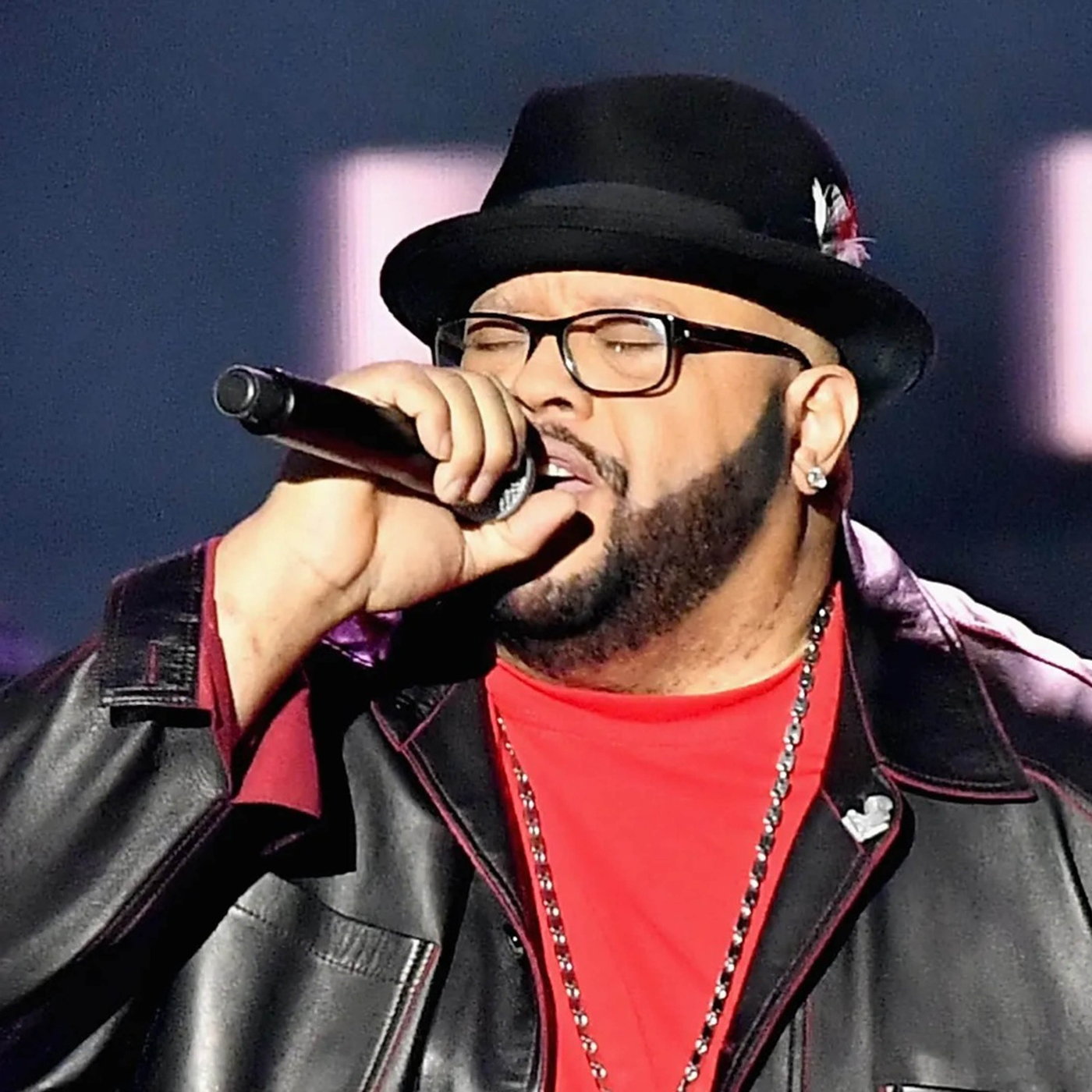
Hurry to your grave! Cyberhack season 4, the Conti files, all episodes available now, wherever you get your BBC podcasts. The documentary, home of the best documentaries from the BBC World Service. Welcome to the documentary on BBC World Service with me, Swazi Shiri. And I'm joined by gospel legend Fred Havent. With the career spanning over four decades, starting from his time as a base player for the gospel group The Winons, to join as one of the original members of the group commissioned before stepping to the front to sing to lead the group Radical for Christ and beyond. Fred Havent is synonymous with gospel music and has shaped the sound we know and love today.
Fred has received 15 Grammy Awards and has toured around the world and his recent tiny desk concert shared on social media showed the impact his music has had. I have grown up loving gospel music and now I'm a radio presenter at BBC Radio 1 Extra and Radio 4 and I love that I get to interview gospel artists. For this two-part series on heart and soul, last week I spoke to Kirk Franklin to find out more about the man behind the music and now I cannot wait to do the same with Fred. Like Kirk, Fred has been open over the years about the highs and lows he's faced and I want to find out more about his life and personal faith journey to better understand what's influenced some of the biggest gospel songs in the world. How you doing? I'm good, I'm really really good. Well thank you so much for joining us.
How did your journey of music and faith start? I started when I was very young. I didn't really want to be a singer. You know, when my mother, you know, when she was used to teach choirs at a lot of different churches. And so when I'm five or six, my mother brings home a record with these five dudes on there and one of them was like seven and I was enamored with his voice and it was a Jackson five. I was just singing along with it. My mother was cooking and singing your mains part and his part and I just loved it. And she said, you know, if you open your mouth, you can sing like that little boy, but I was too shy. So I thought she was going to put me up a church and sing in front of all those people. So I picked up my little record playing when upstairs in the closet, shut the door, put on the flashlight and I sang it in the closet because I did not want her to put me up to in front of people. And so that's why I started. And we were from Ota. So we were just a music village.
And then as I got older, I started playing drums. She would take me to choir rehearsals and I would play a little three piece set. And then as I got older, she told me that she saw that I was standing in line at the church to play drums. And I wasn't getting an opportunity, but the base was just sitting over there in the corner. Nobody was messing with it. So she said, why don't you pick up something else? I said, well, I like the base a little bit. I learned that. And I started learning that next thing you know, when? When? Oh, that's amazing. But what was that transition then? If you was quite a shy kid to step to the front and sing, how did you know that the Lord was calling you to something? Maybe that you didn't even have planned. You know, a defining part was even then, let's go back to elementary school. I'm in the third grade going to the fourth. And we were at this thing and the Jackson five was really hot. So they asked us to come up to the front of the class. She said, if you finish your work in time, we're going to dance and listen to music. You know, so everybody was cool and you know, so everybody got to work done and cleaned off the desk and all everything was done.
So we had about 15 minutes of class. And she said, we got these kids, these little boys right here, Jackson five, cool cool. Everybody wanted to hear them. And they said, we listened to the song one time. And then the next thing you know, she said, well, do we have a Jackson five in here? And so about eight of us ran up to the front. Yeah, of course. And I remember this because Regina, one of the girls, I won't give her a last name to embarrassing. She was like, sit down for it. And she hollered me out. Sit down for it. Fred, I'm in sit down. And I was like, I was already shy. But my boys was up there. So as I was going to sit, I took a step. And then we were talking, we were singing and singing. And so we was doing the dancing. You know, we was doing all this stuff and making up the steps on the spot. And George, another print name, George, he was Michael. And he had charisma. He could spin. He could sing. He just, but when, when your mains part came up on, I'll be there. I looked at my run, my run stepped out.
And he looked at me and I stepped out and I just sang. And oh, I'll be there to comfort you. And I could mimic how people sounded. I didn't know what to sing. I didn't know what to sing. And then all of a sudden the next thing you know, Regina, the loudest one. Woofrey! So, get up, get up. You ain't even want me there. You ain't want me and now I was sitting there. You're all the bum. That's amazing. That's incredible. You've gone on to really shape the gospel sound. We are so grateful for you. We let us know that we're so grateful. Sing us and proud of you. I want to know why is gospel music so powerful? What is it about the harmonies and what is it about the choirs that, for someone like me that cannot sing, I can't help but join in. Why is gospel music so powerful? Because it's the power of the unit. Like, you know it's slightly different.
If you hear somebody with a really beautiful voice and they're singing to you and you're listening, it can touch you. All right. And today's gospel music, gospel singers are the greatest, but they're doing a lot. They're really, they have a lot of skill. But once you acknowledge the scripture magnify the Lord with me and let us exalt his name together, that comes alive. All of a sudden, once you start to sing the word of God, you start to be, you know, you feel the anointing and then you're in the person next to you and in the person next to you in the whole place is crying out singing the same thing on one accord. That's when the Lord said he comes in. He said, I'm in the midst of your praises. And once you, it's about singing. When I write, I, when I left commission, one thing I did was I wanted to write songs that people sang and not people listening to me sing. And he just told me write these songs. He started giving them to me and there were songs that allow people to sing with me, corporate worship, sing and you have to sing in the style
that you know. I'm urban. So, you know, I'm going to sing in that kind of style. It's going to people going to know, I don't know why I like this song. Well, it probably sounds like this group over here in that group and this is what you hear every day. And for one of your songs for many of us, no weapon is, yes, scripturally based as I have for four 17. What was going through your life at that time to make you pen such a song that for many of us, we still sing, especially when we're going through tough times. I didn't start out to start any journey like when we did commission. I didn't say we're going to do this. It's going to change the game. We just did what we did. You know, what we were saying what we sang. Same thing with this. I didn't start out to be the, what they call the architect of praise and worship. I just took praise and worship and I brought it over to the urban side.
Now my Caucasian friends and family, they have been doing praise and worship for 20, 30 years. But our culture was singing from our experience. So that's why some of the Jesus will work it out. I'll turn it over to him to baby need a pair of shoes. Even got a light bill to do. But I'm going to tell you what I'm going to do. We're singing from our experience. You say I must tell Jesus all of my struggles. Jesus can help me. Jesus alone. Well, then praise and worship just reverse that. I'm going to tell my troubles about Jesus. I don't you already know what I got. So as I started singing, I came up with this thing where it was called a flow. I got into this thing where if I heard the message, I can take immediately a song and make it to the message. So the preacher was preaching and one of the guys was playing on the organ and he was playing this little thing. And the preacher was preaching. He went to just one woman and said, I'm restored. The Lord said I'm restoring what the kankworm and the malthabitants with the thief has stolen.
He just went on your not a year's will be to be and she shouting in the audience is shouting. And then he looked to me like, take it away. What you got right and right out of that. No, fun to give to me. I'm like, okay, keep coming Lord. Shout out to God. But what I'm going to do here. Now, how can I make it? It won't work. It was just that simple. No way. And then the next thing was God would do what he said he would do. Not a man. He should lie. He would just keep repeating that and we sang that for a year. And when we did it, it would go into 30 to 45 more minutes of extended church. You know, of worship. Yeah, wow. What an incredible story. What's your testimony though? You grew up in church and I guess I've heard the music side of things. But how did the Lord's grab your heart? How did you put your faith in trust in Jesus? It was, you know, my father died when I was a Ray Hammond and I didn't know
that he adopted me. I remember the proceeding, but I was always thought he was my dad. But truly enough, you know, my mother and real father had an affair. Because a pastor and her they had an affair and I was born out of wet life. And this guy Raymond Hammond took my mother and myself on and he gave me his name. And he didn't really go to church. And when he died, my mother walked away from God. She said, I'm 32. Nobody else in his family and he has a big family. Nobody else on our block. Nobody else's husband died. But you let mine die and he was only 32. She said, I'm good on you. And she walked away from God for about two years, you know. And we didn't go to church. We just played, you know, she wasn't a horrible person. She didn't go out to cries and then drinking and smoking and you know, but she just didn't like God anymore. Then one day about two, two years later,
we were coming home. I was coming home probably from little league football practice. And she said, we're going to start going back to church. You are coming up on the age of accountability, which is 12, you know, and you need to know the Lord for yourself. And we are not upset with God anymore. And so now that was her witness that I'm sitting there in the car just listening. She said, I would take you tonight to see at church. I just can't this movie called the Rapture and I was like, what is that? She says the second coming. And I said, oh, I like that movie. She said, no, you haven't seen this one. And she started saying one day God is going to come back. The Lord is going to come back. He's going to crack this guy. And, you know, ex-wazzy and ex-wazzy. And those that know him and love him will be James in the twink of our, but those that don't, they're going to be left here and it's going to be, you know, she really explained it to me the way I can understand it. And now I'm paralyzed. I just heard a horror story and I can still feel it.
I couldn't talk. I just stood there. She said, well, I have to go away, but we're going to start going back to church. We're not going to listen to, you know, soul music, which is R&B music on Sundays. You know, all the way up to five o'clock. She was giving me some new rules. And I said, okay. And I went in the house like I saw the worst scary movie I ever saw. Wow. And we had a rule. My mother had a rule, do not go in my room for nothing. And when she was there, we had to stand there to do it and say, you know, my, and she said, oh, it come, you know, it was sacred. So I was so prick to my heart because earlier that day, I was just a kid in the hood. And I went to the safest place in the house, which was her bedroom. And I kneeled down for her bed and tears. When I, as soon as I hit the floor, I don't know anything about this Jesus. She talking about.
I hit the floor and immediately I am bawling. And I'm, I'm like 10, 11 years old. We're young, yeah. And I'm bawling crazy. And I'm like, Lord, today, I'm sorry. I hurt you. I'm sorry. I cruised flat your hands. And I saw, because I knew that part. I said, I didn't mean to do that. And today I cussed a whole lot. I'm sorry. I'm crying and I'm telling him everything. Please forgive me. Help me. Next thing I know my knees are hurting really bad. And I must have fell asleep a long time and I heard as a Frederick. And I woke up. Oh my God. And I walked up to her paying for impact because the rule in the house, in my mother didn't play. She would slap you upside your head just before child protective service. You know, that's it. Yeah. And she looked at me. She said, what are you doing?
But she must have stood there and saw me on my knees. Yeah. Because she said, go to bed. And that's where the journey for God started. Yeah. He will stand by the world. Have you found yourself confessing personal things to chat GPT Gemini or Claude? You're not alone. Something huge is underway that we haven't really found the words for yet. A new voice in our ear guiding what we think and feel and do. But should be trusted. I just thought what has this thing done to him? Black box, the chat box, a new podcast series from the Guardian investigates. Listen now wherever you get your podcasts. Your network was successfully breached by Conti team. One of the most notorious gangs of hackers that ever existed.
All of your files were encrypted with military-grade algorithms. Making outrageous demands. Let them pay millions. I'm Jeff White and I'll take you inside a business like no other. Where cybercriminals piled up the cash until divisions grew and somebody took revenge. Cyber hack season four, the Conti files, all episodes available now. Wherever you get your BBC podcasts. Get more with BBC podcasts wherever you listen. Be the first to listen to your favorite shows like Evil Genius, Good Bad Billionaire and Your Dead to Me. With a subscription to BBC podcasts premium on Apple podcasts. You can also enjoy a range of our podcasts. Add free with an Amazon music subscription. You're listening to the documentary on the BBC World Service with me. Swazishiri and I'm joined by special guest and gospel artist Fred Hammond. Wow.
This is what is so incredible. It's one thing to know the music, but another to know the stories and the life of the person behind it all. Hearing Fred say he was born out of wedlock seems like an old fashioned label, but something he seems to have carried with him. Unmarried mothers in the early 1960s were frowned upon by society and Fred has previously shared that just before his mum died, she revealed she tried to have an abortion and was sorry. Despite going ahead with the procedure, it didn't work. Fred sees the fact he survived as a moment of God's hand of protection and providence over his life. He's also been open about other painful moments he's gone through publicly from his divorce and the impact that has had on his family to his physical suffering with multiple knee operations and a fall from stage just two years ago. When I saw him perform in London recently, he was on crutches and shared with the crowd about how his music has helped him overcome the dark periods in his life.
I asked Fred if like his mum, they had ever been a time when his faith may have wavered and if he'd ever felt like walking away because of his suffering. Yeah, only way I dealt with that kind of stuff is when you what what people don't understand is there's a certain part of your life that you're going to have to deal with. You're going to have to deal with certain parts of your flesh and your life. And it is all a part of the process and a lot of people walk away because they give up because they don't feel like they can make it and I felt like I couldn't make it all the way through. I was dealing with so many different things you trying to go through and you just going through life pressures, flesh pressures and but I never wanted to walk away from it ever did I want to walk away from for no reason. I was embarrassed. I was guilty. I walked in shame. But my thing was the good man falls he gets back up and that's what I did but I never was leaving.
You know, I was holding on to him like, yeah, I'm not leaving here till you bless me. So I went through my life and all of the struggles of life so that now at this age, I could tell people. And I've been there and I just I understand what you feel don't don't give up. Don't don't give up. Somebody blessed me with that when I told them and this is how I'm feeling and if I were to give up, it was because I felt like I was so unworthy like I'm just going to stop embarrassing you. You know, I'm tired. You know, I don't want to embarrass you. But at the end of the day, it was for me to get here. So I can tell other people and never stand on this perch of perfect. I didn't you all need to get yourself together. You're going to hell. I'm not like those people that preach that. I don't have to preach hell. Hell exists. It's in the Bible. You have a Bible and I have a Bible. So what my job is is to uplift and inspire and hopefully your pastor one plants.
One waters. Yeah. And God gives an increase. So my job is to not condemn you, but to love you and not, but I'm not going to cuddle you and say it's okay to go being sin. Yeah. I'm just going to tell you I understand and but keep pushing. Keep trying. You keep walking. That's my job with music and you know how I inspire people. Well, we saw you do that on your tiny desk. We was very happy, Mr Fred Hammond. How did that come about? And what was that response like so many of us walking with your music to see you on tiny desk? That must have been a real moment for you. It was, you know, it's funny because the year before that, you know, artists, every artist, they don't let them fool you. Nobody wants to do small stuff. Every artist, every artist that comes up does not see themselves in a little room or a little church.
We all see ourselves on a big stage in front of thousands of people sharing our gift and sharing the Lord, no matter how annoying we are. That is where we thought. And year before that, I've been in Africa in front of 300 and a half a million people. Me, me Kirk Frankie and I'm that Adams, Clark sisters, Marvin Sap and Keir Shier, did an arena tour just a year before that. And I thought, how, who would ever thought after wanting to be on them big stages that we want to get to the smallest stage, which is a tiny desk that we would treat that as biggest honor as every the platform is bigger than as big as anything else. And it was an honor to do it. It's a culture. This is our culture. It's our music culture. And and they let me do my thing. They say, you know, you got 18 minutes, pick the song you want. And let's go to another and it was hard to do because tiny desk, audio wise,
you know, we're used to in ears. Yeah, yeah, we can stay in pitch. We're used to being able to hear through the microphone and hear it in the room. None of that really. The background singers only had two mics and we have no monitors. There's no monitor. Small. Yeah. It is beautiful. But we depend on hearing so we can stay in tune the best we can. And and you know, and the band had to play really, really soft. And it was this. And so it was a different experience. So we just we just had to trust it. And we had a absolute ball. It was great. And I called that stuff the grace of God. Yeah. I'm not supposed to be here. I'm illegitimate and my mother had an abortion. And I'm not supposed and it didn't work. So when I look at this and I see people doing no weapon and the kids dancing this, it's grace. Wow. I say, I'm not supposed to even be here so I cannot glory in any of this.
It's the grace of God that he said, watch, look what I did with you. Yeah. Everybody counted you and your mama out. When she did a throw away, they took her up to Detroit and they threw it in a attic. And nobody wanted to be bothered with you or her. But look what I told you. I take that message and I make it I make the mess out of a message. Yeah. Yeah. Look at that. What does that say about God's grace of your life and his providence? The message I sing about. Yeah. And that's the beauty is because my message is not doctrine heavy or organizational heavy. It's just glorifying God. A lot of people that may not know God. I know guys that told me man, I was smoking a blunt and glory to glory to glory. And I was just I was high, but I was singing that song. So that's my job is to give you some phonics so that in the middle of just, it just creeps into your atmosphere. You know, I got a guy walk up to me and he was, he was in prison and he was like,
man, you guys are doing a great work. Well, we would sing testimony service to you. So we put her on and sing testimony and he said, and no, you let no bleep bleep. And all these little bleep bleeps out there bleep bleep bleep bleep bleep bleep. Don't shoot at them. Because you praise God. Man, you get no save. And I was like, yeah, man, I said, I get it. I get it. Hey, man. And people around me were saying, oh man, don't say that. And I let that man along. This is what he knows. God knows is that God heard cussing before. Yeah. Oh man, get that word out. Stay close. Stay close. Stay close. Stay close. When Fred did his tiny desk concert, people in the comments pointed out that they had spotted his daughter, Briana singing with him, which was a huge moment as they spent time apart since Fred's divorce. Just three years ago, Briana appeared on a show in the US called Grown and Gospel that followed her story and her relationship with her famous father.
I asked him, what's it been like to reconcile with his daughter more recently? It's been great. You know, she lives with me still. We're still doing what we do. That's amazing. You have to let your kids be them at a certain point. And they have to make their mind up. And you have to put yourself in a position. Once they're out of your care, you know, you have to trust that, you know, train up a child in the way that they're bent. And when they're older, you know, they will not be part of it. Don't mean training them to go to Sunday school. They're going to always go to Sunday. No, it just means that the Lord will always be with them with every decision. And one of the things I used during that time was the prodigal son, father, gave him what he asked and the father was sad. We know that the father was sad. But at that some point in time, his son had to come to himself. And after a while, all I would do is say, you know, when she went on that up,
grown in gospel program, I never really commented. I never commented. I said one time, I'm on the shelf where you put me. And if you ever need me, just remember the shelf and coming and I'll be there. And I had to go through and people was saying this and saying, I just sat there until one day, everything I said, running her ears, everybody that was supposed to be for her turned against her. And she can only do is just come on the dad. My son, Darius, he said, you have a whole house and a whole dad. And you won't go home. Because you're shame. I'm going to tell you not. That's crazy. He said, and she came through and she said, Dad, I'm sorry. Everything you say it happened. And she was under the way from my covering and they devoured her until she walked through to do.
And I say, where are you home now? Let's go. And we've been on that journey and it's been great. Now she's my real estate agent. She works with me in that, you know, and she sings. You act. You know, hold on. She's beautiful, absolutely beautiful. I want to joy and thank you so much for all the music that you've given us. Thank you. Love you. Wow. What an incredible conversation with Fred Hammond, someone whose music has meant a lot to me over the years and to hear his story is just amazing. What I love most about talking to Fred was his honesty. There's no denying that he's overcome real difficulties and hearing these stories, whether it be your faith or repentance or resilience encourages me to remember we're all human. And it gives me the full picture of how he's penned such amazing records over the years
that still pack so much truth and power. You've been listening to the documentary on the BBC World Service with me, Swazi Shiri. The producer was Miriam Williamson. Have you found yourself confessing personal things to chat GPT Gemini or Claude? You're not alone. Something huge is underway that we haven't really found the words for yet. A new voice in our ear guiding what we think and feel and do. But should we trust it? I just thought what has this thing done to him? Black Box, the chatbots, a new podcast series from the Guardian Investigates. Listen now wherever you get your podcasts.
More episodes