About this episode
On today’s edition of The Briefing, Dr. Mohler discusses the U.S. housing shortage, and he answers questions about sin in babies, where believers go when they die, how young is too young to get married, if sin destroys the image of God, and more.
Part I (00:14 – 14:07)
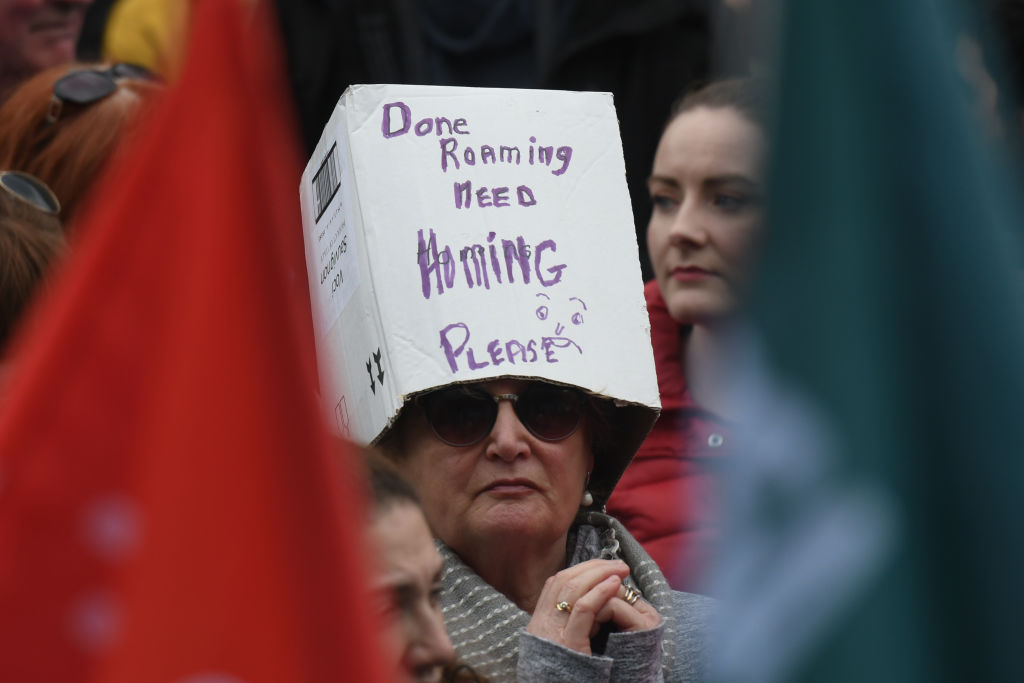
The U.S. Has a Major Housing Shortage: If the U.S. Does Not Address This Problem, It Will Destabilize Our Society
- Peter Thiel warns of ‘catastrophe’ in US real estate, will deal a massive blow to young Americans — but also predicts ‘giant windfall’ for 1 class of boomers. Are you part of this group? by Moneywise (Jing Pan)
Is It Wrong to Speak of Babies as Being Born in Sin? — Dr. Mohler Responds to Letters From Listeners of The Briefing
Part III (17:38 – 19:34)
Where Do Believers Go When We Die? — Dr. Mohler Responds to a Letter From an 8-Year-Old Listener of The Briefing
Part IV (19:34 – 22:27)
Am I Too Young to Get Married? — Dr. Mohler Responds to Letters From Listeners of The Briefing
Part V (22:27 – 24:55)
I Don’t Have Feelings For My Boyfriend Who is a Godly Young Man. Is That a Sign We Should Not Get Married? — Dr. Mohler Responds to Letters From Listeners of The Briefing
Part VI (24:55 – 28:09)
Does Sin Destroy the Image of God in Humanity? — Dr. Mohler Responds to Letters From Listeners of The Briefing
Sign up to receive The Briefing in your inbox every weekday morning.
Follow Dr. Mohler:
X | Instagram | Facebook | YouTube
For more information on The Southern Baptist Theological Seminary, go to sbts.edu.
For more information on Boyce College, just go to BoyceCollege.com.
To write Dr. Mohler or submit a question for The Mailbox, go here.
Get every episode summarized
Each time The Briefing with Albert Mohler publishes, we email you a written briefing from the transcript — the topics, who appeared, and any specific claims, with the ad reads skipped.
Email me new episodesFree for 3 shows. No card needed.
Hosts & guests

Transcript ready
444 searchable segments. Every word is indexed and playable.
Full transcript
The Briefing with Albert Mohler — Friday, February 13, 2026. Machine-transcribed; use the interactive transcript above to jump the player to any line.
It's Friday, February 13, 2026. I'm Albert Moller, and this is The Briefing, a daily analysis of news and events from a Christian world view. As you're looking at the landscape of American political issues, one of the hottest growing actually in intensity are controversies about real estate prices and in particular homeownership. And this ratchets down to the issue of rent because as housing costs go up, they go up not only in terms of the sale of private homes, they also go up in terms of rent. And so it's a calculus that just comes back to the fact that the bottom line is right now. The United States has a housing shortage. Even the federal government believes that there is a shortage of 3.8 million homes in the United States. Now that doesn't just mean 3.8 million houses, but 3.8 million homes. Okay, a couple of things to think about here. In worldview terms, one of the most interesting questions is, who needs a home?
And the most immediate answer is everybody needs a home. But no, specifically, as you're looking at society, who needs a home? And the most obvious answer is families. Families need a home. And so that has been the bedrock understanding of most of Western civilization as the way housing markets have developed just about everywhere. And the United States is the perfect example of that. If you want to see the classic example of how housing turns into a middle class, family centered reality, all you have to do is look at the American frontier and see how it was developed. All you have to do is look at the concentric zone theory of American metropolitan areas. You see housing moving further out, out, out, out and out. And that is because entry level real estate tends to move out in the suburbs. You see, especially the vast explosion of suburban housing that took place, more importantly, after World War II than any other point. You had all of these young couples. They were having babies. They wanted to own homes. And so you had all these enormous suburbs begin to expand outside metropolitan areas.
And you also had even many suburbs develop in non-urban territories. So even in places like Kansas, you know, you could have a suburb of sorts, which is housing development of houses and a certain style and price point, entry level, most importantly, for families, newlywed couples and families of small children to buy houses. That's been a part of the American economy, bedrock. That's been a part of the American dream. And of course, a part of that American dream has been you start out with what's actually been called for a long time, a starter house. And then you move up. You have a little two bedroom house. And then you move up to a four bedroom house as the family gets larger and as your economic means develop as your income expands. And a part of the basis of all of that is that your wealth has been expanding because of the investment in real estate. Owning a home has become the anchoring financial security for an American family. Now let me just point out and we don't have time to trace this completely out.
Part of the problem right now, we have to say this over and over again, is that one dimension of the housing shortage is the breakup of families. You know, where you have divorce where you needed one house, now you need two where you have all kinds of situations, single parenting situations and all the rest. For a huge percentage of the American population, it's not just the need for one home that would have represented the reality, say a half century ago, now it could be multiple homes of one sort or another, rental properties, owned properties, whatever. That's a part of the dissolution here. Now immediately the question arises, just looking at the big, the big problem here, the big question, why is it that housing has become such a dramatic need? How in a country like the United States, given the strength of this economy, how in the world could we be 3.8 million housing units short? And you know the answer might surprise you and the biggest answer is you have had governments limit the expansion of housing in so many situations.
So you know that at one point the federal government actually acted more or less in this way by subsidizing mortgages and creating an incentive there and it simply fueled the market for housing. I think that was basically a good thing, but the reality is it created a huge market and ever expanding market and an ever hungrier and more aggressive market and you also had mortgage rates that had a lot to do with this. You also have the bigger problem in terms of the immediate answer, why is there a shortage of houses? The biggest answer in many metropolitan areas is zoning laws period. That's it. You actually don't need more words zoning laws decisions made by governments to seek to suppress the growth of housing. Part of this was driven by an interest in raising the prices and value of existing housing stock and a lot of Americans don't know that. You know, President Trump just spoke to that and it's interesting.
President Trump says he actually wants housing values to go up. Now I think every homeowner wants the same thing. Let's face it, the average middle class American family that owns a home, the great hope for the future in terms of economic growth, the secure investment is the home itself, the home. You have the double benefit, you get to live in it and invest in it at the same time. Now Christians also understand that in the principle of subsidiarity that's a very good thing. It's a wonderful thing. It's a wonderful thing that a family can have that security in real estate in a privately owned home, even if there's a mortgage on it. It's along as that fits within the ability, the family to pay the mortgage and it's an appreciating asset that that can work, that can work. In many cases over the course of the last several decades it has worked a lot. Let me just go back to pre-COVID. Before COVID now, what's been the average increase in housing value? In a lot of communities it's 50%, 50%.
That means that if you had a house that was worth $200,000 in some metropolitan areas that would be a rather inexpensive house, but you're talking about $200,000, it's $300,000 just because of the economic developments in and subsequent to the COVID pandemic. You also have the NIMBY phenomenon, not in my backyard, and you have a lot of people who are saying, you know, we have these zoning laws, we don't want that kind of housing here. Look, as a homeowner, there's a lot of rationale for thinking this way. There's a lot of good evidence for thinking this way. That's one of the reasons why, by the way, I think just as a matter of suggestion here that one of the problems is, you have too many people wanting to live in places that are too concentrated, and honestly, it's a red America blue America thing to some extent, and red America is a lot easier to build a house. And it's also far easier to build a house where the land prices are lower, and that's one of the reasons why you have a lot of young families that have to move out of inner
city areas or concentrated business core areas or even elite housing areas in order to get to a place where you can have homes. Again, that concentric zone theory of urban development points out that that's one of the main motivations for moving outward as a city. You have you have over a period of time, you have these rings that develop because you have to move further out to be able to afford the land on which to build an affordable home. So that's how you end up with all of this. But something's broken right now, and it's it's broken to the extent that a good many young Americans are very frustrated because they're not certain they're going to be able to buy a home. Many young couples are very frustrated because they are not in a position to buy a home. And when you look at some communities, quite honestly, they're never going to be able to buy a home. And not only that, it's not just housing prices when it comes to private home ownership. It's also rent because the same escalation and inflation, the same capital growth that it comes with a private home also comes with the real estate of say a housing development
or an apartment complex or a condominium complex. And so eventually the rent prices go up commensurate late with the the private home prices. So the housing prices going up, that's a very good thing for homeowners. It has been very, very good for the middle class home owning sector of society. President Trump recently made a statement about the housing problem and he said, quote, I don't want to drive housing prices down. I want to drive housing prices up for people that own their homes. Okay. I understand what the president was saying. And by the way, the politician who wants to lower the prices of homes for homeowners is going to find himself or herself probably out of office. Certainly if there's any dollars with us, what they want. But there is the growing understanding that we have to have more homes and a thriving society is going to have to provide homes and home ownership opportunities. If we really believe in continuing our, our social order, our, our democratic republic, our system of government and all the rest from the very beginning home ownership land ownership
has been a central part of grounding the stability of that society. More people outside that stability will amount to more instability in the society. And so somehow there's going to have to be a reevaluation of all of this. But it is interesting that there have been opponents against growth and how the housing market from both the right and the left. Mostly it's been on the left in terms of zoning policies and all the rest. But there's a growing realization that we have too many people who do not have homes. Something's going to have to be done about it. And you can just look by the way at some of these problems by looking at the horrible fires that took place in Southern California and look at how hard it is for those homeowners to rebuild. Look at how little progress has been made since those fires. Quite honestly in California, given the nature and thickness of the regulatory state, it's hard to believe how some of these things are ever going to get done sadly enough. But this is not just a California problem. It is more acute in the bluest of blue areas, it's, it's most acute in coastal communities.
But frankly, it is a phenomenon that affects the entire nation, but it's not evenly distributed. For example, you've had really interesting news stories about families that had moved from places like California, even to a metropolitan area like Dallas, Fort Worth. And when they were living in a very small home in California, they can now own one fascinating article in a news magazine, you know, featured a family. There's now able to have, you know, that each kid has a bedroom and the whole family has a pool. And that just was impossible in the previous real estate context. But you know, the long term answer just cannot be everybody move. There's going to have to be a response in both red and blue America to the fact that there's the very real need. And Christians have to understand this at the nature of the family. Again, the Christian principle is subsidiary. Talks about strengthening and affirms in the Christian worldview, the biblical worldview strengthening the most basic units of society and strengthening that most basic unit as
the family. I'll say that means a mother and a father married to each other and the children given to that to that couple of the provision for a home, not just a place to live, but the home in terms of home ownership. That's a great event. That is the main way the great middle class in this country has been built in the middle class is the foundation for political stability period in all Western nations period. It is interesting that Peter Tiel, the co-founder of PayPal, also identified as the first outside investor in Facebook, a major financial figure, financier in Silicon Valley and beyond. He has been pointing to the 19th century economist known as Henry George. Henry George's ideas have been referred to in economics as Georgeism. And he pointed out, Henry George pointed out that the value of real estate is in many ways the most important thing in society. But the big issue was that there is a limited amount of land. And there is the danger that with a limited amount of land and this limited amount of private
homes, those housing prices could escalate beyond the reach of many people. And thus Georgeism pointed to the potential of a real estate catastrophe. And Peter Tiel is saying, if we're not careful, that's where we are headed as well to a real estate catastrophe. Tiel made this point that it comes down to supply and demand, quote, he said, if you just add more people to the mix and you're not allowed to build new homes because of zoning laws, where it's too expensive, where it's too regulated and restricted, then prices go up a lot. And it's this incredible wealth transfer from the young and the lower middle class to the upper middle class and the landlords and the old, and, quote, that's a very fascinating thing. If indeed younger Americans, younger American couples are stuck forever paying rent rather than owning homes, they will be subsidizing the wealth of others and not building their own family, wealth, stability and security. That for all of us, and especially for thoughtful Christians, it's a major issue of concern.
And of course, our primary concern is not with the home, it's not with the real estate, it's not even with the continuation of the Republic. It is with the health and flourishing of those families within those homes. And what you see with these rising housing prices escalating so high, what you see with this wealth transfer, what you see with this housing shortage is something that directly weakens the family and its prospects for the future. That's for Christians. This is a pretty loud alarm. All right. It's Friday. As always, I appreciate the questions that are sent in and we'll get to as many as possible. I'm always intrigued by the questions that come and encouraged that to listeners send in such questions and invest trust in terms of the questions and I seek in a trustworthy way to answer them. So here's one coming in from a 20-year-old asking about babies. And this particular listener says, quote, I had a gospel conversation with someone and they got mad that I said, baby, sin.
And maybe I said it wrong in my explanation, but they said, babies are innocent. I just want to make sure I'm speaking truth in my beliefs. So I want to say to this listener, you are speaking the truth. But we need to be careful, I guess, about how we talk about this. Number one, even as is reflected by David and the Psalms, we're conceived in sin. In sin, we even are conceived. And so we are fallen human beings and that includes the baby who is born. So we do not believe in original innocence for a baby. We believe that even before the baby is born, there is sin. And this is something, by the way, that shows up in I'm preaching through Malachi right now. Look at the first five verses of Malachi and then look at Romans chapter 10 and how the Lord, look at the first five verses of chapter one of Malachi and look how the Apostle Paul picks up on that argument. But as you're looking at this, all of a sudden recognize too that when we're talking about babies, we're talking about babies. And so it is not sinful for a baby to be a baby.
But we do know that sins eventually going to show up. I mean, any parent who is surprised when sin shows up in an infant is thinking unbiblically. So an infant is very, very self-centered. The infant is hungry and cries out for feeding. We don't classify that as sin. The infant has absolute dependence and demands absolute priority and, quite frankly, just in terms of the infant's perspective, that's just the way it works. As the baby develops, and as the baby acquires certain knowledge and certain size and certain ability, certain stages of development, at some point, that baby is going to press your hand away from his or her mouth. At some point, that baby's will is going to assert itself. At some point, a parent is going to say, no, and the baby is going to look at him squaring in the eye and do exactly what the parent said, no. And so as you look at that, you recognize, by the way, that's a key issue and that's
a key test of parental faithfulness right there. But it's just a reminder of the fact that you didn't have to teach the baby how to sin. It comes quite naturally. And so when we talk about original innocence, there's a sense in which we talk about innocent babies. But what are they innocent of? They're innocent of the consciousness of their sin. So as we look at that, it's not the absolute wrong word to use except as dangerous because if we mean they're actually morally innocent and they're born without sin, then we have a huge problem because the Bible makes very clear. We are born sinners. We sin. I love the way one of the confessions puts it as soon as we are consciously able. So again, it's not wrong for a baby to be a baby and that may be what the conversation partner was thinking here. So, but innocence is not the absolute worst word to use because they're not consciously sinning, but innocence in its classic form, that's a problem. All right. A father sins in a question from an eight-year-old daughter and this is sweet.
What happened to the people who died when Jesus was on the earth? The Bible teaches that God is just and the justifier and that he's a righteous judge and also says that people live once and face the judgment. And this little girl's asking a question, so what about the judgment of Jesus? What happened when Jesus was on the earth? Let me just say to this dad and thus to this eight-year-old daughter, the Bible says this appointed undemanded once to die and after that the judgment. I think as you put the new Testament teaching together, we are awaiting the final judgment. And I think that's also clear in the text of Scripture that there is a day, the day of the Lord in which that final judgment is going to be made. It is also clear, however, that there is some kind of preliminary judgment that is made and that is when believers are said to be from the moment of death with the Lord. And so there is some intermediate state. You're right. We don't believe in purgatory. We do not. There's no biblical basis we believe for purgatory. I think most faithful Christians do believe in some kind of intermediate state.
Has the final day of judgment come when all things are made clear, when everything is revealed and when God's final judgment is decreed, no. And besides that, we are told that Jesus, Jesus Himself said, He was going to prepare a place. And so I hope this makes sense. I think one of the things we must not do is speculate about that intermediate state. We need to say everything Scripture says, believe, everything Scripture says. And so there is a day of judgment coming. There is a day when after the day of judgment, the righteous in Christ, that is by His righteousness will be with the Lord. And yet even now it's true we say to be absent from the body for believers is to be present with the Lord, present in some way, not yet present in the fullness that is God's promise yet to come. All right. I must tell you, I am particularly honored by some of the questions that are sent about sensitive issues and don't worry, and we're not going to be too specific here, other than to say, I've heard from two young women. And they both written in, won a teenager, won just over 20.
And they are writing in about their desire to be married. And it is interesting they both, in their own way, point out that I offer some pretty, pretty clear exhortations to young people and in particular to young men. And so they're both asking, you know, how are we to think about this? And so one of them asked about dating. And I want to be clear, I don't think the dating culture is particularly healthy. On the other hand, something like dating is going to have to take place before you get married. So let me be honest and say, so what we need is a Christian alternative to the dating culture. And I think one of the things I would offer, just in a common, common sense, kind of common grace understanding is that when you're talking about one-on-one dating, that ought to be never done without marriage on the horizon. And by that, I don't mean agreeing to be married. I mean, I wouldn't date someone that you know you wouldn't marry. And I would put that in the context of, you know, a serious consideration as to whether the Lord would have you as a young woman to marry a Christian young man.
And so, and by the way, this young woman, I assume a high school student is talking about the educational co-op where she is. And you know, yes, she asks about studying the book of Ruth, yes, that's a wonderful thing. And I think a wonderful exhortation to young women in terms of the spirit of Ruth there. And the first thing I need to say is the desire to be married is a good thing. Theologically and biblically, the desire to be married is something which got honors. And I'm not sure how God will do it exactly in your case, but I hope it comes sooner. And by that, what I want to say is, and I say this, and I want to say, you know, test what I say by scripture. But I think one of the biggest problems in our culture is the delay of marriage in a way that is harmful to marriage and harmful to young men and young women. And obviously you can get married too young, but I think the great danger right now is that obviously young people are waiting too long to get married. And there's an honest statement here in this about sexual desire. And by the way, I think that is that is a part of what God puts within us to draw us
into faithfulness in the context of marriage. And so it is in itself not a bad thing. It is in itself one of the signs that God gives us that he has a purpose for us. And I pray that to this young listener will find exactly the young man or that he will find her in such a way that he lives up to his responsibility and in ways that honor God in every respect. You will have the desire of your heart. There's another very interesting letter that I got from a young woman listener, as I said, she's just a little bit older. And she's asking a very specific question. She says she's a 21 year old young woman, a Christian who desires to hopefully get married one day. And she mentions how exhausting the dating culture is. And then she says that recently a godly young man has come into her life and quote, is doing pretty much everything correctly. He's genuinely such a kind man and I know if we were to date and then get married to be worth it in the long run, however, I just don't really have any feelings towards him.
Okay. All right. Is that a problem? Yes, that's a problem. Yes, that's a problem. What kind of problem is it? I don't know that I could ever evaluate that. That's where I would think some of the mature Christians around you could offer some real help. Perhaps you're your own mother in your own father, your own parents, perhaps the elders in your church can help you to figure some of this out. I also want to say, however, that just taken biblically, there have been, and the Bible's clear about this young men and young women who married each other without having met each other. And so one of the things we have to realize from the Christian worldview is that sometimes the feelings follow the truth. The truth doesn't follow the feelings. And so that's just one thought. The other thing is, you know, I guess the question is, would the Lord give you the feelings as you continue in this relationship? I think that would be a sign. I would not, as a man, want to be married to a woman who did not have those feelings
of attraction and commitment. And let me just say, I hope for you that to the Lord to bring into your life a young man who, you know, in all those ways, rightly, becomes the focus of your attention and you are the focus of his attention with marriage very much as the goal. But I would simply say, I would think it'd be really healthy to talk to some older Christian women in terms of godly counsel about this. And honestly, they could give you advice that by definition, I cannot adequately give. I do just want to end with this word. I don't think when any of us gets married at first, we understand how the facts and the feelings all come together. That's one of God's gifts over time, over a long marriage in which the satisfaction and the feelings just grow deeper and richer all the time. Okay, finally, a question coming in from another listener, how do I respond? The listener writes to someone who believes that after the fall, man becomes more and more
morn by sin. And therefore, someone sends a lot. They do not deserve respect and are not created in the image of God any longer. And if this listener does know this, that's true. And writes when the Bible clearly teaches otherwise. Yes, so the image of God is constitutive of human identity and of the human being. It is not something we gain. It is not something we can lose. In Orthodox Christian biblical theology, it is something, however, that sin does corrupt or hides and disfigures and thus there is an effect. But there is no one who can sin his or her way out of the image of God. And that's just something we need to recognize. It is central and essential to human identity. But we, all of us have sinned and rebelled against God. And in every single one of us, that image is distorted. The image of God is distorted by sin. And that is just points to our desperate need, not just for moral improvement, but for redemption,
regeneration, transformation, sanctification, but also our great final eschatological hope that we will be finally able to display the image of God fully by God's grace forever. I want to end today with an invitation to those who are struggling with a specific gospel calling. In particular, I want to speak to young men who feel the call to preach and teach the word of God, to serve in the role of pastor and to preach the word. There are other callings in the church. And quite honestly, we offer programs for those other callings as well. Central to it all is the calling of men to preach. Preparing for ministry is one of the most important decisions you'll ever make. That's why we're so serious about what we do at the Southern Baptist Theological Seminary. Our determination is to provide a theological education for ministry that's trusted for truth and grounded in the word of God. All right. So that's why we built this faculty. That's why we do all that we do. We would invite you to come and visit with us.
Preview day is going to be April the 17th. We'll be able to meet our faculty toward the campus, experience firsthand what it means to receive theological education at the highest level in service to the church. We'll be glad to to house you and feed you while you are here. And you can find out more about that by going to the website at spts.edu forward slash previews. Spts.edu slash preview. And your registration fee is waived when you use the promotional code, the briefing. All caps one word. I'll tell you, I end particular one to extend this invitation because I would look forward to welcome you myself. All right. Thanks for listening to the briefing. For more information, go to my website at albertmolar.com. You can follow me on extra twitter by going to x.com forward slash albertmolar for information on the Southern Baptist Theological Seminary go to spts.edu for information on voice college just go to voicecolleys.com. I'll meet you again on Monday for the briefing.
More episodes
More from The Briefing with Albert Mohler

Monday, September 14, 2026
The Briefing with Albert Mohler

Friday, September 11, 2026
The Briefing with Albert Mohler

Thursday, September 10, 2026
The Briefing with Albert Mohler

Wednesday, September 9, 2026
The Briefing with Albert Mohler