About this episode
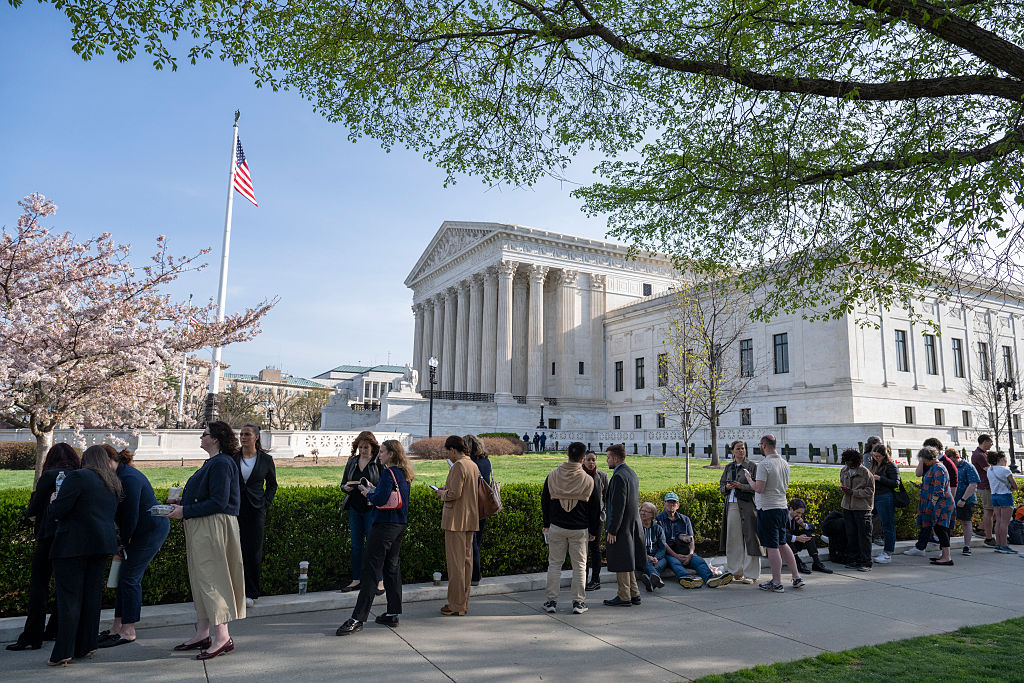
On today’s edition of The Briefing, Dr. Mohler discusses SCOTUS’s ruling that “conversion therapy” ban is unconstitutional, the clarification of male and female from the International Olympic Committee, and Idaho’s extension of trans bathroom bans to private businesses.
Part I (00:14 – 14:56)
SCOTUS Affirms Freedom of Speech for Christian Counselor: In 8-1 Decision, SCOTUS Rules Colorado’s “Conversion Therapy” Ban is Unconstitutional
- 24–539 Chiles v. Salazar by The Supreme Court of the United States
The International Olympic Committee Clarifies Male and Female: IOC Drops Clear Ruling Banning Men From Women’s Sports in the 2028 Olympics
- Olympic Committee Bars Transgender Athletes From Women’s Events by The New York Times (Tariq Panja)
A Big Win for Sanity in Idaho: Idaho Legislature Extends Trans Bathroom Bans to Private Businesses
- Idaho Criminalizes Transgender Use of Some Bathrooms in Private Businesses by The New York Times (Anna Griffin)
Follow Dr. Mohler:
X | Instagram | Facebook | YouTube
For more information on The Southern Baptist Theological Seminary, go to sbts.edu.
For more information on Boyce College, just go to BoyceCollege.com.
To write Dr. Mohler or submit a question for The Mailbox, go here.
Get every episode summarized
Each time The Briefing with Albert Mohler publishes, we email you a written briefing from the transcript — the topics, who appeared, and any specific claims, with the ad reads skipped.
Email me new episodesFree for 3 shows. No card needed.
Hosts & guests

Transcript ready
288 searchable segments. Every word is indexed and playable.
Full transcript
The Briefing with Albert Mohler — Wednesday, April 1, 2026. Machine-transcribed; use the interactive transcript above to jump the player to any line.
It's Wednesday, April 1st, 2026. I'm Albert Moeller, and this is The Briefing, a daily analysis of news and events from a Christian worldview. So, I'm really big developments of crucial interest to Christians. I think most important right now is recognizing that yesterday, the Supreme Court of the United States handed down a decision, an eight-one decision in favor of a licensed Christian counselor in the state of Colorado, who was protesting the fact that the state had declared to be illegal and off-limits talk therapy or so-called talking when it comes to professional practice in ways that conflicted with the dominant LGBTQ ideology. So, that is to say this, the state of Colorado had adopted legislation that eventuated in a regulatory measure that stated that someone who was a licensed counselor could only affirm same-sex orientation or other gender-related, sexuality-related identity
questions, and as this particular Christian counselor made clear, Kaylee Childs, she was legally prohibited from even helping a young person. This is all about minors, children and teenagers. She was in terms of the regulation prevented from even helping a young person who wanted to affirm biological sex as gender identity or to affirm, let's just say, a traditional understanding of gender and sexuality. So, it's very, very interesting. Most of this has to do with transgender-related issues in terms of transgender identity. So, this has happened down several states. You've had several states adopt either legislation or regulatory measures that state that licensed medical practice or professional practice can only be affirming of the transgender ideology and cannot oppose it. And in a very specific sense, these counselors are enjoined from saying that, for example,
there would be possible ways of a young person who is female learning to reaffirm that female identity. Instead, it was only pro-trans that was allowed. Anything counter to the transgender ideology was not allowed. And it's under the umbrella of what's often called conversion therapy. And conversion therapy includes, frankly, a host of issues. Some of them that Christians would not deploy, others of which we have to insist are an absolute matter of Christian religious liberty. We do believe that it is possible and it is actually commanded that human beings should come into a personal identity consistent with their biological identity. We believe that is actually a good thing. And the state of Colorado said that licensed counselors could not offer such counsel, even in so-called talk therapy or talk treatments. So in other words, the case at hand really didn't have anything to do
with physical or surgical or hormonal interventions. It's all about counsel. It's all about the counseling context. And in this case, the context of licensed counseling by the state. Now, there are all kinds of complications here. So let's just state some of the complications up front. When it comes to the regulation of state licensed mental health professionals or counselors, that can vary state to state. And what the Supreme Court statement made very clear in terms of the decision handed down yesterday is that Colorado is not the only state with this kind of legislation or regulation. In other words, the case in Colorado should almost immediately have effect in terms of also requiring change in the regulation or legislation in other states as well. In the summary of the decision, the Supreme Court stated, quote, in 2019, Colorado adopted a law prohibiting licensed counselors from engaging in conversion therapy that put in quotation marks with minor. They mentioned Colorado Revised Statute.
They go on to number it, quote, defining the term to include any practice or treatment that attempts to change an individual's sexual orientation or gender identity, as well as any effort to change behavior or gender expressions or to eliminate or reduce sexual or romantic attractions towards individuals of the same sex. And, quote, so you do have here covered all kinds of confusing issues. It includes virtually every letter and LGBTQ in one way or another. It eventuates in the T in the transgender issue. But you'll notice again that the regulation that was cited says that it is wrong to seek to change behavior or gender expression or to eliminate or reduce sexual or romantic attractions towards individuals of the same sex. So it tells you this really covers the waterfront. So the state of Colorado along with several other states has placed itself entirely in devotion to the gender revolution, the LGBTQ revolution, the sexual revolution and the transgender ideology. Now, this licensed counselor who is a self-identified
Christian filed the suit because she says that law it violates her free speech rights. And after all, speech is the essence of her services. She's a licensed counselor and that is about so-called talk therapy and certainly talk and communication. She's enjoined from speaking inconsistency with her own Christian convictions and responding positively to a patient who might speak out of similar convictions, a patient coming to her for counsel who is a male who's confused on issues and wants to be well situated and satisfied in his male identity. That's prevented by the regulation at stake here based upon Colorado legislation. This is a big story. It's a big religious liberty issue. It's frankly the decision handed down 8.1. It is a smackdown of so much of the logic of the transgender ID logs, but it's been very effective in many liberal states.
And so you've got a lot of states that have adopted this kind of legislation. And by the way, it's not just legislation because in some cases, it is regulation adopted by the administrative state in the respective states, which comes to basically the same end. Associate Justice Neil Gorsuch wrote the majority opinion. And again, the magic number here is 8 to 1. And in that majority opinion, he makes very clear that this was a direct violation of the first amendment right of this Christian counselor to free speech. And, and the free speech issue is just inherently constitutional. It's the first amendment to the US Constitution. As Justice Gorsuch wrote quote, the question before us is a narrow one, Ms. Childs does not question the Colorado's law banning conversion therapy has some constitutionally sound applications. She does not take issue with the state's effort to prohibit what she herself calls long abandoned aversive physical interventions. Instead, Ms. Child stresses that she provides only talk therapy, employing no physical techniques
or medications, yet she argues Colorado's law still applies to her prescribing what she may say in voluntary counseling conversations with her clients. And because that application of the law strikes at the heart of the first amendment's protections for free speech, she contends it warrants considerably more searching scrutiny than the rational basis review, the 10th Circuit applied in this case or in the intermediate scrutiny review. Some other lower courts have employed in cases like hers end quote, that's technical language, but it's really important. The level of scrutiny is a crucial issue in constitutional interpretation and the work of the Supreme Court. What is to be applied as a lighter standard of scrutiny or a higher standard, a stricter standard of scrutiny? It's scrutiny against what? Scrutiny against the laws, statutes, regulations that might violate the Constitution. In the case of free speech, we're talking about a very high level of necessary scrutiny. The court must take charges that free speech rights or religious liberty rights have
been violated must take those charges with deep seriousness. And in this case, an eight one majority of the court found that the state of Colorado did in French upon free speech rights when it comes to talk therapy undertaken by this licensed counselor, who is also a Christian. Just as Gorsuch's majority opinion went on to say, quote, as applied here, Colorado's law does not just regulate the content of Miss Charles speech. It goes a step further prescribing what view she may and may not express end quote. Now, at multiple levels, this is problematic. It's problematic because here you have a state saying what a counselor is to say. That's the prescription of speech. It's mandated speech. Only this speech may be spoken. Speech contrary to this would be illegal. It could put this counselor's license at risk. And the majority opinion also understood there are two really separate issues here. Number one is the free speech right of the counselor. The second thing is the
right. Say of a teenager in the state of Colorado to receive the requested counsel when even the teenager may come and say, you know, I want to feel at home in my body. I want my gender identity and my my my sexual biological sex identity also to line up. I was born a male. I want to be comfortable as a male. I was born a female. I want to be comfortable as a female. Under the prevailing law before this decision yesterday, this Christian counselor, at least in terms of a straight out honest interpretation of the Colorado statute and law and regulation, that counselor could not help that young person even at the young person's request. The state of Colorado said there is only one form of speech, which is lawful and that is speech affirming the transgender ideology. I am so thankful. This is this is a landmark issue for us and eight one decision. That tells you that only one justice voted contrary to the majority here. That justice was associate
justice, Katanji Brown Jackson. No great surprise here. Really the left wing of the court. But it also tells us that justice is Kagan and Sotomayor very liberal in their own sense, but less liberal than justice Jackson on so many of these issues. They voted with the majority. They saw the clear constitutional issue in a concurring opinion written by Justice Elena Kagan. Justice Sonja Sotomayor also joined in making the statement that the clear issue here is the freedom of speech. It's the first amendment protections of speech. And even as Justice Kagan went on to say the law in Colorado could have avoided this by not prescribing or prescribing either speech. The fact is that it did. And so in a pretty clever way of ending her concurring opinion, Justice Kagan says, we could have a debate about the law. Colorado doesn't have, but this decision is about the law. The regulation that Colorado did have the very regulation that's now been struck down. Sighting a precedent known as Rosenberger, Justice Gorsuch went on to conclude saying,
Colorado's law addressing conversion therapy does not just ban physical interventions in cases like this. It's censors speech based on viewpoint. He continued writing for the majority. Colorado may regard its policy as essential to public health and safety. Certainly, sincerest governments throughout history believe the same, but the first amendment stands as a shield against any effort to enforce orthodoxy and thought or speech in this country. It reflects instead a judgment that every American possesses an inalienable right to think and speak freely and to faith in the free marketplace of ideas as the best means for discovering truth. However, well-intentioned, very interesting phrase. However, well-intentioned, any law that suppresses speech based on viewpoint represents an egregious assault on both of these commitments. Thus, the judgment of the tense circuit is reversed, and the case are amended for further proceedings consistent with this opinion. It is so ordered. Justice Kataji Brown Jackson, as we said, wrote the dissent. It was eight to one. She was the one. And she comes out rejecting the logic of the court's majority. And remember, it's a giant
majority, eight of nine. And she rejects the fact that the issue here really is free speech. She instead asserts the rights of the states to regulate medical practice, medical rules and regulations related to medical practice. And so she basically puts that in the higher category. By the way, a fascinating argument, fascinating argument made by the majority is that the psychiatric and psychological practices, the professions, they did a 180 degree turn on the issue of sexual orientation, especially on homosexuality. That's 1972, 1973, the American Psychiatric Association, the American Psychological Association. I've written and spoken a lot about this. It was entirely political. But you know, the majority opinion makes very clear that the Colorado statute, the Colorado regulation, would stifle the American Psychiatric Association and the American Psychological Association the day before they made this change, which is to say this makes the state
basically involve itself in psychiatric and psychological practice. Does the state of Colorado have an official orthodox psychiatry? Well, the Supreme Court just said, yes, it did or it attempted to, but that's what they struck down. So very, very interesting. We'll be following this because, of course, there will be other developments. One of the most interesting developments is what's going to happen in other states where you have similar laws and regulations to what you see in Colorado. We can only hope that corrective action is taken in those states very quickly. We also need to put this in the context. This doesn't mean that the state of Colorado has switched sides, or that the court has ordered the state of Colorado to switch sides. So it just says both sides can be presented. Both arguments can be presented in the context of licensed therapy or counseling. By the way, one final footnote to all of this, a good number of Christian counselors in particular biblical counselors don't seek this kind of state license precisely because of the regulatory
restrictions that under any other states at any time may cause at least considerable complications requiring some considerable compromises on the part of some counselors. Okay, so that's a big issue. Just wanted to lay down the marker. This is an issue of debate within the world of those who counsel as Christians. Okay, another big issue. Here's a headline New York Times Olympics to bar trans athletes. Subhead, genetic test required for 2028 women's events. Tereek Ponja is the reporter in the story, quote, the International Olympic Committee has barred transgender athletes from competing in the women's category of the Olympics and said that all participants in those events must undergo genetic testing. The decision, the most consequential since Kirstie Coventry was elected last year as the first woman, the service president of the IOC, the International Olympic Committee, followed a board meeting and months of speculation over the organization's policy. One of the most contentious issues facing global sports. The rules will be applicable starting
at the next Olympics in Los Angeles in 2028. End quote. Okay, this is absolutely massive. And it's almost in this case, it's almost difficult to exaggerate the impact of this. It is also important to recognize that this headline is really something of a surprise. If you just take the last several years of, say, moral change into account over the last several years, you've had vast, vast transformation of the moral landscape. And frankly, LGBTQ activists have been overwhelmingly successful in recalibrating the law, recalibrating regulation, recalibrating campus rules, recalibrating some medical practice, and recalibrating athletics. But here's where the recalibration has hit a real obstacle. Here's something very interesting. It's interesting, especially from a Christian perspective. It turns out that the vast majority of people all over the world actually do know the difference between male and female.
They actually do know the difference between men and women as in men and women sports. They know the difference between boy and girl as in boy sports and girl sports. Now notice exactly how this story begins because there's a lot here, folks. Here you have the declaration that all participants in women's events must undergo genetic testing to make certain that they actually are biologically female. Now, did you notice the fact that this is going one way? So in other words, the International Olympic Committee has not issued any regulation that would prevent someone with a female body from competing as a man. And the reason why there is no such parallel rule here is because that's just not a problem. And one of the things that is acknowledged in the literature and was acknowledged by the International Olympic Committee is that male and female bodies are different. And when it comes to the kinds of endeavors and the kinds of events, the kinds of competitions, they're included within the purview of the International Olympic Committee.
The fact is that there is no problem of female bodies showing up in male spaces. There is a huge problem with male bodies showing up in female spaces. But immediately after I say that, some people are going to say, how dare you say it's a widespread problem? Because at this point, at the the Olympic competition level, there have just been a few cases in which this has been an issue. Yeah, but you know, those big cases are really large. And you know what? This issue is unavoidable. And you know what? This is becoming a more common concern. You know something else? The outcry over the claim that only biological females should compete in women's or girl's athletics. That itself is just explosive and incredibly revealing. And there's another political reality behind this. There's a moral reality, a biological reality. There's a political reality, which is you're not going to have any coherence to athletic competition at this level in the Olympics. If you don't know the difference between male and female, it doesn't make any sense to have male events and female events. If you're going to allow the mixing of bodies such that there are male
bodies competing as girls or women, that's just not going to work. Now, you don't have the admission of this basic sanity from the left. You just don't have it. Still absolute commitment to the T in LGBTQ as a matter of fact, a doubling down. And you see in response to this IOC decision, you see an enormous amount of pushback. But you know, here's the thing. This is the basic political reality. This looms large. And as Christians understand, there isn't a political reality that isn't at a more fundamental level, a moral reality, even a biological reality. Here's the thing, the U.S. Olympic Committee and the International Olympic Committee understood that with the new Summer Olympics coming up in 2028, there's going to be endless controversy about this and spreading controversy and complication about this. Unless they adopt this policy, which is why they adopted it. It did make the front page of most of the major newspapers around the world. And of course, there is pushback. But the reality is, I think even the news coverage indicates
the acknowledgement that the vast majority of people around the world are going to say, basically, yep, right, emphatically, right, obviously, right. Okay, the New York Times also cites an interesting group. Peiotini Mitra is identified as the executive director of humans of sport. Okay, that that title kind of, you know, tips the scales. You know where they're going here with humans of sport. And we're told that it's a group that is focused on this issue. And the group was quote, critical of the new Olympic policy. The statement coming from this individual was quote, this kind of brutal language doesn't protect sports. It polices women's bodies. It fuels suspicion invites public scrutiny and puts already vulnerable athletes at risk. End quote, you see the collision of two massively different and indeed head on contradictory worldviews here. There's one worldview that says biology is actually gloriously identity. And any, any claimed identity contrary just isn't going to work in athletic competition.
Always Christians know it doesn't work in other arenas as well. But it is at least obvious to most people that it doesn't work in athletic competition. And so it's a very simple straightforward statement. Here you have someone saying, well, that's the policing of women's bodies. Well, okay, that's where we are now. Okay, that's where we are now. I'm going to say you're going to hear that kind of language. But the bottom line is that where there is a question, some kind of genetic test is going to become necessary. The only way to apply that evenly is to require all female athletes to take the test so that there is a determination. And by the way, in a small number, very small number of cases, there may be some kind of genetic question. That's not what's really at stake here. What's really at stake here is where you have biological males unquestionably seeking to compete as females unquestionably. And that is, let's just take the obvious unquestionably wrong. The Olympics won't work. People will not support the Olympic movement. They won't watch the Olympic events. If you've got men in female sports, you destroy the very notion of female
sports. And as you know, even in the last Olympic cycle, there were live controversies. How many cases does it take? Well, obviously, the answer is even just one. The integrity of sport is, of course, at stake, but so is simple sanity. All right, another headline story. It's very interesting. This is the headline Idaho criminalizes transgender use of bathrooms even in private businesses. Okay, Anna Griffin's the reporter here at the Times. Again, we're told straightforwardly, here's what happened. Quote Idaho lawmakers approved legislation to criminalize the use of bathrooms, locker rooms, or changing rooms, even in private businesses by people who sex at birth does not match the facility sign on the door. The Senate there in Idaho approved the measure 28 to seven. And this was described as quote, what might be the nation's most restrictive transgender bathroom bill. Okay, it's expected that this will be signed by the governor. It will become law. Quote, the legislation makes it a crime for a person of one biological sex to knowingly and willfully
enter bathrooms, locker rooms, or changing rooms designed for the opposite sex, violating the law would be a misdemeanor punishable by up to one year in prison. A second offense within five years would be a felony carrying up to a five year prison sentence. End quote. We're told that Idaho is with about 20 other states and already restricting transgender access to bathrooms. But this was applied most importantly to public schools and other public areas. This includes private businesses. Okay, why would the state rightly do this? Okay, this is one of those situations folks in which if you tried to explain this to someone from a generation say prior to us, they wouldn't even understand what we're talking about. How could this be even necessary? You know, as a matter of fact, the legal and moral context of bathrooms has really been very well understood. And it's not even at this point something that requires a word like men or women or boy or girl, just a stick figure will do internationally. Thank you. And you know, even that international stick figure language,
it had to be modified. So for example, you have certain areas in which you have handicapped access or you have other special access and sometimes, you know, those are well marked. But the fact is that the vast majority, the vast majority of people understand that that very simple international sign male or female and they know where they should go and they know where they are not welcome. Let me just also state something that is basically obvious and that is that once again, the problem really is not female bodies and male spaces. That's not the real threat. You don't have men threatened by having female bodies in the bathroom. I'm not saying that's welcome. I'm simply saying it's not seen as a physical threat. But for reasons that are understandable, male bodies in those female spaces, that intimate space that does represent a physical threat. And by the way, there are plenty of cases on the books where let's just say bad things happened and women have a right and girls have a right to be concerned about such a possibility. All right. We have to bring this to a conclusion,
but let's just survey for a moment. The rather happy events, these developments of the last couple of days that we should appreciate at eight one decision by the Supreme Court of the United States defending the free speech rights of a Christian who's involved in licensed counseling on the issue of gender identity and sexuality. That's something we should be thankful for. We need to be thankful for the state of Idaho reaching a point of sanity on this issue and I'm certain it's going to be challenged in court. And you know, we just need to be thankful for clarity and for sanity wherever we find it. We need to take note and appreciate it. And then the International Olympic Committee, you know, you can't always count on groups like the IOC to land on biology, ontology, reality and sanity, male and female, but they did in this case. Let's hope they stick to it. Let's make certain that American authorities require them to stick to it. But of course, this also reminds us that at all three of these cases, it could have gone the other way. This is a constant
issue. We're going to have to watch and watch very carefully and diligently. Thanks for listening to the briefing. For more information, go to my website at AlbertMobler.com. You can follow me on extra Twitter by going to twitter.com forward slash AlbertMobler for information on this other map to theological seminary. Go to spts.edu. For information on voice college, just go to voicecolleys.com. I'll meet you again tomorrow for the briefing.
More episodes
More from The Briefing with Albert Mohler

Monday, September 14, 2026
The Briefing with Albert Mohler

Friday, September 11, 2026
The Briefing with Albert Mohler
Thursday, September 10, 2026
The Briefing with Albert Mohler
Wednesday, September 9, 2026
The Briefing with Albert Mohler