Loading...
businessinvestingeducation
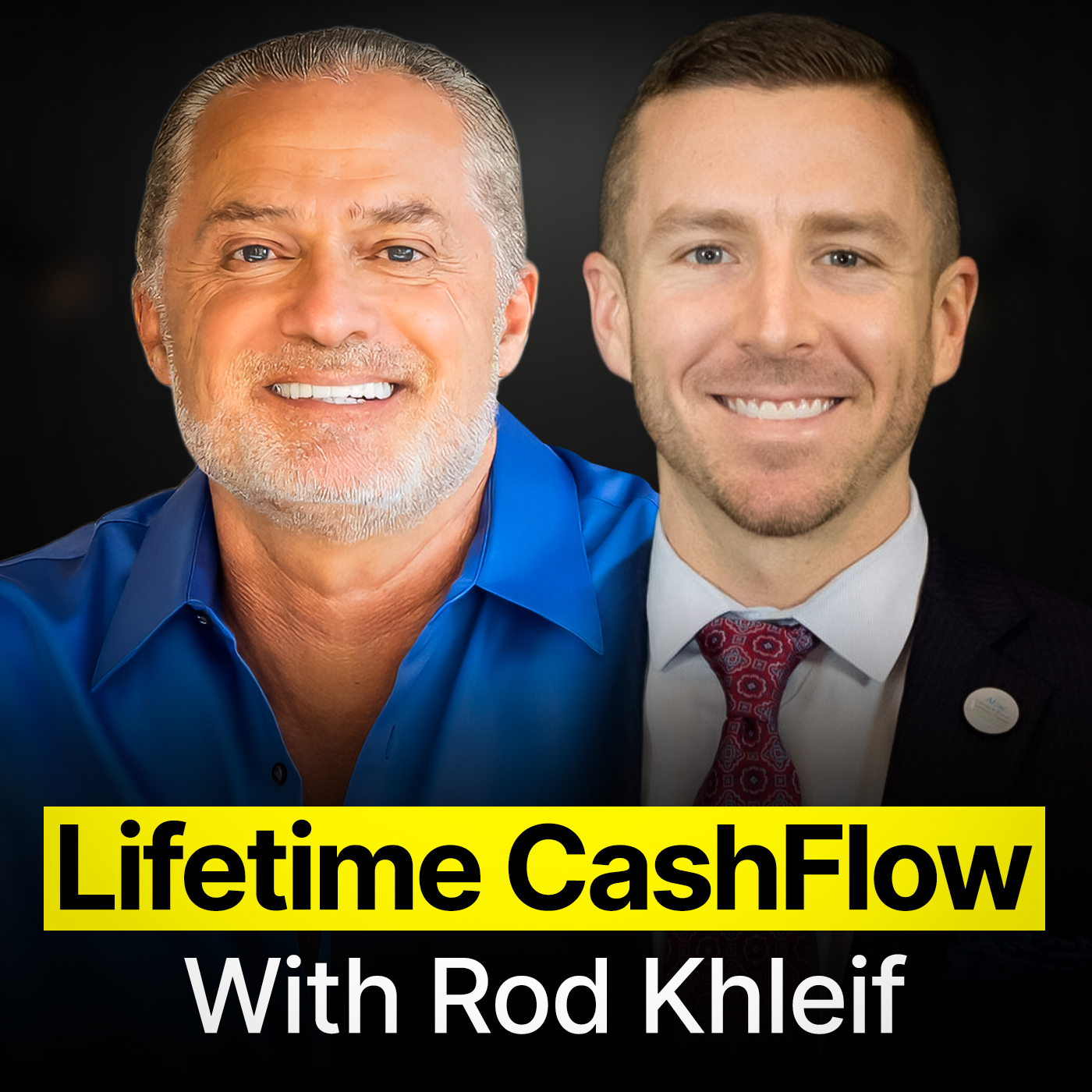
From Door-To-Door Insurance To 50 Mobile Home Parks | Ep.1,220
About this Episode
Derek Vickers is the Managing Partner of Vicktory Capital and Fund Manager of VC Equity Fund I, a value-add manufactured housing fund targeting high-growth Sun Belt markets. He oversees investment strategy, capital raising, and execution, with ownership in 50 manufactured housing communities totaling nearly 2,400 lots. Specializing in turning around mismanaged assets through rent-to-own conversions, operational improvements, and professional management, Derek has led multiple refinances that returned 100%+ of investor capital while preserving long-term equity. With a background leading a 100-person corporate sales organization, he now focuses on scaling the firm's vertically integrated platform across Florida, Arizona, Texas, and other key markets.
Here's some of the topics we covered:
-
From Partying and Rock Bottom to Building a Wealth Machine
-
The Wake-Up Call That Changed Derek's Financial Future
-
The Real Estate Fast Track Most People Miss
-
Investing In Mobile Home Parks vs. Multifamily Apartments
-
Why the Right Property Manager Makes or Breaks a Deal
-
What Really Happens When You Buy a Mobile Home Park
-
How to Win With Brokers and Unlock Off-Market Deals
-
Creative Financing Moves That Supercharge Mobile Home Park Returns
If you'd like to apply to the warrior program and do deals with other rockstars in this business: Text crush to 72345 and we'll be speaking soon.
For more about Rod and his real estate investing journey go to www.rodkhleif.com
Hosts & Guests
Transcript
Welcome, this is the Lifetime Cash Flow through Real Estate Investing Podcast.
This is where you'll learn strategies to help you achieve lifetime financial freedom through
real estate investment.
Your host, Rod Cleef, has owned over 2,000 homes in apartments, and he brings experts in
all aspects of real estate investment and management onto the show.
Now here's your host, Rod Cleef.
Welcome back to Lifetime Cash Flow through Real Estate Investing.
I'm Rod Cleef and I'm thrilled you're here, and I know you're going to get tremendous
value from the gentleman I'm interviewing today.
His name is Derek Vickers, and Derek is in the mobile home park business in a big way,
or manufactured housing community, is the proper way to say it.
No, you mess with me, you mess with the whole trailer park is really what it is, but anyway,
welcome to the show, brother.
Hey, thanks for having me.
Yeah, of course.
So, yeah, so you're in 2,400 lots, 50 communities, that's very impressive.
Why don't you give us a little backstory, where'd you come from, what'd you do before real
estate, why mobile home parks, just give us an overview, and then let's dig in, let's
have some fun.
Yeah, for sure.
So I grew up in a small town in Virginia, so you can go shoot your gun off the back porch
kind of deal.
I know it, right?
I was like, oh, man, did you, what'd you get, man, did you get something like, you can't
do that here, right?
So it's a super small town, and my family is a very blue collar family, like their definition
of hard work was like grabbing a shovel and digging a ditch, so my grandmother, when
I was doing sales, she was like, Derek, you don't have a real job, really?
Not a real job, right?
So that's the kind of, nobody in my family is really wealthy or is really entrepreneurial,
and I had an uncle that had a, has, well, he sold his insurance business, but not really
an entrepreneurial family, generally.
And you know, when I went to college, you know, I got screwed up party in and drugs and
doing all that and went down the wrong path, I was worried about party.
I got that memo as well, by the way, just, yeah, yeah, we would have probably partied
together back in the day, you know, party in and girls, like, what was it going to be
that night?
Right?
Probably a mixture, but exactly.
And that was what I was focused on, and then I moved back to Virginia because I didn't
finish college and started hanging out with the same kind of people and deadbeats.
And I got a call one day and was like, I had a friend of mine that I went to college
with, was like, hey, I got a place in Florida.
You can move down here with me.
You don't got to pay me rent until you find a job for a month or two.
So I moved down the Florida, I had a tax return of about, where in Florida?
Or land down?
Okay.
So I had a ton of money, and moved to Florida and decided to get a job selling insurance
door-to-door commission only.
Wow.
Wow.
So you're good at rejection?
It was fucking rough.
Yeah, that's the right thing.
You got to be good at rejection for that, especially insurance of all things, good
God.
You'd have been better off selling encyclopedias or pots and pans, but wow.
So how long did you do that?
So I did that for nine years.
Holy shit.
Yeah.
Commercial insurance for nine years going door-to-door?
Like, in nine years going door-to-door, so when I started, Rod, I would like, think about
this, unconfident guy who was getting off of drugs at that point, drinking, trying to
go talk to a guy like you to get me to talk to their employees and sell them insurance.
Like it was freaking good.
Oh, so you're going B2B?
B2B.
Okay.
So you were doing businesses.
Well, that's a little less painful than door-to-door.
That's a door-to-door.
I thought you meant residential, but I'm going to tell you, you know, and just as an aside,
those of you listening, if you can do a sales job successfully, even non-successfully,
the sales training is invaluable for every aspect of your life.
Would you agree?
1,000 percent.
Right.
And so, you know, whatever it is, like my boy sells, sells roofing.
He's going to give his own roofing business at some point.
Here's getting licensed, but that's an example.
It doesn't matter what you sell, but that experience influencing people and discovering
personality types and how you influence certain personality types and, you know, negotiation
strategies.
Yeah.
So anyway, nine years.
Okay.
So why'd you stop?
You're probably doing okay at it, if that, you know, right?
Yeah.
I'd built up a team.
I had over 100 salespeople.
Wow.
It was a big jump from making 13 grand my first year and maybe 20 of the second year.
Wow.
You know, COVID had happened and our revenue dropped and I had always wanted to get in
real estate.
I'd been looking at multi-family deals since like 2015, 2016.
So your real estate is fairly recent, then.
Yeah.
Wow.
Yeah.
When did you start?
What year?
2020.
Okay.
So you've been at it just about six years.
Yeah.
Okay.
Wow.
Good for you.
Yeah.
Okay.
So talk about why, I mean, what made you think about real estate initially and then how'd you
get into mobile home parks?
Well, real estate initially because I, I'm like, man, you know, I'd like to create wealth
for myself.
Right.
And I thought, well, you're married at that time?
I wasn't.
Okay.
But I had a girlfriend who is now my wife.
Okay.
Good.
Yeah.
So I thought the guy who was worth $100 million got a paycheck and the W2 that said $100
million.
I didn't know anything about building wealth by businesses, real estate or anything
like that.
Right.
So I learned, I learned about real estate and I'm like, wow, that's simple.
People pay you rent.
People need a place to live.
I started underwriting multi-family deals and just started learning how to back to the
napkin deals back in 2015 all the way up to 2012.
Well, being in the insurance sales business, you've, you've got an analytical component.
Yeah.
I would say so.
Well, you have to.
I would tend to sell insurance.
Yeah.
And so you're an anomaly actually because you're very outgoing and, and typically people
that are analytical can be very introverted for the most part.
So you've got the best of both worlds there.
So, and that sales training really forced you to, would you say you're an introvert or
an extrovert?
I'm very, you know, people won't believe me about to say this, but I'm an introvert.
Yes.
You get energy from being alone.
Yeah.
Absolutely.
I love being alone.
Yeah.
See, see, you've pushed yourself though because of all that sales training and all that
stuff to, to, I'll tell you some of my most successful students in my warrior program are
the ones that come in.
They're shy.
They're introverted.
They never do a damn thing.
And then I'm sorry.
They, let me rephrase that.
They're shy.
They've never done anything in the past.
But then I push them and I kick them and they go and they get out of their shell and
I have them on stage sometimes now.
Yeah.
But, so, you started evaluating, you see, because that, that, that's why I asked the question
because you were doing the analysis part, you know, the underwriting piece, which is
what an analytical person would do.
Okay.
So, you, you started analyzing mobile home parks or, or all multifamily?
Well, it was just multifamily, like apartment building.
Oh, got you.
Got you.
Okay.
And then, and then it was around 2020.
I was like, man, I have to quit jacking around.
Like, I need to start going to buy some real estate because like, I can't do this, like
the insurance business, like you're a glorified entrepreneur.
It's still a hamster wheel.
It's commission based.
Like, you can build some residuals and whatnot, but you still, so did you do the underwriting
for a while then?
Is that what you say?
I did underwriting for like five years.
Okay.
There you go.
That's, okay.
So, that's definitely an introvert dynamic, an analytical dynamic and you have to check
off air every single box before you make a move, right?
Okay.
So, you find that enough is enough.
Some leverage or some, some, some disgust or whatever it was that got you to, to actually
take action.
Correct.
So, what was the first thing you did?
So, I basically, I looked for a, I started doing research on, on mobile, mobile park.
More research.
Okay.
More research, of course.
But then I found the list, right?
Then I found the list of all the mobile home parks in Florida and with my ability to
cold call and take rejection because I'd done that for, for nine years.
You called owners.
I said, bang, bang, I'm calling owners in between my recruiting meetings or any of my insurance
meetings.
Bang the phones.
Okay.
And, you know, I got good of drumming shit up from the insurance, but, sure, sure.
In the other advantage of that.
There's, there's what we were just talking about.
There's the value you got from freaking selling.
Yeah.
Yeah.
Absolutely.
Okay.
And the other advantage I had, Rod, is that I live in Florida.
So I could go see these guys, you know, on the weekends.
So you'd focused on Florida assets.
Focus on Florida assets.
That's a focus.
Well, it's quite a few mobile home parks down here.
There's a lot.
Right.
There's 5,500, believe it or not.
No kidding.
Yeah.
Wow.
So, um, so you started calling and, and you found one.
Yeah.
I found a couple and made some stupid offers, got cursed at, and like missed on some stuff.
Okay.
But then I had been talking to a guy who was, had bought some mobile home parks before.
And he was sort of like looking at my underwriting and saying, hey, you should tweak this or tweak
this, but this is a good deal or this is not.
He called me one day and he's like, hey, I got a deal.
My operating partner backed out.
Hmm.
Do you want in?
So you partnered with him.
Partner with him.
So you did your first deal in the partner?
First deal.
Was it, uh, so describe the deal, was it a syndication or what did you guys, did you put
money in?
He put money in?
What would joint venture?
What kind of deal was it?
So it was a joint venture.
He put the money in.
I just did the sweat equity.
Okay.
Good deal for you.
Yeah.
Okay.
And guys, you can do that.
Okay.
I've got tons of students.
I keep bringing up students, but not by design.
But I've got tons of students have done just that.
They find a deal.
I don't think it can work.
Someone else puts up the money.
I did my 20s.
I did tens of millions of dollars with the stuff like that.
My partners put up all the money, signed on the debt.
I did all the work and we split them.
It's fantastic.
So that great way to get started.
So do you never had any formal training on this?
Not really.
I mean, I told you, I did Frank and Dave's mobile home course back in the day.
You know who I'm talking about.
Yeah.
Okay.
Yeah.
And I did that.
I did that during COVID when they had it.
It was, it was virtual.
Oh, okay.
That was super valuable.
Oh, sure.
Like the basics of...
I had Frank here on that couch, like, I don't know, how long did those six months ago?
Matt's paying not paying attention.
Never mind.
It's probably been about six months and it was kind of a treat.
Because I actually, when I went to his course, I'm sorry, I digress here for a minute.
But I went to his event and I'm like, dude, just remember me because I'm going to do
something here.
And I didn't, I thought it was going to be a mobile home park, so it ended up being
in a multi-family.
Yeah.
But it was kind of a cool, full circle moment to have him here.
Nice guy.
Does a lot.
He's got a big portfolio as well, obviously.
Yeah.
So you got, so you studied a lot.
You studied under him, you know, and learned, and you have any other mentors to speak
of, or?
Yeah.
I mean, I have a mentor that probably doesn't want to mention his name.
Oh, you don't have to.
You don't have to.
You don't have to.
But he kind of grew up in the private equity space, so it's taught me a lot about doing
funds and sending cases.
Oh, that's really helpful.
Yeah.
Instructure and how to do that properly.
And that's important.
Sure.
If you're going to raise money and you've got somebody that's been in that space, it's
incredibly valuable.
Yeah.
So, okay.
And so you did that first deal with that partner, and now you're in 50 mobile home parks.
So let's do this.
Let's talk about some of the differences between regular apartment complexes and mobile
home parks.
Yeah.
Why don't you, I know them, but why don't you enlighten my audience?
Yeah.
So the difference is really it's, you know, you're looking at it from a tenant perspective.
You're looking at a tenant like they own the home.
That's that, that's, see, you'll find parks that have a lot of park owned homes, and
the, the, the, the game plan is to convert them all to, um, correct owner, I mean, resident
owned home.
So you're just getting a lot rent.
Right.
That's your game plan.
Yeah.
Yeah.
That's the game because it's a stickier tenant.
Right.
You don't have the maintenance on the inside.
Right.
Which will kill you on a mobile home.
It'll kill you.
Especially in old sticks.
Yeah.
Yeah.
So that, that's huge.
And I think one of the main differences that I love about the business is that the, the
supply is constrained naturally.
Like you can't, we can't go develop one in Tampa or Orlando, like nobody wants, nobody
wants a mobile home park in their backyard.
It's almost impossible to get them approved.
Yeah.
Yeah.
Yeah.
And, um, that's really like the main reason I like, there's another one too.
And that is those people that are in those homes, you know, it's expensive to move a
freaking home.
Yeah.
Okay.
So they're, they're fairly landlocked.
What does it cost these days?
I, it's been a long time since I looked.
Well, it, it depends on who you ask and if you do it the right way or the wrong way,
if you do it the right way, and you get permits and everything, it's $10,000, $10,000
under bucks.
No kid.
Wow.
Right.
I mean, you still do it like that, but like once you're a big operator, you can't do
that anymore.
Well, no, you can't, but, uh, but, you know, you're, you're not going to have an amass
exodus of homes from your communities.
Correct.
Because it's so freaking expensive.
Yes.
Right.
So they're kind of locked.
Yeah.
And even if you bump the rents, they're, they're kind of locked.
Yeah.
Now I know, um, not to digress, but I know here in Florida, there's some rules around, um,
I mean, there's some rules around rent bumps, I think, aren't there?
Where they, where they, you have to get sign off or, they have the, uh, tell me about
that.
Talk about that for a minute.
Because the one unusual, Florida's got an unusual, yeah, so yeah, Florida has, are all
your assets here by the way in Florida?
Uh, most of them.
Okay.
A large majority of them.
So Florida has something what's called chapter 723, which is the law that, that basically
dictates a mobile home that a resident owns, a resident home, so they have, it's essentially
a bill of rights and thing you have to do.
So when you raise the rent, you have to give a 90 day notice.
The, uh, notice has to be compliant.
There's not necessarily a cap on, on how much you can do.
Okay.
But the residents can, you know, argue that and say, hey, we want to have a meeting at
the park and we want you guys to explain, you know, why the rent is going up by X amount.
Interesting.
They can, can they pull a group together and do something?
I just vaguely remember that it was something.
Yeah.
So there's like, if it gets taken that far, I mean, they can get a group together and
it can, it can be fought.
But again, the, the law is the law really, okay.
Right.
But, you know, when you, when you raise rents in a park, like, when we, we, we don't go
crazy.
Yeah.
Well, we, we go in and too.
We're all, obviously, giving value.
We're paving the roads.
We're putting lights up.
Most of these parks, you can't even see and, you know, you're hitting the front of your
face.
Like, how safe is that?
Mm-hmm.
New mailboxes.
We're getting, you know, the, the bad people out that are ruining the, and they're
always there.
Right.
We're going to the dam phone when you call.
We put cameras in the park.
Right.
So we increase the security.
We increase the quality of light.
Nice.
So it's not just, hey, we're going in and there's still, you know, potholes in the road or any
shit like that.
Like, we go in and fix that stuff.
So, so back to the differences between apartments and mobile home communities.
There are others.
Do you want to keep going with that?
Yeah.
Which ones do we talk about?
We talk about them.
Well, you talked about, you know, the fact that that it's 10 at own homes.
You want them to, if you buy a park that has park owned homes, you want to convert them.
You want to offer the resident the ability to buy that home and it could be, you could
finance it for them where they're paying your lot rent plus a monthly amount towards
that home to end up buying that home.
But the goal is to have them own it because then they take care of the maintenance.
But when you're evaluating a park, what I'm going towards systems here.
So, you may have a well-inceptic and one thing I know about parks is you can have a single
point of failure and if your well goes out, you're fucked basically if you don't have
a capex reserved to bring in public water or something like that.
So, have you had anything catastrophic happen at one of your parks, like a septic system
went out or water system went out or maybe do you have sewer plants in any of your parks?
Yeah, got all the above.
Yeah.
Which story do you want?
Yes, you got them all.
Okay.
All right.
So, what do you do to protect yourself?
Because guys, what you'll do is you'll get into one of these parks and like I say, could
have one well or it could just have three or four wells, but if the well gets contaminated
or something happens, you better have another solution because otherwise they can't live.
You know, have you had any dated like electrical systems or things like that, park wide where
like you have electrical issues, aluminum wiring, things of that nature?
Yeah.
So, you really don't have that in Florida.
Okay.
Like we've looked at some parks in Arizona that have these master meter electrics where you run
into that exact thing.
Okay.
You know, the biggest thing I would tell people is like if you're buying these parks, these
value ad parks, you have to, you need to have the capex money aside and you need to know
what something is going to cost to fix it because I couldn't tell you how many messages
I've got on Facebook, Derek, you know, I bought this park and there's a $75,000 electrical
issue.
I didn't bring the money.
What I did.
Yeah.
Right.
You're screwed.
So, yeah.
And so, you need to look at, you know, some of these sewer plants can cost, I mean, how
high can that go?
Well, I mean, if you have to redo, if you have to replace it.
Yeah.
The sewer plant, the biggest thing like that because we've had a lot of issues with
sewer plants.
Right.
So, if you have to expand the capacity of the system, that is where it gets expensive
because you have to expand the whole system and it's like a, it's a concrete, molded
life.
Gotcha.
Gotcha.
Gotcha.
And the municipalities, some of the parks are, we're built in the 60s and whatnot.
So, there's no room to expand it.
Right.
So, what do you do?
Oh, city water.
It's actually not out there either.
Oh, it's not.
So, what do you do?
So, let me ask your question.
Are you working towards your life goals and your dreams relentlessly?
That's actually the topic of this week's on your power clip and that is being relentless.
Now, if you're ready to push forward and grab this life, I mean, really grab it.
I've got a virtual multi-family bootcamp literally right around the quarter and it's
two full days of training.
I've had thousands and thousands of people attend these two day online bootcasts with
rave reviews.
In fact, the only complaint we ever get, the breaks are too short because I'm trying to
pack so much information into those two days.
Now, you'll leave that online event knowing how to find deals, how to build your team.
How to raise all the money you need for your deals, how to properly evaluate a deal, how
to arrange the financing, how to join ventures, syndicate, even how to manage your property.
But here's the bottom line.
Don't be in the same place you are right now a year or two from now unless you're absolutely
freaking loved where you are right now.
So, right now, text bootcamp to 72345 or go to rodsboocamp.com.
I promise you'll be glad you came.
Text bootcamp to 72345 or go to rodsboocamp.com.
All right, let's get to it.
Well, there's some other options that you can do, but you just have to do your proper
inspections on that stuff when you go in.
And have enough money in case.
Correct.
And if you go in, inspection company says, hey, you know, whatever is inefficient, it's
inefficient.
It could cost you a hundred grand down the road to fix it.
Well, you better bring that hundred grand.
Right.
And keep it a raise that or bring it when you buy the freaking property.
Correct.
So, water and sue is a really big deal.
Big deal.
And you've never bought a Lagoon, I take it.
No, no.
Okay.
Guys, they actually have these freaking lakes filled with sewage called a lagoon.
And, oh, God, I don't know if any of them still exist, but they did when I was looking
at this, because I was going to get into mobile home parks.
I was just telling Derek before we started recording, I spent a lot of time in money
preparing to get into mobile home parks and kind of regret that I didn't, honestly,
because I think it's a great asset class.
So, let's talk about, besides the tenant retention capability, which is definitely there,
besides the fact that it's probably the most affordable residential type real estate you
can buy, you know, I mean, you got a lower demographic economically and sometimes problematically,
but the returns are great.
Yeah.
Great.
There's that whole component where, you know, you're not going to, you're not going to
have absorption issues like we do in, like I've got assets in San Antonio and they built
a bunch of apartments there and it's a bit of a pain, our drinks have dropped temporarily
and you're not going to have that with mobile home parks.
So, do you, so I, here's a question, let's, so we talked about issues when you buy, what
you're looking for, you're looking at infrastructure.
And allow us to talk about management for a minute.
So, do you self-manage?
Yeah.
We have management company.
Okay.
So, you have your own management company, fantastic.
And talk about your team.
So do you have partners, you, I'm certainly, certainly have employees, just give me an idea
of what you have to manage, you know, 50 mobile home communities.
Yeah.
So, basically we have, like I have a COO, who's my partner in the business, he's the overseas
and runs operations, but then we have regional property managers that manage like a cluster
of communities in an area.
So they hire the onsite manager, they manage the onsite manager, they handle problems,
so your phone's not ringing until it's something serious.
Well, yeah, but typically we don't have the onsite manager.
So the regional manager sort of oversees the, that's interesting, but we have corporate
employees that basically, you know, handle home sales, handle, you know, lease up, handle,
the length of the...
Okay, so you call them corporate employees, but they're onsite.
They're not onsite.
Oh, they're not.
Yeah, they're corporate, right?
They don't go onsite.
Interesting.
Right?
They don't go onsite.
So, that's all done remotely.
Yeah.
But why would...
Who's keeping an eye on the property?
Well, the regional property manager and we have cameras there, so it's...
Interesting.
Once we get our tenants in there, right?
The problems, there's really not that many problems.
Interesting.
Right, and most of the problems you would have in a park, someone, you know, some people
fighting outside, oh, that's a police issue, call the police, can't do anything about
that.
Someone is vandalizing something, call the police.
Like, most of the problems you're going to have are police issues, right?
You may have some, like, if you have vacant homes, you may have homeless issues or people
doing drugs and the farms and stuff, right?
Yeah, and so maybe the regional manager has to spend a little bit more time there to
kind of run those people out.
Interesting.
But after you sell the homes and, like, a lot of times, like, we had this in properties
in Arizona.
The old owners didn't...
They didn't give us shit, like, let's just be honest.
Well, you'll find that a lot.
Yeah, they didn't give us shit.
Right.
No matter what asset class.
Right, exactly.
That's what I almost said, yeah.
Yeah.
And so, like, once they...
We put cameras in, we go in and we're like, we kick out the idiots there.
We go in the legal stuff and then we kick out the people that aren't paying rent.
We start putting our foot down.
People see that, like, okay, they're not screwing around anymore.
So a lot of that stuff stops.
When you put lights in the park, cameras, like, you don't get the homeless people running
through anymore and people aren't going to come do drugs in your park anymore because
it's not dark.
Interesting.
Interesting.
Now, maybe there's some things that, you know, as far as clean up and getting someone
to get their pool out of their front yard faster, if someone was there.
So, what do you do for that?
The regional handles all that.
Regional handles all that.
So, they drive the park a certain number of times a week or whatever.
Yeah, probably once a week.
And in the parks for them are close enough that they can do that.
Got you.
So, we don't have more.
I've never heard of this model before.
It's very interesting because I know quite a bit about the business and typically there's
an on-site manager at every park I've ever heard of.
So, it's a very interesting model that you have.
So, have you embraced, I mean, so you've been using cameras, using lights, have you embraced
any other tech like AI, for example, to help you in operations with these parks?
Yeah, I mean, our team, we train a lot on AI just to use it for different things that
they may have questions on.
We've used it for certain documents before we get, you know, legal approval and things
like that.
But nothing like we haven't really-
Not like taking calls or things like that.
Okay.
But it's coming.
It's coming.
Yeah.
Got it.
Yeah.
So, let's talk about the purchase process when you find a park.
So, where do you- how do you find parks?
Is it mostly brokers now or are you still doing your direct-to-seller stuff?
Yeah.
So, I have a team that works for me directly.
They do direct-to-seller.
We do mailers.
So, okay.
We do mailers.
Because a lot of these guys you're dealing with, they're old-school guys.
Right.
Like, they're not- they're not fucking using AI.
Right.
Well, they're not.
No, they're not.
But, you know, from what I hear, it's dog-eat-dog a little bit now in that business because
they're getting- these owners are getting calls from brokers like on a daily basis.
For sure.
And people that want to buy on a daily basis.
Yeah.
So, I guess you just got to be there at the right time.
Is that- would that be right?
Yeah, you got to be there at the right time and like, I go and see these guys.
Right.
I still do that.
Oh, interesting.
And is it a good use of my time?
Maybe, maybe not.
Okay.
I was in Tampa the other week, like messing around with two sellers the whole day and like,
is it a good use of my time?
It's getting less and less like we probably need a skilled acquisition person that can go
handle that.
So, you've pretty much handled all acquisitions?
Not all of it, but that stuff, you know, once we, you know, just because it's-
Well, that can really pay off.
You have a relationship with a seller and you're communicating with them a lot and they
see that you're real and, you know, and you've got integrity and passion and whatever,
you know, you're a nice guy.
They can see that.
So, that can be very valuable for sure.
Yeah.
But you're right about this time value and money, you know, who knows.
So talk about how you've put some of these deals together because you can be creative in
this space as well.
Yeah.
How many of these deals would you say you bought seller financing?
You know, surprisingly, only two.
Only two.
Okay.
So you're like, this is what I would say about seller financing.
Like, yes, it's great.
And it's a great tool for the work.
If you can get it.
Right.
If you can get it.
But a lot of times, these sellers, when you have multiple people like making offers and
things, like, let's just get a deal done.
They just want to cash.
Yeah.
Let's just get a deal done.
Right.
And, you know, if you dick around with seller financing, you'll lose deals, especially
now, if you go in with a seller and say, hey, I only do seller financing.
Yeah.
Got it.
Got it.
Yeah.
So that's not the different financing that's available because it has evolved since I
first started looking at the business.
What sorts of financing do you, is it typically local bank financing that you used to buy
one of these?
Yeah.
Local and regional banks, and you want to find banks that are very familiar with the asset
class.
Right.
If they don't know the business, the bank's going to drive by the park and be like, oh,
it's a piece of shit.
Right.
Not funding it.
Right.
Right.
Right.
They need to understand the business.
Correct.
Do you typically, you don't typically go to the big regionals like B.O.A. Bank of America,
maybe a T fifth, third, Chase, none of them.
Right.
Yeah.
Okay.
Have you done any Fannie or Freddie debt on these parks yet?
Not yet.
Okay.
You're thinking about maybe refying at some point.
Yeah.
You get that?
That's the target.
We'll refi some of these things into Fannie or Freddie.
Or HUD.
I don't know if HUD doesn't.
Does HUD do them?
I'm not sure.
Okay.
Because HUD debt is fantastic.
Yeah.
Fixed 40-year debt, I mean, it's really good debt.
You don't have a balloon payment, you don't have it with a term, they call it in our business.
I'd be interesting to know if you can get HUD financing on these things.
But I know Fannie and Freddie does debt on these.
Yeah.
Yeah.
So, what size park, what's your investment criteria at this point as far as park size and
geographic area?
Yeah.
So, what size we like to do like between like 40 units and up?
Okay.
We really don't care about the utility set up.
To what?
To what?
Forty to what?
Really 40 to 150 is a sweet spot.
Okay.
Yeah.
That's a, you're not getting the big institutional players at that, right?
Correct.
Correct.
Correct.
And so, that's where we like to play.
There's still a lot of mom and pop sellers in that area.
And we don't really care about the utilities.
We don't care if it's all tentative owned or all parking homes.
People buy wells and sceptics and treatment plants because I've just dealt with them.
Right.
I know what to look for.
And how to protect yourself in case something goes wrong, yeah.
Correct.
Correct.
So, and we like to be in the big markets, you know, the Tampa, the Orlando, the Tucson,
Phoenix, Dallas.
Okay.
You're in Arizona.
Yeah.
Oh, okay.
We like to be within 30 minutes to 40 minutes from a large MSA.
Like, hey, can our tenants work in Dallas?
By the way, MSA means metropolitan statistical area, like a Dallas, like a Phoenix, like a Tampa,
Sarasota is in Tampa's MSA.
Yeah.
For example, okay.
Interesting.
So, you're looking all over now, okay.
What kind of, you're looking in those three markets?
Yeah.
Texas, Arizona, Florida.
Correct.
Red States.
Yeah.
Okay.
Yeah.
Okay.
Yeah.
Because we like, and one thing I'll say on that is we like where there's, there's a massive
shortage of affordable housing.
Well, that's country, that's all over the United States, but, but, correct.
More pronounced in these areas, and so I like that.
Definitely, definitely.
Definitely.
On our rents.
And, you know, it just, you know, it creates more scarcity for the asset.
So you buy an asset, you finance it at a bank, you're typically going to get what, 75% loan
to value?
It's about 70.
70 now.
Okay.
You have a 30-year-am with a five-year term, typically, okay, so that you got a balloon
payment, five years, typically.
And so you probably got some terms coming up here, since you've had it about that time frame.
Yeah.
Well, we've already refinanced a lot of those.
Have you?
Okay.
And so your value ad plays, you go in, you pay streets, if they need it, you put lighting
in cameras in, kick out the trash.
Do you ever go in, so let's say, let's say, let's say, let's say, let's say, let's
say, there's homes in there look like crap that are tenant-owned.
You ever go in and just decide, hey, I'm going to paint a few of these just to make the
park look better?
Absolutely.
Yeah, you do that, right?
Okay, I thought so.
Yeah, absolutely.
Put skirting in around the bottom of the home, because it looks like crap, and they
can't afford to do it, and you don't want to actually kick them out, so you, I mean,
that certainly breeds goodwill and makes the whole park look better.
Yeah.
We do that when we come in, and there's park on homes, and we convert them like a part
of them buying it.
We actually come in and it's supposed to hurt the house for that.
But I'm talking about resident-owned homes.
Yeah, we do that too.
Yeah, just to make the park look better, it's like, hey, I can leave that shitty place
there, but it screws me up on everything else, so.
Yeah.
You have to, you have to like, you know, if you're going to do one, you have to do them
all that.
Yeah, well, that's true.
You know, that's a good point.
That's a very good point.
Yeah.
I didn't think about that.
Because they'll let you know.
Right, right, right.
So you're now you're primarily doing syndications, I take it?
Yeah.
Well, we were doing syndications.
We just were finishing up our first fund.
Okay.
So moving to that model.
Gotcha.
Gotcha.
Yeah, you know, I told you about my buddy, Kevin Bup.
I think he's on like his third or fourth fund.
He's a good, really good friend of mine has raised hundreds of thousands of dollars for
my charity.
So what suggestions do you have for someone that's thinking about getting into the business
and maybe considering mobile home parks, maybe considering multi-family, whatever it
is?
Whether that person, that, you know, maybe out of fear, out of, maybe they're an introvert
like you are, they haven't handled super analytical, just haven't pulled a trigger on anything.
Give them some coaching.
Yeah.
Yeah, I think, you know, the interesting thing is like I tell people in real estate, you
just have to have balls like you have to like, you're never going to know anything.
You're not going to know, well, how the, yeah, people ask me like, how, how am I going
to fix the sewer line?
Like, it doesn't matter.
Like, you don't have a park.
Like, who cares?
Right.
Well, you get people that ask you that, they don't even own something.
Oh, that's fun.
Yeah.
So you're worrying about stuff that's, you know, there's a book called, don't sweat the
small stuff and it's all small stuff and that 99% of what you worry about never happens.
That's right.
Okay.
So that's funny.
Yeah.
So like, you just follow the process.
Like, get the deal under contract.
Give the earnest money.
If you don't have enough for the earnest money, well, at least get the deal under contract.
Then you're going to have a, you're going to have to figure out the earnest money.
If it's a good enough deal, call rod or call dirt.
Okay.
Okay.
For God's sakes.
Right.
And then you have to go to the bank and go through that process.
Right.
My whole point is that you're never going to know.
So at some point, you're going to have to freaking, like, go, well, and, and, and, and, and,
another piece of that is, is a line with people that have done it.
Like you did on your first deal, right?
Right.
Right.
You know, and you don't have to do it alone.
This business is a team sport.
And so, you know, there's a, there's enough people out there to go to your local meetup
groups, your local real estate investor association meetings, go to, you know, join these groups
and go to networking events that talk about real estate and meet people that are doing this
or better yet, text the word, crush to seven, two, three, four, five, shameless plug.
Join my freaking warrior program.
But, uh, and, and, and I'll say too, is that that's never going to stop for you because
as you do the first deal, and then you want to scale, and then like, when we started the
fun, this year, I'm like, how, I don't know how to do a fun, I've never done it before.
Right.
How do we do it?
I could have thought about, oh, well, how this legal term is, how is this going to be
structured?
You could have been caught up in fear about it too.
Exactly.
Right.
Exactly.
And I was for a little bit, but I was just like, screw it.
Let's go.
Well, and, and the fear was just a lack of, of, of knowledge most likely.
It's a, it's a competence thing, you know, you got to get the competence first and then
you can have the confidence.
And so, you know, uh, and, and everybody started where we did initially at some point,
you know, with nothing.
And so, okay, um, so you just got to do it.
So, you know, I call my failure seminars, I, I don't know if you know, I lost 50 million
dollars in the 0809 crash, it was a big, big, freaking seminar, but I call them seminars.
So talk about some of your seminars in the business, talk about a doozy, you know, you
bought a park and you're like, oh, crap, this happened, give me a good one.
A doozy.
Yeah.
We've got, I know you got dozens, we all do, but we went, whenever I'm doing my boot
camps, my pant, my panelists, I always ask the question, tell us, talk about a seminar
because I think people learn more from failures and getting their nose bloody than they do
from success.
Yeah.
Yeah, for sure.
I mean, we had an instance where we found out that we had a property manager that was
stealing money from us.
Oh, yeah.
And, and different parks and it wasn't across like one park, it was multiple assets.
Wow.
You know, like 10 assets.
Wow.
And, um, you know, it was all in me.
So I had to, I was literally at the parks every day driving from Orlando to Tampa every
day.
They were cleaning up the fricking mess.
Wow.
And they, they said homes were empty and they weren't, they were collecting rents.
That was some of it.
Yeah, because I had that happen in my, I had, I don't even fly over Memphis airspace anymore.
I, I feel like my IQ drops if I do.
And if you live there, you know what I'm talking about, but, but, uh, yeah, wow.
But yeah, that was some of it.
And the other thing was that we were selling these mobile homes and so like, he would sell
them for 20 grand, have them give him cash, book it in our system for like three grand.
Wow.
Right.
And I over say, like this just, you know, sort of happened and I took responsibility for
it and I had to go there and, um, you know, I lost a bunch of money doing, doing that.
And that's a good one.
That's a good one.
That was a massive learning experience for us.
I lost 100 grand from this, this BITCH in Memphis that, and the, and the police wouldn't
do it.
And she even signed a confession.
The police wouldn't do anything with it.
Don't get me started.
Oh.
As you're growing in this, in this business that you're in now, which is this exciting business,
you love it.
Yes.
Oh, yeah.
Yeah.
You love it.
Yeah.
Any aha moments, any epiphanies where you're like, okay, now I get it.
Does it, does that resonate at all?
Anything where you're like, at a certain point and something happened, you're like, okay.
Uh, anything coming up.
Yeah.
Yeah.
You know, it was in the first property that we did and I realized like, oh, this is
how this business works.
I had created, you know, in a matter of months, I had created, you know, a half a million
dollars in equity.
Wow.
Just like that.
That's like that.
When I was just on the frickin' hamster wheel and the insurance was, I'm like, oh, that's
how this shit works.
Mm-hmm.
Right.
So let's, let's go do this again.
This is how you build wealth.
This is how you build wealth and wealth.
It's an exciting moment, isn't it?
Absolutely.
And I recently had another aha moment where I'm like, okay, wow.
Like, you know, we built this wealth, like we're doing this fun.
Like, hey, what if we, what if we had a, you know, another half a billion dollars of assets
under management?
Then, you know, via management fees and things, the asset management company is now worth
$50 million.
Mm-hmm.
Yeah.
Right.
So that enterprise value of that asset management company is now massive, which we, it's
exciting.
It's not even on your mind.
Yeah, it's exciting.
Yeah.
No, that's what you get with scale.
That's very exciting.
So, so, um, I know you're married, you have kids?
Yeah.
I have three kids.
Wow.
Okay.
Yeah.
Well, the question was going to be, where do you get your drive?
What's the why?
I assume it's, I assume it's that.
Is it legacy?
What is it?
What drives you?
Yeah.
So we, you know, I was funny.
I was actually talking about this before, before we, we got in here and it's like, someone
asked me, do your kids drive you?
Yes, they do drive me.
They drive me because I want to set a good example for them.
Of course.
It's more about me, like showing them how to work hard and whatnot, but like, I'm more
focused on like, what can I achieve and like, how much can I help?
Like, if I, what, what mark can I leave on the world?
Like, do I, like, philanthropic or what, what do you do?
Yeah, like, philanthropic.
Like, hey, you know, I, you know, whatever you want to believe, I think we might come
back like after we leave here.
I, listen, I, I'm, I'm not going to poo poo with that at all and, and, you know, I,
I do quite a bit myself in that arena and it's been really amazing and it's, it's, how
old are you?
37.
Well, I'm impressed that you got the memo already because I'd be 40 to get it.
But it was all about me, me, me, me, but finally got the memo that it's really about, you
know, spreading the wealth and spreading, you know, your knowledge and helping other people,
you know, succeed.
Yeah.
Yeah.
Because like, is, is the world a better place?
Yeah.
Yeah.
Yeah.
Yeah.
Right.
And that's how I want to, I want to feel good about that.
Love it.
Love it.
Well, I appreciate you coming over, buddy.
Yeah.
I know you live nearby and, and, and it's really a pleasure to meet you and you've definitely
added some tremendous value today.
So I appreciate it and, and circle back to me in a year or two when you've got, when you've
got some enterprise shit going on, you know, you've got another few thousand lots.
Love it.
Yeah.
Well, thanks, buddy.
It's a pleasure.
Thank you for listening to the Lifetime Cash Flow through Real Estate Investing Podcast.
If you've enjoyed the show, please take a minute to visit iTunes and leave your comments.
For more resources or to connect with us further, please visit our website at rodcleefe.com.
Tune in next week for our next show.
More from Lifetime Cash Flow Through Real Estate Investing
View all episodes →
How He Bought A 14-Unit With No Money Down (Creative Financing) | Ep. 1,231
Lifetime Cash Flow Through Real Estate Investing
Apr 3, 2026·38:52·failed

AI Is About To Eliminate Millions Of Jobs - Here's How To Prepare | Ep. 1,230
Lifetime Cash Flow Through Real Estate Investing
Mar 30, 2026·34:50·failed