About this episode
Documentaries is made possible by:
Get every episode summarized
Each time Documentaries publishes, we email you a written briefing from the transcript — the topics, who appeared, and any specific claims, with the ad reads skipped.
Email me new episodesFree for 3 shows. No card needed.
Hosts & guests
Transcript ready
251 searchable segments. Every word is indexed and playable.
Full transcript
Documentaries — Getting the homeless homed. Machine-transcribed; use the interactive transcript above to jump the player to any line.
This BBC podcast is supported by ads outside the UK.
I'm Maira Anubi. I host a BBC World Service podcast called People Fixing the World. A show that's all about the brilliant, surprising and sometimes very bizarre things people are doing to make our world a better place. And every week from now on I'm bringing a little bit of that solutions magic to the documentary. First off, two stories about hope, innovation and change. In gotta run, in gotta run, in gotta move, in gotta move, free down. What you're gonna do just be so slow. Homelessness, it's a big issue that affects more than 100 million people globally. And having a house, a safe place to return to every night is something that we might take for granted. But for many, having nowhere to go is an everyday reality. So today on People Fixing the World, it's all about new ways to tackle homelessness.
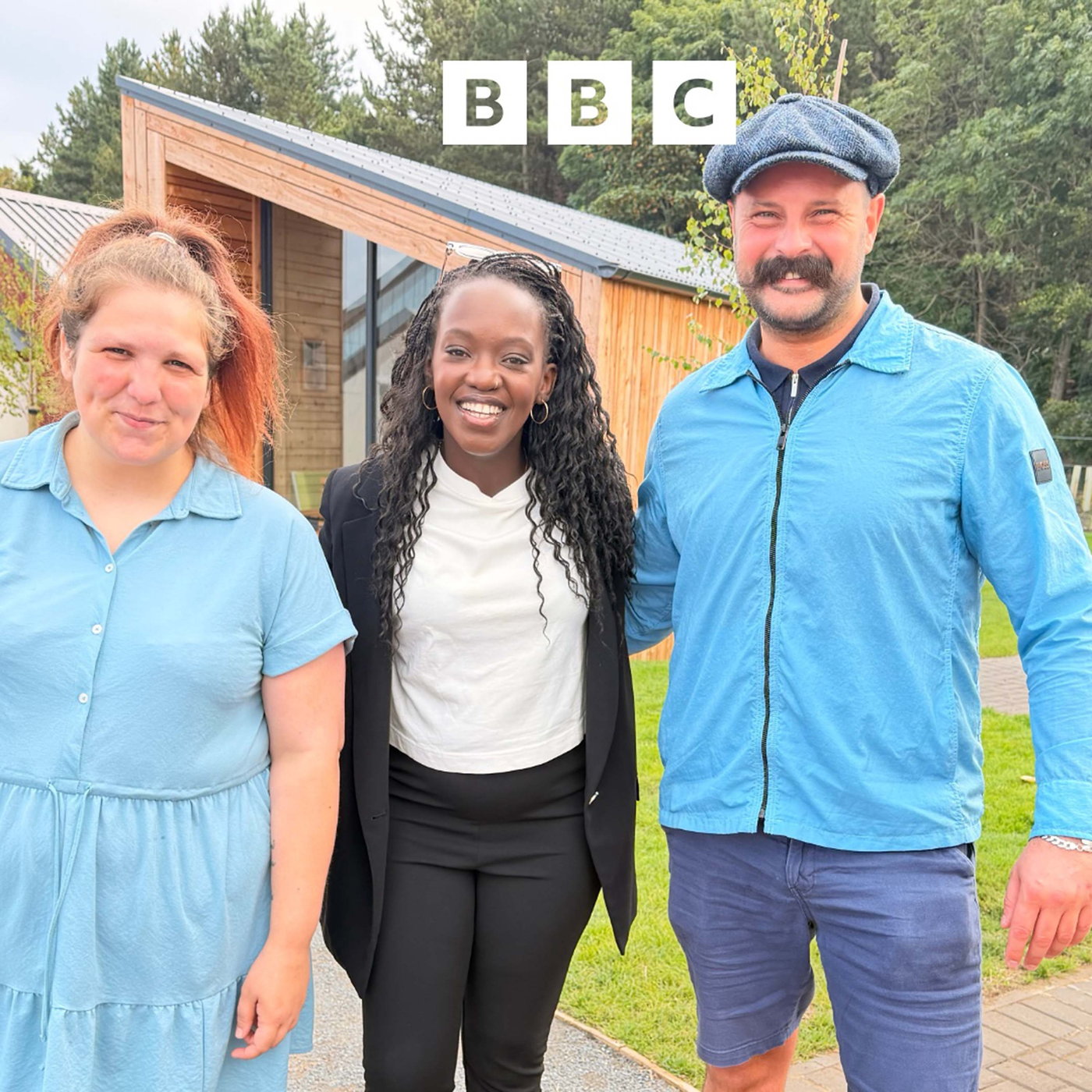
In France, we'll find out how offices can be part of the solution. But first, let me take you to Scotland and to a special village that's providing homeless people with decent accommodation and a proper sense of community. I am in the capital city of Scotland, Edinburgh. It's a beautiful place with a lot of history, castles and it's also known for massive festivals. But today I'm not going to a festival. I am instead heading to a special place called the social bite village to find out more about our solution. So I've just come out of the car and already I cannot describe how beautiful this is. The location is right by the seaside. So you have these stunning views of the hills and amazing green landscapes surrounded by trees. I think I can see a person that I'm here to meet.
Hi, my wife. Hi, Emily. Emily, this is a beautiful location, isn't it Jess? Emily Pickering is part of the team behind this village and she's showing me around. It's an enclosed plot of land that's got 15 houses, neatly placed opposite each other. In fact, they kind of look like holiday homes with sprinklers and flowers blooming beside neatly mowed lawns. A few of them look like small bungalows, others look more like box homes, but these are made of timber. We call them nest houses, so they're kind of condensed homes, but they're still spacious and they have big windows and we just wanted them to really feel like a cozy home. Each one inside was when they originally were made, they were decorated the exact same and then the residents have come in and they've just made them their own. Emily takes me inside one house to see what they look like. And just coming in, you're right, it's a nice cozy space, right? You have a kitchenette space, which you know typical stuff, you've got your fridge,
you've got your cooker and then you have a seating area as well with sofas. The sense of waking up and being able to see your neighbours and talk to your neighbours and also having these quite large for temporary accommodation, these large spaces that you can really create as your own home. They've got a bedroom with a double bed, a desk, a wardrobe, a sofa, a TV, it's a real home. Some residents have been here for a few months and others for over two years as they wait to get more secure housing. Emily leads me to a different house to meet Michael, a local musician and a former resident who can tell us a lot about what it's like living in this village. Hi, can I come in? Yes, we're meeting inside the very same house he used to live in. Michael tells me he suddenly became homeless after his relationship broke down. And then this was like my third place that I stayed in Edinburgh because the other two weren't as nowhere near. It was good as this because some dodgy places that you get put into.
So I'm so glad that I got this place, yeah. And could you just describe how dodgy dodgy was? Oh, but with your fiend and there's like needles and stuff and there's you know packets of stuff for drugs or whatnot but then it's them be aggressive towards you as well. But after moving into the social bite village things began to improve. Yeah, well I was here for a couple of years because I was here when it was COVID so I was just before it and then I'll be back after. Everyone just just chips in and becomes a little family because I've got some friends for life now, don't you? Tell me some of the things you would do together. Well because we got donated some chemical equipment and everything, being a couple of residents were working out every morning and then going for a walk so on the beach because we're just right beside the water. And then you'd at night time help help cooking together and stuff.
This whole idea began back in 2018 with a man called Josh Little John. He'd started a coffee shop in the city called Social Bite that offered employment and free food to homeless people. They would often tell him horror stories about the temporary accommodation they were living in. So Josh created Social Bite Village, a model that gives homeless people access to small supported communities living in high quality homes. People were moving in from other homeless accommodations and I was told they were just bursting into tears with emotion and getting the keys and just feeling that sense of relief. The village has prefabricated homes so they are assembled elsewhere and then placed here. Josh says that they also use locally sourced Scottish wood. Yeah I think there's lots of like academic studies that show the positive mental psychological effects of open wood and in the sort of the built environment, the open wood and timber
it's showing to reduce blood pressure, reduce stress, make people feel more cam or relaxed so we want this to be a place where when people come in and they get their keys they can kind of breathe. Since Social Bite Village started they've helped more than 150 people in two locations. This one in Edinburgh and another in Glasgow. The organisation is also now in discussions with around 15 local authorities across the UK about replicating the model in other communities. And how do you select who gets to stay here? There's lots of referral routes so other charities, lots of homeless charities will refer people that they're working with and people can self-refer and we still have our chain of social enterprise cafes where homeless people can get free food so quite often someone will come in for a free meal and they will get a pick up a leaflet about the village and they might end up self-referring in here. We work with the council who make referrals. These homes cost more than $100,000 each to build. Josh argues that they're cheaper than the cost
of typical social housing in the UK. The organisation hold charity events and auctions to cover their costs. They also get donations and invite companies to sponsor a house and their work has been supported by people from all over the world, including famous actors like George Clooney and Unado DiCaprio. I wonder though if some might be surprised that homeless people are living in such high quality homes. Quite often actually this place gets confused for kind of an upmarket holiday in my location. That was kind of the idea was to sort of turn the traditional concept of homeless accommodation which tends to be really squalid, really awful, often the absolute bare minimum and turn down his head and try and give people a place that's uplifting, that's cozy, that feels it's got some beauty in. I also noticed there's a dog outside. What's your name? What's his name? Leo. Hi Leo. I've seen a few dogs, people can come here with their pets. Yeah, we've had a couple of
village babies over the years. Oh nice! Yes, kind of, again if you're trying to create a community it's important and pets add to that. Also it's a big issue for people that are homeless, they're maybe on the streets if they have a dog, then most accommodations won't allow pets, so people will often choose to sleep on the streets. Another essential part of Josh's model is building a community, giving people a space where they can get support from the staff and from each other. The residents can come together to cook, share stories and play card games in a shared space at the entrance of the village called the hub. Right in front of me is this kind of open style kitchen and then you've got like these sofas where guys come to do everything from watching the game, to watching a movie and playing cards and also I can see on just kind of like the very far and these are whiteboard with tasks that people have to do including emptying the bins, wiping surfaces, so it's very much a community space. Someone who was once a resident at this village is Jane and
she's here now. Hi Jane. Hi, Jane, I've heard you make a mean cup of tea. Yeah, of course I can make one of the best cup of tea there, right? Let's go. What do you take in your tea? Oh so I'm actually kind of looking at you. We might like very strong tea. As Jane started to make me a brew, we get chatting about her life. The reason I ended up homeless was because my mom passed away in 2020 and I was kind of so fussed up with my friends and my sister before that and I was in a night of being bees and hostels and it was a really bad experience for me because there was a curfew. I wasn't allowed any visitors or anything like that. I was just a really bad time for me and I just I didn't like it. I didn't feel safe or secure or anything. And so how did you then learn about social bike village? I found Tobib at this flyer, I saw it up online, I emailed the social bike and next again few days, the email me back asking if I wanted to go for a visit which I did
and a few weeks later I was moved into the village. How was that feeling when you moved into the village and you had your very own space? I mean I was really shy when I first moved in, I didn't know anybody, I didn't know what I was doing but then the first couple of weeks I started adjusting and I was planning activities with people and going for sea swims and just being me. You lived here for about two years, how did it feel when you had to leave? When I left the village I was quite upset because I was leaving behind my social bike family. I just wanted to take them all with me but I couldn't but now that I've got my own flat I'm happy and secure and I still come down and see the village. You know you can always come back and visit with your family, yeah. Yeah, I mean like the social bit and I'm never going to get rid of me, they're stuck, they're stuck for me until the day I die, that's not done, yeah. Yeah. Like Jean, people who've left the village can still visit the hub for a hot meal or just a chat. And for Michael, the former resident we met earlier,
social bite has given him more than just a home. It's given him a community of people he now calls friends, something that inspired him to write a song. You're listening to the documentary from the BBC World Service. What makes a vacation rental of the year stays guests love and host with the most. Discover top quality homes like the vacation rentals of the year using the loved by guests filter. It highlights top rated vacation rentals with near perfect ratings for cleanliness, location and all the good stuff. So no more walking into a surprise. We've done the heavy lifting so you can get straight to relaxation. Book your next day with Verbo now. Insurance may all seem the same on the surface but having insurance isn't the same as having
state farm. It's like getting a granola bar with a candle in it when you want it a three-layer birthday cake. You wouldn't settle for just any dessert on your birthday so don't settle for just any insurance. When it comes to getting the help you need, state farm is the real deal. Like a good neighbor, state farm is there. McDonald's is putting value back on the menu. Whether you're craving a big mac, McNuggets are sausage egg and cheese, McGrittle's, make it a meal and save. Your favorite is now your wallet's favorite too. Extra value meals are back. Get a big something extra. With a big mac or 10-piece McNuggets fries and a medium coke all for just $9. Limited time only promotion pricing may be lower than meal pricing. I'm Mira Anubi and on People Fixing the World today we are hearing about clever ways to tackle homelessness. Now I've left the village in Scotland and I'm back in
the office in London and for many of us offices are constantly buzzing with activity during the day but as soon as people finish their shift they're just empty spaces that could serve a very different purpose. Now I've got my colleague Alex Collins who visited a project in France using this idea to help tackle homelessness. Alex let's just start with a problem how big is this in France? Hello Mira, well according to a 2022 report by the French Charity the Abe Pierre Foundation, it's estimated that there are around 300,000 people in France who are homeless but I was really interested in looking at the city of Nantes in the northwest region of France where the situation is particularly bad. This has been a result of housing shortages, rising rents and significant intra-European migration. So thousands of people are on waiting lists for emergency accommodation but the reality is that the city government just doesn't have enough housing stock.
I mean I'm surprised that there's such a big issue in France but also I can't really wrap my head around this how can offices help? Well there is a project called Bureau de Courts which literally translates from the French as Office of the Heart. Started in 2020 the scheme uses office space to house homeless people. I went to the outskirts of Nantes to meet someone who's taking part in the scheme. I'm meeting Frederick at the place where he lives. It's not your standard accommodation it's in the office of a software company called Eprezia. He takes me through the modern open plan office, past workers at their desks, to the room he sleeps in at night. Now walking down the corridor in the office, past a few doors I can see a meeting room on the left and some office workers and right and I'm just turning into a room. Here's my staff, my detergent, do my washing and the bottle of water. I don't have many things, it's not my home. As it's an
office space for the company I try not to make my presence notice too much. It's a modest space with plain white walls and at the far end is a large desk with two computers which in the day are used by workers. The biggest object in the room is a rectangular box which looks at first like an office cabinet but to my surprise it contains a fold out bed. Okay can you just show me the bed? The bed is pulled down it's on the side of a wall and it just flips down it's very clever use of space. On the opposite side of the wall to the bed is a modest cabinet where Frederick keeps his small number of possessions. On top of that is some ingredients for cooking. So you've also got some food they've got lemon, some nuts. Yes I also have some pistachios and some baby onions. We had to a kitchen area which staff members use in the day to eat their lunch. It's the space that Frederick uses to make dinner in the evening. So I have everything I need, a coffee machine,
plates, a sink, a fridge. You've got your own shelf on the fridge with a little post-it note with your name hats. That's very handy so everyone knows not to touch your food. Occasionally Frederick has a coffee with some of the staff but normally he leaves when they arrive. He says weekends can be lonely because no one is around. After a couple of minutes in the kitchen Frederick begins to tell me how he ended up on the streets. The last few years living in north have been hard. I became depressed after my daughter was born. Her mother stopped me from seeing her. I didn't see her first steps. I didn't hear her first words. As a result I quit my job and I couldn't see the point of working. My life fell apart. I didn't even claim benefits. I couldn't pay the rent. So eventually I was kicked out of my flat. Where did you sleep when you were on the street? There were two buildings that I slept in regularly. In one I slept on the 12th floor. I know that most people don't get down the
stairs at that height. They use the lift. So I was sleeping in the staircase for about two years. It must have been very difficult. Yes it was difficult but I kept my spirits up and I had to stay strong. While sleeping rough Frederick found a job as a gardener. He applied for social housing but was rejected for not having a regular paycheck. It was at this point he was put in touch with Bureau DeCur and days later moved into the appraiser offices. So how does the scheme actually work for companies who are hosting? My name is Guillain Guerinot. I'm the co-manager of the company Iprésia and it's our second guest. We worked with the Bureau of Jucqueur from six months. To make it viable for companies owners like Guillain to participate in the scheme, a contract is drawn up for each guest. In Frederic's there's an arrangement that he leaves the office at 8am in the morning and is allowed to come back for 7pm. At the beginning some of the women worried because
they were a bit scared of being in the office alone with a man that don't know. Frederick was never left in the office with women. But it's fine. But it's fine now. No it's fine that they know him and it's okay. And you wonder whether that's changed people's attitudes about people who are homeless? They learn to understand and to know people who live in the street. It's a second guest we have. Human connection. It's a new way to understand people, to live with people, to have empathy. The ambition of the charity is to help those staying in offices interpermanent work and secure housing. Bureau de Kerr believes having a stable place to sleep makes this easier. Every month a meeting takes place with the resident and relevant support agencies to ensure everything is staying on track. I just got on the number three tram to meet Pierre Yves-Louis. He's actually the founder of
Bureau de Kerr. As I've spent time around Nantes I've seen quite a high number of people who are begging on the street including those who look to be in some sort of psychological distress and also are either drinking or taking some form of drugs and it just shows you that solving the problem of homelessness in a city like Nantes is extremely complex. I'm inside the office of advertising agency Nabilito. It's a business Pierre Yves runs alongside Bureau de Kerr so it's no surprise to find that he's also hosting a person who is homeless there. He's here one for one one so go. It's weird I am literally in its big office but in the corner here it does feel like suddenly if I turn this way and look straight forward it looks like someone's bedroom. A black curtain gives us a degree of privacy but there's also a sofa which is long enough for someone to sleep on. I can even see the sheets on the bed there. To ensure a respectful
experience for the guest offices are inspected by Bureau de Kerr volunteers in advance. Guests must have access to a toilet and shower and cooking facilities. Not every office has a bed but many provide sofas that are decent enough. A lot of people who are homeless have drug addiction problems and have psychiatric problems. Do you see to some degree your project might miss those people out? Yes we can't welcome people who have drug addiction problems because if we want companies to open their doors we have to guarantee them that there will be no health problems. That people won't be squatting in the building and want to settle in the building permanently. So far the scheme has helped over a hundred people but Pierre Yves acknowledges that it's addressing a small fraction of the homeless problem in Nantes. However he says the solution goes beyond helping vulnerable people off the streets. We commissioned a study that confirmed that companies who took part
in our scheme had happier employees compared to the standard French office. In the end I find companies do this because they think it's the moral thing to do. But what does staff in his own office think about the scheme? Wondering around I met Claire and asked her what she thought about the office providing space for a person who is homeless. They sold the idea to me pretty like well done and when you think about it it's pretty logical. I mean like when we're out of the office it's just empty space and a lot of space and that can be comfy so if that can help someone in difficult situation I say go for it. I have to say Claire has me rethinking our own office space. It's a creative way of tackling the problem but I wonder Alex how much success has it had? Well according to Bureau Decare over 90% of the participants who use this scheme end up in permanent jobs and housing which is pretty good numbers in my mind and it's also a win for the public
purse too. While a traditional emergency shelter bed costs public authorities around $10,000 a year a placement here costs around $2,000 because the office already exists. But I did notice that there only seems to be one homeless person per office at a time. I wonder are there any plans to increase that? Well that's right Myra they do have a strict policy of one guest per office and that's because Pierre Yves thinks that individuals deserve what he calls a sense of dignity and privacy. Saying that the one way to get around this policy is obviously as you say is to upscale so they now have 40 participating offices in Nantes. It's also spread into other French cities and across Europe in places like Lisbon and Brussels helping over 1,000 people. Right. Well I'm going to impress you with a little French I know in say mercy Alex for what we've heard today. Mercy Myra. And that brings us to the end of today's episode. I wonder though could your office be used to house homeless people at night? Let me know what you think by sending me a voice note or a message
on WhatsApp to the number plus 448,000 321721. And join me again next week for your weekly reminder that solutions do exist. Until then I'm Myra Anubi and thanks for listening to people fixing the world on the documentary. The AT&T Guarantee is all about having your back. With AT&T Internet Air your home Internet is backed by the AT&T Guarantee. In the rare event of a network outage you'll automatically get a credit for a full day of service. It's like waking up from a nap, the warm blanket resting on your shoulders. Ah, visit at at.com slash guarantee to learn more. When the connection matters, that has to be AT&T. Credit for Internet Air downtime lasting 20 minutes or more restrictions and exclusions apply. See att.com slash guarantee for full details.
More episodes