About this episode
Get every episode summarized
Each time The Soapbox Lex publishes, we email you a written briefing from the transcript — the topics, who appeared, and any specific claims, with the ad reads skipped.
Email me new episodesFree for 3 shows. No card needed.
Hosts & guests
Transcript ready
1,191 searchable segments. Every word is indexed and playable.
Full transcript
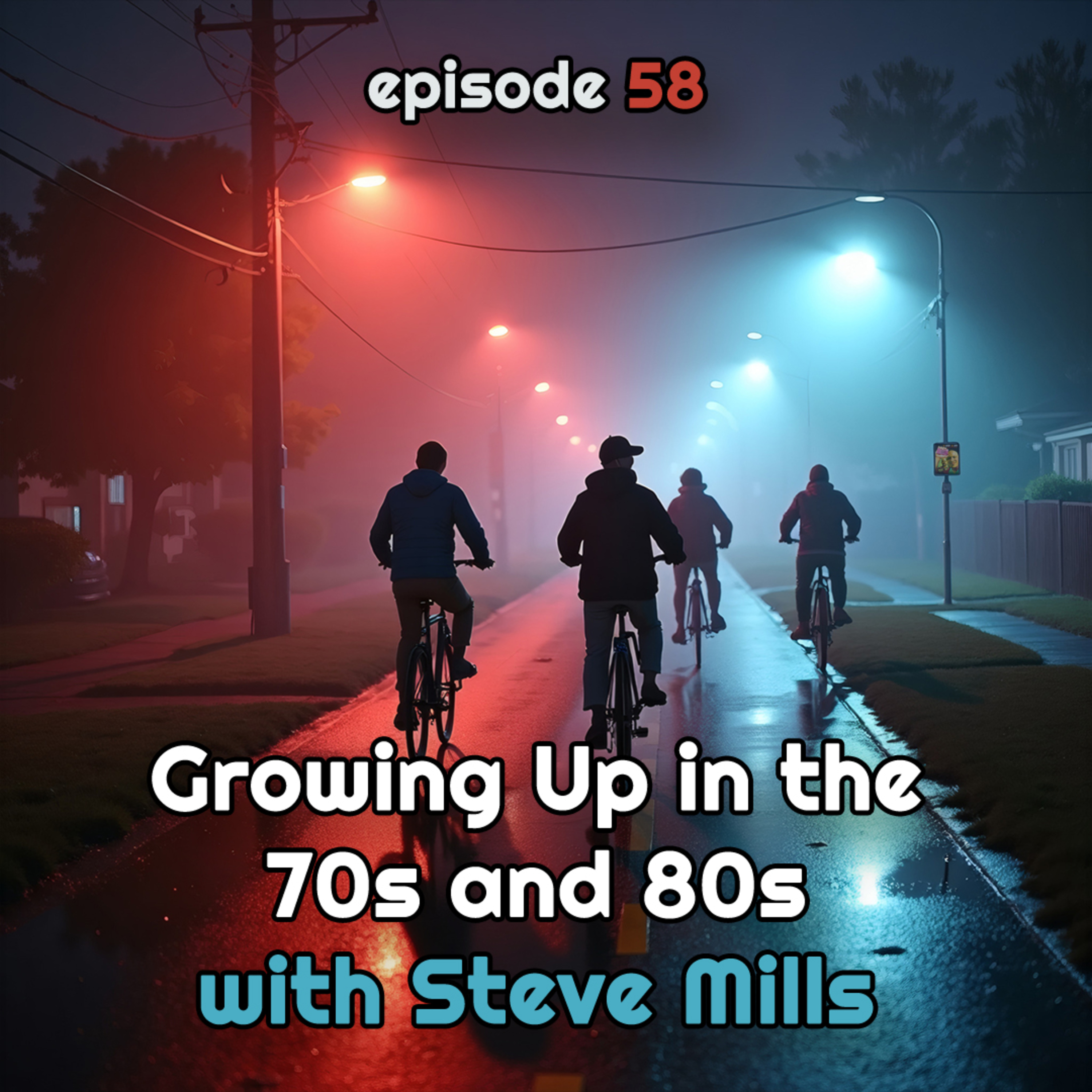
The Soapbox Lex — Growing Up in the 70s & 80s (with Steve Mills). Machine-transcribed; use the interactive transcript above to jump the player to any line.
Finally, we got fallback into Witch Witch. I was on a journey, I was on a weight loss journey for a while, and then I realized I don't care. I'm going to just lean into being the safe off-mortem element, and just watch the mixture entire guy. No, and it was a shame, because we have tradition of going to Witch Witch. For your core witness, like everyone say, we get a Witch Witch, we come here, we have our cups on the table, and then we would say unofficially sponsored by a Witch Witch, but we actually have some, well, two things, one, we've got a guest, we'll get into that, who also joined us for the Witch Witch tradition, what was your impression of Witch Witch? It was good, it was, I would say the sandwich was, I would say, better than some way, that could be the tagline, Witch Witch, better than some way, but I just casually happened
to mention to the manager on the way out, I said, you know, we talked about Witch Witch on the show, all the time, can we get a discount for our listeners, and surprise him to get the soapbox partially sponsored by Witch Witch, there we go, let's go. You are listening to the soapbox, I'm Paul, and I'm here, and this all started out with a list, what's that all about? So I've compiled a list over the years, it thinks it just bought things that grind my ears, and I shared that list with you, and I thought, you know what, that would
make interesting conversation, sometimes I'm going to want to agree with you, and it's just going to be something we talk about. Other times though, I'm going to want to steal me in the opposite position, because I think that's just interesting conversation. Yeah, and keep in mind, I'm always right, but Paul's just a really good dependent, hey, well, so, so, we had a bit, we did on the show, are you familiar with the Millennial Pause? No, go ahead. Apparently, when recording a video, Millennials and folks older than Millennials have a tendency to pause for just a moment, then begin with so, or well, and young people don't, they just start talking, they trust the technology so much, that they just assume that as soon as they see that red button, that it must be working, where we have to calibrate our minds for the fact that that first little part of the physical media, the tape, might not be working. You got to hear it. You have to have that little static moment where the VCR is sort of getting its tracking
in place. It's kind of like what the three, two, one, they'll do it, but they won't say the one would be, yeah, action, and it gives you that buffer of, yeah, it's, you're right, the younger kids. It's like, you know, we did that because we grew up in the 80s, boom, professional transition. That was it, look at that segway. But we're getting ahead of ourselves, because first we need to introduce our guests, Steve Mills, welcome to the soappots. Thank you. Happy to be here, first podcast. So this is a lot of fun. Well, the first one you've ever recorded. The first one I've ever recorded. Awesome. Well, hopefully not too nervous. If you do. I would say it's nervous just kind of trying to feel it out. Yeah. Well, if you completely embarrass yourself, just know that they're going to be tens of people. I've seen your other ones. I don't think I'll. Okay, nine, nine of people. Yeah. I'm counting myself playing it a couple times, so welcome. This came about actually a little haphazardly because we were talking at work.
You work over at UK now with us. And you happen to mention a couple of podcast ideas and my brain immediately went to, you want to launch your own podcast, which I don't. You don't? No. Yeah, completely. Completely mistook that one. And so I started giving you advice on, here's the guy you could talk to and here's our setup. And I just, I just, I went for it, you know, I had the ball. I ran for the touchdown, but I went to the wrong goal post, right? And this must have been maybe after we talked. It was probably after we talked and I do a lot of hiking. So that was one of the ideas we could talk about Kentucky trails. We could talk about backpacking in Kentucky. We could talk about backpacking in general and then we had other thoughts and that thought was the growing up at the 80s, which I think is for us a little more relatable because I only wear a backpack with a computer in it too and from work. Yeah. So I do have a buddy shout out to my good friend, John Kelly, who has a backpacking podcast. It's actually wildly successful. He's sponsored and he's doing collaborations and I've seen a couple of his.
He had production qualities pretty good. Yeah. So you do know this because I watched his body, I watched that one. He went to some of the same places we've been to. He was still trying new equipment and talking about new equipment. We're pretty much, me and my friends, we have very established on what we like and what we're going to use and what we're carrying, what we're not going to carry. We do it different ways, but we're very opinionated in our. Are we drilling holes through toothbrushes to make them lighter? No, you just cut the handle off. I'll go first. I'll just have terrible oral hygiene completely skip that all together. Put all the holes in your teeth and send them. There you go. Even lighter, yes. But growing up in the 80s, I think that's kind of what we landed. So what's the what's the hot take here? What do you think is different about being a child in the 80s versus being a child in the 20s? Well, I was born in 67 just a guy to give you that and I was in North Carolina, kind of a smallish town, Newburn until 5th grade.
And then we moved to Arkansas, a very small town, 3000 population, county seat, hour drive for a town of 10,000, two hour drive to Little Rock. So a lot of my childhood, it really transitioned when you got a car. When somebody was able to drive a transition, but until that happened, it's pretty much bicycles, hiking behind the house, out in the fields, up on the mountain, up on the hill, really what it was. So we can really frame this as being a child even in the late 70s, early 80s. Yeah, yeah, so if you guys had roller rinks when you were growing up, we had the yellow bird in North Carolina, I have vague memories of that because that was definitely 70s. We would do the lock-ins a lot at the roller rinks because as a young teenager, we'd get to go to, and it was poor Washington, so it was Ryan Tengis' stomping.
In fact, last time he, well, one of the last times he was in Wisconsin, he took a picture of the skate country and sent it to me, because he went there and I went there. But we would do the lock-ins. We'd go there, we'd get dropped off at like, I don't know, five o'clock, and parents would pick you up at like seven and eight in the morning. So they could go up at day and night or just quiet evening without the kids? And we were in a safe space, of course, we were flirting with girls, and we would ride our skateboards because not on the ring, but... Okay, I was going to ask if they would let you have the... No, the guy, sorry, I'm going to rev it vortex us for just a second. But we would, the guy that, the family that owned it, their son lived next door to us, and he was a skateboarder, so he would invite all his friends and we would skate on the carpet, which was a real thing, because you got a roller skate on it too, right? Yeah. To go to the concessions and all that. So we just set up boards and all the over them and do tricks, but we wouldn't, we weren't allowed to be on the actual floor, but yeah.
We had the champs here in Lexington, if you're taking your kids to the champs. I have not. No. That'd be fun. That's run by a guy I used to play roller hockey with, Nick Champa, this is a family deal, and actually played with his son as well, and it's a pretty fantastic operation. They've got two levels, the upper levels got mini golf and laser tag, and the lower levels got an arcade and the roller rink, and they do the whole kit and caboodle, the DJ, the fun lights. I don't say we never took our kids to a roller rink, and I don't know, it's something... It's something I thought bigger in the 70s, I guess, both of you did it in that age, 70s, 80s, and then I was born in 76, so I was... You're about 10 years, so maybe they were still doing it. They made a kind of a resurgence in the 90s, and I feel like it probably lost its cool again, and now it's back just because it's kind of an attainable thing for a lot of people. My kids are doing this next week, they're doing roller skating in gym class, so they're
teaching them up how to do this so that they can get that next generation of customers, I guess. I have fond memories of that, so that little bit of time in North Carolina up until the fifth grade moves, little bit, you know, we ride bicycles, we were doing different things, built a tree fort. Oh yeah. So... That was our jam in Wisconsin, before we were building ramps for skateboards, we were building forts, and I mean, it was two floors and whatever board you found. Yeah. Yeah. Man, I... Well, you make a list of all the crime that I'm admitting on this podcast. We just need a research statute of limitations first. We would go into that construction zones and steel nails, so we can build these. Yeah. Because we'd find the wood, and we'd get it, you know, that's hammer, but at one point, I remember we grabbed like a reel of nails that went into a nail gun, and so they're picking them off. No, we would just grab the whole reel, and then, yeah, we would have to, like,
pry them off. And of course, it doesn't have the head on it, it's not meant for hammer, it's not a real air. These did have heads on them, but then they had like a very, very, like, malleable, almost like a solder-like connection, so you'd have to like, er, er, er, and pop off on, and then it had too little, like, barbs on it, but it still, it would, got the job done. We got the job done. But did you die? It was rusty, and we didn't have our shots. We had somebody's dad put up the first, the structure, and then the kids did everything else. And we similar. There were some houses being built, so we would take a little red wagon down their hood or in, you know, and then I think most of it was scrap wood, and we would collect the scrap wood, and then, probably, I think, somehow it got incorporated somewhere. Oh, yeah. Waste not one, not right? Yeah, it was. I think it was 87. I moved into a house in Calgary, and the home that we had had the most, just, oh, should
not friendly, dangerous, ramshackle, garbage tree house. Boards were falling off, everything was rusty, everything was dry-rotted. Little platform and a questionable tree, and then my thinking next door neighbor, his dad was a contractor who had all these, like, spare parts, and he had a carpet and, you know, everything but HVAC and his tree house, and it was just, I remember going to his house, Jordan was this kid's name, going to Jordan's house, going up into the tree house, which had attic stairs, and it's own pulley system, playing up there, and then looking over in my yard, like, come on, dad, just get a couple of them. It was fun having one. So when we moved to Arkansas, that was about fifth grade. There was everything behind our house was fields, and woods, mainly cows. There was one field that had a horse in it. You had to watch that horse. You had to be real careful if you were in that field. The horse was, they can be mean, but we didn't build it in a tree.
We just built a fort. Yeah. That was mostly what we did. We never really did tree ones. We found some farmers, crap woodpile, or burn pile, I don't know, you never burned it, but it had all this, so it had pallets. So we started with just go grab the pallets, and nail the pallets together. I was probably proud to use the, how many men have a pile of wood that one day this might come in handy. Yeah, we do. And then, and then everything we would just collect, and then build it up, and we built like a probably eight by eight, slept in it a couple of times, tried to build a fire inside it. It was a mistake. Yeah, that was fun. But all of our money went to nails, plastic to try to keep the roof from leaking. We did a lot of that growing up. That's awesome. We, we found a couple of, I guess it was three or four pine trees that had all been planted together, and somehow we got in there and cleared out all the space in between and started climbing in the branches. We made a big fort in there, and this unfortunately was not at a house situation.
So after Calgary, I moved to Lexington, and I was in those apartments next to Beaumont Middle School, if you know the area. And now if you go over there, that same area, it's the trees that surround both sides of the entrance to the apartment complex, they've cut all the branches off about eight feet because it probably was, and all the kids that were doing what we were doing in those same spaces. And now it's not fun. Kids can't play in there, but that was our clubhouse for years. Yeah, that's cool. We had a cornfield in Wisconsin growing up there, and this, this was, I'm going to say this is when we're on Aspen Street, and this huge cornfield, we waited till, you know, the late fall when, you know, all the stocks were brittle, and we would like just run through there and make mases and like little areas at the house. It was just, that was our playground, because it was right next to the house. And in the wintertime, of course, they pile up snow from all the roads, and we would have a mountain of snow right in our front yard, and we'd dig tunnels through it, and it's
just probably really, really dangerous. Yeah, we, the only thing we did close to that, because we had a couple of big snows, and we would roll big snowballs. Just keep rolling till they got bigger and bigger and bigger and then pile them together, and then try to tunnel into it to make a little, to make an egg. Yeah, yes. What did that? Now we would, we would make all kinds of tunnels through like this. I mean, it was probably, now it was a kid, so it probably felt like it's 30 feet tall. Yeah. But I wasn't. I mean, you, you see how they pile it up when they're plowing, it probably was a good 10 feet. Yeah. And it was that, I'm pretty sure someone could have just gotten cat, just, now you guys, you guys grow it up like Calgary and Wisconsin, so when we're back there in the fields and stuff, there was farm ponds, and being in the south, you don't, you, yeah, you, you never walked, you were, the parents were very strict about don't get on the farm ponds. Yeah. Farm ponds. So what are we, what are we talking? Just a pond. Oh, a small pond. Okay. But they would freeze in the winter.
But you never could trust them because we, they didn't, because they didn't freeze like they freeze in the cons. A freeze in the south is a couple of days where you get a thin layer of ice on them. And they always knew a story of some kid that fell through the pond and so, yeah, we always had to stay off the ponds. It made it been different where I grew up and where you grew up. Yeah. It's too young to probably have the experience of being out on the frozen lake pond, whatever. But where my dad lives now is Ottawa, and they've got a canal that runs through Ottawa that will freeze so thoroughly that it actually becomes a part of some folks commute. And they can just throw us in my skates and those skates to work. I think it's the redo canal, redo canal, I'll help correct me in the comments later, but I always was jealous of that experience. I grew up playing street hockey with roller blades and wheels in the street. In the same neighborhood, Eric was in. That's how I know this guy. He was a neighbor and never, never got the chance to skate on an open pond.
So we occasionally did some teams, the kids, and it was probably the limit to just because it was pretty small town. We occasionally did flag football, we had a basketball goal, but it was just grass. So you really couldn't dribble, but you just run around and throw it up to it. Capture the flag? Capture the flag? Pickle? Do you play pickle? Two people, one on a base, one on a base, and one trying to run in between? Okay. Yeah. I feel like we could play that one. Yeah. That's new to me. You got three folks. That's a good one. Capture the flag was, we would do the whole neighborhood we would do. And this is interesting because I suspect where we're going to this conversation is what our kids are doing to now. We get to that in a moment, but because it's interesting, Vivian actually had a similar neighborhood experience with like, I guess they would play manhunt and capture flag and things like, but we'd, I just loved it. We would, on Aspen Street again, we'd probably have 20 kids and we'd have the home base at two different houses. We'd have out of bounds, you know, this road and then the railroad and whatever.
And we just, we loved it. It was like running and it was just being free and I don't know, it's just the games that kids cooked up. Yeah. And you made up your own rules. Oh, we figured it out. Yeah. So you had cheaters and you had cheaters and then you had to change the rules. Yeah. There's two others that come to mind. One, I don't know, did your kids ever have those little pellet guns where we could shoot airsoft? We had, well, it wasn't BBs, it was just a little plastic airsoft pellets, it was designed to shoot it to other kids, it wasn't designed to be killing squirrels. They had, they had paintballs and they had some of those, but we didn't use those as much. They did have the, our kids had the paintball guns. So, I think this is an experience that I was probably on the very tail end of the last generation that could get away with doing this because we would run around our neighborhood with real looking pistols shooting at each other, little plastic BBs and nobody thought of anything. Yeah. They weren't yellow and red and the tips weren't yellow or red. I think I had a beretta and the only thing that you could do to distinguish it from a real
firearm was just a tiny little removable plastic orange piece, which we all took the plastic orange pieces off because we wanted to look like we had real guns. And if you did that today, I'm pretty sure you would have a lockdown situation at the neighboring school. We talked, yeah. Some of that we talked about too, a little bit of, so there was things we could get away with in the 80s that nobody really, they may raise an eyebrow, but they weren't obligated to report kind of, I don't want to, let me see where I'm going yet. So, the hardware store was right down from my house. So, we go to True Value Hardware, you can buy anything there. That's where I bought my bicycle, that's where things like that. You could buy a can of gunpowder, you know, we're not old enough to drive, so I don't know how old we were, 16, 17, but yeah, you could, like that gunpowder, and then the shotgun primers, yeah, and what else you got, you know, and they would just say, hey, be safe.
Be careful, come back next time with that anger, you guys are doing okay, and that has all changed. Probably for the better. Oh, for sure. And I lamented a little bit, there's one thing in particular we discovered, my brother, and I think statute of limitations is that on this one too. He downloaded, so we're on the front end of the internet, right, AOL dial up. He somehow found this publication called The Anarchist's Cookbook, and later with this. Basically, somebody puts together lots of things that kids should into, and kids naturally gravitate towards it. It's like, how do I make them, you know, I'm not going to even say, because we'll get demonetized on YouTube, but IED, we'll go with that. So we would go to the, I think it's Windixie at the time, the closest grocery store. We'd buy a two liter of fego cola for around 59 cents, a roll of cheap aluminum foil, and a bottle of toilet bowl cleaner. Okay.
Don't the fego, because even at that age, we're like, this is garbage. You just want the bottle. Just want the bottle. If it full of aluminum foil, put the toilet bowl cleaner, and later put the cap on, set it down, give it a little shake, walk away, because you've got about a two minute chemical reaction. It's an exothermic reaction, and the gas producing reaction. And so it produces a hydrogen gas that pops the bottle. It makes a big explosion sound. The gas would be flammable if there was an ignition source. We never did that. We just wanted the big popping bottle sound. And for three bucks, you had homemade fireworks. Huh. Did you ever find carbide? Didn't find carbide. What you're doing? I don't tell you about carbide. Well, we were like setting these things off, no big deal. And probably about five years ago, maybe six years ago, pre-COVID, there was a story where Dunbar High School got shut down because of IEDs, and it was the same thing. You generation of kids that had discovered this thing, they were setting them off recreationally. It wasn't, they weren't terrorists, they weren't doing anything inappropriate, but complete
meltdown. The whole city was aware, something was going on. Okay, but the similar one, the only thing we knew that would do something similar to that. And yes, it was again, you go to True Value Hardware, they had these little blue cans of carbide. So if you, the old miners lamps, you drop carbide cubes in there and water, it makes a settling gas. So the same thing. If you take a two liter bottle and drop some carbide cubes in there and some water and screw it on, it'll blow up and it, it's, it's smell horrible. The other thing you could do, you could take a Coke bottle, but the carbide cubes in there and you could light it, be a nice little thing. You could put a balloon over it. Make some gas. It would fill up so you could light a little way, a little thing, or the thing we discovered, this was actually pretty cool. You could take the balloon and put a pinhole at the top and start letting it fill up and then light it and it would blow a blow torch about, and it would last, it would, it would last for about, I would say two minutes until, you didn't know how many carbide cubes you put in there, but the balloon would up and then it just,
I don't have just enough air pressure, it didn't chase, right? And it would be just a little bit away from the balloon where it didn't melt the balloon until it all, you ran out and then, and then everything would melt on top of your, your bottle. So my explosion story is also done, bar, and this is right before I was there. This must have been, we must have maybe just moved to Kentucky. Oh, take a shot. Someone's taking a shot. Do you know about take a shot? We're so close to three hospitals every time we hear a siren, it's a drinking game on the show. Oh. For the folks that are listening at home and inappropriate hours to take a shot, if they want, it's just kombucha. We have at least one person that, and we'll drink our witch witch and take a moment to thank witch witch. We're being our, our first somewhat sponsor or semi sponsor, yeah, please mention the show. We get 10% off. Yeah. Tell them, tell them you'll listen. So this must have been 1990, 1991, maybe 92, a kid who ultimately became a friend of mine and had an old grenade that he's grandfather owned.
That was a dud. It was, it was, it was hope so. It was a drill bit harder was it still. He drilled it out, filled it with gunpowder, and put a fuse on it. And then he went to high, he went to school, we lost a lot of deep classmates that day. No, it was, it was, it was maybe less nefarious, but also concerning, and people could probably Google search this and find out who I'm talking about, but I'm not going to name him. He was in USA today. Yeah, you know, he, he was going to sell it to a friend, someone wanted to buy, he was an arms dealer. He was an arts, but he was taking a test and he, I don't know, sat down or got up or something and it, it was hooked on a belt buckle thing, something, and it fell off and hit the ground hole. I feel like that guy's got to be dead and jail or super rich. Like those are the only, the only outcomes I can think for somebody that brave, pulled
and stupid. Yeah. Well, he, he was expelled and so I went to Dunbar the very next year and he wasn't there anymore soon. Now, one thing we, the bicycles too, which added a little bit about that and when we all grew up this way, I mean, you got around, if you were, if you couldn't drive yet, you had a bicycle and you were everywhere on the bicycle. Yeah. As soon as those training wheels came off, you were free. Yeah. Yes. And you said, parents had no idea where we were, we were somewhere, you know, they probably had a good idea of what house we were at. Well, they would use life 360 right now, because yeah, yeah, yeah, yeah, yeah, yeah. They didn't care. They're like, all right, open the line, the kids are good. Yeah, they may ask. If it's dinner time, you should be home, if they're not home at dinner time, they might call some of the other parents that we, they suspect we are and figure out where we are and get us home. I feel like we had numbers by the phone of neighbors and friends and they would, yeah. Yeah. But also, I think, predictable patterns to you, right, like every, every day after school go over to someone's house because they've got the cool new thing or whatever.
Yeah. Yeah. Yeah. Come home hungry. Come home hungry. Come home hungry. This is, as I've mentioned, we were on Aspen street in Grafton. Well, about 13 or 14, 13 maybe we moved from Aspen to Lakeshore, basically by the Bluffs by Lake Michigan. So in Wisconsin, we're basically all the way to the east of Grafton and I was kind of out in the, the boonies, as I would say, because I didn't have a car and I had a bike or a skateboard, but I mean, that's okay in the summertime, but up there. Right. But yeah, the wintertime, I wanted to do anything. I was stuck at home. Yeah. So that's where my brother and I were getting in the shenanigans. We'd go find which one of you guys said shenanigans say one more time. Yeah, one more time. But luckily, my friend Paul, who had the skate country, I could walk to his house and he had a ramp, a skate ramp and we would hang up. But yeah, I felt so kind of, I was a mad at my parents because we lived in the city.
We lived in the suburbs and friends were everywhere and then we moved out here and I didn't have a car. It was like, oh. Yeah. If we're to kind of like transition to the juxtaposition of this, that's actually a really fascinating take because in my mind, we have, we have this idea or we have this idea that interconnectivity was beneficial. That more information and more connectivity was going to be good for society. But I think what we're finding is the opposite. Psychologists are saying now that human beings really can only have about 200 social connections that are any kind of meaningful in their life and beyond that, it gets to be overwhelming and that's where you see an increase in stress, anxiety, depression, isolation, which is counterintuitive. But none of them are deep. Right. Because now you have what, a friend's list or social network, hundreds or thousands of people.
Right. But to your point, do you even know these people? Right. It used to be you would memorize everyone's birthday. You would know their birthdays. You would know their phone number. You would know where they live. See, growing up, it was nothing. I mean, it was almost, somebody would knock on the door. Yeah. Hey, you're the kid. Am I in my brother's home? You know, or we walk away. Let's go see if Mike's home. We're not going to call. They're not going to work. Hey, it's Mike home. You know, and then, hey, can you come out and play? And then, I don't know if any, if that happened, ever with my kids growing up. Because it would be, the parents would call, or the parents would bring them over, or we would go somewhere else, or we would go hiking with them. It was much more structured. And I may be going in a different direction than you were going to be, but it was. I think you can probably drive a number of different conclusions here. My daughter would go knock on the neighbor's door as your daughter home, and she was given instruction, hey, have your mom read that text before you come over. So now, we're like correcting against that social hatred.
Yeah, and I think there's, but it does. It just puts more in the, we're all trying to raise an adult, not control a child. This part is one thing I strive for, but is that, when you do that with a child, yeah, just walk over there and ask. I mean, that, that takes something. I think I'm walking over there, knock over the door. Bravely, it takes. Yeah. And then you got to deal with the parent that answers the door, hey, it's carrying home. I want to go play. I don't know. I remember, I remember how sad it was when the kids stopped saying play. Like at one point, because our neighbor would, on Westmeat, it was really social. I mean, there were probably 15 kids all within a five year age, and they would knock on the door, hey, can Vincent come out and play, can Vivian come out and play? Yeah. They would hang out, right? Yeah, they would, they wouldn't say play. It was too cool for play and hang out, hang out as, or, you know, as so and so here. But I felt like, I don't know if we were maybe the exception to the role, but my kids would,
I mean, they would, they would do the manhunt and they would do, none of them had phones. That's good. So this is probably, this is pre-COVID, really as long as I'm thinking. Yeah. 2018, 2019. Now, it's, we get a different cultural experience altogether with play, right? You have to, they have to be within your visual ability to see if they have to be further. You joked about life 360, but parents are not just helicopter parents, they're satellite parents. They're watching their kids position, geolocated on a map, and I don't, I don't know how that changes the dynamic for the child because now they're never fully responsible for themselves. Yeah, you, you keep them safe as a parent. Obviously, you want to keep your child safe. So if you're watching, you can do better at that. But, you know, I think in a way, you, there's some things, they definitely learn to be
self-dependent. They learned how to make decisions, they learned the ramifications of their decisions. If you let them go out and do that, and I know we did that. I got hurt a couple times, I, I had a bicycle wreck put me in the hospital for like three days, but it was still, I mean, I think I look back, it was definitely the way to, it could be done, but then whenever, the whole society changes to where your kids, the only one out there on a bicycle on route three, it's probably, and somebody's maybe calling CPS because you're not there watching. Yeah, where's that 10, 10 year olds out here unsupervised. Well, yeah, he's on a bicycle. I don't know, but now the, the interesting trade off there, I've heard things were more dangerous in the 70s and 80s than they are today. And yet we have this perception through the 24 hour news cycle, the immediate delivery of bad information across the country that things are worse, but now you can go into your ring doorbell and you can see who the kid was, the toilet paper, your house.
So, like, it's, we're sort of trained to accept the surveillance state and yet, you know, despite the fact that we've got all these additional safety measures in place, we perceive the world to be more dangerous today than we did 30, 40 years ago. There's the, I forget the term, it's like survival paradox or something. There's some term where we judge things like, well, when I was a kid, I wasn't wearing helmets. And it's like, yeah. Yeah. Well, neither was Bobby. Bobby's in Bobby's dad. Yeah. He's not here to tell you. That's, you know, because just because you survived something doesn't mean that it was safe, right? If, if I had to tally the, I mean, we talk about all the fun we had in the 80s and the 70s. You know, if I had to tally the kids that got hurt, either a hunting accident or a car crash, when they got old or a car crash, no seat belts, no seat belts or just drive and drink and drive and it was a little boring, except it with my peer group. One for the road was a, was an actual term you could tell the, tell the bar, let me get one for the road.
Yeah. In Wisconsin for sure. My dad knew a guy that drained the reservoir on the windshield wipers and filled it with his favorite alcohol choice and then ran the line that's supposed to go and squirt the window through the air conditioner. I had a friend that would have done it if he had thought of that, he'd have done that. Because it was, you know, as a pedal back then, push a pedal and get your one for the road. So just touching on that real quick, so we were a dry county as lots of counties are. The closest county was Baxter County, the lady that ran that was Evelyn and to remember that from high school. Yeah. Shout out Evelyn. Hope you're listening. It was grandma Evelyn. So if somebody said, what are you doing this weekend? We're visiting grandma Evelyn. Oh, nice. Me to go to beer. Yeah. We're going on a beer run. Oh, nice. But she would sell to anybody and that it was wrong, you know, and nowadays I don't, yeah, that wasn't a good thing. I would go to the Rockledge on a Tuesday night to see a band and that wouldn't card me. I would go to two keys tavern.
I feel like there were, there were places like that that some people just do not care. I didn't have my first drink at alcohol until I was 22 years old. However, I was at a wedding when I was about 12 years old and they just started pouring wine for all the kids and I was like, uh, what's going on? Yeah, small town. We would go camping. So that we were pretty safe. We didn't do a lot of it. It was so we would get our case of beer, you know, and then we would go out to a creek or a place that we were and we would camp out on the creek bank and that's, as it was, I think it was, um, pretty innocent fun, yes, we had beer and we, yeah, this was more in my 20s, early 20s, but we would go to the Red River Gorge and we'd get eagle nest and we'd do all the, and as we were probably doing some sketchy things, and of course, there was weed and there was alcohol, but we weren't getting too carried away, but there was a guy we met there that was drinking a handle of wild turkey or, I think, no, Seagram 7
7. And, you know, he had the bottle pretty full when we saw him at, you know, eight o'clock or whatever. And then hours later, we hear reports of a helicopter coming in and fetching someone out of the, out of the tree line because he fell off of it. Oh, yeah. He survived. We actually visited him at the UK's hospital to check on him because I miss all pre-phone phones and all that. But we saw the newspaper article and saw that he went to the UK and we went in and checked on him. He was having a good time and fell, yeah. Now, compared some of the memories that you have from childhood and now compare that to, you've got children of your own. Yeah. How old are your kids? Oh, they're 27, 24. 27, 24, so they would have been children in the 90s. Yeah. So we're now fast-forwarding between 10 and 20 years, your experience to theirs. What stands out to you is different.
I think some of it, I guess, where we grew up was different. Growing up in a small town where if we walked behind our house, we could walk all day and not see another person. Not see a, you know, you can see the house is way down there, but you're not in anybody's yard. I mean, there may be a couple of cows you annoy, but you're up there. You had the hole. You could, there wasn't much we could do to get in trouble. Or did he cause trouble? We were, yeah. You might tip that cow over, but only the cows upset. The hours we spent catching grasshoppers and throwing them in a pond, just to watch you fish eat it. Because that was what our entertainment was, you know, which now would be an habit. You'd have to pay money for the grasshoppers. Yeah, you'd have it. It was a little different growing up even in a, in Frankfurt, in a subdivision. It was just, it's that same freedom to explore, but then you had all the video games and the phones and then the parents, yeah, we'll drive you wherever you want to go. I think my parents would look at me go, no, you can ride your bike down to Eddie's house or what?
Yeah. Why am I going to drive you to Eddie's house? Got to give you legs. Got to give you legs. Get going. We're now, if the kids said, hey, we want to walk to such a city, we'll drive you. So there was, it's good. The parents have much more of a mentality of, I'm going to make sure my child is safe and I'm going to make sure I know where my child is, which, yeah, that's good. But, you know, what you lose along a little bit of that, there's no balance. Figuring it out. And, it is the balance. And I respect the balance. I really do. I'm all for the helmet. All for the helmet. I like the tracking, at least that I, you know, to know what county they're in. You don't have to call them and say, what do you do? And that's such, you just know you just, oh, he's at such and such. It's okay. So we know where he is. That's all you need to know. My daughter got her first phone this week. And one of the things I love is the notification that says she's home for, she's at school. Yes. It's nice. You know, she's not old enough that I'm really worried about where she's going. It's just a reassurance when dad's not there to know that she's where she should be.
Yes. So that I appreciate, I think that's fantastic. But also, I have been the parent who has let my kids suffer some of the consequences of their own choices too. When we had this cold spell, not too long ago, my son decided he didn't need his coat, but he was fine with his sweatshirt. Yeah. I said, it's really cool, but you should put a coat on. And he fought me on it. So I said, okay. Master pain will teach you, and Master pain is a fantastic teacher. So we got to, we got to church, and I got a little bit of the stink guy from the person checking him in. And I said, he didn't want to wear his coat, but I promise you next Sunday he'll be wearing his coat. Yeah. I think you have to. But I think that's the thing society needs to understand. Yes, he's safe. He's cold, but he's safe. Yeah, he's not, he's not going to die, he's not outside in the elements. No. He was in the warm car and had the cold. He's not playing with knives in the parking lot and out on the street. You know, he's safe, but yeah, he's a little, he's going to be cold. Absolutely. What about playing with knives?
Did you have a pocket knife when you were a kid? Oh, everybody had a pocket knife when they were your kids. We always, and one of the dumbest games we play, just as we'll say that. The one where you stand up, can you try to stick the knife up? Oh, no. Tell me this. I don't know this. Who's just like throwing in the ground? Well, two of you stand face to face and you spread your legs as far as you can, and you try to stick the knife up. That's a game where if you're not a winner, you don't reproduce. Well, yeah, yeah, never went that far. But then you move your foot to touch the knife. Yeah. Okay. And then it was called chicken. So you're supposed to at some point when your feet are so close together, you know he can't. Yeah. So you chicken out. So nobody ever chickened out. So did anybody get a knife on the foot? But we were in shoes, so it never was blood. Okay. More than just a spot. Yeah. The steel-tolled boots would be a nice. Steel-tolled boots would have been cheating if we had done. Yeah. I'm going to tell myself here. You guys never, I mean, I don't know. I've done sounds familiar. I don't remember playing it. We may have called it mumbledy peg, but I don't know why we, we didn't play that game.
We didn't play that game. We saw how fast you could. And it's good for my cousins. If the cousins got together, we went and found the knife somewhere. We go to the kitchen. What you did? No, no, no, no. We had blonde arts. Oh, we had blonde art. We had blonde art. By that point, they had sanitized them instead of being sharp. They were just heavy on one end. They were dangerous. They sure were. We would get them in that. They'd land on the roof for a long time. Did you ever, now I tried to get my kids to do this one. This one I tried to do. I was so mad if I had to call a roof or something. Like a rock, go out and find a rock. Right in the, on blade-eemed end, just as it started to get dark. And the bats start coming out. Throw a rock straight up in the air. And the bats will follow it down. Oh, never did that. So getting three or four kids out in the gravel driveway or whatever, all throw a rock straight up in the air. You know, eventually somebody gets hit. But it's fun watching the bats chase it down. I will say for all the shenanigans we got into, the generation before me seems so much harder.
I don't know if you've talked to your parents, but my uncles would go out into the cornfield. And they would have 22 caliber rifles. And they would go on opposite sides and shoot at each other because they knew that it wouldn't be a lethal shot. But it hurt like fire if they got hit. So I'm doing it with baby guns. We were using little plastic babies as a soft next generation. So do we go around here? The dumbest thing you did is you don't want to hear it. I'm going to say mine. You go first. OK. So you got a second to think on this one. What you're willing to tell. Yeah, I'll tell it, but it was really dumb. That mine's really dumb. And luckily, I think I was pretty young. I think I was probably five or six. And we had a little fence, like a little corner fence. The yard wasn't fence, but you'd have just like a wooden corner, kind of like the landscape architectures design of a, I don't know, it's neat. Yeah. So my brother and I would often, he was two years older
than me, we'd stand on the edge of the fence and king of the yard, whatever. I had a neighbor and Jennifer Steinbeck. I apologize, Jennifer. My parents and their parents were good friends until this day. I had a rock. Must have been that, like, I mean, no joke. Like I don't know, half the size of a bowling ball or something like that. And I don't know why we were kings of the yard. We had our rocks. And I threw it at her head. Oh, I just, I know, like, concept of physics or what. And now she listens to Cardi B. No, but I remember it was like I could, I had no memory of me doing this, right? And then, you know, years later. Did you hit her? Oh, yeah, I hit her. She had no memory of it either. And my parents would, they had a huge fallen out, obviously, because, you know, there was a monster.
And I remember, I would ask questions about, like, so why don't we talk to the Steinbeck's? You know, okay, I would see her in school. And then I knew her as a, you know, as a teenager. And like, she would never talk to me. And it was the, of course, it was, most of it was her parents telling her. And my parents telling me. And I'm sure her parents went more than 10. You were five when this occurred. Yeah, maybe even four. It's funny how long. If you were outside looking at him, you're like, oh, he's five. He grew up. But if you were one of the two, right? It's a, but yeah, so it's, you know, I'm sure she listens because, you know, we're nationally syndicated program here. So Jennifer, sorry. Sponsored by which which? Yeah. So that's my worst, for sure, I'd say. I think my stupidest one had no consequences whatsoever, but I would just die inside of my children, did what we did, lived in that sketchy apartment complex over by Beaumont. And the cool thing for a brief snapshot of the 90s was Pogs. Do you remember Pogs?
Either one of you. It's a little cardboard disc, so various art on it. And then you'd have one little piece of metal or rubber and the whole game was just, you hit the stack of discs and you get them to flip over. And if you get the whole stack to flip over, they're yours. And so it was child gambling, basically, but with a skill element. So it was completely legal. Well, they were all the rage. You wanted to get the coolest Pogs. I want to get the coolest slammers. Hologram skulls, all of the things that seven and eight year old and nine year old boys think are just the coolest. And we just randomly ran into this guy, single man, in these apartments, who sold Pogs out of his apartment. And all of us children just went into his apartment with his plastic folding tables covered in his selection of Pogs. And we're transacting Pogs like we were breaking bad and we were buying drugs out of the Spartans. No adult knew we were there. No adult knew this was happening. And if that guy wanted to ship us off to Epstein's Island, we would have been gone.
So yeah, as far as like risk, gunpowder, we did it. Furious forms of assault. We did that too. And then various forms of assault. But I want to say that was like maybe the dumbest, least informed, possibly worst potential outcome thing that I did as a kid. Okay, I had two. I'm gonna narrow it to one. All right. Okay. We're breaking news here. Okay, this was, I was in high school band, played saxophone. So one of my friends played trombone. He's the trombone maker. So it was the trombone. It was a joint. So we were at all region trial. So everybody, the band director really encouraged everybody to go to all region and try out for all region band. And I wasn't very good. But I was saxophone. Yeah, I tried out and saxophone it. You know, I got, I knew the music. Yep, I was in the bell curve kind of near the top, not where near where you would actually make the band. But not one band.
So I had already done it. I'd done my thing. And we were sitting in the break room, chatting in the trombone players. One of the trombone players came in and said, you know, I'm not ready for this. I'm going to do horrible. I don't even, I don't even think I'm going to try out. And one of the spur of the moment, throw it out there, go, well, give me that trombone. I'll do it. And then all the friends start, oh yeah. He can wear your band bad jacket. Oh yeah, just show him how to do it real quick, you know? I mean, he's just going there. He's behind the screen. They don't know, you know? And I could read music. I knew how long each note was. And I knew if you did the slide out, it got this way. So I knew when to put the slide out, put the slide in. So I did it. You made it. No, no, no. So I got like nine points. So at the end of you, you see, here's the, you look at all the rankings and, da, da, da, da, da, da, da, da,
and here's the trombone player. And I won't use his name, but he's an Arkansas and he, but anyway, nine points out of, well, I don't know. Yeah, yeah, but I remember nine. I remember nine was not, was there, definitely the bottom of the bell curve. And the band director was mad. And he was mad at the trombone player that how could you? So he told him, um, somebody sabotaged my trombone. They put tape inside the slide. I couldn't, so the band director accepted this as fact. Now they're on the hunt for who done it. No, a year later, somebody, parts two of the somebody slipped to the band director with a, no, no, no, no, no, no, Steve tried out for him, Steve did it. Yeah, he was, he was, was, was there consequence for that? That was a lot of detention. No, okay. There was. There was consequences. I had, I had a paper I wrote in the seventh grade. I was supposed to read either a biography or autobiography
and then write a book report. I just didn't want to do it. I didn't like reading nonfiction. And so I picked a hockey player, Gordy howl. And I made up a life for Gordy, based on what I read on the back cover of the book and details that I wanted to make up. So I included a fake twin brother who died in a car accident. And both of them were hockey players, but Gordy wanted to live up to the legacy of his brother and do him proud and went on to win all sorts of things. And then I just picked dates and names off the book jacket, turned this thing in 97% A fascinating story. I had no idea I'm gonna have to read this on the rest of the semester. I was like, please don't read it before. Please don't read it before this thing wraps because this is a work of fiction. But no consequences. I totally got to wait with that one, so. Yeah, I thought I got to wait with it. It was, yeah. So, uh, okay, I gotta follow up with, you can make cheat sheets for college courses. A lot of times where you have an exam
and you can bring in a cheat sheet. There was one semester we're all taking this really difficult course, I'm gonna say what it is because instructor might still be here. And we realized how to work this copy machine and you could copy the textbook and shrink it down to like an eighth size. And so our cheat sheet was like literally pages of the textbook with text formulas, all the stuff. But that was legit because you could take a cheat sheet. Well, it was in the color, right? What happened was the professor at the moment of the exam said, I've been hearing stories of people putting textbooks, you know, examples in the cheat sheets and you are not allowed to do that and you're gonna get in trouble if you do that. So please, everyone is gonna have to turn in their cheat sheets with their exam. And I just so happen to have my original cheat sheet
that I was using before I met the guy who knew how to use the copy. So I turned in my fake cheat sheet with it. Suffering that scot to go into this. Yeah, I was also the guy that would program formulas into your end of my calculator. Yeah, an HP 41? No, I had a TI-85. Ah, see what I went. Everybody had an HP 41. Either a CV or a CX. CX had the time thing on it. CV was the cheaper one, but it didn't have a time built in. There is a hack going on. So he used my 41. Right now there's a hack going on where you can hack a TI-83, a TI-84 graphics calculator and get it Wi-Fi connectivity and install a very basic web browser. So what's wild about this hack is that you have to hold down certain buttons on the calculator when you turn it on in order to boot from that second ROM. So some proctors have gotten into the habit of resetting the calculator now because of you guys
so they would reset the calculator in case you programmed anything in. But because of some solder work in an SD card that's hidden in the actual body of the calculator, it looks fresh, but then you push the alternate boot and people are able to boot into their own custom ROM that has their cheat sheets and has internet access if you need to Google something. So it's been wild. The amount of cheating is wild. And what you were saying about your sheet that you could take in. Rumors were like on steel design and stuff like that. You had to take in the steel design book because that was real. Sure. And you could shrink example problems and slip them on the pages of the steel design that weren't really neat. You didn't really do that page anyway. Right. So there's per rumors of that. I love the creativity of engineers who are spending more time cheating than they would just study for the test. And then one day the professor, instead of being in the front of the room where he should have been, he stood at the back of the room. And he was watching. Well, you didn't know what he was doing. Yeah.
So it made people nervous. Awesome. Well, we're running off the clock here. And I didn't ask you the one question I told you was going to ask you. But maybe we've already touched on this. What grinds your gears? There's several things that grind my gear. But I'll get in the context of the 80s and all that other stuff that we used to spend a lot of time on the creeks. Because we could. They were all open. They were private land. But you know, you know which creeks. Yeah, but you knew where you could park, where you could go swimming, where you could go fishing that you were pretty much welcome, even like a community thing. You'd go out there. There was pool people and there was creek people. We'd go, you know, the creek was a lot funner. So we always went to the creek. They're all fenced off now. They were almost all of them. But I think what grinds my gear is the people that abused them. And even now we go hiking and stuff and you get out there in ATVs or where they're not supposed to be. They're even no ATV in there out there. And they tear them, be jeepers out of the trail. They get on private land and tear it up. You're gonna ruin it for everybody, you know?
Because we all, we, some of mine, yeah. We played it and always respect the private land we were on. Especially once we were teenagers and. But better than ATVs and leaving. They just, leaving trash everywhere. And the neighborhood where Eric and I used to live, there were a handful of guys that decided they wanted to go into some private land and play paintball. That was us. That was us, it's like 30-year-olds. Yes. Oh, we would, yeah, we would set up big paintball events and like, we're go, go, I remember you like put a, installed a fan in yours to keep the fun. Mine would fog up. So I actually hooked a battery pack in and a computer case fan and I had air flow in my mask. We would, we would have walkie-talkies and like, paintball fun. Yeah, oh man, we were, I mean, I'd be crawling around and poison IVs. And I got into this, the stuff I did with the kid, that, that, that, that, that, my kids paintball. No, yeah, that was fun. I wish we had dead some of that when I was growing up.
That was a blast. Absolutely. All right, well, Steve, thanks for being on the show and I feel like we got to have you back because we went almost an hour and we even scratched the surface. Well, cut it back to actually what's good. You know, so you can find some good in there. It'll be a two-minute episode. Yeah. But that's the attention span people have nowadays. That's right. It's just basically good. I'll tell you the dumb thing. I'm bored and gonna tell you here. Oh, there it is. The after hours. Yeah. All right. Thanks, Steve. Yeah. We've got a brand new website. What is that site? That is soapboxlex.com. So you can check us out on the web. You can also check us out on your favorite streaming platforms, including. Uh, we're on Spotify. We're on Apple and we're on Amazon. And of course, if you want to check us out and actually see what you're listening to, we do have videos well on YouTube and, I don't know if you knew this, but Spotify does video too.
More episodes
More from The Soapbox Lex

We tried to fix passwords... then argued about religion
The Soapbox Lex

Teachers Aren’t Underpaid (Paul’s Rant vs Eric’s Defense)
The Soapbox Lex

Love Thy Neighbor
The Soapbox Lex

What if your kids don't believe what you do
The Soapbox Lex