How Classical Music Has Changed Over the Past 30 Years of WQXR Host Jeff Spurgeon's Career
About this episode
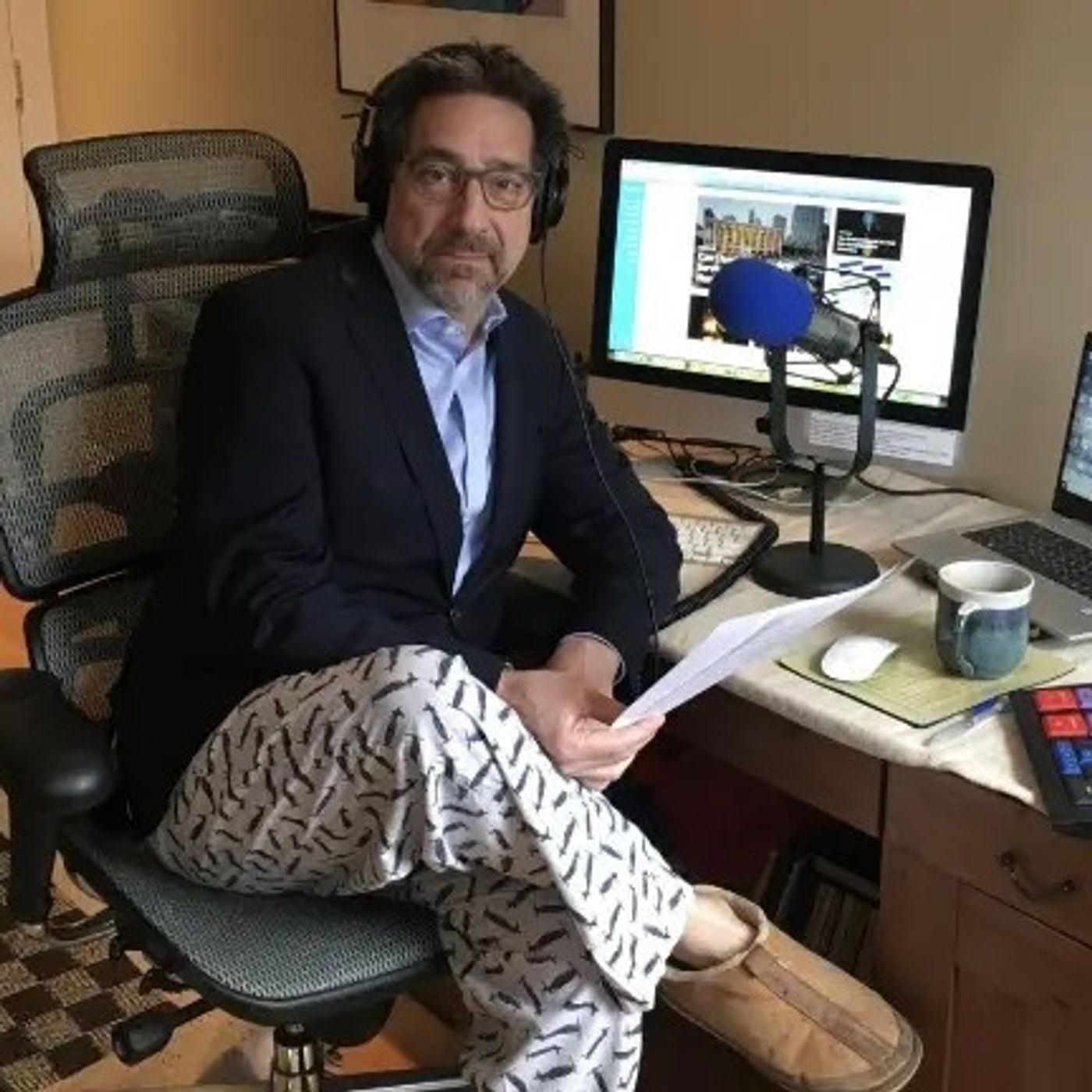
As WQXR morning host Jeff Spurgeon retires after a 50-year radio career, we sit down with him to reflect on his path from a Nebraska farm to three decades on New York's airwaves, and talk about classical music's surprising resurgence among Gen Z and Millennial listeners.
Photo: WQXR
Got any questions, comments or story ideas? Send us a message at [email protected].
- NYPD data shows decline in summer crime, as perceptions of safety shift
- ’I want to die': NYPD says it shot, killed knife-wielding man on Brooklyn Bridge cables
- Bask in the sunshine of NYC’s mild and sunny Labor Day weekend weather
Hosted by Simplecast, an AdsWizz company. See pcm.adswizz.com for information about our collection and use of personal data for advertising.
Get every episode summarized
Each time NYC NOW publishes, we email you a written briefing from the transcript — the topics, who appeared, and any specific claims, with the ad reads skipped.
Email me new episodesFree for 3 shows. No card needed.
Hosts & guests
Transcript ready
238 searchable segments. Every word is indexed and playable.
Full transcript
NYC NOW — How Classical Music Has Changed Over the Past 30 Years of WQXR Host Jeff Spurgeon's Career. Machine-transcribed; use the interactive transcript above to jump the player to any line.
From W and YC, this is InWisey Now. I'm Jean-Apeier. My suggestion for people who feel intimidated by classical music is find a piece that you like and then look for some more things like that. You don't have to know all of what is in the ocean in order to enjoy what's at your own beach. WQXR's Jeff Spurgeon has guided listeners through the big, bold world of classical music for over three decades. On Today's show, we discuss the evolution of the genre's audience and who's keeping it alive. But before we get into that, here's a few headlines we're following as we head into the weekend. Let's start with some pretty good news. You know how crime tends to spike in the warmer months? Well, NYPD officials say this summer was one of the safest in New York City history. According to police data, even crime in the city's public housing complexes and subway
systems continued to go down this summer. And it's not just us. Experts say violent crime has also been dropping consistently across the rest of the country. Though crime may be down, that doesn't mean the job is getting easier for the men and women in blue. This is our investigating after officers from the NYPD's emergency services unit shot and killed a man with a knife on the Brooklyn Bridge in the wee hours of the morning Friday. Officers hooked up to harnesses met the man on the cables of the bridge. But after more than an hour of trying to persuade him to come down, officials say the man rushed towards them with a knife prompting one of them to shoot. The man's name hasn't been released yet, but other details are available at our new site, Gothamist. It's Labor Day weekend and meteorologists say it'll be perfect for all your outdoor plans. It's going to be mostly sunny and dry with pleasant temperatures throughout the holiday. From the US open to the West Indian Day Parade, there's no shortage of things to get into
this weekend. And if the plan is simply to chill with me myself and I, well, that's cool too. Just don't let the beautiful weather pass you by. This time next month, it may feel a lot different. Alright. Now let's get on with the show. New York City's premier classical music radio station WQXR is saying goodbye to longtime host Jeff Spurgeon. His departure comes as the genre expands. According to classical pulse 2026 and analysis of classical music consumption habits, Gen Z and millennials have been the fastest growing audience in the US for the past few years. It got me thinking about the impactful work of my colleagues down the hall. So I thought this would be a great time to talk with someone who's been keeping those 18th century hits in rotation. Jeff Spurgeon, welcome to the show. Thank you, Gen Z. Nice to be here. Congratulations to you. Oh, thank you. You're such a wonderful colleague.
I don't want to, you know, queue up the violins or everything. It'd be appropriate for the format. You would. It would, but. You are, you are a gem and you will definitely be missed. I'm wondering, Jeff, for you, when did you fall in love with classical music? I, I think that it happened over a long period of time. I had a good piano teacher when I was 11 or 12. Okay. So you play a bit. And yes, and that started with, with her. And I had a good high school music program. We didn't do tons of classical music, but there was band. We sang a little Latin in choir. When I came to New York, I began to sing with an early music group. That is not people who met early in the day, but music from before 1600. Renaissance, stuff and Gregorian chant and that kind of thing got into that deeply. And then I began to do news at WQXR. And the room was full of this music all the time. So it's been an education always for me.
Yeah. Yeah. You know, for some people who don't listen to classical music, you say the two words and you may think old music, right? White wigs. Right. Right. But you know, that doesn't mean that this genre is solely for older people. How have you seen your audience change over the 37 years that you've been with WQXR? It is true that classical music on the radio has always appealed to an older audience. But that's been true for at least three generations. So people seem to in some ways age into classical music. But one of the things that's become apparent to me in recent years, really as a result of the way that listeners communicate with us now, is that there are tons of families who listen to classical music. People have grown up listening to WQXR in the car on the way to school. And so yes, the appeal has often been for older people.
But it seems that people come to it. If they're exposed to it when they're young, they return to it a little bit later on. Yeah. If I can get a little personal here, I remember hearing classical music. But I remember going out and seeking it for myself when I was in college, just to help me study. It was the thing I had on in the background. I'm wondering, what do you think is behind this shift that we're seeing in New York City? Well, I think that you're right. I know that younger people are using it to study. And honestly, I think we've always understood that classical radio has people who love classical music and the people who love that pretty audio wallpaper. Isn't that nice looking? It's so nice and it's so tranquil and it feels good. And that is a legitimate use of the music. And so I think that younger people are finding it that way. Also, there are tons and tons of video game scores that are recorded by symphony orchestras.
So in the way that my generation learned about classical music from cartoons, I think a generation today is learning about it because video game scores. Wow. You know, I had got about that, but you're absolutely right. I have heard this. I know how much pride you take in bringing classical music to so many listeners in New York City and beyond. But the growth we're seeing in classical listenership goes beyond terrestrial radio. The report that I mentioned earlier also looked into who's attending classical music concerts. And again, Gen Z millennials are are feeling those seats as well. I'm curious to hear your thoughts on that. Well, there are new compositions and younger composers who are taking a look at the music and changing it for their own generation, putting their own perspective on it, which is not a new thing. A remix. Yes, that's right. A recreation and that, but that has happened all through the history of classical music. There have been composers who have taken what we have and changed it and made it better, made it more relatable to the audience of the moment.
Who are some of the composers and musicians you find younger audiences are most drawn to? Well, some of the performers that draw people like Ray Chen, he's a violinist, young guy, very charismatic, has an enormous YouTube following and he created a practice app. So for young people who want to play the violin, he's got tons of little tips for to help them. Hillary Han, another violinist who has done that with a with a practice project that she's created and that has attracted young students. I will put in a plug here for Carnegie Hall's National Youth Orchestra. It's a program that's been running for about 15 years. They audition orchestral students from around the country and they have a couple of generations now of that program. And it really has attracted a lot of young people and also been a place where people who love classical music can come together because you don't always find somebody right next to you who loves the music the way you do. You know, Jeff, I want to talk about accessibility when it comes to classical music.
Is it cheap to go to a classical music concert? Yes. You can find inexpensive seats at Carnegie Hall for the New York Philharmonic, for all kinds of concerts around the city, compare it to the price of going to a popular artist's concert. They're going to find classical music much more accessible. You want to see a Broadway show, you're going to pay a hefty price for that these days. You want to go here a great orchestra at Carnegie Hall, 25, 30 bucks, you can find those seats. So I think that the accessibility question is really a question of understanding how to get in. It's not that expensive. I think more people are intimidated by what they think classical music is supposed to be than they are by the ticket price itself. Yeah, you talk about understanding it all. WQXR does a great job doing that. Can you talk about that? Can you plug the station? It was Clive Gilinson who's the executive and artistic director of Carnegie Hall.
We were talking with him one day and he said WQXR is the most democratic way of enjoying classical music. All you need is a radio or an internet connection and you can get to WQXR. So my suggestion for people who feel intimidated by classical music is find a piece that you like and then look for some more things like that. You don't have to know all of what is in the ocean in order to enjoy what's at your own beach. So enjoy what you find. Beautifully said. Wow. I'm talking with WQXR's Morning Host Jeff Spurgeon about the resurgence of classical music. But after the break, we switch gears and discuss the resurgence of Jeff's free time. He's retiring today after a 50 year career in radio. Stick around. We'll be right back. Music
Are you hungry for some great investigative journalism that sounds like a music? Then Radio Lab might be the show for you. Radio Lab began over 20 years ago as an exploration of science, philosophy, and ethics. The show is in expanded to become a platform for some of the best long form journalism and storytelling you'll hear today. Join Chad, Lulu Miller, and myself, Letth of Nostar, as we investigate stories that provoke, delight, and ask you to completely change the way you view the world. You can find Radio Lab wherever you get podcasts. Music Welcome back to NYC now. I'm talking with WQXR's Morning Host Jeff Spurgeon who retired this week after three decades of guiding listeners through the big, bold world of classical music. Overall, he spent 50 years working in radio. So Jeff, you were raised on a farm in Nebraska. How did you end up in New York City?
A woman. That's the truth. That's the truth. It's a lucky lady. I was working in Omaha. I actually grew up in my hometown in Scott's Bluff, which is in the western part of Nebraska. But I got a job fairly early in my career in Omaha. Was there? Met a woman who was from Long Island. We dated a couple of years here and there, and then I was like, What did you say? Is this going anywhere? So I came out and got a job in New York. And the relationship ended, but I met my wife at the first job I got in New York City. And then eventually went to WQXR after a few years in New York. So it's pretty safe to say that you love your job, right? Oh, it's been amazing. Can you bring me back to the moment that you were first brought on to WQXR? Because I understand that you were a fan effort. Yes, I was a station I loved listening to.
It was a news job. It was I began working as a newscaster at WQXR. I'd been fired from another radio station in town. They'd had a format change. And I learned about a news opportunity at WQXR. And it was a great thrill just to join the part-time staff of this station that I listened to. And to hear idols of mine as broadcasters and begin to become their colleague. And that was an incredible experience. And then yes, the music is endlessly rich and endlessly fascinating. So you're right, Jenae. I'm incredibly lucky to have had a job I've loved so much. I'm wondering what are some of your favorite moments that come to mind when you reflect on your time hosting at WQXR? Well, there have been a great many. I've had many amazing opportunities to meet artists, to meet these people who enter the station. To meet these people who entertain and thrill audiences around the globe with incredible talent.
And to watch them work and see the music made up close. To talk about the richness in the repertoire, this music that stretches back hundreds and hundreds of years. And yet still touches us and to relate that music to people who bring it to life today has been a real thrill. I've also had some amazing travel opportunities. So I've visited some of the capitals where this music has been made. To go to the streets of Salzburg where Mozart grew up has been a thrill. To spend time in Prague where at Vorzhak and Smetana created great works that were of such pride to their countrymen, to the Czech people at a time when that nation was trying to get itself out from under the Prussian rule. There's so much history and to have experienced that in person has been rich too. Yeah, you talked earlier about all the wonderful musicians and composers you've been able to sit down and interview.
And I know this has to be an unfair question as a journalist myself. But is there a conversation that has stuck with you over the years? Something that you just find yourself often coming back to? Remember a conversation about Bach with violinist Jennifer Koeh? I loved a conversation with the band leader Vince Jordana when the conductor Maurice Paris when they were recreating the concert at which Rhapsody in blue was first performed in New York City in 1924. Had a wonderful evening with pianist Andra Schiff in the green space here at the New York Public Radio Studios. And any number of conversations with players and conductors talking about the richness of this music. Wow, wow, such a fascinating and illustrious career you've had. Do you think you'll still spend your mornings listening to classical music? I am looking forward to going out of doors between the hours of 5.30 am and 11 am.
That's going to be a big refreshment. What's the song? A whole new world? Yes, that's right. So I'm really looking forward actually just to breaking up that routine after very many years. Yes, I'm going to continue to listen to classical music and to WQXR. And what else does retirement have in store for Jeff Spurgeon? I'm also looking forward to mispronouncing fewer things. I think that's going to be a real change. I think you get a pass when it's classical music. Well, thank you. At least that's what I told myself when I was filming in every one time. We need a lot of those passes. And I'm looking forward to actually going to a few more things in New York that happen at night that are hard to see when you start your day in the early hours. All right, look for Jeff Spurgeon at night, y'all. That's right. That's Jeff Spurgeon. Long time, morning host at WQXR, New York City's classical music radio station. Jeff congrats again and thanks so much for all you've done.
Oh, thanks so much for having me with you today. And thank you for listening to NYC now. I'm Janay Pierre. See you next time.
More episodes
More from NYC NOW

After 9/11, Two New Yorkers Told WNYC How They Felt. We Found Them 25 Years Late...
NYC NOW

Why More City Dwellers Are Raising Chickens
NYC NOW

Why New York City Is Restricting Artificial Intelligence in Public Schools
NYC NOW

Ahead of Labor Day, Haitian Businesses in New York City Feel the Impact of TPS E...
NYC NOW