About this episode
Then, homeschooling numbers continue to rise in the U.S. Retired professor Kenny Anthony explains the trend.
And, we’re taught that growing up means putting away childish things. That includes trading the magic of fairy tales for serious adult novels. But what if turning our backs on children's literature is a mistake? Oxford University professor and children’s author Katherine Rundell makes the case for "Why You Should Read Children's Books, Even Though You Are So Old and Wise."
See pcm.adswizz.com for information about our collection and use of personal data for sponsorship and to manage your podcast sponsorship preferences.
NPR Privacy Policy
Get every episode summarized
Each time Here & Now Anytime publishes, we email you a written briefing from the transcript — the topics, who appeared, and any specific claims, with the ad reads skipped.
Email me new episodesFree for 3 shows. No card needed.
Hosts & guests

Transcript ready
232 searchable segments. Every word is indexed and playable.
Full transcript
Here & Now Anytime — How the soaring coast of diesel is hitting school budgets. Machine-transcribed; use the interactive transcript above to jump the player to any line.
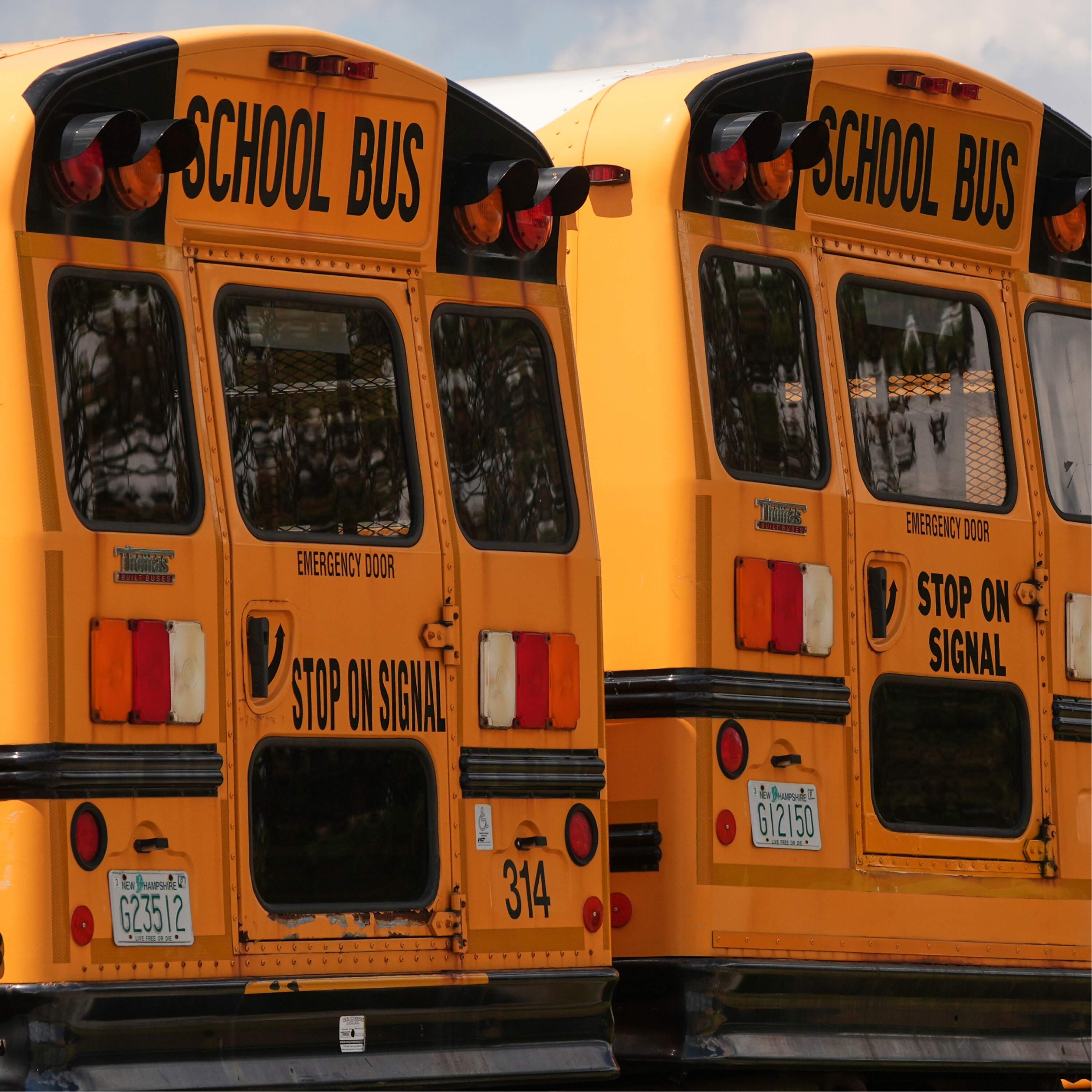
This message comes from NPR sponsor Raymond James, a firm where wealth management, banking, and capital market solutions start with the connections between people. That's the power of personal. Disclosures at RaymondJames.com. WBUR Podcasts, Boston. So we're talking about the difference of having a one teacher in our district, which is significant if you're a student. The high price of diesel has impact far from the gas pump. One school district in Washington states says they're paying an extra $100,000 a year to fill up their fleet of buses. Money they could have spent on hiring another teacher. It's Friday, September 4th, and this is here and now anytime from NPR and WBUR. I'm Chris Bentley. Today on the show, it's a back-to-school special. Depending on where you are in the country,
kids have either been back in school for a month or so, or they're about to enjoy the last weekend of summer before returning to the classroom. Of course, for some people, the classroom is at home. In fact, home schooling is on the rise, and the US will learn why. I think the public's mind has been associated with maybe religious conservatives or political conservatives, but that's not necessarily only true. And we'll talk to author Catherine Rundle, who says children's literature is not just for kids. The greatest children's books are, I think, a way of accessing that which is most sharp and clear within us. But first, schools across the country are getting squeezed by funding cuts and rising costs. One place they're feeling the pinch is in the cost of transportation. A third of districts said they had to tap into emergency funds this year to help fuel their fleets of school buses. Diesel is on average $2 more expensive per gallon than it was one year ago. Trevor Green knows
that well. He is super intended for Yakima school district in Yakima, Washington. He said they burned 87,000 gallons of diesel last year at the current price. That would be over half a million bucks for fuel. Green tells Peter O'Dowd they sometimes get cheaper diesel from the nearby Native American reservation, but he says higher costs are definitely having an impact. Well, we're strained in our budget in the state of Washington. Education is not fully funded, even though that's the paramount duty of the state. We do anticipate that the price level of the district could expand an additional 130,000 this coming year on diesel fuel to put that into perspective. The average cost of a single teacher in the district is just under $140,000 with salary and benefits. So we're talking about the difference of having one teacher in our district, which is significant if you're a student. Yeah. Wow. So across the country schools are making kind of tough choices about programs and bus routes and maybe even staffing. What have you had to consider? What have you done
to make up the difference? We worked on offsetting the cost by rerouting our buses and changing bell times and that should actually lead to some savings. So the good news for us is it's given us a good excuse to look at doing work or operating a little bit differently and with that we think we'll be able to offset the cost this year. Tell me about shifting bell times. How does that help you? Well, when we have multiple elementaries going at the same time, we have to have more buses out on the road. So if we can consolidate some of the routes and make them maybe a little bit longer, but half of our elementaries now start earlier, about 15 to 20 minutes earlier than another cohort of of elementaries, which allows us some flexibility in having some some rerouting issues and allows us to save and offset some of those costs. Sounds tough for your schools. What about the families that you serve in this part of Washington state? Are they feeling the price of diesel?
They're feeling the price are our families of every cost that does go up. We live in a community that's over 80% our students are at 80% poverty on a scale of 100% obviously and it does impact prices go up and job salaries don't go up and so that does create some decisions that have to be made just like we're making here as a district and looking at streamlining opportunities that we have out there and looking at the challenges as I just said as opportunities and recognizing what we can control and what we can't. So, you know, it's not it's important not to admire the problem, but to actually come up with a solution and we're fortunate to have a small geographical footprint. So we're actually about 15 square miles so our routes are shorter than most of our neighboring rural districts. So I do become more concerned. I think if you're talking about some of the elongated routes of the mountainous regions, we have naches which is near us. It has probably the greatest largest geographical area in the state and serving students in a very
small district so I would imagine it's impacting them much differently. To your point about solutions, we don't know when this conflict in the Middle East will end or when prices will eventually come down for fuel. Have you been thinking about the future? I mean, you know, maybe doing something like an electric bus so you wouldn't be holding to the price of gas? We've already explored that option. We do have a small number of propane buses as well as six electric buses. The electric buses that we do have were grant funded. The issue that we have with them is it's operationally challenging because they don't necessarily function as well in hot and cold weather. So they are good for us in certain conditions and they're working well right now, but we do live in an area that will get quite cold in the winter and typically around July at June, July it's a little bit different for us. So we'll continue to work with the mix of having the regular diesel electric buses and propane buses. Trevor Green is super intended for Yakima
school district in Yakima, Washington, which is spending well over $100,000 extra in a school year to accommodate the cost of diesel. Trevor Green, thank you for your time. Well, thank you much. Appreciate it. Coming up next, what's behind the increase in home schooling lately? Find out in just a minute. Aside from rising costs, schools are also grappling with the rise of artificial intelligence. We've got lots more on that topic. Scroll back in the feed to Wednesday, September 2nd. Among other things, we dug into New York City's policy banning public school kids from using AI until high school. And last Friday on August 28th, we looked at how AI is making its way into all sorts of emergency services for better and worse. But rules restricting AI use in public schools
would not apply to the increasingly growing share of families that are home schooling their kids. About 30 states plus Washington, DC track home schooling trends. And more than a third of them say they hit record numbers last year. Kenny Anthony has been looking into why this is happening. He's a retired education professor from Mississippi State University. He tells Scott Tong, a lot of families tried home schooling during the coronavirus pandemic in 2020. And some of them never came back to the classroom today or I guess last school year, about 3.4 million school aged children are being home schooled. And that's about 6% of the school age children in the United States. And then of course, you're probably familiar with the idea that there's been disappearing children from public schools and private schools and some of those are some of those were just they're kind of lost in accountability. But a large number of those are in homeschooled. We did some research into homeschooling and motivations of homeschooled. And so we looked at
people who had homeschooled before and people who had homeschooled after started homeschooling during during COVID. And so we asked them why do you homeschool? And the interesting thing is that everyone had a chance to experience learning at home. And for many of those families, maybe some of these that are in the growth of homeschooling, they realized that hey, I can actually do this on my own. They may have we called it kind of like a catalyst that COVID didn't cause it, but it was a catalyst to allowing them to kind of opening the door. Oh, so some parents maybe were already thinking about it and in the pandemic gave them the chance to try it. Yes. And so a long time ago, people just think that homeschool parents or parents who decide to homeschool their children are angry or mad at schools or there's something that's a negative decision. Most of the research shows including the research that we did shows it's a positive decision. But often you need something to push you into that decision. And then it could be a negative like COVID. Back in 2009, I did some
research that showed it was a smaller qualitative study. The families that I interviewed, they said, you know, yeah, I was frustrated with something at the schools. Maybe I had too many bus, you know, had me in the school drop off, I said to take my kids to four different schools or maybe there was something with my child that learning something my child wasn't getting from the schools, far as individualized learning. And that made me think about homeschooling and maybe even push me to homeschooling. But what happened was once they got into homeschooling, they realized that there were some pretty good benefits to homeschooling for their family, for their children. And they stayed for that positive reason, if that makes sense. Yeah. And let me ask you about the benefits as the parents saw them from your research and others. What do these parents say are the benefits? This first is curricular benefits. You can individualize instruction. If the children have an interest or a specific need, the parent can go find a resource to tap into that. And of course, there are the concerns, there are ideological concerns about, you know, whether or not what's taught maybe in schools,
maybe there are some differences there. And so they have the ability to reinforce at home the the family values or religious values that they have. Dude, do you find from the data that a good percentage, a good portion of families that are homeschooling have an ideological religious motivation? I would say that our research in most research shows that homeschool families are across the ideological or partisan spectrum, political spectrum. You've got liberals, you've got conservatives, you have libertarians, you have religious people, you have non-religious people, you have atheists. The movement now, I think in the modern iteration of the past 2025 years, I think in the public's mind has been associated with maybe religious conservatives or political conservatives, but that's not necessarily only true that you find people who homeschool across the board, if that makes sense. Fascinating. But regardless, they may make their decision, though partially based upon ideology, whether they're conservative or liberal.
And do you understand Kenyanthanie, you have personal experience with homeschooling? I do. And so it's interesting. I am actually, you know, I'm non-partisan when it comes to schooling. I've had children in public schools, private schools, and now homeschooling. And we made our decision at a chance to move for a year up to Rhode Island. And while we're up there, we decided to, like, that our kids homeschool children, mainly because that flexibility, I was only going to be working about half a day. And so I'd have a lot of time and it was an opportunity for us as a family to go and do things together in a part of the country where we didn't live. If you'd have asked me when I got into homeschool research, if I homeschooled my kids, that's a never. Really? Because it's hard. It's difficult. It's hard on the family. It's a huge sacrifice. You know, you're sacrificing probably one income. You're also sacrificing a lot of time and you're taking a risk. Not only a risk, but you're assuming most of their responsibility for the education of your children. And I guess I'm an example of the guy who realized that at this time
of my life, it was a good, it worked for our family. But I had no problem. I had children who, you know, I children attended all types of schools. I've taught in public schools and I support public schools, I guess, as my point. And I think public schools are vital to on the United States and its success, you know, as a society. We've been talking about the rise in homeschooling in this country with Kenny Anthony, retired education professor from Mississippi State University. Kenny, thanks so much for the time. Thank you. Appreciate it. Well, our next story is about something school kids and adults can do together. A famous children's author says her books are not just for kids. Catherine Rundle is just out with the third novel in her Impossible Creatures series. That one's called The Never Fear. And she's also written an essay called Why You Should Read Children's Books, even though you are so old and wise. She makes the case to endure
a locksmithing on after the break. We're taught that growing up means putting away childish things. That includes trading the magic of fairy tales for serious adult novels. But what if discarding children's literature is a mistake? Catherine Rundle believes it is. She's a Renaissance literature scholar at Oxford and the first British children's author since JK Rowling of Harry Potter fame to hit number one on the US and UK sales charts. Disney made a seven figure deal to adapt her fantasy series Impossible Creatures into films. Catherine Rundle, welcome to here and now. Thank you so much for having me. I want to start with why most people stop reading children's novels when they grow up and why you think that's a mistake? I think we have been embarrassed by the idea of children's fiction since children's fiction began. Martin Amos famously said, you know, people ask me,
I may have a writer children's book and I say, if I had a serious brain injury, then I might write a children's book. But my argument would be not only the children deserve our very finest work, because every time you write for a child, you might be writing someone for whom you are the first book they have ever read in its entirety. But also the greatest children's books at their finest are I think a way of accessing that which is most sharp and clear within us. They can speak to us about huge themes like power, endurance, fear, faith, care, love, doubt, passion. All of these things you can find in Northern Lights in Ursula Laguin's Earthsea and Pippie Longstocking in Paddington Bear in Stuart Little. If you turn to children's fiction, you can, I think, find what in
Josephus when all our adult compromises and poses a stripped away, you can, I think, find the very meat of a human heart. So if the greatest children's literature it is stills our purest emotions, who do you write for your 12 year old self or your adult self? So I think I am writing for both simultaneously and of course for the child of this moment as well. So I think I write for three people. For what I longed for when I was 12 and that would have been big adventures, peril, food descriptions, jokes. But also as an adult I want reality, not necessarily reality of plot, reality in the sense of truth. The truth about our aggression, our capacity for darkness, the rat that lives at the heart of the human stomach. But then I also write for children right now, I do think a lot about what they need. I try not to write for kids 30 years ago and I try to write
books that will salute how clever they are and how much they deserve. What do you say to elites of the literary fiction world who dismiss children's literature as frivolous or escapist? So I think I always say is it is not escapism, it is findism, it is secrecy, it is a way of searching out large ideas, questions, answers. And I think one of the things that children's fiction can do is it can unassumably think about hope. The best children's fiction does not deny that there is darkness, though the world burns, it is on fire and there will be more to come. It is always worth teaching children how to rejoice. And I think if you think of the joy in children's fiction, it explodes from those books. It is a kind of a stick of dynamite of hope.
Catherine, before fairy tales and adventures, the earliest children's books were more like behavior instruction manuals. Tell us about the history of children's books in English. Absolutely. So as you say, the very earliest children's books which we find in the middle ages were sort of mostly fixated on controlling children. They were very much focused around getting children not to spit on the ground or pick their noses. That was a real theme. So these are ongoing problems in other words. They've never gone away. And then you see the idea, particularly in the 18th and 19th centuries, of a child as somebody whose morality is to be constantly shaped. That is what children's literature is for. It is not for delight. It is not to try to entertain or captivate. It is too instruct and it is in many ways to control. And then with the great golden age, you start getting the sense of writers who are
in the form of Louis Carroll, Kipling J and Barry E. Nezbert looking a child clearly in the face, looking at what they actually are and writing books about the reality of the child heart. Alice in Alice in Wonderland is a difficult girl who doesn't obey the rules. And so you start getting the sense that children's fiction is being unhooked from the schoolroom and the pulpit and set free. That I think is where children's fiction starts to become one of the most exciting art forms that we have ever created. You start getting Mary Poppins, you get the tiger who came to tea. You start getting things like the wonderful Wizard of Oz and extraordinarily bonkers book with extraordinary power. And you know, I think one of the things that I love that children's fiction has been doing since it became for children rather than for adult anxieties about
children. It has been saluting the child heart. It's wildness, it's strangeness, it's idiosyncrasy, children are stranger than adults because they have not yet learned to conform. And that I think has power in it. You know, you mentioned Elf Frankbaum. I as a child read all 14 original novels in the Wizard of Oz series. And as you say, they were utterly utterly bonkers. Nothing is too strange for children's literature, which I find unbelievably invigorating. All right, let me ask about how you've put your thoughts into practice in your own books for young readers. The never fear is the third in your impossible creature series. The book is named after a ship in the story. And one thing about this ship is it gets broken, it gets rebuilt. And I wonder whether the never fear is a metaphor for rebuilding ourselves when we're shipwrecked by adulthood. Exactly that.
So the never fear is the ship on which Christopher the protagonist and his best friend, his co-hero, and your Argon, the two of them know what it is to fear. And in their journey, which is around the idea of two children suddenly being asked to perform tasks, which no child expects to be asked, that are very literally herculane in that they draw the tasks of hercules. But then they fail at one of the tasks. And failure looks like it might be absolute despair. It might mean that they have lost one of the people they love most. And I wanted the never fear at that moment to be something which gives them a sense of hope, a sense that yes, we will all be shipwrecked. Nobody makes it through their adult life without shipwreck. But you rebuild faster and tougher with a kind of flair and a kind of sweep and skill that you didn't have before.
And that I think is a thing that I hope a child reading it. Some of them will just take the adventure, but some of them I hope might also take the idea that it's not going to be easy this being human. But it is going to be a thing to be cherished. Oxford Scholar Catherine Rundle is the author of the fantasy novel The Never Fear and the extended essay Why You Should Read Children's Books Even Though You Are So Old and Wise. Catherine Rundle, thank you so much for joining us. Thank you so much for having me. That's it for our show today. Here and now, anytime comes from NPR and WBUArb Austin. Today's stories were produced by Ashley Locke and Jenna Griffiths. Lots more to read and listen to at here and now.org. Today's editors were Todd Munt, Mikhail Aradbikes, and Michael Skato. Technical direction from Matt Reid and Andre Peralta. Our theme music is by Mike Misketto, Max Leedman, and me, Chris Bentley.
Our digital producers are Allison Hagen and Grace Griffin, and here now's executive producer is Alan Price. Thanks for listening. Have a great weekend. It's a holiday weekend, but we will have a new episode for you on Monday. You don't want to miss it. So click that follow button. Make sure you keep up with here and now anytime when we're back with you on Monday.
More episodes
More from Here & Now Anytime

The story behind the photo that captures the horror of 9/11
Here & Now Anytime

The conservative movement, one year after the killing of Charlie Kirk
Here & Now Anytime

9/11 and the long shadow of Islamophobia
Here & Now Anytime

Israel faces global outrage over West Bank violence
Here & Now Anytime