About this episode
Also, film critic Justin Chang reviews Practical Magic 2.
Subscribe to our free weekly newsletter
Follow us on Instagram
Subscribe to our YouTube channel
Check out the Fresh Air Archives
See pcm.adswizz.com for information about our collection and use of personal data for sponsorship and to manage your podcast sponsorship preferences.
NPR Privacy Policy
Get every episode summarized
Each time Fresh Air publishes, we email you a written briefing from the transcript — the topics, who appeared, and any specific claims, with the ad reads skipped.
Email me new episodesFree for 3 shows. No card needed.
Hosts & guests

Transcript ready
550 searchable segments. Every word is indexed and playable.
Full transcript
Fresh Air — How the WNBA became a political prop in the culture wars. Machine-transcribed; use the interactive transcript above to jump the player to any line.
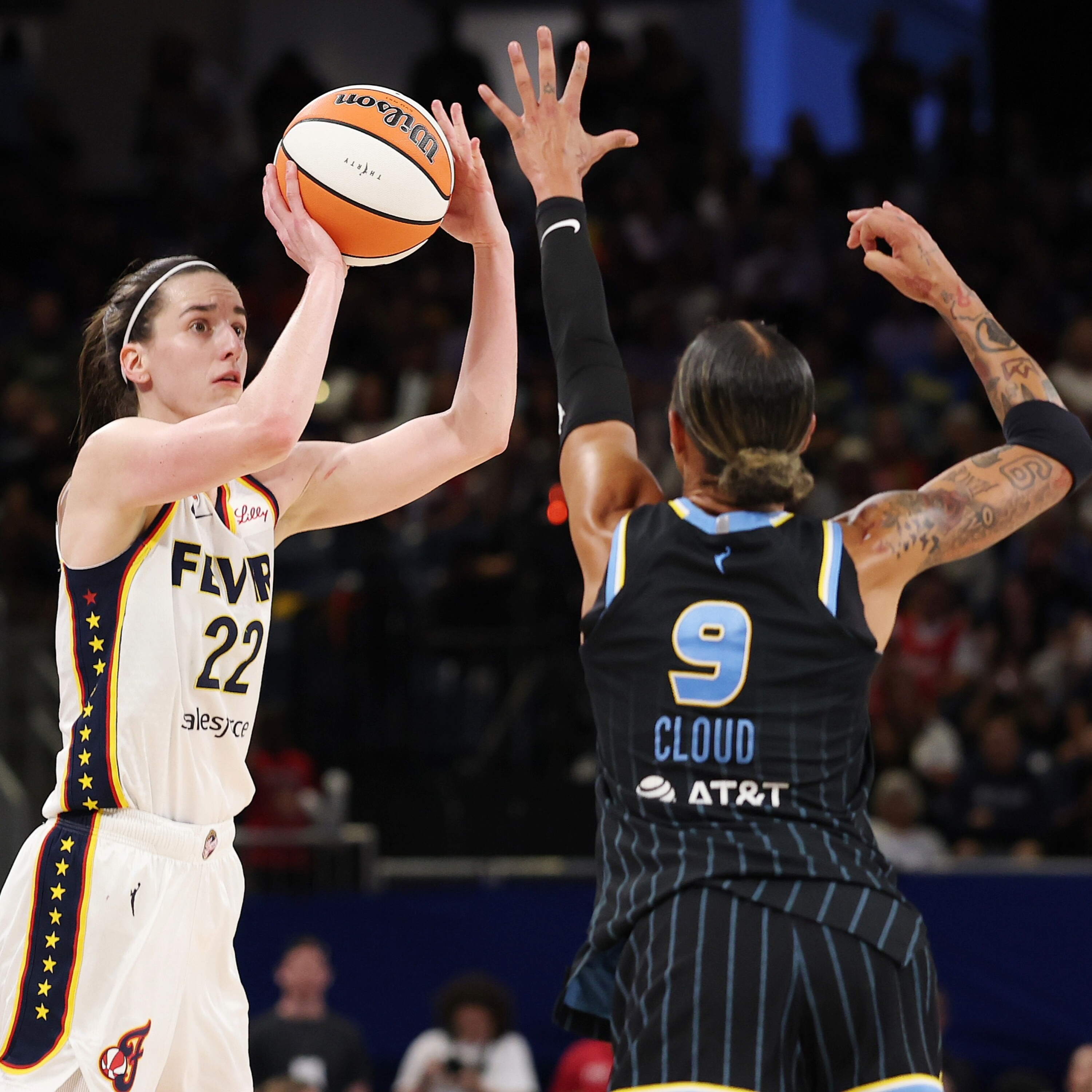
At NPR, there's a little something for everyone. If you need advice for that big life change, try listening to LifeKit. If you want to know more about that new TV show, check out Pop Culture Happy Hour. And if you want to dive deeper into your favorite podcasts and enjoy perks like bonus episodes, archive access, and more, check out NPR Plus. Find out more and support the shows you love at plus.npr.org. This is Fresh Air. I'm Terry Gross. In June, the WNBA announced significant expansion of the league, with new teams coming to Cleveland, Detroit, and Philadelphia. It's a milestone for the sport, as women's basketball gains both fan and corporate support. At the same time, the league has been embroiled in controversy that has more to do with the culture wars than with the game. Sabrina Merchant covers the WNBA for the New York Times Sports Journalism site The Athletic. She spoke with guest interviewer Sam Fragoso, host of the interview podcast Talk Easy. Here's Sam.
By any metric, the WNBA, the Women's National Basketball Association, is having a landmark year. Record viewership and attendance, soaring team valuations, and a massive $3.1 billion media rights deal with partners like Disney, ABC, and Amazon. And that's only the business. The basketball is chock full of talent across the league. And the scoring talents like Asia Wilson and Brianna Stewart, young dynamic rim runners like Angel Reese and Kiki Iruffin, Steely Veterans like Chelsea Gray and Kelsey Mitchell to fan favorites like Olivia Miles and Sophie Cunningham. The difficult degree of shot making the acrobatics, the extended range, night to night, the game has never flowed better or been more competitive. And yet, as WBUR reporter Kari Thompson writes, the collision of what the WNBA has always been, a lifeline to the LGBTQ plus community and what it's becoming as a result of this newfound attention following Indiana Fever star Caitlin Clark's arrival in 2024, has turned
the league into a target. According to media matters since June 25, Fox News has dedicated at least 206 segments to the WNBA, largely aimed at stoking cultural war tensions related to race, trans athletes, and more. My guest today is sports reporter Sabrina Merchant. She covers the WNBA for the athletic and has been on the beat for nearly a decade. Sabrina Merchant, welcome to Fresh Air. Thank you for having me. To start, the commissioner of the WNBA, Kathy Engelbert, has announced her retirement come the end of this season. Why was this the time for her to step down? So this past offseason, the commissioner presided over her second collective bargaining agreement negotiation, landmark deal that pushed WNBA salaries into the seven figures, introduced revenue sharing into the league, meaningfully for the very first time, and has just completely transformed the economics of the business. And it always seemed like this would be the last CBA that Kathy Engelbert wouldn't negotiate.
It was just a matter of time of when she decided to step down, whether that was closer to the signing of this one or closer to the expiration of the state. I guess she decided that this was the right time. She has said that she only intended to be in this job for less than five years, and she is completing her, I guess, eighth season. She came in sort of midway through the first season. So she is about seven years since she took on the job. At the end of last season, Nefisa Collier, who's a Ford for the Minnesota Lynx, arguably the best team in the league right now, said, quote, we have the best players in the world. We have the best fans in the world, but right now we have the worst leadership in the world. Are those comments reflective of a larger sentiment around the league, especially with the players? Yeah, if you really brought it with that statement, you know, she had just been injured a few days earlier in a playoff game that essentially ended the Lynx chances of winning her first WNBA title, and I imagine the emotions were pretty high.
She eventually had to have surgery on both ankles. You know, came into this exit interview setting on a scooter, I believe, like, or crutches like a combination of the two. She was, you know, not the kind of state that you want to be when you'd rather be playing in the WNBA finals. And she has since said that she was being a little dramatic with the worst leadership in the world comment. I do think she intended to get across the fact that the WNBA officiating needs to improve more than anything, and that there has to be a greater partnership between the league and its player stakeholders. But I don't think it is out of ordinary among the players to be critical of Kathy Engelberts leadership and her ability to communicate and maintain relationships with the players. That was at the heart of the negotiations and a lot of the distrust during the collective bargaining agreement process, you know, from about January to March of this year. And it is a sentiment that like, not just a piece of collars expressed, but other players around the league. I think the successful ratification of a new CBA has sort of alleviated some of those
concerns. But even so, a lot of the issues that have popped up over the course of the season with regards to the culture wars and officiating and online hate and vitriol that the players are experiencing, you know, players weren't necessarily satisfied with the way that the commissioner had responded to all of those things and her ability to protect the players in those situations. And what way were they not satisfied with her protection or lack thereof? There has been a sense that the league is more reactive than proactive and doesn't make efforts to, you know, provide online safety platforms or reach out to players until they have been the victims of doxing or death threats or, you know, really terrible behavior online, you know, too such players, Duana Bonner and Alyssa Thomas, who received just an enormous amount of online hate after Alyssa Thomas admitted a flagrant foul on Kate Linclarke earlier in the season, said that they hadn't heard from the commissioner and that, you know, that the only safety and security protection they were receiving was from
their own team, the Phoenix Mercury. Is that common practice that they don't reach out after something so severe? Well, you would imagine that if Kate Linclarke was receiving death threats, that the response might be a little timelier, but I think there is a sentiment that... Why would want to imagine that? Because she is the most popular player in the league and has received the attention of the NBA commissioner when this, you know, whole flagrant foul incident happened. A flagrant foul wasn't actually adjudicated in real time during the game. It was assessed later and it was reported that Adam Silver was actually making the call to assess that flagrant foul, even though this is technically not his league. This is the WNBA and not the NBA. So there is a sentiment that there is a certain level of protection provided to some players and not others. Is the protection based on race or talent? I think popularity has something to do with it. You know, Caitlin is sort of the golden goose that came in in 2024 and created this rocket
ship of popularity that the league has experienced ever since. When we talk about viewership records, those tend to involve games that include the Indiana fever. Her WNBA draft was the most viewed. You know, when she participated in the All-Star game, that was the one that caused, you know, record attendance. So sort of an understanding that like this is where our bread is buttered. Let's make sure to take care of this and that's something that Adam Silver has at least publicly made clear that he is worried about the treatment that Caitlin Clark gets. That's not a sentiment that Kathy Engelbert has publicly expressed, but based on the way players' relationships are with the commissioner, there seems to be a sentiment that like certain players have better access to things than others. I noticed online that I did not see a ton of players, both current and former, lamenting her retirement. How would you describe the general feeling now?
I mean, you know, this record season in the WNBA, like I said, viewership, valuations, all-time high, attendance, all-time high is the league broadly excited for the commissioner to have stepped down and for her to find a replacement. I think part of the lack of reaction to the commissioner retiring from that player pool is that 50 current WNBA players are participating in the FIBA World Cup across the world in Berlin and this might not be at the top of their lists or things to be focusing on when they're playing games at the beginning of a very important international competition. But I think it's important to realize that the job Kathy Engelbert was hired for in 2019 as the commissioner of the WNBA is dramatically different from the job she currently presides over. The league was in a completely different place in 2019. It didn't have any sort of resonance in the national consciousness compared to what it does now. You know, WNBA finals games like weren't hitting a million viewers. Now you regularly get that for regular season games. Attendance was at different levels.
The way people talk about the league, it wasn't breaking through on social media or like internet platforms the way that it does now. She was basically brought in to improve the business of the league, which makes sense because she was the CEO of Deloitte when she was hired for the role. And she answers in this really strange situation where less than a year after she gets hired, COVID pandemic hits and she's now trying to construct a season in a bubble in Florida and they can't really bring in revenue as much because there's no fans and the entire economics of the league have shifted. And so she, I think pretty successfully navigated the league through that pandemic to got them out of it and had the league positioned where it was ready to, you know, ride this rocket ship once Caitlin Clark and Angel race arrived. But once the two of them came into the league, all of a sudden WNBA became a cultural phenomenon in a way that I don't think the commissioner was prepared to address. So while her business acumen has helped the league, you know, come to these heights and
you mentioned all of the economic milestones that they pay, there is just a lack of control of the narrative of the WNBA. And I don't think the commissioner is entirely to blame there. But because of the experiences of the players in their daily lives and online, how they are affected by this new cultural cache that the WNBA has, I think they want a commissioner who is better able to, again, control the story around the WNBA and prevent it from being a political prop in all of these culture wars. And do you suspect the next commissioner will be a former WNBA player? So that's tricky because one of the names that I've heard, you know, potentially in the running for the next WNBA commissioner, is the current president of basketball operations. Her name is Bethany Donovan. And she was a player for one year, but I wouldn't say that like her major claim to fame is because she was a player in the WNBA. I generally think it would be hard for a person who was recently a former player to be able to respond to the interests of the owners in the way that a commissioner has to, rather
than, you know, keeping her player hat on. So how do you mean? Well, the job of the commissioner is they serve the owners, right? Like they respond to the 15 currently owners in the WNBA and the board of governors. And so they have to protect their interests. And if it's a player, I think it's hard to separate that from the interests of the players, especially when the players are already represented by the head of their union, the president of the WNBA. So it almost feels like duplicative interests when I think there has to be a healthy give and take between the commissioner who is sitting at one side of the table and the players representative who is sitting at the other side of the table. Before we discuss the cultural wars that you referenced, big picture since the WNBA is off and many of its players are participating in the feeble world cup. Can you give us an overview of kind of the state of the league as it stands right now, like the 30,000 foot view, both on the court and off? On the court, I think the league is in a better place than it ever has been. The number of young stars who have come into the league of late, including, you know,
you previously mentioned Olivia Miles, we've got Kate and Clark, Paige Becker, is Angel Reese, Alia Boston, all of these players who are currently representing Team USA at the feeble world cup. They are more popular and more marketable than previous generations of stars have been. I think a lot of that has to do with the fact that they came of age during the NIL era in college and they were much bigger names when they got to the WNBA than their predecessors had been. For those who may not be familiar with the NIL era in college, can you give just a basic summary of it? Right. So in 2021, the courts ruled that college athletes could profit off of their individual name, image and likeness so they could make money independently of, you know, playing in college sports. Previously, the status of amateurism meant that college players couldn't accept money for anything they did while they were in college. And so by, you know, capitalizing on their NIL, they're able to do endorsements and marketing deals and appear in commercials and it just significantly increased their fan bases and made them
individual brands almost by the time they got to the pros. So there's a huge fan following. There's so much talent. The quality of play and the league is better than it ever has been. The playoff field is really exciting and it's kind of open. So no one really knows who's going to win the title in 2026. I think there's a lot of drama and potential storylines that could take place through these last four games of the regular season and into the post season. And a lot of players who could assert themselves to new heights because, you know, we could easily get a new champion and somebody else, you know, adding to their resume in a new and exciting way. But then there's also all of these things happening off the court that continue to permeate the discourse on September 3rd. Former NBA player, Ennis Cantor, freedom said that he was suing the Chicago sky for violating his first amendment rights by ejecting him from a game at Winchester, arena and then subsequently banning him from that arena because he stepped onto the court. And so things like this that just continue to make their way into the WMBA and
detract from all of the basketball that is being played is just this constant push and pull that the WMBA hasn't quite figured out how to navigate. And I'm not sure that's entirely on the commissioner, but it is preventing the leak from enjoying all of the fruits of its labor at a time when it really deserves to. I would say this season has had a few different flash points. One of them is this game between the Indiana fever and the Chicago sky in August. You referenced Ennis Cantor, freedom. He is a former NBA player who made upwards of $100 million before retiring with the Celtics where he averaged in his final season four points and three rebounds. Now he came to the game with a shirt that said, woman, parentheses, noun, adult, human female. And toward the end of the third quarter during a time out, Natasha Cloud, a player on the sky, goes to confront Cantor who's been sitting courts on all game. And subsequently, Cantor extends his arm, takes a step on the court which you cannot do
and is promptly ejected. Since then, he's been banned from the Chicago sky home games. Can you unpack beyond the description I just gave? What happened here? In July of this year, ESPN released a profile of Sophie County, him and athlete on the Indiana fever who has monetized being Caitlin Clark's teammate better than anybody else in the history of mankind. She has taken advantage of every opportunity to increase her popularity by being on the Indiana fever. She has sort of fashioned herself as Caitlin Clark's protector on the court. There is a segment of the fan base that came in with Caitlin Clark who believes that she is the victim of more heart fouls and isn't protected by WNBA officials. And in one game in 2025, after Caitlin Clark was the victim of a flagrant foul, Sophie County, him, proceeded to take out the player who fouled her on a fast break and ever since then has become a cult hero. So since then, her Q rating is off the charts relative to the first six seasons of her career
when she played Phoenix and was just this anonymous role player on a decent team in the WNBA. And in this profile that was written about her, she has a line in the middle of it where she says that she doesn't believe that trans women belong in girl sports. And she was asked about that after the profile came out and doubled down on her statement saying that she wants to protect young girls and sports. In doing so, Sophie became the first active professional women's athlete to express the sentiments about restricting transgender women from women sports. And a lot of people latched onto her as this avatar of this particular viewpoint of keeping women sports exclusively for cisgender women. And a couple of the people who latched onto Sophie's position are Annis Cantor Freedom and another former NBA player. As of now, the WNBA doesn't have an expressed policy about transgender athletes in their league. In the CBA, it says that you have to be a woman to play in the WNBA, but it doesn't go on to define what a woman is. And
why is that? Well, the WNBA has never had a transgender player in its history. They've had a couple of non-binary players, both of whom were assigned a female at birth. There have never been any eligibility concerns about transgender women wanting to enter the league. The NStableA doesn't even currently allow transgender athletes to play, so it's hard to see where the pipeline would come from. So it's a theoretical issue at this point, one that the WNBA is not currently presented with. Annis Cantor Freedom is one of the people who believes that the WNBA needs to clarify its policy to restrict transgender women from the league and came to the Chicago Sky Game in the attempts of making such a statement with that shirt. He proceeds to get into an altercation with Natasha Cloud, who they have previously had Twitter beef, and is ejected from the game, as you mentioned, because he stepped onto the court. Every security apparatus at the game, whether that's WNBA security, Chicago Sky security, like Arena Security, all agreed that he deserved to be ejected. And has since taken that as a violation of his First Amendment rights,
because he says that he was ejected for wanting to protect women. Beyond the lawsuit that he has recently filed, it's also resulted in a petition for the WNBA to enact, quote, female only eligibility criteria. And the petition features 18,000 signatures and counting, including NBA Hall of Famer Charles Barkley. So it sounds to me that within the league, and again, the CBA, as you described it, the issue of a trans athlete is not an issue in large part because the league has never had one. And yet what you describe as a theoretical problem has had, as I understand it, real world consequences on the entire league and fans within the LGBTQ plus community who feel obviously threatened by Cantor, and the players themselves who now find themselves defending and backpedaling and talking about an issue. I don't think they were prepared to talk about.
Yeah, Cantor is not the only person to come to a game because he was trying to, you know, espouse support for this exclusion of trans and arathletes. There have been many protests and like small rallies at a number of Indiana fever games during the second half of the season, with people in support of Sophie Cunningham staging outside of the games beforehand, coming into the games, waving signs. So the interactions have made their way onto the court. But again, all of these things are regarding an issue that has not actually made its way into the eligibility of the WMBA, and no other players in the league have said that they believe trans-dunder women should be excluded. And so we're seeing transgender women outside of the league, who are fans of the league. We are seeing members of the LGBTQ community within the league who are being excessively policed because could they be trans? And again, it is all surfacing from something that does not actually present an issue to the league as is. We're listening to the conversation
our guest interviewer, Sam Fragosa, recorded with Sabrina Merchant, a staff writer for the New York Times Sports Journalism Site, the Athletic. We'll hear more of their conversation after a short break. I'm Terry Gross, and this is Fresh Air. This message comes from the Center for US Voters Abroad Foundation. US citizens live, travel, and serve all over the world. But wherever they are, they can stay connected to home through voting. All US citizens abroad may request an absentee ballot to vote in the 2026 election, and requesting yours is easy. Keep your connection strong no matter how far away you are. Visit registerabroad.com to get started. This is Fresh Air. I'm Terry Gross. Let's get back to the interviewer, guest interviewer, Sam Fragosa, recorded with Sabrina Merchant. She covers the WNBA for the New York Times Sports Journalism Site, the Athletic. The other story I want to discuss, and you've alluded to it, is the game between the Indiana fever and the Phoenix Mercury that took place on June 24th.
Can you explain what happened on this play between Caitlin Clark and Alyssa Thomas? And what happened in its aftermath? In doing so, I feel like we should back up a couple days to the previous game between the Indiana fever and the Phoenix Mercury when a few of the players got into a little bit of a tussle and had to be separated by the officials. And as part of that tussle, Sophie Cunningham became infamous for this point that she was directing at one of the members of the Phoenix Mercury to want a bonner who used to play on the Indiana fever last season before a less than amicable split. So two days later, the teams play again. There are heightened tensions because of what had just happened. And I think it's safe to say that the officials did not do a good job of controlling the game from the start. How do you mean? They let a lot of contact go that probably should have been officiated more tightly and whistle as fouls to not let the game get out of hand. But this is something that the WNBA had recognized as a problem and created an officiating task force in
2026 to tighten up the game and allow for more freedom of movement and to prevent things from getting out of hand. So this game between the Indian fever and the Phoenix Mercury seemed like a perfect opportunity to keep things tight from the start. They did not do so. Things get a little bit physical. In one possession, you know, Kate O'Clarke goes down on the ground, Alyssa Thomas is trying to get the ball from her, ends up pushing her fist into Caitlin Clark's throat. The Indian fever coaching staff is obviously irate. No foul is whistled in the moment. But afterwards, Alyssa Thomas has given a flagrant two foul and suspended for one game. Do you think the foul itself was a basketball play? I do not think it was a basketball play. Things like that unfortunately happened during the course of the game inadvertently when bodies are flying around. I don't think Alyssa Thomas intentionally meant to put her fist into Caitlin Clark's throat, but it did happen and it necessitated a flagrant two foul and the subsequent suspension. In your reporting, have you found that Clark's opponents are disproportionately
targeting her because of her race? The data does not suggest that at all. Caitlin Clark draws more fouls than any other guard in the league. And yes, she has more usage. She has the ball in her hands more often, but she's still getting to the line and drawing fouls at a higher rate than other players at her position. So to suggest that she is getting played more physically, maybe that's the case, but she is also receiving the fouls because of that and earning the free throws as a result. Do you think her opponents are tougher on her or target her because she's from De Moine, Iowa? Is it because she has a $28 million shoe deal? I mean, does any of those claims bear any truth or in reality in your reporting? What I will acknowledge is that the way to successfully defend Caitlin Clark is to pressure her for 94 feet. Her handle can get a little loose. She doesn't respond as well to people entirely up in her airspace. She tends to use her off-arm to clear them out. And that is the most successful way for disrupting her offense performance and as a result,
disrupting the Indiana fever as a whole who have currently the best offense in WNBA League history. So the act of being physical is more just a tactic that has to be applied because of the way her game works. The WNBA has historically been built on the back of Black women. Most of the great players in the league have been Black women and the fandom has been a safe space for marginalized communities like Black women like LGBTQ women. And things started to change when Caitlin Clark came into the league and brought in a new fandom that didn't have those identities. She is a straight white woman from middle America. And it's not as if the WNBA hasn't had white superstars before, you know, Diana Terazi, Super, Rebecca Lobo. But Caitlin still is kind of unique in the grand scheme of the WNBA because she has a fandom that didn't associate any of these identities, like didn't relate with her because of those marginalized identities. And it's just a different group that
isn't used to what the WNBA has been. I still don't think that there's any reason to doubt the way defense is covered Caitlin Clark. It just makes sense from a basketball scouting and strategy perspective. But there are so many people who came in watching Caitlin Clark really have free run at Iowa to do whatever she wanted on the offensive end because college players are not good enough to defend Caitlin Clark and couldn't do any of those things against her. So to see her go from all of that open space at Iowa to a WNBA scouting report where people like coaches opposing players understand how to stop her was just a bit of a disconnect. And people unfortunately want to read a lot into that because she is playing against a lot of black players. The majority of players in the WNBA are black. So she is going to be defended by a lot of black players. And you just don't see the same level of animosity when she's defended by a white player like JC Sheldon who gets in her grill and played at Iowa State and is very familiar with Caitlin's game from the big 10 when they
played against each other in college. As you do when somebody like Dijonet Carrington defense or Alyssa Thomas. And yet Clark herself on the post-move podcast co-hosted by WNBA legend Candace Parker spoke on the physicality of the game saying that the gameplay did begin to start to cross certain line and that she's quote excited about the forthcoming rule changes. It's going to make the product of the game a lot better too. And quote, what do you make of that? So we had referenced previously and if you sequelae are talking about the WNBA having the worst leadership in the world and needing to improve its officiating processes. I think Caitlin Clark was speaking to those same sentiments. It is universally acknowledged by what players black players, straight players, gay players alike that WNBA officiating is not as good as the quality of play in the league. They don't have full-time officials. The training process is such that the good ones from the G-League end up going to the NBA and the less good ones end up going to the WNBA for a long time. It was even written that when officials went from the WNBA to the NBA they were being promoted. So they
are not even getting the best quality officials in this league. A lot of them have to referee college basketball as well during their off season. So they're sort of picking up two different sports at the same time because college rules are a little bit different the WNBA rules. So yes, the game was trending towards excessive unnecessary degrees of physicality, particularly in the 2025 season. A season that Caitlin missed a lot of because she was hurt. And her coach Stephanie White didn't go so far as to say that the officiating was to blame for it, but she didn't exactly deny that correlation. During the 2026 off season the WNBA worked really hard to create this officiating task force to improve the consistency of its officiating to decrease the amount of contact that is allowed in a game. At the start of the season we were seeing record numbers of free throws, fouls, games were taking a little bit longer obviously because of all the stoppages, but there was a lot more movement allowed by offensive players which would happen to benefit somebody like Kayle Clark who is a magnificent offensive player. If you're just joining us my guest today is
Sabrina Merchant. She's a women's basketball staff writer for the athletic. We'll continue our conversation after a short break. I'm San Frugoso. This is Fresh Air. This is Fresh Air. I'm San Frugoso. Today I'm talking with Sabrina Merchant of the Athletic which covers the inner workings of the WNBA. So according to media matters since June 25th Fox News is dedicated at least 206 segments to the WNBA largely aimed at stoking cultural war tensions related to race, trans athletes and more. The play between the list of Thomas and Kayle Clark that in many ways seemed to be a flash point in this season and jumpstarted all kinds of conversations. And I think to draw a comparison to the past and to the other league the NBA. The infamous Chicago Bulls player Dennis Rodman, he was suspended on six different occasions for his physicality. And I just want to list some of them for you. In 1994 he had butted John
Stockton. In 1996 he had butted a white referee. In 1977 he hit Joel Wolfe in the groin. And in the coverage of those altercations I could find no insinuation that his on court aggression was racially motivated. So again to bring us back to this moment and this kind of larger conversation within the league. So why is Thomas's play along with other black players in the W? Why is that being described as racially motivated? What is different about it? I feel like if there were an answer to that question then we could solve why all of these conversations keep happening. It doesn't really make sense to me why we have to describe everything in the WNBA in terms of race when that doesn't happen at the NBA or in the NFL or other professional sports. Everything in the WNBA seems to take on a political lens far beyond what is actually happening on the court. And I think it's because people see an opportunity to
use the league as a political prop. And you know they've done so with these culture wars, with the racial sensitivity with you know we spoke earlier about the transgender women playing sports issue. None of these things are really issues to the players in the WNBA but because it is popular because it is on social media people are able to use it as an avatar for whatever statement they want to make. With this commissioner who has been with the league for quite a while now, Cathy Engelbert with her stepping down the next commissioner that is ushered in to the league. Where do you think they'll be trying to take the league moving forward? Especially as we think about you know what what should be a very exciting playoffs come the end of September. I think part of the role of the new commissioner is going to be to maintain solid relationships with the players. Understandably like every commissioner is hated from the outside.
That's just something that you understand when you step into the role. But I don't think it's a good look when players are consistently badmouthing you in public. So maintaining a consistent line of communication with the players, building that relationship that rapport I think is a big part of what WNBA is hoping for because so many of the victories that it should be able to celebrate have been clouded by a lack of proper framing or just an inability to celebrate things because you know the players and Cathy seemingly don't want to be in the same room with one another. Well exactly one such example is the 30th anniversary poster that the WNBA tweeted out encouraging fans to quote bring a piece of W history home. And this poster notably left out Caitlin Clark, Candace Parker, Maya Moore, and three time champ, ten time WNBA first team player, Diana Terossi. Now Clark's omission made waves I think understandably but it sounds as if Caitlin Clark was actually
responsible for her own omission on the 30th anniversary poster. Same goes for Candace Parker, Maya Moore and like I said Diana Terossi. The golf there is pretty damning. Yeah I don't think we can do anything about the framing of it on Fox News but I do think it is concerning for the league that they couldn't get four of the most famous players in their history to sign off on being on a poster. Like that to me speaks to the gulf in the relationship between the league and its stakeholders. And you know it's not lost on me that at the 30th anniversary celebration in Los Angeles when the sparks played the New York Liberty in an anniversary of the very first game in 1997. Hmm. Cathy Engelbert wasn't present at that game. We were wondering like the kind of event that you would want to commissioner to be at. I've tried to find out where she was. I have not been able to but she was not at the game. They seem like easy missteps for a leader of a league. Yes but why continuously misstep. I think that's probably a good sign for when it's time to go.
You know if these are the things that are not priorities to you anymore even though it is your role to be commissioner of this league then it seems like the right time to step down. Hmm. For those who recently found the WMBA and you know have complicated feelings about professional athletes complaining about playing a game for a living. Can you talk about the salaries that these players command within the league and what they do to supplement said salary? So prior to the collective bargaining agreement that was instituted during the 2026 offseason the average salary for WMBA player was a little over a hundred thousand dollars. Somewhere between if you're going mean versus median between a hundred and a hundred and a hundred and twenty thousand dollars and that necessitated a lot of players to play overseas during their WMBA offseason or in recent years these domestic leads have popped up to supplant
their incomes whether that be unrivaled which is a three on three league that plays in Miami or athletes unlimited and that means that players are competing year round not giving them a lot of time to rest you know recover their bodies work on their games even or spend time with their families and loved ones during their break from their WMBA season. For the majority of the WMBA's history players made more money on their overseas contracts whether that was like playing in Russia or Turkey or France or Italy or Australia compared to their WMBA contracts. I mean it got so ridiculous at points that player like Diana Tarasi after winning a WMBA title in 2014 goes to play in Russia during that offseason and then her team says we're going to pay you a million dollars not to play in the WMBA this year just so you can rest and be ready for our next season. And so she sits out instead of defending her title and makes ten times as much money as she would for not playing as she would by playing. And with this increase in popularity viewership numbers up ticket sales higher
are the salaries changing? Yeah the new collective bargaining agreement has created an average salary of about six hundred thousand dollars now for tapimmea players and there is a revenue sharing component in the CBA such that as the WMBA's revenue rises whether that's you know more media money or ticket money any sort of revenue that the league brings in that would create a corresponding change in the WMBA salaries previously the salaries were fixed in the collective bargaining agreement so it didn't matter that this WMBA experiences rocket ship wave of growth in 2024 and 2025 their salaries were still governed by the number that was set back in 2020. So now they have even more money as their base and the potential you know for the capital by as much as 13% this year to increase that salary even more over the life of this CBA. So when it comes to the players I'm thinking about how the league is continuing to grow and change especially with the 30th anniversary but but also heading into what I think many people are feeling is going to be a very exciting playoffs. And the larger
big picture question that I have is something that sports commentator Bill Simmons has suggested that some players in the league need to quote develop a thicker skin now that more attention is being paid to them. And so as we leave do you think the players are prepared to shoulder this level of criticism and scrutiny and most importantly success. I think women as a whole are absolutely prepared to shoulder layers of criticism and scrutiny and it is a rich coming from Bill Simmons to talk about thick skin but this new level of success I think is different. Also. It's so funny you think about these studies about how men apply for jobs where they have like certain percentage of qualifications and women apply for jobs if they have like 110% of the qualifications and there is an element of like the WME players feeling the need to prove that we got all this money we need to show that we are capable of producing at this level and they're still
making like really small percentages of what NBA players are even though the delta between people that watch WME games NBA games is smaller than ever not nearly reflective of the media rights deal that has been assigned to both of the leagues and the product is awesome and it is so much fun to watch WME game whether that's on TV whether that's in person and I think they should celebrate the fact that they've gotten to this point and not worry about proving that they belong here anymore because I think it is all deserved frankly more is deserved of WME players and the fact that they have to go through this hell of all of the political nonsense as part of it it's just more proof positive that like people are uncomfortable with seeing women having success especially on this public of a platform and there will constantly be people trying to bring them down and unfortunately like we can't stop that but at the very least you should enjoy the moment that you have in the sun where like the WME is making money giving you an opportunity to play the game you love
and you know just have fun with it. Sabrina Merchant thank you for the time. Thank you for having me. Sabrina Merchant covers the WNBA for the New York Times Sports Journalism site the Athletic. She spoke with guest interviewer Sam Fragoso, Sam hosts the interview podcast Talk Easy. Coming up our film critic Justin Chang reviews Practical Magic 2. This is Fresh Air. This is Fresh Air, the supernatural romantic dramedy practical magic, starring Sandra Bullock and Nicole Kidman opened in 1998 to mix reviews and did poorly at the box office but it eventually developed a cult following and now 28 years later Bullock and Kidman have reunited for a sequel Practical Magic 2. It opens in theaters tomorrow and our film critic Justin Chang has this review. I didn't see Practical Magic when it opened in theaters back in 1998. In truth not many people did go to see this adaptation of Alice Hoffman's best selling novel about
two New England sisters who supernatural powers wreak havoc on their love lives. But over the nearly three decades since the film directed by Griffin Dunn, this found an intensely loyal audience via cable and streaming and on airplanes to judge by the number of times I've seen it pop up on InFlight video screens. Catching up with Practical Magic myself a couple of years ago I was charmed by Sandra Bullock and Nicole Kidman's win-some chemistry and by the films arresting Stu of genres from romantic comedy to domestic abuse melodrama to undead horror. Back in 1998 a lot of critics dismissed the movie as tonally incoherent. Decades later it feels pretty daring in its embrace of both darkness and light and prescient in its vision of women coming together whether to overthrow the forces of evil or to kick back with some midnight margaritas or both. Like the 1993 movie Hocus Pocus, a very different tale of witchy sisters that became an unlikely occult classic. Practical
Magic has accrued enough goodwill to spawn a mildly enjoyable sequel that's bigger on fans' service than freshness. In Practical Magic 2, which is based on Hoffman's 2021 novel, The Book of Magic, Bullock and Kidman return as sisters Sally and Jillian Owens. They're still living with a centuries old family curse that has an inconvenient habit of striking down any man they fall in love with. Sally, who's already lost two husbands to the curse, has given up magic altogether, hoping to keep future tragedies at bay. She hasn't even told her now-grown daughters Kylie and Antonia that their witches, to the chagrin of the freer spirited Jillian. The truth comes out soon after Kylie, played by Joey King, professes her love for her adorable boyfriend, Gideon. He's promptly hit by a car and slips into a coma. Kylie is furious at Sally for her deception and hell bent on breaking the curse and saving Gideon's life.
Through a complicated series of events involving a mysterious spell book that's tied to the Owens family's magical legacy, Kylie impulsively jets off to England in search of answers, with Sally and Jillian in hot pursuit. In a charmingly rustic village, the sisters meet a local authority on witchcraft named Ian, played by a dashing Lee Pace, who tries to get Sally to reclaim the powers that she long ago renounced. Practical Magic 2 was directed by the Danish filmmaker Suzanne Beer, who previously worked with Bullock on the Netflix thriller Birdbox. Beer's assignment here is pretty straightforward. Mostly she stays out of the way so that two of
America's most beloved actresses can slip back into their characters familiar, lovingly bicker some dynamic. There is fun to watch, as ever. Kidman's caution to the wind energy still bounces nicely off Sally's tightly wound exasperation. It's also a pleasure to see Diane Weast and Stalker Channing reprise their roles as Sally and Jillian's wise old aunts. Even in their twilight years, they have a lot of rye wisdom and even a few intriguing surprises to impart to their nieces. And of course, their grand nieces, who is characters are more of a mixed bag. I must confess a certain exasperation of my own when it comes to stories about impetuous youth, and I lost my patience pretty early on with Kylie as she foolishly hurls herself into a world of supernatural terrors that she has no idea how to navigate. I'd like to have seen more of her younger sister Antonia, a diligent doctor who spends most of the movie in a hospital room looking after
the unconscious Gideon. Given that Antonia is played by Maisie Williams, who is the formidable Arya Stark in Game of Thrones, it's startling that she isn't given more to do, especially in a movie that, at 130 minutes, runs far longer than its predecessor. Too much of practical magic too, is given over to a grindingly mechanical mystery plot that takes forever to unravel, though the climax is never in doubt. In order to prevail, Sally, Jillian, and Kylie will have to put their differences aside, interact with some flashy visual effects, and reassert the family bonds that unite them. Unsurprisingly, Sally will also have to open herself up to the possibility of love again, given the sparks that fly between her and Ian. For their sake, you can't help but root for the Owens women to break the spell that's haunted them for decades, even if the curse of the Hollywood sequel, in this instance, proves a lot harder to shake off.
Justin Chang is a film critic for The New Yorker. He reviewed practical magic too, starring Sandra Bullock and Nicole Kidman. If you'd like to catch up on interviews you missed, like our conversation with Casey Gerald, author of The Great Refusal, a new vision of resistance, and Richard Beck about how life in America has changed since 9-11, check out our podcast, Jillian, find lots of fresh air interviews. You can also watch some of our interviews on our YouTube page, which is called This Is Fresh Air. And to find out what's happening behind the scenes of our show and get our producers' recommendations for what to watch, read, and listen to, subscribe to our free newsletter at why.org slash fresh air. Fresh air is executive producer of Sam Brigger. Our technical director and engineer is Audrey Bentham. Our engineer today is Adam Stanishevsky. Our interviews and reviews
are produced and edited by Phyllis Myers, Roberta Shorok, EnriBLE D'Nato, Lauren Crenzel, Theresa Madden, Monique Nazareth, Susan Nucundi, Anna Bowman, and Nico Gonzalez Whistler. Our digital media producer is Molly Cvnesper. They are a channel director today's show. Our co-host is Tanya Mosley. I'm Tariq Rose.
More episodes
More from Fresh Air

Best Of: Life in the Mojave Desert / Director of ‘The Uprising’
Fresh Air

Stories of survival & loss at Ground Zero
Fresh Air

How Sept. 11 changed American life
Fresh Air

Casey Gerald says ruining his reputation saved his life
Fresh Air