Loading...
businesseducationself improvement
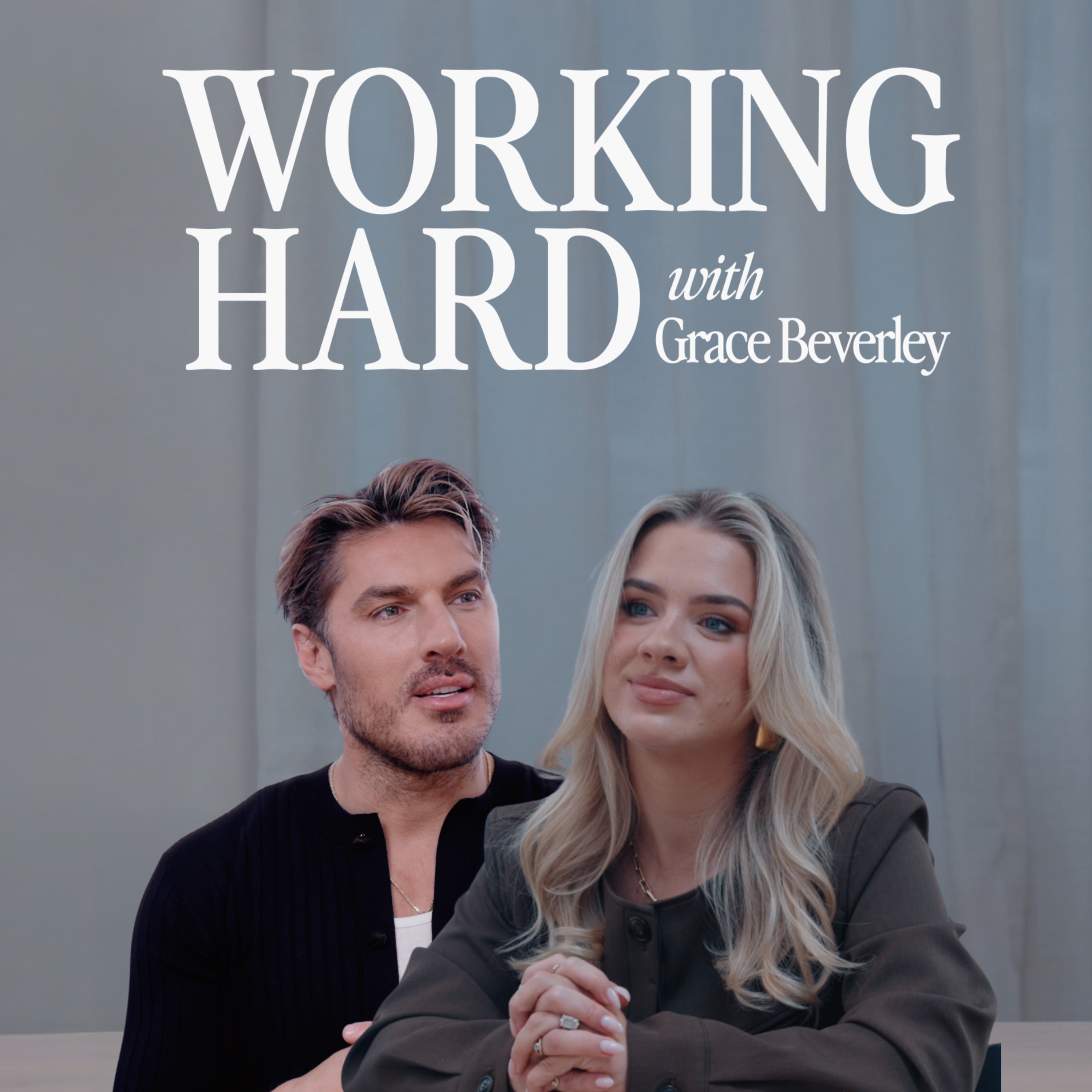
How to stop your past dictating your future (& let go of your inner critic) with Chris Appleton
About this Episode
Today’s episode is about reinvention, confidence, and creating a comeback, not the kind that looks good on the outside, but the kind that actually changes how you see yourself.
I’m joined by Chris Appleton, celebrity hairstylist. He’s worked with some of the most famous and successful women in the world, like Kim Kardashian, JLo and Ariana Grande but behind all the glamour, he’s been on a much bigger journey of reinvention and self discovery. In this conversation, we talk about insecurity, self doubt, identity, and how to stop letting your past, your background, or your inner critic dictate your future. I hope you love it.
You can buy Chris's book, Your Roots Don't Define You, here: https://yourrootsdontdefineyou.com/
Chris's links:
IG: https://www.instagram.com/p/DNBZvwKJkkT/?hl=en
TikTok: https://www.tiktok.com/@chrisappletonhair
+
SIGN UP TO THE WORKING HARD NEWSLETTER: https://graceb.myflodesk.com/k0sfhlac34
+
FOLLOW THE PODCAST
Instagram: https://www.instagram.com/workinghard...
TikTok: https://www.tiktok.com/@workinghardpo...
+
DILEMMA SUBMISSION
If you'd like to submit any dilemmas to the podcast to be answered in the bonus episodes, please send them to [email protected] with the subject beginning DILEMMAS or DM us @workinghardpod on instagram!
+
MY LINKS: https://gracebeverley.komi.io/
+
RETROGRADE, SHREDDY, TALA and THE PRODUCTIVITY METHOD are my own businesses, therefore any mention of them - whilst not being a sponsorship - is monetarily endorsed. As usual, sponsorships do not change my opinions nor my honesty, but I will always disclaim to make sure motives are clear 😊
Hosted on Acast. See acast.com/privacy for more information.
Hosts & Guests


Transcript
Springfest is happening now at Lowe's.
Keep the spotlight on your yard, with stay green premium 2 cubic foot mulch, 5 bags for
$10.
Plus, when you want more help indoors, get up to 40% off select major appliances that
help you supercharge your chores.
Our best lineup is here at Lowe's.
Vela to 422 will supplies last selection barriers by location.
There's one place for the newest drops in wellness and performance, and the biggest sale
of the year.
It's the drop by GNC, curating the best of what's new handpicked by the pros who know what
works.
And right now, get it all by 1 get 150% off during the semi-annual live well sale, from crushing
workouts to leveling up to nutrition and everything in between, get the best deals on
the latest innovations.
All the newness is all on sale right now during the live well sale on the drop by GNC.
If you've used Babel, you would.
Babel's conversation based technique teaches you useful words and phrases to get you
speaking quickly about the things you actually talk about in the real world.
With lessons handcrafted by the 200 language experts and voiced by real native speakers,
Babel is like having a private tutor in your pocket.
Start speaking with Babel today, get up to 55% off your Babel subscription right now,
at babel.com slash a cast, spelled B-A-B-B-E-L.com slash a cast, rules and restrictions may
apply.
What is up?
I'm Grace Beverly and welcome back to Working Hard, the podcast shit guidebook on how to improve
your own life and achieve what you actually dreamed of doing, because life's too short
for boring podcasts and bad advice.
What is up and welcome back to Working Hard, today's episode is all about re-envention,
confidence and creating a comeback.
Not the kind that looks good on the outside, but the kind that actually changes how you
see yourself.
I'm joined by Chris Appleton, the celebrity hair stylist, who's worked with some of the
most famous and successful women in the world, like Kim Kardashian, J-Lo and Ariana Grande,
but behind all the glamour, he's been on a much bigger journey of reinvention and self-discovery.
In this conversation we talk about insecurity, self-doubt, identity and how to stop letting
your past, your background or your inner critic dictate your future.
If you feel like you're on the edge of a new chapter or wanting a big change in your
life, but you're unsure how to step into it, this episode is for you.
Before we get into it though, please make sure you're following the podcast, so a new
episode lands on your feed every Monday, let's get into it.
Chris Appleton, are you currently more working hard or hardly working?
I am working hard.
Is that your only setting?
No, I'm better at hardly working now, I enjoy my quiet time, I think it's really important
to have quality of life.
For a long time I probably didn't think that, but you, you know, I think experiencing
bad now and just maybe having a great career but not a personal life was something I wanted
to change.
But you're generally changing styles of my thought is, I think, you know, I'm proud of
my career, but it's still a lot, and I realized I got to a place where, do you think you're
going to get enough money and enough success and everything's going to be okay?
And it wasn't, you know, and that was the sort of side of reality.
So I think there was a part of me that wanted to find a piece when I'm alone and when I'm
on my own, to be able to enjoy the life I've built and created, where sometimes your automatic
go to is to just keep going, keep going, keep pushing, but I think it's really good to
be able to be present and sit with yourself.
So I'm good at hardly working at times, you know, it might just be weekend or a few days
of the week, but I don't know, I think I've created a life now where I want to enjoy
it, you know, and it's also nice to reflect on what you've come from and how you've built
and how you've gone through the years and just be present with that rather than running
from it.
And I think for a lot of my life, I was running from things, but when you have your running
shoes on, you know, it's, it can be beneficial.
I'm not going to say I regret that because I think for a long time in my life, I needed
to have them on to get to where I've got my career, but I also got to point my life
like I said there, where I wanted to enjoy the world I've created.
Yeah, and I think that's, I think what you mentioned there about like running from where
you came from actually is such a defining factor in so many successful people who I've
spoken to stories because I think that, you know, it's easy to say, oh, what motivates
you and where did your desire to do X, Y, Z come from?
And I think for so many people who put in extraordinary effort in comparison to like the rest
of the population, it is escapism for a lot of people like you, you, you hear that healing
that comes later in their journey that allows them to build that balance when we sort of
realize, oh, shit, like I'm going to be working for like 40, 50 years.
I need to pace myself at some point.
I need to be able to chill out.
I need to be able to be able to sit with myself where I'm not going 100 miles per hour,
but the thing that really seems to connect so many people who are very successful and have
that almost unlimited drive actually seems to be rather than it being drive.
It's like that element of escapism and I want to talk about that a little bit intensive
your roots.
Could you tell me a little bit about what your early life looked like?
My early life was in Leicester in the Midlands.
I think probably as a kid.
I'm one of five kids.
I think I felt maybe the odd one, not as the middle kid, just because my brother just
kind of did boys things, my sisters did girls things.
And I kind of just was, I didn't learn the way they learned.
I didn't add the way they acted.
So I was just like sick at school, but no one recognized that.
I wasn't really a thing back then that people were aware of.
And even if it was a thing, I don't think people knew how to deal with it.
So I think from a young age, I was told, was stupid.
You know, I was told that I wasn't good enough or putting a special needs class and you
carry that with you.
You carry that with you forever your life, not feeling good enough.
And then also because I did hair at a young age, I started doing my mom's hair around
the age in nine, just because I really enjoyed the way it made it look and feel.
Like I say, we were really porous kids, our family was not blessed financially and it was
a struggle.
So doing my mom's hair, there was some sort of part of it where I wanted to make a little
glamorous because that was far from what life was.
And so when she looks in the mirror, you know, try and make a look like glamorous like
a hot, the people on the TV.
I saw her react to it, which I thought was really powerful and change and she's not
seeing herself like that before.
So I think at a young age, I decided I wanted to do hair.
I really enjoyed the idea of making someone look and feel good, but also I was good at it.
So I was like, well, I'm going to be the best of it.
You know, I'm going to focus and be the best of this.
So doing hair at, you know, at a young age, getting a job in a salon was different.
So again, I was different at school because I had a job when I was doing hair.
So, you know, I very quickly guys would call me gay and, you know, I was like, it was
preferred really for about sexuality or was just sort of getting into developing as a kid
that you do.
But I very quickly loved that was bad and that was wrong.
So I think I took these two, I guess it was trauma really, you know, it was really bullied
for it.
It wasn't a nice experience.
It was a bad one.
So these two big things that seemed to carry me throughout my life, these weights have
been told of stupid or gay, I thought, well, I'm neither of those things.
I'm going to prove everyone I'm not.
And I'm going to prove I'm, I'm, I'm, I'm neither of these things.
So I didn't look left or right.
I just got really headstrong on building a career, you know, and living a normal life like
society told me was normal, but that caught up with me later on in life.
And I think what I really realized is I abandoned myself at a young age.
I think from a young age, I kind of really left a version of myself because I didn't
let it develop.
I didn't let myself grow.
I just kind of became what I felt was normal and what fitted in.
But it didn't really get me very far.
Yeah.
And you've spoken a lot as well about understanding which parts of you are made for yourself
and which parts of you were actually made for others like you designed to, to please
others or impress others or whatever it might be.
What point did you start to really notice that those things weren't one and the same
and that you perhaps weren't living authentically with who you actually were?
I didn't have to know a lot of my life.
I mean, I'd say when I came out of 26, 27, it was like a time where I realized what was
I doing before?
I didn't really understand it.
And the brain is really powerful, you know, I was kind of as I was consciously thinking
of being gay or thinking about guys or I was really happy until I wasn't.
And I was really kind of felt like I had it together until I didn't.
And then that was the harsh reality of trying to deal with it, was trying to understand
what I've been doing these years.
And I think like I said, in that moment, I realized that I didn't really realize the extent
of it.
Coming out was really hard because I was dealing with not only the way I felt, but really
the way everyone else felt about it.
And you know, when people think they know who you are and then something's different,
they want to know like we must have always known and I really didn't have the answers.
That took a lot of work and a lot of therapy to figure out what had happened and why
I had never evolved or developed as a kid, as most people should or have the freedom
to.
I don't know, it took years of understanding it.
Like I think maybe surface level I understood what was going on and that carried me through
my career, my life.
But I think probably internally I was very unhappy and detached from myself.
I was really being authentic, I wasn't really living my most authentic life, I think.
There was parts of me that healed, but then I think I found myself in situations or
relationships or friendships that were just really unhealthy.
So I seemed to have like a great career, but my personal life, I didn't seem to have
much success with because I was sort of getting people in my life that I shouldn't, you know
and I should have very quickly put boundaries in place, I didn't know I could.
But that really just comes down to self-love and you know, coming back to myself, going
back to that little kid that I abandoned, I kind of like I say became a version of myself
for other people rather than being authentic to myself.
Yeah, and I think what's particularly interesting as well about your stories, the fact that
you obviously have received a lot of bullying and a lot of kind of like putting you into
a certain box that you didn't even know whether you fitting yet and it wasn't, you know,
your immediate reaction was to rebel against that, as is the reality for a lot of people
in lots of different ways, whatever that like bullying or kind of name calling or being
put in a box might look like.
I think what's really interesting is that you worked really hard to build yourself this
quote-unquote perfect life that you saw that you were kind of meant to aspire to.
So building a family with a wife and two kids and like seeing that as how do I make it
really clear that I'm able to achieve these things that other people want from me and
I think we don't necessarily stop to question what out of those expectations is appropriate
for our own lives and what do we actually want?
And I think that to get to your mid-twenties, I mean, I look at that and I was obviously looking
into your story and I mean, immediately like, well, I was like, oh, he was so young.
Yeah.
And he was so young, but I also think probably at the time you probably felt like you'd
kind of ruined your life to some extent or you'd decided your life and you'd kind of like
your path was decided for you.
I think there'll be so many people listening to this who are 26 thinking that about
something in their life, whether it is their career, whether it is their relationship,
whether it is their family, whatever it might be.
And I think yours is such a good example of how things only decided until you decide
they're not and actually the fact that you were able to reinvent what a good life meant
to you outside of that.
I think a lot of people live lives are not their own.
I think we live lives that are inherited to us.
Yeah, a lot of people don't live their own life.
A lot of people live lives that were inherited from parents, brothers, sisters, friends.
We kind of take parts of that and kind of have it as our own.
It could be as small as someone as a kid saying like, oh, you need bangs because you have
a big forehead or you're the quiet one, you're sisters, the confident one or you're the
chubby one or whatever these things are, like everyone has their own journey in their
own story.
But we carry these dramas throughout our whole life and they weigh on us.
And I think the power of the book and why I wrote your recent define you is to sort of show
people that you can really find your own journey.
And it's never too late to reinvent yourself and find out who you are.
The sad part is a lot of people think their lives are normal.
So a lot of people don't even know.
I didn't know that there was anything wrong with me until I really had to stop and look
in the mirror.
That's like when I came out.
Something felt wrong and I think when something feels wrong it usually is and I really had
to stop and take a look and be like, have I decided to be this or am I sort of pretending
to be a version of myself or am I fearful of actually like investigating who I truly
am and how I really feel and the decisions I've made are they mine or are they to please
of a people.
And the truth is there were to please of a people.
And I think it took a lot of understanding but a lot of people go through their lives
not living the life they've chosen.
They've really sort of living parts of their life that people have passed down to them.
And it's not always good.
It's not always healthy.
I like to say most of it is I would say like, Oh, my childhood was normal.
But in actual fact, now I've really done the work and what's the day?
My childhood wasn't normal at all like far from it.
There's no regrets and there's no, but I don't want to like delete my past different
for a long time.
I felt ashamed of it.
And I wanted to hide it.
I'm really proud of all those parts because all those parts have made me who I am
now.
And all of it as a whole whereas I've been before I used to try and separate the past,
you know, like now I've had some success.
This is who I am like delete everything else.
Whereas in actual fact, all those parts are, you know, me and they're all part of the
growth.
And honestly, getting to a better place is growth, it takes time.
It's like trying to lose weight at the gym.
You don't go once or twice and see a difference.
It takes weeks, months, years.
And then you get to a place where you change your body and people go, wow, you look
great.
Yeah.
It's been quite a journey.
You know, I think a lot of people, if, you know, if they do want to change something,
it's not, you know, you're not going to have the instant answer.
It took me years to figure out and the work will be really difficult.
But once you see yourself, once you stop and look at yourself in the mirror and encourage
people to do this in the book, they use by example, like we look in the mirror, maybe
10 or 12 times a day, you know, you're brushing your hair, brushing your teeth, but not
many people already stop and look and see themselves.
And I think there's a part in the book that we talk about looking at yourself and seeing
if you really aligned with what reflects back to you, how you present yourself, your image,
but also how you feel on the inside.
And there's a moment where people sit in the stylist's chair where they say, like, you
know, your hairdressers look a therapist.
And I think there's an element of that about sitting in a chair and looking in the mirror
because there's that quiet time where you won't be a stylist to come over and you're
kind of just looking at staring yourself.
And most people kind of start tearing themselves apart and they're like, oh my god, this
lighting, I look so old, or my god, these grey roofs, or, you know, I look so tired and
the amount of people that are lifting their face and you know, it's kind of just something
that we do.
Yeah, everyone, you know, it's just lighting bad, but I think there's a moment of vulnerability
where you're sitting and really looking at yourself and there's a moment of like, you
know, possible change and you know that, you know, like, you could feel different about
your image.
And I think if you have a good stylist and a good relationship, the possibilities are
quite endless of opening up to, you know, evolving your image because the image really
is your identity.
It's something you're carrying out to the world.
It says something about who you are, how you feel.
Even people that say like, I don't care about my, I don't care what you're also saying
something with that, you know, that you are making a statement whether you like it or
not.
If you think of anyone like, think of Marilyn Monroe, like, you know, shit, that blonde,
bombshell blonde or, you know, you think about the Kardashians and I'm for that rich
dark, you know, colored hair or chapel room with a red head, you know, that it becomes
like part of your identity and people will kind of not stereotype, but to an extent make
a judgment on you from first impressions and, you know, the way you look.
So a lot of it is external for sure, but it really is the internal because once you kind
of fit it better out, that's when I think it's really, the journey is really complete
of like being in, being aligned on the inside and on the outside.
And I mean, a lot of people maybe have it more external and probably a lot of people
think the book is about external and there is elements of that for sure, but the real
beauty is the internal stuff because I think once you have that figured out is when you find
peace in your life and when you can enjoy the life you've created and I mean, a lot of
people create lives and they're not really present in them and they're not really happy
in them truly, you know, and that's the sad reality there.
And life is really short, we're lucky to be here and I think sometimes people wait
for these moments to be reminded by losing a lost one or maybe, you know, being faced
with mortality and, you know, having a cancer scare or something that makes them feel
vulnerable where they kind of stop and look, but otherwise I think we can generally sort
of think how life is fine and that's why again, writing the book about chapter called
the word fine and danger of fine is, it's just kind of pacifying, not acknowledging
who you are, like, you know, how do you feel today?
You might have had a terrible, you know, it's fine or someone treats you really badly.
Oh, it's fine.
It's just the way they are or, you know, it's not really, you know, how's your hair cut?
It probably looks like shit.
It's fine.
How's your marriage?
It's fine.
It's just a way of sort of saying, don't look at me.
Let's not talk about it.
It's just carry on.
It's kind of almost a bit of avoidance.
So I think again, like I encourage people to sort of really open up conversation, which
I think is healthy.
Why do you feel like so many people even hearing your story and hearing the fact that you redefined
everything from when you were 26?
Why do you think so many people feel like it's too late to change their life even when
statistically it's so clear that it's not?
Yeah.
I mean, if you go anyone of the age of 30 thinks it's too late, too old, you know, too
certain that ways.
The truth of it is it's never too late to reinvent yourself.
It's the mindset, you know, and I think it's never too late to change not only your
image, but, you know, your life, and sometimes you can start with a haircut, but a lot of
the time it starts with, like looking, like I say, with a lineman of when you look in
the mirror, are you happy with what you see?
Are you happy with the way, you know, you portray yourself to the world, are you happy,
are you job?
You're in or you're married.
And sometimes you just really have to stop and just acknowledge that maybe you're not.
And if you don't need to necessarily know what's next, because unless the scary part
is some people find it overwhelming and we've changed and like, wow, you know, if I
leave this relationship, I'm going to have to separate and we've got the house, we've
got the kids.
There's all these like things that pull up and I've seen people in situations where, you
know, the kids grow up and, you know, they do get more financially secure and they still
are stuck in this situation of, you know, fearful of change.
I don't know, because there's been moments where I've said to my friends, like, your family
don't need you.
They've got their own family now.
They've grown up.
Why are you still feeling like?
And it's almost like not an excuse, but they're the ways to stay stuck.
And I think sometimes you just have to start with like acknowledging that something's
off, something doesn't feel right and start the journey of change.
And you know, instead of sitting at work bitching about your job, maybe acknowledging
that you're in a job here on Appian and finding what you really do find interest in and
maybe working towards creating that life, maybe find someone to look up to.
I think envy is really scary.
I think we live in a world now where it's very easy to be envious.
You know, they say now that we learn in a day what they learn in the whole lifetime 100
years ago, because we're so stimulated now by social media, like the phones listening
to you, AI, like, there's information everywhere.
You need to find out whatever.
I mean, the amount of times I talk to Judge EBT tells me things I don't need to know.
You know, TikToks, I'm seeing things and places that I just never even knew about or
that you could do.
And I think there's an element of being over, sort of, just stimulated and I think it's
just really important to be able to sit with yourself and, like I say, feel good on the
inside.
A lot of people don't.
I think envy can be really dangerous.
And I try and use envy is instead of feeling bad and being negative towards that thing.
Actually, look at what that person is, what you aspire about their life.
What is it?
I like them.
Oh, it's the fact that they have that great job.
And I use them as like a role model.
I call myself SpongeBob SquarePan sometimes like, I'm just like a sponge, I just absorb
everything.
Everyone I'm around, I'm just absorbed the information.
Anyone I look up to in business or, you know, in, I don't know, the way they look with
their body or I just try and say, well, how have they done it?
And they're using more, almost as an idol.
But the opposite of that is to be jealous and think, oh, we'll fuck you.
You're not that great or, oh, you take steroids or, you know, well, you're probably not really
that happy.
So sometimes I saw someone write a comment on Instagram the other day, they wish someone
got cancer in their eye and I was like, that person must be really sad.
But I think it comes from like envy and jealousy and it can get really dark.
Yeah, I think that when you notice jealousy crop up again and again in your own life as
in like you feeling jealous or envious, I actually didn't get a difference.
I think that can, as you say, be a really powerful tool in working out what you actually
want from your life.
I think that looking at something and working out like, why does it make you feel shit?
And of course, there are many things that you can't necessarily control that might make
you feel shit about someone else's life when you're going through something or you're
just having a heart of time or you would just never in that situation.
It's going to be much harder for you to get there.
But it is a powerful tool to be able to kind of like reassess and cement, okay, what does
that person have that you want and how can you get closer to getting it?
Yeah, definitely.
I think that's something a lot of us.
Exactly.
That's something that a lot of us are missing, particularly with social media use, as you
say, where it is the path of least resistance to feel unhappy about that person, rather
than to feel inspired by that person.
And of course, there are many differences that will mean that for some people, it will
be 10 times harder to get to whatever route, but using it with jealousy and having apathy
towards it where you essentially then don't do anything isn't helpful either.
And I think what you were saying before, I really think sunk cost fallacy is one of the
most powerful things to feel.
And I think that even if you're very aware of it, so many people again will not do anything
about it because it feels hard.
Like when you think I've been working to be a doctor for five years, I know it's not
what I want to do, but I've been working to do that.
I've spent a lot of money on it.
And therefore I must do this for the rest of my life.
Like that five years has gone anyway.
Like yeah, maybe you want to get qualified to be able to open up some doors for yourself.
But beyond that point, like does it make sense you're doing something for 40 years because
you've already done five years of it, same with any relationship, same with anything in
your life that feels worth changing, it's so easy to think, oh, well, because I've already
spent X amount of time investing in this relationship or this job or whatever it might be that I now
have to do this for the rest of my life.
And I think one of the most powerful contextualizations and arguments against that is just
realizing, like, seeing other people's stories like yours and seeing that that so obviously
doesn't have to be the case.
Shipping, building, admin, payroll, marketing, you're managing all the things.
So why waste time sending important documents the old fashioned way, mail and ship when
you want how you want with stamps.com, print postage on demand 24 seven and schedule pickups
from your office or home, save up to 90% with automated rate shopping.
That's why over 1 million small businesses trust stamps.com.
Go to stamps.com and use code podcast to try stamps.com risk free for 60 days.
If you work in university maintenance, Granger considers you an MVP because your playbook
ensures your arena is always ready for tip off and Granger is your trusted partner offering
the products you need all in one place from HVAC and plumbing supplies to lighting and
more and all delivered with plenty of time left on the clock.
So your team always gets the win.
Call 1-800-GRANGER, visit Granger.com or just out by Granger for the ones who get it done.
You know what's wild?
Most people are still overpaying for car insurance just because it's a pain to switch.
That's why there's Jerry.
Jerry's the only app that compares rates from over 50 insurance in minutes and helps
you switch fast with no spam calls or hidden fees.
Members who save with Jerry could save over $1300 a year before you renew your car insurance
policy.
Do yourself a favor.
Download the Jerry app or head to jerry.ai slash a cast.
And I think as part of that, you know, it's really easy to look at your career where it
is now and think that he's done incredible things.
He's got to this level, but obviously we know that that's taken a very long time to build
it.
And it wasn't.
It didn't just jump to this point.
Could you tell me what you feel the biggest turning points were in your career that really
led to you getting to this height?
Yeah.
I mean, I think people with success always want to know like what's the short cut.
I don't know if there is one.
I mean, I started doing how on a 13 and 42.
So I guess, yeah, I did, I did all right, but it took a long time and it was never really
one big thing.
It was just a little, lots of little milestones.
I don't know.
Every when I got, I used as a leapboard and every failure I got, which was way more than
the winds.
I just kind of just did myself and carried on.
I think for me, I used a lot of sadness in my life to motivate me to get away and get
out.
That really motivated me to try and get to a better place.
And I think some of the way, I mean, you know, moving to America was really big and I'd
say I moved for my job, which I did, but I think really I was trying to run away from
a version myself that I didn't really want to be around or see, you know, I don't want
people to say about very shamed and about very scared and they're really, I don't live
in with that shame, I couldn't seem to function.
So I think moving to America was like there was a freedom to people not knowing who I was
and being able to introduce myself just as Chris and, you know, being accepted as that
and not be labeled, you know, or my past, follow me.
So I think really the journey of success is very long and I think even when you get
a success, you lose it very quick, especially in today's society, people are famous for
five minutes all the time, you know, you're in a TV show like everyone's looking at you
and then a week later they forgot about it or this is trending and then the next week
something else is trending.
And I think it's just constantly about kind of continuing your journey and I think one
of the most important things for me was probably used in social media, I know people have
like mixed opinions about it, but for me, social media was a really powerful tool to be
recognized.
Just with the type of work I do and making sure my social media looked, I guess the
portfolio of like the work I do and that's when JLo's team reached out and I moved to
America and she asked if I was available to have a Vegas show and I remember thinking
how does Jennifer Lopez know I am, like I'm just this guy from, you know, the Midlands
and the social media, you know, she saw it, people look.
So I think making sure you're setting yourself up also to be seen is people do see, people
are always looking around for the younger or just want to change and I think it's about
making sure that you're ready for that.
I think the other part was just like every part of my craft, like I learned every skill
of her, like I wanted to be the best to do and I don't know, we all have our strengths
and weaknesses, but I think then when I did get presented with opportunities, I could
handle them because I've done the work, you know, it wasn't as I was going in blind trying
to figure out how to do the ponytail, I knew how to do the best ponytail.
I went to the fashion week and watched how the best people did it and you know, Kassel
was at the sponge or, you know, I knew how to braid because I went to, you know, the braid
shops and sat there and watch them braid and would practice for, you know, nice on my
own or I knew how to colour her, I got a colour degree with L'Oreal back in the day, like
I knew the science of her and so then when I was presented with these jobs, I could
do it well.
Yeah, and I think that's a, I mean, it's a powerful lesson in kind of both making your
own luck but making sure that when the luck comes, you're positioned to take it.
Yeah, you've got to know your craft or whatever it is you're doing, like get passionate
about it, you know, and you know, it's like I love doing TV stuff, like I do stuff on
the Drew Barrymore show and the Today Show and you know, I'd like to do more TV work, but
people love to label people, like I, you know, people love to say, well, we wish just
to help us out, but you know, you kind of always reinventing yourself and growing and people
don't always want to see you grow, people love to put people in boxes and you just have
to stand strong and just keep working towards your goals and evolving, but you shouldn't
carry that label and accept it and be like, yeah, they're right, you know, because you're
never going to get anywhere.
I think you really do have to have strong shoulders, I think you have to have people around
you that can support you and pick you up when you need it and give you that pep talk
and help you sort of say, you can do this, we all need that sometimes, you know, we
all need that friend that can say, I believe in you, even when we don't believe in ourselves
and put one foot in front of the other.
And how did you feel like you were ready to go to the States because that is a huge
leap, particularly like you were going from Leicester all the way up to the States, did
you have like a job lined up?
Was it something where you felt like there was some sort of guaranteed success?
No, I think I was, I wasn't ready, I don't know if I've ever been ready for anything.
I don't know, I think moving to America was absolutely, but my career, you know, getting
an email from JLo's team isn't something you get every day.
So I knew it was an opportunity awaiting for me and I did want to take the opportunity
and see if I could take care and, you know, take the challenge of, could I do Hollywood
stars, like I aspire to do when I was a kid doing my mom's act, could I, they're now asking
for me, could I do that, could I withstand the job?
But I'm a personal life and you know, I think a lot of people with careers like have to
acknowledge where they're at in their personal life, I ignored mine for a long time, but it
wasn't the happy place to be and I think, you know, I have to be honest and say that
I was running away from a version of myself coming out as gay was really hard later on
in life and I felt very shamed and I was trying to run away from that.
And for many years, it was fine until I'd returned to the UK and I'd literally have panic
attacks and I didn't understand why.
And it's because I had like post-traumatic stress, like I was going back to a version of
myself that I abandoned and I kept abandon these versions of myself rather than understanding
that all of these parts of me made me whole.
And you know, knowing that now makes me walk in a room and for the first time in my life
I feel confident and feel secure in what I do.
Doesn't mean I don't have my triggers and I'm not in doubt sometimes, but I think I
can definitely be way more present and do the best job I can whereas I think for a lot
of years it was, it was just running off anxiety and fear and shame.
And although they're fuel and it did work and I don't have any regrets because I had
a great career and have a great career, there's a sadness I feel about the quality of my
life.
And I think quality of life is really important and that will affect like I say your friendships
and your relationships and I think for me, like I said before life is short and I want
to have a happy life.
I want to have a life, my goal at the end of my life is to have a life that I can look
back at the memory, it's not the dreams I once had.
I want to push myself to challenge myself to feel uncomfortable and I kind of embrace
those moments because we all have them.
It doesn't matter how much success or how much money you get, everyone has that sort
of moment of reinvention and needed to move on to the next goal post because we're aging.
I am not 21 anymore and I'm not going to try and do what I was doing when I was 21.
So my career right now is changing and evolving and I'm not resisting that.
I like that.
I think it's great to keep moving.
A lot of people get stuck.
A lot of people get stuck with the same past, all their whole lives, but that also reflects
in the rest of their life.
It reflects in the marriage or the relationship they're in, it affects their friend groups
that are maybe unhealthy and they could have moved on or let some people go or put boundaries
in place, financial decisions, it affects everything.
It's not just being stuck with that hair, it usually bleeds into a lot of different areas
of our lives.
When I realized that, when people sat in my chair and that started to stand, that's
why I wrote the book because I work with everyone now.
I work with women that come to the salon every week for a blow out.
I've worked with models on a runway or cancer patients that lost their hair or some of
the most famous women in the world, but university, we're all human.
We all have these emotions, different volumes and at different times in our life, but life
is life for everyone.
Everyone gets a get out of jail free code and I think it's about having techniques to
be able to handle them and to be able to share more stories and conversations where maybe
people think like, oh, your life looks perfect, but showing the reality of it, well, it's
not.
But this is how I went about my journey and also, like I say, some of the stories in the
book are about, some of the people I work with and watching the world they've created
which have been so inspired by.
There's a chapter in the book where you talk about the fact that you are the message and
the messenger in the marketing of you.
What do you feel most people can change about the way they're kind of presenting their
message or the marketing of themselves to the world?
I just think no truly who you are.
I think that's such a powerful thing.
I think it's about selling the sizzle, not the sausage.
What is it?
When it's in a salon, there would be three people charging, I don't know, like a hundred
pounds for example, for a haircut, okay?
And we're all available and we all have the free-acloc appointment available.
The client walks in, why are you going to pick me?
Like why is a client going to be loyal to me and give me her money and come back consistently
for me?
And I would watch about how people sort of behaved in the salon and I noticed a lot of
people would go and stand behind the client and say, okay, what are we doing today?
See, I'm as usual.
And there's a kind of detachment there with that.
And the client would be like, oh sure, yeah, you know, yeah, same as usual.
You know, I used to sit with the client and I'd face them and have more that face-to-face
sort of conversation and talk about like where they're at with their style, but I'm also
where they're in from the past, but also what they've always aspired to have hair like
or what their sort of hair idols were, and I'd open up conversations where people would
say things like, well, you know, I've always, you know, I love, and Jennifer Anderson, but
I know I can't be blonde, you know, I can't, I know I can't, you know, I don't say
that.
And they're like, well, I just, I know I can't, you know, and it was interesting that
probably someone once said like, oh, you, you're a brunette, you, you're only suit brown
and they carried this kind of one thought that someone once had their whole lives, but
we do that about all areas of our lives, like the type of relationship that you have to
get into or the job or the way you spend your money or the way you save or don't or you
can't, you know, you're relationship around alcohol and we're all kind of susceptible as
kids have absorbing this information and carrying it for our lives.
And I think really, I noticed when people sat in my chair at the power of change and
how when you kind of acknowledged and showed people that they could change and they could
have all, and it wasn't scary, I mean, it was so powerful to see how people grew and
evolve and how loyal they would be.
So I think, you know, in the clients that I work with now, I still kind of just do that.
I just show that genuine interest and that connection and that's my, my selling point is
I think I, I, I think I do good hair, you know, I don't think I'm arrogant at saying
that.
I think I do good hair.
I'm sure I do bad hair sometimes as well, but also like my work, I know the thing that
I do is change.
I love to reinvent people.
That's something that's always inspired me.
So I think you can see that in my, in my work on my Instagram, there's always something
different.
I like to do a different book.
And then I remember Kim got actually one sent to me, like I can tell when you've done
JLo's hair.
And I said, how can you tell compared to someone else, she said it's the finish you get
on the hair.
You get this really kind of polished finish, even if it's a messy style, you get like
a looksness to the hair.
So again, I try and incorporate that as my brand and as the message of you, what would
me, this is, this is what I'm about.
So I think most people, if they book me, know that they're maybe going to, you know,
they want to do something different.
They want to create a local creating image or an identity.
And that's my, that's my brand.
So who I am.
So I think the most important part of business as well is knowing what your brand is and
then showing that.
And in the book, you talk about seeing your kind of internal voice as like a personal
hater.
Yeah.
Can you talk to me a little bit about that?
Yeah.
I mean, I think it's, no one speaks more poorly to themselves than you sort of, you know,
it's, it's just true.
Like, I'll tell you some of the things I say about myself.
I don't know.
Like, you're looking the rear end, like, maybe the lighting's been like, fucking hard.
So I would like Jesus or, like, so tired or like, my kind of fat, my face is so puffy.
Or I kind of work out harder or, you know, got these wrinkles, like a majoring or I saw
some great hair, fucking a, like, I know you just kind of, you can tell yourself apart
that hater voice, most people can relate to, like, I look fat or I've heard it all, like
one boob is bigger than the other, like most of the time I used to hear it when people
sat in the salon chair.
And like I say, that time where you were sitting in the mirror, you're like, is the lighting
bad in here?
You know, it sort of, and I think that hater and that voice is something that's very prominent
to a lot of people.
But we kind of just ignore it's kind of like, oh, it's just the way I speak to myself.
No one else is hearing it.
It's like a inside, you know, conversation dialogue.
And the way to break that and to realize how toxic that is is to sort of really go back
to looking at yourself as a child and maybe go back to a younger version of yourself.
And I did this in therapy.
I remember my therapy said, I want to kind of go back to like a younger version of yourself.
So I remember like, he wanted the youngest memories I had was like, my six years old.
And I remember being in my bedroom in Lasta and it was kind of raining outside and I was
looking outside the window.
And my therapist was like, well, how do you think that little boy felt?
And I thought, well, I remember, I think he felt quite sad.
And he's like, why is that?
So I think it just felt different.
I felt alone.
I felt like I wasn't understood.
And the real part that a lot of people was fine benefit of getting to is he said, well,
what would you say to that little kid?
And I'm like, well, if it was some kid on my kid or anyone really, I'd be like, oh, my
God, you're great.
You have a great life.
You're going to, you know, the thing that makes you different now is going to be your
superpower when you're older.
Like, you beat that kid up.
There's a kid here now that felt sad.
I couldn't comfort them and be like, you're amazing.
Look at you.
You say, so good.
You know, you'd give them the love that they were asking for.
And he said, well, why don't you try and say that to him?
And so I did.
And then I felt so broken after I was really upset.
I was crying out.
And he was, it was, I guess there was like a hypnosis part to it, but really there was
just more realization of like how mean I'd been to myself a whole life and how I really
abandoned myself.
That was the part where I realized I abandoned myself as a kid.
That was the moment where I realized, oh, my God, I never let this kid develop his feelings,
discuss his fears, or just just develop in any way.
I just left him and I became a version of myself that I thought I should become.
And I think in going back to sort of the younger version of myself, I can then be kinder
and turn that voice down.
So the Hater Voice is always there, but now I can recognize it and recognize it's
a healthy and I can be like, I'm doing nothing I do.
So you can turn the volume down and I can come back to myself as an adult, and I can kind
of be like, you know, I'm actually, you know, not that old and, you know, we also, the
smile lines on my face show that I laugh a lot and you can start spinning it in a different
way.
Like you would if a friend said that.
Like a friend said, I'm like, God, you know, I'm looking all like, baby, you're pretty,
you're kidding me.
I've got these smile lines.
Yeah, but you're always laughing and I love that about you.
You know, you start to be kind to yourself and it's really powerful.
And I think a lot of people could benefit, benefit from that.
So a lot of people already mean to themselves and it, but it's a secret, no one knows because
no one hears the voices.
Yeah.
Springfest means more sun, more fun and more free at loves.
Keep your yard in line with an additional free ego 56 volt battery.
When you buy a select ego, mower, trimmer or blower, plus keep landscaping fresh with
staggering one cubic foot garden soil, five bags for $10.
Our best lineup is here at Loves.
Valor through for it.
Walls supplies last selection varies by location, soil offering scoots of Laskin Hawaii.
And why do you have such an issue with the word fine?
Because it's shit.
Hey, it's just such an excuse.
Um, you know, you might be in the most worst situation.
I don't like a relationship or marriage.
Um, and they talk to you like share or treat you like share or they've been sleeping with
someone else behind your back and, you know, people say, oh, how's things would be
partner?
It's fine.
It's fine.
It's fine is this kind of like facade for me that we can use a lot in our lives to
excuse change, um, acknowledging what really is going on in our lives.
And that doesn't mean that, you know, to a stranger, you're going to open up like
deepest, darkest secrets, but sometimes we also say fine.
I don't know.
For example, it's like a family member that's really toxic and you're like, they treat
you like shit or they speak to you really poorly or, you know, you know, it's fine.
It's just who they are to find because this happened to them when they were a kid.
And that's the, you know, but a lot of times it's not fine.
A lot of time it might just be like, maybe this is not fine.
Maybe I need to put a boundary in place of, you can behave this way and just don't do
it around me.
You know, if you're going to behave that way and you just do it from a distance, you
have to separate yourself from that person.
And that can be about so many different things in your, you know, how's your, how's
you drinking these days?
It's fine.
I mean, if someone said to me, if I'd got dressed and I said, what do you think?
And they said, it's fine, I'm just going to get changed.
Like, I don't want to go through my life being fine.
Yeah.
I want to, I want to, you know, feel something.
I want to have some sort of a strong, so I think the chapter and I say, finally, shit,
you know, I don't know what I'm going to do, I don't know, I don't know, I don't know,
I don't know.
I don't know.
I don't know.
I don't know.
I don't know.
I don't know, I don't know.
I don't know.
I don't know.
I don't know.
I don't know.
I don't know.
I don't know.
Well, it's fine.
I don't know.
I don't know.
I don't know.
It's fine.
It's fine.
It's just very middle of the road sometimes, and I think it's sitting on the fence and sometimes I think
I'm more about how do you make any decision.
Yeah.
And it's like, it kind of feels like in the way you're describing it.
an acceptable level rather than, you know, this, this good is the enemy of great thing.
Everything actually self-visit pilot. Is your marriage fine? Like, is your,
in a relationship with what we call fine? Is your eyesight fine? Or are you struggling to see
shit? I mean, yes, it's my way. I know, but it's just like, you know, your head, I say,
cuts all your hair off and you're like, how is it? It's fine. Thank you, it's fine. You know,
it's just this kind of like, I'm not going to acknowledge how I feel. Yeah.
And I think that's a really dangerous place to be when done too often.
You've spent the most recent years of your career working with some of the most confident women
in the world. What would you say are the biggest things you've learned from that experience?
I think the idea of celebrity is sensationalized and I think, you know, we think that celebrities are
super humans and don't have the lives we live. But the, the highest relative it is is we're
all living and breathing the same air and we all go through highs and lows in our life.
And I think a lot of it is about how you, you know, evolve throughout your life and how you
take the falls and pick yourself up and move back on and not just get up and, you know,
not just accept that things are fine. You know, I think a lot of successful people don't accept
just fine. You know, they want to get to a place of achievement and they want to do well and I think
to do that, there's a lot of consistency involved, a lot of hard work, a lot of failure. A lot of
those, I've had way more knows in my life than I've had yeses and I've had way more losses
than I've had wins. But, you know, after a few wins, people only seem to sort of recognize that
and think you have people together and the harsh reality that it is and if you see the journey,
it's not. And they're, you know, the work is for everyone to do but not everyone wants to
necessarily, you know, commit and, you know, that's why they think it's satisfying. Yeah.
And then that can lead to like I say, like the envy chapter about people feeling
envious and well, they're not that great. You know, instead of actually being well done,
you know, I see how hard it got to get that kind of inspired by your story and your journey and
kind of woke me up a little bit. I mean, we feel like I want to kind of do something like that.
I might not be on that level, but just, you know, take elements from. So I think it's very easy
to go into downward spiral where there is, you know, when you actually know the reality of what it
takes to get to, you know, success or whatever, you know, we like to label it as it's usually a lot
of work and a lot of sacrifice. Before we end, I'd like to ask you some specific quick fire
hair questions, obviously, for obvious reasons. So firstly, asking for a friend, what would you
recommend to people who struggle to find like hair inspiration on the day to say, like they may
be go back to the same hairstyles over and over again, even if they don't necessarily feel they suit
them, how would you recommend they get out of that? I think for me, I love pictures and I look like
looking at, like, you know, things that just make you horny, you know, you're just looking
in your life to look at. I don't know for whatever reason you might be on Pinterest, I mean,
it has gorgeous, like, I don't know, it might be way off from where you're at right now, but just
I would just take as many pictures and look about, usually then you can find like a common theme,
like a lot of them are lighter based color or a lot of them are more layered or a lot of them are
these cuts and what is it like that you like about these kind of, you know, looks, because I think
pictures for me just help you kind of tell the story, maybe that's what you do it, you know,
you tell it the story. So I think Pinterest, Instagram, TikTok, just say whatever you see that you like
and then try and find out what it is you like about it and you'll find a common theme.
Can I tell you about my recent thing that's actually changed my life with Pinterest?
I've made myself a hair menu, so I go back to the same styles over and over because I'm like,
I don't have very long to get ready in the morning before going to the office and all of that,
and so I just, you know, go to the same things over and over. I've created myself a Pinterest
hair menu, which is like a board, but it's split up then into like things you would do with like
a blow drive versus unstyled hair versus slick for a greasy hair day, all of that and it's
such a change my life. It's great. It's a validation for you. It's a leader of that.
Congratulations. I'm very proud of you. That sounds great.
Thank you very much. It's very organized. My Pinterest is a mess. I don't know how to use it.
I just screenshot stuff, but I don't have to say it. I can give you a little lesson,
but that's definitely not how you use it. I mean, everybody's screenshots properly. It's always
like about all this stuff around there, but yeah, it's green Pinterest is great. Just find things
that, you know, catch your eye and you're like I say, you'll probably find a theme.
And what about go-to products that make curls stay as someone who's hair does not like to hold
for two seconds? Oh, really? Because what you mean naturally curly hair or to curly hair,
curly line, and make it stay? Yeah, second one. Oh, I love clueless style and starroids. It's
spring texturizing spray. I love it because it has heat protection in, so a lot of the times
with curls when they're too soft and it's just people wash the wash day, you do it in the
hairspray, so they'll be drop. A lot of people like the hair when it's a bit dirty,
sometimes it kind of grips better. Colorful style and starroids gives the hair this kind of
lived in texture, gives it some grit, but it's not sticky or stiff and it really holds the curls.
And then the ultimate flex is the Texas Holtum hairspray because it's just a really strong
old hairspray that keeps it in place. And I love products. The nicest thing about all of them is
that they're all kind of brushable and once you're done, if you want to brush it out, it has
to hair. It's not like some of these hard hairsprays that are on the market, where would you spray it?
It's like you're going to tear your hair apart. I've had to make my husband get in the shower with
me to wash my hair after some red carpets. That's not that healthy. Absolutely not. He's
literally like, I've had a thing, but I'm here. It's like a swim cap. On that, just a question,
so I'm using it correctly. With the starlon starroids, does that mean if it's got heat protection
and you'd recommend spraying it also before you do the heat, like before you'd curl it as well
as after. I put it on. Yeah, I put it on before. The starroids I would use during the
curling, before you take your section and spray it on the starroids curl it, and then I'd use the
Texas Holtum after just to lock it all in. Right, I'll report back. What would you say is the
biggest red flag in a hair routine? Maybe washing your hair like it's laundry. I think people are so
rough and aggressive with their scalp. And I think scalp care is really important. Scalp is a
continuation of skin. I see you guys doing skin care routines. They're insane. I mean the
products that people do and the rolling at the skin, I'm relatively good. I use a serum and
a moisturizer. I use a nice facial wash, but some people skin routines like 10 regimen, like night
and day routine. But you scalp is a continuation of skin. And so by using scalp treatments,
that can be a game changer because a lot of people lose density of hair. And it's usually
because the quality of the scalp is really poor. A lot of people don't find around the hairline.
So I use the color wow youth juice. It's basically like a serum that you put on every night.
And it has collagen in it as well, which you lose collagen every year. After the age of 25,
I mean you lose 1% collagen every year. It's a basically decline of like the looks. So your hair
will come through dry. The quality there isn't as good. Whereas using this, not only is it going
to encourage hair growth when you see the quality in the hair growth come through, but also just the
quality there is a lot better. So I think scalp care is really important. And it's probably
what are the biggest red flags that a lot of people don't acknowledge, especially if they're
lost hair density or you know the quality there isn't good. Scalp care is really important.
Perfect. We'll be writing all of these down, really sending them and taking them on board.
Thank you. And to end, I'm going to ask you what I ask everyone, which is what is the best
piece of advice that you've ever received? It's a really good piece of advice which we have
talked about on this podcast before. Very important because they're doing a contract for you anyway.
So you might as well do your own contract, although they don't hold us happily in the UK.
Just a flag. Yeah, of course they do. Yeah. Yeah. Yeah.
Really? Of course. I'd like to go down. Absolutely fine. Yeah, because if they're saying
they don't want it, then it's a problem. Well, exactly. Also, you both come into the
marriage with assets and it's important to design your own contracts. You might as well
design the contract when you're both feeling nice and happy with each other. I'm a child of
boss. I like yeah, but also like it's aimed to protect you both, although in the UK it literally
doesn't stand up as soon as something changes in the marriage. So like if you had a child, if you,
I don't know, moved into a new home, it doesn't like whatever stood for the previous home,
it doesn't actually stand for that home. So you've got to reassign it all the time.
What's your toxic tree? Oh, how long do you have? Have known it as one.
Oh, toxic tree. Do you know it? Oh, I have so many to choose from. Really? Yeah.
You don't seem like it. It's so nice. Oh, thanks. No, I'm quite nice. That's not one of my toxic
traits. In relationships. Okay. In relationships. What would your past partners,
probably all have said to you at some point? Oh, it's a very good question. Let me think about
this for a second because I wanted to live you a clear and accurate answer that none of my
acts, it's all necessary about answers and correct. I like to communicate about everything,
like I think that, well, I don't think it's a toxic tree. I think someone, some men will say it is,
well, I like to talk through everything. I think it's really important. Well, exactly. That's
probably the answer is that I have no toxic traits and they have money. Yes. That's glad we
cleared that up. Yeah. What's yours? I know it's changed because I think it used to be wanting
to sort of fix people or help people. And I think that's not always healthy in a relationship,
although it comes up a good place, but it's like, maybe what I do as a kid, I do one one time,
make a feel good. Like that's kind of what I do as a job, make people feel good. Like broken
birds type. Like, make people feel the best. But in relationships, you can't overextend yourself
because people are who they are and people don't change that much. And I think there's an element
as well of overextending yourself in a situation where you think love is enough and everything will
be fixed and it's not. That's the harsh reality of it. I think one thing I thought was a toxic trait
before that I've actually just realized, just means you're pouring things into the wrong people,
is like, I am a very high effort person and I will come to everything with high effort,
so I will help you prepare for everything I will help you in your career. Like, as you said,
I will do whatever to make your life better. I expect the same in return and I have very high
expectations in terms of what I expect. You see a high achiever, though, and a high performer,
and you obviously like that in all areas of your life, which is great. But yeah, I think that you
then have to have someone who matches that back otherwise there. Maybe you pick it off. What's that?
Like, you pick it, like, you pick it on people. The problem is, once I've done the work of knowing
what was good for me, what is actually attracted to rather than past traumatic experiences that I've
been drawn towards, probably seen things in my childhood where I'm like, oh, this is normal
realizing it's actually not that. Breaking those patterns and those cycles, I think now,
like, I realize the pool of people that I would actually date is very small.
Oh, I'm sorry. As always, just in a relationship, I go from relationship to relationship,
whereas now I'm like, it's like being an alcoholic and drinking a lot and then doing the 12-step
program and you're like, oh, I'm so attracted to the things I'm like, I like that someone
looks good, but I'm like, I know where that goes. So I'm not going to. So once you know that,
I'm like, the pool of people is actually quite small, rather than just pointing someone in to fill
the gap. But again, that's like a lot of the work I did on myself. I used to find it easier to be
with someone than to be alone. And now I really enjoy my alone time. And I actually very,
how much value I'm like, if someone's going to come into my life, I want it to be a better place,
you know, not just a place where it's, you know, being pulled and overextending yourself.
Yeah. No, I think that's completely right, I think, in order to choose the right part of your
future, you have to heal the things that made you, well, gave you your toxic traits in childhood,
like, boy, did I love an avoidant man? And I have not gotten avoidant husband. So I should start
when I'm actually avoiding the best of both worlds. Yeah. So if you're avoiding, I'll be
anxious. If you're anxious, I'll be avoidant. Yeah, most people I've done that though. Most people
like tend to become one or the other. Yeah. But I think I'm secure now. Yeah. Same.
Well, apparently in the right relationship, you should both move towards secure.
Yeah, although you, because communication is really the, you know, key to getting to a good place
that's like, hey, you know, like, I know you don't like looking at your phone, but when I text you,
it just means a lot to me when you just take back. And it's like, well, I'm making effort to let you
know that like, hey, I'm busy, but I will go back to you in a bit. I'm just letting you know,
you know, and it's kind of like conversations where you both feel hurt and respected it. Oh,
they need their space. Yeah. I need to be, you know, reassured, but you can kind of come into the
middle and find middle ground a bit. And I think that's great for both of you. Yeah.
Like my daughter and her boyfriend, he's definitely more avoidant. She's more anxious, but they
like do her opinion this. They're great. They're like, they have couples therapy. They're very
healthy. Really? Oh, yeah. I love it. That's so good. Because like, they really love each other.
And I want you to understand one another. And like, you know, he would just be one way, which was
just kind of like the, what he grew up around. I guess where it comes from, you know, like, like,
switching down and not wanting to talk about it. Where it's Kitsima, daughter, she loves to talk.
She's like me. She wants to sort of understand a conversation, a situation, talk about it,
not to sweep it under the rug and move on. And I think they've both seen the value in
each of us qualities and kind of, you know, wanted to sort of understand one another.
That's the thing. Yeah, that's very beautiful. So it can be with an avoidant and an anxious
attachment, but you've got to have to do the work. Yeah, because obviously it's the
just. Yeah. Yeah. I see you later. Yeah. Well,
Anastasia Felista. Well, thank you so much for joining me. Oh, thank you so much.
It's been amazing. It's such a lovely time.
There's one place for the newest drops in wellness and performance and the biggest sale of the
year. It's the drop by GNC curating the best of what's new handpicked by the pros who know what
works. And right now, get it all by one, get one 50% off during the semi-annual live-well sale.
From crushing workouts to leveling up to nutrition and everything in between,
get the best deals on the latest innovations. All the newness is all on sale right now
during the live-well sale on the drop by GNC.
Guys, it's no use putting it off. The best time for an underwear refresh is now.
Tommy John underwear is designed for a perfect fit that stays put all day.
There's zero shape thanks to four times more stretch than competing brands.
And their innovative horizontal quickdraw fly is a game changer. With over 30 million pairs sold,
there are thousands of men out there more comfortable than you. Don't settle for less.
Go to TommyJohn.com today for 25% off your first order with Code Comfort. That's TommyJohn.com
slash Comfort. Tommy John. Comfort perfected.
More from Working Hard with Grace Beverley
View all episodes →
The exact advice that’s changed 25 million lives (Ep.200!!)
Working Hard with Grace Beverley
Apr 27, 2026·55:46·failed

Your guide to fixing your finances without life becoming boring with Two Broke...
Working Hard with Grace Beverley
Apr 20, 2026·1:08:51·failed

