About this episode
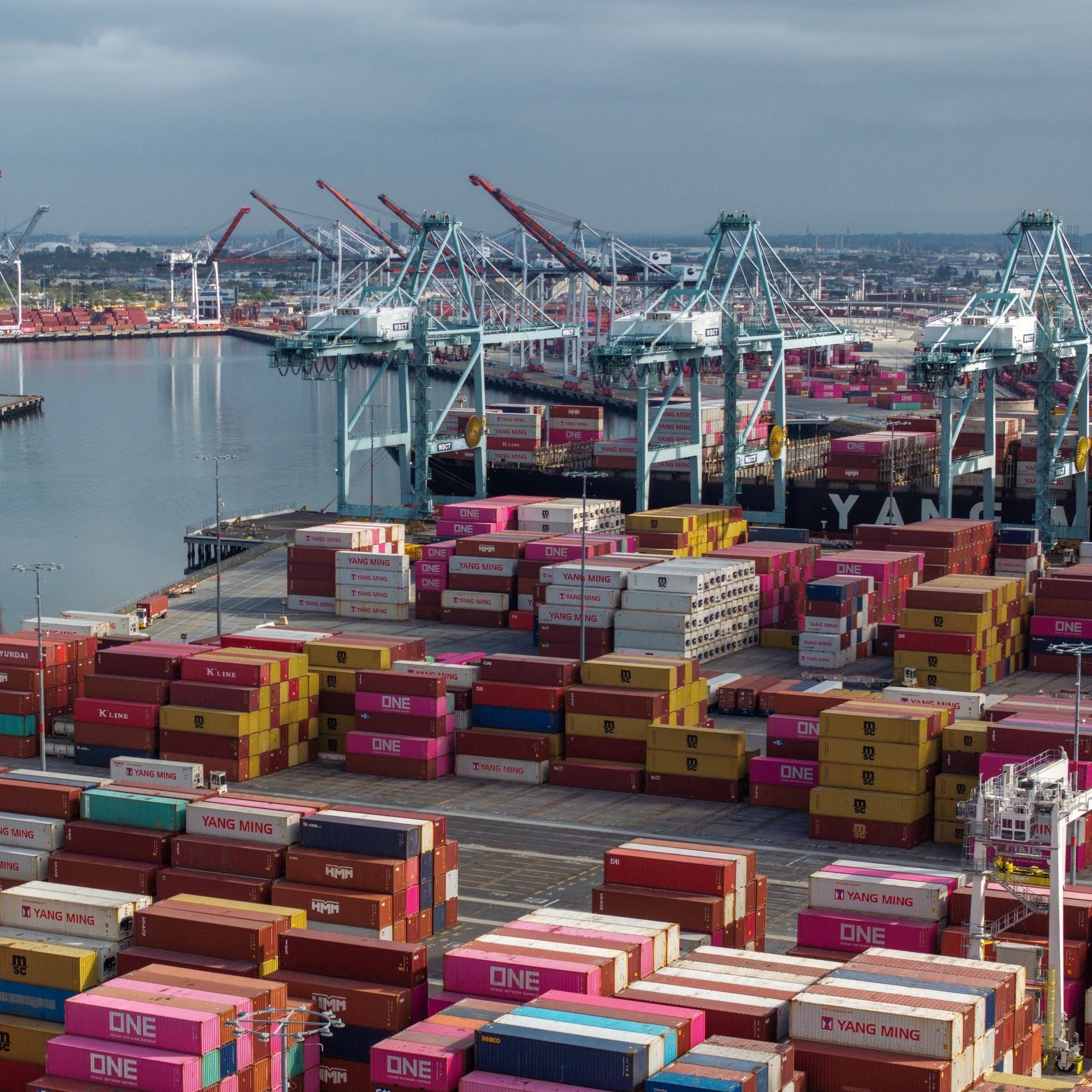
This morning, we learned that import prices rose 1.3% in February. That’s way more than expected — and that data is from before the war. In today’s episode, we dig into the price boost and what it means for inflation. Also, rising mortgage rates could spell trouble for the housing market, and a jewelry designer explains how gold and silver prices are affecting her work. Plus, a deep dive into the “sleepcation.” And finally, don’t strike out when you’re searching for tonight’s Opening Day baseball game — it’s on Netflix, and here’s why.
Every story has an economic angle. Want some in your inbox? Subscribe to our daily or weekly newsletter.
Marketplace is more than a radio show. Check out our original reporting and financial literacy content at marketplace.org — and consider making an investment in our future.
Get every episode summarized
Each time Marketplace publishes, we email you a written briefing from the transcript — the topics, who appeared, and any specific claims, with the ad reads skipped.
Email me new episodesFree for 3 shows. No card needed.
Hosts & guests

Transcript ready
313 searchable segments. Every word is indexed and playable.
Full transcript
Marketplace — Import prices are sky-high. Why?. Machine-transcribed; use the interactive transcript above to jump the player to any line.
This Marketplace podcast is supported by Vantage Score. The modern credit score used by nine of the ten largest banks, over 3,700 companies, and now approved by Fannie Mae and Freddie Mac. Vantage Score. Trended data, alternative data, reduced risk. Running a business is hard enough, so why make it harder with a dozen different apps that don't talk to each other? Introducing Odu, the only business software you'll ever need. It's an all-to-one, fully integrated platform that makes your work easier. From CRM, accounting, inventory, e-commerce, and more. And the best part, Odu replaces multiple expensive platforms for a fraction of the cost. This is why over thousands of businesses have made the switch. So why not you? Try Odu for free at odu.com. That's odo.com. We'll do data today, because sometimes you gotta better up. It's opening day, and hey, how have you been sleeping? From American Public Media.
This is Marketplace. In Los Angeles, I'm Kyle Rizdole. It is Wednesday, today, 25 March. Good as it always is, everybody, to have you along. The data point of choice today is a tidbit from the Bureau of Labor Statistics called the U.S. Import and Export Price Indexes. It's the import side of that equation that's of most interest to us. In February, those prices increased 1.3 percent. That's more than anybody had been guessing. And the biggest monthly increase since March of 2022. Year over year, the increase also 1.3 percent. Marketplace's Kristen Schwab gets us going with the why and the where for. One funny thing about this data on import prices says Orrin Clatchkin, an economist at Nationwide, is it shows the price of goods before businesses pay tariffs.
But all of the kind of secondary effects, if you will, all of the knock-on effects of tariffs, these are all visible in the data. Businesses front-loaded inventory and shifted supply chains to avoid the highest taxes. And because of the uncertainty tariffs caused, the value of the dollar has fallen. These are all things that make imports more expensive. Then there's a seasonal quirk. We just had a really cold winter. Laura Valdcamp is an economist at Columbia University. She says demand for heating pushed fuel import prices up 3.8 percent from the month before. And that trickled down into the price of other imports. You might not think that oil was used in the production of an apple. But whether you're talking about a honey crisp from Canada or a gala from New Zealand. We needed fuel to get that apple from the tree where it was grown into your supermarket. This is the part of the story where we acknowledge the big elephant in the room. This import price data is from before the war started.
And the price of crude has been hanging out above $90 lately. Each war presod, a professor of trade policy at Cornell, warns February's increase in import prices isn't a one-off event. This is a significant increase that is almost certain to be topped by even higher increases in the next month at least. Higher import prices don't necessarily translate to higher prices at checkout. But presod says companies can't always absorb the costs. More and more they have been passing them on to consumers. Which would drive up inflation. Before the war, Clashkin at nationwide was thinking inflation would average out around 2.8%. Now we're looking for headline CPI inflation to average around 4.3% in the second quarter. The hope is it's just a one-time jump in prices. I'm Kristen Schwab for Marketplace. Oh yes, that one-time jump in prices hope. Wall Street day traders found somewhere in the back
and forth about the war. Reason for hope? We'll have the details when we do the numbers. tariffs have been the macroeconomic through line the past year or so. Well, until three weeks ago, right? Now though, speaking of three weeks ago, a small businesses watch energy and uncertainty take unwelcome turns. They've got a whole new set of worries. Kristina Stemble is the CEO of Farmgirl Flower. She is our go-to in the directed to consumer flower business. Kristina, welcome back. It's good to have you here. Great to be here. Thanks for having me back. So I went back and I looked it up. We had you on April the 28th of last year, which was just counting here 26 days since President Trump's tariff, Paloza. Obviously, we talked a lot about tariffs.
How was the rest of 2025 for you? Yeah, it's 2025 went well. Tariffs were tough, but just like everybody, you know, we paid more. We had to pass them on. We absorbed some, but because of how we're running, we're just really focused on profitability. We were able to get through. How are you running? How's business sort of writ large? Business is okay. I think. Okay, it's not great. Usually you say it's really good. My company's great. I love my company. Now you're like, oh, it's fine. I love my company. Of course you're not sorry. I do. No, no, no. I think everything just seems to be like people know 10% about what the full picture is, which is totally understandable. This year, I would say the biggest risk isn't tariff. It's not trying to get tariff money back. I think most companies won't ever see that, even though the general population thinks you will. But we'll see what happens. I'm not going to waste time on something that is really outside of my control. So the biggest fear I have this year, or the reason I'm kind of like business is okay. I'm kind of tentative about it is because of the impending, you know, fuels or
surcharges that might come into fruition right before Mother's Day. So, you know, anxiously awaiting to see what happens there. Yeah, well, let's talk about that for a second, right? Because not only are there transportation costs for you, right? Just straight up oil, but fertilizer is a huge issue with the closure of the state of hormones or the partial closer, or however you want to sort of negotiate that. And flowers need fertilizer. Yeah, there's kind of like two things with that. So the biggest risk is outbound transportation. So, you know, in 2020, we saw our outbound transportation rise from 26 percent of revenue to 41 percent. And it almost put us out of business. This year, you know, we were at sub-20, which was great last year. And now we're already back up to about 25, 26 percent. And if we go up to like 35 percent, I just ran that scenario this morning, you know, we would actually lose a million dollars. So we'd be in business to lose money again. So that's the number one risk. I say the second, I think the second risk is fertilizers. And it's more the ripple effect that, you know, you don't
think about until you run it run through the scenarios. And so if we can't afford fertilizers or farms can afford fertilizers, the prices will go up because the yield will be less on the flowers. You know, we raised our prices as high as we possibly could last year without losing a tremendous amount of sales. There's not much more bandwidth we can do raising prices. And I think most small businesses are in the same same place. How much running room do you have here before Mother's Day? My mother's going to kill me when she hears this. When is Mother's Day again? One more time. It's May, you still have a full month before that. So you're okay. I do, but you probably don't, right? You don't have a lot of time is my point. We do not. We do not. We're already in Mother's Day planning. We've been in for months. So I just went the fuel surcharge charges to stay at bay until after Mother's Day and then I can sleep better. You know, it's funny. We've been talking a while now, you and I, and you are, and I'm sure somebody's probably told you this, you're a fast talker. And it sort of seems like you're going faster today. It's just like that's the way your
life is now. Yeah, it's definitely, I feel like there's whiplash constantly. And so, you know, I'm trying to do everything I possibly can for what I can control. But when I think back to like 2019, that seemed like a hard year. Like everything seemed hard. We'd been a business almost 10 years at that point and everything seemed hard. And it's nothing compared to now. Now I feel like you have to make the same amount of decisions in a month that we used to have to make in a year because there's so many out, you know, external circumstances, you just have to adapt and pivot and, you know, make decisions on the fly without any stability really. This is not on my business, but are you sleeping all right? Yeah, I mean, I think if this had happened, you know, when I was in my first five years of the company, I wouldn't be sleeping at all. But right now, it's like, okay, well, it would be very tired if I don't. Christina Stamble, she's the founder and the CEO of Farm Girlflower. Christina, thanks a lot. It's good to talk to you. Thank you so much. Bye.
Here's one about not counting your economic chickens before they hatch back in late February, the 26th to be precise. Freddie Mac reported the average rate on a 30 year fixed mortgage had fallen ever so slightly to 5.98% the first time and it had been below six in three and a half years. That, however, did not last a week because two days later, the war started and mortgage rates have been rising pretty much ever since topping six and a half percent this week. Marketplace of Mitchell Hartman takes it from there. 30 year mortgage rates closely track interest rates on tenure treasury notes, which in turn are mainly determined by how much inflation investors think there's going to be in the economy. And a month ago, heading into spring says Susan Walker at the Wharton School. We were hoping as inflation decreased as tenure interest rates decrease mortgage rates would get back to a normal range 5% but then the Iran war sent energy prices
soaring pushing the 30 year mortgage well above 6%. Walker says the shock is already dinging the spring housing market mortgage applications for purchasing new homes that will decline. This will be a dining room for the refine market. Meanwhile says Jeff DeGorean at loan depot. If potential home buyers are putting their dollars into the gas pump, they're going to have less dollars, potentially to spend on buying a house. High mortgage rates well above 6% will keep the housing market stall this spring says Jay Hatfield at infrastructure capital advisors. Six is a critical psychological barrier. We do need the 30 year mortgage to be at six or below to get a real recovery and housing. And it could take more than that says Richard Green at the USC Lusk Center for real estate. The Netherlands fundamentals, you know, they're not terrible but they're not good either. Green points to economic uncertainty caused by tariffs and war and a weakening job market.
With your buying a house, you're not just asking yourself can I make the first payment on it? Am I going to be able to make payments in five years, 10 years? And I think people are going pretty insecure right now. He says confidence in the economy is key to a strong housing market. I'm Mitchell Hartman for Marketplace. We've been keeping track as you know of the very volatile prices for silver and gold past couple of months. Gold is down from its late January high of almost $5,600 an ounce. Still though, it's up around 20% compared to six months ago. The investor mindset on that stuff is of course as a safe haven. The way small businesses think about it is very, very different. Here's today's installment of our series, My Economy.
My name is Donnie Pekwin. I'm the owner, founder, designer of Agapantha Jewelry in Torrance, California. Welcome to the showroom. Welcome to the Ring Bar. This is where we have about 30 different styles of rings. Our whole thing is delicate modern layering jewelry so everything is made to layer and stack. Everybody gets to be creative. It's very interactive and you know makes for lots of good ASMR. So we use primarily sterling silver and 14 karat gold fill. When you say metals prices, my blood pressure rises. At this point, I check daily just to see what kind of heart attack I'm going to have. At first, I try to ignore it and I can't ignore it anymore because we're losing money in our current pricing. It's crazy making because then you see like we have an earring like this,
our Cassidy hoops have been one of our best sellers for a long time. Now because there's you know there's a big chunk of metal on there, I have just reprised them and I almost had a heart attack. I mean it was like I think these were about $80 retail. They are now marked down as low as I can do at like $225. I think it's just expensive to exist right now in general and I am making a luxury non-essential item. We've always been in a price point that has allowed us to be affordable for those that still want everybody wants to feel good and they want to feel beautiful and they want to feel confident, they want to feel all the things that our jewelry does provide. The worry now I think is that are we out of that price range? We're all sweating.
You know there's part of I've talked about this a lot with my team and one thing we've talked about is you know we do offer 14 karat solid as well and there's sort of this idea of like do we just double down and go for it and become a fine jewelry brand at this point. If we're going to be paying these prices our client is now paying gold still prices that used to be 14 karat prices. Most people doing what I'm doing they just we just want to be an artist. I want to make jewelry. I don't want to worry about what the geopolitics are like no that's not in my wheelhouse. I also have 22 years under my belt of this and knowing that things go up and down knowing that things change certainly having a lot more cortisol spikes than I would like in the last several
months you know I take a lot of walks and I listen to a lot of music I just have an attitude of sportmen and get through this how it whatever it looks like. That's Donnie Pequen owner of Agapanthe jewelry in Tarns California. Do let us know how things are going in your economy personal or small business precious metal or otherwise you can do that at Marketplace.org slash mycommon. Coming up. Room service for breakfast not through the afternoon and go back to sleep for the night. What's not to like huh? First though let's do the numbers. Dow industrials gained 300 and five points today seven cents one percent 46,429.
The NASDAQ added 167 points about a tenth percent 21,929. This would be 500 expanded itself 35 points to the good half percent 65 and 91. Mitchell Harman mortgages a minute ago. So mortgage-related stocks. Why don't we rocket companies based in downtown Detroit, Michigan lifted eight tenths percent so far. Headquartered in San Francisco, soured eight tenths percent loan depot. Based on Irvine, California dropped two and three quarters of one percent. Bond prices, they rose the yield on the 10-year T-note down 4.32 percent. You're listening to Marketplace. This Marketplace podcast is supported by Vantage Score. The modern credit score used by nine of the ten largest banks over 3,700 companies and now approved by Fannie Mae and Freddie Mac. Vantage Score. Trended data, alternative data reduced risk. Advanced manufacturing demands precision. Aerospace demands trust. In Puerto Rico, companies
like Honeywell, Luftonza Technic and Collins Aerospace deliver complex engineering and high-value production within a U.S. jurisdiction. That means federal regulatory alignment, strong IP protections and fast access to the U.S. mainland, plus competitive tax incentives and a STEM-trained workforce. From aerospace to advanced manufacturing, the infrastructure is proven and the talent is here. It's not what's next, it's where. Puerto Rico, visit investpr.org. Support for the show comes from public.com. It's a new trading year, but have you outgrown your brokerage? Public is built for where you are now. Stocks, bonds, options, crypto, with AI woven throughout your investing experience. Go to public.com slash marketplace and earn a 1 percent uncapped match when you transfer your investments. Public, investing for those who take it seriously. Paid for by public investing. This marketplace podcast is supported by Viking, committed to exploring the world in comfort.
Journey through the heart of Europe on an elegant Viking longship with thoughtful service, destination-focused dining and cultural enrichment on board and on shore, and every Viking voyage is all inclusive with no children and no casinos. Discover more at Viking.com. This is Marketplace. I'm Kai Rizdom. Opening day is upon us. Major League Baseball starts its 2026 campaign tonight. San Francisco Giants hosting the Yankees of New York broadcast exclusively on Netflix. So that. And to watch other openers tomorrow, people are going to have to tune into a whole lot of other places. NBC peacock, Apple TV, Fox to name just some. Marketplace, Carla Javier looked into the business of the evolving sports broadcasting landscape, full disclosure here. We should tell you she and I are Yankees fans. Michael Johnson grew up watching New York's second best baseball team, the Metz on ESPN with his dad. But now keeping
up is a bit more complicated. There's still your traditional TV stations, of course, plus. I watch a lot of highlights and everything through the major sports apps. You know, I tune in when I can to the streaming of a lot of events. Johnson, who covers sports at S&P Global Market Intelligence, says viewership across the major sports leagues has never been higher. People are are piecing together different streaming subscriptions and tuning in regardless of different price points and things like that. That's good news for sports leagues, which want to reach as many fans or potential fans as possible. Susville Squadron at Elon University. It's very important for the leagues to have as much exposure as possible. And the trade off the balance they have to address is when you're on multiple platforms, can people find it? But at the same time, you're reaching people who use different platforms. For streaming services, sports do drive an uptick in subscribers,
says Brendan Brady at the analytics company antenna. The challenge is keeping them in the off season. It's quite easy for the consumer to say, sign up for the start of the season and then potentially cancel at the end of the Super Bowl. And I think increasingly what we're seeing is almost these program planning and scheduling moves in an effort to combat that dynamic. He gives Paramount Plus as an example. After football was over, the service offered UFC and the drama Landman to keep viewers subscribing. Progress rights don't come cheap, but Brady says sports are kind of the closest thing streamers have to a home run. It can be a risky proposition inherently to take a bet on a scripted piece of programming, right? A net new idea that comes from the brain of some brilliant creator. Something like live sports, Brady says, requires an investment but already has a built-in audience. For the game and for advertisers. I'm Carla Javier for Marketplace.
I've been off for a couple of weeks. Hopefully you notice vacation and then reporting trip to Vietnam stories from that coming in a couple of weeks. Anyway, believe me when I tell you that the jet lag is brutal. I've been home for five days and yet I was still up at 315 this morning, which makes this next interview somewhat up for Poe. People taking a vacation to sleep. Natasha Dangoor is an editor at the Wall Street Journal. She wrote about it the other day. Natasha, it's good to talk to you. Hi, nice to be here. So do me a favor and just so we all know what we're talking about here. Sleepcation to find that for me, would you? Yeah. So a growing number of gens in millennials are heading off on a sleepcation for the weekend, which is where they go on vacation literally just to sleep. So there's no hikes. There's no adventure. There's no sightseeing. There's no city tours. It's literally
just sleep all night, wake up, room service for breakfast, nap through the afternoon and go back to sleep for the night and start it all over again. Which sounds great in a way. There are a couple of things sort of to touch base on here. Number one, I bet hotels love this because there's nothing less burdensome than a guest that just stays in their room all the time. Yeah, exactly. I mean, hotels must be loving it. The guests just stay in their room. They don't need a concierge service. Someone there telling them, you know, where they need to go to explore the city, booking the restaurants, et cetera, et cetera. They're literally just in the room sleeping. I mean, at best, it's a bit of room service, but aside from that, they're the dream client. It was interesting to me. Also, we're not talking people going to New York or London or Paris. They're just going sort of out to the suburbs sometimes or some quiet little place just to get away from it all. Yeah, I mean, what's the point going somewhere expensive or far away when you can just go 20 minutes
of the road? I mean, ultimately, they're just going for the bed rather than anything else. Well, so look, don't they have beds at home and why do they have to spend extra money to do this? Yeah, I think the thing is that at home there's always something you can do. You know, you can clean, you can go pick up your kids, you can, you know, see your friends or do some work. There's always a distraction. Whereas when you're in a hotel room, you're more separated from your everyday life. And I think that for a lot of people, you know, in today's day and age, we're all busy, we're all, you know, 100% energy and drive all the time. People aren't finding enough time for a break, so they're heading on a sleepcation literally just to get away from it all. You mentioned Gen Zs and millennials, but it's fundamentally, it's people who work crazy long hours, right? That's who we're talking about. Yeah, I spoke to one nurse who only gets three, four hours of sleep a night because of her shifts. She's completely exhausted during the week and enjoys going on sleepcations because it's just a
chance to get away from everything. Just to placate the sleep specialists out there and all the sleep medical professionals, it's not, and we've been told this forever, it's not like you can make up for a lot of sleep just because you get 14 hours on a weekend, doesn't mean that it's okay to get six and a half during the week. Yeah, I think the sleep specialists aren't too happy about the trend, but yeah, there are studies that show that consistent, sufficient sleep is much more beneficial for your long-term health than not having enough sleep during the week and then crashing out at the weekend. So sleep experts won't recommend it, but a lot of the other people I spoke to that do them off and definitely would. No, look, it sounds great. I totally get it. Hotels are catering to this, right? They've got special offers and they do all kinds of special things for you. Yeah, some hotels offer a sleep package. So for an extra, I don't know, say, $100, you can get your room kitted out with skincare products and bath bombs and weighted blankets and sat in eye masks. All things to basically help aid sleep. So people are choosing
hotels that have these upgrades. I mean, some even have like sleep doctors or they've got AI-powered beds that optimize your sleep. I mean, there's no limit to how bougie you can go on your sleep cation. I think there may well be a limit, but we have yet to find it. Would you do this? I would frankly be bored out of my mind. Yeah, I mean, I'm normally more of an adventure person on vacation, but one of the people I spoke to for the story said she's a travel blogger. She's, you know, just been to Antarctica. She's climbed Kilimanjaro and she now loves the sleepcation. So maybe I can be converted. I, you know, I'd give it a whack, maybe. I don't know. Natasha Dungor at the journal. We reached during London. Natasha, thanks a lot. Thanks for having me. This final note on the way out today, you might have already heard meta and YouTube have found to
be negligent in the case of a young woman who sued the company, saying their apps were responsible for her mental distress, harmful and addictive to be precise. Meta has been ordered to pay 4.2 million dollars in combined compensatory and punitive damages. YouTube 1.8 million in our continuing belief on this program that context is critical. Meta had net income of 60 billion dollars last year. Alphabet YouTube's parent cleared 132 billion dollars. Our media production team includes Brian Allison, John Fokey, Montana Johnson, Drew Jostet, Gary O'Keefe and Charlton Thorpe. Alex Simpson is the manager of media production. And I'm Kyle Rizzo. We will see you tomorrow, everybody. This is APM. You can turn to Marketplace to hear from powerful leaders and everyday people about the economy and their roles in it. And now we hope we can turn to you. Marketplace is facing
real threats and challenges as we plan for the future. As a public media program, donations from you are a critical part of our budget. So here's one action you can take right now that's going to have a long lasting impact. Start a monthly donation to support our work. Five bucks a month is a great place to start. Head to Marketplace.org slash donate. And thanks.
More episodes


