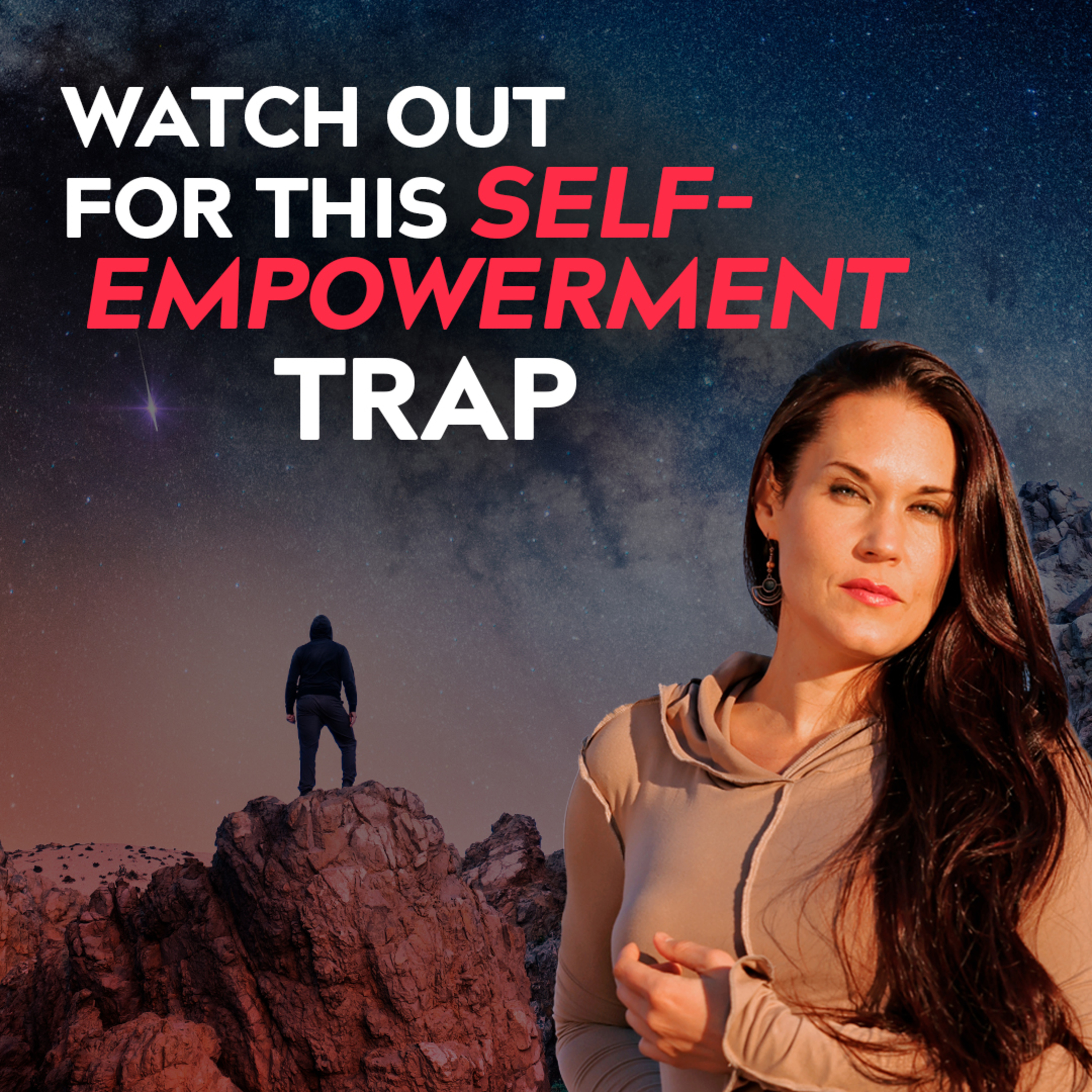
About this episode
This concept of 100% responsibility is very, very popular now. The thing is, it is a problematic philosophy. Let’s unpack why as well as what to do instead.
Get every episode summarized
Each time Teal Swan publishes, we email you a written briefing from the transcript — the topics, who appeared, and any specific claims, with the ad reads skipped.
Email me new episodesFree for 3 shows. No card needed.
Hosts & guests

Transcript ready
126 searchable segments. Every word is indexed and playable.
Full transcript
Teal Swan — Is It Good To Take 100% Responsibility?. Machine-transcribed; use the interactive transcript above to jump the player to any line.
In this era of self-development, coaching, and new age spirituality, there are a lot of experts telling people that it's important to take 100% responsibility. This concept of 100% responsibility is very, very popular now. The thing is, it's a problematic philosophy, and today we're going to be unpacking why, as well as what to do instead. Responsibility has several definitions. From the opportunity or ability to act independently and make decisions without authorization to the state or fact of having a duty to deal with something, to the state or fact of having control over someone, to the state or fact of being accountable or to blame for something, to a moral obligation to behave correctly towards or in respect of someone or something. Well, obviously this makes it really hard to have a conversation about responsibility. If there's so many definitions, what people tend to be concerned with, when they teach you that it's critical to take 100% responsibility, is in fact personal power.
It's framed as a tool for personal empowerment. But when this philosophy is treated as a rigid absolute, as a universal and non-negotiable law that applies and must be followed in all circumstances regardless of context, nuance, or conflicting evidence, it's out of reality and even dangerous. Let's look at how. One, treating self-empowerment tools like radical responsibility as a rigid absolute can pull us right out of reality. So that you understand what I mean, let's look at the roughly 17 million people who were killed in the Nazi Holocaust. Does it seem correct to you to go up to them when they are in the horrendous situation of sitting there about to be executed and tell them, look, it's really important that you realize that you're 100% responsible for where you are today and it's really important that you take 100% responsibility. You're here today because of your choices yesterday and you will be where you are tomorrow because of your choices today. It terrifies people to accept the reality that we can and do affect other people and that other
people can and do affect us. Even if you recognize pre-incarnation factors as well as the law of mirroring, often call the law of attraction, there is in fact a reality that many people do not want to accept. You are not the sole operant power. You live in a system of constant co-creation. You are looking to find personal empowerment relative to your part in that cosmic symphony. You are not the literal author of every single thing that occurs in existence, even when you accept the higher-dimensional truth that everything is you. In the time-space reality that you occupy, reality is in fact a partnership, not a solo dance. It's a paradox. One truth does not negate the other. There is an intersection between you being the architect of your life experience and the other forces, both physical and non-physical, that are also at work. You do not exist in a vacuum. Your reality is a dance
between you and a larger complex system that you are a part of. Many philosophies, including the philosophy of 100% responsibility, and you create your own reality with it, can offer extreme utility for personal growth. But this doesn't mean that they are an objectively accurate description of reality. This is where we need to go at on a little bit of a limb that's going to have sets in people. Many non-physical beings who teach humanity do not care for truth in and of itself. They have a very specific aim and purpose, and teaching humans to view life through the lens of extreme personal empowerment, such as you create your own reality and radical responsibility along with it shifts the person from being a reactive organism to being a proactive self-reflecting producer of life experience. It helps them overcome states of powerlessness by rewriting painful narratives into empowering ones. It switches them into an internal locus of control, causing them to focus
all of their energy where they actually do have the most influence, which is their own choices and perceptions and vibration. In other words, it very much serves a purpose for people to start thinking this way. Two, the philosophy of taking 100% responsibility is rooted in the absolute terror of powerlessness. It's a power of hungry philosophy, which is in fact a state of avoidance. A major idea behind the 100% responsibility idea is that whenever you recognize what someone else did to cause a situation that you're in, i.e. blame them, anytime you see yourself as a victim, make someone else responsible or try to hold someone else accountable. You are surrendering your power, your abilities, and life to the power of something or someone outside of you, that you are saying that they have control over you and that you are powerless. So by taking 100% responsibility, you are taking your power back. This is a very appealing philosophy for people who were hurt by
others in the past, and who never, and I mean never ever, want to feel that powerlessness ever again. And this philosophy becomes part of their hyperindependence trauma response, a coping mechanism. This terror and trauma is why they hold on to it so rigidly. This terror and trauma is also the case when people latch onto this idea of 100% responsibility because they want to get away from this feeling that other people are going to put themselves onto you in any way. We've got a lot of people in the world for whom their trauma with people was that they were held responsible for things that they didn't want to be responsible for. They had pressures that were way above their head, especially when they were children. And so when they say everyone takes 100% responsibility, they finally feel like they can get that pressure off them, but it's all trauma. There's so much trauma baked into this philosophy. Three, this philosophy is a slippery slope to self-blame. Many people who adhere to the take 100% responsibility philosophy consistently monitor every life
experience for how they caused it. This can easily lead to internalizing literally everything that happens, and this converts very easily into self-blame, shame, rumination, and serious self-criticism. Essentially an extreme negative spiral. Four, this philosophy causes anxiety and burnout, specifically hyper-responsibility burnout, which is a thing. It encourages you to take everything onto your own shoulders, which no person can actually do by the way, and so it's a dead end. It leads people to believe that they must control everything in order to avoid pain, and that it's shameful or personal failure to rely on other people, both of which lead you to burnout. Most people who say that it is important to take 100% responsibility, assert that you have to take hold of the fact that you are where you are today, because of the choices that you made before, and where you will be tomorrow is because of the choices you make today. Okay, that's good. This creates a real need for perfectionism regarding choices.
If one wants to avoid calamity, which increases stress, it can easily lead to trying to control something that you can't actually control, and this makes you stay in chronic stress. When you decide that you also have to fix a situation because you are a person who takes 100% responsibility, and this is a one-person show in a situation that can't be fixed by you alone, you will enter to a state of fight or flight. Rather than empowering this take 100% responsibility mentality, will in fact end up being disempowering ironically. Burnout is a horrible experience. The name does not do it justice. Five, and this is perhaps the most important point. It is a recipe for absolute disaster in relationships, and can very easily blind you and bind you to dysfunctional relationships. Taking 100% responsibility in a relationship will mean you taking responsibility for both your part and the other person's part of what should be a two-person tango.
It will burn you out. It's absolutely unsustainable. You're going to enable basically under responsibility, none of the people to do a big degree. You're going to become a irresponsible people magnet, if you will. People are going to gravitate towards taking less and less until everything's on you, but you won't notice until it's too late. You're also going to struggle with the vulnerability that's necessary for relationships. The intimacy and vulnerability necessary to form deep connections with others requires mutual reliance, which the 100% responsibility philosophy tends to prevent. If you are in a dysfunctional or abusive dynamic, taking 100% responsibility can enable dysfunction as well as abuse. It can even become a tool that the other person is using to abuse you. You make yourself the problem and the one to blame, and so do they. Even when the issue is something that they are in fact doing or not doing. For example, it very easily leads to the, I'm the one to blame for and responsible for my partner lying to me
dynamic. It can also very easily lead to boundary erosion, where you are only focused on your reaction, rather than on setting consequences for another person's behaviors. Adhering to this philosophy can easily put you in the scapegoat role in social dynamics as well. Overall, this philosophy is a one-way ticket to relationship hell. Sixth, the 100% responsibility philosophy is part of the problem with our world today. In today's world, reciprocal social bonds are being corroded as the world becomes more and more individualized. Humans are turning from a we take care of each other's society into when everyone's responsible for themselves and their own well-being, society. The take 100% responsibility attitude shifts the blame and burden of systems failures, things that are not okay, and that are not within a person's individual control.
Onto the individual. The take 100% responsibility philosophy very much feeds this world-wide social problem and enables it. It's making this human world a much crueler place to be. Self-empowerment is great. For this reason and many others, responsibility tools are great. In its purest form, what responsibility is is taking positive ownership over something, such as yourself and your life experience. This is a highly engaged and empowered state of being, which is why taking responsibility is so important. But if we're interested in awakening, we need to look at the full picture of reality, not just use the part that makes us feel empowered to negate the part that doesn't. The full picture of causation does not involve just us. Regardless of whether your soul chose this specific life and even a specific set of negative conditions, it is still true that this life experience is a co-creation. You affect others and others affect you. To not get that is to be profoundly and I
mean willfully out of reality. This is why a far, far better and more awakened practice when it comes to responsibility is to see what is yours and what is not yours. And this can be a long list in any given situation. But doing this is going to allow you to see your role in the big and often very complex picture of causation. It's also a different and better practice to use in order to mine this life experience for how you can take ownership and wear it in what ways you do have power in any given situation. It's very black or white thinking to assert that people need to either take 100% responsibility or their in-victim mentality. You don't have to go out of reality to ask yourself questions like this. What choices did I make that got me here? What can I do differently next time? What steps do I need to take to move past this?
What can I learn from this? How can I react differently? What should I be doing differently? How can I shift to an internal locus of control? Don't let the philosophy of 100% responsibility lead you down a road that takes you into distress and out of reality. Start asking yourself instead. What is mine? And what's theirs?
More episodes


