About this episode
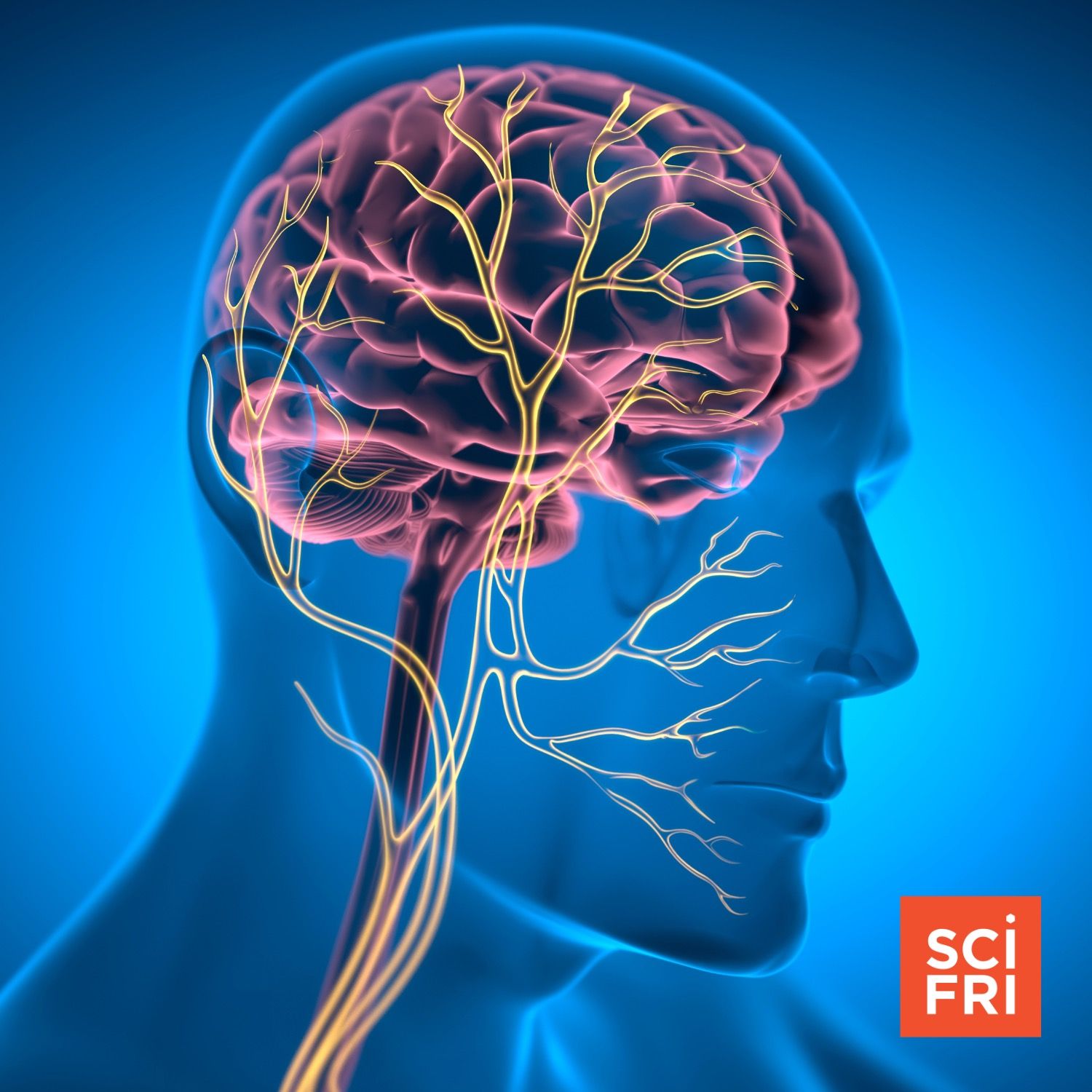
On social media, the vagus nerve often gets billed as the gateway to nervous system nirvana: It’s your ticket to better rest, relaxation, and health if you “stimulate” it correctly. Where did this idea come from, and what does the research say?
Host Flora Lichtman talks with neurosurgeon Kevin Tracey, a pioneer of a field called bioelectronic medicine, which uses techniques to stimulate the nervous system with electricity. Back in the 1990s, he was the first to discover that the vagus nerve regulates the immune system and inflammation.
Guest:
Dr. Kevin Tracey is a neurosurgeon, and president and CEO of the Feinstein Institutes for Medical Research at Northwell Health. He is the author of The Great Nerve.
Transcripts for each episode are available within 1-3 days at sciencefriday.com.
Subscribe to this podcast. Follow our show on Instagram, TikTok, Facebook, and Bluesky @scifri and sign up for our newsletters. Got a science question that’s keeping you up at night? Call us: 877-472-4374
Hosted by Simplecast, an AdsWizz company. See pcm.adswizz.com for information about our collection and use of personal data for advertising.
Get every episode summarized
Each time Science Friday publishes, we email you a written briefing from the transcript — the topics, who appeared, and any specific claims, with the ad reads skipped.
Email me new episodesFree for 3 shows. No card needed.
Hosts & guests

Transcript ready
288 searchable segments. Every word is indexed and playable.
Full transcript
Science Friday — Is There Science Behind The ‘Nervous System Reset’?. Machine-transcribed; use the interactive transcript above to jump the player to any line.
Hey, it's Floor Lictman and you're listening to Science Friday. Today, turning our attention to a social media darling. What happens in the Vegas nerve, this is not state in the Vegas nerve. It controls your heart rate, your lungs, your diaphragm, your breathing rate. The Vegas nerve. It gets built online as the gateway to nervous system, Nirvana. Your ticket to better rest, relaxation and overall health. All you need to do is coddle it correctly, which, according to Wellness TikTok, can be done in a surprising number of ways. If you stimulate the Vegas nerve and you can do that by gargling some water... This is a Vegas nerve ear massage. You can also learn to cough in an effective way, which is... If this sounds like any other overhyped wellness trend, there's actually a lot of science done in school. Here with us today is Neurosurgeon Dr. Kevin Tracy, one of the pioneers of a field called Bio-Electronic Medicine, techniques to stimulate the nervous system using electricity.
Back in the 90s, he was the first to discover that the Vegas nerve regulates the immune system and inflammation. He's been on that Vegas train from the very first stop. Dr. Kevin Tracy is President and CEO of the Fine Steen Institutes for Medical Research at Northwell Health. Hey, Kevin, welcome to the show. Thank you for having me on the floor. It's great to be here. Let's start with the 101 I need. What is the Vegas nerve? Where is it? How should I picture it? The Vegas nerve we call it the Vegas nerve. You actually have two. Starts in your brain at about the level of your ears. One on each side, it travels down your neck across your chest and into your abdomen. And all along the way, it sends off branches to organs that you don't think about all day long, like your heart and your lungs and your pancreas and your spleen. And what's really important is the fact that you actually have more than two Vegas nerves because inside each of these two nerves is 100,000 fibers.
And each and every one of those fibers is a specific nerve that carries specific instructions if you will, either from the body to the brain or from the brain to the body. And these instructions are absolutely critical to maintaining the healthy, balanced functioning of your organs and in fact of your health. You discovered this link between inflammation and the Vegas nerve back in the late 90s. Tell me the story. How did that happen? How did you get interested in it and what did you find? I got interested in questions about inflammation during the time that I was training to be a neurosurgeon. And it turns out that what my colleagues and I discovered was that there are molecules made by white blood cells today we call cytokines. And these cytokines are really important in driving inflammation forward, causing inflammation. The cytokine storm.
We all heard about this. We all heard about this. That's right. And the cytokine storm back in the 90s was a relatively new concept. And it led to the possibility of treating inflammation by making drugs that blocked cytokines. And today you see those drugs advertised on the nightly news and during football games and they're called biologics and go by other names. And as good as those drugs are, they're very powerful and they can actually cause immunosuppression. And so in thinking about ways that we could make drugs that would slow down inflammation for conditions like rheumatoid arthritis, we envision making molecules that would treat the inflammation without causing the immunosuppression. And so like you could block the cytokines but prevent the whole immune system from shutting down. Exactly. That was the hope. And one of the early molecules we made, we had named it 1493.
Okay. This molecule was a very good at blocking inflammation, didn't cause immunosuppression. What we discovered completely unexpectedly is that vanishingly small amounts of this molecule in the brains of these animals turned off inflammation in their body. And this was a real shocker. This was a head scratcher. And the question was, how did it work? After many months and then ultimately years of work, what we had accidentally discovered was that the molecule in the brain was turning on signals that traveled in the vagus nerve to the immune system to turn off cytokine storm. And that changed everything. So basically you found that this molecule turned on the vagus nerve and the vagus nerve turned off inflammation in the body and other parts of the body. Exactly. This discovery indicated to us that the vagus nerve was like the brakes on your car. And when you're barreling down the hill, you turn the brakes on in order to slow down the car.
In this case, when you turn on the vagus nerve, you can slow down inflammation. And so from that discovery, we said, well, if that's true, we don't need to put this drug in the brains of people. We should be able to put an electrode on the vagus nerve, which we knew even in the 1990s could be safely done in humans. Because we knew this from epilepsy, right? Exactly right. Vagus nerve stimulation therapy was approved by the FDA back in the 1990s for the treatment of epilepsy. And so by targeting now the fibers in the vagus nerve that turn off inflammation, we can make new kinds of vagus nerve stimulators that are now FDA approved to treat patients with rheumatoid arthritis. Interestingly, even if the patients don't respond to the biologics and the other currently available drugs, which is actually quite remarkable. So these are approved. This is now an approved use of vagus nerve stimulation for rheumatoid arthritis.
Exactly right. Very important point. Last summer, the FDA approved a new device made by a company called Setpoint Medical that I co-founded. And this device is about the size of a multivitamin. And it's implanted on the vagus nerve in the left neck. And turning on this device for one minute a day, it actually activates what we call the inflammatory reflex in the vagus nerve. And this is like hitting the brakes in your car to slow down the inflammation in patients with rheumatoid arthritis. Do we understand the mechanism? I mean, I know we understand the effect, but do we understand why this works? I like to say that we understand the mechanism of the vagus nerve control of cytokines better than we understand how many drugs actually work. Really? Really. And the reason for that is because we can study it in exquisite detail. And we've been studying it for going on 15 or 20 years now. What we've learned is that there are neurons that start in the brainstem that send their
fibers down the vagus nerve through the neck and all the way down into the abdomen. These neurons carry electrical signals, which when they get into the area of the spleen are converted into chemical signals. And these chemicals go by names like neuroponephrine and acetylcholine. And we can study the effects of these chemicals on the immune cells in the spleen and prove exactly how they regulate the production of cytokines, which are actually turned off by the presence of these chemicals. So what happens is the electrical signals start in the brain, travel down the vagus nerve and are converted to chemical signals, which turn off the activity of the white blood cells. I love this level of detail. It's so satisfying. I have the best job in the world chasing questions like this. After the break, we're going to fact check your feed. What about everything we see on social media about nervous system, resets and all these other ways to stimulate the vagus nerve?
What should we be paying attention to? That's after this. Science Friday is supported by Audible presenting Project Hail Mary, one of the most beloved adventure stories by Andy Weir, Project Hail Mary, is now a major motion picture. So there's never been a better time to immerse yourself in the best-selling audiobook. As the sole survivor on a desperate last-chance mission, Ryland Grace must save the earth from disaster. Except that right now he doesn't know that. He can't even remember his own name, let alone the nature of his assignment or how to complete it. Part scientific mystery, part dazzling into stellar journey, Project Hail Mary is a tale of discovery, speculation and survival to rival the Martian. While taking us to places, it never dreamed of going. Narrated by fan-favorite Ray Porter, who brings every moment to life with humor, heart
and pulse-pounding tension, listen to the audiobook available on Audible and watch the blockbuster movie starring Ryan Gosling in theaters now, Project Hail Mary. Listen, watch, save the world. Listen now at audible.com slash Hail Mary. WNYC Studios is supported by Odu. When you buy business software from lots of vendors, the cost's at up and it gets complicated and confusing. Odu solves this. It's a single company that sells a suite of enterprise apps that handles everything from accounting to inventory to sales. Odu is all connected on a single platform in a simple and affordable way. You can save money without missing out on the features you need. Check out Odu at odo.com. That's odo.com How does AI even work? Where does creativity come from? What's the secret to living longer? Ted RadioHour explores the biggest questions with some of the world's greatest thinkers.
They will surprise, challenge, and even change you. Listen to NPR's Ted RadioHour, wherever you get your podcasts. Maybe we can drill down on this a little bit. We had tons of people call us and people were curious about all of these purported ways to quote stimulate the vagus nerve from gargling to humming to devices you wear on your neck. We had a caller who had vagus nerve-directed treatment for traumatic brain injury. So they had me listening to music that somehow would stimulate my vagus nerve and the music kind of faded in and out and it almost immediately made me incredibly nauseous. There's real science here and then there's people selling things and then it's let the buyer beware. The real science behind the brain neuroplasticity is fascinating. There's fantastic work out of Texas using implanted vagus nerve simulators which enhance neuroplasticity
in the brain through mechanisms that are still being worked out. And when you enhance neuroplasticity and parrot with various psychological interventions or apps in people with PTSD, you can get remarkable clinical effects. But it's not one size fits all. There's a difference between carefully controlled scientific studies and large populations that are randomized and well controlled and somebody who makes some new device and claims it works in five or ten people and then starts advertising it. And that's where the whole thing gets confusing. The neuroplasticity is fascinating though. I mean, is that why people think it might be useful for depression or why we see results for people? What happened during the epilepsy studies is that and this goes back to the 80s and 90s that patients about half of them benefit from the device. We don't know the mechanism for epilepsy. We don't know the mechanism for depression and we do know the mechanisms for inflammation.
That's the separation. So in the epilepsy patients, the half that weren't getting benefit, the doctor said, well, take it out. And the patients said, lot of the patients said, no, you're not taking it out. And they said, why? And they said, because it makes me feel happy. What about the breathing techniques? Well, that's the 200,000 fibers. So when you breathe in, right? You expand your lungs and there are pressure sensors and gas sensors in your lungs. Those activate vagus nerve sensory signals that travel up into your brain. Once the brain has these incoming signals, it can send signals back down the vagus nerve to your heart to speed it up or slow it down or down other nerves to your lungs or heart or other organs. So is it really fair to say that I took a breath and I've stimulated my vagus nerve and I hummed and I stimulated the branch of my vagus nerve to my larynx or I sighed or
I, whatever. These are all technically correct because the vagus nerve has so many functions. But it's not specific and it's not selective and it's not the same as putting an electrode on the vagus nerve. It's become almost a cliche at this point that we all need nervous system resets. Is it overactive or an overstimulated nervous system causing illness and people? There is definitely evidence that damage to the vagus nerve occurred in patients who died of COVID and in more recent studies, there's a great interest in understanding patients with long COVID who have evidence of autonomic dysfunction whether that is being caused by damage to their vagus nerve. Now if you damage the brakes to your car, you can't stop the car. And if you damage the vagus nerve, you're going to allow excessive inflammation to occur
and that is one of the hallmarks of long COVID. This same sort of analysis has been done in patients with autoimmune diseases like rheumatoid arthritis and other conditions. It's still an open question in terms of cause and effect but the data are really interesting supporting the idea that in some patients, damage to the vagus nerve or dysfunction is a better word of the vagus nerve may somehow contribute upstream to the problem of too much inflammation. What's interesting to me though is that the euphemism for this like overactive nervous system feels almost opposite to what you're describing which is like damage to your nerves. You said it right. There's too many euphemisms and we really do have a semantic problem, right? And that's because individual nerves, individual neurons have individual functions. And so to make a generalization about I'm going to do this general behavior and it's
going to affect my vagus nerve in this specific way, belies the reality that each and every fiber can act specifically and selectively. Hmm. I want to talk about what this means for patients. What has it been like for you to go from the sort of basic research discovery to an FDA approved treatment? It is incredibly exciting and gratifying to see a progress from a laboratory idea on the back of a napkin to a clinically approved therapy. And you know, when I meet patients who now are walking around with an implanted vagus nerve stimulator in their neck and they tell me that they used to be nearly disabled from rheumatoid arthritis and now they're living a normal life and not taking an medication. It's the most gratifying thing you could ever hope to experience. It won't be for everybody. We are still early in early days.
But what we know right now is that about 80% of people with rheumatoid arthritis not responding to drug therapy, about 80% of them are significantly better one year after this. So it's hard to put towards how gratifying that is professionally and personally. What other conditions are people investigating vagus nerve treatments for? There is a long list of conditions being investigated and the reason for that is actually because of the fact that vagus nerve stimulation can control inflammation. And inflammation is either a contributing cause or a root cause. So conditions like cancer, like diabetes, like obesity, like other autoimmune conditions like inflammatory bowel disease and multiple sclerosis and even potentially diseases like heart disease and stroke. I am aware of either laboratory-based studies or ongoing clinical studies that are exploring
the use of one form of vagus nerve stimulation or another for all of those conditions. You know, treating disease through a device through electrical stimulation feels really different than like what we're used to, medications and surgery. Have you found barriers getting people on board with this idea? Yes and no, you'd be surprised. It turns out that early on the data were so clear for immunologists in particular, the doctors and scientists who study inflammation. It was so clear that vagus nerve stimulation and laboratory studies could be effective that it was accepted relatively quickly. And then as the story moved into clinical testing, patients have embraced this. Many of the drugs that they're using today, they're extraordinarily expensive and typically only work about 40 or 50 percent of the time.
And perhaps most importantly, patients are looking for alternatives because the drugs they're taking have serious, serious side effects. So the patients want options and I think patient demand ultimately will drive this. Kevin, thanks so much for being here today. Thank you for having me on, Flora. Dr. Kevin Tracy is a neurosurgeon, researcher and president and CEO of the Fine Steen Institutes for Medical Research at Northwell Health. He's the author of the great nerve, the new science of the vagus nerve and how to harness its healing reflexes. This episode was produced by Shashana Bucksbaum and I just want to thank everyone who called in for this segment. We really appreciated your thoughtful questions and stories. They were so helpful in shaping our approach. So thank you for that. And if you have a lead you'd like us to look into, give us a ring, 877-4 Sci-Fi, 877-4 Sci-Fi, the Listerline is always open. I'm Flora Lixman, we'll see you tomorrow.
More episodes
More from Science Friday

Did the fire at the Library of Alexandria set humanity back?
Science Friday

Black bears are moving into the neighborhood. How do we coexist?
Science Friday

Is a shorter course of antibiotics OK? + Genetic risk of fibromyalgia
Science Friday

Why cannabis’s health effects are so hard to study
Science Friday