Loading...
artsbookseducation
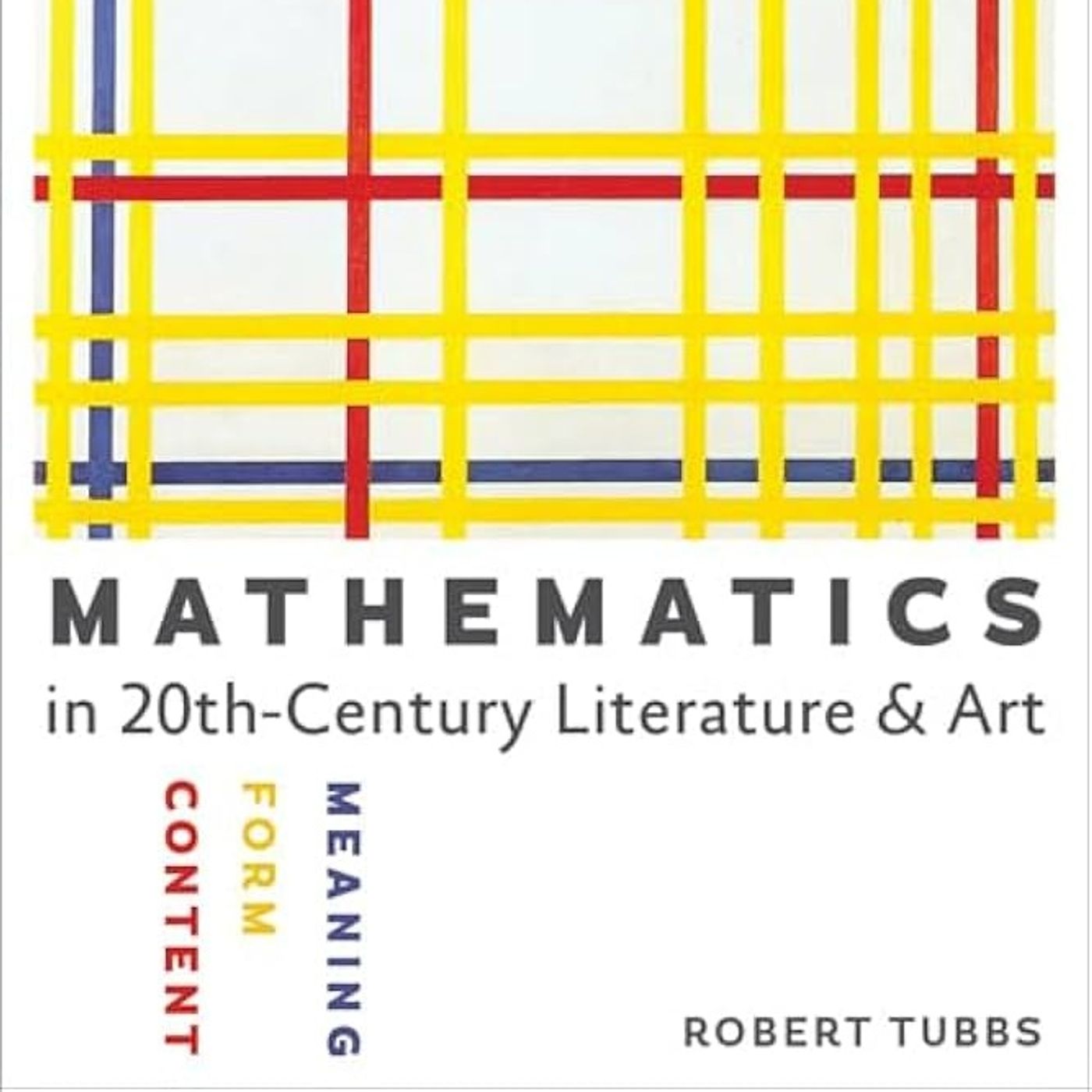
Mathematics in Twentieth-Century Literature and Art: Content, Form, Meaning
About this Episode
Explores the multifaceted relationship between mathematical concepts and creative expression across the arts. It begins by examining surrealist writing and art, showcasing how mathematical surfaces, new geometries, and abstract ideas influenced artists like Man Ray and writers like André Breton. The text then investigates the role of axiomatic structures in art, such as Malevich's "Black Square," and in literature, connecting them to Hilbert's foundational work in geometry. Further chapters reveal how mathematical forms like the Möbius strip and Klein bottle provided literal and conceptual frameworks for narratives by authors like John Barth and Alain Robbe-Grillet, while also discussing the presence of infinite numbers and graph theory in literary choices. Finally, the source illustrates the use of mathematical principles in poetry, random art, and algorithmic composition, demonstrating how artists like Alfred Jensen and writers like Jackson Mac Low integrated numbers, prime numbers, and arbitrary systems into their creative processes, ultimately arguing for mathematics' significant role in understanding modern artistic thought.
You can listen and download our episodes for free on more than 10 different platforms:
https://linktr.ee/book_shelter
Get the Book now from Amazon:
https://www.amazon.com/Mathematics-Twentieth-Century-Literature-Art-Content/dp/1421413795?&linkCode=ll2&tag=cvthunderx-20&linkId=eaf5adc29067038995ec2e816a2f83da&language=en_US&ref_=as_li_ss_tl
Produced by Podcai Studio:
https://www.podcaistudio.com/
You can listen and download our episodes for free on more than 10 different platforms:
https://linktr.ee/book_shelter
Get the Book now from Amazon:
https://www.amazon.com/Mathematics-Twentieth-Century-Literature-Art-Content/dp/1421413795?&linkCode=ll2&tag=cvthunderx-20&linkId=eaf5adc29067038995ec2e816a2f83da&language=en_US&ref_=as_li_ss_tl
Produced by Podcai Studio:
https://www.podcaistudio.com/
Transcript
Welcome to The Deep Dive, where we sift through sources to bring you essential insights fast.
Today, we're tackling something really fascinating, maybe even a bit surprising.
The idea that mathematics, logic, numbers, structure actually had this huge influence on 20th
century art and literature, worlds that seem almost opposite, right? Absolutely. And our guide for
this is Robert Tubbs' brilliant book, Mathematics in 20th century literature and art, content, form,
meaning. Our mission today is really to tell the story he lays out.
The story of discovery. Yeah, exactly. How artists and writers, some of the most innovative
minds, turn to math, not just for, like, subject matter, but to actually shape how they created
things, their whole aesthetic approach, numbers, and abstract ideas as muses.
It really begs the question, though, why math, why then?
Well, Tubbs points out that around the turn of the 20th century, math wasn't just for
mathematicians anymore. Its ideas were seen as key to understanding the universe or place in it.
It sort of entered the general intellectual conversation. So it became a viable alternative?
So like, the old ways of making art. Precisely. A fresh way to think. A challenge to artistic
traditions that had been dominant for, well, centuries. And Tubbs breaks down this engagement into
four main ways artists and writers interacted with math. Okay, let's hear them. First, you've
got folks using mathematical imagery shapes, forms, even methods to express non-mathematical ideas.
Think man-rays, paintings of those mathematical surfaces. We'll get into those.
Intriguing what second? Second is using mathematical structures to build their work,
like using a mobius strip to structure a narrative loop. Ah, okay, that makes sense. Number three.
Third involves putting mathematical thinking often linked with chance or randomness right at the
core of the creative process. Data poetry is a prime example. Right, embracing the unpredictable
through a kind of system. Exactly. And fourth, Tubbs looks at analysts, critics, scholars who use
mathematical concepts after the fact to analyze creative works, like using client bottles to understand
complex narrative jumps. Wow, okay. So it's a really rich landscape. Where does Tubbs start this
story? He kicks off in the world of surrealism. Chapter one, unveiling hidden geometries in surrealist
dreams. It starts with Andre Breton and Philippe Supal and their 1919 work, The Magnetic Fields.
Automatic writing, right. Trying to get the subconscious straight onto the page. Yeah, and they
were intense about it. Six weeks straight, just dictating rapidly, trying to shut off the conscious
brain entirely. And what's fascinating is how math terms just bubble up. Like actual geometry terms
in automatic writing. You got it. In Britons, soluble fish from 24. You find things like triangular
staircase, I saw these wasps. It's bizarre dream-like imagery, but also more abstract stuff, like
neat parallel, or even a dimension perpendicular to our existence. Well, that last one sounds
pretty heavy, hinting at something cosmic. Sort of hinting at humanity's smallness, maybe. Yeah.
And Breton, he wasn't satisfied with art, just copying reality. He wanted new objects, things
you'd only see in dreams. This search for the marvelous La Mervea through disorientation,
depasional. It led them directly to exploring non-uclidean geometries. You know,
Lobochewski, Boliye, where parallel lines do weird things. It was a perfect fit for that
feeling of disorientation they were after. So the math itself provided a kind of strange new world.
In a conceptual way, yes. And this brings us right to Man Ray. His muses were literally mathematical
models from the Institute, Poincaré, in Paris. Actual physical objects like teaching aids. Exactly.
Wood and plaster models of complex surfaces. But Man Ray saw them as art. He photographed them
the pseudosphere, others, and they got published in Caihé d'Art in 1936. Just photographs. At first.
But later he painted them, calling the series Shakespearean equations. He really took liberties
transform them. That pseudosphere became Anthony and Cleopatra, a simple sphere turned into as
you like it. Totally. Okay. So from those dream-like hints, Tubbs shifts focus in chapter two,
axioms of art and abstract forms to artists who used math more foundationally, like Cosmere
Melavitch. The black square iconic. All right, 1915. From Melavitch, that square wasn't just a shape.
It was feeling pure feeling. And the white space around it, the void beyond this feeling,
just one single intense emotion stripped down to its essence. Completely. And then his red square
from 21, he called it a hero. It's tilted, right? Denying coordinates, representing this primal sense
of motion. It's like he's trying to find the basic building blocks of art using geometry.
That's a great way to put it. And it echoes what David Hilbert was doing in mathematics around
the same time. Hilbert wanted to purify geometry, get rid of extraneous elements. How did he do that?
By not even defining basic terms like point or line, he said, look, the axioms are what matter.
The fundamental rules that dictate relationships. That makes geometry abstract applicable to any
system that follows those rules. So an axiom isn't about a picture, it's about a logical rule,
like between any two points on a line, there's another point. Exactly. That implies infinite points
just from the rule itself. It's purely abstract. And this thinking really clicked with writers like
Raymond Kino. Kino, part of that leapo group right with the constraints. The very same. In 1976,
he took Hilbert's geometric axioms and translated them into rules for writing. How did that work?
He set up correspondences. Word, point, sentence line, paragraph, plain. So Hilbert's axiom,
two distinct points determine a line becomes Kino's literary rule. A sentence exists containing two
given words. Mine blown. Okay, so this leads to things like lipograms. Precisely. Like George's
peric writing, avoid an entire novel without using the letter E or Paul Fornel's suburbia,
a novel with no text at all. These extreme constraints, these literary axioms force incredible
creativity. It's like solving a puzzle. It really changes how you think about writing. Okay, so we've
had dream geometry, axiomatic art. What about structure and silence, chapter three, right?
Structure, silence and abstract algebra. Yeah, this gets into some really minimalist territory.
I think ad-Ryan Hart's black paintings from the 60s. Just black canvases. Seemingly. He even
had these pronouncements, his own kind of axioms. Art is art as art and everything else is
everything else. Pure totology, art for art's sake, basically. But there's more to it. Oh, yeah.
The subtle thing is those black squares aren't truly monochrome. They're divided into nine smaller
squares, each with a slightly different tent, reddish, greenish, bluish, almost impossible to see.
A hidden structure. Wow. Then you have Robert Roshenberg's white paintings from 1951,
even more radical. John Cape said they weren't art because they took you somewhere art hadn't been.
They were meant to just reflect whatever was in the room, light, shadows, people.
So the art is what happens to the canvas. Kind of, yeah. Which leads perfectly to Cage himself
and his famous four foot three three. The silent piece. Right in 1952. The musical equivalent of a
blank canvas or a textless novel. But Cage didn't see his empty. He described it as structured,
built up by means of short silences put together. How can silence have structure? For Cage,
music was fundamentally about duration, not pitch. So Silas could fill measured time slots.
Yeah. The structure was temporal. You're listening to the sounds of the silence, the ambient sounds
in that measured time. Okay, that's a different way to think about it. And this connects to abstract
algebra. Connects to the idea of structure, which mathematicians like the Borbaki group formalized.
They saw a mathematical structure as like an empty box. An empty box? Yeah. A set of rules or
relationships that different things can fit into. They identified three mother structures. Order,
algebraic and topological. Take algebraic structure like a group. It's defined by symbols and an
operation, say four symbols, ABCD in one operation. Okay. That box can be filled with the numbers 1i,
negative 1i using multiplication. Or it can be filled with 0, 1, 2, 3 using addition module of 4.
Totally different elements, different operations in the real world. But they share the same
underlying abstract structure. I see. So the structure is this deeper pattern that different
things can share. Like maybe different stories could share a narrative structure. Exactly.
Which brings us neatly to chapter 4. Twisting narratives. The mobius strip and infinite numbers.
Here we see that idea of structure play out. It starts with the art concrete movement back in
1929. Concrete art. What was their goal? Pure objectivity. Universal art created with mechanical
means. And a key figure, Max Bill, rediscovered the mobius strip as an artistic form.
Ah, the mobius strip. The one-sided loop. That's the one made from a rectangle. Give it a half
twist. Take the end suddenly. One edge, one surface. It messes with your intuition. And writers
just grabbed on to that. How would you use that in a story? Well, John Barthrot fran tail in 1968.
It's a self-referential looping story designed to be printed on a mobius strip. You turn it
and the story literally never ends. Unending number of stories within stories, he called it.
Wow, that's meta. Totally. An Albert Wachtel's novel, Ham, from 96, uses it conceptually.
Characters seem to arrive at the same point in a conversation, but with opposite viewpoints,
like Clarissang, Too Bad There Jews, and later pneumonia, polio, Jews. It's like they traverse
the strip from different sides or orientations. Challenging the idea of a single truth.
Right. And Gabriel Joseph Vichy's Mobius The Stripper plays with the physical form two parallel
stories printed on the page. One about Mobius The Stripper, one about a writer with writer's block.
Reflecting the two sides you see on a paper model, even though mathematically it only has one.
Clever. But this looping and contradiction, it bumps up against ideas of infinity,
it does. And that's where George Cantor comes in. His work on the mathematics of infinity is
crucial for understanding parts of Wachtel's ham. Cantor found a way to compare the size of
infinite sets. How do you compare infinities? Are they all just infinite? You use one-to-one
correspondence. Can you match every element in one set with a unique element in another? He showed
a set is infinite if you can match it perfectly with a proper subset of itself, like counting
numbers 1, 2, 3, and there's squares 1, 4, 9. You can match 1-to-1, 2-to-4, 3-to-9, even though
the squares are only part of the counting numbers. Okay, that's weird, but I follow.
But here's the kicker. Cantor proved you can put the counting numbers into a one-to-one correspondence
with all positive rational numbers, all the fractions. Even though there are infinitely many fractions
between any two whole numbers. Wait. With a clever grid and a zigzag path basically. But even more
mind-blowing, he then proved that the set of irrational numbers, like pi, 2-for-up, is a larger
infinity. You cannot match the one-to-one with the rationals. So there are different sizes of
infinity? Yes, it's profoundly counterintuitive. And in ham, the character Neil gives a lecture
claiming the opposite, challenging Cantor. Suggesting maybe truth isn't fixed, maybe it depends on
the path you take on that moveious strip. It questions fundamental logic. This is deep stuff.
It feels like we're moving into higher dimensions now. And that's exactly where chapter 5 goes.
Unfolding the fourth dimension. Client bottles and hypercubes. Starting with Elaine Rodgrillis novel
in the labyrinth from 1959. I'm sure that one's tough. It is. Very disconnected. You have like
three nested spaces, a guy in a room, a soldier wandering a street, and the soldier's memories.
It jumps between them. Scholars tried mapping it, like Ronald Lethko used a bar graph to show
time spent in each space. Just tracking the shifts. Yeah, but Bruce Morris said proposed a more
sophisticated model. The Klein bottle. What's a Klein bottle? Think of it as a 3D version of a
mobius strip, but it can only truly exist without self-intersecting in four dimensions. It has one
continuous surface, no inside or outside. Morris said argue this model shows the transition between
Rodgrillis narrative spaces aren't abrupt jumps, but a continuous flow, like the surface folding
back into itself. So the structure suggests continuity underneath the apparent disconnection.
Exactly. Settle cues in the text, linking objects across spaces, reveal this underlying topological
structure properties that remain stable even when you stretch or twist the form. Fascinating.
And this fourth dimension idea popped up elsewhere. Oh yes, often with mystical overtones.
Manray used a Dodecahedrin, one of Plato's cosmic solids in his Shakespearean equations,
and Salvador Dali. Well, Dali went big. Of course he did. His painting Crucifixion,
Corpus hypercubus from 1954, shows Christ on an unfolded hypercube, a Tesseract.
It's a 3D representation of a 4D object. How does that work? Think about how you unfold the
3D cube into a flat 2D net of 6 squares. Dali's cross is like a 3D net of 8 cubes that if you could
fold it in the fourth dimension, would form a 4D hypercube. It connects to this 19th century
idea from Charles Howard Hinton that visualizing 40 objects could lead to higher consciousness.
Dali mixing science and mysticism again. His oddball synthesis, as Tubbs calls it,
seeking profound insights through geometry. From dimensions to choices, chapter 6, paths,
graphs, and narratives of choice. This sounds like cheese your own adventure territory.
It definitely includes that kind of thinking. Yeah. Julio Cortez Cortez are his hopscotch.
1963 is a classic example. It literally has a table of instruction. Telling you how to read it.
Offering options. It says there are many books, but two books above all. You can read chapters 156
straight through. Or you can follow a hopscotch path jumping between chapters, according to a sequence
Cortez provides, including chapters he labels expendable. So your choices create a different book
each time. Potentially yes. And using mathematical graph theory where chapters are nodes and reading
paths or edges, you can see the structure. Tubbs mentions it implies something like 245 possible
reading paths. That's insane. Then there's Mark supporters composition number one from 1962.
Yeah. Even more extreme. It's literally a box of 149 loose, unnumbered pages. So you just
shuffle them. Exactly. Read them in any order you like. Unlike hopscotch with its suggested paths,
supportive forces complete randomness under the reader. You impose the order. And Tino did
something like this too. Yes. It's a story as you like it from 1967 is interactive.
At decision points, it asks you directly. Do you wish to hear the story of the three alert
peas? If yes, go to four, if no, go to two. His own diagram shows it creates a network
with at least 105 possible stories. This mapping of choices sounds like that bridges problem.
Precisely. Leonhard Euler's seven bridges of Conexburg probably from 1735. That's the
birthplace of graph theory. Euler ignored the size of the land masses or the length of the bridges.
He just looked at the connections. Lando nodes bridges paths.
Focusing on the relationships, the topology. Right. And he figured out you couldn't cross each
bridge just once by looking at how many paths connected to each node, the degree of the node.
It was pure structural logic. And this graph idea got used in theater.
Yeah, but leopor writers Paul Fornell and Jean Piranard for their play the theater tree.
The audience votes on choices after each scene. The graph structure means the actors don't
have to learn hundreds of unique scenes. Just branching paths that sometimes cleverly converge,
giving the illusion of vast choice. Very efficient. Okay. Let's shift to poetry. Chapter seven.
Poetry permutations and unique numbers. How does math structure poetry? Well, classical forms
already use basic math, right? Sonnets, count lines, syllables, follow rhyme schemes,
ABA, PDCD, EFF, GG for Shakespeare. The Sistina is even more mathematically demanding.
How does the Sistina work? You have six stanzas of six lines each,
plus a three line envoy at the end. The six end words of the first stanza repeat as
end words in all the other stanzas, but in a specific rotating pattern. For example,
the word ending line one moves to end line two and the next stanza line two's word moves to line four.
And so on. That sounds complex. It is. That rotation is a perfect example of a mathematical
permutation. The set of six possible permutations actually forms a mathematical group. Wow.
They're a deeper example. Oh, yeah. Paul Braffert, another Eulipa member, wrote my hypertropes,
21 minus one program palms in 1979. This used a kind of that called Zekendorf's Theorem.
Zekendorf, never heard of it. It relates to Fibonacci numbers,
11235813. Zekendorf proved in 1972 that any positive whole number can be written in exactly
one way as the sum of non consecutive Fibonacci numbers. Okay. Take 14. The Fibonacci numbers are
1235813. You can write 14 as 13 plus one. Those are non consecutive Fibonacci numbers. You
couldn't use eight plus five plus one because eight and five are consecutive in the sequence.
There's only one unique way using non consecutive ones. Got it. So how did Braffert use this in poems?
Each poem in his collection, numbered one to 20 since 21 minus one, is dedicated to someone.
But it also shares characters or images with the other poems whose numbers make up its
second door for representation. So poem 12, which is eight plus three plus one, has subtle links to
poem eight, poem three, and poem one. It creates this hidden web of connections. That's incredibly
intricate. And then there's concrete poetry. Right. Where the visual form is the content.
Marianne Soltz-Mancher was formed, content, content, equal form. You see math imagery directly.
Manray and Adam LaCroix did a poem called Murderous Logic in 1919 that spirals along
two calculus curves. It's serious. Yep. Reflecting, they said, rising passion and the irrational
logic of obsession. Or Emmett Williams, like attracts like, where lines of the alphabet are shifted
to spell, well, to spell bullshit vertically down the page. Okay. And Charles Bernstein used math
symbols like intersection or less than or equal to in his poems. Sometimes just for their visual
texture, not necessarily for a specific meaning. So using the look of math, which brings us to
chapter eight, numbers, targets, equations, and imaginary meanings, using numbers themselves as art.
Exactly. Jasper Johns is famous for this. His paintings like gray numbers 1958 just feature
numerals zero through nine, filling the canvas, maybe in a grid or just one big number. And what did
they mean? For Johns, they were like flags or targets preformed, conventional, depersonalized things
that already exist in the world. He wasn't necessarily painting the concept of the number seven,
but the simple seven as an ordinary object. I see. Taking something common and making you look
at it differently. Right. Then you have Alfred Jensen, who was deeply into Mayan numbers and
calendars. His painting, the apex is nothing, 1960, uses the Mayan symbol for 18, linked to their 18
month hive calendar. He was trying to find connections between Mayan and ancient Chinese cosmologies
through numbers. So he was interested in the meaning, the cosmology. Very much so. Some paintings
are just equations like the light color notes showing calculations related to calendar cycles,
or the ionic order with lists of odd and even multiples. He saw numbers as having this
concrete symbolic power, though he was a bit vague himself about whether it was mystical or
purely structural. A bit of both, maybe, and imaginary numbers. How did they get into literature?
Through the Russian writer, Velomir Klebnikov, he was obsessed with numbers,
thought they held the keys to history. He found these supposed 365 year cycles in historical events,
calculated cosmic ratios. And numbers mystic. Totally. And he actually used R1, the imaginary
unit, Al and two in his prose. He believed negative and imaginary numbers were just as real as
positive ones, representing hidden dimensions of reality. That's pretty far out.
It is. And Malavitch might have tipped his hat to Klebnikov in his lithograph arithmetic.
It includes symbols, maybe the Cyrillic letter standing for i. But Malavitch leaves an equal sign
unanswered, keeping the mystical interpretation open. A question. It also highlights the difference
between algebraic numbers, like two solutions to equations and geometric ones. Imaginary numbers
are algebraic, but don't have simple geometric meaning, which artists found really provocative.
Okay, almost there. Chapter nine. Embracing or controlling chance and arbitrariness.
This sounds like the dog again. Definitely starts there. Tristan Zara's method from 1920.
Cut words out of a newspaper article, shake them up, pull them out randomly, and that's your pump.
Diving up control. Totally. Letting the chaos of the everyday world and random editorial choices
create the work. G-Darp did similar things. Daniel Spirey took it further with his
and anecdoted topography of chance in 1962. What was that? He just mapped and described
every single object left on his table one day, embracing the messiness. But then he had
it notes and got others to add notes, layering chance and collaboration. And math came into this.
Casually Spirey mentions prime numbers, which leads tubs into discussing primes, only divisible by
one and self, and perfect numbers, some of their divisors like six equals one plus two plus three.
Euclid linked perfect numbers to a special type of prime called mercen primes, 2k1.
Hilariously, Spirey reports a new prime found that was actually wrong because it didn't fit a
known theorem. Shows how easily math can be misunderstood. Even in trying to be random,
rules sneak in. Right. And writers also play with the arbitrariness of language itself.
Raymond Roussell would start with two nearly identical sentences, but using words with
double meanings, like French, billard, pillard, and then write a bizarre story to connect them.
Forcing connections between unrelated things. Yeah. And Klebnikov, again, with Krzyszinik,
invented zone transrational language. Not new meanings, just new sounds based on Slavic roots.
Hugo Ball went further, ditching words altogether for pure sound poems like musical compositions.
Breaking language down. And algorithmic writing, that sound like the opposite of chance.
It is. It's about deterministic methods.
Jackson Maclow, in the 50s and 60s, wanted poems free of his own psychology.
So the poems title might dictate the number of lines or words per line. Or he'd use a
caustic methods, take a source text in a seed word, and systematically pull words from the source
based on the letters in the seed word. So the process generates the poem, not the poet's feeling.
Exactly. More recently, Emeroth Borsuch and Gabriela Jaregi did transversions of
Brafford's poems, using algorithms. Maybe selecting words based on Fibonacci numbers.
The algorithm becomes the co-author. Wild. Okay. Last chapter. The art world and mathematical
perspectives. Bringing it all together. Sort of looking at how the art world itself started to be
analyzed through a kind of mathematical or philosophical lens. It starts with Duchamp's
ready maize, the urinal fountain, art as ordinary objects. Which led to artists making art that
looked just like ordinary objects. Right. Like Rauschenberg putting paint on an actual
bed or plays Oldenburg making a sculpture that looked like a badly designed bedroom ensemble.
Philosopher Arthur Danto in his 1964 essay The Art World nailed it. To mistake an artwork for a
real object is no great feat when an artwork is the real object one mistakes it for.
So the big question becomes what makes it art then? If it looks just like a normal thing.
Exactly. And Richard Hertz in 1978 tried to build a philosophical framework for modern art
using axioms like Hilbert did for geometry. Art axioms like what? His existence axiom basically
said art exists but crucially if there were no theory of art we could not distinguish art from
what is not art. Theory becomes essential. His reducibility axioms that art can always be
reduced to its physical stuff. Implying its art is not purely material. So if it's reducible to
physics and only theory makes it art. Then Hertz derived the theorem. Arts aesthetic properties
aren't the defining thing. The theory or concept behind it is what makes it art.
Which sounds a lot like Duchamp again. His large glass right? The bride stripped bare.
The perfect example. That piece is almost meaningless without Duchamp's extensive notes in the green
box. The ideas, the complex conceptual framework that's the core of the work. More so than the
physical glass object itself. It perfectly illustrates Hertz's point. So wrapping this incredible
journey up. What's the big takeaway from Tubbs' exploration? I think it's that math wasn't just
a tool or a theme for these 20th century creators. It was a whole way of thinking a source of
structures, concepts, even ways to handle chance and infinity. They genuinely adopted its frameworks
to break new ground. From non-uclidean dreamscapes to algorithmic poems, they really ran with it.
They absolutely did. Cubs shows us that this deep desire we have to understand and remake the world
can lead us down unexpected paths. And sometimes, the seemingly rigid abstract language of mathematics
provides the most powerful tools for exploring very human questions about reality,
perception, and creativity. It leaves you thinking, doesn't it? If something as abstract as math
can be the hidden engine for so much art and literature, what does that suggest about our own
minds? That we can find such imaginative power in logic and numbers. Definitely something to chew on.
A perfect place to pause until our next deep dive.


