About this episode
Get every episode summarized
Each time Science Weekly publishes, we email you a written briefing from the transcript — the topics, who appeared, and any specific claims, with the ad reads skipped.
Email me new episodesFree for 3 shows. No card needed.
Hosts & guests

Transcript ready
149 searchable segments. Every word is indexed and playable.
Full transcript
Science Weekly — Meningitis explained: who is most at risk?. Machine-transcribed; use the interactive transcript above to jump the player to any line.
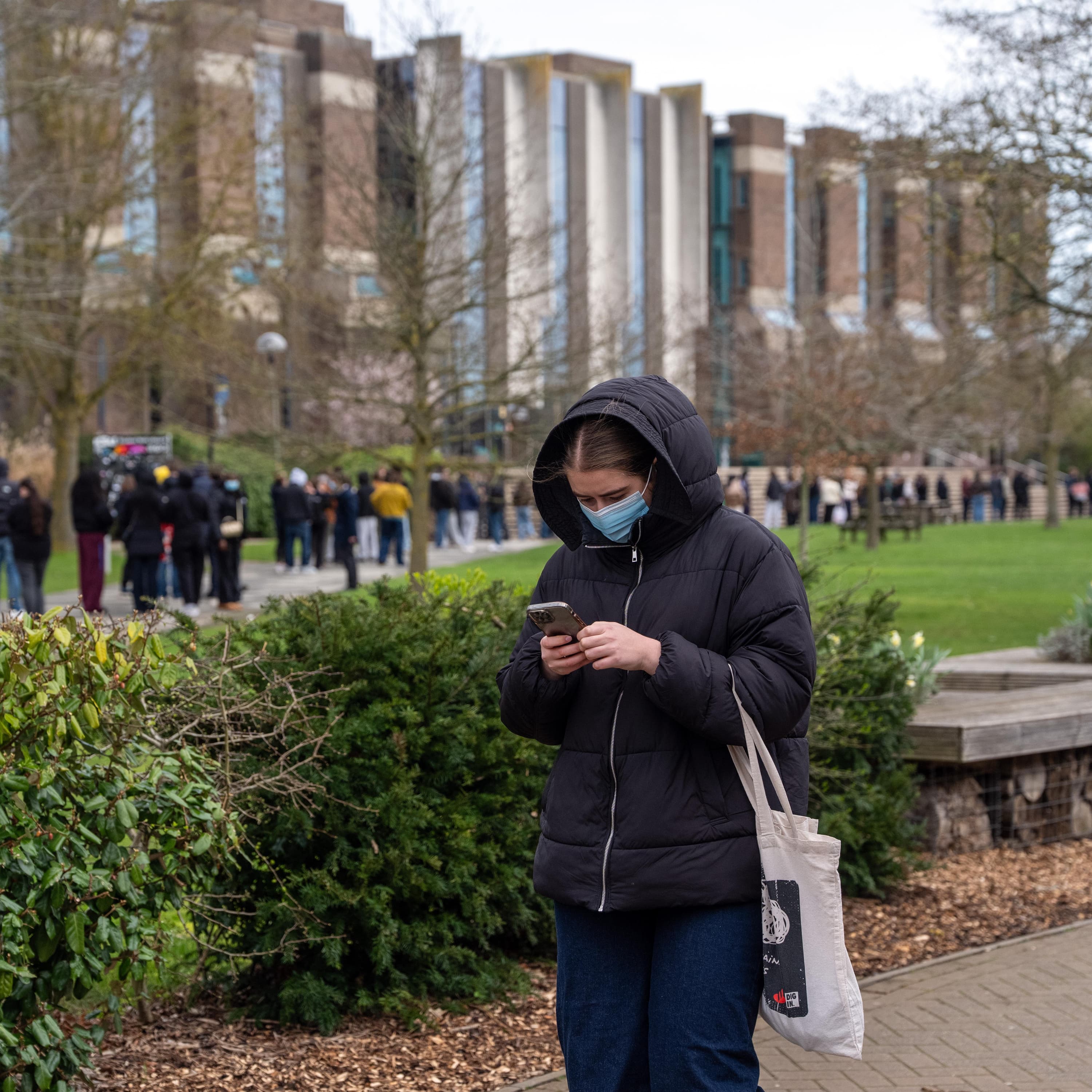
This is the Guardian. Late on Sunday, news emerged of a meningitis outbreak in the southeast of England among university and school students. Hundreds of students are queuing for antibiotics this lunchtime following a meningitis outbreak in Canterbury. A year 13 people named by her teacher as Juliet and a 21-year-old from the University of Kent have died. There have since been an additional 13 confirmed cases, an unusually high number for a bacterial meningitis outbreak. The strain has been identified as men B and scientists and public health officials are racing to find out how and why so many have been infected. The outbreak of invasive meningitis has been linked to this nightclub in Canterbury,
the popular venue now closed until further notice. In the meantime, alongside the offer of antibiotics, the UK Health Security Agency has said it plans to launch a small vaccination programme for students who live at the University of Kent's Canterbury campus halls of residence. Right now, most people born before 2015 in the UK won't have been offered the men B vaccine, but in light of the sad deaths of two young people, questions are being asked about whether this should change. So today, what you need to know about the meningitis outbreak so far. From the Guardian, I'm Madeline Finley and this is Science Weekly. Dr Eliza Gill, you're a clinical lecturer specialising in infectious disease at the London School of Hygiene and Tropical Medicine. First off, what is meningitis?
So meningitis essentially catch all terms for anything that causes inflammation of the membranes that surround the brain. So the brain is floating in fluid to protect it from bashing against the skull and in that fluid you have the membranes called the meninges. Anitis just means inflammation, so it's inflammation of these meningial membranes and it can be caused by anything. It actually doesn't have to be infection, but infections are kind of the ones that we worry about and those can be bacterial, viral, occasionally fungal and very rarely parasitic, but here obviously the ones that we are talking about today in Kent is an outbreak of bacterial meningitis, so that's a bacterial infection of the membranes around the brain. And how does a bacterial infection of the brain's membranes happen? So almost all causes of meningitis all the bacteria anyway, they normally are bugs that live in our nose and throat and in most people who carry them, they never cause any issue. They just are hanging out, just living there, part of your kind of flora as we would call it.
And in a small proportion of cases for reasons we don't really understand that probably are a combination of bacteria factors and factors about the host. Sometimes those bacteria are able to invade deeper, usually they would go first to the blood stream. And that's sepsis, as we would call it, so then we've got bacteria in the blood and that's causing a lot of inflammatory response, a big immune response in the body and making the person quite unwell. And in a proportion of these cases, as the bacteria whizzing around in the circulation in the blood, they're going everywhere, they're also obviously passing through the brain. And in a proportion of cases, they then cross over from the vessels in the meninges, into the menendial spaces and cause meningitis as well. There's a variety of reasons why that's particularly problematic. So this kind of inflammation in the contained space of the skull with a very delicate brain in it is a really dangerous combination for long term damage and can unfortunately be fatal in around 10% of cases. And as you said, this outbreak was caused by a type of bacterial meningitis, we now know meningitis B, but one of the things
that occurred to me was that it's been estimated that up to one in four young people and one in 10 of the general population carry meningitis bacteria in their throats and in their nasal passages. And yet only very rarely does an event like this happen. So what causes it to turn from something that's generally innocuous to something that can be very quickly potentially fatal? Yes, this is an absolutely fascinating question and one that we don't really have a complete understanding of. So it's probably likely that this particular bacteria that has caused this outbreak has turned on some of its virulence genes. So it's particularly expressing a lot of the molecules that cause host damage and enable it to become invasive. So within type B there are also strains. So it's not that all type Bs are the same. And we don't have that level of information at the moment. And I'm sure you, Kate, you're saying doing a huge amount of work at the moment to understand exactly what this meningococcus looks like is in what genes it has. If we've seen it
before in the UK has it caused outbreaks before. So it's going to be bacteria factors that they're going to be looking for to try and understand why this outbreak has happened with men B. Because as you say, men B is around in the community and in the majority cases it doesn't do this. It doesn't normally invade and it doesn't normally cause outbreaks. But it does happen from time to time. We often see outbreaks actually amongst school students and university students. You know people we think of in the prime of their health. So why is it that that's the groups that you often see these outbreaks pop up in? We know that university students and sick farmers it's a time of life where people are often living in very close proximity. They're often socialising a lot. They study and they go out for example to this nightclub that we know has been implicated potentially has been involved in the outbreak. And historically when we think about outbreaks of meningococcus we look for what have been termed kissing contacts or people that
can have close contacts who may have had oral fluid exchanges and they've been very close talking to each other or had intimate contact with each other or shared a small space for a long period of time. So it's just a phase of life where I guess your risk of picking up carriage is higher and then the number of invasive events becomes higher even though the rate remains very low. It's also worth just discussing because it's coming up sometimes is around vaping and that question about anything that inflames your airway probably does also increase the background risk of invasion by your respiratory flora so by the bugs in your throat and we don't have any evidence at the moment to implicate vaping in this outbreak or sharing vapes which again I would not recommend because it's obviously an easy way to transmit bacteria but that will definitely be something that will be considered when people investigate this outbreak whether vapes sharing was implicated and also whether vaping is a risk factor for acquiring invasive meningococcus. Now in the UK babies get
a host of vaccines which help protect them against meningitis including now the men B vaccine which was introduced in 2015 and then later teenagers are offered a vaccine against four types of bacteria that can cause meningitis, meningococcal groups AC, W and Y but how effective are these vaccines? So they're not all the same and men B vaccine is known to give imperfect immunity so even initially the protection is not totally complete and that immunity also is known to weigh in over time and that was accepted when they bought it into the baby schedule because the risk is highest really early in infancy and into sort of toddlerhood but then falls away quite quickly and it was ultimately decided that even a say 75% reduction in risk that faded by the age of four would be overall of benefit at a population level but when people have looked to sort of done similar calculations in adolescence to date the conclusion has been that it wouldn't be at a
population level a useful thing to do I'm very sure that that decision will be revisited. The number of cases of meningitis has fallen enormously since we bought in the AC, W, Y vaccine and then even further since men B came in for babies and general babies are at more risk of men B than young adults so we're now talking about a proportion of a very small number which is part of the difficulty with making a case for rolling out men B vaccination because the absolute number of young adults affected is very small or they're obviously it's tragic that anyone is affected by this illness and obviously very sad that we've you know had two fatalities in this outbreak. Unfortunately for the current cohort of university students they are unlikely to have had the men B vaccine but for those who have had it as babies will they have protection when their teenagers? Yes we obviously learn a lot about vaccines by using them and children born in 2015
will only be 11 at present so we don't know honestly as to the extent of protection that those children will still have by the time they go to university and again whether a booster dose gets added to the vaccine schedule there won't be any evidence yet to inform that decision making so it is quite a difficult weighing up on the basis of kind of gut feel and probability without another country to look to at the moment because we went first coming up what you need to know about protecting yourself and others. Chicago 2011 a cop is murdered police and prosecutors swear they have the trigger man he swears he didn't do it how far will each side go to prove their right like it's just one bombshell after another you know you're like what what the story of a playstation
a brain eating amoeba and the relentless pursuit of justice off duty out now listen wherever you get your podcasts. Eliza the men be vaccine is being brought in for outbreak control for the students at the contemporary campus and of course antibiotics are an offer for them too and then there's been contact tracing for those who have been affected would you say now it's likely that this outbreak is under control. I don't think we can call it under control until we start seeing no further cases so at the moment I think there's a lot of moving parts and unknowns but I would say the response obviously has been very large scale and since it has begun has been very quick and they clearly are offering prophylaxis with antibiotics to a huge number of people this is not a bug that we typically would worry about antibiotic resistance for example that isn't a play here so the antibiotics we would expect to be effective very quickly in clearing the carriage from the
throat so people if they have been contacted to attend antibiotics or are aware that they're a contact of a case should definitely go and take up that offer because that's the best thing they can do to reduce their risk. The students at the University of Kent will of course be very aware of any symptoms or potential symptoms of meningitis and these can be so easily confused with other things like a bad cold or a hangover at the early stages. Public health information is clearly very important in that kind of situation. Do you think right now at risk groups receive enough information about meningitis? Yes I do to be honest I think that there is an overwhelming amount of health information available which sometimes means it's hard to work out what to prioritize for the public. A lot of the symptoms of meningitis and sepsis are similar they can be very non-specific and it is very difficult because many of these students will have had freshers flew,
hangovers, a myriad of respiratory illnesses and it's not straightforward to disentangle meningococcal sepsis or meningitis from those other illnesses. That said outside of this outbreak situation it's still most likely to be something else but if people are concerned then they should either call one-on-one if they're outside the outbreak area and get some advice or if obviously they're outbreak area go and get themselves checked over and just to reiterate in case anyone isn't familiar. Specific symptoms of meningitis that people should be looking out for are things like headache, high fever, next stiffness, eyes that are bothered by light, a rash that doesn't blanch if you press it with a glass and then there's non-specific symptoms like nausea and vomiting feeling generally very unwell sometimes people have very cold hands and feet or flu-like symptoms. So obviously if people have symptoms which they think are meningitis like they should get assessed immediately by a health care provider. And there will be parents thinking of their teenagers right now
who might be wondering you know oh should I pay for my child to be privately vaccinated? Is that something worth considering? So at an individual level there's no reason not to have the vaccine if that is something people wish to pursue although as I've said the actual risk to anyone individual is very low you know it's a difficult situation at the moment as you say because parents that are able to pay are very likely to and then we have a problem around the equity of access to this vaccine but clearly at an individual level if you are a parent and worried and have the means to vaccinate I don't think that's a bad decision. I equally don't think people need to be rushing outside of the outbreak area to get themselves vaccinated because the risk remains very low. Eliza thank you so much for coming and explaining all of that. Thanks very much. Thanks again to Dr Eliza Gill. This episode was produced by me Madeline Finley and Ellie Sands. It was sound designed by Joel Cox
and the executive producer is Ellie Beary. We'll be back next week. See you then. This is The Guardian.
More episodes
More from Science Weekly

Muons, massive waves and restored sight: the winners at the ‘Oscars of science’
Science Weekly

Mythos: are fears over new AI model panic or PR?
Science Weekly

The surprising value of boring chats, ‘super El Niño’ and Alzheimer’s evidence r...
Science Weekly

Helium: the invisible gas that powers AI, and why it’s in short supply
Science Weekly