Loading...

About this Episode
There's been mixed reaction to the government's proposal to extend the rent-a-room scheme to modular buildings.
Under the proposals, people could get up to 14 thousand euro a year tax-free for building a modular home in their back garden for rent.
Opposition parties have criticised the proposal - calling the units "beds in sheds".
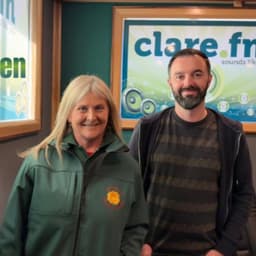
To explore this further, Alan Morrissey was joined by Diarmuid McMahon, auctioneer, Sherry Fitzgerald McMahon in Ennis and Douglas Hurley, Managing Director of DNG O'Sullivan Hurley in Ennis.
Hosts & Guests
Transcript
Now, there has been mixed reaction to the government's proposal to extend the Renterooms
game to modular buildings under the proposals.
People could get up to 14,000 euro a year tax-free for building a modular home in their back
garden for rent, opposition parties have criticized the proposal, calling the units beds in
sheds.
Is this the answer to the House in crisis?
Let us know.
Do you think it's a workable solution?
086089964 or 081840964, but I have two guests to give us their considered views
and us are joined by Douglas Hurley, managing director of DNG or Sullivan Hurley here in
Ennis and also here in Ennis Sherry Fitzgerald McMan, and Tim McMan from said company good
morning to Bolivia.
Good morning.
Good morning.
Thanks very much to Bolivia for coming in.
I suppose with the House in crisis, any and all solutions are welcome.
Is this workable, allowing modular homes and back gardens under the Renterooms game?
It's been a fair bit of debate that's kicked off around it.
This is part of that debate.
Pying the sky or is it something that should be pursued?
I don't think it's pying the sky.
I think you and I would have spoken a few years ago how the country has lacked that urgency,
that kind of emergency spirit if you like that you had around COVID and a bit of outside
the box thinking.
Yeah, maybe I try to try and try anything.
Beds in sheds certainly catch the headlines and it's good to be fair.
But, you know, and actually there might be something in that as well.
I think there's a few sides to this.
So I think it's welcome, but there are, it really depends on what regulation you put
around it.
So the divas in the detail and there are considerations and I think to be fair, you don't want it to
end up as beds and sheds.
You know, you want a quality about this.
So I think a lot would be in the detail around what building regulations and what rules
would be around planning exemption.
So previously when this was announced, it was going to be in back two years ago.
I think Douglas and I spoke to you at the time as well.
It was kind of initially sounded out and they were talking about, you know, for family
members that could move in or as a granny flash for, you know, somebody who couldn't
trade down, but, you know, the family could move into the house and granny could move
into the flash kind of thing.
And now it's evolved so that, you know, you could potentially actually rent it out and
get the rent around 14,000 euros a year and free.
I suppose when somebody's going to put a structure like that in their garden, it potentially
has an impact that may not necessarily be positive to the value of the property itself.
So you have to make sure how you do that and how you look after your property and how
you get it done well and professionally.
And I suppose then from a planning perspective, if you're going to give an exemption, just
how they structure that and also have some control over it.
So we would have discussed before, like, in NS, you've got two surge treatment plans.
You've got the Clear Abbey system, which is at max capacity.
We understand it's very hard to get numbers on it that the, the client road site has
about a headroom for about a thousand units, which sounds like a lot, but the lead time
to get a new treatment plan is about seven years.
So you need to start planning now to upgrade client road and not when it gets full.
So how, that's a lot of extra surge connections, if everybody puts a modular home and they're
back yard and what does that do to surge capacity treatment as well?
Do you know what I mean?
So that sort of from an Irish water perspective, they'll want to have some kind of control
over this as to how many connections are going to be, how many extra toilets are going
to be and everything else, you know.
So like, the divils in the detail is what I'd say to you, but on the whole, I think if
you can get units in, bypass the backlogs you have in planning, potentially, you know,
get a rent link them for people, solve a housing crisis, solve problems within families
where you have, you know, people in their, their thirties who are still living at home
because they're trying to save a deposit, you know, all of those things, there's, there's,
there's a potential to definitely.
Okay.
So something worth exploring.
And as opposed to Douglas, you know, discussed with yourself and definitely with
Jeremy, many times in the past, the smaller landlords leave in the market and they're probably,
you know, they're thinking, it's a big investment for a lot of headaches and maybe not as much
return as they would have hoped for, you know, buying a home and renting it out.
Is this more feasible for homeowners to install these modular units, you know, lower costs
and investing in a home and even if you do end up with a troublesome tenant or whatever
it might be, you haven't put as many eggs on the basket as you would do with an actual
brick and mortar home.
100% Alan, I think this is the first piece of legislation or the potential legislation
that may help with the rental crisis, whereas anything today has nearly led to if people
leaving landlords leaving the rental markets or it has had a detrimental effect, whereas
I think this piece of legislation or it's not going to solve the housing crisis nor should
it, but it should, it definitely will, you know, hit a niche in the market that I don't
think society is catering for, you know, in terms of single people under own, I mean,
we will stop building, stop building bedsets and all that years ago.
So I think it will definitely fit a niche in the market and just to reiterate what Jeremy
is saying, the devil will be in the detail and it's one way how these things are sold
and saying it's beds and sheds, it's the wrong narrative to have out there.
I think for a snappy sound bite from the opposition and saying, they're raising a legitimate
concern.
100% and now is the time to get it and get it right, let's be in the certification that
the suppliers for these homes or modular homes are providing, put something in where they
have to be a certain energy rating cert, put something in where they have to meet certain
regs and let the suppliers are to get your exemption, to get your tax exemption, or to
get your planning exemption, you have to supply a certain amount of rig, no, we don't want
to over regulate it and over, but let it be a birth cert of a certain level or something
like that.
So now it's time to get it right and get it right from the start, but 100% I think it's
there, it will, you know, there's families to avail of it, you know, older people because
the whole downsizing and this older population we have, we're not catering for a high up or
low down, people that want to downsize and people that want to move, maybe this will
suit some people that they'll be able to go in to, you know, convert or build a party
square meter and maybe care for a family or get supplementing income.
So I think 100% it's a positive, positive move and will help with the rental crisis
and the housing crisis.
But again, it's the limit of saying the devil will be in the detail at the start of it and
I think something we need to get right in terms of maybe certification, what's needed
in terms of there have to be a certain level, maybe energy efficiency and have to meet certain
rigs.
Without over regulating it, so maybe put it under supplier to, you know, that's supplying
these, use the supply certain amount of regulation and there to be exempted.
And that is going to be crucial, isn't it, you know, for me, particularly for, there
are, you know, some landlords maybe, you know, which demand, fire exceeding supply, there
can be a tendency even though we've talked about, you know, the difficulty, some of that
smaller landlords face and that landlords can feel like they're tired with the same
brochures and so on, but that there can be some out there, you know, tenants fall
file of landlords who have substandard properties and they don't maintain it because there's
no impetus there.
They feel like, well, I'll find someone else to move in.
I don't need to really invest in this place and keep it looking well, but that's going
to be key here, isn't it the type of modular building you should be building if you want
to get involved in this is going to be crucial as well, isn't that, I suppose other issues
like access to the modular home, you know, you're not going to want, you're going to have
to have a side gauge, you're not going to want to have somebody traips and through your
house every day to be able to access their accommodation.
Yeah, and I suppose, you know, there's some commentary on how fair that's just the system
maybe do you know what I mean in terms of it suits people who are on a larger plot, other
people who are more confined, but the platform to have the same opportunities, I suppose
what I encourage anybody who's thinking about this is, this is a saying in a state agency
is the day you buy is the day you sell, so and the day you add on to your property is you've
got to think about you're looking ahead to what you're offering on the market, right?
Exactly, and just on that point in terms of getting it right, huge frustration for all
estate agencies, we get to the point where we get the sale agreed, you know, great, great
excitement, great frenzy, I have the saying that the day somebody's sale agrees the property
is the day they're in peak love with it and then, you know, they start thinking of every
reason not to sign the contract until, you know, the contract is exchanged, they're
pushing their hand towards the government, I can't, but I mean, but like, but then once they've
signed the contract, well, they've obviously made the right decision, because they don't
go back, but my point is that any change you made to a property, we see people doing
things unilaterally without recourse to planning and they think, gosh, that's grand, should
I go away with that, but then when the day they come to sell, it suddenly becomes a problem
because everything is being, being looked through and gone through in terms of planning,
in terms of certification, in terms of everything.
So be careful, if you're doing this, just do it right, get it done the right way, whatever
the regulations are when they come out, get it done right, get it done, and you might
think, I'm never going to leave that property, but continually we see families whose personal
circumstances, you can have separations, you can have deaths, you can have all kinds
of different things.
So anticipate anything you do to your property that you're planning for that point in time,
but it's going to go to market.
Lots of techs coming in on this already on some questions, am I put to you guys in just
a moment, but listener here saying, beds and sheds, your last guest, that was the historian
Columniddy talking about begging in 1830s, Claire, your last guest was talking about single-room
mudhots, is this the trajectory the government has us on?
I don't think we're quite going down that road, touch on some other issues though, Douglas,
I mean, the proposal suggests removing the need for planning permission for these units,
is that a sensible move or could there be difficult consequences, potential consequences
from that in terms of maybe neighborhood disputes or overdevelopment?
A hundred percent, there is potential, but again, there's the amount of saying, as long
as you do within the legislation of what's going to be brought out, and one of those
going to be, is that you have, you still leave 25 square meters of free lawn space,
so they need to be careful with that.
So I mean, if the government give very clear pointers and people adhere to them, well,
then there shouldn't be disputes, and to go back to your initial question, if people
go for planning for all these things, our planners, we already know where our planners
are getting clogged up and trying to get bigger schemes to market and stuff like that.
If they're getting cut up with, you know, party square meter sheds and hundreds and hundreds
of applications, you know, it's just going to need to afford a lot and backlog, so I
think the idea of exempting it is to free up the planners for the bigger projects, and
so we can get the best, you know, it's only a piece of the parcel for this overall housing
crisis, but I think definitely it's a help, it's a positive, but needs to be carried out
in the correct fashion.
And being exempt is going to free up some of the planning situation for more.
Just for people to understand, planning exempt doesn't mean that it doesn't have rules
around it.
It has an exemption if you stick to the rules.
You go outside at all times, you don't have to raise your own.
Exactly.
Exactly.
And typically what you'll have to get afterwards is a certificate of exemption, so you'll
have to get a certificate from somebody to go outside, look at it and say, yes, you
adhere to the rules.
There's a certificate to say you did it as part of the rules, so you don't have to go
through the planning process, but you have to stick to the rules.
So it's not a free for all, do you know what I mean?
There will be structure around it so that it won't be beds and sheds.
I'll just put some of what's coming in to you guys, a text in here from a listener,
an 08 6181964 saying, would it mean if you put a modular home in your property that
you cannot do it for a family member, it sounds like you can get money from revenue if
you rent to a stranger, but you cannot put rent to a family member.
100% under your rules, that was a problem, actually, anybody that went to try and do it
legitimately and put up these granny flats, there was a condition of the planning that
had to be to a family member, so I think this legislation will free it up, that it doesn't
have to be to a family member, and you can rent it, you know, it turns out to be.
That's a tax question, rather, is it?
It seems to be, yeah, it sounds like you can get money from revenue if you rent to a stranger,
or as opposed to a family member.
I don't know the answers to that, so will you get the 14,000 tax free if you rent to a family member?
No, I think that's already there, that you cannot, it has to be.
It has to be, yeah, yeah, yeah, yeah, yeah, yeah, okay, that's even already within the
room scheme, is that it cannot be a family member that you're getting to 14.
Okay, another one in here from another listener saying, do you know if you can build a modular
home on your farm, not your backyard?
I don't see any kind, again, I suppose it'll be, it'll be a function of whatever, the detail
that they bring out, like I can't imagine there'll be, wait, they'll have something against
farmers.
Yeah, exactly, you're not going to be, yeah, you're not going to be discriminated.
Listener here saying, these sheds, which is what they are, are a plaster on a wound, we
have seen the effects of light-touch regulation, just look at the issues around micapyraism
with defects and Celtic tiger apartments, I would have to say, these sheds, which is what
they are, I can take the point of plaster on a wound, you all want to, you know, break
mortar homes, but we're taking it out to, yeah, I've seen pictures, I've seen companies
who build modular homes, and I've thought, when I've seen kind of what mine lived in those
myself, I mean, it obviously depends, we've just spoken earlier on a bit, there would have
to be regulators to what, you can't just build any old thing out of your backyard,
no?
Yeah, I think that's really soaking into that headline, but it's, you know, there's some
very, very good, I mean, you know, as part of just regular housing, they discuss using
more modular units for a full house, and there's no reason, I mean, the technology is absolutely
there to do that, you know, for not just something that's in your backyard and what to build
the whole house out of it, so that's already part, the quality is, can be very, very good.
The problem was, there was a view with modular homes that this would suddenly solve the
housing crisis and speed up the, you know, product coming to market, but the bottlenecks in
the Irish property market had very little to do with the construction process, even if you're
building by block construction or any other construction, once they can get in on site and get
working, they'll fly through it relatively, you don't say the delays are everything bringing
them to that point, to that point, not the on site, when they're on site, those guys will
get on with it, you know what I mean, there isn't big time savings to have to be had in multi-unit
development with modular homes, but the quality is excellent. Okay, another one here from another
listener on 086, 1800, 964, saying, I've designed and constructed and renovated many extra living
areas beside behind existing homes for many years, your speakers are correct, they'll be pleased
to hear that. A level of control must be retained by authorities in terms of services,
access, design, style in its surroundings, impact on neighboring properties,
modular, garage conversions, cabins, etc., are all feasible, but must be blending incorrectly,
I suppose Douglas, that'll be part of it as well, that they'll have to be of, you know,
type standards, as you said, like ratings and so on. I'm sitting in with the surroundings,
might be a key part of that too. Yeah, 100%. You know, they're going to be
have to be single story, I mean, what was exempted development, it had to be single story,
probably to the rear of your property or to the side, so I said, the devil will be in the detail,
but now is the time to get it right. But again, if done right, I think it can be nothing but
positive. Okay, not quite to finish to summarize, they're not quite a plaster in a wound,
definitely not sheds, definitely not the beyond, and I'll catch all the solution to the housing
crisis, but an idea worth exploring with the proviso, deer met that certain standards are in place.
Certain standards are in place and that people are conscious that at some stage in the future,
their property is going to transact. So be conscious of that, be aware of that, plan for that,
always plan with any property, whatever works you do, be it an extension or anything else,
be it one of these modular units or not, that at some stage, either you or your family or your
estate or somebody is going to have to sell that property. So do things right, do it correctly,
have the certification right, and then, you know, you'll add value to your property rather than
damaging the value of your property. Okay, we do have to leave there, Jens, thank you very much,
I do wonder if the phrase beds and sheds is just caught on too much now, but we shall see,
my thanks to German McMahon and to Douglas Hurley.