Loading...
newsdaily
One Thing: After DOGE Cuts, The Government Is Hiring Again. Will Anyone Bite?
About this Episode
Last year, Elon Musk’s Department of Government Efficiency took a chainsaw to the federal government, slashing jobs and cutting programs in the name of eliminating waste, fraud, and abuse. While it did not reduce spending, current and former government officials tell CNN that some of the cuts are hampering government readiness amid the Iran war. Now, the government is looking to ramp up hiring again – but only with workers who align with the Trump administration’s priorities. We hear from a former federal worker about how last year’s cuts impacted her, and from an expert who says he's concerned about adding more political appointees to the mix.
For more: ‘A shell of our former self’: How Trump and Musk’s spending cuts are hampering US government readiness amid the Iran war
---
Guests: Melissa Patsalides & Max Stier, Partnership for Public Service President and CEO
Host: David Rind
Producer: Paola Ortiz
Showrunner: Felicia Patinkin
Editorial Support: Tami Luhby
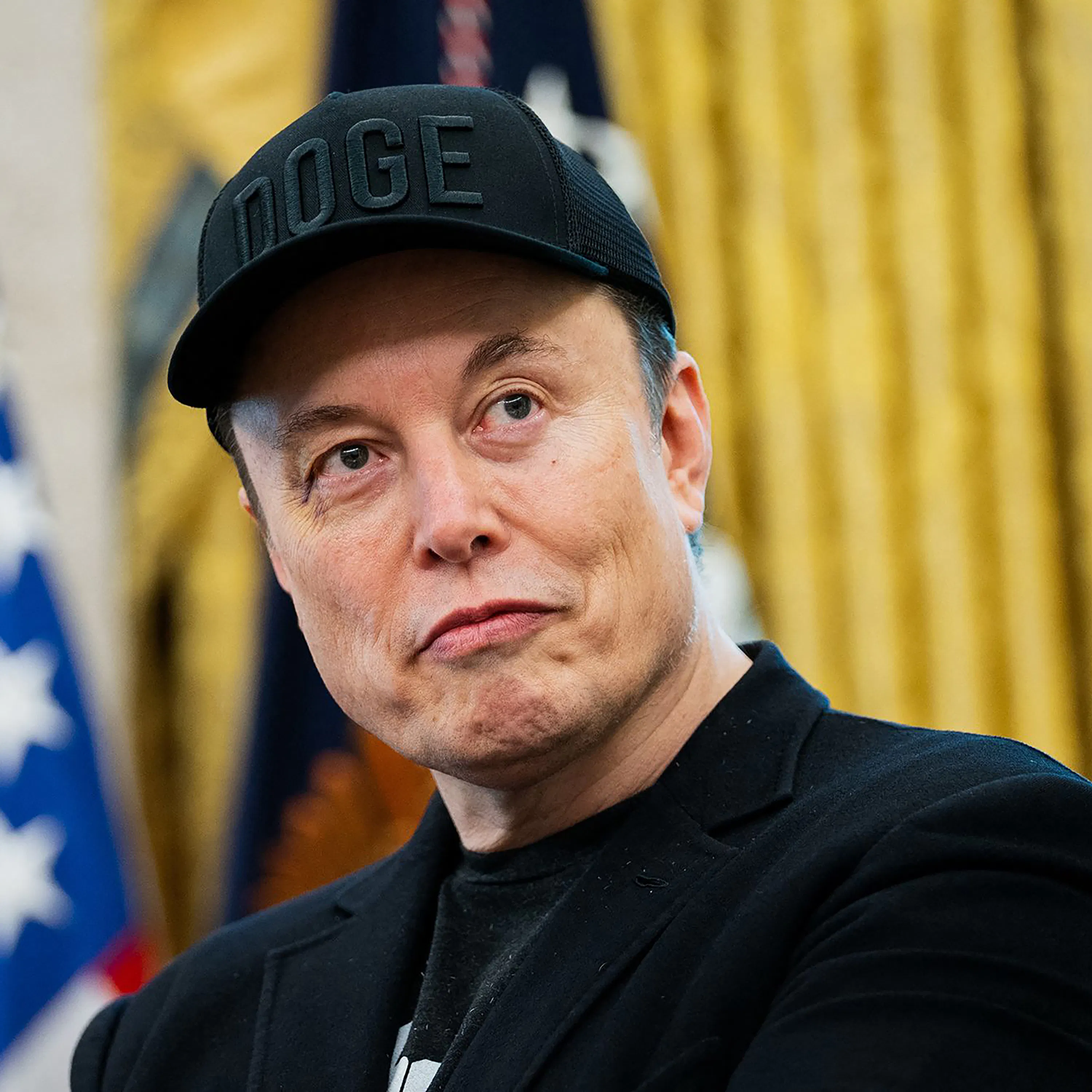
Photo: Allison Robbert/AFP/Getty Images
Learn more about your ad choices. Visit podcastchoices.com/adchoices
Hosts & Guests
Transcript
This is one thing, I'm David Rind, and Doge left Washington long ago, but the cuts
it made were deep.
You were at USAID for like 20 years, right?
22 years, yeah.
And now you want nothing to do with it.
I want nothing to do with it.
Stick around.
Today, I want to revisit an interview I did early in President Donald Trump's second term.
Our latest reporting is that fewer than 300 employees are expected to be retained at USAID
when this is all over, down from like 10,000, 10,000 down to 300.
What is your reaction to that?
It's laughable.
What could you do?
Very, very little.
I first spoke to Melissa Petzalidis last February.
At the time, she was still sort of kind of working for the US Agency for International Development,
USAID.
The latest is that I am still walked out, never got back into this system.
Melissa and hundreds of her colleagues lost access to their work servers and were placed
on administrative leave.
They were told not to show up to the office.
As we dug into USAID, it became apparent that what we have here is not an apple with
the worm in it, but we have actually just a bowl of worms.
Elon Musk's Department of Government Efficiency was just beginning to slash and burn through
the federal government and the name of rooting out waste, fraud and abuse.
USAID was its first target, but far from its last.
For weeks, the parade of departing workers has been growing from the FAA to the IRS, from
health agencies to the small business administration, from veterans affairs to the national parks
and more.
As the months went by, the outrage grew.
There were protests at Tesla dealerships, some cars were vandalized.
Some critics said they were outraged, that Musk, an unelected billionaire, had such intimate
access to government systems and personal data.
But others simply found the doge approach to downsizing in the name of efficiency, careless
and cruel.
Republican lawmakers are being hammered by voters, including their own.
Over the Department of Government Efficiency or Doge, which is chainsawing federal jobs
in blue and red states alike.
And it's worth noting that Doge's stated aim of cutting out waste, fraud and abuse in
the federal government didn't really pan out.
The New York Times reported that government spending actually went up in 2025 compared
with 2024, not down.
Eventually, Musk's time as a special government employee came to an end, he went back to running
as many companies, and his attention turned to controversies related to immigration enforcement
and military action or broad, Doge kind of faded from the headlines.
It's hard to overstate just how impactful these cuts were though.
Just look at USAID.
Experts say nearly 10 million preventable deaths will occur over the next few years because
of the dismantling.
They described irreversible damage to global health and food programs.
But I asked Melissa last February, say the administration changed their minds or if legal
challenges went her way, would she ever consider coming back to continue this work?
I can't imagine that there would be a work environment that would be conducive to anyone's
mental health.
I think it would be very difficult psychologically to try to work under the banner of USAID
under this administration.
They've made very clear what they think of us.
As human beings, not just as professionals, but as human beings, to allow some of that
rhetoric.
Yeah, so that happened and just kind of moved on with life.
I started my own business.
I caught up with Melissa again on Wednesday, and she said a lot has happened since she was
officially fired from USAID back in July.
Not only is she no longer working for the federal government, she decided to pivot
about as far away from civil service work as possible.
I've long been a gardener, and I was looking into joining the master gardener program,
and I had a perfect opportunity with all my newfound time, so I got into the University
of Maryland program.
That's a volunteer focused program, and I thought that was what I was going to do, and
then I ended up also finding a woman who trains people to be garden coaches and garden consultants
and start their own business doing it.
So that's what I am doing now.
But I mean, you were at USAID for like 20 years, right?
22 years, yeah.
And now you want nothing to do with it?
I want nothing to do with it.
No, it's heartbreaking, and I have been off of signal.
I am mostly not consuming the news.
I really, my coping mechanism, I don't know if it's denial or what.
But I just don't want to consume any of the, I know it's going to hell in a hand basket.
It's a disaster, right?
Our foreign policy is a disaster.
I know enough to know we bombed you wrong, and that was, you know, I just can't watch it.
I can't avidly consume it and stay sane.
I've got a six-year-old daughter, my husband has cancer.
I can't.
It wasn't working for me, and I was in a really bad mental place for much of the summer.
In the early fall, and when I decided to go this route, I felt a whole lot better.
Are there other people you know that have broken so severely like you?
I think so.
There are folks who have gone, you know, into the corporate world and are focused on that.
I think a lot of people who are still very passionate about making the world a better place.
But I think there's a huge siphoning of resources away from international aid in general,
and so I don't see a lot of people finding success going, you know, looking for other opportunities
there.
But I do, there are, yes, other government workers in the area where I live or people
who I, you know, have known from aid who, many of them are still very, very engaged,
but some of them have disengaged for just their own mental health.
But I guess just looking back on your career at USAID, like how do you look back on that
just with the fullness of how it ended up?
Yeah, you know, I still don't have a good retrospective.
I think I haven't allowed myself to process all of it.
I kind of look at it as a career.
It was a career that I had.
It was something I did.
It was all consuming for a while, and now it's not.
And maybe that's psychologically healthy, or maybe it's not, but in a better place
mentally than I was last summer.
It's really exciting.
So I got one thing from my career that I was really good at, and I loved, was training
people, teaching people, and I think that this is my own contribution in helping people
learn how to grow things sustainably, save pollinators, you know, not use chemicals, be
better gardeners, there's, you know, it's a much, much smaller scale.
But I still can make a difference.
President Donald Trump's former director of the Office of Management and Budget Russ
vote once said when talking about plans for a potential Trump 2.0 agenda, quote, we want
the bureaucrats to be dramatically affected.
Critics would say Melissa's story is an example of that vision come to life.
Now, after the massive layoffs end up evil, it appears the government wants to hire again.
What kind of people are they looking for?
And what does that say about the future of government service even beyond the Trump
administration?
Let's bring in Max Steyer.
He is the president and CEO of the Partnership for Public Service.
He started the nonpartisan nonprofit after working in jobs across all three branches of
the federal government.
He says the partnership's mission is to make government work better.
So Max, as we sit here talking on March 12th, how would you describe the state of the
federal workforce right now?
We're deeply troubling and deeply concerning.
So we've seen, I think, arson of our public infrastructure.
We've seen the largest outflow of talented people from our government in our history.
And we are watching the conversion of our government into what used to be an entity focused
on the public good to one that is now being pushed into the role of supporting the private
interests of the president of the day.
So it's a dramatic change of purpose and the capacity of government to perform its
various functions has been diminished immensely.
I think the numbers from the Office of Personal Management, since Trump's inauguration,
puts it at the amount of workers fired late off or who accepted buyouts more than 387,000.
Is that the biggest reduction in force ever?
How does that stack up historically?
So it is in the time frame that we're talking about, it is.
There have been larger reductions, but there's never been a reduction that was arbitrary
and non-strategic as this one was.
So it's very important to be clear that these are huge numbers when the Trump administration
arrived, the actual federal workforce, was the same size as it was during the 1960s.
So we're not talking about a workforce that has grown topsy-turvy.
So you're saying it wasn't quite as bloated and large as they might make it out to be?
No.
It certainly wasn't.
And there was so many mistakes, one of which was mixing up the idea of size of worker
force with size of government.
This administration spent more money last year than the year before.
So they've cut a ton of people.
What they've done is cut people in the wrong way.
They've cost our society in all kinds of ways.
And we're seeing that play out today and the recent stories about the horrible mistake
in terms of the missile that hit the school in Iran, that may be the result of cuts
at the DOD.
We're seeing those kinds of things today, just in the absence of fairness.
There's a lot of reasons why that possibly could have happened.
100 percent.
100 percent.
But my proposition is that there are so many different aspects of our government that
have been reduced in terms of their capacity.
And we are not going to be able to show direct causation.
But when you add it all up, there's zero question that these cutbacks have caused real
harm.
And it's not just the loss of people, it's also the loss of morale.
We have a leadership that came in that said they wanted to traumatize the workforce, and
they've accomplished that.
And that is not the way to get better performance from anybody.
You did mention some of the possible impacts here, because CNN reported how some of this
downsizing is left glaring holes in parts of the government that are dealing with the
war in Iran.
Yes.
People, executives and industry groups have noted they're getting less outreach from this
Department of Homeland Security, Cybersecurity and Infrastructure Security Agency.
The State Department got a ton of heat for what many people saw as a slow response to
evacuating civilians from the Middle East, although they were able to get some.
So do you get a sense that the administration thinks or is realizing now, all this time
later, that Doge went too far, too fast?
I think that the administration or elements of the administration has been forced to reckon
with the fact that Doge was a nightmare.
It was Godzilla rampaging in the city and the destruction really created unbelievable
harm.
I don't believe that has fundamentally changed the direction of this administration.
As I noted, the really more fundamental question is to what end?
And this is an administration that has really not just started with Doge, but is continuing
to try to reshape the workforce to be a loyalist cadre.
They've got an executive order in the waiting and a regulation that they have passed to
create a new classification that would enable them to convert at least tens of thousands
of additional federal workers into what will be the equivalent of more political appointees.
Their hiring process has been changed to make it more conducive to hiring people that
they want who they see as loyalists.
Well, yes, say more about those kind of classifications because that does seem to be a big
theme as we kind of move forward here.
There's this new reclassification that would reclassify federal employees involved in policy
into at-will position.
So they lose some of the protections that other career workers have.
There are concerns that it would eliminate some of these staffers' ability to appeal any
disciplinary action or termination.
And the OPM basically says it did this because, you know, supervisors say they have difficulty
removing employees for performance or misconduct, and this one will kind of create more flexibility.
Like what's your take on this move specifically?
So this is really, unfortunately, easy.
That is, indeed, not the real reason why they're doing this.
The reality is that in our government, we already have 4,000 political appointees.
We don't often do a good job of benchmarking against other democracies, most democracies,
and pretty much every democracy counts their political appointees, maybe in the tens,
maybe they get to 100, 4,000 is way out of the norm anyway.
So a president in the normal course has huge ability to bring in people easily that will
perform the functions that they want.
Poor performers is a real issue in our government addressing them effectively, but the way to
do it is not to create more at will employees, rather the way to do it is to ensure that
the leaders in our government, those political appointees themselves are held accountable.
One of the things that's pretty extraordinary about our system right now is those 4,000
political appointees effectively have very little of any clear qualifications about what
you need to get those jobs.
There's almost really no performance plans for them, and very little of any accountability
in terms of review for them.
And they go 4 or 5 layers deep in every agency.
So when you think about trying to make the civil service, the career people more accountable,
it should begin with making sure that they're boss, they're boss's boss, they're boss's
boss's boss's boss and all the way to 5 levels up, that those folks are actually being
held accountable for clear outcomes for the public.
That is not happening.
So what you're saying is that there's in this stew of bureaucracy, there are a bunch of
levels of political appointees, those people are tasked with carrying out policy priorities.
So having these at will employees could kind of be a shield to say, we see you as not
following out these priorities, but we can just say, you're not following orders and we
can get rid of you.
We've seen this movie before.
In the 19th century, we had the spoil system.
And that's the closest analog to what we're seeing being recreated right now.
And the basic idea was to the victory go to the spoils.
You get elected president, you get to put your people in federal jobs at one point they
actually had to pay money to the parties.
But that is not the system we've had for 140 years that Republicans and Democrats have
collectively understood is much better for the American people.
The spoil system led to incompetence, corruption and very bad government in a world a lot less
dangerous than today.
And the public said, no, we don't want this.
The president was assassinated and when we started the long march to the civil service
system we have today, that is being upended again, 140 years of consensus.
It was viewed as a nonpartisan asset and we're going back to a time that was not a good
one in terms of performance for our government in an age where things are a heck of a lot more
dangerous.
Got to take a break when Max and I come back, we're going to talk about the push to make
the federal workforce younger, stick around.
This week on the assignment with me, Adi Cornish, George Severus, the host of the podcast
United States of Kennedy, which digs into America's enduring fascination with this mid-century
camelot.
You know, I don't want to be too controversial about the Kennedy family overall and part
of it is the hunger for power and influence, of course, but the other part is he understood
early on the intersection between entertainment and politics.
Listen to the assignment with me, Adi Cornish, streaming now on your favorite podcast
app.
Well, so amid all this, the office of personal management seems to be leading a new hiring
push.
The director Scott Cooper told the Washington Post that they need to hire some skills
back and are focusing on healthcare, program management, technology roles.
They're trying to get younger people into the mix.
But doing it under this new rule, these new classifications, what do you think that
hiring process is going to look like?
So very good question and it is worth noting back again in terms of the cost of what has
been done already.
So they do need to be more young people in our government.
They do need to be more technology savvy.
The cuts that we've seen so far have dropped the number of young people in our government
already consequently.
So today it's about 8% of the federal workforces under the age of 30.
It used to be 9%.
So the firings that they did, you know, directing constructive have already taken us the wrong
direction.
They got rid of programs that brought in technologists.
So they're now trying to, you know, at least what their statements are to capture ground
that they that they gave up at the very beginning.
And then as you know, the processes that have been put in place right now really enable
them, they've cleared the covers now to restock those covers with people that are committed
to the president as a person rather than to the rule of law and the constitution.
And that's not the way our system should be.
So I appreciate there are real important improvements that ought to be made to the system.
This is an administration that uses that language, but actually achieve something that's
the opposite.
Is there anything you can point to that the Trump administration has improved when it
comes to how the federal government operates?
So there are definitely things that are improvements, but unfortunately too bad ends.
So an example of this would be it's been crazy, but prior administrations have not really
effectively communicated with the federal workforce.
And one of the things that Doge frankly got right is they figured out very early on how
to be able to communicate to the entire federal workforce via email, which is fundamental.
I mean, it's critical.
And so it's an absolute improvement to create a mechanism that allows you to communicate
to your workforce, but it's not an improvement when that mechanism is used to traumatize
that workforce.
And so that is what we're talking about these blast emails that went out the fork in
the road.
Like if you don't, you know, absolutely comply or when they were asking for like the five
things you did this week or whatnot.
And telling the federal workforce, you should leave the government and go to, you know,
a higher productivity job in the private sector.
They didn't fundamentally understand the core value of public service, which is serving
the public.
You've got hundreds of thousands of federal employees that have opportunities to make
more money elsewhere, but they're in government because they care about this core question
of purpose and have serving the public.
And you had leaders come in and tell them, no, no, that's meaningless.
Go to the private sector because you can make more money.
That's crazy.
That is malpractice of the highest order.
So you asked me, have they done some improvements in the answer is, yeah, they figured out how
to communicate to the full workforce, which prior administration should have done a long
time ago.
But what they're communicating is the worst kind of management I can imagine.
But you can't point to one cut, you know, that they made one program that they got rid
of where you're like, yeah, that we probably didn't need to be doing that.
You know what?
The point here is their whole process was fire, fire, fire, not ready, aim, fire.
So my job isn't to criticize the policy choices of this administration.
That's not the work that I do.
But what I can tell you from a management perspective is that, yes, every organization
should go through a review and understand what's working, what's not working, what can
be done better, what may not be necessary, what are the trade offs.
They did none of that.
They came in and just started firing the people that were easiest to fire.
So the best example of that is that they went after the probationary workforce.
Those are the people that were hired that don't have the kinds of protections that people
who've been around longer have.
And they're the people who probably best represent the skills that our government needs most
because they're the most recently hired.
And certainly the younger cohort and technology savvy folk.
So they did it again because it was easiest, not because it was the right group.
So you asked me, was there something good that they've done?
I'm sure, but it was, again, the broken clock being right on the time.
They didn't go through the right process.
They don't respect the basic value of public service.
And they've been just really terrible managers.
And the price that we are paying already and will pay for many years to come is huge.
Well, so your organization works to help recruit people to work in government.
And I guess I'm wondering, after a year of firings and general chaos, mistrust, does anybody
actually want to work for the federal government right now?
Well, I think that the challenge for us right now is that the people that this administration
is trying to hire and is prioritizing are those, again, that are the loyalists rather
than those that have the best skills and the best character.
These are really important jobs.
They are fundamental to all kinds of critical services we're in the middle of a war right
now.
These are people that are critical to get the right information, to leadership, to make
sure that things are executed effectively.
These are fundamental to our safety, to our health, to our prosperity, to our strength
as a nation.
We really do want the best and brightest.
And that is not either the system that they've created in terms of recruiting new people,
nor is it the message that they've communicated.
So this is, again, not about being partisan.
We've had Republican and Democratic administrations that have, you know, not managed our government
as well as they should have, but it's been rust.
Now we're seeing a sledgehammer.
Sledgehammer is a lot faster and a lot much more destructive, and it hurts all of us.
And finally, you've been talking about a lot of these concerns for a while now, going
back to 2024 when we first started hearing about Project 2025, this plan, you know, for
a potential Trump administration, all the changes that would be made.
I mean, did you ever think that it would come to manifest in the way that it has?
So the answer is I did not have any appreciation about how fast and how destructive this administration
would ultimately be.
Back to this central question about the purpose of our government, the Trump administration
in its first term made clear that they did want to remake the civil service, and they
wanted to make it return us to that spoil system in which you were talking about loyalists
rather than non-partisan professionals.
And that's the reason why we came out early to say that would be a huge mistake for us.
But I honestly underestimated, you know, their willingness to destroy so much to get there.
And they're not done yet.
And that's super important to understand that we've been through a year and a couple months,
and that's it.
And it really, really matters.
We are getting a civics lesson.
I think the public has a responsibility to really pay attention to understand and not
pay attention simply to the damage that is occurring, but to understand that there in fact
is a way better path.
We're engaged in that and our work around reimagining government.
And we do need to modernize the systems.
But we have to start from that proposition that our government is there for the public
good, not for the private interests of those who are in charge of today.
Well Max, thank you very much for the time and the conversation.
I really appreciate it.
Thank you for paying attention, especially where so much is going on.
This is underlining a lot of it.
We should say the Department of Homeland Security admitted in an statement that national security
and preparedness are strained, but claimed to quote, as nothing to do with doge and everything
to do with the Democrats refusing to fund DHS.
It added that the cybersecurity and infrastructure security agency was quote, back on mission focused
until two thirds of the workforce are furloughed at a time when cyber threats never stop.
We also asked the Office of Personal Management about whether it's new hiring process has
become politicized, designed to find loyalist, director Scott Cooper said in the statement
that their new merit hiring plan quote, ensures all candidates are evaluated based on their
skills, knowledge, commitment to public service, and respect for the Constitution and quote,
and is focused on restoring accountability and rigor in federal hiring, not political
favoritism.
It's all for us today.
Thank you.
As always, for listening, leave a rating and a review wherever you listen.
Make sure you follow the show so new episode pops in your feed right away, and that will
come your way on Wednesday.
I'll talk to you later.
I'm CNN tech reporter Claire Duffy.
This week on the podcast, Terms of Service, there's a growing category of products aimed
specifically at addressing women's unique health needs.
These tools and services are sometimes known as FEM tech, and they can provide big opportunities
and benefits, but they can also come with some risks.
To walk us through all of this, I spoke with Bethany Corbin.
Bethany is an attorney and CEO of FEM Innovation, where she advises startups, clinicians,
and healthcare organizations.
In my opinion, what it really does is gives us a collective language to talk about women's
healthcare innovation and the tools that are out there so that we can take control of
our healthcare experiences and know how to advocate for ourselves in a system that's
probably not been designed to advocate for us.
Listen to CNN's Terms of Service wherever you get your podcasts.


