Loading...
leisure
Prussian Socialism Episode 38: The German Mindset vs the English in Werner Sombart's "Traders and Heroes"
About this Episode
Is this entirely fair? Are the English really so craven? Hitler did not think so. Several sections of Mein Kampf, while not calling out Sombart by name, are explicit criticisms of his theory. Hitler saw much to admire in the English, and regarded Sombart's views as demoralizing and counter-productive to the German war-effort.
So why read Sombart? Gregory Conte argues that Sombart's idea has more relevance today than it did in 1915. "Traders and Heroes" is an excellent summary of the differences between German and Anglo-American thinking. Its usefulness to us today lies in its well-founded criticism of materialism and the doctrines based on it: Jewish capitalism, libertarianism, and self-serving individualism.
You can't beat money-power by appealing to people's greed. You have to appeal to their nobler sentiments. Only a movement based on love of duty and willingness to sacrifice can topple an evil, mammonistic regime. Our problem is not "How do we convince people of the danger of Jewish power?" but rather, "How to we convince people to put duty before rights". Just as the German of 1924 needed to be nationalized, the American of 2024 needs to be socialized.
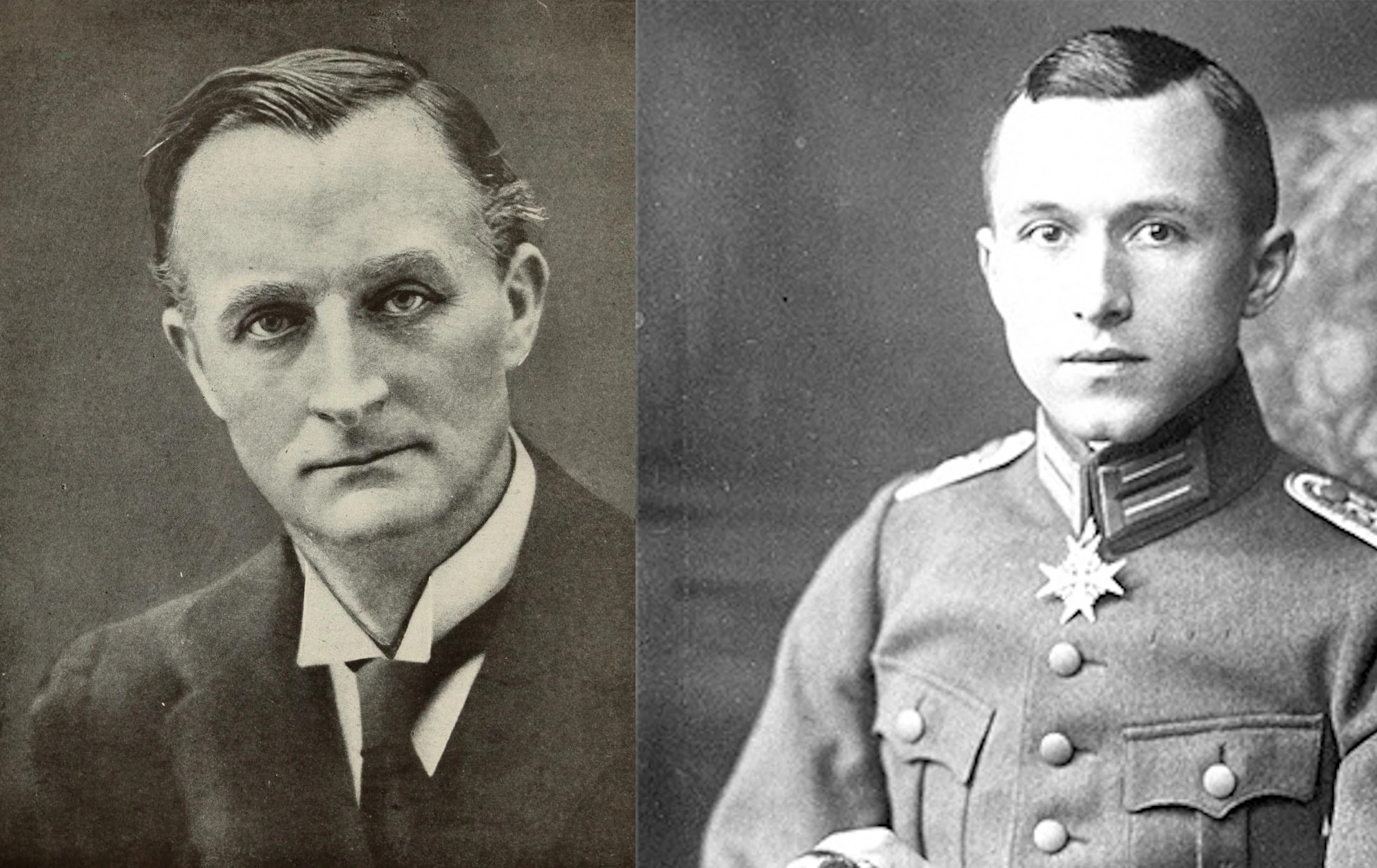
pictured: (left) Sir Edward Grey, (right) Ernst Jünger
Hosts & Guests

No transcript available for this episode.
More from Prussian Socialism Podcast on Odysee
View all episodes →
The Beerhall 21: Iran War... Has ZOG Picked a Fight It Cant Win?
Prussian Socialism Podcast on Odysee
Mar 30, 20261:39:12failed
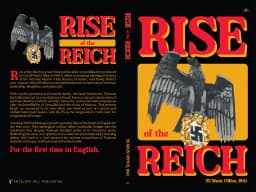
Prussian Socialism Book Review: Rise of the Reich by the SS Main Office
Prussian Socialism Podcast on Odysee
Mar 3, 20261:29:08pending
The Beerhall Ep. 17: Nazi Economics, or Is Libertarianism a Jewish Scam
Prussian Socialism Podcast on Odysee