Loading...
news
Qatar warns Gulf security is tied to global stability | Talk to Al Jazeera
About this Episode
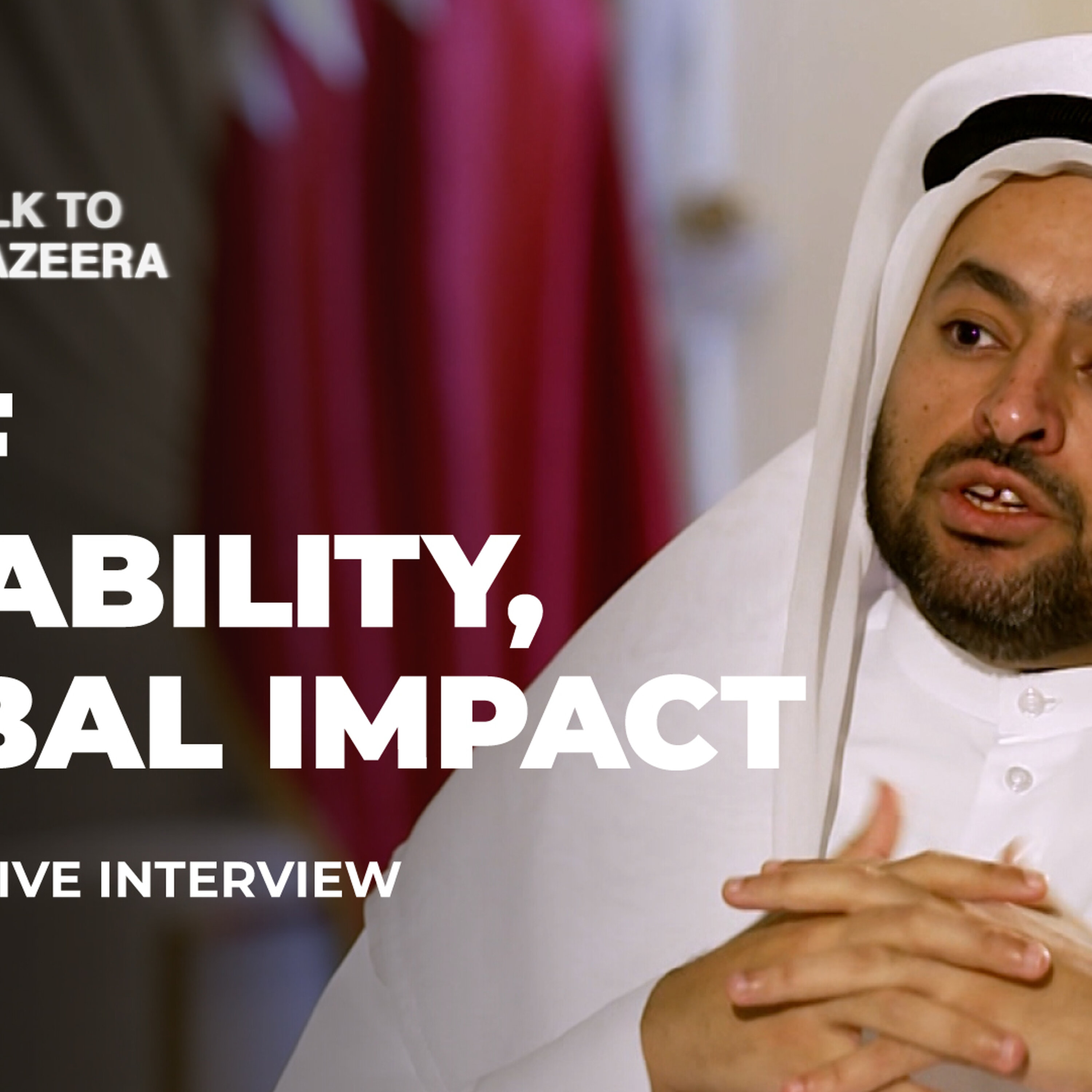
Qatar’s Minister of State for Foreign Affairs, Mohammed bin Abdulaziz Al Khulaifi, speaks to Talk to Al Jazeera as the Gulf faces its most dangerous escalation in years. After Qatar itself came under drone and missile attacks, Al Khulaifi condemns Iran’s aggression, warns that attacks on energy infrastructure threaten global markets, and argues that Gulf security is inseparable from global stability. Despite rising tensions, he insists diplomacy remains the only path to a lasting solution and says Qatar will continue pushing for negotiations to prevent a wider war.
Hosts & Guests

Transcript
The Middle East is once again staring into the abyss of a wider war.
Air defenses intercepting missiles and drones have lit up the night skies.
Warning sirens have sounded in cities across the Gulf, and embassies have issued security
alerts, evacuating non-essential personnel and citizens.
The latest escalation, a joint US Israeli operation that began on February 28, killed Iran's
supreme leader.
Tehran's response to the ongoing offensive is sending shockwaves through one of the most
strategically vital regions on Earth.
For years, the Gulf states have watched tensions play out around them.
For this time, the conflict is closer to home.
Even Qatar, which has spent decades positioning itself as a diplomatic bridge between rivals,
has come under attack.
The country occupies a unique position.
It hosts the largest US military base in the Middle East, while maintaining open lines
of communication with Iran.
Balancing act has allowed Doha to mediate in complex, high stakes negotiations.
But when missiles are crossing borders, the question becomes unavoidable.
Count diplomacy still holds the line.
How close is the region to an all-out war?
And what role can Qatar play in preventing it?
I'm Adrian Finnegan in Doha, where Qatar's Minister of Foreign Affairs, Mohammed bin
Abdulaziz Al-Khalafi, talks to Al Jazeera.
Excellent seat.
Qatar itself has come under drone and missile attack during this conflict.
How serious is the security situation in the country right now?
Well, at the outset, I want to say that those attacks need to immediately stop on the
not only on Qatar, but on the whole region.
Qatar have mentioned its political position when it comes to this aggression that we have
condemned by the strongest terms, the unjustified and outrageous attacks on the state of Qatar.
And that directly impact its own sovereignty.
And Qatar will do and continue to do every possible and legal measures to defend and practice
its exercise of self-defense against this aggression.
Are you confident that the region can avoid a wider war?
If attacks on energy facilities, airports, civilian infrastructure in the Gulf continue,
could we see a direct military response from the Gulf nations?
Well, I want to say that we are extremely worrying about the wider range of attacks, not only
in the military, but also in the civilian infrastructure.
We've seen in the last few days that are attempts of attacks on civilian infrastructure,
such as energy, aviation, commerce, and that definitely goes against any provisions of
international law in the United Nations Charter that has been clearly violated by those
attacks coming from Iran.
On the other hand, of course, we are extremely proud of the efforts that has been done by our
defense and security forces in the state of Qatar, responding and intercepting every single
missile and drone comes with the purpose of, of course, terrorizing the civilians, people,
and with the aim of damaging vital infrastructure, we're really proud of these efforts.
Those personnel have definitely resembles a solid example of true courage and definitely
professionalism in dealing with this matter.
We're also proud of the people that lives in Qatar, whether they are citizens or residents.
They've also re-sample the very important example of resistance, resilience, and also definitely
unity under the strong and wise relationship of the state of Qatar.
That's a Qatar's Prime Minister said two days ago that Qatar feels a big sense of betrayal
by Iran.
Has that fundamentally changed Doha's relationship with Tehran?
Does Qatar still trust Iran enough to mediate?
Well, let's say that this aggression brings a benefit for no one, and it is definitely
worrying to see a neighboring country start taking those aggression against another
neighboring country.
And a country that has a long history in the field of mediation and resolving conflicts
with Iran and other disputing parties as well, Qatar has been always there in reaching
out and stretching the hands of help and support, including the pre-war periods where Qatar
has intensified its efforts and reached out with the Romani mediators in trying to help
and support the parties to reach that agreement.
It's unfortunate where we are standing right now, but we also believe that there is no pathway
of a sustainable and long-lasting solution other than returning back again to the negotiation
table.
Is there still a line of diplomatic communication between Doha and Tehran right now?
And did you last have communication with Tehran?
Absolutely.
The Prime Minister received a phone call a few days ago from the Foreign Minister of Iran
where we have clearly expressed our condemnation over those attacks and demanded an immediate
stop of those aggressions against the regional country.
The regional countries are not an enemy of Iran, and the Iranians are not understanding
that idea.
They keep throwing those missiles and keep attacking the state of Qatar and the regional
country.
That brings no benefits to Iran, as a matter of fact, it creates a huge damage to that
long historical relationship.
Until the very last moment, the state of Qatar and you were trying through various diplomatic
channels to contain this crisis, to prevent the outbreak of war.
When did Qatar realize that the diplomatic path was no longer capable of preventing this
confrontation?
Qatar has a long-standing experience in the field of mediation.
We have dealt with the most difficult and complicated conflicts around the globe.
We know that at certain points within the mediation, the parties may not reach an agreement.
Our role is always to continue to encourage them to return back again to the political
solution and to the negotiation table.
It's unfortunate that the matter has reached what it's reached right now.
We continue to push and to call for their return again to the diplomacy and to resolve
that conflict peacefully.
As I mentioned to you, there is no alternative solution for a long-lasting solution of this
conflict other than the political solution.
All right.
So if you look ahead to the coming weeks, what would a realistic path to de-escalation
actually look like, who needs to take the first step?
How would it done?
What role could Qatar play in that?
Well, first of all, we need to stop that aggression against the regional country.
A country such as Qatar or Iran and several other countries in the region played a vital
role in trying to build bridges between Iran and the West.
Will not be able to fulfill that role under attack, and that's something that the Iranians
needs to understand and needs to treat the regional countries with respect and return
back again to the political favoring, the political solutions moving forward.
Of course, there are a series of suggestions can be provided for de-escalations, but an
opportunity need to be provided at that level for that efforts to be reached.
And therefore, I think that Qatar will continue to call for further de-escalation.
And Qatar will continue to call for a political solution for that conflict.
When this war ends, do you believe that Middle East needs a new regional security system
that establishes clear rules for protecting maritime routes and energy facilities and prevents
an escalation such as the one that we've seen in recent days?
Certainly, this war and the recent few days and the escalations in the recent few days
has directly impacted not only the military bases, but also, as I mentioned to you, civilian
infrastructure and energy companies have directly impacted by that specific action, which demands
– of course, re-engaging back again on providing guarantees that the energy sectors
need to back again to function and to back again to full operation.
And they will not be able to do that unless that we reach a level of a permanent de-escalation
that allows that – I will call it energy booster – to return back again to the market.
The also the navigation and the movement of ships, we're talking about the state of
farmers and the major threats of the freedom of movement on the state of farmers is something
very critical and a lot of countries that deals with this matter believes that there should
be an immediate solution for that specific purpose.
Firstly, the United States and Israel say that their strikes were necessary to neutralize
Iran's nuclear threat.
Does Qatar accept that argument or do you believe that this military action has –
has made the region even more dangerous now for the future?
Well, I cannot speak on behalf of the United States or reflect on the objective of the
United States, what I can say is that when it comes to the position of the state of Qatar,
Qatar has been always an advocate for peace.
We're always favoring the peaceful methods of resolving conflicts.
We've been always a strong facilitator of peace for resolution of conflicts, including
this one, where we have a long-standing experience in dealing with both disputing parties in
the previous incidences, and we will continue to offer our help and support that.
We are, as I mentioned to you, we are of the view that the finding, a permanent and
long-lasting solution of this conflict, with demands, the parties to restore to a political
solution.
How, Minister, would you assess the United States' role in managing this crisis today?
Well, we keep our line of communication as always open with our colleagues in the United
States, and we keep encouraging them, and supporting the pathway of peace and resolving conflicts
to a peaceful means.
We really hope that the parties can find that pathway and really end the military operation
and return back again to the negotiation table to meet the concerns of the parties.
And now we're talking about the concerns of the regional parties as well, when we're
talking about aggressions on Qatar and the GCC country, these are legitimate concerns.
And those are the matters that has been discussed under the GCC organization, and we continue
to reflect that with our partners internationally as well.
Qatar's leadership has warned that this war could destabilize, that the global economy
and, of course, the energy markets.
We've seen that in the last few days already.
What are the biggest risks that you see if this conflict continues as it is?
Well, if there is a message that I can mention today that the GCC security is not only a
regional security, it's a global security.
What the GCC country has been doing in the past years is to contribute towards the
stability of the global market through our energy infrastructure, through the international
trade, and as well as through our diplomacy and our international engagement, limiting
the GCC countries from fulfilling that role would have more certainly a major impact on
the global market.
And therefore, it is definitely a major concern globally, not only regionally, and it demands
and a global solution that can protect the movement or the chain of supply of energy from
the GCC to the world.
What would your message be then to Qatar's energy partners right now?
How does it reassure them in a time like this?
Well, as his excellency, our Minister of State of Energy is reflected previously, our
engagement with the contractors and with our partners have been very solid, and we've
been engaging with them, reflecting on the challenges that Qatar has facing currently,
hoping that this is will be temporary, and Qatar would return back again as used to
be strong, fulfilling when it comes to the international demands.
And I believe that this is not a situation of that Qatar is only facing.
It is the wider region.
And we've seen how this conflict has reached out countries that are not in the GCC, but
directly impacted by this conflict.
Iran, of course, has said that it won't attack GCC countries if they don't use territory
to launch attacks on Iran.
Has Qatar, Minister, allowed attacks through its territory in this conflict?
No.
Qatar has a very personal position when it comes to this issue.
Qatar never did not launch an attack and will not launch an attack on an neighboring
country.
This is a matter of principle for us.
And what Qatar has done is simply exercise our right of self-defense, and Qatar will
continue to use all means necessary, legitimate means necessary, to defend our territory and
our people.
I'm going to put a question that I put to you a little earlier again.
How close do you believe the region is to a broader conflict involving multiple countries
in the region?
What would be the single step that could prevent that escalation?
How dangerous a moment is this?
As I mentioned to you, I don't think this is a regional war.
This is a war that has its own impact on the global market.
It demands a global engagement by all countries around the globe.
And you might see even his Highness the Emir and the Prime Minister, it made several received
several phone calls from leaders around the globe, continue to share their solidarities
with Qatar, but also to continue to share their concern regarding the implication of this
war on their countries.
And therefore, I think the major step is a global engagement by all countries around the
globe to, you know, a play, an important role in de-escalating and finding a permanent
effort.
How big a role is the state of Qatar playing in that, that efforts, diplomatic efforts,
to de-escalate, to find some sort of solution to this conflict?
Qatar has been extremely active in the last few days in terms of our reach out to our strategic
partner globally, but also from a regional perspective.
Qatar has been very much identical with the position of the GCC countries in terms of preserving
and protecting our territories and our people, but also to calling for a de-escalation and
a permanent solution of that conflict.
We know that post this conflict, there should be a lot of measures to guarantee and secure
that this issue will not be repeated, and that's why further engagement with those important
regional partners will be extremely important in the next days.
What about the U.S.?
Is it listening?
We have a very solid relationship with our U.S. partners, and we've been, you know, engaging
with them on those important issues, and they've been, you know, communicating well with
us regarding those important matters.
Of course, the U.S. will have an important role in securing that, and we will engage
transparently and directly also with our U.S. colleagues on those different important concerns
that the GCC will have.
Qatar has minister of state for foreign affairs, Mohammed bin Abdulaziz al-Ghalafi.
Thank you for talking to us.
Thanks for having me.


