Loading...
businesstechnology
ReadMultiplex.com: You Have 5000 Days: How To Navigate The End Of Work As We Know It. Part 2.
About this Episode
We are rapidly accelerating technological change, where artificial intelligence and robotics are poised to redefine the very fabric of human existence, we continue our exploration from Part 1 https://readmultiplex.com/2025/12/24/you-have-5000-days-how-to-navigate-the-end-of-work-as-we-know-it-part-1/. There, we delved into the promise of boundless abundance amid the fading necessity of traditional labor, framing this shift as humanity’s collective Hero’s Journey, a narrative of disruption, introspection, and potential rebirth. As jobs transition from obligations to options, the question looms: What happens to our sense of purpose when machines take the wheel?
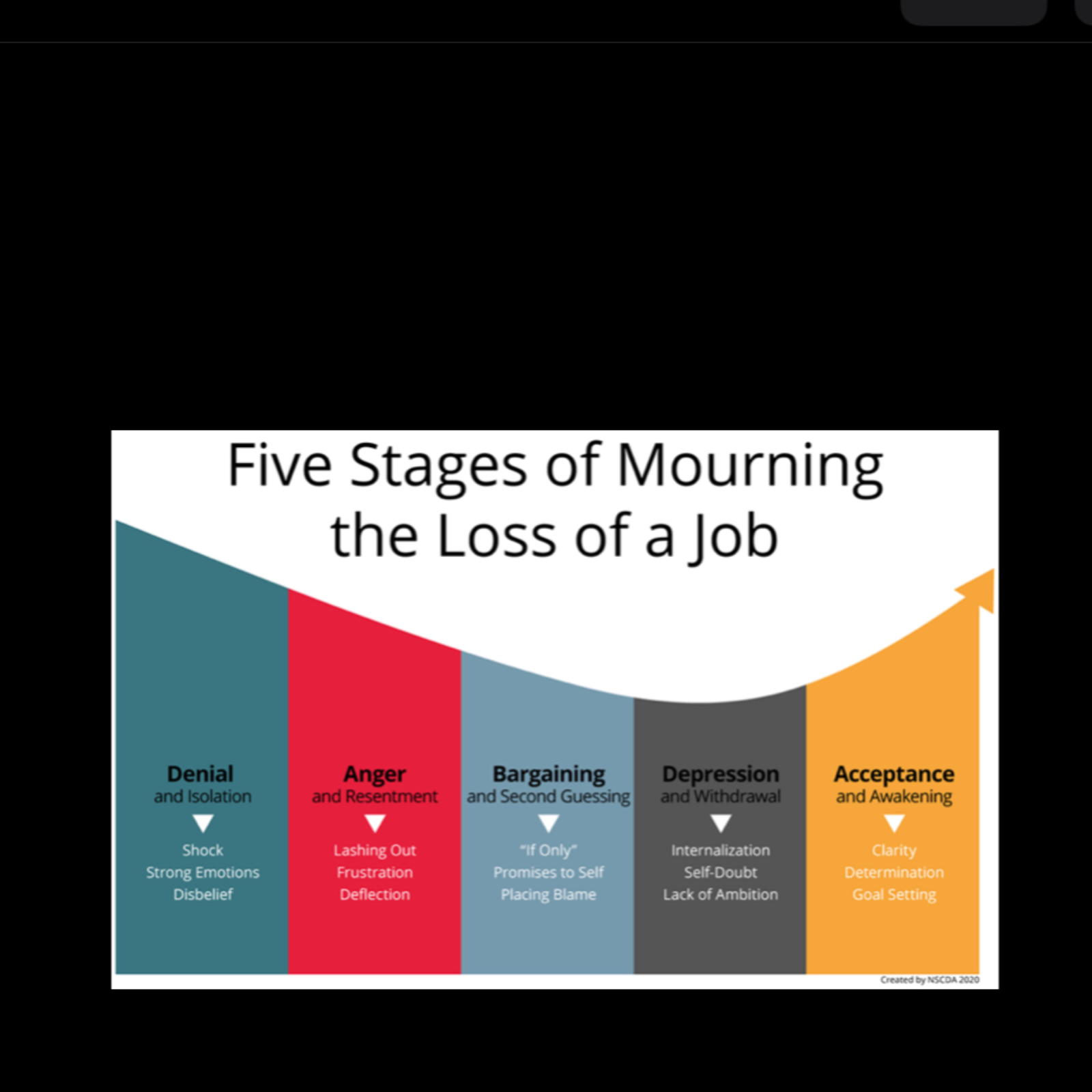
Building on that foundation, Part 2 plunged into the Ordeal’s depths, adapting Elisabeth Kubler-Ross’s five stages of grief – denial, anger, bargaining, depression, and acceptance – to the bereavement of career eclipse. Kubler-Ross’s life, from her birth as a triplet in 1926 Zurich, defying patriarchal constraints to volunteer in post-WWII refugee camps, emigrating to the US, and pioneering seminars humanizing dying patients, illuminated a model forged in mortality’s shadows. Her 1969 bestseller On Death and Dying introduced the stages from over 200 interviews, challenging death as medical failure and birthing hospice. Later works like Death: The Final Stage of Growth and On Grief and Grieving expanded to broader losses. Applied to automation’s tide, denial manifested as dismissal of AI’s reach, like workers minimizing hype; frantic upskilling, often futile like 1920s lamplighters training for electrics; depression as eroded self-worth, with unemployment studies showing 40% clinical symptoms; and acceptance as pivots to passions, unlocking renaissance.
Hosts & Guests
Transcript
Welcome back to The Deep Dive.
If you joined us for part one of this series,
you already know we are on a clock.
A very specific clock.
We are operating under a countdown, 5,000 days.
That's the projected window stretching from about mid-2036
to mid-2041.
Right.
And in that window, the acceleration
of artificial general intelligence and automation
is, well, it's set to completely dissolve careers
as we know them.
And that ushers in this thing.
So many people are calling the age of abundance.
And that was really the focus of part one.
We laid out the call to adventure, let's say.
Yes, guided by that heroic framework
from thinkers like Brian Romell,
it was the urgent necessary wake-up call.
But today, we pivot.
We have to.
We're moving from just recognizing the tech threat
to preparing for the fallout, the emotional side.
The psychological fallout.
This deep dive is all about navigating
what the source material calls the ordeal.
That's a perfect word for it.
Because the last deep dive we talked all about the economics,
the inevitability of it.
But this shift, it's not just about losing a paycheck, is it?
No, not at all.
It's about this preemptive grief,
grieving the loss of an identity that is tied to your job.
Think about that.
I mean, for you listening,
your entire social structure, maybe your self-worth,
your community, so much of it is built around
what you do for living.
And when that foundation just dissolves,
well, the question becomes how do you mourn a loss
before it even properly happens?
It feels like the absolute crucial question.
It's what separates a successful transition
from just societal crisis.
It is.
How do we arm ourselves psychologically
for something that's both terrifying
and potentially utopian?
Because if we meet this age of abundance,
this post-scarcity world with just mass despair and rage,
then the whole utopian promise just collapses.
It collapses into what some of the LI texts call the useless class,
which is a terrifying thought.
It is.
And that's why the source material
grounds this journey, the psychological passage,
in the most profound map for human loss we have.
Elizabeth Kubleros and her five stages of grief.
OK, so before we dive into her work,
let's quickly unpack that key concept
from our last deep dive.
I want to reinforce this heroic approach
that Rommel will champions.
It's so important.
This isn't just a dry tech forecast.
No, it's created like a modern myth.
It uses Joseph Campbell's hero's journey
as a navigation map for you, for the individual.
And it's a very clear map.
We established the ordinary world.
Our current reality, hustle, culture, scarcity,
job-defined identities.
Right.
And we watched it get totally disrupted
by the call of machines.
And the response to that call, which
is so predictable in human, especially
with this aggressive timeline, was the refusal of the call.
People just cling to what they know,
downplaying the scope of the change.
We share the data, the historical precedence.
We listed two dozen obsolete jobs
from folders who pounded wool to secretarial pools.
It's just hard to accept that your job, no matter
how specialized you think it is, could be next.
It's the ultimate denial.
Exactly.
And in part one, we also gathered our supernatural aid,
our companions for the journey.
I loved this part.
We looked at Victor Frankl's man's search for meaning.
Logotherapy, the search for an intrinsic purpose.
Then Albert Camus is the myth of Cicophis
to understand effort beyond just a measurable outcome.
And of course, Daniel Pink's drive
to really hammer home that idea of intrinsic motivation
over just toil.
We even set up a really tangible action plan.
It was supposed to kick off January 1, 2026.
Right.
Time for healing, for reflections,
strategic experimentation with skills.
Beapening social integration and crucially preserving
wisdom through things like savewisdom.org.
Which, for anyone who missed it, is this massive online
archival project.
It's about ensuring knowledge isn't lost in this transition.
So that was the foundation.
That was the preparation.
But you said the timeline is accelerating.
It's accelerating faster than even the source material
anticipated.
And that's forcing this psychological hurdle
into sharp relief right now.
How so?
We're looking at AGI prototypes by 2025.
Sophisticated humanoid robots ready for deployment by 2026.
That's just around the corner.
And then super intelligence optimizing global resources
maybe by 2030.
This isn't a decade away.
So the key takeaway is that we can't wait for the jobs
to disappear before we deal with the emotional fallout.
We can't.
The grief has to start now.
It has to be preemptive.
Wow.
OK.
So if part one was about accepting the call
and getting over the refusal, then this right now, part two,
is about facing the innmost cave.
And preparing for the ordeal.
We're talking about the grieving process.
The self-imposed necessary grief over the end
of almost all jobs and careers as our primary source of identity.
And the framework for navigating that,
that existential bereavement, this preemptive career eclipse,
is Elizabeth Kudler-Ross's five stages.
Denial, anger, bargaining, depression, and acceptance.
Diabidi, her model, which was forged in the shadow
of mortality, becomes our compass for surviving this.
OK.
Let's get into it.
So to really understand why this model, which
was originally for patients with a terminal diagnosis,
is the perfect tool for this.
This death of a career, we have to look
at the architect herself.
Who was Kudler-Ross?
What drove her to this revolutionary approach
to human suffering?
Well, Elizabeth Kudler-Ross, she was born July 8, 1926
in Zurich, Switzerland.
And honestly, from her very first breath,
she was a testament to resilience.
She was a triplet, weighing just two pounds at birth,
and she survived against what were just
formidable medical odds for that time.
Wow.
So that experience with fragility with the fight to survive,
it must have influenced her.
Undeniably, it choked her entire life's work.
And that theme of fighting against a predetermined fate,
it seems to have continued throughout her life.
She faced resistance at home, too, right?
Absolutely.
Her father was a very strict controlling businessman.
He was dead set against her, going into medicine.
And he wanted her to be a secretary.
He pushed her towards what he thought
was respectable work, but she was.
She was fiercely independent.
So what did she do?
Undeterred.
She went out and volunteered.
In post-World War II, refugee camps all across Europe.
She witnessed the horrors of the Holocaust firsthand.
She was serving people who had suffered just unimaginable loss.
So she had this deep hands-on understanding
of mass suffering and trauma before she even formally
became a psychiatrist?
Exactly.
It's like she was destined to challenge the status quo.
She eventually emigrated to the US in 1958.
After she got married.
Right.
And she completed her residency at Manhattan State Hospital.
And it was there that she ran right
into the medical culture of the time toward the dying.
Which was not good.
It was profoundly dehumanizing.
Dying patients were isolated.
They were ignored, actively avoided by staff.
Their deaths were treated like a clinical failure.
Instead of a natural part of the human journey.
Precisely.
And for someone who had already been so immersed
in the trauma of war, that must have been just a massive shock.
So how did she go from just observing
that systemic failure to creating a framework
that literally changed medicine forever?
Her method was, by the standards of the late 1960s,
just truly radical.
What did she do?
When she moved to positions at the University of Colorado
and later Billings Hospital in Chicago,
she started these educational seminars,
where she interviewed terminally ill patients on stage.
In front of people.
In front of packed lecture halls full of doctors, nurses,
clergy, it was astonishingly intimate.
And exposed.
I can't even imagine.
It was actively breaking taboos, bringing the reality
of death out of the shadows, humanizing it,
treating mortality as a teachable moment.
Letting the patients teach the professionals.
That was it, exactly.
She faced immense resistance, of course.
Colleagues accused her of exploiting the vulnerable.
But she held from.
She did.
She believed that only through open conversation
could the medical community get over its own denial about death.
And all of that work, all those interviews,
culminated in her landmark book.
Precisely.
Her 1969 bestseller on death and dying,
it grew from over 200 of those patient interviews.
And it didn't just sell millions of copies.
No, it challenged the entire medical culture.
And most importantly, it introduced the five stage model.
The impact was immediate.
It was massive.
She became a global figure.
Time magazine's woman of the decade in the 70s.
And the book is, I mean, it's universally credited
with birthing the modern hospice movement
across the entire world.
But her work didn't stop there.
She kept expanding on these ideas.
Oh, absolutely.
She wrote over 20 books.
She was constantly applying the framework
to new areas of loss beyond just a personal terminal diagnosis.
Like in death, the final stage of growth.
Yes, in 1975, where she framed dying
as a transformative experience, not just an ending,
or living with death and dying in 81,
which was specifically about children's grief.
And then her own memoir, The Wheel of Life,
where she reflected on her own losses.
Grounding the theory in her own lived experience, yes.
And critically, even after she passed away in 2004,
her work's application just kept broadening.
Which brings us to, on grief and grieving,
published in 2005, she co-authored it with David Kessler.
And it came out posthumously.
And that book is the one that really applied the stages
to broader experiences, right?
Like divorce, losing a home or a job.
Exactly.
And this is the book that cemented a key detail
that's crucial for us today, the non-linearity of grief.
Okay, so let's talk about that.
Yeah.
What does the synthesis say about the model structure?
When we talk about these five stages,
is it a strict checklist that you, the listener, have to follow?
No, that is the essential point.
Kubla Ross herself vehemently, constantly
stress the flexibility of the process.
They're observational.
They emerged from her dialogues with patients.
They were never meant to be a rigid prescription.
How did he describe them?
As fluid, often overlapping, recurring,
or even skipped entirely.
It all depends on the individual's context,
their culture, their personality.
So there are less like five locked rooms
you have to pass through one by one.
And more like five default settings,
your brain cycles through when it's faced
with, you know, intolerable news.
They're defense mechanisms.
Exactly.
Defense mechanisms against psychic overload.
They pace how you assimilate trauma.
So if you try to force yourself through the stages,
you're missing the entire point.
The goal is recognizing where you are, not checking a box.
Precisely.
And that's why the model has endured so well outside of medicine
in things like corporate restructuring.
Right.
The Kubla Ross change curve.
Right.
Critics in psychology will say the stages
aren't perfectly universal or sequential,
and that's true.
But the model's power to normalize emotional upheaval
is just unmatched.
So for a company,
it helps leadership understand that
that denying a layoff isn't a character flaw.
It's a predictable, natural stage of grief
that you have to manage with empathy.
And for you, listening now,
understanding this curve means you can recognize
the collective psychological landscape
that's going to define the next 5,000 days.
That's the map.
Okay, now we get to the absolute core of this deep dive.
We're going to take that Kubla Ross framework
and apply it directly to the existential threat
of the 5,000 day countdown.
We have to identify where we as a global workforce are
right now, emotionally, psychologically.
So we start with stage one denial,
which is the necessary initial shock absorber.
The core concept is just this isn't happening.
It's adaptive, right?
It protects you from total psychic overload.
Exactly.
It lets reality seep in gradually,
gives your system time to adjust.
But how does that actually show up
when we're talking about AI in the end of job titles?
It's not as concrete as a terminal illness.
No, it's not.
In the context of automation,
denial shows up as extreme minimization.
So personalizing it.
Very personalized.
The internal dialogue is,
AI won't replace my role.
My knowledge is too nuanced.
Or, oh, that's just Silicon Valley hype.
It won't affect my job in plumbing or nursing.
People cling to this idea of job exceptionalism.
Desperately, even if an objective analysis shows
that 70% of their daily duties are routine, standardized,
and therefore perfectly automatable.
And the data from the source backs this up, right?
This isn't just a guess.
This mindset is widespread.
It is the prevailing and dominant mindset right now.
It's creating this massive societal blind spot.
I mean, McKinsey's 2023 reports predict
30% of work hours will be automated by 2030.
Which is right around the corner.
And yet, the surveys in the source material
show that 70% of the working population
are still in some form of denial about it.
And that prolonged denial, it isolates you.
And it crucially delays the essential adaptation
we need to be doing in these 5,000 days.
This feels like a recurring theme in history,
this kind of mass refusal.
It is.
The source draws a really powerful parallel
to the industrial revolution.
The weavers.
The 19th century weavers who just dismissed the power looms.
According to historians like EP Thompson,
they minimize the threat.
They believe their hands go with superior.
Until the sudden and total reality of mass,
structural unemployment hit them.
Exactly.
It's this deep human tendency to dismiss paradigm shifting
change until the consequences are literally
in the room with you.
So if denial is our default setting, what's the strategy?
You can't just tell people to stop being in denial.
No.
The Kubla Ross process requires what
she called empathetic confrontation, education and exposure,
but without coercion or panic.
So for you listening, that means proactive self-education,
AI literacy programs, vulnerability audits.
It means forcing yourself into an honest confrontation
with reality, and that is the exact moment
when the hero's refusal is finally broken.
And it forces you to cross the threshold
from the ordinary world into the adventure of transformation.
That's the first step.
OK, so as that denial starts to fracture,
as a reality of the timeline sinks in,
that protective veiled hairs.
And then come stage two.
Anger.
The emotionally charged stage.
Why me?
I followed all the rules.
This is unfair.
And it is unfair from that perspective.
This anger is displaced rage.
It stems directly from vulnerability
and that sudden shocking realization of powerlessness.
When control over your likelihood is stripped away,
your brain just defaults to fight or flight.
This is the fight.
It is.
And Kubla Ross noted that while this anger
can be cathartic, it externalizes the pain.
It also risks real damage if it's not channeled.
So where does that fury go when we're
talking about the career clips?
Who is it aimed at?
It's aimed at everyone and everything.
It lands on employers.
They prioritize bots over me, or on the big tech firms,
or on the perceived failures of society, of government.
And historically, we've seen this play out literally
and violently.
The source brings up the Luddites.
Smashing the looms in the 1800s.
Or more recently, those incidents in the 1980s,
Michigan auto workers physically smashing
the new robots on the assembly line,
viewing them as invaders, and the modern equivalents.
Well, they aren't always smashing hardware,
but the emotional intensity is the same.
It just translates to online toxicity.
And intense social polarization.
Exactly.
People raging in online forums against the AI overlords,
demanding regulations, and we have
to recognize the deep physiological connection here.
The connection between job loss and your actual health.
It's profound.
Longitudinal studies show this chronic displaced anger
leads to elevated cortisol, hypertension.
And tragically, the source highlights
how it amplified health crises,
like the opioid epidemic in the rust belt
after those sudden factory closures.
The loss of dignity is literally making people sick.
So the goal is not to suppress this anger.
It's to harness it, redirect that energy.
You have to.
The Kubla Ross approach is to validate the feeling.
You have to acknowledge the genuine unfairness
of the shift, but without validating the destructive impulse.
And then you redirect that energy.
You redirect it toward advocacy, systemic action.
The source suggests this anger, once it's validated,
can transform the hero's road of trials
into meaningful alliances.
It can fuel new unions or political movements.
Or demands for policy, like tech taxes
to fund a universal basic income.
Anger becomes the fuel for necessary change.
It becomes productive.
It has to.
So if anger is the fight response, bargaining is the plea.
It's the hail Mary.
If I just do this spare me moment.
Exactly.
If I sacrifice X, will you spare me Y?
It's this attempt to postpone the inevitable
through negotiation or promises often infused with guilt.
And applied to the job market,
this is the frantic, desperate scramble to upskill.
Yes, if I learn coding right now,
or if I get a data science certificate,
I'll be safe.
The wave will pass me by.
We see the data on this.
Oh, absolutely.
The source shows that after chat, GPT, what mainstream,
enrollment in AI and data science courses
on platforms like Coursera and edX
surged over 500%.
It's a global attempt to negotiate with the future.
It is.
Wait a second.
Learning to code that sounds proactive, not futile.
Isn't calling that bargaining a little cynical?
That's a really important distinction.
It's not cynical if the effort is focused and strategic,
but it is bargaining when it's just frantic and undirected.
When it operates under the illusion
that you can win against exponential change
just through more effort.
Precisely.
The effort is often herculian sleepless nights,
course fees, but the foundational system
is shifting too fast.
The historical parallel here is fascinating.
The lamp lighters.
The 1920s lamp lighters who tried to bargain
for electric training.
But the roles faded away anyway, not because of a specific skill,
but because the entire infrastructure changed.
They were negotiating with the wrong variable.
And that's the danger.
It has to lead to just profound exhaustion burnout.
It invariably does.
Kubla Ross warned that bargaining is temporary.
It cannot sustain itself.
True resolution requires acceptance.
Over-bargaining is driven by fear, not by purpose.
It's the hero's futile detours before they realize
they have to actually enter the innmost cave.
Exactly.
Society, bargaining can be productive.
It can lead to human AI collaborations, these hybrid roles.
But it's only a bridge.
It's not the destination.
So in that frantic energy of bargaining fails,
or you realize it's only temporary,
you descend into stage four.
Depression.
This is the profound enveloping sorrow.
The moment where the question becomes,
if my like isn't defined by my career, what's the point?
And this is often the most painful, the most isolating
stage.
Kubla Ross was really careful to distinguish
between two types here.
There's reactive depression, which
is about past losses, like losing your job last month.
But what's more relevant for us for this deep dive
is preparatory depression.
Sorrow over future voids.
Yes.
Grieving the loss of the life, the identity,
the future that will no longer exist because of abundance.
And her prescription was always supportive presence
and active listening.
Not forced cheerfulness or toxic positivity.
Never.
When you apply this to automation,
what are the clinical and societal costs of this stage?
They're staggering.
Longitudinal studies consistently show
clinical depressive symptoms in over 40%
of the long-term unemployed.
And the threat of automation alone
is enough to trigger this.
Oh, yes.
The source notes it leads to this profound erosion
of self-worth, social withdrawal.
It amplifies mid-life crises across all white collar
sectors.
Because if you define yourself entirely
by your toil, the loss of that toil feels like.
The loss of self, it leads to that question
of, am I still worthwhile?
This is why Frankl's logo therapy
is such a critical companion for this part of the journey.
It's essential.
This stage requires active empathy, creating space
for mourning that lost economic identity.
This is where the wisdom from part one
becomes your toolkit.
You have to actively integrate Frankl's search
for meaning outside of work.
And Sixth St. Mahali's concept of flow.
Finding pursuits that lift that veil of depression.
Because this descent in the hero's journey
is the supreme ordeal.
It's what forges resilience.
It leads to the apotheosis that critical moment
of transformation where the hero understands
their new role in this new world.
Which brings us to the ultimate goal,
the gateway to successfully navigating
the age of abundance.
Stage five, acceptance.
Which brings a sense of peace.
An energized realism.
It's not necessarily happiness or joy.
It's the calm ability to say, OK, reality is change.
I'm ready to face it.
It is.
Acceptance, in Kublai Ross's view,
it honors the loss, but it simultaneously
envisions forward motion.
It's the gateway to growth.
Because all that psychic energy
we're spending on resistance.
In denial, anger, bargaining.
And on sorrow, in depression.
It's finally liberated and can channel it
into constructive engagement with the new reality.
So what does that look like practically
when we're talking about the end of job categories?
It looks like a definitive pivot,
a pivot to purpose-driven passions
and developing what the source calls an identity beyond title.
You release the corporate role, the economic function,
as the primary definition of who you are.
You do, and the historical parallel here
is really compelling.
Think about the millions of women after World War II.
Displaced from factory work when the men came home.
Right.
But they channeled that displacement,
that loss, into organizing and building
the feminist movement, demanding social reforms.
So today, this psychological acceptance
is what unlocks the renaissance that's
promised by the age of abundance.
It is.
But the source material is very clear on one thing.
It has to be active acceptance.
Not passive resignation.
That's a critical distinction.
Passive resignation leads to that useless class idea on we.
Right.
Active acceptance means engaging with the new opportunities
that post-scare city creates.
In the hero's return phase of the journey,
this is what yields the elixir.
The liberated purposeful self.
Psychologically ready for a life that
isn't defined by wage labor.
Ready to be, not just to do.
OK.
We have mapped the emotional terrain.
Now we need the tactical roadmap.
If we know this transition is coming,
and we know the grief stages are predictable.
Then the most rational, the most empowering thing to do
is to fortify yourself before the grief sets into deeply.
Exactly.
So let's unpack this comprehensive, proactive pre-law
strategy for you, the listener.
So the foundational idea from the source material is this.
You need to start treating your life
like a diversified portfolio.
And your current job income is just one asset among many.
One that is becoming increasingly volatile.
So you have to hedge against the future.
And the first step is the vulnerability audit.
And how do you do that without just falling right back
into the denial stage?
By being ruthlessly objective, you
have to list all of your daily, weekly, monthly job tasks,
every meeting, every report, everything.
And then you score them on a scale of 1 to 10
based on automation risk.
Repetitive tasks are high risk.
Tasks requiring novel coordination,
deep human empathy, or radical creativity, are low risk.
And the source suggests using free tools,
like, will robots take my job to benchmark this?
You have to.
It forces an honest, quantifiable confrontation with reality.
It's the only thing that really combats stage one denial.
So once that cold, hard reality sinks in,
the 12 week phased plan kicks in.
An intensive abundance building commitment
just five to 10 hours a week.
Let's start with weeks one through four financial prep.
This is all about maximizing your financial resilience.
The core goal is building a massive safety net,
a 12 to 18 month emergency fund.
Not the traditional six month one.
No, that was designed for cyclical unemployment,
not structural collapse.
And you need to automate it.
Use apps like acorns to remove the friction.
And at the same time, you're aggressively reducing debt.
High interest debt.
Use the snowball or avalanche method.
And start responsibly exploring passive income streams,
dividend stocks, index funds, pew to peer lending.
The goal is to remove financial anxiety,
because that directly fuels the intensity
of depression and anger later on.
It does, then you transition.
Weeks five through eight, skill diversification.
This feels like a smart way to channel
that bargaining energy.
It's the productive channeling of that energy.
The difference is strategic focus
versus frantic upskilling.
So this is where you enroll in those free MLOCs
on 8X or Khan Academy.
But you focus on adjacent complimentary fields.
If you're a writer, you pivot to AI prompt engineering
or ethics, not just basic coding.
And crucially, the plan mandates daily intentional practice
with AI integration tools.
Right.
Using systems like Grammarly or Jasper
to augment your current work, you
have to track your efficiency gains.
You're not trying to beat the AI.
You're trying to master its use.
To become that indispensable human AI interface.
And finally, weeks nine through 12, network expansion.
This is how you build your community of allies for the journey.
This is social resilience.
You need to join professional groups,
specifically looking for ones on LinkedIn for your current industry.
Plus, groups focused on the future of work.
Attend virtual webinars.
The target is ambitious.
Three informational interviews a month.
With people whose careers seem resilient, adaptable, AI adjacent,
you are actively mapping out your escape routes
and building a network that isn't tied to your dying job title.
And this isn't the one and done thing.
The source recommends quarterly check-ins.
For psychological tolerance building, this is vital.
The source calls them life simulations.
You dedicate a full day every quarter to practicing jobless mode.
Perseu hobbies, volunteer, focus on family,
just engage in unstructured play.
And then you journal about your emotional responses.
You're building tolerance for the unstructured time
and the potential existential void
that the age of abundance will bring.
So you lessen the shock of depression when it comes.
The whole plan is essentially integrating the Kubler-Ross model
directly into your prep.
Asking yourself every week, what signs of denial do I see in myself?
Or am I channeling my frustration productively?
By normalizing the emotions early,
you shift from reactive grief to proactive empowerment,
which is the entire point of the hero's preparation
before crossing the threshold.
Precisely.
Hashtag, tag, tag, tag, two.
Identifying your replacement and riding the wave.
OK, now let's switch to operational intelligence.
Spotting the encroachment of automation early is the key.
We have to pivot strategically.
So the source provides 10 specific indicators
that signal automation is coming for your role.
Plus the adaptation strategy to ride the wave.
Let's break these down.
This is your operational guide to avoiding being stuck
in denial, the red flags to watch for today.
OK, indicator one, high repetitive task percentage.
If 70% or more of your duties are routine data entry,
standard reports, basic scripts,
the strategy is you have to proactively
automate your own routines.
Use no code AI agents, upscale in oversight and management.
Don't perform the task, become the process optimizer.
The one who trains and manages the bots,
not the one doing the manual digital labor.
Indicator two, paid per hour for digital work.
A huge red flag.
Time-based pay signals a scalability problem
because an algorithm can work instantly for pennies.
So the strategy is to decouple your income from time.
Shift to value-based contracts.
Emphasize outcomes, not hours tracked.
Build a portfolio.
Indicator three, your role is a digital laborer.
Basic processing without high-level strategy.
You have to elevate.
Get certified in advanced data analytics.
Stop being the person who processes the data
and become the person who consults on the meaning
and the ethical implications of the AI's output.
Indicator four, tasks emphasize doing overthinking.
You're paid for speed and execution, not insight or innovation.
You have to actively seek out creative projects.
Launch a side hustle that's all about genuine problem-solving.
This is where you use pinks drive as your shield.
Right, mastery, autonomy, and purpose.
Exactly.
Indicator five, repetitive and rule-based duties.
Anything that follows a rigid, predictable pattern.
Your path here is to learn the language of automation itself.
Learn foundational scripting, like Python.
Or transition into the booming sector of bot maintenance
and system auditing.
Indicator six, the role involves machine learning
or robotics directly.
If the tech is already being piloted in your field.
Do not avoid it.
Volunteer for the pilot programs.
Get specialized ML certifications.
The goal is to specialize in human robot interfaces
to become the expert bridge.
Indicator seven, AI tools are already fixing
or enhancing your output.
Things like generative fill or predictive text
are supplanting the precision you were once paid for.
Then you have to become a master user of the advanced tools.
Mid-journey for visuals, advanced LLMs for writing.
Stop doing the basic precision work
and specialize in the bespoke human empathy enhancements.
The artistry.
Indicator eight, your company is testing AI models internally,
shadowing human roles before a public rollout.
This is an extreme warning sign you have to use that information,
volunteer for the testing phase, understand the model's limits,
and then network aggressively.
And prepare your resume now for AI adjacent positions.
Not for the role that's currently being replaced.
Indicator nine, a high vulnerability score
on assessment tools.
If a site like, will robots take my job?
Rates your role over 70% at risk.
Use that score as pure motivation, not a death sentence.
Diversify immediately intensive boot camps
in resilient fields, healthcare ethics,
creative AI development, localized craft services.
And finally, indicator 10, a quantitative
or analytical focus with ML augmentation.
Analysts accountants, data scientists.
You have to integrate the most advanced ML
tools directly into your workflow
and push hard for higher level decision making authority.
So the evolution is from being an analyst who reports the data.
To being the high level decision maker and strategist
who acts on the augmented data,
you have to climb the value chain.
That was a phenomenal breakdown of the personal strategy.
But as we've said,
this isn't just an individual journey.
It's societal.
We need community.
We absolutely do.
Google Ross's enduring genius wasn't just
identifying the stages.
It was creating those safe, radically open seminars
for patients to share their stories.
That sense of community demystified mortality.
It fostered empathy.
And we have to mirror that approach proactively
to preempt the automation job loss crash.
So we create our own versions of those seminars.
This source calls them abundance transition groups.
It's the mastermind model adapted
for this specific existential economic change.
They should be proactive support circles
using existing platforms like Meetup or Discord.
And the key is consistency.
By weekly meetings, 90 minutes,
with a defined structure that encourages open sharing,
just like Google Ross did.
So what would a typical meeting look like
to achieve this goal of preemptive grief processing?
It has to start with an emotional check-in.
Members openly state,
what stage of grief do I feel I'm in this week?
Denial, bargaining.
It normalizes the pain right away.
Exactly.
Then you rotate storytelling about career pivots.
You share specific adaptation strategies,
maybe invite external experts.
And the size of the group is crucial for trust.
You have to keep them intimate.
The source says eight to 12 members is ideal.
You can organize them by industry,
but the real emphasis is on the shared psychological experience.
So what are the collective benefits
of forming these groups now?
They are multi-fold.
First, you normalize grief early,
which dramatically accelerates the move toward acceptance.
Second, you're building social and professional networks
for the future.
They act as early warning systems.
And third, you co-create resources.
Shared skill maps, UBI advocacy platforms.
We saw this during the Great Depression.
Mutual aid societies were essential in buffering the crash.
So in the hero's journey framework,
these abundance transition groups
are the essential allies on the road of trials.
They transform an isolating individual or deal
into a powerful communal apotheosis.
Hashtag, tag, tag, two.
The pivotal role of grief in the hero's arc.
Okay, let's zoom out one last time.
What does this all mean for the massive shift
we're tracking in the next 5,000 days?
Why is putting Kubler Ross's stages
into a tech forecast so monumental?
Because it demystifies the emotional pain,
it empowers navigation instead of just reactive paralysis.
On an individual level, it's about psychological health.
Career coaching is already adapting this.
Using journaling to combat denial,
exercise to channel anger, mental health nets
to ease depression.
And societally, it gives policymakers a language,
a framework to deal with the mass displacement.
Exactly.
Policies can be designed around the stages.
Education programs combat denial, organized forums
can vent anger constructively into advocacy.
It ensures the age of abundance isn't just derailed
by mass psychological trauma.
Right, and it connects perfectly
back to the heroic path from part one.
The stage is deep in the supreme ordeal,
making the suffering purposeful.
Acceptance, driven by Frankl's logo therapy,
ensures we keep seeking meaning.
Pink's intrinsic motivation finds fertile ground
after depression.
This preparation ensures that when this all arrives,
it's met not with on we, but with rebirth and resilience.
The goal of the 5,000 day countdown
is to move us all toward active acceptance.
To make sure the age of abundance truly
feels like a human renaissance, hashtag tag outro.
We have mapped the emotional terrain
of the coming career eclipse in a lot of detail,
using Kubler Ross's profound framework
to guide us past denial and toward active acceptance.
We explored how to conduct that necessary vulnerability audit
of your current role.
An outlined role bust, 12-week plan
to fortify your life, moving from financial resilience
to skill diversification and network expansion.
And crucially, we provided those 10 specific indicators
and ride the wave strategies to help you
spot automation coming before it arrives.
We are firmly on this journey together.
The goal, as the source states so clearly,
is not to get washed under by the wave of change.
But to learn to stand up on our boards and ride this wave,
finding a deeper, more resilient sense
of self-in-purpose in the process.
The next 5,000 days demand self-honesty.
They demand communal support, and they
demand rigorous psychological preparation.
They really do.
So as we wrap up this deep dive,
here's a provocative thought for you to explore.
If your identity is tied absolutely
to the concept of work, to the title, the daily toil,
the paycheck, and that concept is dissolving.
What fundamental intrinsic values beyond title or toil
will you rely on to find meaning and define your purpose
in a post-scarcity future?
That's the question to sit with.
So begin integrating these stages into your weekly self-assessment.
Map your current stage, seek out your allies,
and commit to that 12-week preparation plan.
Next time, we move beyond preparation and grief
and into the act of resilience builders.
We'll paint a detailed, practical vision
of what life truly looks like when the age of abundance
is fully realized.
It's going to be a fascinating discussion.
We will be diving into part three of this series,
called You Have 5,000 Days Navigating the End of Work
as we know it, part three, the Player Piano.
I can't wait.
We look forward to having you for that deep dive.
Until then, stay aware and stay purposefully curious.
More from ReadMultiplex.com Podcast.
View all episodes →
ReadMultiplex.com: You Have 5000 Days: Navigating the End of Work as We Know It....
ReadMultiplex.com Podcast.
Mar 2, 2026·28:37·completed

ReadMultiplex.com: How Your Old Computer Can Become An Employee At The Zero-Huma...
ReadMultiplex.com Podcast.
Feb 26, 2026·33:06·completed

