About this episode
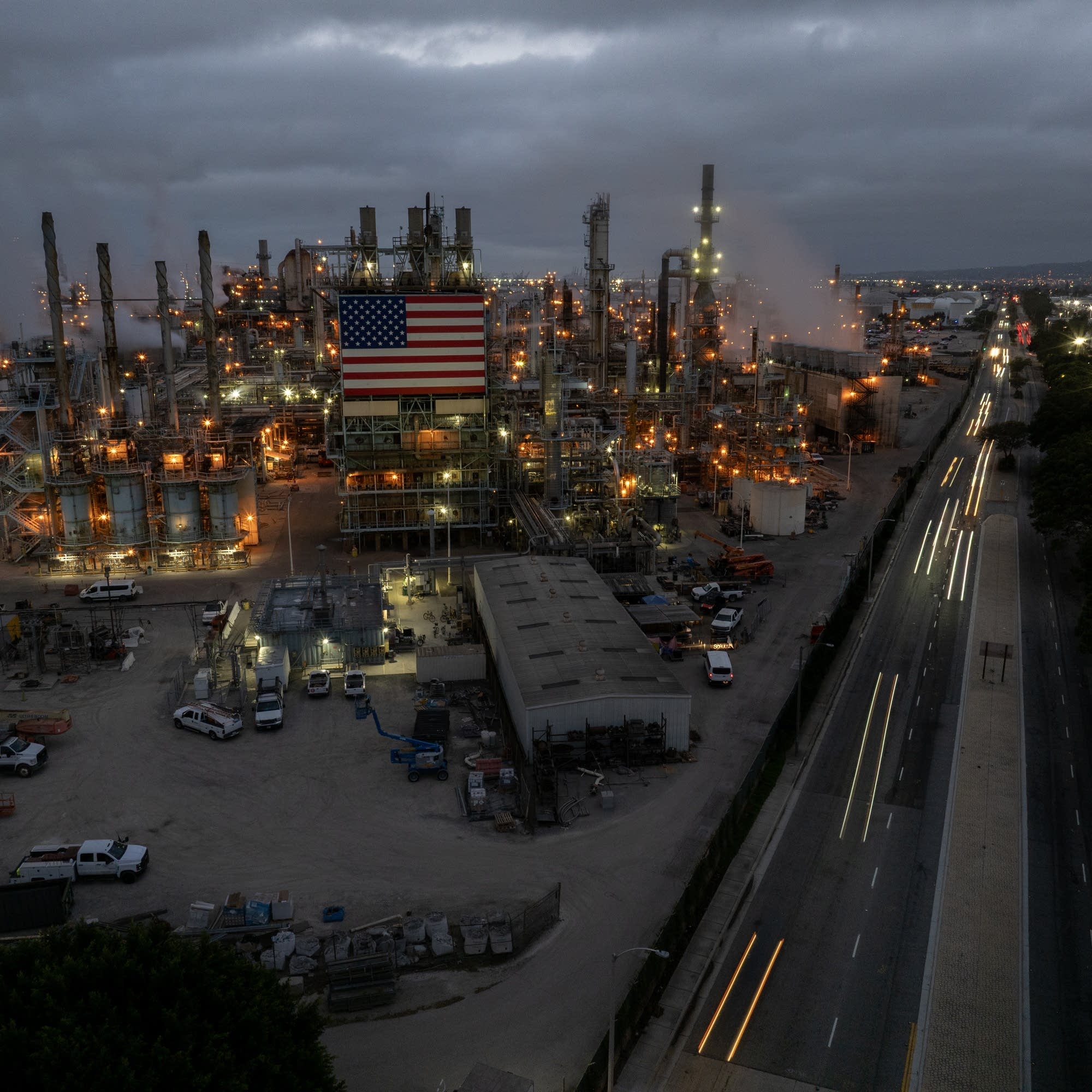
President Trump’s war with Iran continues to provoke economic consequences. With the Strait of Hormuz closed, Middle East crude oil will be blocked from reaching refineries, including those in California. In this episode, what happens if those refineries run out of oil. Plus: Single-family home construction slows as costs rise, winter Paralympians face unique obstacles, and fickle weather reshapes the ski resort business model.
Every story has an economic angle. Want some in your inbox? Subscribe to our daily or weekly newsletter.
Marketplace is more than a radio show. Check out our original reporting and financial literacy content at marketplace.org — and consider making an investment in our future.
Get every episode summarized
Each time Marketplace publishes, we email you a written briefing from the transcript — the topics, who appeared, and any specific claims, with the ad reads skipped.
Email me new episodesFree for 3 shows. No card needed.
Hosts & guests

Transcript ready
574 searchable segments. Every word is indexed and playable.
Full transcript
Marketplace — Refineries brace for crude drought. Machine-transcribed; use the interactive transcript above to jump the player to any line.
This Marketplace podcast is supported by Vantage Score. The modern credit score used by nine of the ten largest banks, over 3,700 companies, and now approved by Fannie Mae and Freddie Mac. Vantage Score. Trended data, alternative data, reduced risk. Running a business is hard enough, so why make it harder with a dozen different apps that don't talk to each other? Introducing Odoo, the only business software you'll ever need. It's an all-to-one, fully integrated platform that makes your work easier. From CRM, accounting, inventory, e-commerce, and more. And the best part, Odoo replaces multiple expensive platforms for a fraction of the cost. This is why over thousands of businesses have made the switch. So why not you? Try Odoo for free at odu.com. That's odo.com. Navigating the pipelines of the global oil economy. Plus, let's squeeze in some winter sports before the season is done. From American Public Media, this is Marketplace.
From Minnesota Public Radio in St. Paul, I'm Kimberly Adams in Forkye Ristall. It's Thursday, March 12th, good to have you along. We're going to start today's program by looking at oil and the global economy right now. The president's war in the Middle East is restricting the supply of crude to the rest of the world. And Iran said today that it will keep the straight of Hormuz closed, so oil prices jumped. And Brent crude, which is the specific kind of oil that's no longer flowing out of the Middle East, topped $100 a barrel. Even with more than 170 million barrels of oil being released from the strategic petroleum reserve, some of the refineries that convert crude oil into the energy we consume just don't have access to the raw material they need. And as Marketplace is just in whole reports, the war could end up causing many refineries to shut down production. The kind of oil that's getting cut off by this conflict mostly goes to Asia. A lot of that crude goes to China.
Malaysia, Singapore, India is very important also. That's Anna Mikulska, head of analytics at CGCN Group. She says some Middle Eastern crude also heads to refineries in California. So California has imported a lot of its crude from Iraq, for example. This is a lot of barrels that California will have a problem replacing. Refineries there can't just switch to the heavier sulfur rich oil that comes from Western Canada because they aren't set up to handle it. You have to build the infrastructure. You need the de-sulfurization infrastructure. And that takes a long time. And more importantly, it takes a lot of capital investment. Hugh Dagle is a professor of petroleum engineering at the University of Texas. He says even though the U.S. produces a lot of its own oil around the Gulf of Mexico, California isn't connected to that supply. The easiest way to move crude oil around domestically, obviously, is in pipelines. There's not a lot of pipeline infrastructure
to get from Texas to California, believe it or not. There's none, in fact. Refineries in California and Asia still have oil they can refine in the meantime. But Mark Broadbent with Wood McKenzie says there is a point when that will start to dry up. You need to keep a certain amount circulating through your units in order to keep them online. At that point, you'll be looking at refineries that are going to shut units down because there's simply not enough material to keep them running. Broadbent says even if the war were to suddenly end and oil started flowing through the strait of Hormuz again, it could take a while for those refineries to come back online. He says if they partially shut down, it could be one or two weeks. And if you're looking at the whole refinerie down, then that becomes more like a month to one to two month process in terms of starting up the entire refinerie. Broadbent says refineries would likely want to turn the lights back on as quickly as possible because demand for fuel is still high and so are prices, which means refinerie profit margins are up. So that's a huge incentive for refineries to keep running as much as possible.
Broadbent says energy prices are likely to stay high, even if the war ends suddenly. I'm Justin Hao from Marketplace. Wall Street today, once again, the markets are following the constantly shifting dynamic of this war and its impact on oil prices. We'll have the details when we do the numbers. So on the show yesterday, we were talking about how the inflation numbers revealed a drop in egg prices, but that those savings have been kind of offset by rising meat prices, especially beef. According to the Bureau of Labor Statistics, the average cost of a pound of beef across the US sits at $6.73.
To give you a comparison, in January of 2021, the average price sat at just under $4. So we checked in with our cattle rancher regular, Nate Bradford of G-Line Ranch in Bolly, Oklahoma. We kicked off year pretty good. I would say this season for us was probably kind of a medium year. We had quite a few customers show up. We made lots of summer sausage, smoked a lot of meat. We had to get in for the winter time. You know, we got some pretty harsh seasons of cool weather. Didn't last too long, but we ended up with a little bit of snow. But we did need it. You know, needed that moisture, even though it came with some cold temperatures, because we was pretty dry really in the state, come into the fall. You know, we normally have around 150 plus mama cows, but we have trinkled down with, got a herge down a third. And we really want to rebuild, but the conditions have to be really, you know, really right, right.
So try to capitalize as much as we can out of the market, but also we don't want to pay too much for our cattle, and the markets fall out of it. So been a lot of uncertainty in the markets. So that's kind of been slowing us down. Right now, currently, fertilizes skyrocketed. These will fuel that skyrocketed. So when we go into the summer, our contracts will be up. And we're going to pay a little bit more money for amount of feed. And already our markets are starting to fall off due to, you know, due to war right now. So, you know, we've been over, which is also is affecting, you know, what we're giving for the price of fuel, and it's created as a whole, another heck of a situation in our commodity markets. So prices are our cattle has been pretty good. You know, demand for this beef is high. You know, it goes back to we are at the at the lowest number in history with cattle animals for producers in the United States.
So it does help keep these stabilize these markets, but you have to really be on your peas and cues when it comes to selling points. Because if you try to decide to go to the sale one day, you may short yourself two to three hundred dollars ahead. That's how ball toy it can be at times. You know, being a small family farmer ranchist, it feels good, you know, but I say it, it has its challenges because we all have to manage and maintain a decent living. And as the cost, everything, inflation, land, process, equipment have went up so much over the years. It's making really challenging for a person to have a next generation to get in this business. You know, this year we just want to focus on making the best of everything we have. We don't want to spend no more money than we have to. And hopefully by doing that we can create other opportunities with our money and invest it in and try to expand
things like our dear process of facility. Nate Bradford of G-Line Ranch in Bolly, Oklahoma. . Despite a week of false spring weather in many parts of this country, over in Italy, the winter Paralympic Games are in full swing. And an average of 1.4 million viewers watch the prime time coverage this past Saturday on NBC and Peacock. Viewership for Opening Weekend was up 27% from the 2022 Beijing Paralympics. And more fans are following the games and the athletes than ever.
Here to talk all things winter Paralympics is Amy Purdy, a three-time Paralympic medalist in snowboarding. Her book, Bounce Forward, comes out later this month. Welcome to the show, Amy. Thank you so much for having me. So the winter Paralympic Games started just about a week ago in Italy. You've competed in two rounds. You kind of wish you were there this time. You know what? I love being on the side of things. I mean, I loved competing in the Paralympic Games. I competed in Sochi, which was the very first time Paris Snowboard was in the Paralympics. And then I competed in South Korea, but you know, I thoroughly enjoy being on this side where I can just cheer everybody on. In addition to cheering everyone on, you've also been using your social media platforms to kind of raise awareness of some of the problems actually with the Paralympics. And you were recently talking about why the timing of the Paralympics is problematic. Can you lay that out for us? Absolutely. I mean, one of the greatest challenges
that the Paralympians face is the conditions and the deteriorating conditions. Because we compete in March, the snow would get so warm and so slushy. And they either keep the snow really slushy. And then you're literally snowboarding or skiing in just inches of slush that grabs your skis. And you just can't perform at your best. Let alone, you know, these athletes have prosthetic legs or a different type of disability. I have two prosthetic legs. So as an athlete, of course, we adapt. And as Paralympians, that's what we do best. But it just makes it so much harder to show up at your best. So moving the Paralympics to a time where it's optimal for the athletes, because you want to be able to watch the athletes perform at their best. And it's just hard to do that in spring conditions. The coverage of the Paralympic Games is also getting a lot of attention on social media. Because NBC did more than 3,200 hours of coverage
for the Winter Olympics. But when it comes to the Winter Paralympics, they've only announced that they're going to have more than 270 hours of coverage. Plus, a lot of the folks who are trying to watch online are complaining that there's not a lot of commentary. It seems like there's quite a ways to go, even in just terms of coverage of the events, much less, people being able to access them. Absolutely. And from what I've seen is people want to watch them. I'll get my audience on social media. I'll get people excited about it. You've got to watch the Paralympics so exciting. The athletes are amazing. The stories are amazing. And then we turned it on the other day. We turned on downhill skiing. And there was no commentary. We had no idea who we were watching. Nothing about their disability. Nothing about their story. I competed in 2014 and 2018. I just thought by this point, we would have way better coverage. And so somehow I do feel like there needs to be some changes with not just timing of the Paralympics,
but of course broadcasting. It can be difficult to make a living as an athlete in any circumstances when it comes to trying to get corporate sponsorships or trying to get other forms of funding. How do you see the sort of financial landscape for Paralympians and other Parathletes right now? I do believe that it's changing and improving, which is great. I mean, it's difficult across the board for Olympians and Paralympians. Most people don't realize that you really live on nothing and you can't have another job either because you're expected to be training five, six days a week plus traveling for all the world cups on the whole circuit to be able to lead up to the games. You're dedicated to the team and what they pay is barely anything. So most Olympians and Paralympians are living on pretty much nothing. And if you think about Paralympians, we deal with adaptive equipment that's incredibly expensive. So I have two prosthetic legs.
If I were to have to pay cash for these legs, they're $30,000. That's just for my walking legs. Let alone if you want a snowboard and now you're paying for feet, specialized feet for snowboarding. I am seeing it grow and seeing it change, which is great. But there's definitely a lot more support that's needed for both Olympians and Paralympians. All right, so the Paralympics are ongoing. What are your recommendations for people who do want to watch? What should we be looking out for? What should we be watching? Absolutely. So I mean, Paras snowboard, I think it's just the most exciting Paralympic sport because I came from it, but it really is exciting. The other day, there was side by side, which is called snowboard cross. That's the most exciting of all. Also, we still have hockey coming up. I mean, there's just some wonderful sports that are still being aired. And so if you see something that you like, if you hear a story that you like, you know, share it on social media. Let your friends know that you're watching it. Just let people know that it's going on.
You know, all of that just kind of gets the buzz going around the Paralympics. And these athletes are still there competing hard, going after gold. And so we want to make sure to show up and support them. Paralympic medalist, Amy Purdy, thank you so much. Looking forward to watching. Thank you so much. Coming up. Some years, you would make money when the snow was good. Some years, you would not make very much money when the snow was bad. Leaving it up to fate or climate change. But first, the numbers. Yeah, that was coming. The Dow Jones Industrial Average dropped 739 points,
1 and 6 tenths percent, to close at 46,677. NASDAQ gave up 404 points, 1 and 8 tenths percent, to finish at 22,311. And the S&P 500 fell 103 points, 1 and 1 half percent, to end at 66,72. Gig workers are getting hit hard by the price of gas right now, which is up 22% nationwide over the past month. And so are the companies that make the gig platforms. Uber technologies lost 2 and 7 tenths percent, and lift also declined 2 and 7 tenths percent. Bonds fell the yield on the 10-year teen-out rose to 4.26 percent, and you're listening to Marketplace. This Marketplace podcast is supported by Vantage Score. The modern credit score used by nine of the 10 largest banks, over 3,700 companies, and now approved by Fannie Mae and Freddie Mac.
Vantage Score. Trended data, alternative data, reduced risk. This Marketplace podcast is sponsored by the University of Illinois Geese College of Business. For many, the next step in their career is an MBA, but finding the time and budget can be a challenge. The University of Illinois Geese College of Business offers their online MBA, the IMBA. It's fully online, flexible, and delivered at a fraction of the cost of a traditional MBA. Students get the same world-class Illinois faculty, and an interactive global network all designed to fit their lives. To learn more about the Geese IMBA, visit onlinemba.illinois.edu. That's onlinemba.illinois.edu. Expanding to the US Market doesn't have to mean higher costs. Puerto Rico is a US jurisdiction with federal regulatory alignment, strong IP protections, and seamless access to the US mainland. It's why companies like Amgen, Honeywell, and Lufthansa
Technique operate high-value manufacturing and aerospace services from the island. Add competitive tax incentives and a highly-skilled bilingual workforce, and the advantage is clear. It's not what's next. It's where. Puerto Rico, learn more at investpr.org. This is our glass of this American life. Do you know our show? OK, well, either way, I'm going to tell you about it. We make stories, old-fashioned stories that hopefully pull you into the beginning with funny moments and feelings and people in surprising situations, and then you just want to find out what is going to happen and cannot stop listening. That's right. I'm talking about stories to make you misappointments, and ignore your loved ones. This American life, every week, wherever you get your podcasts. This is Marketplace. I'm Kimberly Adams. The Census Bureau dropped some new housing numbers this morning, single family housing starts at the beginning of this year were down 2.8% compared to December. Marketplace's Carla Javier looked into the reasons
why new home building has been such a slog and what changes in construction loan interest rates could mean for the market going forward. There are two big reasons why single-family starts have been slow, so is Odetta Kushi at First American. For buyers on the demand side, she says, well, mortgage rates have come down a little bit. When we zoom out, we can still see it's a very challenging affordability environment. And for builders on the supply side, she says things are expensive there too. You have labor issues, so skilled trade shortages and wage pressures, lots, so scarcity of lots, laws, so zoning constraints and permitting delays, lending, more about that in a second, and lumber, but really just materials, construction materials, more broadly, to cover these costs, rather deets of the national association of home builders says private, single-family home developers typically get loans. He says builders say if they could get access
to more financing at a lower cost, they could build more. And the cost of that financing, he says, is... Much more strongly connected to federal reserve policy and the short-term interest rates. But trying to predict what the Fed will do is complicated. Now there's the conflict in Iran and the resulting jump in oil prices to consider too, so Steven Bushbaum and Trep. All else equal. If prices go up, typically that means that our interest rates are going to go up to combat that inflation. But if the economy slows... That could mean that we have to cut interest rates to combat a weakening economy. By trying to stimulate growth. If the Fed rate saw a cut, construction loans could too. For his part, Robert Deets at the National Association of Home Builders says for now, he's still expecting the Fed to cut rates twice this year. Though I think those could happen later than initially forecast. That would be an unambiguously positive development
for the housing market. Because he says lower Fed rates mean lower construction loan rates, which would potentially mean more supply and lower prices for buyers. I'm Karla Javier from Marketplace. We talked earlier about the Winter Paralympics and even though it's March now, there is still a bit of the winter snow sports season left for those of us not quite ready for our Olympic or Paralympic debut. But as the warm weather rolls in and the snowpack disappears, it's time for ski resorts to start closing the slopes and do some accounting to see how the season went for them. But in the last few decades,
that end of year tally has been looking different for ski resorts that accept certain ski passes. Roberto Ferdmann is a senior video correspondent with the Wall Street Journal where he produced a piece called How Veil Changed the Economics of the Entire Ski Industry. Roberto, welcome to the program. Thank you for having me. It's nice to be here. So this piece really hinges on what's called the epic pass from Veil. What is it and how does it work? So season passes are not novel. But what Veil did, which changed the notion of like how a ski mountain can collect money and when, is they said, what if we didn't just sell a season pass? We sold a season pass that people could use across all of the mountains that we own. And we sold it at a very low price. The only catch, the only thing that you had to do for us was you had to buy it before the ski season starts. And why was that an important catch? Their bet was twofold. One was it would be meaningful for their business to an extent that it was just worth it
to collect money ahead of time in like one fell swoop as opposed to the way in which it worked up until then, which is that some years you would make money when the snow was good. Some years you would not make very much money when the snow was bad. And that was very difficult. I mean, that led to lots of mountains closing throughout the United States. The second part of this is they bet that if we offered this incredible deal, we would get just more people to commit to skiing at Veil and do that in bulk. How has this past model like that Veil rolled out with the epic pass changed the industry overall? It has turned Veil into a behemoth. Veil over the past almost two decades has gone from owning six resorts to now owning 42 resorts around the world. So there's now competition. There's icon pass. It can be used at places like Aspen and Big Sky. And many others, not just throughout the country
or continent, but the world. And it is also pushed the price of individual lift tickets. The lift tickets that you buy at the booth when you come day of up a lot. I mean, if you take Veil resorts, for instance, the peak of a day of lift ticket back in 2008 when epic pass was introduced was maybe around $100, just shy of $100. They sometimes reach almost $400, well over $300. And you can see that across most of the industry, especially in North America. So you mentioned this a bit already, but there in addition to the epic pass, there's the icon pass and the indie pass. What does it mean, especially for skiers and snowboarders that this past system is now so pervasive throughout the system? There are a lot of hardcore skiers who really resent the spread of mega passes. If you're someone who skies regularly, say at like a local mountain, you'd like to go on during the week,
you might be seeing more people than you would on a Tuesday or Wednesday. The other thing that it has led to is overcrowding on really good ski days. This is the truest at mountains like Veil, Park City, Whistler, and you don't have to look very hard or far to find videos of overcrowding. I mean, the other thing that is created is this dichotomy between those mountains which are owned by large conglomerates like Veil Resorts or participate in mega passes like icon. And those who don't at all. And you might see differences like, for instance, in the bells and whistles that are available at these independent mountains. They might have fewer amenities. The food might not be as diverse in terms of offerings. But the skiing is certainly a lot less expensive. So even though these passes have been such a big moneymaker for Veil and similar resorts, sales for that pass have been slowing in recent years.
What do you see as the future of the system? There's a sense that the reach of epic pass in particular has plateaued. And I think it's worth pointing out that they sell over two million epic passes each year. So they either have to figure out how to scale internationally. And that's much more difficult because the European ski market, for instance, works very differently. Or it has to figure out how to get more people into its epic pass program. And the program is quite large and it might have just reached its peak. Roberto Ferdmann is a senior video correspondent with The Wall Street Journal. Thank you so much. Thank you for having me. This final note on the way out today,
if you've been wondering about whether the Supreme Court's recent ruling over turning some of President Trump's tariffs means a refund is coming your way, you're going to have to keep wondering for now. The Hill reports that Customs and Border Protection told a federal judge that it's more than 40% of the way there in terms of developing software that could help businesses start getting tear free funds, but it needs at least a few more weeks of performance testing. For consumers, who knows? Our daily production team includes Livy Burdett, Andy Corbin, Maria Hollenhorst, Sarah Leeson, Sean McKenry, Michaela Sia, and Sophia Terenzio. Will's story is a supervising senior producer, and I'm Kimberly Adams. We'll see you tomorrow. This is APM.
Hey, David Brunkachio here. I hope you're well, and that your passport is up to date, because I am hosting a trip to Italy this fall, and you, you, are invited. Stay at a world-class Tuscan villa and step into the world of the Medici, the formidable family, whose influence and power help give rise to the Renaissance, and the art we still celebrate today, not to mention the banking system. We're going to visit the world's oldest bank, swim, and the thermal spa waters in Montecatini, and take in the art of the Ufizi. All of this, and then we'll try to put it all into context, with great conversation over even better meals and wine tasting. Please join me and know this buying into this trip will provide essential support for public media. Discover more about this fall's Tuscan Adventure at Marketplace.org-slash-travel to reserve your spot today. That's Marketplace.org-slash-travel.
More episodes


