Loading...
newspoliticsdaily
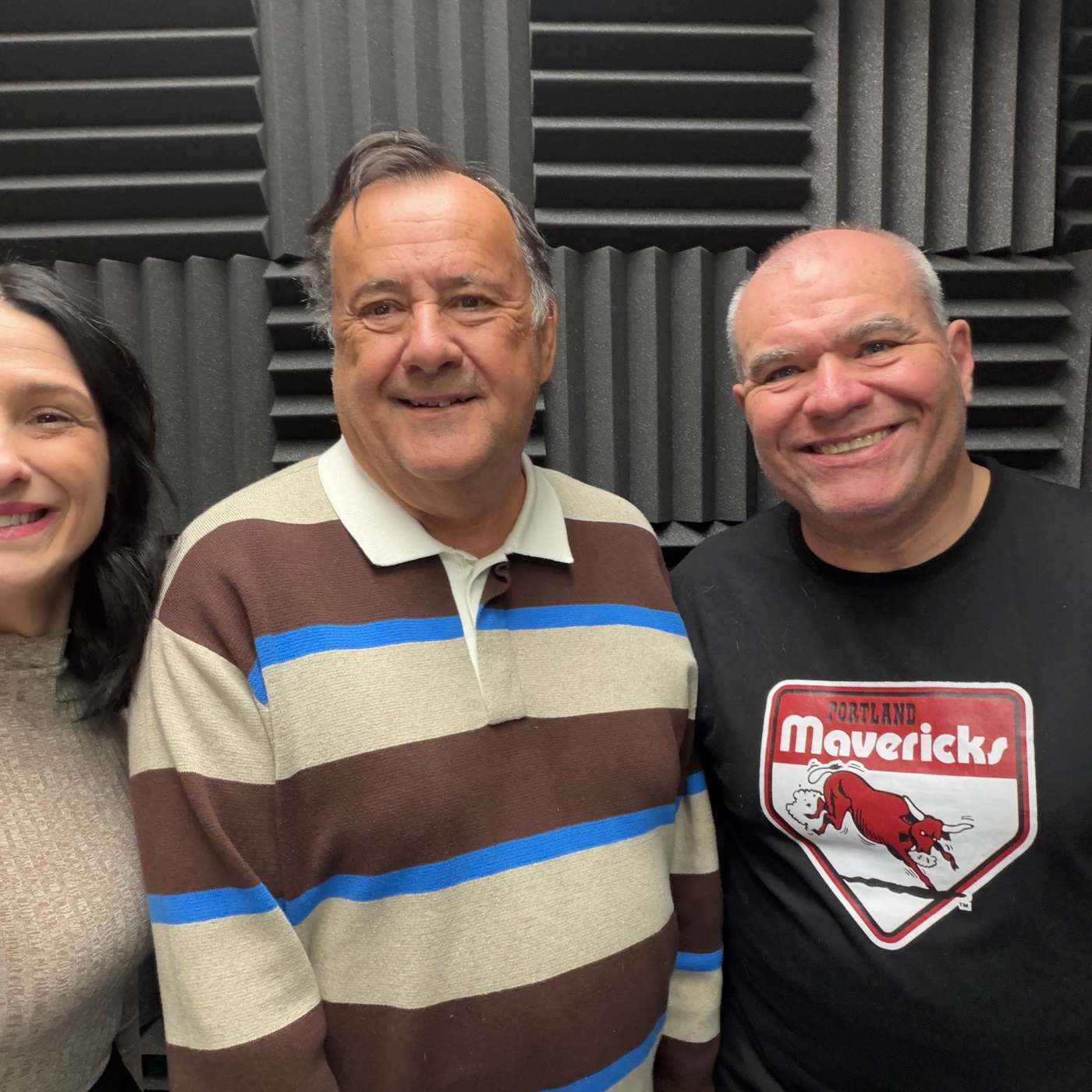
Rick with Pac West Lobby Group interview with Amanda Smith and Baron Robison - March 19th, 2026
About this Episode
1201 Court St NE
Suite 301
Salem, OR 97301
[email protected]

Transcript
Good morning, you guys.
It is Amanda and Baron with the ABCs of KSL in radio.
Does Amanda and Baron have in conversation?
Yes, we are in studio with us today.
We have Rick from Pac-West lobby group.
Good morning, Rick.
How are you?
Good morning, Amanda.
How are you?
So good.
Okay.
You've got a bunch of stuff to talk about.
So I'm just going to let you just go.
Well, I just think about you.
We have the big primary election coming up.
And once again, people are out gathering signatures to try and open up the primary,
which a lot of states have done.
We haven't done that in Oregon.
The legislature even had a bill on this session.
It was widely attended and a lot of people testified in support of it.
But as usual, it basically never went anywhere.
Because the two controlling parties Republican Democrats,
well, they talk about open inclusion of all voters.
They really don't want Republicans don't want other people voting in their primary
and Democrats don't want other people voting in their primary.
The problem is the biggest voting block in Oregon is not affiliated voters.
Okay.
And so, I mean, in people in Oregon are not affiliated with any party.
That's 300,000 more than Democrats.
That's 500,000 more than Republicans.
And they don't even get to participate.
Yeah.
So, they can't participate until the general election.
And so, and the general election will be all ours and these.
In fact, I remember research back to 1910.
I haven't been able to get as much information yet.
But for the last 120 years, there has never been an unaffiliated citizen of Oregon
who's ever been elected to the legislature because they can't run.
So, you have 90 representatives and senators.
And the biggest block of voters have never had a single person elected to represent them in the legislature.
So, they have to affiliate.
They have to pick a side.
Basically, if you want to, if you want to serve, you have to pick a side.
Why do I have to pick a side?
So, the concept is in a pinch going to be all the general election.
Yeah.
The concept is, you know, with the open primaries,
well, let them all vote.
Which is great.
But you're still voting for ours and these.
Why can't you vote for someone who's unaffiliated?
Why can't you as an unaffiliated one?
As an unaffiliated one.
Yeah, I'm unaffiliated.
Pick your R or your D or me.
Right.
Right now, to get on the ballot, the most reasonable one was Betsy Johnson,
Lenny for Governor, but she had to spend $750,000 to get signatures.
That's the only way.
Everybody else pays a couple hundred bucks to just get on.
Right.
I'm going to pause here.
We have to make a quick break.
And we'll be right back with more sticking.
Hey, guys, it's Amanda and Barron.
And we are chatting with Rick from the Pat West lobby group.
And we had Zilla's excited last night.
We were out of time.
Yes.
So, go ahead and pick up where you left off, Rick.
Well, I'm just saying nothing's going to happen this year,
although they're, again, this could be on the ballot.
But it would be very interesting if.
If someone would put something on the ballot or the legislature,
would find the way with all to open the primary,
not only for these 1.1 million are going in to vote,
but to actually run.
I just, I think it would make a big difference,
especially over a couple of cycles.
If everybody had a chance instead of having an exclusion primary,
where we're going to only nominate a Republican or a Democrat,
and everybody else, you don't get to play.
Yeah.
You know, and put everybody in the sandbox,
so let everybody get a chance.
I think, I think that would change things over time.
Now, another way we could talk about is redistricting.
Representative Alex Scarlett was asked a question during the hearing
on open primary says, how do we make these seats more competitive?
Because reality is out of 30 Senate seats,
there's only three of them that are competitive.
There's only about six or seven house races
out of 60 that are competitive.
And that's because the parties have drawn their districts
to safe seats for themselves.
But back before 1952, we used to have primaries
in which candidates represented entire counties,
or multiple counties, not all this part of this,
part of that, part of that county, trying to get ours together
and these together.
For example, Multnomah County had eight senators.
And 16 people would run, and you voted for the top eight.
You know, Lynn and Polk and Marion County worked together,
and they had four senators, and you had to talk to people
in Lynn County, Polk County, and in Salem to get elected.
And I think it would be very interesting if we went back
to a county-based system.
What did that change?
You know, 1952, and then slowly until about 1971,
they keep making other changes.
The Supreme Court came out and said,
you'd have to have one vote for one person.
So some of these counties were imbalanced.
And so they said, oh, we can't do it anymore.
That should start drawing to the population.
But then the parties figured out, well,
we're going to go out into the population.
Now, I want to put all my populations together,
all my ours, and the DSA, I want to put all my populations together.
That's why we have no competitive districts having anymore.
So you said at one time, Multnomah County had eight?
Yes.
And now, how many do they have now?
Well, there's, like, right now, there's 10 senators
that represent parts of Multnomah County.
So, obviously, with the Democrats having a huge lead
in Multnomah County, they siphoned off some of those folks
to put them with Washington or Clackamas County
to make them stronger in a race they might not otherwise win
if it was just Clackamas County.
Okay.
You see?
And the ours have done the same thing in other parts of the state.
But if we went back to you, you had to run in multiple counties
where there's pockets of Ds and Rs.
You're going to have a much different conversation
and probably a much better pool of candidates, I think.
Okay.
I see.
Yeah.
Interesting.
And the question is, is that even a possibility?
Yeah.
I don't think that's going to happen.
But nothing ever happens unless you start actually talking about it
and getting people to change.
Fair enough.
We'll move this back in place.
Okay.
Hey, guys.
It's Amanda and Baron, and we are back again with Rick
from Pat West Lobby Group.
We're talking a redistricting here.
Vs.
Yeah.
And like I said, this is not realistically going to happen.
It's time to talk.
Unless we talk about it and people engage on nothing ever happens.
Right.
But it was very difficult.
I spent four days trying to put a map together that would meet
the Supreme Court requirement of less than 5% deviation of population
and keep counties whole, right?
Yeah.
And control how many people are in a county.
Right.
But I finally did with one exception.
I had to split Kus County into a North Kus and a South Kus.
But I got the other 35 counties all contiguous time together.
Now, someone from Eastern Oregon all the way over to Benton County
and vice versa, which a lot of people say, oh, there's a crazy.
But it would sure change the conversation of how people have to be concerned
about other people in the state.
Right.
And you have a huge count on the East side of the state,
which are mostly land on people.
Yeah.
Right.
You back counties like Gilliam and Sherman, they have less than 2,000 people.
Oh, wow.
Right.
Well, it rains land.
Yeah.
But if you had a state graph from the shoots and marrying county who also had Sherman
and Gilliam, they're going to have to pay some attention to that.
It's not just the vote.
It's just that they're going to expect to see you.
And when they have an issue, you are their senator.
Yeah.
It opens their eyes to the bigger picture.
Yeah.
Just their little small area, but other problems that they probably didn't see
because they're in heavily in the city versus the country.
And it's like, well, your real problems are much different than our problems.
So let's combine them and actually figure out a solution.
Exactly.
And when I did mine, this is certainly a napkin type, you know, map.
But I went back to the last election.
And I said, okay, if this map, if this is where these people were represented.
Right.
In the last election.
And we have the next election.
How many competitive seats would we have?
That would be a toss-up in terms of figuring out.
It's going to be a lot bending on the candidate rather than the party, right?
So right now in the Senate, there's basically three out of 30 seats that are competitive.
In this map, I think 22 of those 30 seats would be competitive.
Wow.
In the House right now, there's like seven to eight seats that are competitive.
Yeah.
In this map, 44, that would be competitive.
Yeah, yeah.
And to me, that's true inclusion.
And if you want to bridge urban and rural divide, if you put them together with the same representation
in different parts of the state, I think that would improve that.
Okay.
We're going to take a quick break.
We're going to take a quick break.
Hey guys, it's Santa and Barry.
And we are back again with Red from Park West Lobby Group.
And let's talk my elections.
Yeah.
The primary coming up.
Well, two months from a couple of days from now, it's May 19th.
And there are some very interesting ones, especially for the people here in the city.
In the city of Salem, with the mayor's race.
You have Mayor Julia Hoy, who's just only completed one year offer for election again.
I don't know why we have a two-year mayor.
And where most people have four-year mayors.
But we have a two-year mayor.
And so she's up your feet wet.
Yeah.
Basically, what have you done for me?
I haven't been off for 12 months.
He is a mayor.
Hoy is up for the election.
And she's running against Vanessa Nerdite.
Who is the current city councilor?
And so a sharp contrast between the two of those.
But that's going to be very interesting because, I think, as we were talking about off-air,
this election is more important than a general election because you may not have one.
Yeah.
And whoever you vote for for mayor is the mayor we're going to have.
They don't want the general election.
Yes.
So if you want a voice, and who's going to be mayor, you've got to vote in May.
Yeah.
You have two candidates.
Katie, one of them is going to have more votes than the other.
And that will be enough to elect them.
Yeah.
So it's really important to vote if you're concerned about the city council.
Same thing with city councilors.
There's like four of those.
Seven, I think, are up for election.
And for the mayor's race and sale them is that consider the mayor is actually your general election.
I mean, that's what that is.
And of course, we have the transportation bill.
It's going to be on the ballot in May.
And then all the efforts get that on the ballot and they push to May.
Yeah.
Yeah.
I mean, what a year and a half saw gone that we talked about that last summer.
Yeah.
And in fact, we talked about last summer.
I said, they needed to pass a companion bill to move the election if it were to be referred.
Well, that's what we used to do in case.
So you don't have to wait a year and a half.
They didn't do that.
And then it created this whole mess.
And now they say, oh, I wish we would have done that.
I would.
And now you have this whole referral thing.
You have the whole legal thing.
And it's like, you know, don't anybody ever think one or two steps ahead anymore?
Mm-hmm.
Yeah.
Yeah.
But we're going to have a decision on that.
And that'll be really interesting, especially in light of the news we got yesterday.
Surprise, surprise.
Interstate bridge has doubled.
It's the.
Very expensive.
Now it's $14.5 billion, we think.
Which is what was reported two months ago.
If you remember, Joe court write any comments from Portland had found ODOT documents.
It said they knew it was already doubled.
And how come they hadn't told anybody?
And that was all in the news.
Oh, we're still refining this.
But the documents are pretty final.
And now that they're final.
That's true.
It was $14.5 billion.
And so.
Because the number I had seen was six.
Yeah, right.
And.
And you couldn't believe that.
So how can you even believe $14.5 billion, right?
Yeah.
They say it will be done now to 2045.
Wow.
So anyway, those people who will.
It won't be done in my life.
You know, let's put it that way.
And it's just this is the thing that was supposed to be done in 20.
21.
And now.
Maybe by 20.
Okay.
Yeah.
Yeah.
Yeah.
Yeah.
Alright.
Thanks.
Yeah.
Good.
More from Community Conversations with Amanda and Baron
View all episodes →
John and Nancy from Engelberg Antiks interview with Amanda Smith and Baron Robis...
Community Conversations with Amanda and Baron
Mar 24, 2026·12:10·completed

Austin with the Oregon Farm Bureau interview with Amanda Smith and Baron Robison...
Community Conversations with Amanda and Baron
Mar 24, 2026·12:11·pending

