Loading...
newspoliticsreligion
RIP Vladislav Krasnov, Russian Dissident Who Spent Six Decades Getting It Right
About this Episode
Today I received some sad news:
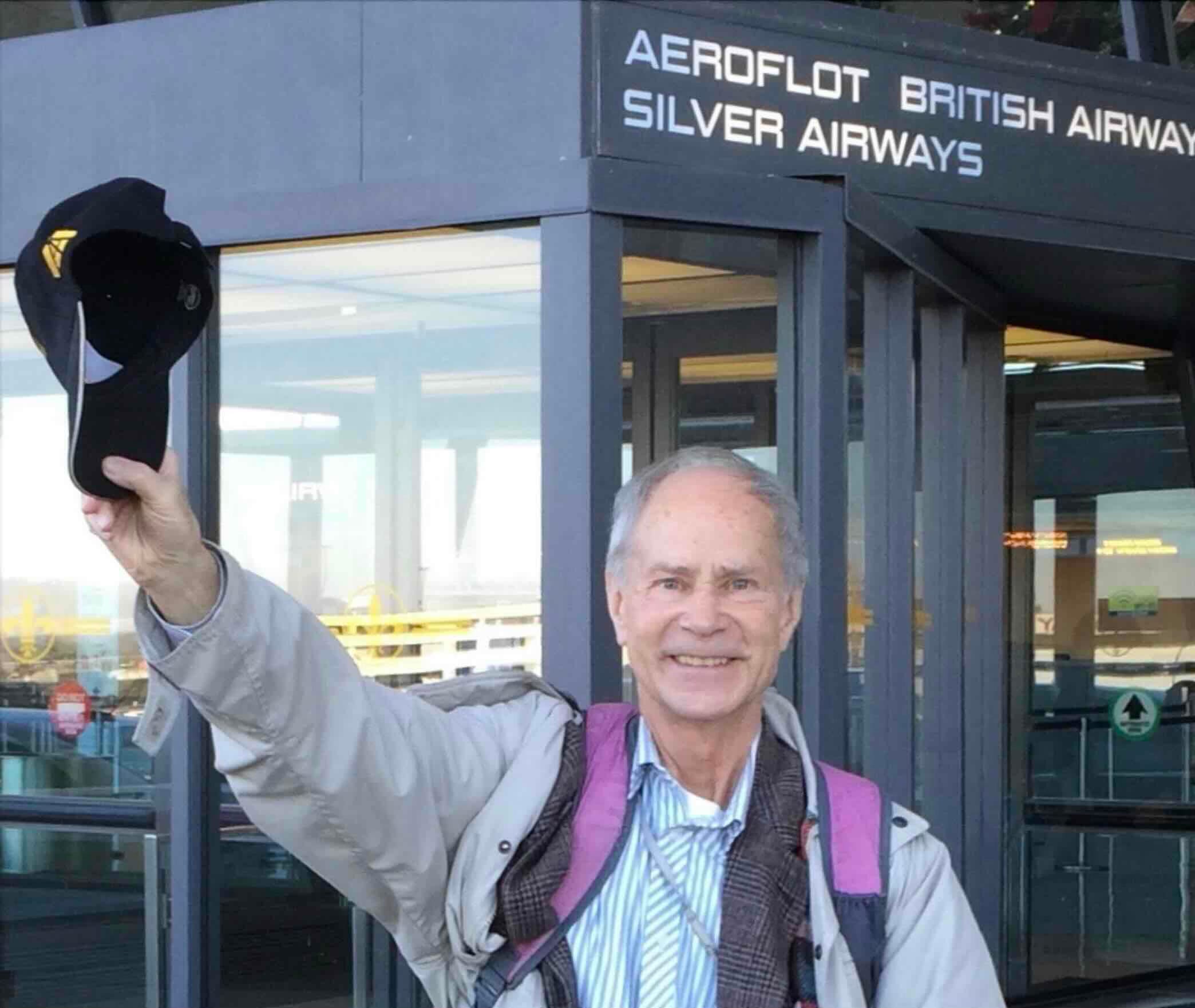
Vladislav Georgievich Krasnov (AKA W. George Krasnow) passed away peacefully at the age of 88 on 23 November 2025 at the home of his daughter and son-in-law in Crockett, California…Vladislav graduated from Moscow State University in 1960 with a diploma in history and anthropology and worked with the Swedish Service at Radio Moscow prior to defecting to Sweden where he studied and lectured at the University of Lund (Sweden) several years prior to moving to the United States. With a Masters in Slavic languages and a PhD in Russian Literature from the University of Washington, he became known for his work on Soviet defectors, Russian literature and politics. He was a post-doctoral fellow at the University of Chicago, taught or conducted research at the University of Texas, Southern Methodist University, Hokkaido University (Japan), and Hoover Institution at Stanford University where his research materials are housed. He served as the director of the Russian Studies program at the Monterey Institute of International Studies, Monterey, California.
He was passionately devoted to improving relations between the United States and his beloved Russia, to which end he established and led the Russia-America Goodwill Association. He studied and wrote prolifically, published numerous books and articles and lectured in a variety of venues. His books included: Solzhenitsyn and Dostoevsky, a Study in the Polyphonic Novel; Soviet Defectors, the KGB Wanted List; Russia Beyond Communism, a Chronicle of Rebirth; From the East to the West, a Message of Peace - Select Essays; Permian Cross: Mikhail Romanov; and, When I Was Born, The Genesis of Dissent (a memoir), the latter two in Russian only.
He heartily embraced and promoted the philosophical ideal espoused by Alexander Solzhenitsyn as a viable pathway toward a revitalized Russia. He actively participated in efforts by fellow native Permians to highlight the legacy of Grand Duke Mikhail Aleksandrovich Romanov who, as the ‘last’ Tsar of Russia, surrendered power in favor of a constitutional monarchy. And, as a board member of the Gandhian Global Harmony Association, he actively supported their efforts promoting global peace.
Vladislav was known and appreciated for his intellect, even temperament, friendliness and eagerness to promote goodwill. He travelled extensively in many countries, easily engaging people from all walks of life and ethnic backgrounds while spreading cheer and harmony along the way. He was thoughtful, considerate and kind to all. He cherished the company of the animals in his life, and they doted on his presence and affection. He enjoyed frolicking at the beach, taking a dip in the ocean, playing tennis, snow skiing, hiking and dancing to his own beat.
—
Vladislav Krasnov epitomized the way that people with uncommon common sense often wind up as dissidents. He didn’t get caught up in groupthink bubbles, whether the Russian Communist totalitarianism he was born into, or the post-Cold War and especially post-9/11 neocon “American” (covertly Zio-supremacist) triumphalism that has ruined the USA.
Like me, Vladislav was a literature scholar heavily influenced by M.M. Bakhtin and his Doestoevsky-based theories of dialogism and polyphony. He liked my podcast because he saw it (correctly, I hope) as radically dialogic: I listen to guests and interact, without ponderously imposing my own views Alex Jones style. That can get you in trouble, as Tucker Carlson found out when he interviewed Nick Fuentes, but it’s a good kind of trouble to be in if you’re an openminded truth-seeker who doesn’t mind offending fools and knaves.
Vladislav didn’t just dissent against silly orthodoxies and champion the heretics who poked holes in them. He focused on solutions. His Russia-America Goodwill Association (RAGA) was an exemplary attempt to foster cordiality between the great powers. Though a Russian nationalist at heart, his brand of nationalism did not exclude, scapegoat, or demonize the other. It was more about seeking and championing the best of Russian history, culture, and spirituality than about denigrating anyone else. Contemporary nationalists, including European and “white” nationalists, could learn from his example.
—
Vladislav “George” Krasnov: Is the USA Becoming Monologic and Totalitarian?
November 2017
Welcome to Truth Jihad Radio, and now Truth Jihad Video. I’m Kevin Barrett, doing all kinds of interesting interviews with some of the best guests you’ll find anywhere, talking about truths way outside of the mainstream box. Today, we’ve got a very special guest, Vladislav Krasnov of the Russian American Goodwill Association, or RAGA. He’s got a wonderful newsletter, and it features incisive and really fair and balanced commentary on these issues involving the rising tension with Russia. The American people can’t really figure out why we’re supposed to still be antagonistic towards Russia with the Cold War over. But somebody wants us to be. And for those of us interested in trying to defuse that, the Raga newsletter from Vladislav is a terrific resource.
Vladislav has a very interesting background in literary studies. In fact, he and I share an interest in the great Russian literary theorist M.M. Bakhtin, the inventor of dialogism and polyphony, which actually has a lot of relevance to the international situation and to politics, as well as to a lot of other things. So without further ado, welcome, Vladislav Krasnov. It’s good to have you.
Thank you, Kevin. I’m always glad to be on the show. It’s been for a while now, but I continue to watch and I know what you’re doing. So I’m delighted to see that you’re doing good work for dialogue, for polyphony in the United States. That’s what we need. We need different ideological, different religious voices. And we do not have to be enemies. We just should converse with each other and conduct a dialogue. Follow, if you wish, the foundation, the fountain spring of the Western tradition. Socrates. Go back to the Greeks.
Let’s explain to the listeners and viewers a little bit about this notion of dialogism. Bakhtin argued that there are tendencies towards monologism, which is a mode of discourse in which one voice purports to completely and perfectly describe reality and therefore subordinates or even almost erases all the other voices, versus dialogism and polyphony, which is a kind of multi-voice discourse, and which is actually what really happens in the world, except when the one voice is trying to crush all the other voices.
This has so much political relevance. In the Soviet Union, Bakhtin was suffering under the monologism of the communists. And today... Many of us think that in the unipolar world order with the neoconservatives and the supremacists—whether American supremacists or in some cases one might say Israeli Zionist supremacists—these sorts of people are trying to impose a single viewpoint, a single voice, and marginalizing other voices.
So polyphony and dialogism involves listening to the other, bringing on the other, paying attention to the other, and busting up this monologue, this monopoly on discourse. And that is partly what I try to do here. So literature and politics actually kind of intersect with this, don’t they?
They do. They do. Very much so. And actually I came across the name of Mikhail Bakhtin—Mikhail is the same as Michael in Russian—Mikhail Bakhtin. I came across his name when I was already out of the USSR. I defected to the West in 1960 and came to the United States. And when I started to study the art and novels of Alexander Solzhenitsyn, who became a Nobel Prize winner for his novels, I found one interview Solzhenitsyn made with one reporter from Slovakia. It was not even published in Russia, it was published in Slovakia. Slovakia was a little bit freer compared to the Soviet Union. And in that interview with the Slovak journalists, Solzhenitsyn mentioned the word polyphony. He described his method, polyphony. That means when you write a novel, you do not have a single hero who the reader knows as well that he represents the views of the author himself. No, you never know that in polyphonic novel, like Solzhenitsyn’s novel The First Circle, for which he got the Nobel Prize. There are many heroes there. The reader is free to read and to make up his own mind and to choose his preferences.
So that’s the freedom that Solzhenitsyn gave to American readers. I think probably that’s one of the reasons that he was highly appreciated. People felt that he was not imposing his views. He wanted to have variety of views of the Soviet Union, the country which was a terra incognito for many Americans. And now they had more trust in the author who can be so objective and let other people judge situation in the former Soviet Union.
Solzhenitsyn and Bakhtin both suffered from internal exile because there were dissidents in the Soviet Union. Actually the chain is even deeper or longer starting with Dostoevsky. Because Dostoevsky was also a rebel or dissident and actually so much against the Tsar that he was suspected of being in a conspiracy in which they may have conspired to kill the officers of the Tsarist army.
He was considered a terrorist.
Yes. And whether they actually planned to kill someone, I don’t know. But they discussed those issues. So because of that, he faced the firing squad.
Actually, we could make a connection here, Vladislav, between that situation and the situation we have today in the United States, where repeatedly we find these so-called terror plots, which are often actually fabricated by the FBI... They invent a terror plot, and then they find some vulnerable, maybe mentally challenged young Muslim and convince them in discussions to say things that make it sound like they’ve acquiesced to the FBI terror plot. And then they swoop in and basically imprison that young person for life.
Dostoevsky was in a radical circle, and they were talking big, they were talking loosely, and there were police informers who were probably egging things on. So in a sense, Dostoevsky was in that kind of position, although he was probably a lot sharper than some of the Muslims that get entrapped.
Well, let me say, when I was teaching Russian…I was teaching Russian literature, and I had American students at Monterey Institute and elsewhere, including in Texas. So some American students told me: “You know what, Professor Krasnov? Dostoevsky saved me from being a revolutionary.” Because Dostoevsky knew both sides of the issue. He knew what it was to be a terrorist or be a suspected terrorist and how wrong it is. So eventually he came to the Christian viewpoint that one should love even your enemy, and of course even more your friends. “Love your neighbor.”
But originally he was familiar with his thoughts of grand revolutionaries. They were all, as Dostoevsky called them, small Napoleons. After Napoleon, the young people wanted to be heroic and to save mankind for some great adventures. And that’s why it was a temptation for the young people to be revolutionary. But Dostoevsky came around. So on the whole, I would say, Russia learned it the hard way. They had the temptation of strong revolutionary decisive action, of liberating the whole mankind. And they got burned with that.
Dostoevsky changed his mind while he was serving prison time after almost being executed, in Siberia. Then it happened to Bakhtin. And it makes you think hard. You learn the hard way.
And of course, Baktin got in trouble precisely because he was reading Dostoevsky. That’s where he got his ideas of dialogism and polyphony, from Dostoevsky, And then he ended up getting exiled.
Exactly. And Solzhenitsyn too. He was serving in the Soviet Army. He was a brave officer, an artillery officer. But then he also felt the deficiencies of Soviet system. Even in the military and what he saw around him. So it made him think hard that maybe the whole foundation, the value system, of the Soviet Union was wrong. So he came to the other side. So Russia has learned the hard way. Unfortunately many people in the West…and I know that because when I came first to Sweden then to the United States they were rather naive about communism. They were they had many illusions about communists: tkind of idea seems to be good. Oh, well, liberating poor people and the whole world seems like a very sympathetic great idea. But this idea was, of course, made in hell.
Yes, well, it’s a millenarian offshoot of the Judeo-Christian tradition. You could see Marxism as a kind of heretical form of Christianity or Judaism in that there is this millenarian tradition that keeps cropping up in religions and certainly in our monotheistic mainstream. Marx was saying that if we have this great revolution seizing state power, and then the state withers away, we’ll have a sort of paradise on earth. And this parallels the millenarian dreams of religious visionaries going back millennia.
Well, maybe I disagree a bit about Marxism as being a Christian offshoot or something like that. It seems like it’s antithetical. Because it’s a revolt against God. It’s a revolt against the Russians who got involved…
But it parallels other (strands of messianic millenarianism). We could look back at Shabtai Zvi and Jacob Frank, who led this first Zionist movement. They were also sort of anti-God anti-Christians, millenarians, and they were a heretical offshoot from Judaism. They said the Messiah will come if we can get all the Jews back to Palestine. And so Shabtai Zvi, who was a Satanist and a very diabolical, demon-haunted kind of person...
Yes, on that I agree with you. Yes, there was an element of Messianism. Yes, a false messiah. Both for Zionists and also Marxists. Of course, Marxists tried to hide it because they were anti-religious openly. But nonetheless, there was a kind of messianic subtext for the Marx activities. And those, especially Jews…many Jews in Russia followed Marx precisely because it was messianic. So they did not admit to religion, but they felt that it was some kind of salvation of mankind. Indeed, it was a revolt against God. So in my essay about Karl Marx, as Solzhenitsyn wrote precisely that it was a teomachy. It’s an uprising, just like Marshall’s (?) model on Prometheus. And Prometheus, on the one hand, yes, he gave the use of fire for mankind, liberated mankind. But on the other hand, another image of Prometheus is that he was a rebel against God. So it was his personal rivalry with Zeus and some supreme Greek pantheon of God that made him so obnoxious. So I think the followers of Marx tried to say, well, he just liked people so much that he wanted to make revolution in order to save them. Other people say, no, it was not so much love of neighbor, of people around, poor and downtrodden, but it’s rather self-love, revolt, the affirmation of himself as a god.
Very good point. Do you think that there is a connection and a parallel between this sort of aspect of Marxism as a millenarian anti-religious religion, a kind of revolt against God, and today’s secular humanism, which seems to be in some ways more... fundamentalist and more extremist than most actual religious extremists. For instance, in France today, they force women to take their clothes off on the beach. There are so many examples. You’re a heretic if you believe that marriage is between a man and a woman. And you’re a human rights violator if you don’t want Pussy Riot to go and desecrate the cathedrals in Russia. And so you can argue there’s so many of these examples that would suggest that today’s secular humanism, which is almost a sort of new state religion of the Western elite, is following this path of communism as a kind of extremist reaction against traditional religion.
It’s monologic, monologic. They’re against polyphony. They’re against dialogue…Socrates was condemned in a democracy. So democracy by itself does not guarantee a better way of life or justice. So he was certainly condemned unjustly. So he’s one of the heroes of free speech. And I think Dostoevsky follows him, Bakhtin follows him, Solzhenitsyn follows him, and I wish the modern secularists would follow and allow more dialogue instead of affirming the political correctness one way or another. So that’s what is missing now. So when I was writing my book, Solzhenitsyn and Dostoevsky, A Study in the Polyphonic Novel… At that time, I thought the issue was for the Soviet Union, because the Soviet Union was a totalitarian state. It could not tolerate, it did not print Bakhtin for a while, and Dostoevsky and Solzhenitsyn especially, and so for them it was the issue. And the United States was okay, because I based my findings on numerous reviews of Americans who read Solzhenitsyn’s novel, that they welcome such diversity of opinion.
And now I see the situation turn around. Now in Russia—and I spend a lot of time now in Russia—this freedom of expression…there’s a greater variety of views there than there seems to be here, especially in the media. When you see such anti-Russian campaigns (as currently in US media)…It’s too much uniformity. I think there should be more dialogue. And that’s why I’m president of RAGA, Russia America Goodwill Association, at the website www.raga.org. As Americans, we favor multipolarity, many views, polyphonic views. I do not try to choose some Russian author and poll them on Americans. Most of the authors I include in my almost monthly newsletter…I call them RAGA antidote newsletters, because they’re an antidote against overwhelming propaganda of monologists, the people who take monological, almost totalitarian views.
It’s not totalitarian yet, because we still have private property, unlike in the Soviet Union. But nonetheless, it is already too much of the same. So I want to have antidote to the poison which they spilled on Russia and other countries. I think my attitude toward other countries is essentially based on our founding father for the United States. We were not supposed to meddle in other countries.
Or based on the writings of a great philosopher whom I learned about when I came to the United States, Edmund Burke, a British statesman, member of the parliament, and a hero for us Americans, because he was one of the few members of parliament who voted against King George’s sending troops to suppress George Washington. And for that reason, he was called a traitor by the supporters of the king there. And for that reason, in Washington, D.C., where I lived a number of years, there is a monument to Edmund Burke. And so he was a conservative. He’s the father of conservative thinkers, the conservative movement. His attitude was, don’t meddle in other countries. And he based his reasons on ancient Greek philosophy, on Socrates and Aristoteles, that countries are different, and depending on their geography, neighbors, national tradition, religion, they choose their form of government. And one cannot say that this democracy is the best, it’s the best for all. No, it may or may not be.
And he was not against Republicans. Edmund Burke liked Switzerland. That’s fine. They already, for many centuries, decided to divide the country in the six different cantons, and they have a Republican form of government. It’s good for them. But maybe for some large countries, maybe like Russia, maybe a more centralized way of organizing the government is better.
So we should not judge the nation, or meddle by trying to change the ways of the people, just because we think that our American constitution is great. I happen to believe that we have good organization here. But as soon as we go to impose our constitution or our notion of what is good on other countries, it’s a severe mistake. And I think our founding fathers were against that.
Read the full transcript by clicking “transcript” above the image at my Substack.
Stripe is Substack’s only processor and they debanked me, so you can no longer pay me through Substack. Now I am posting everything on Substack free and asking people to sign up for recurring donations at my Paypal donation page…or better yet, the free speech platform SPdonate. Alternately you can Paypal or Zelle to truthjihad[at]gmail(dot)com.
This is a public episode. If you would like to discuss this with other subscribers or get access to bonus episodes, visit kevinbarrett.substack.com
No transcript available for this episode.