Loading...
newspolitics
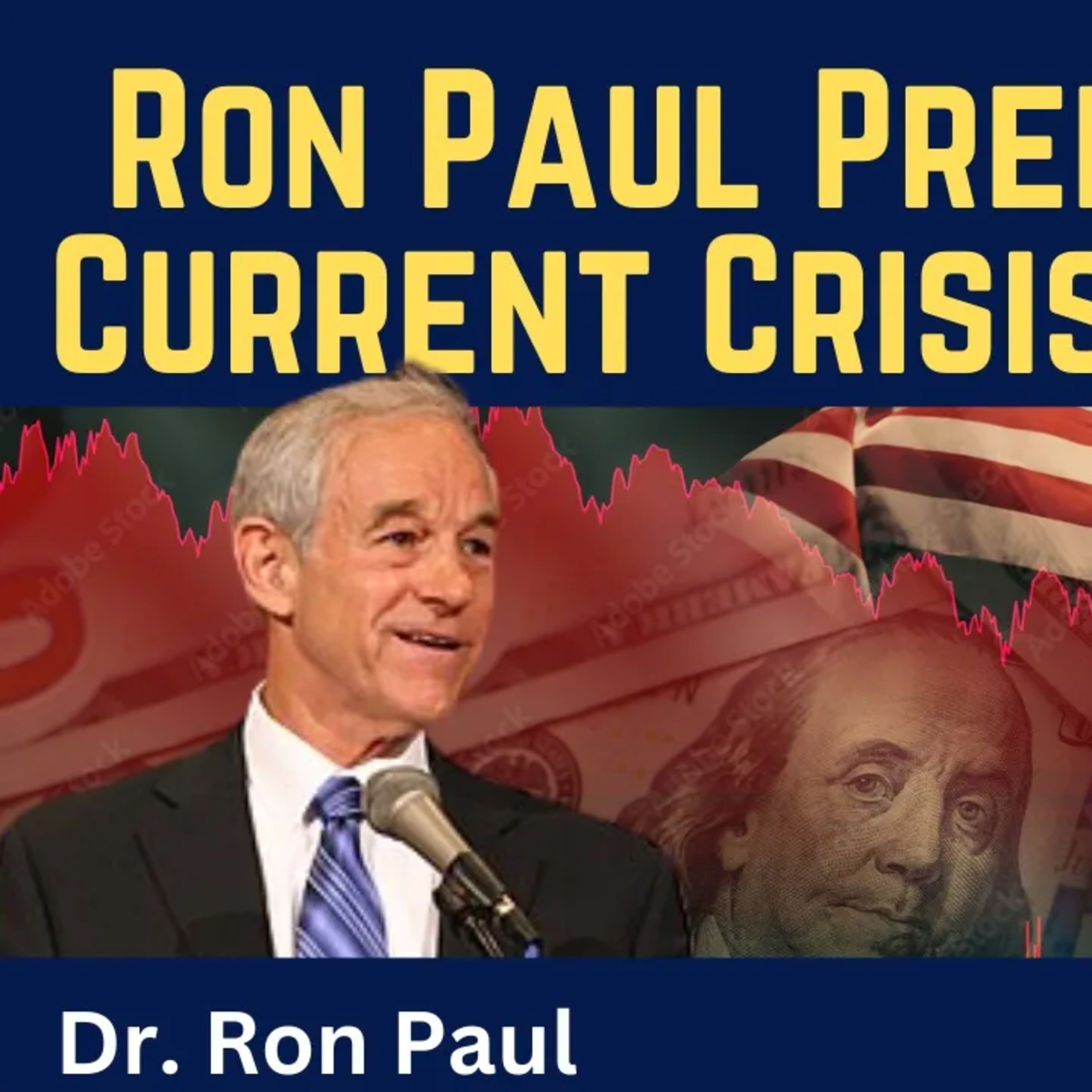
Ron Paul Predicted the Crisis of Empire, Monetary System & Civil Liberties
About this Episode
Dr Ron Paul is an American politician who served as a Republican member of the U.S. House of Representatives (1976–77, 1979–85, 1997–2013) and who ran as a presidential candidate in 1988, 2008 and 2012. Dr Paul is renowned for his consistent and correct predictions about the crisis of empire, the monetary system & civil liberties.
Hosts & Guests

Transcript
Welcome back. Today we are joined by Dr. Ron Paul, a former representative from Texas who ran
for the presidency of the U.S. in 1998, 2008, and 2012, and a champion of limited government,
non-interventionist foreign policies, sound money, and civil liberties. So thank you very much
for coming on the program. I've always been a huge supporter of your work and always
shared you on during the presidential elections. Well, Glenn, it's great to be on your program.
Well, I feel that most, if not all the things you have warned about over the years,
is now obvious to all the out of control, monetary policy, the declining civil liberties,
and of course, overextended and exhausted military. But when you look at the world today,
what is it that concerns you the most? My biggest concern is that we will
lead ourselves into a big, big crash affecting everything, our civil liberties, the whole works.
And we're seeing hints of that. And what worries me the most when things like that happen
will be a shift away from the society that at least had some respect for personal liberty,
and we end up with more dictatorial government. And I think we're going that way. And yet,
at the same time, I tend to look for areas where I become more optimistic. Because when I get on
a program like yours, you must talk to a lot of people. And there's a lot of people like you
are out there talking to a lot of people. And the internet has provided me a tool where I can
reach a lot of people. And I think our side of this debate is much more, you know, much more present
than we realize because the advertising, the information out on the internet and all that
reach people, that it sounds like we hardly even exist. But after campaigning a lot and traveling
a lot and talking to a lot of young people, I'm left with a bit of optimism, but also aware of how
dangerous it is in a transition. I worry about the crack up boom, too, quite frankly, that
Mises talked about. And that would cause a chance for the opposition to try to take over our
government. And I'm afraid that some of that has already happened, but at the same time,
I still look at some of the positives that I get excited about.
Well, I guess a lot of big, big problems that all these issues are interlinked. Once one is
overextended in the foreign policy, this will mean economic problems, which would then have
negative impacts on civil liberties. But you've been a very long-standing critic of the federal
reserve. But in your view, though, what are the biggest dangers of the current monetary system
for the US economy? Well, it is the total destruction of the dollar. And we've been doing this
systematically. We had people warning us before 1913 of what we were getting into. And it didn't
take long after that to start to see our problems. And by the time we fed to create the first
depression, the first thing they did during Roosevelt's term was to take into gold. We didn't
even want to even allow to own gold. And that knowledge was taken away from us because the price
of gold does give you a hand about what's happening. And I think that the evidence is very,
very strong. And I got exposed to Austrian economics. You know, it probably in the 50s and the
60s. And they were writing about, and, you know, Mises and others were there, and Hayek and I read.
And they said that this is a mess. And the Bretton Woods is unworkable. Henry Hazler said that
the day they were trying to organize it. And, you know, it fell apart. And so on July 15, 1971,
it really like rang a bell. You know, even though I expected it to happen, it was still quite a
shock that it really did. And listen, you know, on a live report by Nixon on a Sunday night. And from
that time on, I decided, you know, this is an interesting subject. It looks like it's a pretty
important subject. And I enjoyed dealing with it. And I started talking out about it. And before you
know, before you know it, it led to a type of a political career, which was just the vehicle,
for me, trying to call people's attention to the danger of what we were doing to our monetary
system. Yeah. Actually, my initial interest in Austrian school of economics and buying gold came
from listening to yourself and Peter Schiff in the mid-2000s. But in terms of an overextended
foreign policy, though, at the moment, we are fighting this proxy war against Russia, which
becomes increasingly direct. They could be a war anytime soon with Iran. And China, even
war with China could be on the horizon. I was wondering how do you see this, I guess, global
military presence affecting both national security as well as the fiscal health? Yeah, from my view,
point, it's a horror. You know, it consumes wealth. All wars will, if they get to be real hot wars.
But here we are spending us into oblivion. It's part of the big reason that we're approaching
$40 trillion debt. So it's something that is expected in empires. Empires eventually expand
themselves too much. They stretch their wings too far and they spend too much money. So debt and
expansion of a military power tends to bring things to an end. And that's what I think is happening
right now. But the day it ends, because nobody knew the exact day that we would have the
restoration, you know, of gold in this country again. But, you know, that followed, you know,
the breakup of the Bretton Woods. And we were allowed on gold again, which I thought was very
positive. So, but what we have is we have a foreign policy, which is very, very aggressive,
very, very expensive. And the American people are gullible. I imagine there's a lot of gullible
people because they depend on a dollar. But sometimes you look at the countries that we deal with
are getting smart too. You know, they're starting to maybe protect against what we worry about.
And that is the total collapse of the dollar. And when you see gold coin from a thousand to five
thousand, maybe six thousand soon, there has to be something big going on. And of course,
from my viewpoint of trying to have better government than my whole goal is to strive for a society
that allow people independently make up their mind and control their wealth and control their lives
as long as they don't commit aggression. And that's what the libertarian argument is all about.
I guess this is what's different from the Cold War. That is the
adversaries of the United States, they're not just adversaries in the political and military
realm. They're also able to begin to reduce their dependence on the economic instruments of power,
such as the US dollar. But what do you say to critics though, the argue that non-interventionist
foreign policy would simply embolden adversaries and allow them to, I guess, grow too strong and
confident? Well, right now they totally ignore me, but they generally ignored me when I was in
Congress. But behind all that, I think we're gaining ground. But empires have to be held together
by law. Because truth becomes treasonous in an empire. The empire has to exist. That always
has to expand. And here we have this crazy thing going on. We're up to a trillion dollars in our
military budget. And they claim we're going to increase it by 50 percent and get a little 500 billion
dollars. They're looking to run how to spend it. Because they're just intimidated by the fact that
they know they can't compete with the marketplace. And if they give up on an empire, the market might
creep in. So for me, the solution is more liberty less government. And that's a big picture and
difficult. But I don't think it comes from governments. I don't think our Congress is all a
son going to be smart and do some of the things I ask. And you know, it'll be a transition. I think
transitions come outside of Washington. It's through education. That's why I get, even though I don't
understand all the technology in the internet, it's a good tool for us. And I think there's a lot
of people out there we don't even know about. I believe in a rem that of people that always salvage
something. And I think it's very big. And I think I was exposed to it and was recognized that
when I did those presidential campaigns, because I met a lot of people and a lot of young people
were interested. That's what excited me was if I'd go to a liberal university, I could get
thousands of people that were very young, college kids, high school kids. And so I think there's a
lot of positive. But of course, I think it's part of all of history. There's always competition
right now. The fight is between the authoritarianists that want to maintain their power. And they
see that by lying and trying to expand their empire. But right now, I think the empire is very fragile.
And the dollar is representing that. And as long as you see that, we'll keep moving in that
direction. But the danger is political power and how much power and how much damage will be done
in the transition. That's why it's so important that there's a group of people that should continue
to grow to lead in understanding what liberty is all about. And I think our founders gave us a
pretty good example of their responsibilities. But people who get a little whiff of what we're
talking about get discouraged. And I don't think they should be because it has been there a long
time. I think they should be aware. And they should be motivated. And one thing I tell a crowd
if I've talked to and they seem to be excited about it. I say, if you're getting all getting to
understand this, and you really believe in this issue of liberty, I believe you personally have a
greater responsibility to talk about it because the other people are there a little bit around,
no man's land. And that's not like to use. It's not to force them or get hold of the school system
or something like that and to tell people that. But I think individuals, if they say, I think
I think the liberty message is correct. And I'd like to participate in everybody has a way of doing
it. What you do and what I do won't be the same. But the same thing, the goal would be,
it's to spread a message of liberty. I get the same impression that well, especially among
young people as well, they recognize things aren't going this. It's going the wrong direction
yet they see authorities essentially arguing for the same thing. So I think a new or fresh message
such as yours is always very welcome. But you mentioned Empire's fragile. A key instrument of
empire appears to have been the expansion and the interventionism of NATO. Well, I'm not sure if
you agree, but what is being the future now of NATO? Because for the first time, it seems to,
well, its future could be in doubt. That is the US seems more willing to de-prioritize it. Do
you think the days of NATO could be over? And what is the goal of NATO today? The way you see it?
Well, their goal is to maintain power and be political and be part of the empire, but it's
it's not workable, so it'll self-destruct. And I think that's what we're seeing is it's not
efficient, even Robert Taft was opposed to getting in a NATO. And from a libertarian viewpoint,
it's just more big government, you know, and getting out of the hands of personal individual
decisions making. So I think it's a very important issue, but I don't think we need NATO.
But I think our administration has done a little bit of good in emphasizing some of the some of the
dumb things that NATO has done and that we shouldn't be doing ABC. But I don't think that's the
whole answer, because I think what would what we need is is is an understanding. I think the people
who are complaining, the neocards that are complaining today about maybe some things in NATO
or our administration, they just want to run the show by themselves and they want to get rid of
the old hat. But we have to or at least I feel like we should argue the case that collectivism
and governments and putting them together where there's the League of Nations, United Nations,
NATO, or all these things. That's all political. And we should come together because we believe in
something something as really in some ways very sacred and that is personal liberty and personal
responsibility, which then creates a system where you have nothing other than honest money.
Instead, we have a system of nihilism that we don't there's a large number of people that don't
even believe that you can find truth. So those who believe in liberty and those who are nihilists
if the real contest because of nihilists, they don't believe in natural law that you can't lie,
cheat, steal or kill. But if individuals, if a growing number would believe that and practice it,
you know, the world has peace. If you can't lie, but governments lie all the time.
The other principle that we have done, we have to chore change is the fact that
governments regulate people. Most people know we're not a lot supposed to do as individuals
lie, cheat, and steal and you kill people and they try to keep that in check. But nobody really
emphasizes the fact, well, that's what governments do. They lie and they cheat and they steal and
they kill and they start wars. And so that has to come together where the governments are doing a
lot more harm than the bad people that are doing it individually. But of course, it's a moral issue.
We're financially bankrupt, but we also have this moral bankruptcy. But it's the lack of the
ability to believe in natural law over the nihilism. It's a nodal out there. All we do is to
build up the empires and it'll take care of us. So the challenge is out there. It's not brand new,
but I look for the signs that there may be some optimism and there are some signs. And I
participate in trying to do what I think we should do.
My last question is just how you assess the performance of the Trump administration. Because
you and I were spoke about a year ago, about at that time, there was some defunding of USAID,
sorry, USAID, some NGOs linked to the intelligence agencies such as the National Anthem for
Democracy. It was talked about reducing the blow to bureaucracy. All they think perhaps the
military or the Fed. Some of this has fallen through, but how what's the overall, I guess,
assessment of how the first year of the Trump administration? I think there's more talk than
action. The action hasn't solved the problem. So that is it. Because a lot of things that were
sad, especially with Moscow, what we should do is cut back. But you know, to take for instance,
the goal was to get rid of the Department of Education, for an education over to the local people.
You know, we said I'm done. So they finally get around recently to have a vote and they gave
more money to the Department of Education. So nothing really ever changes. And I think there's
some people. It's certainly a lot of people that are still determined, you know, that it's well
intended. But if it's well intended, it's still not working. We haven't cut. And I don't think
it's going to be easy to cut. That's why I don't think Washington's the answer. Because if I
got in office and I had dictatorial powers for a week and I cut the budget 10% or said the Federal
Reserve can't buy any government debt anymore. I mean, it'd be revolutionary. It'd be so many
penalties. People wouldn't cooperate with it because they have to understand why people think
that you solve inflation by getting a sending more money so they can pay their bills. And I've
had people tell me, well, I said, what do you want me to do about the inflation? Send me more money.
I need more money. I'm like, check. And I was like, yeah, but you know, that's the problem.
Everything is different. More money. You have to change the philosophy. You have to quit the
spending. You have to challenge the welfare state. You have to challenge the military industrial
complex. But you say, well, that sounds like it's impossible. No. There's a similarity in one way
to what we're doing and what the Marxists do. They want chaos. They want this to happen.
Well, we don't like chaos, but if it happens, it may give us a chance to them, say, there is an
answer to this. But the Marxists wants chaos because they want to make it go in the opposite
direction, have more dictatorial power. And that's an educational problem. It's one of the reasons
why I have a homeschooling group. So I get to talk to a few people, but it's going to be education.
But I like to talk with people like yourself. And I have no idea. You might not even know how
many people you influence. So it's out there. And I believe that when the time has come,
and with the ideas whose time has come, armies can't even stop them. And I think that is right.
Ideas are very important. And I think about what happened under COVID, the people finally woke
up and said, it isn't crazy. And you know, it finally just dissipated and they quit that crazy
stop. So it's just getting people galvanized and understanding. And to me, that first is a moral
and an educational issue. I very much agree that the ideas can be very powerful.
So but also your political ideas, they continue to gain much popularity. And I'm also happy to see
your son Senator Rand Paul carry on your legacy of promoting common sense, I would say. So it
gives me some hope. So thank you very much for your time as well as Eric. Very good. Thanks for
having me on again.
More from Glenn Diesen - Greater Eurasia Podcast
View all episodes →
Seyed M. Marandi: Yemen Joins the War - Red Sea Could Be Blocked Next
Glenn Diesen - Greater Eurasia Podcast
Mar 29, 2026·54:31·completed

David Gibbs: The Coming Energy Shock - Similar to 1973 Oil Crisis?
Glenn Diesen - Greater Eurasia Podcast
Mar 29, 2026·55:01·completed

