S8, Ep 18: The Learning Curve: Mac Brown on Effective Teaching Methods
About this episode
Episode Overview
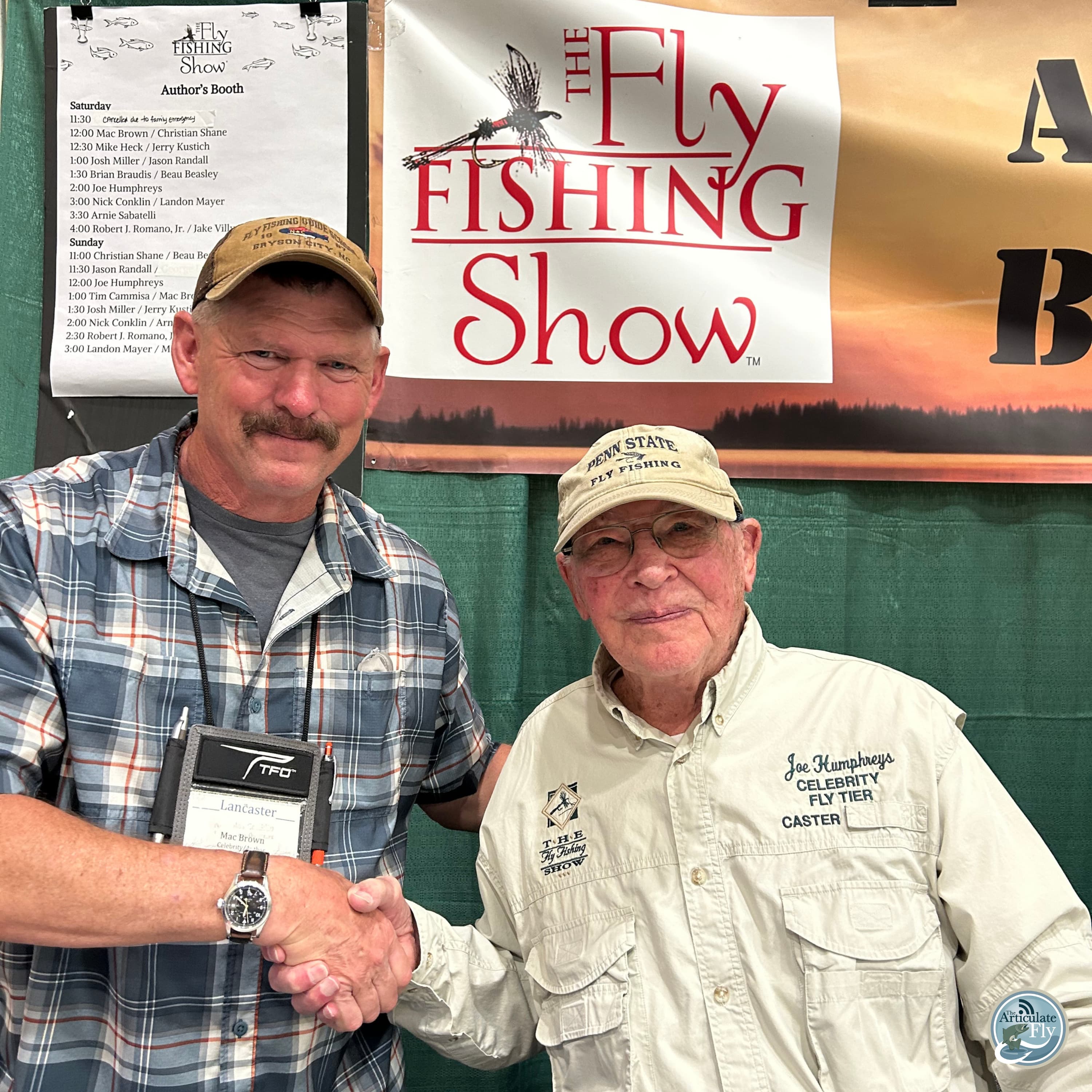
In this Casting Angles episode of The Articulate Fly fly fishing podcast, host Marvin Cash and Master Casting Instructor Mac Brown close out the fly fishing show season with a candid debrief on what happens after students leave the classroom. Recorded immediately after both Marvin and Mac wrapped up their teaching schedules at the Lancaster Fly Fishing Show — the final show of the year — the conversation digs into one of the most practical and underexplored questions in fly fishing education: how do you structure a class so students can actually keep improving on their own once they leave? Mac Brown, owner of Mac Brown Fly Fish in Bryson City, North Carolina, and a Master Casting Instructor through Fly Fishers International, draws on decades of coaching experience and current sports physiology research to frame the core tension between teaching to immediate performance versus teaching for long-term self-correction. The episode explores how video on smartphones has transformed what's possible in a single class session, why saturation happens faster than most instructors expect during hands-on practice, and how foundational mechanics — particularly the elbow drop and correct arm path — give students a reliable framework to diagnose and fix their own casting long after the lesson ends. Mac also previews his spring guide school season starting in late March in Bryson City, making this a timely listen for anyone considering casting instruction before the season ramps up.
Key Takeaways
- How to structure a casting class so students leave with both foundational understanding and the self-correction tools to keep improving independently.
- Why teaching entirely to immediate performance — without covering the underlying mechanics — leaves students unable to troubleshoot when their casting breaks down.
- How using smartphone video during a lesson gives students a concrete reference point so they know exactly what to look for when they practice at home.
- Why 15 to 20 minute practice sessions, repeated several times a week, produce better results than long, unfocused practice blocks that lead to early saturation.
- How the elbow drop and correct arm path mechanics — grounded in 160-plus years of casting science — deliver a measurable, immediately felt difference in loop speed and efficiency that converts skeptical students on the spot.
Techniques & Gear Covered
This episode is focused entirely on casting instruction methodology rather than on-water tactics, so there are no fly patterns or gear brands discussed. The core technical concept Mac returns to throughout the conversation is the relationship between arm path and loop quality: when casters move the rod hand horizontally straight forward — essentially throwing like a shot put — they generate far less line speed than when the elbow drops and the rod tip travels on a proper path. Mac uses a practical field demonstration to make this concrete, counting out a slow, soft cast aloud (1001-1002-1003-1004) and contrasting it with the sub-half-second delivery produced by the elbow drop, then asking students which loop they'd want in a 30-knot Belize or Montana wind. Beyond the mechanics, Marvin and Mac discuss a drill-based curriculum structure — roughly six drills covering power, pause and path — that students can work through in short, focused practice sessions using their phone cameras for feedback. The broader instructional philosophy draws on contemporary coaching literature, including Nick Winkelman's language-of-coaching framework, and aligns with what Mac and Gary Borger have implemented in their all-day casting classes.
FAQ / Key Questions Answered
Why shouldn't a casting instructor just focus on getting students casting as quickly as possible?
Mac Brown explains that while pure performance-based teaching can produce fast results in a demo context — like getting a kid casting 40 feet with tight loops in two minutes — it leaves students with no conceptual framework to fall back on when their casting starts to deteriorate. Without understanding the underlying mechanics, they have no idea what to change, and they end up needing to return for the same lesson repeatedly rather than progressing independently.
How do you use smartphone video effectively in a casting lesson?
Mac Brown and Marvin both emphasize that students should use their phones to film the instructor demonstrating the correct movement. The key is that students leave the class knowing exactly what they're looking for — and having footage of it. Without that reference, independent practice becomes guesswork.
How much hands-on practice time should be in a casting class versus instruction?
Marvin notes that students reach a saturation point with hands-on practice faster than most instructors expect. He describes his introductory class as roughly 75% classroom and 25% hands-on. The goal is not to have students perfect every skill in class, but to build enough intellectual understanding that they can drill efficiently on their own — ideally in short 15 to 20 minute practice sessions several times a week rather than long, unfocused blocks.
What is the elbow drop, and why does it matter so much?
The elbow drop is a fundamental casting mechanic in which the caster's elbow descends during the stroke rather than tracking horizontally straight ahead. Mac demonstrates its impact by comparing two identical 40-foot casts: one made with a horizontal hand path, which takes several seconds for the line to turn over, and one made with the elbow drop, which delivers the line in under half a second. He uses the contrast as both a diagnostic tool and a conversion moment — once students feel the speed differential for themselves, they are immediately motivated to change their mechanics.
When does Mac Brown's spring guide school season start in Bryson City?
Mac's first guide school of the spring is scheduled for March 25, with additional two-day and three-day schools running through April and beyond. He also teaches private casting lessons and guides as the season ramps up. The best way to reach him is through macbrownflyfish.com, where his full schedule and contact information are listed.
Related Content
S7, Ep 16 – Simplifying Complexity: Effective Teaching Strategies in Fly Fishing with Mac Brown
S7, Ep 20 – Practice Makes Perfect: Mac Brown on Mastering Casting Techniques
S7, Ep 28 – Warming Waters and Active Fish: A Spring Fishing Update with Mac Brown
S7, Ep 41 – Navigating High Water: Strategies for Success with Mac Brown
Connect with Our Guest
Follow Mac on Facebook, Instagram and Twitter.
Follow the Show
Follow The Articulate Fly on Facebook, Instagram, Threads and YouTube.
Follow our Substack newsletter for episode updates, tips and resources.
Support the Show
Shop through our Amazon link to support the podcast.
Join our Patreon community to support the show.
If you are in the industry and need help getting unstuck, learn more about our consulting options.
Subscribe & Advertise
Get every episode summarized
Each time The Articulate Fly publishes, we email you a written briefing from the transcript — the topics, who appeared, and any specific claims, with the ad reads skipped.
Email me new episodesFree for 3 shows. No card needed.
Hosts & guests
Transcript ready
163 searchable segments. Every word is indexed and playable.
Full transcript
The Articulate Fly — S8, Ep 18: The Learning Curve: Mac Brown on Effective Teaching Methods. Machine-transcribed; use the interactive transcript above to jump the player to any line.
Hey, folks, it's Marvin Cash, the host of the Articular Flyer back with another casting angles with the man himself, Mac Brown. Mac, how are you? I'm doing great. How are you doing, Marvin? I am glad to be home, Mac Brown. I'm glad to be home. You put a lot of miles on your Subaru, didn't you? Yeah, as you know, so if folks haven't been following along, I've fished my way to the show by driving from Charlotte to Cleveland and then I had a meeting in Columbus and then drove from Columbus to Lancaster and then broke the drive back to North Carolina by stopping off to see my mom. So I literally just got home, gosh, probably five hours ago, give or take and I added up all the mileage when I got home and it's a easily drove over 1700 miles from last Sunday to today. Wow, that's a lot of pilots. You know, it was fun flying back too. We had all this big front come through. So we got pretty much tossed and thrown around in the airplane the whole way back to
Asheville and even coming in to Asheville, landing, you know, had had a lot of big wind and then when I started driving home from the airport at 10 in the morning, then it snowed really heavy and got down to like single digit windshills last night. So it was pretty, pretty exciting when I left it was like 75 degrees and came back to winter. Yeah, and you know, we've got some friends here still stuck and it sounds like they're going to spend a better part of the week hanging out in the Lancaster. So, you know, I was thankful to have the car and it was kind of great too because I could kind of move around the weather a little bit. So I was able to avoid the turn pike and some things like that and made the trip trip a little bit easier. But the fishing was really good on the alley. I was up there and we absolutely crushed them Monday on Elk Creek and then it's pretty stingy on the sugar and the following day and then that rain came through and kind of blew us off the water. But it was good seeing everybody in Lancaster. You know, it's the last defly fishing show for the year and I think it's, it was my last show. I don't know it was your last show and we thought it'd be kind of interesting to kind of talk to folks about, you know, you've taken these classes and you know, now what's next
and how do you apply that knowledge to improve into the upcoming fishing season? Yeah, I think that'd be a good topic because the last one, you know, if you're doing those week after week and then it really gets you pretty sorry about what you're going to deliver and I thought that'd be a good topic for, you know, people that like to teach whether it's this type of kennis ed, export teaching or whether it's whatever it might be in the fact of just talking about the separation of how much do we teach to performance. In other words, just to make sure that somebody's doing something with fundamental movement or how much do we want them to go away where we know good and well they can correct themselves without having to come back again and again, you know, so I don't know if that'd be a fun topic to kind of dive into. Yeah, and it kind of boils down, you know, to, you know, you know, what, how much you're teaching, but I'm thinking, you know, you and I, you know, if you're sitting there teaching somebody for two and a half hours or all day, you know, and you're teaching them a lot of different things, you know, it's kind of unrealistic to think that they're going to nail all the tasks and go home and be perfect, you know, and so you have to kind of,
you know, we do, I do that in the introductory class, I know you do it in your classes where you're really trying to set things up where people kind of intellectually understand what they need to do and then how to basically drill that and test themselves after they leave the class so that they can work on the perfection part kind of on their own time. Yeah, and especially with these devices, everybody has in their pockets these days with the use of video on their phone, once I know it is what they're looking for and that's kind of how the classes, I mean, the numbers like what you said in your classes, real similar to even the all day class that we do with how much actual performance versus how much you're going over stuff to bring that understanding and all kinds of literature, we could bring up the, you know, that support that all the latest, you know, coaching methodology and sports physiology and psychology at all backs up what we're saying, you got it, you got to have all of that to make it a worth a worthy class and when I got into this rodeo in the early
90s, everybody would tell me and I obviously, I questioned it back then because I was teaching programs at, you know, Western at the time and teaching 30 kids at a time, it's very different than teaching a one-on-one lesson and all of them would say, Marvin, get the rod in her hand as quick as possible and just let them flail away for the whole three hours as just ridiculous opinion because you're just watching them all do whatever dysfunctional movement there is and none of it's good usually. I mean, that's not, that's not trying to be main, it's just the truth, if you look at backcasts of in a lesson like that, you're just looking at a bunch of property lines with no tension and I mean, just nothing but mistakes, I mean, that's not productive. I don't know, I just think a lot of that philosophy has changed with a lot of this latest stuff, like from Nick Winkelman and the language of coaching, there's a lot of good books out there that support like what we're saying and and I think that's really where we're where we're heading, you know, I know Gary's been really in tune to that Gary Borger too with the classes, the all-day
classes and he's very, very in to make him sure that they film themselves, that they film what we're going to try to get him to dayfars and then they really understand them when they go home what they're trying to pull off, you know, because without that, how do they go forward? Yeah, and I think too, you know, like I like the class I taught was probably 75% classroom, 25 hands-on, but I would say, you know, people get pre-saturated pretty quickly with the hands-on stuff, right? So, you know, it's just like we talk to people about, you know, having short 15 to 20 minute practice sessions, it's really kind of the same thing with the hands-on stuff in class and you kind of were going to hit that saturation point pretty quickly. Yeah, and I mean, I've thought about this today since we were going to talk about, you know, tonight, when I was kind of going over it, there is times we do teach to performance, but in general, if it's a bigger numbered class, we really can't do that. So, I mean, a good example where we actually teach 100% to performance is you pull a little kid out of the crowd,
you've got everybody watching you for a demo and you're going to get the kid cast in 40 feet with nice loops in under two minutes. That's 100% teaching to performance. There's no time to talk about understanding. Does that kind of make sense? I mean, there's ways to do that. I mean, you do that to get a big result for the kid and then everybody golf clubs and everybody's happy. But my point is, you can't run something like that. When you could do that with the class, obviously, too. But then what happens when it starts to go south, I mean, there's no concept whatsoever, what to change, and that's the problem. We have to go over the understanding a little bit to where at least they know what to look for. Yeah, it's kind of interesting, right? Because, you know, you and I worked together to put together that introductory class, and that's really, you know, kind of breaking all those foundational things down and it was kind of interesting, kind of working with the students and Lancaster, you know, trying to tell them like, you know, because it's a little bit of a change, right? That system, I mean, a lot of people don't have that, you know, whole arm casting with the drop the elbow thing. And so we work with people,
videotape and switching back and forth or not videotape, but, you know, taking video on phones, but, you know, and, you know, they were like, well, what should we start with? And, you know, the students in that class, they were having trouble dropping the elbow. And so I said, well, you know, the first thing you got to do is you got to get that ingrained. And then from there, you can start refining the other pieces of the system, but, you know, kind of trying to get people to roadmap. And in that class, you know, we gave people probably, I don't know, gosh, a half a dozen drills that are going to help them with path pause and path. And, you know, that in a video camera, you know, in 15 minutes, three times a week, and you'll get better. Oh, yeah, that's a fun part of it. And I noticed that with a lot of the, at least the last half of the show season, I started using this a lot just because so many people come and they think the fundamental movement is trying to throw the baseball to home plate like a shot put, you know, me with a hand just travels horizontally straight ahead. And that's hard way to cast. I mean, you're really hard to generate any kind of speed. So we started incorporating that a lot of Marvin with these classes to where the handle tribal straight ahead and the loops going out. And it's not a bad loop. It's
not a tailing loop or anything like that. But I'll say out loud, 1,000, 1,000, 2, 1,000, 3, 1,000, and 4 before it lands on the water. So then I've given the example, okay, now you're in beliefs, trying to throw in the wind might be in Montana and it's blowing 30 knots. Do you want to line the takes four seconds to get out there for 40 feet? And then you show them the pull down, which is like anybody could do it at a hundred years old, just by dropping your elbow and it's down in less than half a second. I mean, which one do you want? Because, you know, that right there proves it all. So it's funny to look on their faces once you show them that they realize they're moving, their hands straight ahead and then they see the difference. Then they know it's not a trick or a gimmick, you know? And they're like, I want that one. Then they try to get, like you said, why is it so hard for them to just drop their elbow? But it's funny. It's kind of funny because once they see the light and they do it the first time, you know, you can see this big smile come across their face. And it's the first time they've ever felt really that kind of speed. Yeah, then you know, the whole thing is right. You're going to cast a lot during a day. So, you know,
the biggest thing is you kind of refine this stuff and you can use less and less energy and have a much better cast and you don't get off the water than today, feeling like you need rotator cuff surgery. That's right. As I was other things that you up for injury a lot greater too. So, yeah, there is a lot of styles and a lot of people want to talk about this style versus kind of like Kung Fu with watching the old black belt theater movies as a kid, the monkey style versus, but I mean, so much in casting, I think really does go back to basic fundamental movement. It's not like my opinion or Marvin's opinion. I mean, this goes back to studying really way back to 1856. I mean, it's very hard for somebody to come in there and say, no, that's a horrible style because that's what the best in the world have done for world records and accuracy for over 160 years. So, it's not just our opinion. It's what all goes back to the base of that tree, you know. Yeah. So, you know, you see their Newtonian or quantum physics and for casting its Newtonian physics and you can't change the equations, right? Now, it's still the same. Yeah. So, you got home
and it's kind of, you know, we've had this nutty weather. I think it's been kind of true kind of everywhere east of the Mississippi, basically. And you got home yesterday and it was snowing and which is kind of shocking and it's like down on the 20s again, but, you know, gosh, what in two weeks, you start your guide schools, right? Yeah, we had the first one on March 20. I think it's the 25th is the first one and then we're right back into it. After that, you know, it's one in April, two day school and April is a bunch of three day schools going on and it's just yeah, at least, at least I get to stay here instead of jumping on an airplane every week. So, I'm kind of excited to be staying put for a while here. Yeah. And of course, also means private casting lessons and the guiding thing will start to ramp up here is, you know, we got what less than two months before DH Burns off in Western North Carolina, but if folks want to get in touch with you, where should they go? The best thing really is Mike Brown Flottersh.com that has an email in the cell number, they can text
it or leave a message or whatever. I mean, off of that's just by far easier because the DM stuff, a lot of times I don't look at that as much. So, I'm not, I don't have on my profile of digital influence or do you have Marvin? So, that tells you how much I look at it once a week, once a month. Yeah, you need to get that squared for 2026, 2027, but you know, before we hop this evening, I just want to thank everybody that kind of came out, came to the classes, said hello that we got to meet at the shows. It's always great to meet listeners and it's always interesting to see, you know, how far away people are that listen to the podcast. So, I appreciate that everybody and, you know, if it's warm enough to fish where you are, get out there and catch a few, otherwise, you know, tie some flies and wait until you can get out and practice your cast and then catch a few fish. Tightlines, everybody. Tightlines, Mack. Tightlines, Marvin.
More episodes
More from The Articulate Fly

S8, Ep 66: The Roadless Rule Debate: Chris Wood on Protecting America's Wild Spa...
The Articulate Fly

S8, Ep 65: Mastering the Roll Cast: Mac Brown's Essential Techniques for Challen...
The Articulate Fly

S8, Ep 64: Streamer Strategies: Ellis Ward's Late Day Fishing Tips for East Tenn...
The Articulate Fly

S8, Ep 63: Seasonal Shifts: Brian Shumaker's Smallmouth Strategies for Late Summ...
The Articulate Fly