Loading...
newssocietyculture
S8 Ep549: 3. This file explores veteran journalist Cholerton and his translator Natalia. Having witnessed decades of Stalinist rule, Cholerton’s deep knowledge eventually led to his exile from the Soviet Union. Natalia suffered a tragic fate, enduring ten years in
About this Episode
3. This file explores veteran journalist Cholerton and his translator Natalia. Having witnessed decades of Stalinist rule, Cholerton’s deep knowledge eventually led to his exile from the Soviet Union. Natalia suffered a tragic fate, enduring ten years in the Gulag for her association with him, illustrating the immense danger faced by truth-seekers. (20)
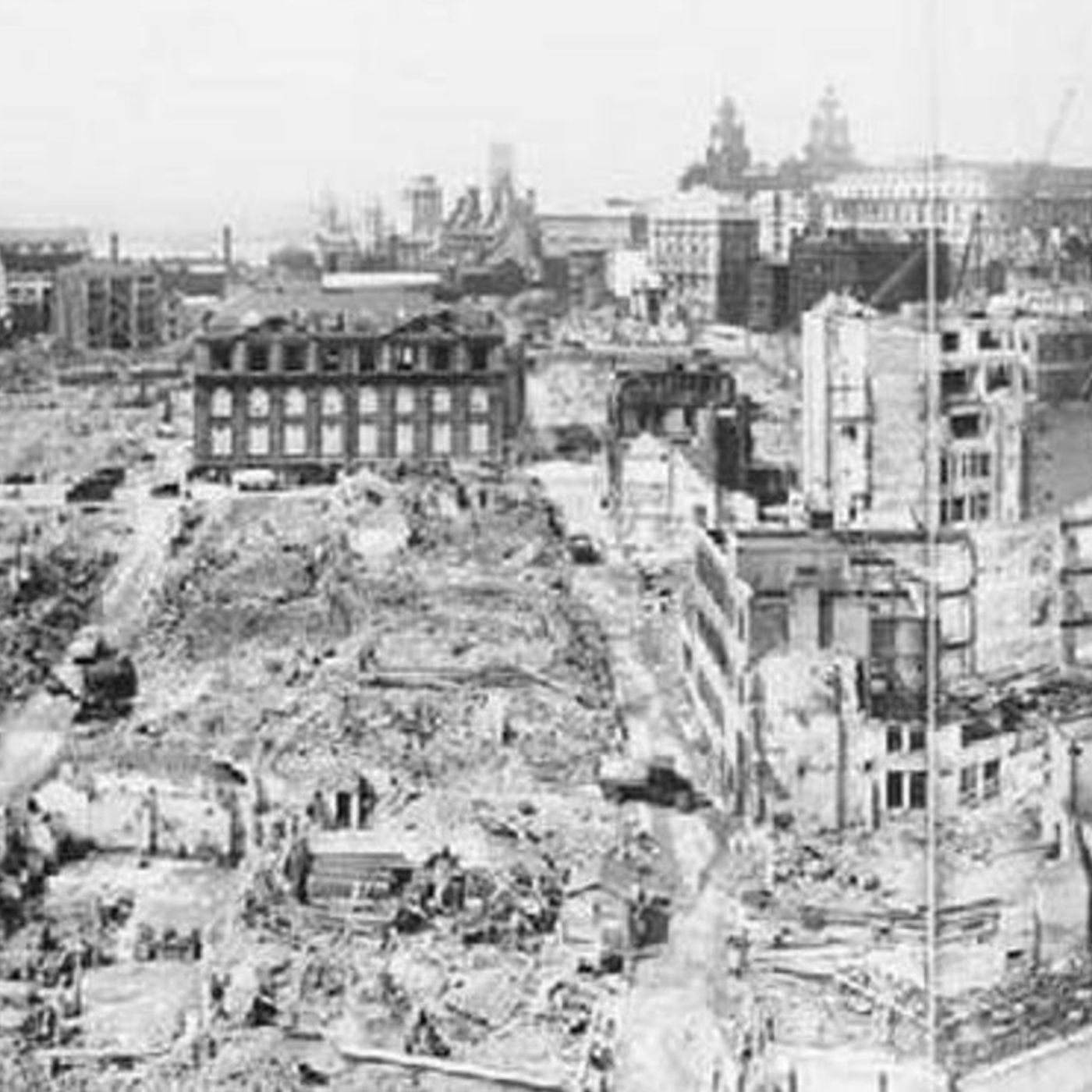
1942 LIVERPOOL
Hosts & Guests

Transcript
This is CBS Island the World. I'm John Baxter, continuing with Alan Filps. The book is the Red Hotel.
The story of the Metropolitan Hotel still is centered in Moscow. And the untold story of Stalin's propaganda war
We're focusing on the heroines of the Metropolitan Hotel. We now turn to one of the heroines and tragedians of the Metropolitan Hotel.
Her name is Natalia, but we begin introducing the senior correspondent, the grand old man of covering Moscow, 17 years, 16 years, 15 years, depending on where you are in the war.
His name is Cholerton. He lives in an apartment that looks like a dorm room from a graduate party that ended badly.
It's a shambles and it's not heated, but Cholerton continues to turn out copies because he's very famous as a correspondent from the Soviet experiment.
This means from Stalin to the purges and into the war.
Alan, what do we need to know about Cholerton's reputation at the time and let reputation ever since before we meet Natalia?
Cholerton was unique in that he was the only correspondent who had stayed or been allowed to stay since the 1920s.
So he'd been seeing the rise of Stalin, seen the show trials, the purges, and then the beginning of the war.
He was an eccentric intellectual. He could have had a career as a Cambridge historian, but he decided that all he wanted to study was Russia and the only way he could work was a journalist.
So he had a unique encyclopedic knowledge of everything that happened in the past 15 years.
Most of it, of course, he couldn't get past the sensor, but he was very generous with briefing the blow-ins, the correspondence who passed through Moscow.
He would tell them everything he knew. In fact, it was pretty difficult to stop him talking because he knew so much he would come up in a sort of tsunami of recollections jokes and reminiscences.
The Russians tolerated him because in some way he seemed to be part of the landscape.
He had a beard like a 19th century intellectual. He was very knowledgeable about Russian culture and literature.
But in the middle of the war, he suddenly stopped filing. I used to work for the telegraph, indeed I worked for the telegraph in Moscow.
And when I started researching, I thought, why did Cholatan suddenly disappear from the pages of the telegraph?
And when he died, the obituary was about two paragraphs, and the obituary writer didn't seem to know anything about him or to have bothered to find out.
So I thought, I'm going to find out what happened to him. Well, basically, what happened to him was he knew too much. He was telling the largely non-Russian speaking inexperienced reporters who came through Moscow too much background.
And the Russians took the opportunity of him going on a break to Britain to fail to renew his visa.
And the British embassy moved heaven and earth to try and get him back, but they just said, nope, we're not letting him back.
And I discovered from the archives that his translator, who he'd worked with for many years, was the love of his life, though in fact he had been married to someone else.
And as part of the purge of Cholatan, she was arrested, and she was sentenced to 10 years in the Gulag, and her daughter to 15 years, solely because they've been working allegedly telling too much of the truth to Cholatan.
So Cholatan was stuck in Britain, and he did hear second and third hand what it happens to the love of his life and her family.
But he never got in touch with her again. He thought if he did get in touch even after Stalin's death, it would be bad for her.
So that the most important relationship in his life was cut. He never wrote a word about Russia. He could have written the definitive book, I think, about that period.
But he felt if he put pen to the paper, if he wrote anything about Russia or said anything in public, it would be bad to Natalia.
So he was well and truly silenced from 1943 onwards till he died.
Between 1941 and 1943, however, he was the centerpiece of all of the other correspondents in competition with him.
I believe there were gatherings at his apartment. Natalia was always the hostess, the well informed hostess. He worked with her for 16 years.
She had a family, too, and her family watched that work, and they ate better. They performed better because of Natalia's work. She held him together.
And I understand that he was anxious about her once he'd left. He thought they'd let him back because he'd been there for so long.
He even wrote, you report, he wrote a letter to Stalin, a cringey worthy letter, a begging Stalin to let him back in. Certainly, Cholotin knew by that time why he was being kept out, didn't he? No?
He did know why. There's Natalia, even though she and Cholotin were known to be intimately attached.
She had a husband who was who was an engineer at the Stalin Motorworks, one of the biggest factories in Moscow, and the fact that there was some connection, albeit rather distance between Cholotin and an important munitions factory during the war was used to fabricate the charge of espionage against him, which of course was completely ludicrous.
Yes, they accused her husband as my memory of the scene, and then they accused her. And we need to need to emphasize here for Alan for a younger audience, the NKVD constructed these accusations.
It wasn't just that that happened in the show trials of the 30s. It was still going on. It was a style that they had, even if they didn't herited it from the NKVD,
who'd been executed before they joined the NKVD. So there was never any proof there was an allegation. And once you were accused, I get the understanding there was no reprieve, none whatsoever. It was just going to get worse for you.
I think once you'd been arrested, there was no actual trial. You were just brought, brought before three judges. The accusation was read out, and then a certain sentence was delivered.
Anyone being found innocent was extremely rare, maybe two or three percent or something like that. It almost never happened.
Once you'd been arrested, you would be held in pretrial detention and interrogated sometimes every night for 13 nights and kept awake in the daytime in order to force a confession.
But even if the accused never confessed, there was still a guilty.
Also, Charlton had been married before. Was still married, I think. I don't know. Divorce was always arbitrary. He had a daughter, Katarina, Katja.
Yes.
And you've spoken with Katarina.
That's right. Yes. Yes. Yes. I went to see her. She's living in London.
She married a British diplomat, quite a well-known one. So she was Katarina, Katarina Porter. She had a wonderful collection of photographs of Charlton.
And when I rang her up, got her on the phone and said, I'm writing about, I'm writing about British and American journalists in the metropolitan. She immediately said, Ah, you're interested in my father.
Anyway, so she remembers very clearly going to visit her father when she was probably early 20s.
And a message had just arrived from Moscow through what means I don't know from Natalia to tell Charlton that she'd been released from the Gulag after Stalin's death.
And there was a debate in the family about what to do. And it was decided that it would be too dangerous for him to respond to her, because that could lead to her having another accusation, another arrest and spending more time in the Gulag.
So they never spoke again.
We do not know Natalia's fate, is that correct, Halle?
We do know that she was, she was, she spent the years from, but would be from 1943, at least until 53, at least 10 years in the Gulag.
She did survive. She was, she was released after that. We have no information.
It's very hard to follow these things up in any case. And when all journalists are suspected of being spies, it's harder these days.
That's part of the irony of talking to Alan. He was working on this book when the war started in Ukraine. And so much of the paranoia that is commonplace when you read about the Soviet period has returned.
And it's, it's good that we have this version of the stories of the 1940s because it begins to resemble the stories of the 2020s.
We turn now to another heroin who also met an unlikely and tragic fate, her name Valentina.
The book is The Red Hotel, The Metropolitan Hotel, and the untold story of Stalin's propaganda war. Alan Phillips is the author. I'm John Batch.
Stay tuned for more of CBS Eye on the World with John Batchler.
That's how much money and refunds the IRS flanked for possible identity fraud. But it's not all grim news.
Lifelock monitors millions of data points per second and alerts you to threats you could easily miss on your own.
If your identity is stolen, they'll fix it. Guaranteed.
Save up to 40% your first year. Visit lifelock.com slash iHeart. Terms apply.
Here's the truth. You could literally be adored by everyone and then come home and still get completely ignored by your own cat.
It's classic cat behavior. But new Shiba Premium Pure A is a lickable treat that changes all that.
Their protein rich made with bone broth and have the smooth creamy texture cats go crazy for, especially when it's hand fed.
Yeah, it's more than a treat. It's a fast pass to favorite human status.
So feed your cat Shiba and go from totally ignored to truly adored in just 12 days, guaranteed or your money back.
Learn more at Shiba.com.
More from The John Batchelor Show
View all episodes →
S8 Ep551: 1. Jeremy Zakis details severe flooding in northern Australia, explain...
The John Batchelor Show
Mar 8, 2026·9:43·failed
S8 Ep551: 4. Jeremy Zakis recounts a neighbor mistaking a venomous red-bellied b...
The John Batchelor Show
Mar 8, 2026·7:53·completed
S8 Ep551: 2. Jeremy Zakis explains Australia’s T20 World Championship exit and c...
The John Batchelor Show