About this episode
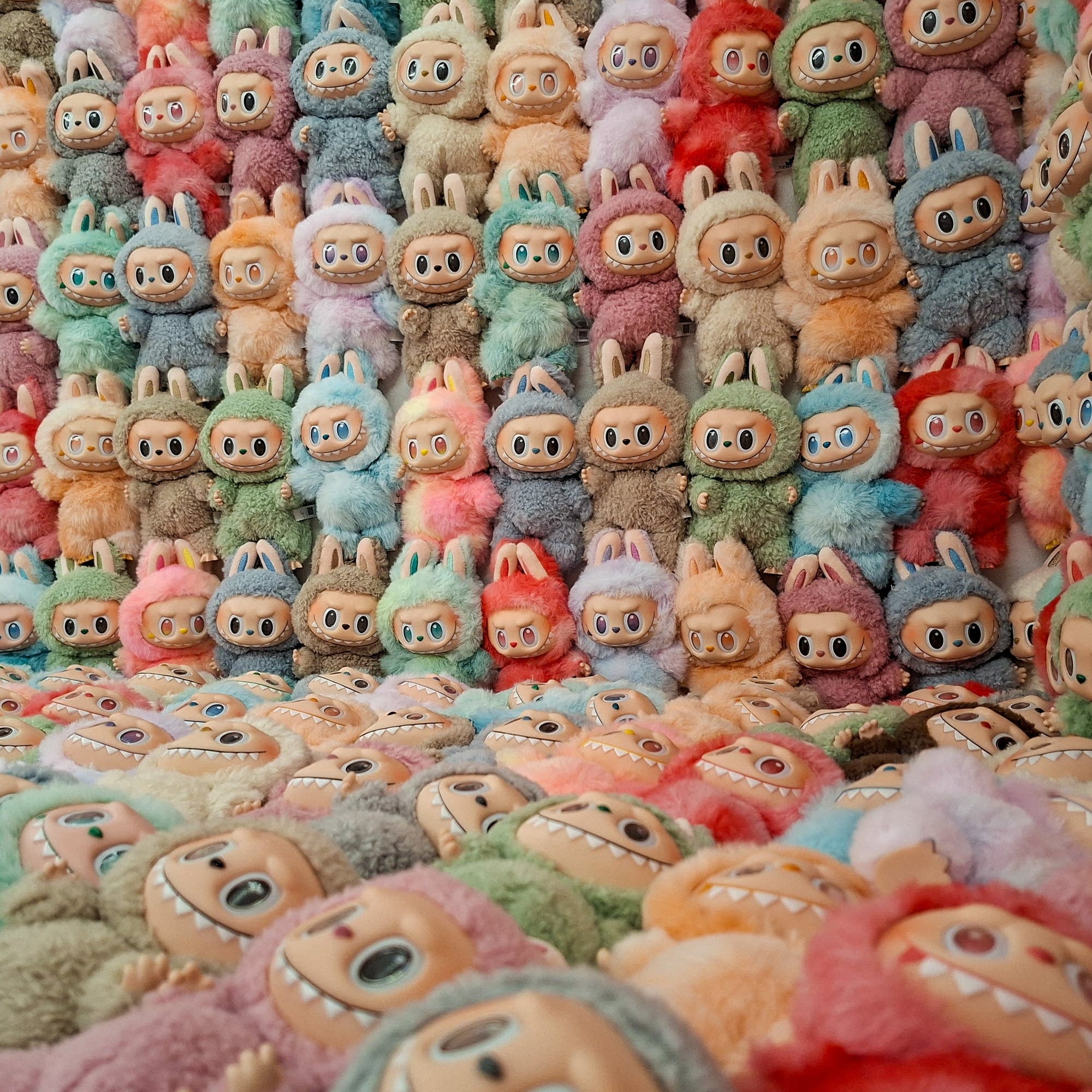
Looking for an exclusive pastel Trader Joe’s mini tote? How about the latest Labubu? Once a staple of sneaker and streetwear, the “limited drop” release model is popping up all over the place. In this episode, find out why every brand seems to be chasing the “drop.” Later, we spill the tea on office gossip and what it’s like to run a dance studio. Also: A new survey shows 9% of Affordable Care Act enrollees are now uninsured after subsidies expired.
Every story has an economic angle. Want some in your inbox? Subscribe to our daily or weekly newsletter.
Marketplace is more than a radio show. Check out our original reporting and financial literacy content at marketplace.org — and consider making an investment in our future.
Get every episode summarized
Each time Marketplace publishes, we email you a written briefing from the transcript — the topics, who appeared, and any specific claims, with the ad reads skipped.
Email me new episodesFree for 3 shows. No card needed.
Hosts & guests


Transcript ready
404 searchable segments. Every word is indexed and playable.
Full transcript
Marketplace — Shop for “the drop”. Machine-transcribed; use the interactive transcript above to jump the player to any line.
This Marketplace podcast is supported by Vantage Score. The modern credit score used by nine of the ten largest banks, over 3,700 companies, and now approved by Fannie Mae and Freddie Mac. Vantage Score. Trended data, alternative data, reduced risk. This message is brought to you by the Capital One Venture X card. Venture X offers the premium benefits you expect, like a $300 annual Capital One travel credit for less than you expect. Elevator earned with unlimited double miles on every purchase, bringing you one step closer to your next dream destination. Plus, enjoy access to over 1,000 airport lounges worldwide. The Capital One Venture X card. What's in your wallet? Terms apply, lounge access is subject to change. See CapitalOne.com for details. It's Friday, so we're going to do our wrap of the week's economic news. Plus, a little healthcare and retail. Then some office gossip. From American Public Media, this is Marketplace.
In Denver, I'm Amy Scott, Infer Kai Ristall. It's Friday, March 20th. Good to have you with us. A lot has happened in this economy in the week gone by. The effects of the ongoing war. A fed meeting. Some data on inflation and housing. And we only have six minutes to talk about it. With our Friday guests, Sue Deep Ready joining us from MS now. And Amara Amokwe with Bloomberg. Welcome back to both of you. Hi. Hi Amy. Amara, I'll start with you because you cover the fed. It was, you know, maybe not the most exciting meeting this week in terms of interest rates staying where they are. But there was some interesting discussion in Powell's press conference, you know, about how the fed is thinking about the economy right now. What stood out to you? Well, what stood out to me was how much chair Powell kind of emphasized that fed policy makers at this point are really looking for progress on inflation. I think many fed watchers interpreted chair Powell's comments as kind of hawkish.
She was asked about the situation that has originated around the war there. And he kind of said, look, we had inflation that was above our 2% goal even before this conflict. We think a lot of that overshoot is due to tariffs. And we really need to see progress on inflation before we can even think about how we might approach any inflationary pressures that might come from the energy shock that we're seeing right now. And so Powell really was kind of emphasizing there that right now policy makers are really squarely focused on getting inflation progress, seeing inflation progress. I think he also talked a lot about the fact that policy makers really just don't know there is so much uncertainty out there as they try to assess what's happening in the Middle East and what implications that might have for the U.S. economy. And so really, officials are in weight and sea mode and they're going to be following inflation expectations. They're going to be following how long this energy shock lasts. And so really, we're in weight and sea now. Yeah, there was a lot of wheat just don't know.
We'll find out when we get there. So deep, I thought something interesting that came up was about the state of the job market. There has been some concern about that weaker report we had earlier this month, the employment report, plus some pretty high profile layoffs. But Powell really said he's focused less on the rate of job creation and more on the ratio of jobs to available workers because the supply of workers has really come down because of immigration policy. What did you make of that? Yeah, that's right. We're in a new paradigm here in terms of where job growth needs to be, just to have that break-even level when you don't have immigration and we don't have employers necessarily shedding jobs. Jobless claims are still relatively low. So there are no real signs of crisis here. It's just a very weird world to be in where we might be able to look at these monthly job numbers see that they're fairly close to zero and not panic over that.
That's kind of a wild idea. Now, the risk there is that when you're that close to zero, something can come and tip the scales and that's the problem right now. Obviously, when you have a war and oil prices going up as fast as they have been going up and eating away consumer spending, that can certainly hit in the services economy, how people spend at restaurants, how people have disposable income to spend, and that can actually filter through the economy. But that takes more than just a few weeks, takes months to actually derail the economy. And so the demand and supply side of the labor market is still an open question and not something that Chair Powell is panicking over. Another thing that came up, Amara was this idea of stagflation risk, that word's getting thrown around a lot because of high oil prices. And that would be stagnant economic growth combined with high inflation and high unemployment. But Powell really batted that idea down. Yeah, he threw cold water on it.
And as the people were just talking about, there are a lot of reasons to think that the labor market is maybe somewhat in balance. As Chair Powell was pointing out inflation, isn't on this sort of runaway trajectory like it was in the 70s. But at the same time, I think like stagflation, some people, I think when you think about it, it's more of a question of how are people feeling about the economy? And are people really feeling that the labor market is strong? Are people really feeling that inflation is sort of well controlled? And we know that that's not the case, right? We know that even though the unemployment rate has held relatively steady, if you're looking for a job, it's not necessarily easy to get one. The hiring rate isn't great. And we know that a lot of Americans still care about affordability and that that's a top concern for many Americans. And so I think sometimes like we're sweating here, hair's about like the term itself. But I think for a lot of people, the economy doesn't feel really great right now. Yeah, so to eat more about the price of oil, the U.S. is battling to reopen the state of Hormuz. And yesterday, the administration even floated lifting
sanctions on some Iranian oil, which is kind of wild, given that we're currently attacking that country. But how long before this starts really hitting the U.S. economy and how much can be done about it? We are on the cusp of that price of a gallon gasoline, up a dollar over the last few weeks. The administration is taking a lot of steps to just calm the water so to speak. Iranian oil, Russian oil, things that you wouldn't have expected them to provide relief for in the near term. It does provide enough support if this wore only lasts a few more weeks. But if you had last month said that the straight of Hormuz would be closed for three weeks without oil getting out when there's ongoing bombing and the barrel of oil is still under a hundred dollars. I think people would be surprised by that. You'd think we'd be in a much, much bigger crisis. And so things are actually not turned out as bad as they could be.
It just, if this goes on for more than a couple more weeks, there's going to be a big, big problem that will start hitting consumers, businesses, everybody, not just in the U.S. but around the world. And that is going to be painful. Yeah, well, there's so much I wish we could talk to you about. But we're out of time. Thank you both so much. Amara Amocoa at Bloomberg City, ready with MS now. Have a great weekend. Thanks, Amy. On Wall Street today, just yikes. We'll have the details when we do the numbers. We got some new data this week about how many people dropped health insurance this year
after Congress let those enhanced subsidies for affordable care act or Obamacare plans expire. 9% of people who had a plan last year are now uninsured. That's based on a survey from the Health Policy Nonprofit KFF, people in their late teens and 20s were twice as likely to drop coverage as those over 50. And most people who did keep coverage say it's more expensive this year. Marketplaces Samantha Fields has more. Buying health insurance through the Affordable Care Act is twice as expensive this year as it was last year on average. For some people, it's three or four times more expensive. Even so, Ashley Curzinger, a pollster at KFF, says most people chose to sign up again. What it says to me is that people really value having health insurance and so they're willing to make significant changes to their lifestyle and to their household expenses to be able to afford that coverage. More than half of people say they're cutting back on other things so they can pay their insurance premium and even though they currently have health insurance,
that doesn't mean that they're going to be able to afford their health insurance for the entire year. One in six say they're not sure they will be able to afford to keep paying their premium. Lauren Adler at the Center on Health Policy at Brookings says when people were signing up during open enrollment, there was still the possibility that Congress might extend the subsidies. And there was probably some folks hoping that the premiums wouldn't go up as much as they ended up going up. Others may have figured I'll sign up for now and try to make it work, says Sabrina Corlett at Georgetown Center on Health Insurance Reforms. I do think this is going to be sort of like a slow moving train wreck in the sense that many people may manage to pay that first month or second month and then start to drop off later in the year. Many people are also paying more now for worse coverage because in order to afford the higher premiums, they had to sign up for a lower value plan with a high deductible. And of course, when you have a deductible that's like $67,000 a year, it's effectively being uninserved because for a lot of folks,
it's easier to fly to them then and pay a $6,000 deductible. And if you can't pay your deductible, you can't really use your insurance. I'm Samantha Fields from Marketplace. We talked in the wrap about the low higher, low fire job market that's been with us for a while now. It's a big change from back in the pandemic when workers had a lot more power and people were switching jobs right and left or even changing careers. Juanita Gabel of Cincinnati was one of them. We talked to her back in 2021 after she was laid off from her jobs as a dance and fitness instructor in Cincinnati and she decided to go back to school. The hope was to make more money in a more pandemic and recession-proof field.
Here's the update. Five years and a move to Chicago later. With the cost of school and the fact that I would have to take out a large amount in loans, I decided it might be better to take advantage of that job market. And what I found is that often employers were promising more than what they could genuinely offer. And I decided that it would be better for me to be in business for myself. So my business is called First Dance Chicago. It is one ST. I'm going to have a lifetime of explaining one ST at the beginning of it. But it is a small studio that focuses primarily on teaching couples their first dance. I started on my own basically in the end of July almost two years ago. It's absolutely amazing. I love it. It is equally terrifying. I was completely terrified.
Come November. But then you know there is something in the wedding. I hate to say the wedding industry. That's kind of known as engagement season. So when January rolled around and especially over Valentine's Day, there was a lot more traffic. And so my sales have gone up like 300 percent at least since the same time last year, which is great. So hopefully I can just keep that trend moving in that direction. So I teach fitness classes and I also occasionally work catering events. So those things are all kind of fun. You know, the day that I am not doing those, that's fine. You know, I'm going to be good with that. But in the meantime, it definitely does help to make ends meet. There is work every day, whether it's through a side hustle or through my own studio. But being able
to call the shots, I mean, there's nothing that is a better trade off. I mean, I'm happy to work every day if I get to call the shots. Totally happy. Onee the gable there. She's owner of First Dance Chicago. Coming up, like one time I came in and they were like, just so you know, we're dealing with an octopus problem. Not your typical workplace. But first, let's do the numbers. The Dow Jones industrial average slid 443 points. 1% a close of 45,577. The NASDAQ also gave up
443 points, 2% to finish at 21,647. And the S&P 500 lost 100 points, 1.5% and at 6506. For the week, the Dow dropped 2 and 1 10th percent. The NASDAQ also fell 2 and a 10th percent. S&P 500 dropped 1 and 9 10th percent. What could possibly be wrong? Bonds fell, the yield on the 10-year T-note rose to 4.38%. You're listening to Marketplace. This message is brought to you by the Capital One Venture X card. Venture X offers the premium benefits you expect, like a $300 annual Capital One travel credit, for less than you expect. Elevator earned with unlimited double miles on every purchase, bringing you one step closer to your next dream destination. Plus, enjoy access to over 1,000 airport lounges worldwide. The Capital One Venture X card. What's in your wallet? Terms apply. Lounge access is subject to change. See CapitalOne.com for details. This Marketplace podcast is supported by the University
of Illinois Geese College of Business. Earn a world-class MBA degree completely online at your own pace. Through their online MBA program, you'll learn from amazing faculty and network with classmates on a global scale without having to put your career on hold. Take your career to the next level by applying what you learn in real time. Get started at onlinemba.illinois.edu. That's online mba.illinois.edu. This is Marketplace. I'm Amy Scott. The Starbucks Barista, the traitor Joe's mini-toat crocs new Lego clog. These are just a few examples of recent limited edition products that have driven people to stores and into long lines to buy one before they're gone. Ellen Cushing, a staff writer at the Atlantic, wrote about the rise of the product drop and why every brand seems to be doing it. Ellen, thanks for being here. Thrilled to be here to talk about this
pressing matter. All right. For the uninitiated, what is a drop and how do these things typically work? So a drop is just a slightly different way of releasing products instead of companies making goods at the rate of expected demand and releasing them without fanfare. What they're doing instead is producing in intentionally low quantities and then releasing those products in these discrete hyped event product launches. And it seems like everyone's doing it these days but it hasn't always been this way. How did it sort of begin? In the US it really started with like sneaker culture and streetwear. So the most famous company in this realm is Supreme which in the 2000s started releasing its products in these super limited quantities. They say that they did that for practical
reasons. They just you know did not have large production capabilities and so they didn't have a ton of stuff. What they did was they would say like we're releasing this product today and we're going to release this product next week and we're going to release this product the week after rather than putting everything they had on shelves at once. Yeah and you point out I mean luxury brands have been doing this for a long time right? If there were ubiquitous Birken bags they would not be worth so much but you know if everybody's doing it what's the point? Yeah I mean this is sort of the moment we're at now in the story I call it late stage drop. It's like big companies that make their stuff in factories like Stanley Cup and Skims and a huge number of snack food companies. We're also releasing in drops and the stuff itself isn't really special. It's not a pair of sneakers that our hands ditched. It's not a bag that was made by artisans. It's just a coffee cup
that was like injection molded and now what you're seeing is it's getting knocked off online. Right or just sold on eBay for much more than the shopper paid. It seems like the real winner here is the collector who gets it in time to put it online and sell it for an inflated price. Yeah I mean this is a huge industry the people who stand in line at Trader Joe's. Trader Joe's has done a very good job of this. They have these ultra limited edition pastel colored tote bags last year that were incredibly popular and they retail for $2.99 in most markets but online you could get them for like $500 because they were so limited. Those people are making $2.99. Yeah sorry $2.99 you know less than the cost of most things for Trader Joe's. It's quite a market itself. Yeah and so if you're if you're happy to get in line at three o'clock in the morning for one of those then you're you're making a couple hundred dollars an hour which is pretty good. Well you call this
late stage drop. It also speaks to late stage capitalism. I mean how how much longer do you think this sort of frenzy goes on before people would kind of like shrug at the latest drop of a factory produced item. You know we've seen that the sneaker resale market is really cooling off. At the same time we're seeing the market for result like lobubus increase and get hotter so who really knows how long this will last but I find it interesting that people are no longer as hype about limited edition sneakers as they were 10 years ago. Should we suggest that maybe people are getting tired of it. All right Ellen Cushing had the story in the Atlantic. I recommend reading it. It's it's fun. Thanks so much Ellen. Thank you. Everyone loves some good office gossip. Some stories even become part of the company lore.
Around marketplace there was that reporter who got tipsy on absent that a happy hour and had a revelation about traffic circles and the editor who was rumored to take lunchtime naps in their car. We think of gossip as maybe a guilty pleasure something we shouldn't do but can't help it. Turns out there are some surprising benefits though. Marketplaces Stephanie Hughes has the inside scoop. Allison Rand used to work in a university library in central Illinois and when she started her shift she'd always get the gossip about what had been going on that day. Like one time I came in and they were like just so you know we're dealing with an octopus problem. Not the sea creature but eight undergrads dressed up as an octopus. Running around the library as one giant unit as an octopus and I was like oh okay Rand loves gossip so she immediately texted her friends to tell them this might be happening. I just like couldn't keep it in. Gossip as defined by academics who studied it
isn't necessarily malicious it's anytime you talk about a third party who's not present. Sometimes colleagues will bond over silly stories about an undergrad octopus. Other times gossip is shared in order to feel seen. For example Rand says at another job there was a lot of gossip between her and her co-workers. They'd have secret meetings about how to deal with their supervisor. Oh it's it was so cathartic I mean it was like oh my god I'm not alone like I'm not the only person who's having this problem I'm not the only person who is coming up against these issues. This kind of gossip can help workers find emotional support. They want others to validate their feelings and they want to be able to express and invent their emotions. Steven Lee studies gossip as a professor of management at Washington State University. And that is beneficial for the person sharing that gossip. What's not helpful is when people share stories meant to tear someone down. But often Lee says gossip shared in order to protect a coworker. This is where someone might say hey you know you might want to double check someone's work just because I've noticed they've had some issues lately.
Lee says this kind of gossip can strengthen relationships between colleagues and lead to more cooperation in the workplace. Meanwhile Peter Capelli who studies human resources at Wharton says gossip can also help people learn what it takes to get rewarded at a company or punished. Especially if people get fired it is really important for everybody else to know why. That shapes a lot of the culture of the organization you know what are we holding people accountable for. And most employers don't want to send a note around saying you know Peter got fired for this. But word does get around and they kind of know it will get around. Capelli says gossip can help people learn what a company is really serious about. Say, reigning in workers who are abusing expense accounts. But spaces for those conversations are disappearing. About a quarter of us now work from home either some or all of the time. Which means a lot of the communication is over company software. And it remembers what you said. There's a lot of recording and transcribing and analysis going on. Josh Berson's an industry analyst who studies HR.
He says more workplace conversations are being monitored these days. And it can be easy to forget that. Say you've got an AI note taker in a virtual meeting with a bunch of people in it. Most of them leave but to stick around and start saying what they really think. Then when the meeting is over the AI note taker sends out the notes from the meeting. Including the gossipy part at the end. I think that's happening all the time in companies. I think people are stripping across this a lot. One person who learned this the hard way is Jenna. She works at a tiny consulting firm that's fully remote. They use Slack a kind of messaging software. And she had a private channel with two co-workers she was especially tight with. A lot of the gossip was like observations about why are we all feeling like stressed or burnt out. We're not using Jenna's real name because she still works at the company and she doesn't want to lose her job. She says they were also critical of their boss the CEO. Then one of Jenna's colleagues who'd been in the channel left the company and her boss pulled Jenna and the remaining co-worker into a meeting.
She was just like I don't like the attitude you guys are bringing. I don't like that you guys have talked to each other about things. Jenna doesn't know for sure that her boss saw the messages. But then she also started bringing things up that were mentioned in the Slack channel. Jenna says she learned never to put her opinions on company software like that. So now we just keep our group chat on our like phones you know iMessage. Even in the remote world says researchers Steven Lee, gossip finds a way. And hey not all of it is about bad behavior. People could be sharing about someone who totally nailed a presentation. Lee says that nice kind of gossiping can be contagious. Can I have like a positive spiral type of effect? So my marketplace co-workers want to share something with me and i'm here. I won't tell anybody. I'm Stephanie Hughes from Marketplace. Sure Stephanie we would love to hear your stories of office gossip. You can share them at Marketplace.org.
This final note on the way out today. After nearly a hundred years CBS news is shutting down its radio service. The company owned by Paramount Skydance says the service will end on May 22nd. Cutting off its signal to 700 stations around the country. Founded in 1927 the radio service was home to legendary broadcasters, including Edward R. Murrow and Douglas Edwards. The announcement came amid more layoffs at the news division. And as Paramount prepares to buy Warner Brothers Discovery, which owns news competitor CNN, for some 110 billion dollars. Our theme music was composed by B.J. Letterman, Marketplace's executive producer is Nancy Fergali. Joanne Griffith is the chief content officer. Neil Scarborough is the vice president and general manager. And I'm Amy Scott. Have a great weekend. Hope to see you back here on Monday.
This is APM. Hey David Brunkachio here. I hope you're well and that your passport is up to date. Because I am hosting a trip to Italy this fall. And you you are invited. Stay at a world-class Tuscan Villa. Step into the world of the Medici, the formidable family, whose influence and power help give rise to the Renaissance and the art we still celebrate today. And not to mention the banking system. We're going to visit the world's oldest bank, swim, and the thermal spa waters in Montecatini, and take in the art of the Ufizi. All of this, and then we'll try to put it all into context with great conversation over even better meals and wine tasting. Please join me and know this. Buying into this trip will provide essential support for public media. Discover more about this fall's Tuscan Villa adventure at marketplace.org slash travel to reserve your spot today. That's marketplace.org slash travel.
More episodes


