scienceJan 2, 202637:54pending
Stellar Spectacles: January's Night Sky Highlights
About this episode
SpaceTime with Stuart Gary Gary - Series 29 Episode 1
In this episode of SpaceTime, we delve into extraordinary cosmic phenomena and the ongoing exploration of our solar system.
Cosmic Matter Ejected at 20% the Speed of Light
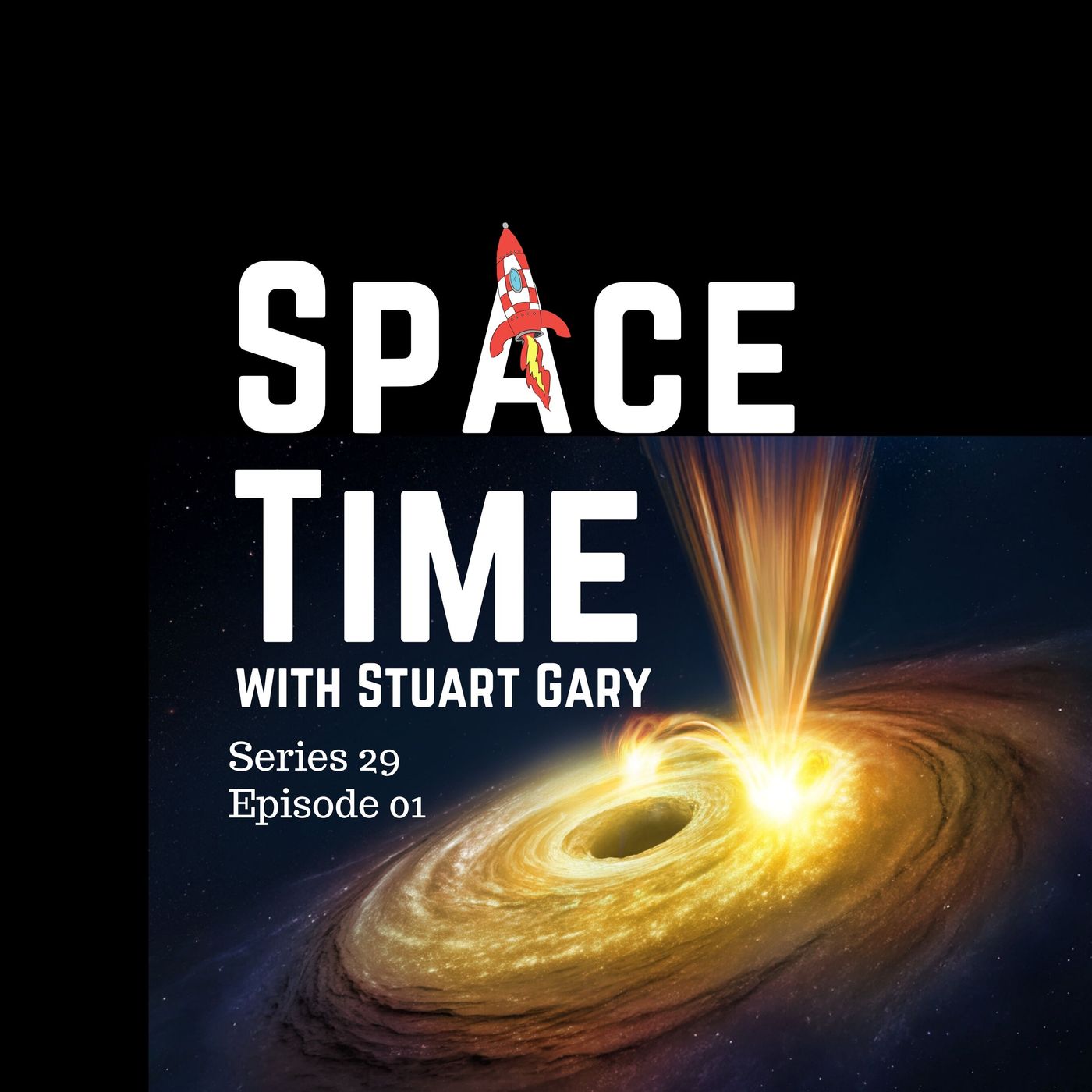
Astronomers have made a groundbreaking observation of matter being ejected from a supermassive black hole at the center of the barred spiral galaxy NGC 3783, located 135 million light years away. This matter, propelled at an astonishing 20% the speed of light, challenges previously held notions about how such superluminal jets are powered. The findings suggest that a sudden change in the magnetic field, rather than radiation, may be responsible for this high-speed outburst, providing new insights into the mechanisms of black hole dynamics and their impact on galactic evolution.
Wind-Sculpted Landscapes on Mars
NASA's Perseverance Rover continues its exploration of Mars, focusing on megaripples—large sand formations shaped by wind. These megaripples, some reaching up to 2 meters in height, offer scientists a unique opportunity to study current Martian atmospheric processes. As the rover investigates the Honeyguide region, researchers hope to gain insights into the planet's wind patterns and surface chemistry, which will be crucial for future human missions to Mars.
Potential Ocean Beneath Uranus's Moon Ariel
New research suggests that Uranus's moon Ariel may harbor a vast subsurface ocean, potentially more than 170 kilometers deep. This discovery, reported in the journal Icarus, highlights Ariel's unique geological features and raises questions about its past interior structure and orbital dynamics. The study indicates that understanding Ariel's ocean could provide crucial context for the moon's surface fractures and cryovolcanic activity, emphasizing the need for future missions to the Uranian system to confirm these findings.
www.spacetimewithstuartgary.com
✍️ Episode References
Astronomy and Astrophysics
Icarus
NASA Reports
Become a supporter of this podcast: https://www.spreaker.com/podcast/spacetime-your-guide-to-space-astronomy--2458531/support.
(00:00:00) This is Space Time Series 29, Episode 1 for broadcast on 2 January 2026
(00:00:47) Cosmic matter ejected from supermassive black hole
(00:12:30) Perseverance Rover studies wind-sculpted megaripples on Mars
(00:20:10) Evidence of a subsurface ocean beneath Uranus's moon Ariel
(00:25:00) Skywatch: January night sky highlights and celestial events
In this episode of SpaceTime, we delve into extraordinary cosmic phenomena and the ongoing exploration of our solar system.
Cosmic Matter Ejected at 20% the Speed of Light
Astronomers have made a groundbreaking observation of matter being ejected from a supermassive black hole at the center of the barred spiral galaxy NGC 3783, located 135 million light years away. This matter, propelled at an astonishing 20% the speed of light, challenges previously held notions about how such superluminal jets are powered. The findings suggest that a sudden change in the magnetic field, rather than radiation, may be responsible for this high-speed outburst, providing new insights into the mechanisms of black hole dynamics and their impact on galactic evolution.
Wind-Sculpted Landscapes on Mars
NASA's Perseverance Rover continues its exploration of Mars, focusing on megaripples—large sand formations shaped by wind. These megaripples, some reaching up to 2 meters in height, offer scientists a unique opportunity to study current Martian atmospheric processes. As the rover investigates the Honeyguide region, researchers hope to gain insights into the planet's wind patterns and surface chemistry, which will be crucial for future human missions to Mars.
Potential Ocean Beneath Uranus's Moon Ariel
New research suggests that Uranus's moon Ariel may harbor a vast subsurface ocean, potentially more than 170 kilometers deep. This discovery, reported in the journal Icarus, highlights Ariel's unique geological features and raises questions about its past interior structure and orbital dynamics. The study indicates that understanding Ariel's ocean could provide crucial context for the moon's surface fractures and cryovolcanic activity, emphasizing the need for future missions to the Uranian system to confirm these findings.
www.spacetimewithstuartgary.com
✍️ Episode References
Astronomy and Astrophysics
Icarus
NASA Reports
Become a supporter of this podcast: https://www.spreaker.com/podcast/spacetime-your-guide-to-space-astronomy--2458531/support.
(00:00:00) This is Space Time Series 29, Episode 1 for broadcast on 2 January 2026
(00:00:47) Cosmic matter ejected from supermassive black hole
(00:12:30) Perseverance Rover studies wind-sculpted megaripples on Mars
(00:20:10) Evidence of a subsurface ocean beneath Uranus's moon Ariel
(00:25:00) Skywatch: January night sky highlights and celestial events
Get every episode summarized
Each time SpaceTime with Stuart Gary publishes, we email you a written briefing from the transcript — the topics, who appeared, and any specific claims, with the ad reads skipped.
Email me new episodesFree for 3 shows. No card needed.
Hosts & guests
No transcript yet
This episode has not been transcribed. Request it and it moves to the front of the queue.
More episodes
More from SpaceTime with Stuart Gary

Comet Births and Neptune's Secrets
SpaceTime with Stuart Gary
Sep 11, 202622:27completed

Molten Planets and Solar Storms: Unveiling Cosmic Wonders
SpaceTime with Stuart Gary
Sep 9, 202634:16completed

Dark Matter Signals and Lunar Origins: Exploring the Universe's Mysteries
SpaceTime with Stuart Gary
Sep 8, 202625:39pending

Discovering Blazars and SpaceX's New Spaceport
SpaceTime with Stuart Gary
Sep 4, 202618:54pending