Loading...
musicinterviewseducation
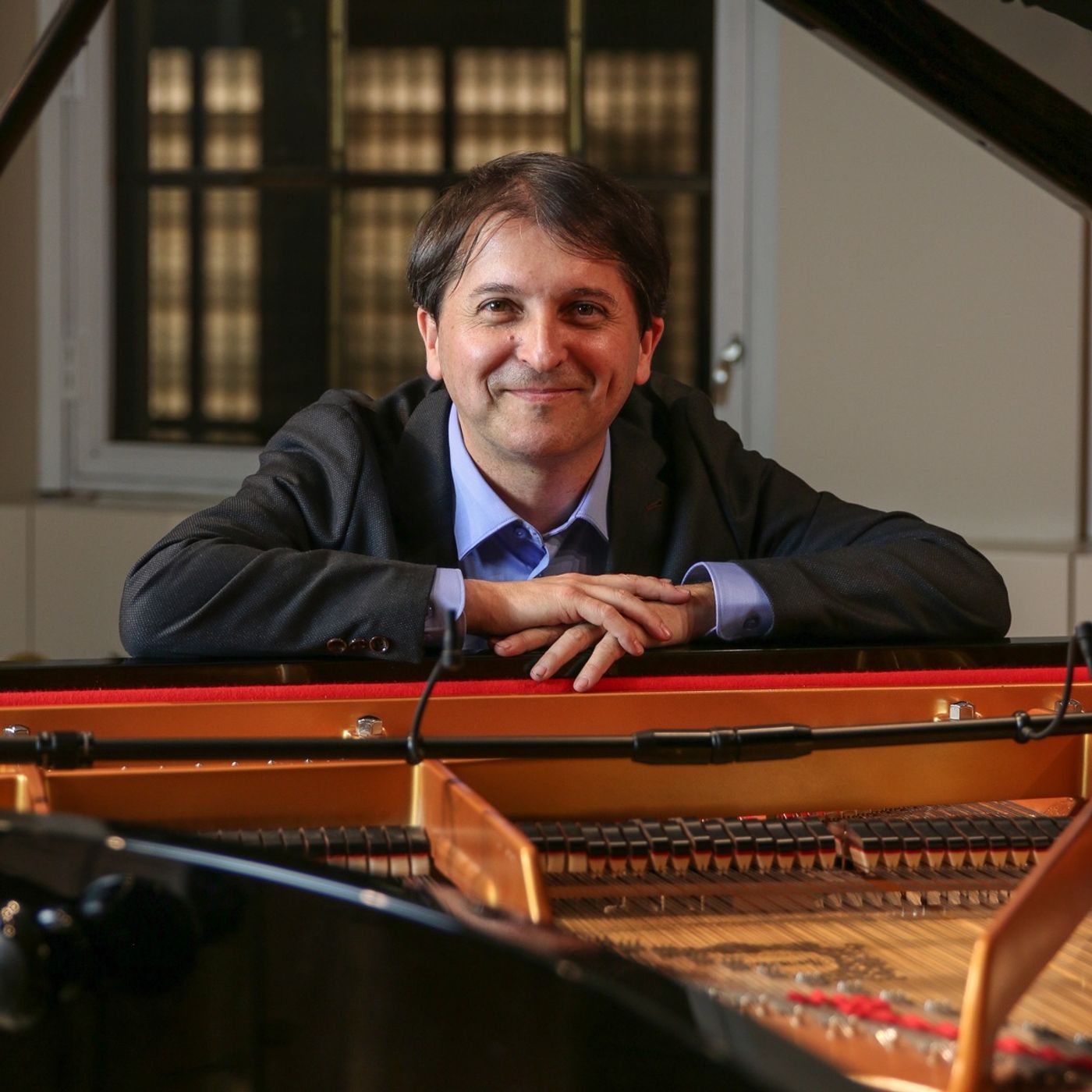
Tamir Hendelman - Israeli Born Award Winning Jazz Pianist. John Pizzarelli, Gladys Knight, Diana Krall, Tierney Sutton, Jackie Ryan, Natalie Cole And Barbara Streisand!
About this Episode
Tamir Hendelman is an Israeli-American pianist and composer. He has toured with drummer Jeff Hamilton. He’s recorded with superstars like Barbra Streisand, Natalie Cole and Paul McCartney. And he’s worked with Tierney Sutton and with Jackie Ryan, both of whom have been guests on this podcast.
My featured song is “Sea Journey”, from my debut album Miles Behind. Spotify link.
—-----------------------------------------------------------
The Follow Your Dream Podcast:
Top 1% of all podcasts with Listeners in 200 countries!
Click here for All Episodes
Click here for Guest List
Click here for Guest Groupings
Click here for Guest Voices
Click here to Subscribe
Click here to receive our Email Updates
Click here to Rate and Review the podcast
—----------------------------------------
CONNECT WITH TAMIR:
www.tamirhendelman.com
—---------------------------------------
ROBERT’S NEWEST RELEASE:
“MI CACHIMBER ALL STARS” is the new, expanded version of Robert’s single, “Mi Cachimber”, which he wrote for his father. Featuring Camila Cortina on Rhodes and Xito Lovell on trombone in addition to Benny Benack III and Dave Smith on flugelhorn, and Project Grand Slam’s rhythm section.
CLICK HERE FOR OFFICIAL VIDEO
CLICK HERE FOR ALL LINKS
—--------------------------------------
ROBERT’S RECENT RELEASE:
“MA PETITE FLEUR STRING QUARTET” is Robert’s recent release. It transforms his jazz ballad into a lush classical string quartet piece. Praised by a host of classical music stars.
CLICK HERE FOR YOUTUBE LINK
CLICK HERE FOR ALL LINKS
—---------------------------------------
Audio production:
Jimmy Ravenscroft
Connect with the Follow Your Dream Podcast:
Website - www.followyourdreampodcast.com
Email Robert - [email protected]
Follow Robert’s band, Project Grand Slam, and his music:
Website - www.projectgrandslam.com
YouTube
Spotify Music
Apple Music
Email - [email protected]
Hosts & Guests
Transcript
Hi, this is Tierney Sutton, I'm a jazz singer and a songwriter, and this is the
Follow Your Dream podcast with Robert Miller.
Hi everybody, I'm Robert Miller. Everyone has a dream. I followed my music
dream and now I engage remarkable creative artists from all around the world in
conversations about their lives, their craft, their creative journey, and showcase
some of the works that define them. Welcome to Follow Your Dream.
Hi everybody, welcome to another episode of the award-winning Follow Your Dream podcast.
With listeners worldwide on every continent in 200 countries, I'm Robert Miller your host.
My guest today is Tamir Handelman. He is an Israeli-American pianist and composer.
He has toured with acclaimed drummer Jeff Hamilton. He's recorded with superstars, like
Barbara Strison, Natalie Cole, and Paul McCartney, how about that? And he's worked with
Tierney Sutton and Jackie Ryan, both of whom have been guests on this podcast. And in
the middle or there about Tamir and I going to do what I call a song fest, I've asked
him to send me a handful of his best works. We're going to listen to a little bit of each,
just a taste so you get an idea of how good this guy is. And then we're going to talk about
it and all of that good stuff. And also you know by now that I like to feature a song
of mine in every episode, underneath the introduction, and at the end, that I always
try to make it relevant somehow to my guest. Okay, well listen to this. My featured song
is called Sea Journey. It's from my debut 1994 album Miles Behind. And I chose this
song because it's a beautiful chick career song. And chick was one of my favorite pianists
of all time. He actually got in touch with me afterwards and thanked me for covering
his song. And I chose this because I've read the chick was also one of Tamir's favorites.
So I thought that that worked. So Tamir, Handelman, welcome to the Folly a Dream Podcast,
baby. It's so great to be here with you. It is a pleasure to have you here with me.
I tell you, okay, you know, I like to read everybody's bios and I like to pick out stuff.
It's kind of unusual from the bios to start with. And I know you're Israeli American,
but your grandmother was from Poland. My grandmother was from Poland too. They might have been
in the same stettle. Who knows? Tell me about that. What's your background?
You know, I'll tell you, with both my grandmother's came to Israel when they were four years
old. And I remember that she lived two apartments below us. And every Saturday night, we'd
have a big Shabbat dinner. She would sing. I would get inspired by that. And we would
watch an American TV show. And so they would be like, maybe a musical, like my fair lady.
And that's where I got my first start hearing these standards that we love to play so much
in jazz. Fantastic. Okay. Well, listen, my fair lady was a great show. Okay. And I understood
that you started on the organ. Am I right? Electric organ. I was walking down the Main Street
and Tel Aviv. And there was a big music store. The guy was demonstrating. And it sounded
like an orchestra to me. I ran home. I said, Mom, you got to get me one of these. And
she did. And the rest is history. All right. Was it a Hammond organ or what kind of
organ was it? It was an electric organ. And so you could really create an orchestra.
You can have a big band. You can have the bass pedals. Do a bass line. You can have a flute.
You can have a drum track. And it allowed me to have three hands in a sense. You know,
you can have the full orchestra, the full band. And I think that helped me as a writer and
as an improviser and coming up with songs as well. I'm sure you're right. Did you ever
have a Hammond organ or did you play a Hammond? You know, with the big Leslie cabinets and
all of that. I never did. But when we came to the US, when I was about 12, my parents
got me into this competition for Yamaha organ players. And that led to so many things.
Because after winning it, they sent us to Japan with a group of coaches. And we played
each other's original music, kind of classical meets jazz. One of the judges came up to me
and introduced himself. And he became a mentor. His name was Joe Harnell. He wrote music for
the Incredible Hulk and other shows. And so I had mentors who would take me to recording
studios to see them conduct music for TV, take me to jazz trio shows that they would do.
And it was a great education. All right. Now, you were about 12 years old. You said when
you were in that competition. Yeah. And you were playing jazz at that time? Yeah. I was kind
of, it was a mixture of a little jazz and a little classical. I started with really popular
music of all styles. So I would learn light classical, like Badenari by Bach. And then I
would learn a little Jobim song and maybe take the A train. And then gradually, after
during this competition, all of a sudden, I heard the piano in a different light. I said,
wow, the piano in itself is actually an orchestra. Because I started listening to people like
Bill Evans, Chikouria, Keith Jarrett, Oscar Peterson, Herbie Hancock. And listening more deeply into
instrumental classical music. And that's when I really started to take classical piano lessons,
jazz piano lessons and really get into that world. It's interesting because so many of the musicians
that I've had on the show, they all started with, you know, traditional classical music.
And they branched out from there. You kind of went the opposite way. Yeah. And I mean, even at
Eastman, when I went to school in conservatory, I studied classical composition because I thought,
well, that you cannot learn at a jam session, learning orchestration, learning conducting,
learning counterpoint. But my teachers would want me to focus on the classical. But I always insisted
on putting jazz and free improvisation in my concerts. And if you're originals in a classical
piece and just making it all about a collective music. Well, listen, you're speaking to the choir
here because I love all the things that you've been talking about. You know, I came of age
musically in the 1960s. I've spoken about this many times on the podcast. So that was kind of the
whole British invasion era in pop music. And then I segue into the jazz fusion era of the 70s.
And that's when I got introduced to Chick Korea, Herbie Hancock and some of the greats. Did you ever
go through the jazz fusion kind of era? I loved it. I mean, Chick was one of my main big
initial influences and inspirations. And later I became friends with him and it was very supportive.
And I got to actually sit in on one song with him. I was doing a recording in Switzerland
years later. And he was doing a solo piano concert. I came to the concert and his manager tapped
me on the shoulder and asked me if I wouldn't mind coming up and doing a duo with Chick and she
called me up. That was just a great memory. Oh, man, that's something else. All right, you got to
tell me about these superstars that I mentioned in my introduction. Tell me about McCartney. What happened
there? Well, I was invited by Tommy Lee Puma to join him to visit Paul at his studio in England.
So we can go through songs, help him pick the right keys because he was going to do this special
album called Kisses on the Bottom that Dan Crawl reduced. And I actually got to play on one of
the songs. And but it was a blast. He was so humble and down to earth and funny. And it was great
to be in the same studio where they recorded, you know, with the harpsichord from Sargent Peppers
and everything like that. He was quite a trip. There's a couple of people that have been on the
podcast that spoke about recording with McCartney. And they said that his advanced people gave certain
rules out, you know, you weren't allowed to take a photograph with them. You weren't allowed to
ask them about the Beatles. Did you have any of that stuff? None of that. Not it was very low key,
very informal and relaxed. All right, I'm glad to hear that. Okay, turned out at least with one
of the guys that had all those rules. He said McCartney raised the Beatles with him right away.
Okay, so he broke his own rule. All right, tell me about Barbara Streisand.
Yeah, well, I was invited to join a recording. Love is the answer. That's actually a lyric from a
song called Make Someone Happy. And Diana produced this one as well. And there were a few very
special pianists who were in that recording, Bill Charlotte, the great Bill Charlotte,
and Diana Crawl herself and Alan Broadband. And she wanted one more pianist. And so Jeff Hamilton
and John Clayton, with whom I've been in the big band for many years, recommended me. And so I came
and the first thing that she said is, do you know this song some other time, you know, Bernstein?
I said, of course, he made with the Bill Evans introduction. There's a classic introduction
that Bill Evans plays from his piece, piece, piece. And I played it. And he was just a wonderful
connection right from the beginning. And I ended up also doing a little tour with her promotional
tour. And one of the events was concerted the Village Vanguard, where she got her start,
where she first auditioned 60 years ago. And in the audience were people like Jimmy Cobb,
who played with her back then, Bill Clinton, et cetera, et cetera. And that was wonderful to be
a part of. And then I did a US and Canada tour with the full orchestra directed by Bill Ross,
wonderful conductor and orchestrator and composer. So beautiful experience from beginning to end
with the smaller setting, the quartet that became a DVD live at the Vanguard one night only.
And then to the beautiful orchestral concert with all these lush arrangements.
Part for me to believe that Barbara Streisand was appearing at the Village Vanguard.
I mean, compared to all the other places that she plays, this is like being in somebody's basement
almost. Yeah, it was very intimate, very special, very intimate. I'm sure you're right about that.
Okay, tell me a little bit about Tierney Sutton and Jackie Ryan, both fabulous vocalists,
as I said, I've had them both on this podcast. And we're going to listen to one of the things that
you've done with Tierney when we get to the song fest. But tell me what it was like working with them.
Yeah, well, I mean, Jackie is a dear friend for many years. I recorded on an album of hers
called You and the Night in the Music 2004 with Red Holloway and with Jeff Hamilton and so on.
And just she's so in the music, she's so in the moment and she captures all that tradition and
all the love and the fun of the swing really in a special way. And just a very warm caring person.
And I just saw her the other day at a festival app in the Bay Area. And Tierney and I have been
friends for decades. I first performed with her locally in LA as a duo and then did a tour in
Europe with her many years ago. And it basically became longtime friends. And a few years ago,
I was invited to bring her as a duo in Japan. So we did a little show in LA. And then the next thing
you know, we're starting to perform in Japan in Italy, all these places. And then the pandemic
happened. And during the pandemic, I started doing my own solo streamed shows from home.
I did them for about 70 weeks. Each week was a different theme, maybe Duke Ellington,
Pat Muthini, Chica Ria. And then I just started to do duo shows. And one of the first guests
and most regular guests was Tierney. And we began to develop themes for special shows, shows about
Johnny Mercer, Songs about Spring, and so on. And when the pandemic ended, we began to perform with
these all around the country and abroad. And then finally, we went into the studio and we recorded
a album called Spring, which is coming out April 3rd. And we're going to be on tour from now until
July and beyond doing music from the CD and continuing to collaborate in a very special fun
collaboration with her. She's a spectacular vocalist for sure.
Hi everybody. This is Robert Miller, your host. I was a rock and roll kid when I was growing up.
I came of age musically during the 1960s and particularly during the British invasion era
of that decade. But at 19, I got introduced to jazz when I studied bass with Jimmy Garrison,
John Coltrane's bass player. From then on, jazz became a very important part of my musical
vocabulary. My debut 1994 album, Miles Behind, featured my take on three classic jazz tunes.
All Blues is a Miles Davis tune featuring the late great John Lucien on vocals.
All Blues. All Shades. All Us. All Us.
Well, you needn't is a classic Thelonious Monk tune, which was arranged in a big band style for
this album.
And C-Journey is a tune by Chick Korea, one of the greatest keyboard players ever.
I actually got a message from Chick afterwards thanking me for covering his song.
So there it is, three classic jazz songs from my first album. As usual, I want to thank you
for listening to this podcast and to my music, and keep on rockin'.
You know, this is a good segue into the songfest portion of this interview because I have teed up
L-O-V-E. Okay, that new album you're talking about.
What I found so interesting in the music was written by Bert Canford, okay, and for people that
don't know Bert Canford, this is one of the unsung heroes of popular music. I mean, the guys
written so many things. Strangers in the night, for example, Dr. Shen. So tell me a little bit about
why you chose this song and tell me about the recording. Well, L-O-V-E actually is the first
single that's coming out, and it's always fun to take a song and twist it a little bit, do it a
little faster or slower than usual. In this case, a little faster than usual. And gosh, you know,
it's just one of these songs. It actually became a little bonus track on the CD because the CD is
really just about spring and all the different aspects of spring. And for your listeners who want to
learn more about the CD and where we're going to be and so on, there's a website that was created
called Spring, the album.com. So you can find that about where we're going to be and the inspiration
behind it. We created a special video about it. And one of the things that Tyranny says about it
is that spring is known as the season of hope. But there's songs about heartbreak, you know, like
spring is here and there's songs about being in this in-between spot, you know, and all these
different things. So we try to capture all the different facets of spring, you know, as well as
the happier ones like Joy Spring, like Happy Madness by Jabeem, which we didn't record, but still,
you know, that's one of those songs that we sometimes love to perform, like Double Rainbow by
Jabeem, like Waters of March. I mean, Jabeem is one of the favorite composers. Yes, mine too.
Well, given that we're doing this discussion of ours in the middle of the winter and it's freezing
everywhere in the United States. It's nice to think about spring. I'll tell you that. All right,
let's get to the next one here. I'm playing now Playground. This is from 2008.
This is your trio. So tell me about this one. Yeah, so Playground was my first CD and I was
thinking about John Clayton, the great bass player, and I was thinking about what is a great
bass line to create for him that would really capture his spirit. But at the same time,
my first daughter was born Zoe, and we would take her to the Playground and I would swing her
and I was just not sure what to call this song. And my friend was like, well, it's obvious,
you know, Playground. And that made me realize that as a musician, you know, the studio or the stage,
that's our Playground. I like how you said you took it to the Playground and you would swing her
because you swing as a musician too. Thank you. All right, that fits together.
Next one here. Bag of Tell. This is solo piano.
Tell me about this one. Right. So you're going to be listening to a great classical pianist named
Inna Falix, F-A-L-I-K-S. She teaches at UCLA where I teach. There's quite a few classical composers
who teach there as well. And she had the idea of a musical response to music by Ravel and Beethoven.
And with Beethoven, she chose the later Bag of Tells, which are a little bit eccentric and
philosophical and extremely quirky and fast and just really unique pieces. And she gave each one
of us one Bag of Tell to create a musical response to and she chose them according to our personality.
So that was telling and kind of funding. All right. So what was the personality of yours that she
chose it for? I guess playful. I would have to say playful. You know, that's what I tapped into in
responding to Beethoven. But that actually inspired me to create this thing. You know, I've always written
pieces dedicated to people who I love or people who have known whether it's a musician like Beethoven,
whether it's my family, like my daughter. And now I'm starting to do this thing called
Musical Portraits that's inspired by my my late mom passed away about a year ago and she was
an amazing photographer. If you go to Beverly Handelman.com you'll see amazing photos she took
all over the world of people capturing their spirits. And I'm all about that in my music. So
lately I've had some invitations from people to write musical commissions that are inspired by
a couple, maybe an anniversary, even lately a hospital in Guatemala that for 50 years has been
serving people in need, people in poverty, people who need their eyes, taken care of and so on.
And this organization has supported this hospital and wanted me to write a piece that captures
the spirit of the Guatemalan people. So I just really enjoy writing pieces that are dedicated to
a person or to a thing that captures the essence of that. All right. When you're doing something like
you just described a Guatemalan situation, do you immerse yourself in the music and the culture
of that area? Absolutely. I mean, that was part of the request for the commission. You know,
capture the earthquake, capture the civil war, but also capture the bird songs and the indigenous
music. So I try to let all of that filter through my consciousness and create something that encapsulates
that. You know, one of the great things about this podcast in addition to all the wonderful people
that I've met through this, they're from all different places in the world over 40 countries at
this point. And everybody's got, you know, a different culture, a different background, a different
way of looking at life and music. And everybody kind of comes together at some point because music is
universal, isn't it? So I look at it as a gigantic gumpel that we've got going here, okay? Yeah,
absolutely. It's one of the nice things about the time that we're living in because we have the
opportunity to listen to one another to hear everybody's creativity and what they're doing and put
it all together and infuse it and what we're doing, right? Amen. 100%. All right. I like that. All right.
So the last one here, I can't print out this lit combo.
What's the pronunciation? Tell me about this. Let's
umbo de Cuperon. So there's a tradition in French music and in French culture. When you're paying
tribute to someone, it's as if you're standing at their tomb, tipping your hat to them. And Cuperon
was a classical composer from the Baroque era and Ravel, one of my favorite composers, with all his
jazzy harmony. He had a real love for classical traditional classical music. His favorite composer
was Mozart and he loved the Baroque era and he wrote a sweet paying tribute to Cuperon. And so
this is my arrangement of the prelude from this piece with my tribute to Ravel. Fantastic. Well,
listen, you've got so much going for you, so many great artists that you've worked with and I
want to thank you so much for being on this podcast and for all the great things you've done. We have
been speaking here with Tamir Handelman, great luck and good fortune for the new album and everything
else. And thanks so much for being on this podcast. Thank you so much and great work that you're
doing, sharing the word about so many great artists. Thank you. All right, we're going to listen
out to that song of mine that started this episode. It's called Sea Journey by a guy that we both
love, Chick Korea. I want to thank you so much for listening and we'll see you in the next episode.
Thanks for listening to the Follow Your Dream podcast. Make sure to subscribe,
rate and review the podcast so you don't miss another inspiring episode.
You can connect with Robert at Robert at followyourdreampodcast.com. And you can hear more from his band
at projectgrantslam.com.


