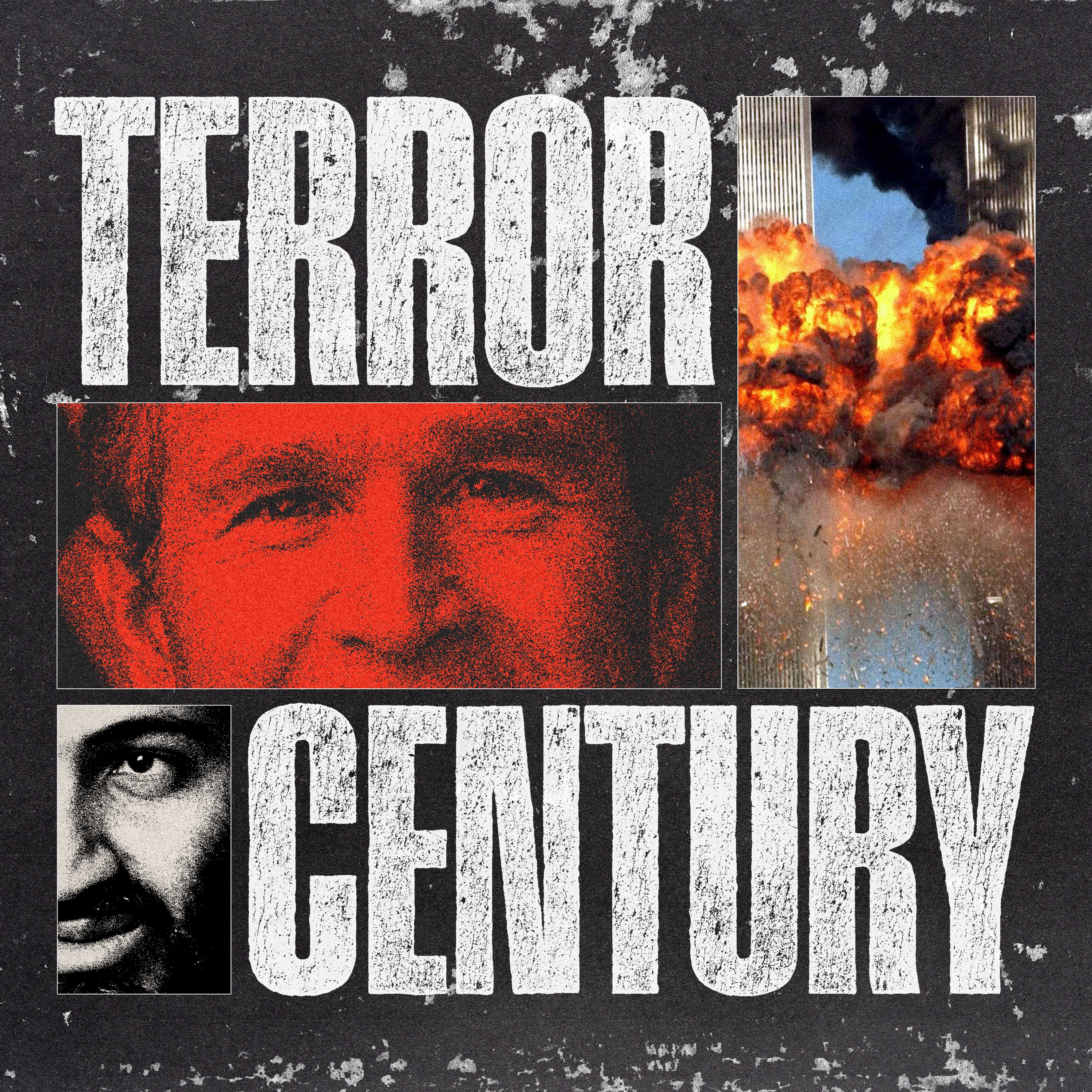
Terror Century – Did the War on Terror become a war on freedom?
About this episode
The Bunker – News without the nonsense is made possible by:
A three-part mini-series from The Bunker… In the aftermath of the 9/11 terror attacks 25 years ago, an enraged America stumbled into the quagmires of Afghanistan and Iraq. At home the Bush Administration created a new security culture which began to erode freedoms in America and around the world. Are we still living with the compromises Americans made during that feverish decade?
On this episode David Cole, author of Less Safe, Less Free: Why America Is Losing the War on Terror, explains how the USA PATRIOT Act and other measures ran out of control… what 9/11-era surveillance means in the age of Big Tech… and whether the freedoms Americans temporarily suspended ever fully came back.
• Find out if you’re owed on car finance at refundclub.co.uk/bunker
• Refund Club is a trading style of Sandsford Law Limited, authorised and regulated by the Solicitors Regulation Authority (SRA no. 8008114). Checking is free. A fee is payable only if your claim is successful. Eligibility: car finance taken out in the UK between 2007 and 2021. The average claim is around £829 per agreement; this is an average and not a guarantee of the amount you will receive. You can also claim yourself for free by contacting your lender or the Financial Ombudsman Service. refundclub.co.uk/bunker
Written and presented by Andrew Harrison. Audio production: Simon Williams and Robin Leeburn. Music by Kenny Dickinson. Artwork by James Parrett. Managing Editor: Jacob Jarvis. Group Editor: Andrew Harrison. THE BUNKER is a Podmasters Production.
Hosted on Acast. See acast.com/privacy for more information.
Get every episode summarized
Each time The Bunker – News without the nonsense publishes, we email you a written briefing from the transcript — the topics, who appeared, and any specific claims, with the ad reads skipped.
Email me new episodesFree for 3 shows. No card needed.
Hosts & guests
Transcript ready
303 searchable segments. Every word is indexed and playable.
Full transcript
The Bunker – News without the nonsense — Terror Century – Did the War on Terror become a war on freedom?. Machine-transcribed; use the interactive transcript above to jump the player to any line.
Support comes from wise, the smart way to manage the currencies you need around the world. Your life is global, your money should be too. Some providers promise no fees on overseas transfers. Don't be fooled. Extra costs often hide in bloated exchange rates. Choose wise. You can send, spend and receive money in over 40 currencies. Count on the exchange rates that you'd usually see on Google. That's how millions save billions on hidden fees. Be smart, wise, visit wise.com. Season C's apply. Hello and welcome to the second episode of Terra Century, our three part mini series on how 9-11 changed our world in ways that we are still living with 25 years on. I'm Andrew Harrison. You can listen to this series in any order. Just check your podcast app. Today, in the weeks and months after Alcade is attacked on the World Trade Center in the Pentagon
on September 11th, 2001, the United States went through a period of profound psychological shock. One result was the ruinous was in Iraq and Afghanistan, the failures of which as we'll discuss next time created fertile ground for Trump's isolationism to grow. Another was an immediate security crackdown. Among other things, a new piece of legislation, the USA Patriot Act, gave government new powers to monitor phone calls, read emails and track financial records. Overseas, the US detained hundreds of Arab and Muslim non-citizens in secret, extra legal circumstances. Many turned out to be active terrorists, some inemerged were not. Immediate polling suggested that most Americans supported giving up certain personal freedoms if they could feel safer from terrorism. But surrendering freedoms and suspending legal rights is seldom temporary. And the 2000s and 2010s became a dark period for civil rights in the US, which is perhaps what Osama Bin Laden had intended. What did 9-11 do to individual freedoms and the rights of privacy in the US and beyond? How resilient did the American
system turn out to be and are we still living with the consequences? Today's guest David Cole was national legal director of the American Civil Liberties Union. He's written several books connected to 9-11, including less safe, less free. Why America is losing the war on terror and terrorism in the Constitution, sacrificing civil liberties in the name of national security. And he's here with me today. Hello, David. How are you? Good. Thanks for having me. So anyone who's alive in 2001 remembers their own personal experience of September 11th. What was yours? Oh my God. It's hard to believe 25 years have gone by. I was at home with my two-year-old daughter getting ready to take her to a music appreciation class. And I got a call on my landline because we used to have those things from ABC, Australian broadcasting, wanting me to comment on a plane that had hit the World Trade
Center. And I thought, well, I'm not an aviation expert. And I imagine some private plane hitting the World Trade Center. I said, I'm not an aviation expert. I don't think I can really comment. Hung up the phone. Took my daughter to music appreciation class. Didn't mention anything to anybody. And then when we came out, 45 minutes or so later, people were streaming down Connecticut Avenue. Everyone was sort of leaving work going home because, of course, there was the plane that was aimed for the Pentagon. There was a plane that was maybe coming for the White House, etc. That's my memory of that horrific, horrific day. And I think events became clearer. And it unfolded over the following hours. I mean, given your area of expertise, how quickly did you realize that the consequences for this? We're going to change the experience of living in America. It's going to change the legal environment that certain rights and certain legal givens are
probably going to change. Yeah, well, I pretty quickly I worried about that because, after the initial shock, obviously, we held an event I think the day after at Georgetown Law School where I was teaching, and I had already written the book terrorism in the Constitution before 9-11. So I had studied sort of the ways in which our country had dealt with national security crises. And I remember saying, look, this is a horrific event. Just a complete tragic loss of life, completely unacceptable tactic, no matter what your complaints are. This is not within the grounds of any kind of reasonable action. But we have to respond in a way that is consistent with our principles. Because in the past, we have fallen short, whether it be World War One or the concerns about anarchists leading to the Palma raids, which was kind of rounding up of foreign
nationals across the country after a series of bombs went off in the United States in 1919 to the internment of World War Two of Japanese citizens and Japanese Americans, merely because they were Japanese, to the McCarthy era and the kind of ruinous attacks that our government and at all levels, leveled against perceived communists, you know, I was worried that this is going to lead to overreaction and indeed it did. Well, I mean, I guess that's the core of it, the idea that the reaction, once against the values of what America stood for. Do you think that it was the immediate psychological shock of effectively witnessing the murder of about 3,000 people on television that made a sober political response impossible? Because we can all remember the atmosphere of the time if we were around. And we can remember, but simultaneously, a worldwide smell of sympathy for the United States, but also witnessing way on the outside. So almost a kind of an abandonment of the
ability to look at it soberly. Yeah, no, absolutely. And you know, I mean, when something like this arises, there are, you know, oftentimes within the federal government, which is a big entity and has a lot of career people and a lot of political people, there are hardliners and there are people who are calling for more reasonable responses. When something like this happens, there's no obstacle to the hardliners. So, you know, various bits and pieces of the Patriot Act had been around for a long time had been proposed, had been considered and Congress had been rejected. But once, you know, 9-11 happened, you know, the Justice Department just, you know, opened their drawers. What's our wish list? Let's put it down. And it passed without serious opposition. And you saw the United States, you know, doing things that it had done before, like engaging in guilt by association, targeting people based on what they looked like rather than what they did. But you also saw the United States
doing things that it hadn't really done before. You know, authorizing torture of human beings in the hopes of gathering information to about al-Qaeda. So, you know, they certainly in the short term. And for a significant period of time, there was really very little headwind for the hardliners and they ran with it. I completely forgotten that the USA Patriot Act is actually an acronym, and it stands for Uniting and Strengthening America by providing appropriate tools required to intercept an obstruct terrorism. That's peak 9-11 area, isn't it? It's very, very hard for a person to be able to vote against something with that name that stands for those things. It just presumes its own justification. Yeah, absolutely, absolutely. And, you know, among other things, it authorized just vastly expanded surveillance, both of foreign nationals without any just, you know,
any probable cause or individualized suspicion, but also of Americans. So, you know, the NSA, the National Security Agency was collecting the cell phone traffic of every American cell phone. And then they, you know, maintained a database with literally everybody's cell phone connections. Not the conversations themselves, but, you know, who you called, when you called how long you were on, all of that was maintained by the federal government and then, you know, seen as a kind of a trove of information which could be mined when there was some concern about somebody. Well, let's see who that person connected to, et cetera. And, you know, that could be useful. It could definitely be useful if you're a detective looking for a, you know, the perpetrator of some act, but, you know, talk about overreach, literally every person's cell phone data was
collected and maintained by the federal government. There are so many deeply worrying things about the Patriots Act. I mean, there's a particular thing on a title five, an agency could demand data without probable cause. And there's also a gag order in that you cannot say that you have been served with this order. There's another provision of the legislation which allowed for any alien who the Attorney General believed may cause a terrorist act to be detained indefinitely without proof. But I mean, my, I guess what, where I'm going with this is, and it's very difficult to be objective about this for all of these worrying things. Was the Patriot Act an effective piece of legislation in the terms of the people who framed it? Did it actually do what it was supposed to do? You know, it depends. If what it was supposed to do was expand the government's authority to watch us, detain us, take action against us without individualized suspicion and without probable cause and without all of the kinds of protections that you ordinarily get. Yes, it did
what it was supposed to do. If the question is, did it stop terrorist attacks from occurring? Was it useful in deterring actual incidents? Very, very hard to say, right? I mean, it's sort of like, they would say, well, that's trying to prove a negative. But, you know, I don't think there's really a good case to be made by the government that here's someone we brought to justice. And the way we got this person to justice, and you know, we brought to justice for planning a terrorist attack. And the way we found him, the way we detained him was by using the paycheck. I've never seen that case be made. You know, and I would assume that they could make that case if in fact that had happened. So I think the silence around what have been the positive effects on the ground, not just of expanding federal power, but of actually protecting Americans, the silence speaks volumes. Support comes from wise, the smart way to manage the currencies you need around the world.
Your life is global, your money should be too. Some providers promise no fees on overseas transfers. Don't be fooled. Extra costs often hide in bloated exchange rates. Choose wise. You can send spend and receive money in over 40 currencies. Count on the exchange rates that you'd usually see on Google. That's how millions save billions on hidden fees. Be smart. Get wise. Visit wise.com. Decent Cs apply. Many of the provisions of this act had sunset clauses. They were designed to expire after a particular period of time. Many of them were extended. I think Obama renewed some of the most controversial provisions in 2011. How much of the Patriot Act is still around? Do we know? How much of it has become part of national security architecture? I think most of it has become part of national security architecture. There were these sunsetting provisions. People debate about sunsets because on the one hand, if you're acting in a midst of a crisis, you say, well, let's put
a sunset on this so we can reconsider it in hot with some hindsight and with a little more reason. But the problem with that is then you're willing to accept more. If you think, well, we're only going to do this for two years. But almost inevitably, what history shows and I think shows with the Patriot Act as well, is that the sunsets lead to extensions. The one useful thing about the sunsets is that they kind of rekindle debate, attention. There are hearings. Sometimes there are some modifications. But by and large, these were not temporary changes, but permanent changes. And it's one thing to try and vote against something called a Patriot Act when it's being introduced and thereby kind of cast yourself as not a Patriot. It's another thing to argue for an established piece of legislation called the Patriot Act to be sunset or to be cut back. It's even more difficult politically. But I think we spend a lot of time focusing on the Patriot, but I think in fact, well, I think many people don't realize is that most of the worst things the government did
in response to 9-11 were outside of the Patriot Act, not authorized by the Patriot Act. So I'm talking about things like disappearing suspects into secret CIA run prisons called black sites where people were subjected to waterboarding and other forms of torture. Sending people to Guantanamo, 750 people sent to Guantanamo on the mere assertion that they are an enemy combatant without a hearing, any kind of assessment of whether that was factually supported or not. The rounding up on pretextual immigration grounds of Arab Muslim men in the United States several thousand detained on suspicion. And the suspicion was somebody calls the FBI and says, hey, you know, this grocery store down the street is run by an Arab guy and there's a bunch of Arab men there. And so they go down and
they, you know, the federal government goes and picks up the ones who are immigrants, locks them up and then investigates them, a kind of preventive detention. You know, those sorts of things were using existing authorities, but just using them very, very aggressively, not authorized by the Patriot Act. But I will say many of those things by the time George W. Bush left office, he had backed off of many of those initiatives. And I think it's because there really was a lot of opposition both in the United States and around the world. So the black sites were closed. The waterboarding was stopped. No more authorization for that kind of interrogation. Over 500 of the detainees at Guantanamo were released before Bush left office. So there was a correction. That wasn't like self correction. It was a correction that was in response to a lot of advocacy and a lot
of work by a lot of groups and organizations both here and in the UK and in other countries. Yeah, you wrote quite a lot about this because I actually found a quote which surprised me and then I realized it was from you. I was reading around, perhaps the most important and surprising lesson of the past decade, this is in 2012, is the constitutional and human rights which seems so vulnerable in the attacks aftermath. Prude far more resilient than many would have predicted. This is in 2012. But I guess my question here on this is, is the system really working when it's down to citizens groups, pressure groups, civil rights campaigners and lawyers to correct it? Because the actual system of the United States has allowed it and it's only legal challenge and actually international pressures you described that rolls this stuff back. Well, I mean, I think first of all, you have to also look at the courts. The courts played a big role at Guantanamo in rejecting the Bush administration's assertions that it could hold people there indefinitely
without any access to courts. The Supreme Court said no, they do have access to courts. You have to give them hearings, et cetera, et cetera. But the reality is that is the case with civil liberties. If people aren't organized and in the streets and working with associations to defend those liberties, they're not going to defend themselves, particularly in times like this, right? The all the political pressure is on one side. The few elected representatives who said, wait a minute, were drowned out by the many who said, we must do everything in our power to protect Americans. And so courts could be some break because they have life tenure and they're not subject to reelection and so they can play a role. But courts can't do it on their own. You really need people out there. And I wrote a book called Engines of Liberty, which looked at the ways in which
citizens groups, civil society really is the backbone of constitutional protections. And one of the case studies I did was of George W. Bush and the war on terror and the pushback to that war on terror, which really was an international effort. I mean, a lot of people at Guantanamo, all the people at Guantanamo were citizens of other nations. And so one of the tactics was to get those other nations to bring pressure to bear on the United States about their people. And Britain was actually one of the first. And the UK detainees were some of the first to be released, because there was pressure put on the British government to put pressure on the United States government. And we needed the UK as an ally. And so we were responsive to that pressure. But that pressure came from groups like the ACLU and human rights watch and reprieve, which is a UK based organization started by Clive Stafford Smith, which ended up representing something like 75
Guantanamo detainees, almost all of whom were released through these kinds of pressure tactics. So, you know, that's just the reality. If citizens and civil society are not behind civil rights and civil liberties in these times, it's an open road for the hardliners. Global. Your money should be too. Some providers promise no fees on overseas transfers. Don't be fooled. Extra costs often hide and bloat at exchange rates. Choose wise. You can send spend and receive money in over 40 currencies. Count on the exchange rates that you'd usually see on Google. That's how millions save billions on hidden fees. Be smart, get wise, visit wise.com. TizenC's apply. You described how the campaign revolved around the essential principle that the law and human rights
applied to you whether you are a citizen or not. And it seems from the outside that a central principle of the post 9-11, the war on terror era was that the law replies to American citizens, the human rights apply to American citizens, but not of you are not a citizen. Sometimes not of you are a citizen. Is that something that has lasted that we're kind of stuck with now? Because you do see the way the law is applied to even people actively seeking American citizenship within legal channels are now treated as having no rights and can be disappeared. This is a constant struggle within the United States and it's one that we are definitely continuing to fight to this day, which is the bill of rights in the Constitution protects the right of people of persons. It does not limit its rights to citizens with the exception of some voting rights, the right to run for office, some of those sorts of political rights, but the right to speak, the right to free exercise of religion, the right to do process, all the rights that are associated
with being a defendant in a criminal trial, they apply, should apply, equally, to every person in the United States whether they are a citizen or a non-citizen, whether they are here lawfully or unlawfully. The court has actually said that. What I just said is almost a verbatim quote from a Supreme Court decision, but particularly with the immigration power, the government has been able to do things to immigrants that it could never do to US citizens. For example, I'm representing right now a man named Mosin Medawi who was a Columbia student who the government is trying to put it as a permanent resident, green card holder, the right to live in the United States for the rest of his life. He has that except the government is now seeking to deport him from this country because he spoke out against the Israeli attacks on Gaza and they determined the Secretary of State Marco Rubio determined that his activities have potentially serious adverse consequences for
American foreign policy and his activities are his speech, just his speech and the government is seeking to deport him. They locked him up, we got him freed, but they're still seeking to deport him for his speech. Now, I'm an American citizen. I can criticize Israel all I want till I'm blue in the face and the government cannot deport me, but it also can't punish me in any way, shape, or form. So there is a double standard in this country. It mostly stems from the exercise of the immigration authority, but many organizations, including the ACLU, have spent a lot of time fighting to get protections for non-citizens that are the same as those for US citizens. I want to finish up by bringing this up to that with where we are now. You've talked on some of the themes just there. Since the establishment of the post 9-11 security apparatus, since the huge change on what people would accept, societies changed enormously, technology has
transformed everything. The technological capacity for mass surveillance has exploded. The platforms of social media didn't even exist in those days. We now have the capacity of big tech to all those telephone relationships you mentioned gathered under other pictures. People can say much more to more people, but they can be detected more easily. Have we now moved to a place where government accepts and in fact expects that it can monitor conversation on a large scale and that that previously while sort of nominally protected is in effect not protected. I mean, put it this way. If I would have visited the United States, apparently, within the next few years, I'll need to deliver 10 years worth of social media data, which I'm not sure I could even find. Yeah, that's a huge issue. The technological boom that we have seen in the last 20 years really has made mass surveillance so much easier and it is being done. It is being done every day,
not by the government, but by private companies for profit, mostly with our consent. Right? I wouldn't say it's totally voluntary consent, but you don't have to go on social media, but if you do, that's all going to be recorded. You don't have to have a cell phone, I suppose, but if you do, every time you use it, your location is going to be kept track of. What we are fighting in the United States now, and I think we'll continue to fight for some time, is how should the protections that we came to expect in the analog era be applied in the digital era? The Supreme Court has decided maybe four or five cases thus far where the government has come in and said, well, look, we could do this in the analog era. We ought to be able to do it in the digital era, even though the capacities they have in the digital era just dwarf what they were before. In each of those cases, the Supreme Court has ruled against the government in favor of
privacy protections, seeking to update the constitutional protections for privacy so that they limit government access to this information without some kind of showing that it has probable cause, some grounds for suspicion that you have engaged in wrongdoing. So, the private companies, they're not governed by the Constitution, so they can gather all this information unless we pass laws that prohibit them from doing so. The real, I think, where a lot of the fight is, is can we insist that the government not get access to that information without good reason? And I think it's really a big difference if the government gets it and if Google gets it because Google can't lock you up, the government can. Yeah, it's producing all kinds of novel cases. I was reading one the other day where a guy had been instructed to unlock his phone by law enforcement and instead he'd entered the password that destroyed the contents of the phone to protect his privacy and it's prosecuted or they're attempting to prosecute him for the
destruction of evidence for offenses unspecified, which that's very hard to say what we could do that in the analog days, isn't it? Yeah, it's a novel case. Exactly. And I mean, one example is that in the analog era, the court held that you don't have any expectation of privacy in where you go in public. So, if you go from your house to the tube to Herod's and back, you don't have an expectation of privacy in that because someone could follow you, it's in public. And so the government said, well, we can put a GPS tracker on somebody's car and follow it 24-7, you know, for a month. And we're only following it in public. It's the same thing as, you know, just adding up a lot of trips to the tube and and Herod's. And in the analog era, you said that was public and not private and the government could do it. The Supreme Court said, no, that is qualitatively different. You couldn't realistically follow someone for a month 24-7 without extraordinary
resources. And even then, you probably couldn't do it. And so, no, we're going to treat that as a search, as presumptively private. The government can't do it without getting a warrant where it shows there has reason to investigate. I think if you're going to have to serve all you get, and frankly, the idea of me going there is hilarious, but I just want to wrap on by, I mean, the kind of the conceit of these little mini-series we're doing, the premise is that we are just some extent still living in the world that was kind of violently, rapidly created by the aftermath of 9-11. Are we reaching too far there? So, I think yes and no. I think most of the authorities that were put in place after 9-11 remain in place, you know, sit around like a loaded gun ready to be picked up and used in the next crisis. We have seen, you know, President Trump use these sorts of authorities, you know, claiming things are we're in an emergency situation and doing things that were authorized for emergencies in a, you know, where there's no emergency. So,
on the one hand, the authorities are there. They can be abused. President Trump has shown us how much they can be abused and why we ought to be concerned about letting them sit around there. On the other hand, I would say, people really did push back and objected to many of the extreme measures that were taken. So, disappearances and waterboarding, you know, that has not reared its ugly head again in the 25 years. It happened. It was horrific. There was a tremendous amount of debate about it. Ultimately, there was a massive Senate inquiry that wrote a very damning report and, you know, of all the horrible things that Trump has done since coming into office. He has not authorized, you know, disappearances and torture. So, I do think that, you know, it's also the case that we're not living at the same kind of threat level. And so, what happens when the threat level rises again? Is anybody's guess? And what we saw after 9-11 will make it easier on one
end will make it easier for the government to overreach. But I hope that that kind of pushback and that kind of reflection that followed will also put some roadblocks. I don't think it'll be as easy for a justice department official in the future to authorize waterboarding and say, this is not torture. David Col, thank you for joining us. We never get optimism on this podcast. I'm glad you were able to bring a little bit, even though you want to talk about check-offs legislation lying on the table. Great to talk, see, thank you for joining us. Thank you, bye-bye. Listeners, this is just one part of three on the long-term effects of the September the 11th attacks and how they shape the modern world. If you've enjoyed listening to this, please do subscribe to the bunker every morning. We bring you an episode on a different new story or theme all designed to fit your commute, whether it's from home to an office or just from the kitchen to the living room table. And you want to help us keep carrying on. Your support on Patreon would be very welcome. We're an independent self-funding setup with no big media backer and we rely on regular contributions and listeners to pay our team. Follow the link in the show notes,
pledge us little as three pandemons and you can be a valued part of what we do. Thank you for listening. We'll see you next time. The bunker was written and presented by Andrew Harrison and produced by James Adel with audio production by Robin Leiband, art by James Parrot and music by Kenny Dickinson. The managing editor is Jacob Jarvis, group editor Andrew Harrison and the bunker is a podmasters production. Support comes from wise, the smart way to manage the currencies you need around the world. Your life is global, your money should be too. Some providers promise no fees on overseas transfers. Don't be fooled. Extra costs often hide in bloated exchange rates. Choose wise. You can send spend and receive money in over 40 currencies. Count on the exchange rates that you'd usually see
on Google. That's how millions save billions on hidden fees. Be smart, get wise, visit wise.com.
More episodes
More from The Bunker – News without the nonsense
Trump’s ‘bribe’, Miliband’s sanctions, Met investigates Reform – Weekly Wrap-Up...
The Bunker – News without the nonsense

Terror Century – How the trauma of 9/11 made Trump and MAGA inevitable
The Bunker – News without the nonsense
Terror Century – Are we living in the world that 9/11 created?
The Bunker – News without the nonsense
Farage: It wasn’t me! — Start Your Week with Alex von Tunzelmann
The Bunker – News without the nonsense