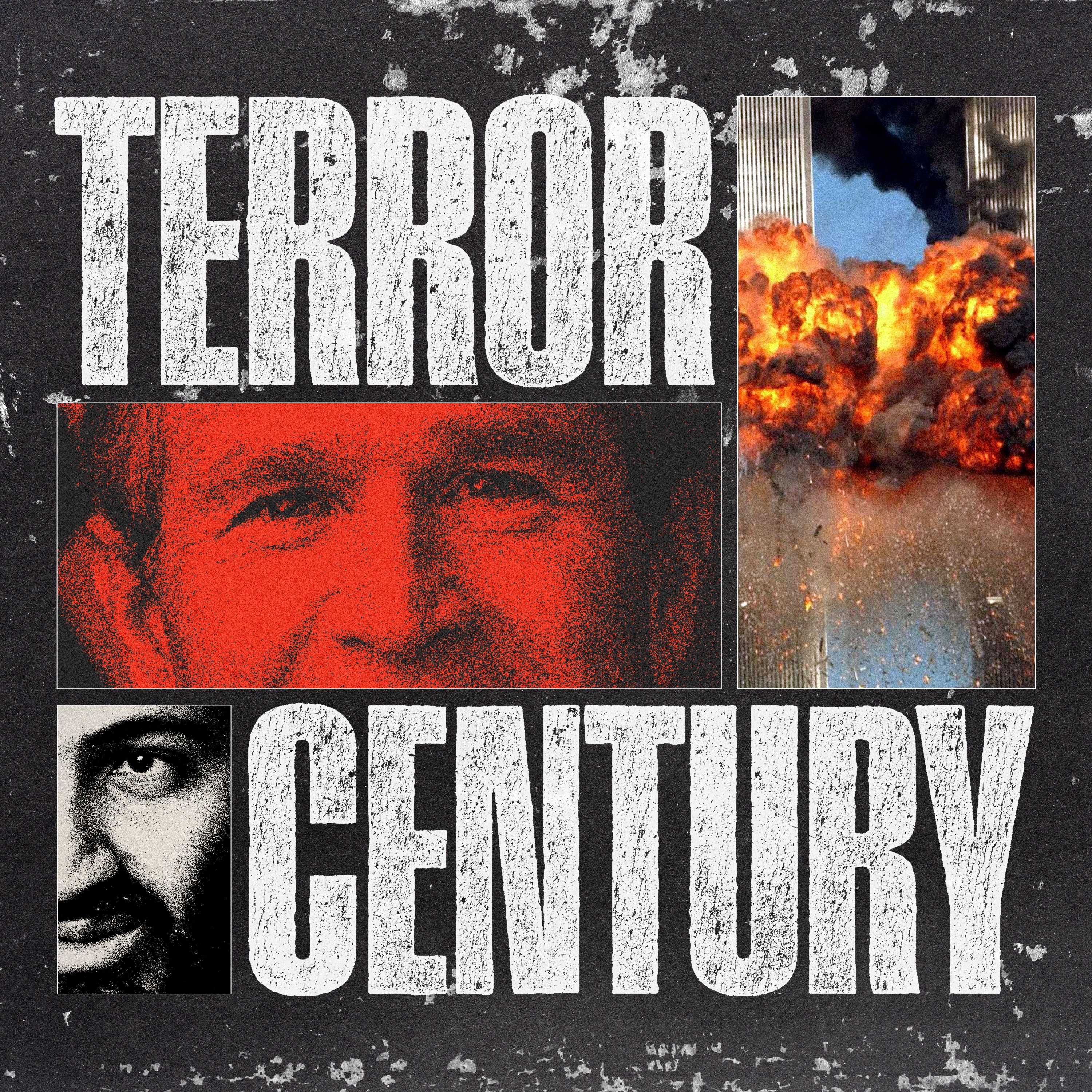
Terror Century – How the trauma of 9/11 made Trump and MAGA inevitable
About this episode
The Bunker – News without the nonsense is made possible by:
A three-part mini-series from The Bunker… The horror of the 9/11 terror attacks 25 years ago this week led America into massive retaliation and ultimately national humiliation in Afghanistan and Iraq. In years to come, these failures and the lies used to sell them would breed a paranoid, isolationist, racist strain that ultimately took over American politics. Did 9/11 ultimately create Trump and Trumpism?
National security journalist Spencer Ackerman has reported from Iraq, Afghanistan, and Guantanamo Bay and he’s the author of Reign of Terror: How the 9/11 Era Destabilized America and Produced Trump. He talks to Andrew Harrison about the long road from Ground Zero to Mar-a-Lago.
• Worn out by the War on Terror? Buy Spencer Ackerman’s Iron Man books – there’s two! – through our affiliate bookshop and you’ll help fund The Bunker by earning us a small commission for every sale. Bookshop.org’s fees help support independent bookshops too.
• Find out if you’re owed on car finance at refundclub.co.uk/bunker
• Refund Club is a trading style of Sandsford Law Limited, authorised and regulated by the Solicitors Regulation Authority (SRA no. 8008114). Checking is free. A fee is payable only if your claim is successful. Eligibility: car finance taken out in the UK between 2007 and 2021. The average claim is around £829 per agreement; this is an average and not a guarantee of the amount you will receive. You can also claim yourself for free by contacting your lender or the Financial Ombudsman Service. refundclub.co.uk/bunker
Written and presented by Andrew Harrison. Audio production: Tom taylor. Music by Kenny Dickinson. Artwork by James Parrett. Managing Editor: Jacob Jarvis. Group Editor: Andrew Harrison. THE BUNKER is a Podmasters Production.
Hosted on Acast. See acast.com/privacy for more information.
Get every episode summarized
Each time The Bunker – News without the nonsense publishes, we email you a written briefing from the transcript — the topics, who appeared, and any specific claims, with the ad reads skipped.
Email me new episodesFree for 3 shows. No card needed.
Hosts & guests
Transcript ready
342 searchable segments. Every word is indexed and playable.
Full transcript
The Bunker – News without the nonsense — Terror Century – How the trauma of 9/11 made Trump and MAGA inevitable. Machine-transcribed; use the interactive transcript above to jump the player to any line.
Support comes from wise, the smart way to manage the currencies you need around the world. Your life is global, your money should be too. Some providers promise no fees on overseas transfers. Don't be fooled. Extra costs often hide in bloated exchange rates. Choose wise. You can send, spend and receive money in over 40 currencies. Count on the exchange rates that you'd usually see on Google. That's how millions save billions on hidden fees. Be smart, get wise, visit wise.com, season C's apply. Hello and welcome to another edition of Terror Century, our three part mini series on how the world has changed and what we've learned in the 25 years since 9-11. I'm Andrew Harrison, you can listen to this series in any order and the other two parts are available right now on your favorite podcast app. Today, when Osama bin Laden and Al-Qaeda planned the coordinated
attacks of September 11th, 2001, their state-of-dames were immediate. Vengeance for America's support of Israel for its sanctions against Iraq and for the repression of Palestinians. Plus a rag bag of secondary justifications ranging from outsting US troops from Saudi Arabia to America's supposed complicity in the Russian massacres of Muslims in Chechnya. The Bush administration simply said they hate us for our freedoms. But the consequences in America and beyond were far reaching and unpredictable. The military failures in Iraq and Afghanistan, the deceitful news management, the suspension of civil and legal rights and the subsequent blame game, all nourished a conspiratorial mindset amongst voters, a spreading fear that the establishment could never be trusted under any circumstances. A quarter century later, we're living with the results, a world in which paranoid populism destabilizes democracies. Did Osama bin Laden succeed in seriously damaging the West in ways he could not have possibly imagined? Did 9-11 help to generate Trump the new far
right, the return of unrepentant racism on the world stage, and the collapse of the old Western led order? Here to talk it over with me is Spencer Ackerman, national security journalist and author who was joint winner of the Pulitzer Prize in 2014 for his role in reporting the Edward Snowden NSA leaks. He has reported from Iraq, Afghanistan and Guantanamo Bay, and he's the author of Rain of Terror, how the 9-11 era destabilized America and produced Trump. And to my amusement and delight, he's also written an Iron Man series from Marvel Comics, but we won't talk about that until the very end of the podcast. Hello, Spencer. Thank you for joining us. Thank you so much for having the answer. So I want to start with your personal experience of the 9-11 years and the events that led up to Trump because it's kind of the story of your own career. You were born in 1980, is that right? That's correct. So you're basically like your 21 when 9-11 happens. What was your personal experience of the attacks? So I'm in New Yorker, born raised and still living there, gonna be a lifer. But on 9-11, I was at college at Rutgers University, which is just across the river
in New Jersey. I was working for my school paper and my expectation when I went to bed the night before was that I would have to get a couple miles away from campus to cover a candidate's appearance in town running for the New Jersey governor's election. That was about to happen. And instead, I woke up and saw my flatmates, as you guys would call them, transfixed to the television and sobbing. And I quickly saw why. And my life was forever changed. For that day, my priority was getting in contact with my family, which took me several hours to do to find out if they were alive and well, friends of mine the same. And there was also this period of, I guess you would call it Survivors Guild, where I was not, because of all of the travel restrictions after the attack,
able to get back to New York, where I wanted very, very desperately to be. It took me until that Friday to get there. I ended up having the least useful role in history in the ground zero cleanup. I immediately went to a staging ground that Friday to see what I could do. And they let everyone know, unless you have medical experience, construction experience or military experience, you're not really going to be very helpful to the relief effort. I didn't really accept that. And what I ended up doing was fetching a number of free tickets for first responders to the Broadway production of Chicago. And that was my great contribution to the 9-11 recovery effort, such as it was. But I think that is worthwhile. Or the such insane circumstances, it's a worthwhile thing to do. But really, the overall experience that I want to have people remember is that, like,
a great majority of Americans, this was my first and only experience of my country and my city experiencing an airstrike. And that was an absolutely terrifying thing for a great deal afterward. I tried to suppress it as much as I could, but I had running through my head. Everyone I love could die. And I could do nothing about that. And that's a very jarring experience. I'm sure there are some of your listeners who remember the blitz. I can only imagine that must have been a very similar feeling. Yeah, they would only be the very much the oldest term members of our own, remember the blitz. But it's very much engrained in the national memory. I wanted to ask you, I mean, have you always intended to go into national security journalism? Was this kind of your your kind of, you know, turning point moment? Yeah, not at all. I had ambitions to go into journalism. And I figured that would mean, you know, local reporting in New York, perhaps larger stories
from around the country. I had no background in national security. I didn't really have much of an interest in it. I didn't really know, I guess, in any rigorous way what it was. But all of the media attention all of the political attention all of the military energy, everything about the culture was saying that this was the story of my generation. And it would continue to be in what was rapidly portrayed as a coalescing war that would last for perhaps as long as a generation. And so if that was the story of my times, that would be the story that I would devote myself to covering. I mean, your argument in the book in Rain of Terror is that I think this is a direct quote, the forever war eroded the legal, political, cultural, and economic armor surrounding American democracy. I'm from perspective of 25 years later. It looks a lot like that. When did you realize that this was happening? Because the psychological shock of 9-11, I have American family members and friends who live in New York, you know, you kind of, it was palpable. And it was as if reality had been
suspended. I don't know if I realized all of it was happening at once. It was very clear in the immediate years after 9-11, the years that the United States likes to tell itself that it was, you know, very firmly united, that whatever unity manifested in those years was at the expense of American Muslims. And there was a really coalescing architecture of the suppression of their civil liberties, their ability to live in the United States freely. It would be several years before we would really know the extent of that, given how much was developing in secret from the NYPD in New York City, reinventing itself as a secret police, literally thanks to secunded current and former CIA officers that devised its programs for reporting on what you might call pre-crime in Muslim neighborhoods to the transformation of US surveillance. You might
say restoration of US surveillance to a pre-1970s model before a lot of congressional oversight was placed on it to become a dragnet, not only domestically but internationally, but it was very clear and wadded at the time that the relationship between state and citizen was changing in a way to, as it was often described, preserve the United States's open society that the quote-unquote terrorists had leveraged against the United States. And like the famous Vietnam era contradiction that we had to destroy the village in order to save it, they had to very substantially erode, if not completely, destroy American democracy, that open society in order to quote-unquote preserve it. Now, it would take a while before I was able to see that the political effects of 9-11,
we're not limited to the 9-11 era, but we're cumulative. So for instance, not only the wars in Iraq and Afghanistan, but also their failures became really potent grievances that helped transform America into a state where someone like Trump could capitalize on it, but really around the time that a great deal of the war on terror collapsed with the rise of ISIS, it became clear that the sorts of political candidates that were not just arising but gaining success in a way that they had previously, you know, people like, you know, not just Trump, but Ted Cruz and overseas, the challenges because of the enormous outmigrations from the war on terror we're having on a lot of the European countries that these two phenomena often treated as distinct, the rise of the far right and the war on terror, very usually and not incorrectly, attributed solely to the great recession,
owed a tremendous amount to the war on terror, which at the time was often thought of as pretty much indeed a kind of, if anything, long tail of 9-11 rather than an active series of operations, authorities and institutions that had gone from an emergency nature to a presumption of permanence. Support comes from wise, the smart way to manage the currencies you need around the world. Your life is global, your money should be too. Some providers promise no fees on overseas transfers, don't be fooled, extra costs often hide and bloat at exchange rates, choose wise, you can send spend and receive money in over 40 currencies, count on the exchange rates that you'd usually see on Google, that's how millions save billions on hidden fees, be smart, get wise, visit wise.com,
season C's apply. There's kind of two things that seem to happen in parallel as the war on terror or the forever war is just you turn it unfolds both domestically and abroad. You see, the coinage of things like Homeland Security, which we'd never kind of really talked about previously, and suddenly it was speed launched, the Department of Homeland Security, and I can remember the objection was be careful what you build, you have no idea what the next guy will do with it. Look forward to where we are now, Homeland Security is quite at the center of the entire Trump project. So you've got the kind of infrastructure and the agency's being created, but you've also got a mindset and a willingness to, as you say, abandon those freedoms in order to get a version of security that is not really the kind of version of the secure America that we were sold and told was kind of core to the country. So I guess what I'm asking is, how much of the kind of
trumpification of America is a product of the new institutions and the gathering of security under one umbrella, and how much was it down to the kind of the psychological shock that people suffered? I would say the institutions provide the means and the opportunity and what transformed American politics to wield them in the way that they've been wielded and are being wielded currently was the permission structure that emerged from 9-11, which was one in which there was a presumption of an internal enemy that was defined civilizationally, that was supposed to be identifiably non-white, that was described relentlessly in media both respectable and not respectable as unassimilable as inherently civilizational alien. We had endless amounts in respectable media in the years after 9-11 about encouraging a never-quite-defying term called moderate Islam,
an idea that American government had an obligation not only to be waging what you would call in an earlier time wars of civilization, but also to challenge the ideas, quote-unquote, in Muslim countries that made anti-Americanism prominent. And this was also an incredibly sensurious culture, which is what helped pave the way for Donald Trump and the far right in the United States, that was sensurious in a very jingoistic direction. So for instance, what that permission structure never allowed was a consideration of the material grievances that al-Qaeda had with the United States and with Israel, American support for Israel against the Palestinians, the starvation, as you mentioned, of Iraqi society thanks to the post-Sidam sanctions. And in general, America's extractives, exploits, and enduring and expanding at that point in history,
relationship with the Middle East. That was not allowed to be discussed because it suggested that there could be a material transformation of American policy that would actually end the war that would redress these grievances, that had the power to redress these grievances, and then actually resolve the conflict. America, particularly its elites, did not wish to do that. They wish to live according to the pre-911 standards of dominance that were, in their view, the due of America's position as the last remaining superpower, and that meant disciplining the Muslim world. And there were people who argued in the United States that we needed to pay attention to those historical and material grievances, and we could address them accordingly, either without recourse to war or without the sort of endless infinite war that was ultimately constructed. So, for instance, Susan Sontag, the very notable American cultural critic, wrote in The New Yorker,
a very, very delicate version of what I've just said, without really, you know, going too deeply into, you know, portraying American complicity. But for that, she was widely denounced, including among liberals, and basically driven for a great deal of time, and she didn't live much longer, from American respectable discourse. Those sorts of wide-ranging propaganda functions, from a culture growing increasingly unwilling to deal with, to accept, and to even acknowledge critiques of 9-11 that had to do with blowback from American foreign policy, most recently, in Afghanistan itself, where America, after the Soviet invasion, devoted for reasons of superpower competition, a great deal of time resources in energy promoting radical Islam, as a way of combating the Soviet Union. None of that was, was remotely considered acceptable
in American mainstream media and politics, and accordingly, that worked to allow only the, you know, pseudo-religious dimensions of al-Qaeda's critique to the understood as the reason for 9-11, rendering those critiques incomprehensible to people in the West who don't have the religious and cultural backgrounds to understand what, you know, Bin Laden was talking about, which helps make Americans understand the war on terror as a kind of almost a statological event, something that can't be resolved through rational discourse, or through policy changes, unless those policy are violent, and so accordingly, over the next several years, overseas, the United States ended up intensifying precisely the conditions that al-Qaeda put out as its grievances against the United States. Domestically, it began to unleash its suppressive elements against, you know,
first Muslim and then broader immigrant civil rights in this country, and then culturally, it adopted a mode of critique that was both centurious, almost hysterically patriotic, and completely intolerant of voices that argued against this and viewed those voices as potentially lending aid and comfort to this ever-expanding cast of always Muslim enemies that the war on terror was predicated upon. That's extremely fertile ground for exactly what we saw, the revitalization of American nativism that exists right from the outset of 9-11 and ultimately puts Donald Trump in power, and to which too many liberals, and especially the Democratic Party, over the course of this long period of time, accommodate rather than challenge. There's another aspect that really comes to the fore in these years, which is effectively the Trump of the Paranoid style in politics, right? It is the idea that there are conspiracies,
there are things being held from you, there's an establishment which operates in secret and in concert, and that he, or the other, whichever demagogue plays the Trump role, is going to expose and fight for you against them. This really takes hold during the post-9-11 years, often with good reason, because you've got a massively profligate war, creates of money, literally being delivered into these countries unvanishing, never seen again, and Republican apparatus chicks are being given at highly rewarded jobs and no oversight, and you are seeing defense corporations, logistics people like Halliburton, mercenaries like Blackwater, making out like crazy. What is a fringe suspicion about American government creeps to the center? It's harder and harder to deny that this is actually going on. Do you see that as having fed into the triumph of Trumpism? The idea that actually there is a conspiracy going on here. Unquestionably, this was the way in which American society as
an elite project reorganized itself, the military budget throughout the war on terror exploded, it exploded with extremely little oversight, as American social conditions are deteriorating. The first thing that happens after 9-11 economically is a recession. That was what I graduated college and entered the workforce into, and there would be, I've lost track of how many, in the course of my life since at least three, and that wealth transfer was also a massive aspect, a structural aspect of the war on terror. While at the same time, there's this other element that goes into that mindset, as you mentioned it, on the far right that provides for Trump. And without it, I don't believe Trump would have happened. I think that important element is that the wars are a disaster. That by the time Trump is able to find a durable foothold in American politics,
we are past the point, because this point certainly existed in the early and mid-2000s, where anyone could credibly argue that Iraq and Afghanistan were worthwhile, that they were beneficial, that they had made the country safer, that they had resolved the war on terror, that they had created a safer Middle East, that they had successfully contributed to resolving the problems that they were predicated upon. That became a project, sort of seeming to sell the wars, rehabilitate the wars, arguing some measure that the wars were necessary. That had become a project increasingly a fewer and fewer elites, but at that point, those elites could be discredited because of what they had wrought. They had wrought these wars. They had wrought enormous, previously unfathomable, and increasingly algorithmically determined surveillance at home at a broad.
They had not given a sense of resolving the problems that they had set out for themselves. And also, now, the people who were stewarding these projects were Democrats and liberals, because of the Obama administration being in power. And so now you have this very, very potent political concussion of this disaster emerging. And while previously, there had been a great deal of Republican complicity and even architecture of that disaster, that all faded to the background and could be used on the right as a way of discrediting the elites that were often seen as standing both with the Democratic Party, with liberals and a four nativist inclinations, discredited also while in the process of Trump attacking them, the Democratic Party huge closer and closer to that security apparatus in order to claim it politically for itself as a
realignment, removing what had been in their minds, the danger of deligitimizing liberalism as complicity with terrorism or an earlier era of the Cold War complicity with communism. So that made the Democratic Party, the elites in the Democratic Party very, very discreditable as well as the elites in the Republican Party, because both of them were so tied to the security apparatus, the CIA, the military, the Department of Homeland Security, of the war on terror at a moment when the war on terror was seen increasingly and kind of undeniably as a kind of gaping law of disaster that blood and treasure could pour into but never resolved the reasons for which it was decided to be necessary to pour all that blood and treasure into. Do you think it also just basically legitimized conspiracy thought in general? The idea that
you know there was this great big Khan, the war was sold under false pretenses, Saddam Hussein wasn't behind 9-11 and if that could be true then everything is true. Hence there's a reflexive rejection of COVID, an actual pandemic which actually happened. The reflexive rejections of science comes under threat. It says if the events at the start of the 21st century destroyed many Americans' abilities to rely on reality. I think that's entirely correct. I think that we should understand the war on terror from the start as a culture of conspiracism with the irony that if you go back and you look at a whole lot of American kind of chat show discourse in the early years of the war on terror, a question seized upon not just by the right but by liberals as well is why is there so much conspiracy thinking in the Arab world that was never a question turned back inwardly but the whole culture of it
was conspiratorial from the idea that Saddam was tied to 9-11 that Saddam was tied to al-Qaeda that your Muslim neighbor is part of a sweepers cell that will find you and kill you to the ways in which the CIA lied about what it was doing in the war on terror that it wasn't committing torture. It was carrying out enhanced interrogation that the NSA wasn't spying on an extraordinary previously impossible amount of communications again both domestic and international that was the quote-unquote terrorist surveillance program and on down the line you know conspiracies handmaidened his euphemism. Euphemism ran absolutely wild during the war on terror while American public officials in the security agencies and within both parties lied constantly about what they were doing when Obama
comes into office he says he's going to look forward not back at CIA torture in order to continue using the CIA to carry out the war on terror the Obama administration repeatedly misrepresents outright lies about quote-unquote progress in Iraq it obscures that it is destroyed Libya and left kind of nothing in its place but chaos to the point where it became extremely difficult for a great deal of people for understandable reasons to trust what the government and other elites say this goes you know alongside the way that economic elites lie about the stability of the banking system very often these were the same elites that both promoted and benefited from the war on terror and I'll also mention just you know something that is worth kind of using as it as a as a measuring stick for whether politicians are as I think is very clear on the right
exploiting these sentiments as opposed to politicians and social movements that are willing to confront these institutions apparatacies and operations and that's the question of abolition you know trump wants to blame the CIA and the military and those who lead it for the loss of the war on terror but he's never willing to abolish the war on terror he recognizes that the war on terror and its various manifestations is useful for him precisely because he embraces this civilizational critique and looks at it at home and says let's do mass deportation there are all of these civilizations that cannot be assimilated into the United States and certainly during his second presidency is going farther than ever before in trying to get rid of them meanwhile there are socialist movements in the United States that are attempting to gain power within the democratic party that are willing to take starting with ice a more abolitionist approach that is what I would look at
as a distinguishing factor between kind of those who are rejecting the just endless amounts of unreality that comes from political economic and social elites throughout the war on terror and those who want to exploit them there is a material basis for an agenda going forward that a simple embrace of conspiracism obscures and kind of draws energy away from support comes from wise the smart way to manage the currencies you need around the world your life is global your money should be too some providers promise no fees on overseas transfers don't be fooled extra costs often hide in bloated exchange rates choose wise you can send spend and receive money in over 40 currencies count on the exchange rates that you'd usually see on google that's how millions save billions on hidden fees be smart get wise visit wise dot com season sees apply
you publish reign of terror in 2021 trumps first term had just ended Biden was president we just experienced the January the 6th insurrection but not the bedding in at the big lie that the election had been stolen it's not five years down the line trump is operating as close to an altercrat as he can get away with and what you disclose the legal political cultural and economic armist surrounding american democracy looks pretty weak right now is there any way out of this are all we kind of is your country kind of trapped in the world that 9 11 built around it i don't believe i have seen over especially the last you know year plus with the depredations of ice becoming so visible on the streets now this should not excuse the acceptance and normalization of the way ice brutalized immigrant communities all of this time that that is a lasting stain on american society
i mentioned it only to say that the war on terror was first very visible overseas and then when it started going terribly sought by political insecurity leads to be made less conspicuous at home it was always less conspicuous but now it is very visible and with that these periods of visibility entirely correlate with american popular rejection of them now i don't think america at this point is a very democratic country american democracy is a democracy for all of its citizens is only as old as nineteen sixty five and in my lifetime thanks a no small part to the war on terror that democracy has been seriously eroded we are not eroded to such a point where the elites can entirely discount the deep unpopularity on both sides of the american political spectrum the iran was something like thirty three percent popularity that is by the way about the same level
of popularity as vietnam after the ted offensive uh which would really tell you something i have seen candidate after candidate starting with my mayor zoran mondonny in new york city but now over the past several months in congressional races take out mainstream democrats who don't fight ice and oftentimes have funded it in favor of more straightforwardly abolitionist candidates candidates who are seeking to combat this whole post nine eleven order and attempt to restore american democracy this is something that took a very long time to manifest there are other versions of this throughout the nine eleven era i think you can you can clearly see that anti-war sentiment uh elected Barack Obama and then he squandered it so we have to see and put pressure on on these candidates to make sure that they don't do the same but this is a rejection of a lot of the residual aspects
of the war on terror when we see things like ice on you know college campuses grabbing people kidnapping people deporting people putting them in cages not just deporting them to their own countries but rendering them overseas to third countries that's something we saw the cia do during the first decade of the war on terror in a practice called extraordinary rendition that has been so normalized that it is now being done to random everyday migrants who have perhaps overstayed their visas people who are committing civil violations like you know tax law or something like that are being policed by people kidded out to you know conduct raids in infallusion or helmet profits so this is a way in which i don't believe we are faded to just go along with this i think you know when people ask me how do you stop the war on terror how do you end the war on terror the answer that i give is very often not satisfying but because it's not easy but i believe it to
straightforward and true and that's organized organization political organization will be what ends the war on terror wholesale root and branch it will never come from elite politics deciding that this is over what elite politics has decided is that the war on terror is a toy they don't want to play with anymore but they want to keep the toy available and perhaps use it in new playtime scenarios and that's what we're seeing with ice right now i don't believe americans accept it and i don't believe that they will accept it in the future the war on terror without terrorism at home spence or echo and thanks so much for joining us that's really interesting i mean it is insane so much in the after 25 years we're kind of still living in this world but it's a at least you're optimistic that we can get out of it thank you so much entry this has been a great conversation before we go we have to talk about iron man how did this security journalist end up writing one of the biggest pop culture properties in the world who ironically before kind of like 2007
nobody heard of iron man and now he's one of the most famous characters in the world and he is let's not forget an arm's dealer that's right you end up doing this uh i had written a midi series for DC comics before that was a kind of uh spy thriller set in the late cold war and i wanted to write for marvel comics but didn't know how so thanks to and equitants who worked there already i got the email address of an important editor and just sort of through my credentials into the mix and i heard back that iron man was a book that was becoming available and they thought perhaps with my background i had something to kind of say about the the character and his circumstances and there were two trade paperbacks that i would be very gratified if your listeners picked up from many of the fine comic stores in the uk or from some on-ron retailers that you will see very much incorporate my critiques of the war on terror my critiques of the security state but always kind of remembering that this is a superhero comic and
it has to be you know a fun action story where the hero stays the hero yes because i mean as we all know unfortunately we know what Tony Stark would be like in real life it's Elon Musk and he's a total asshole at least Tony Stark is just a fun one that's right well look Spencer thanks so much for joining us there are links to the book reign of terror and your iron man books in the show notes that people would like to investigate listeners thanks for listening we hope you've enjoyed this mini series terror century if you haven't had every episode yet there are two more editions on the bunker feed and if you want to hear them ad free and you want to keep independent podcasting in business please do think about backing us on patreon there is a link also in the show notes we can find out more thanks for listening and we will be back tomorrow the bunker was written and presented by pod masters griff editor andru harrison and produced by james ladel audio production was by tom phaler with music by kenny dekinson and artwork by jenn
manager of james james and the bunker is a pod masters production support comes from wise the smart way to manage the currencies you need around the world your life is global your money should be too some providers promise no fees on overseas transfers don't be fooled extra costs often hide in bloated exchange rates choose wise you can send spend and receive money in over 40 currencies count on the exchange rates that you'd usually see on google that's how millions save billions on hidden fees be smart get wise visit wise dot com
More episodes
More from The Bunker – News without the nonsense
Trump’s ‘bribe’, Miliband’s sanctions, Met investigates Reform – Weekly Wrap-Up...
The Bunker – News without the nonsense
Terror Century – Did the War on Terror become a war on freedom?
The Bunker – News without the nonsense
Terror Century – Are we living in the world that 9/11 created?
The Bunker – News without the nonsense
Farage: It wasn’t me! — Start Your Week with Alex von Tunzelmann
The Bunker – News without the nonsense