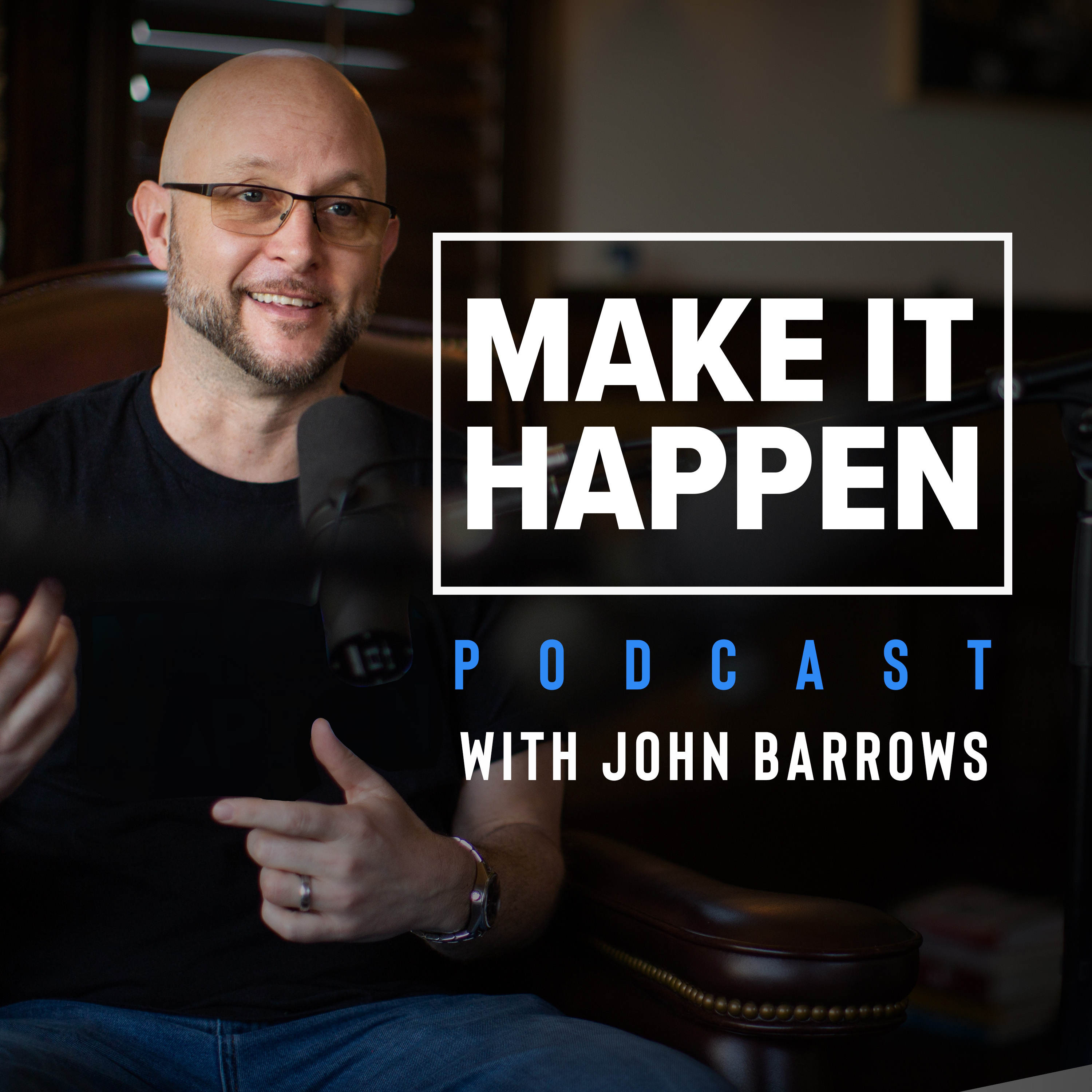
The Biggest Sales Shift Since the Internet with Peter Grant
About this episode
Artificial Intelligence is transforming sales faster than any technology shift we’ve seen before. In this episode of Make It Happen Mondays, John Barrows sits down with Peter Grant, CRO of You.com and a four-time unicorn operator who helped scale companies like Salesforce and Siebel.
Peter shares his journey from the British military to enterprise software leadership, and how that experience shaped his approach to leadership, hiring, and sales discipline. The conversation dives deep into how AI is changing enterprise sales, go-to-market strategies, and the future of work.
They explore why AI literacy is becoming a mandatory skill, how sales organizations are evolving, and why the gap between top performers and average sellers is about to grow dramatically.
If you work in sales, leadership, or technology, this episode will challenge the way you think about productivity, hiring, and the role of AI in modern business.
What You’ll Learn in This Episode
• How Peter Grant went from the military to leading revenue at multiple unicorn companies
• Why AI is the biggest disruption to sales since the internet
• The evolving role of sales professionals in an AI-driven world
• Why top performers are becoming even more effective with AI tools
• The risks of relying too heavily on AI without critical thinking
• How enterprise companies are adopting AI and measuring ROI
• The importance of AI literacy for professionals in every industry
• Why the future of work will reward curiosity, adaptability, and continuous learning
About the Guest
Peter Grant is the Chief Revenue Officer at You.com, an AI platform helping enterprises deploy generative AI solutions with measurable ROI. He has helped scale several high growth technology companies, including Salesforce and Siebel, and is known for building high-performing revenue teams in emerging technology markets. MIHM Peter Grant
Key Takeaways
AI is accelerating the performance gap.
Top performers who embrace AI will become dramatically more productive, while those who rely on outdated processes risk falling behind.
AI literacy is becoming essential.
Understanding how to effectively use AI tools will soon be a core skill across nearly every profession.
Sales roles are evolving.
The traditional sales process is changing as buyers gain access to more information and automation tools.
Curiosity and adaptability matter more than ever.
Professionals who continuously learn and experiment with AI will have a significant advantage.
Resources Mentioned
You.com – https://you.com/business
John Barrows Training – https://jbarrows.com
Get every episode summarized
Each time Make It Happen Mondays - B2B Sales Talk with John Barrows publishes, we email you a written briefing from the transcript — the topics, who appeared, and any specific claims, with the ad reads skipped.
Email me new episodesFree for 3 shows. No card needed.
Hosts & guests
Transcript ready
695 searchable segments. Every word is indexed and playable.
Full transcript
Make It Happen Mondays - B2B Sales Talk with John Barrows — The Biggest Sales Shift Since the Internet with Peter Grant. Machine-transcribed; use the interactive transcript above to jump the player to any line.
Hey real quick before we get into the conversation. Look, if you've been listening to this podcast for a while now, you know I don't house sponsors. And it's mainly because I know most people including myself skip right through them and I just don't want to annoy my audience with 10 minutes of sponsor spots every single week. However, it also means I don't get paid to do this. So the way I help fund my ability to provide free content and really interesting conversations like the one you're about to hear is through my sales training and coaching services. So if you've gotten value out of some of these conversations on this podcast and you're looking to level up your sales game, do me a favor and go to jbaros.com and check out the training tab on the top nav bar. I have training for teens or individuals and you can even get an individual training module focused on a specific skill that you're looking to address like objection handling negotiations much more. If you're an individual, you can also use discount code podcast for 20% off the membership. Look, sales is evolving faster than ever right now, especially with AI. And we all need to level up or risk becoming irrelevant. Whether you're an executive looking to train your
entire team or you're an individual rep looking to level up, I promise I can help you get to where you want to go in 2026. Send me an email to schedule call or sign up to my membership today and let's make it happen together. Now, let's get on with the show. People say to me, people, what is an amazing salesperson? Is it a great communicator to be able to page knowing all the product? Yes, all those but they actually two is in one mouth, right? You need to listen to what the customers are saying as a salesperson, you have to be a domain expert. Hey, everyone and welcome back to make it happen. One day is when we talk about sales, business, our different eras of personal growth, mental health and everything in between, we guess what, truly respect and I think make a positive impact on the world around us. Now, today's conversation is with Peter Grant, who is the CRO at U.com, which is y-o-u.com, where he's helping fast going startups and global enterprises achieve real ROI on their AI deployments. He's also a four-time unicoin operator. He's got a track record of dragging hyper growth at companies like Salesforce and Sebel, and now he's bringing his expertise
to one of the fastest and most competitive categories in tech, which is enterprise search. He's a proven revenue leader who's helped some of the most successful software companies thrive from their early stages of development to maturity and IPO. And boy, does he get a lot of experience in this space as far as hyper growth and what he's seen out there? I think he's around the same age as me a little bit older maybe, so he was right there when the internet was popping and right there at the beginning ages at Sebel. So he comes from a military background too, which I think gives him a very unique perspective. And we talked about a lot of stuff as it relates to AI in this new world of sales. And for instance, pilots, pilots or trials and where do they fit, right? And how fast and easy it is for customers to find out information and what is ROI in this world that is so fast moving that none of us can predict, you know, next six months what's going to happen. I talked about his frameworks for diagnosing problems as a CRO and what he looks for, right? People and then the market fit and a few other things. And also how hiring is his number one focus
because you're higher the right people, you're training the right way, a lot of the other stuff takes care of itself. So there's a lot to unpack with this one. He jammed a lot of value into this conversation and we talked pretty fast here. So hope you're ready for a good one. Let's make it happen. Peter Grant, welcome to the Make It Happen Monday podcast, my friend. How you doing today? I'm Ekston, John. Great to see you and thank you for the opportunity to talk to you today. Yeah, thanks for coming on, man. I've been been interested in this conversation since it popped on the calendar as far as, first of all, your experience is pretty significant with a bunch of the companies that you've worked for and seen a lot of stuff going from zero to a billion and unicorns and all the fun stuff that we can get into. But more importantly now, the kind of your experience in AI with you.com and what's happening in the marketplace right now, which I am extremely curious about from a sales standpoint. So we're going to get up to all that, but Peter, I always love to start these podcasts off with kind of your origin stories, stuff that we can't find on LinkedIn. Like, where'd you grow up, parents, what influenced you to, you know,
and then, you know, school, what'd you get into? And then how'd you stumble into sales here? Because everybody has their own journey getting into this profession. That's really deep. Yeah. So a group in England, so I'm English, not Australian or Kiwi. Often just confused over here. I live in the US now, but I get to how I came over here. I had a pretty standard education. I actually didn't go to university. I joined the military, which is not on my resume. So it's not on my LinkedIn. So you wouldn't see that there. And I had aspirations to sort of go into special forces, but unfortunately on that journey got injured. And I couldn't achieve my goal on what I wanted to do, but I was pretty successful as a young soldier, as forward air control. So I used to bring in all the basic, the artillery, the mortars, and the ground attack aircraft onto targets. But I did that very young age. I love a responsibility, like a 20 years old served in Northern Ireland as well, but I came at the military, a friend of mine said, I think he'd be quite good at sales. Yeah. And yeah, I was quite good communicator, quite good building relationships with people. Trust is really
important to me as well. So you deliver on what you say you're going to do. But the military is really important to me because it gave me, gave me respect for other people. I came from a pretty small village, wasn't exposed to big cities, different ethnic backgrounds, different educational backgrounds and everything else as well. And you get all co-mingled into the military. And you you basically have to fix problems. And you have to come together as a team. Yeah. So it told me to do that. How to pay you as a team, give me some leadership skills as well. So I shouldn't quite a lot of responsibilities as I said before at a young age. And I don't know why, but I'm in my 50s now, but it hasn't left me in 30 years. And also the other important thing is that 24, 7, 3, 6, 5, always on work environment, which you need in the start-up, especially in today's environment with AI. I just don't know when to switch off from that point of view. And but that's that's the military for you. We get paid to work literally 24 hours a day, 365 days a year. And our salaries is not in a 9 to 5. That's how it is work for us. And I've
just always had that mindset. So that was a good round. If we came out, we're actually going to publishing first. I sold advertising. And that's really hard to do. Don't physically sell a product. It's not like I saw you this water bottle because you're seriously unique to droop right. You have a need for it. It's quite easy to sell it. It contains the water. He's got 1.5 liters in here. I'm going to keep you hydrated for most of the day, etc. You saw something on a page. As soon as someone's gone past it is dead. Yeah. So you have to sell a vision. You have to sell the readership. You have to sell the promised land and the art of the possible. And everything else in the work for a company called Redel Sivir and this is an excellent sales training there. Things like IEDO, tension, interest, desire, action. So you learn all that in your sales process isn't everything else. And then in 95, the worldwide web sort of came along actually a bit before them. But it's some become more prevalent in the UK. I thought this is really cool. This is something I really would like to get involved with. And I didn't have an academic background, but I was running a local cricket club and someone that played cricket for me was working at ICL for Jitsu. And they were looking
for a different profile, a person living for entrepreneurs to come in. I'd try various things. I don't need to go into it by various businesses. And there's a young 24, 25-year-old. I just wanted to be an entrepreneur. I wanted to be the next Richard Branson. And I'd failed. And but I had this opportunity to get to ICL, get trained, long story short. I went in as a new technology sales manager and I said to product, what does that mean? So we don't really know. We've never had one before. But you and the soul is internet stuff and deliver the stuff by, you know, over the internet into stores. And we're going to do this thing called, well, workplace shopping and home shopping. And this was basically back then where you were going to the internet and you would basically order something from Tesco's or Sayingsbury's or Mark's and Sparks like Walmart. And then some pickers would go and store and they would basically pick it for you and then we would get delivered to your house. We do everybody does it now, right? But back then it was brand spanking new. And I read in a magazine that Tesco's were having customer sat issues because basically
that you got a CD-ROM because there's that product catalogs. You can do it over the internet is dial up Modem back then. Most of the people in this podcast are going, what the hell's that? But there's a dial up Modem. You put it into your computer and it gave you the product catalog and you would pick it. And what the pickers would do if they couldn't find the goods, they would substitute it for something else. And he was having a lot of problems and customer sat issues and they wanted to improve all of this. So long story short, Tesco's were not a customer of ICR for Gitsy. They wouldn't do business with us because we had maps of Spencer's, we had Sayingsbury's and we did all their what's called E-Post systems for them. And these are like 50, 100 million pound deals back then. So significant deals and they've never touched us. But because we were a part of Gitsy with a flat screen computer that just came out like a measurement iPad, but by an inch thick. And I thought if we could put that on a trolley and we could tapping to the RF network in the store, we could send it live to the pickers in the store. So I went to the solutions team. A long story short on a Kichino. We got these batteries. We went and got Tesco's trolley. We
welded on a little computer to it, right? We welded on an RF network and we tried it in store and I got an initial order of 30,000 pounds or about 50,000 dollars. And I skipped a down, I never forget, down the corridor with the order from the fax machine like this. Oh my God, I've just got into Tesco's. That turned into six million. We've turned into roughly a hundred million in total orders over a period of time. I won the ICL Innovation Award at the whole company. Wow. But that set me on my way for a solution selling. And then my boss who was my mentor, he left and he went to a little company called Reef Thoughts, called Cybers, called Siebel. And I burned him up one then. And so why have you not taken me with you? And he said, because you're doing so well where you are. And I said, get me out of here. It's like working for the, you know, the government, right? ICL is a big company and everything else. I just, for me, it was just a grounding and everything else. And I managed to get myself into Siebel, which is very, very hard. And I'll come back to it. And it was tough. It was really hard. However, being X military,
the way it was run and the discipline that we had, I hadn't experienced anything like that in civilian street before. So I felt I was back in the military and I liked and I liked the accountability. I liked the teamwork. I liked the professionalism. I liked the fact that everybody around me was better than me. And I had to pick up my game, the matter of reading. I had to do and study etc to become an expert and understand basically proper IT. And then we were selling perpetual software. And long story short, I've got the media market with back in 1996, John, you try selling a multi million dollar CRM solution to newspapers when that we were using flip cards. Basically, I would go, a John Barrow's like this, where I worked here, call you up, hey, John, you're going to buy some advertising, they're going to do that. And she would transform your note, go away, phone down, go back to the back of the list and pick up the next phone. That was, that's, you know, and I grew up with that because I came from publishing. So I knew it. But luckily, for me, Reuters was in my patch. And those days, we didn't really scale the internet. You read all
the trade magazines. You were looking for what people were doing, what they were talking about. They were looking to transform their sales organization, which was approximately 700 sellers. And I thought it was an opportunity here. Long story short, got in there, did a pilot, I believe, didn't know, didn't do a pilot with them actually got in there. And then as I was in the sales process, they wanted to add 1200 customer service people as well. So the order basically became multi-million dollar order. And it was the largest single transaction anybody did at sea board at that time, without doing a pilot that we went for. So we did that. And then that turned into significant revenue pull through for our partners and everybody. I'll just pause actually. Just curious on that one point question on the pilot, right? Because I think a lot of reps get lazy using a pilot, get lazy using a trial because they're like, oh, just test it out and check it out. What's your kind of approach to pilots, non pilots? Like, was that a conscious
thing that you didn't want to give it to them? Or was it just the sales process that you were going through? It was a sales process we were going through back then. Remember, this is perpetual software. So you had to install it, configure it. It's not like SaaS, we can just stand up with instant, the tenant for them. And it's pretty much out the box you can get going. So you didn't have this, what we now call POG, didn't have this premium model to penetrate and everything else as well. But I think it's more important. It's an interesting question because if you're further along in your journey, and you have your product market fit, your reference ability, then you can push back on the pilot and you can use your existing customers to negate having to do a pilot. If you have to do a pilot, you only do a pilot if you know what success looks like before you go into the pilot. Yeah. And what's really important is you, you basically have documented, yes, it's not, and it's not subjective, right? And it has to be realistic in the time span of the pilot. Is it a week, two weeks, a month or whatever? You're not going to close a million
dollar deal if you see your own system you're selling, right? But will you have a good view of your forecast, right? Will you get all your activities in there? Will you not miss any follow-ups and everything else? You need to control what it looks like and be realistic with the customer. And Tom told me that Tom Siebel. So when we would do it, he would sign off every single contract, he would check it and he would put himself in the position of the buyer. And if he didn't think he was getting value for what he was spending, yeah, he said, no, no, go back and read it. Read the KPIs aren't correct, right? So we would be very focused on making sure that was getting the customer allied. How do you think that plays in today's market with AI, right? Because what I'm seeing right now, and I'm sure you've seen, you know, Challenger Sale, Challenger customer, and then Jolt Effect, right? And Jolt Effect's highlight, you know, highlight the indecision factor and how it's because there's just so many options right now and things are moving so fast. And so risk is the big issue of making decisions right now. People are too scared to make a decision because nobody got fired for not making decisions. A lot of people get fired for making bad decisions.
And so in this world of AI, where things are changing so frequently, part of it is like you almost have to do the, like at least in some reps of mine, they have to do the demo because the client's like, I am not going to implement anything until I see how this works. So I guess what, how do you think it plays right now in this very dynamic market that's changing drastically? I mean, you were in one that was changing pretty drastically when, you know, 95 and the internet was hidden. But I, and I was there too. I graduated college in 98, right? So I came a little bit, maybe a little later, but I was, you know, but that was, that was kind of like, huh, this is interesting, right? Like, okay, oh, that's weird, right? But you dipped your toe and people doubted that it was even going to be a thing, you know, I remember news of people being like, oh, yeah, I was a fad. Hey, taking a quick break here to remind you to check out some of my sales training programs at jbaros.com and use discount code podcast for 20% off the individual packages. If you're not interested in training or you don't think you need it, then you
can still support me by leaving a five-star review on your favorite podcast platform or G2 if you've already gone through my training before. You can also sign up for my newsletter on jbaros.com where every single week I put out a newsletter that breaks down what I'm learning out there, some of the new tips and tools and tech and resources that I'm coming across and some stories from the streets of train wrecks that I go through and stuff not to do. So if you could do one of those things either sign up for the membership, give me a five-star review or follow me on the newsletter, it would mean the world to me. Thanks for your support. Now let's get back to the show. AI is obviously not a fad and it's moving faster than anything I've ever seen in my entire life and career and it's just rupting things faster than I've ever seen. So with a kind of a pointed question on that, how are you selling or helping seller sell or seeing sales evolve right now as it relates to AI and the risk factor and is demos, trials, those type of things are they now necessary to leverage as opposed to something you should avoid. I think we could spend the
whole podcast just talking about this. If you go back to perpetual software when SaaS came along, perpetual software, we didn't like doing pilots because it was so complicated and it was difficult to do and everything else. When SaaS came along and back then it was good utility computing but when the SaaS came on, you could stand up an instant, you could configure it really quickly and you could do a very fast pilot for them and you could control the set success as I said about before but always your end game with the sign of 12 months, 36 month contract, whatever it may be and you just move a lot faster through the sales process than you were before. With AI today, there's a new saying called the fear of committing too early because you just write quite rightly said and people are so scared because things are moving so quickly in changing they want that optionality. So we're in search. So for us from a pilot point of view, we need to control the narrative right and specifically what we call the eVal set. So when you're doing search, you need to understand what people are searching for and what type of answers they want to get back.
It's called the golden data set right doing grounded in the truth because AI basically hallucinates. So what you, what I think you're seeing is an acceleration of consumerization in the enterprise. We always spoke about it with SaaS, Mark Benioff was a bit would delete this but I don't to get really happened but now it is right now. Absolutely. So what you're seeing in accounts is you're seeing all your competitors are in there and everybody's doing these point solutions, different use cases and everything else as well. And the problem is technology now is not so much as different shaders it used to be. It's more you go to marketing your brand, distribution, actually your customer success and things like that that sort of differentiating you. So that's what people are looking at is will you maybe be successful and are you going to innovate and grow at the speed that I need and people need and especially the VCs need to get used to the fact is they're going to run month to month contracts right a lot of the big deals like really big deals that we do they don't like committing for 12 to definitely not for 24 36 months we have a few of them
in a more institutional type like the universities how but enterprises that are moving really quickly want to try things they want that optionality and you just need to change a mindset to do that right with them and you need to continually keep innovating as well but you also need to that what doesn't goes what why are you doing this right why are you doing it now why are you doing with us right yeah what a success look like for you yeah and then solving that particularly use case that problem and then obviously people like to buy solutions as opposed to buying point point solutions right now so certainly the really they can grow with you and they can share that patient with you I think that's super important and and is that so that's what I'm seeing too is like these point solutions I can't I can't understand I don't understand how the big platforms don't ultimately win because now historically with SaaS let's go back to Benioff and Salesforce right I trained every rep there was with them from 2010 to 2020 and had a blast doing it right and in for Salesforce it was like okay there was a point solution first of all money was free grow at all
costs so people really didn't care as much about overlap of tech stack details and you know Salesforce would see a point solution that was was good and they would either build it themselves but it was kind of be like 70 percent of the functionality of whatever that point solution was or they'd buy it and they'd try to cram it in and it just wouldn't yeah I mean some of them did well but most of them didn't now with AI at least theoretically like these platforms can just say hey go build me that feature and all of a sudden that feature is done and I know it's obviously much easier than that but how we go through these phases and you've been through them just with me where we go from mainframe computers to individual computers then we go to the cloud and then we come back right and we're in a consolidation zone right now where everybody's kind of going back to the platform trying to cut down all their additional expenses non necessary point solutions so how do you survive if you're a point solution right now and not a Salesforce not a Microsoft not a like how do you survive from a sales standpoint in this in this environment it's super tough right and that's
that's why we pivoted right so we were we were a GPT yeah and we were a really good GPT a good research GPT but we do not have the resources that open AI have the Claude and Thropic have for example so we don't want to compete with them right so then you have to think about everything about your ICP right so not everybody wants to go on and Thropic not everybody wants to go on open AI for example so we find a sweet spot in what I call this sort of upper mid market lower enterprise space and we find it there for a couple of reasons one is that they're not getting the attention from open AI Microsoft and all these people right so they're not getting the love to put around them to make them successful and more importantly they can't influence them whereas I can influence the company of our size to grow and there are many more companies later than or rather the big enterprise companies as well so you do a lot of more small ideas I say smaller I'll come back to that in a moment but that's one area the second area is like the speed to open AI is developing you look at Claude co-work it's looking at that today where Claude works what
is co-work what is called rent but the fact is that can go across your whole desktop for you and do a lot of things automate your MCP connect to all the sorts of stuff right you like I don't want to be in that blaster radius so then you think yeah how can I serve those people and that's all we've gone through this AI infrastructure and building their web index for AI agents so they can proficiently and accurately answer any domain question so we can serve the B-spositively right and we can be the picks and shoppers for the particular marketplace and then from there we can extend expand to building a vertical in the sea right so general web index is a mile wide in inch deep vertically index is more an inch wide on the mile deep so it's like going to your primary or your GP if you're English right your general character doctor right and he or she would know everything about medicine but they're not domain experts I know you've got a bit of a cold you've got sinus problem if you you know put it antibiotic or whatever it may be you're a heart issue right they're going to refer you to cardiology so you've got cancer you know you prostate problem you're going to go to urologist that individual is studied for years and know everything
about it well agents are going to be the same right so you've got to look at where the parts going right and you've got to be able to pivot really quickly right and you've got to see the writing on the wall and that's what we'll be doing we call it chaos internally and it is and you know your planning is not a year out is quarter and if you're lucky is six months for what you're doing right now but you've got to see what's happening what people are doing and yet what's really different here jump if you think about when when we were at sales force ever we didn't have a hub spot license and a base license and you know all the we didn't have all these as sales people to see what our competitors were doing but we can all use claw chat GPT and complexity and all these other licenses to see where they are how their products are performing yeah and make sure we're keeping abreast of design actually I'm not going to win that distribution battle I need to I need to change my strategy so that's we've gone through it we've pivoted very it and you have to do it very quickly as well yeah faster now than ever and and so so how do you look at our
then you brought that up and you know it's it's you know strategy sessions of a year out two years out nobody can look to two months out so my my struggle right now is I've always had a little bit of an issue with like the ROI calculators and all that other stuff and let's you know especially the generic ones nobody really believes them but right now how are you looking at ROI it you know is it even a thing because ROI theoretically is well not through it really is is the investment today for the potential return in the future and with the future being so uncertain how are you even coaching people or or thinking about ROI right now or is it more CLI cost of inaction or or current problem we're trying to fix this right now to save you to and the future as the future is we're just going to evolve as it goes what's your thought process on that yeah it's a good is a great question and it is hard to track right because the obvious ROI when social media productivity is ours give them back right so if you if you take a sales person
from a research and I did before I actually came here is 20 is reps only spend 23% to 28% their time actually from the customers so why is that what what else are they doing well most of them are doing hopefully they're doing research on their customers right they're doing unfortunately internal meetings they're getting trained on new product stuff and everything else as well right yeah and kept at speed a lot of that one AI is going away yeah so it gets into where AI is really affecting the sales process right then you look at your bell curve have you talk of formers right what's actually happy are we are we bringing the lower performers up to the middle tier and the middle tier up to the top tier what I think the research I've seen is actually your top tier getting even better right even better right and you mid tier maybe with the ones here and and the biggest problem is it actually engagement and training as there's a big AI literacy problem with people not understanding the power of the models of what you can do so what we do in you.com is we basically trap all the usage and we do all the training as well so we train you to
be a domain expert in your field of expertise by using LLMs and how they're going to help and support you and then whilst and so we take you from fundamentals all the way through to mastery the partner call pair absolute amazing with any company does is embeds it but it's roll based training it's not called Sarah it says i pedagrand cero u.com it will go out to web index our web index it will find basically it's in the jd's and job roles and situations that a cero will be in an attack firm it will give me tasks to solve that I have to do using with technology and then it will mark me and then it will certify me then I can post it out so that's the first step is getting everybody up addressing the AI literacy as it does it it will never say well how much time do you say doing this right so if you're preparing for a really important meeting with a cxO of a of a fortune one thousand there's lots of information out there but you'll probably spend two or three hours doing the research doing the report writing it out having to send it to your boss and everything else that can be done like that now and it's a lot more comprehensive it's more
accurate and not only would it give you the information it will give you a strategy right based on what they're doing as well and that's where it starts to come in the ROI so now it affects your win rates it affects the deal volume you can do and if we're XCRN guys John so if you remember it's all about the quality and leads to come in right can you improve the quality can you improve the win the upsell excuse me the deal size right can you improve your win rate over your competition might and can you reduce your sales cycle I think all of those from an ROI point of view are better if you embrace AI and music properly yeah and I think that's the the the augmentation piece and the heavy lifting of the research but that that human being the last mile and one of the things I'm really concerned with right now is in I've been searching for this answer and I don't know if it's out there you know the all the work that you and I did when we were young right all the grunt work that those cards and writing down the notes and all that stuff that that gave us the context that gave us the business acumen that gave us the ability to have this conversation without
a script now all of that junior stuff that junior reps or or pick a profession would do is getting done better with AI so so there's one piece of that which is to me is where the fundamentals going to come from and what are the fundamentals anymore but then the other danger factor here is I think for people like you and me who have the context and who are curious this is a super power it's wait tell me more about that can be because I can say oh yeah I used to spend five hours doing that research but now I can do it like this because I can tell it what to do and where to look and why it's doing that but we've gone from a search engine to an answer engine and and for those of us that are curious that's a good thing because it's cool tell me more but for the vast majority of people that that latter half of the bell curve who are quite frankly lazy and they take the answer they gives in the answer in the copy paste and send I feel like AI is could either accelerate the top 20% in and it does from a learning standpoint but also retard in a lot of ways the people that are
lazy who are just kind of get the answer right like oh instead of me going through the process of doing my research on the account prepping up my point of view for the QBR and thinking through my strategy it's like oh just give me the strategy for this great there's my strategy and and we're skipping this whole learning we're skipping this whole acumen phase here so is is are you seeing the same thing and and for those people who might not be the intuitive enough to be like yeah no I know exactly how to use this stuff for the right reasons how do you suggest they use it so that they don't get replaced by it yeah I mean it's called pseudo intelligence and our brains over the years that they they've developed the human brain yeah and they it's like a muscle and if you don't train if it doesn't have the work things out it gets lazy right and the pseudo intelligence is accelerating that for the people that aren't embracing this hybrid model of using the AI to do the legwork for them but still questioning it and using it more as an assistant to work with them
yeah and getting the full benefit from it and educating them on stuff they didn't know that they can bring value to the customer right it's one of my rules of enterprise selling you have to add value every single time to the customer if you just do what you said you just go go off do it and bang send it they won't know it's so synthetic the way it goes through and you will get found out very very quickly right which is why you need to as I say go through the training go through the sophistication and is it continuing it's not one I'm done because the models keep getting better every single time you know amazing developers or even people like you and I five coding can do stuff that you could never imagine that you could do before you have to constantly be learning keeping abreast but that to me right is exciting yeah that's why I'm in this space I wish I was 25 again but but that's the mindset everyone needs if you don't have it go back to that 23% when I talk to CEO's they want to double their revenue not their head count that's frightening right that is right and I'm afraid I think there's a winter coming for a lot of people that are not
going to get with this you know 300 million jobs are risked from a billion knowledge workers and if it is happening faster than you think it is right so yeah you have to get into your point you have to see how you use it and how it makes you better doing your job and adding more value to your customer yeah and how you can basically almost use it to what I say to a friend's of mine who weren't really into it and they're in the job market right now and they're not they're struggling you know so I have an accountant friend right and he was at a work for nine 12 months whenever it was and I asked him I was like hey um so where are you with AI like you know what's your skill set with this and he goes oh well you know I used it to you know update my resume and I'm like oh dude I go I go look and he's 50 like me right and I said my friend Jeremy and I said Jeremy you have to be able to walk into an interview and say hey I've been messing around with AI quite a bit and I've actually been able to automate 80% of what I do like I've been able to automate all of it because it's not much better however the reason you're going to hire me is because that 20%
I got 30 years of experience to tell me that when it produces this that it's not right and I have to check that and I can so I'm going to be far more efficient but that last mile is where I add the most value and I think that is what all of us have to have that conversation like if you are a process person where you are putting you know following the process that's why I'm so scared for sales reps because most sales reps quite frankly are our process monkeys you know okay let me qualify now let me set up the demo let me bring in my SE let me now you know get the like and and they're just following a process they're not engaging they're not adding value to your point and so the value of a sales rep is getting squeezed where the client now has access we've all heard that by the time somebody comes to us they're already 60 to 70% of the way through the process whatever but that was that was more that was such an overused stat and that was also one that was you know an inbound like somebody who was genuinely interested did their homework and reach her you know now you could get a call call from an SDR and go yeah that's kind of interesting why don't we set
up a call with an AE and five minutes before that call with the AE I could jump into chat GPT and say tell me what I need to know about this client about the software the how does the lie with my strategy what are what questions should I be asking to make sure that this is worth my time and come in so prepared that if an AE then sits and asks you bent questions you know forces you through a generic as demo can't answer your technical question has to wait for and like that conversations over yeah I'll give you a really good I'll give you a really good example so I hired a new guy and he joined on a Monday and on a Thursday a partner of ours a very well known partner and you're here on the west coast said hey we we've got one of the world's largest cruise lines coming in and we had a renewal with the partner so they're a partner but we're also a customer and they said oh we've got a slot for an hour would you like to come meet the C-suite for them and I went yeah and it happened to be in this new wrecked territory and lights on the Thursday night
he said when's the meeting I said Monday we have to work over the weekend to be prepared for the meeting right and there's a window with the page and what we do and everything else and he said oh yeah let me let me prepare some stuff for you long story short he used R is our advanced research and insights and he basically he he mapped the whole guest journey for a cruise line what it would be for search what it is now for this particular customer and what it would transform like if they had enterprise search yet he created all the swim lanes all the use cases and everything else right he then rebranded the whole presentation to them he created a mobile app to provide code codey all over the weekend yeah we went in there we were the only vendor got invited to their HQ after they met everybody else was in this space because of what these boat is literally three days in our company he did all of that using our technology oh my god and I call it Dom Draper Selling what he may imagine right so we open the presentation right and we would literally walk back from their customers and how they would experience our technology and I
thought this is freaking amazing so we we do a lot of that now with everybody we go into to show them the art of the possible because it's like you know when when I've always liked you being the precipice and new technologies we are always ahead of our customers they don't know most of the Lord you respect what they're good at running cruise cruise lines hotels car companies via whatever right they don't know necessarily what the technology can really do and how can transform their business so you have to give them that vision and this AI just accelerates and helps to do a lot of that and to your point earlier you you don't do a 50 discovery calls now before you show the demo and everything else you don't need to when we're at Salesforce we were market makers right no one knew what we were doing well how are you but here you don't need to GPT's your best marketing part ten billion dollar marketing budget right so you don't need to you need to say well you're different how I'm going to change your business how I'm going to add value to you you have to read it quickly and help them figure it out this is why what my thing is is like it's not necessarily as much about your product or service anymore it's how you partner with the company to help them
figure out what they're at help them evolve to your point their experts in this they're not experts in what they're trying to accomplish which is why I'm you know for a lot of the smaller mid market companies that work with them like I personally recommend that every company created their own internal GPT basically like you.com right so so they so that but their own internal that is effectively an SE so now when you and I are talking because there's all these tools out there now that are like you know surfacing up like oh John he just said this so here's a couple of talking points and it's like don't do that right don't pretend like you know there's on my screen and then I'm going to regurgitate a question from AI so let's learn out loud with our customers and so one of the things I suggest is you know obviously not configuring the software or whatever it is but but enough to answer the vast majority of technical type questions or run scenarios and when that question comes up instead of the rep saying hey you know what why don't we schedule a call with my SE in a week that's actually that's a good question you know what Peter let's let's let me share my screen here we have our own internal you know GPT effectively it's all right it's
SE let's let's ask us some questions because you might not know the questions to ask but I do and that's kind of what I bring to the table it's not how awesome our product is because it's going to evolve really fast it's not the features and functions like it ever like it ever has been it's our ability to communicate the EQ side of the house to get that person to trust that we are going to be that partner whoever solution that is going to help them evolve and figure this shit out as we go and I think that's the agility and the transparency factor of being able to leverage AI and admit that IQ is effectively over you know what I mean like anybody can vibe code prompt whatever the hell it is to get whatever answer they want but it's the EQ component of being able to understand that help guide people through this that I think is going to be the differentiator am I am are you seeing I think partly you are I also think the profile in our space right the profile of the rep is changing as well and the ratios are changing as well and you go to market model so we're still the rep profile first we look for more technical backgrounds
right so they can naturally hope you have a good IQ anyway but but but they need to have that EQ as well but they need to be able to understand the power of the technology to your point early and the value you can bring to that customer and the customer can say I trust you I'm going to go on this journey with you on the ratios the go to market all got fat and lazy about six or seven years ago John right just pre-COVID right I was seeing you know there's a great there's a great a VC presentation like to get 36 million dollars in revenue I think it was was costing like 28 million or something like that right and now it costs like about that it's costing like 50 so the economics will work it because you had one a one s c one s t r but those are rate luck WTF right my day it was like one eight three three three eight eight eights to one s t r and the same for pre sales people what we're seeing now is a six to one ratio rather than the three to one ratio because you have a more technical seller to your point anybody can buy code spin something up
know what questions to ask and all those sorts of things as well so and that has a that has an impact on the unit economics as well absolutely yes I think that those are the sorts of changes that we see let's go back to kind of your experiences a CRO and as much as you've seen right because you went from CRO to then CEO which gives you a different perspective on the CRO role and right now with things is moving as fast how does a CRO know that it's it's the sales the sales motion is the challenge the the the the market is the challenge like how do they feed or the strategy is the like when if those aren't working right now what's your approach to diagnosing the problem to identify is it product market fit is it things are just moving too fast is it risk is it the sales reps that we have we don't have the right pro how do you diagnose coming in as a new CRO because CRO is right now I think the average CRO stays like I don't know 14 15 months or something like that in our position so they have to make it they have to make changes fast and they have to be more adaptive than ever
before do you have a framework or an approach that you use to help diagnose problems and adjust quickly yeah I mean the the first framework is obviously the the quality of the people they're working with right to begin with that's that's the number one in tech right I have to be the best of the best and you have to invest in them you have to enable them you have to do everything to make them successful hopefully you work with people especially in this everything situational I said when you're pretty early from trying to build and scale and everything else as well the second thing is you said the market so what is that market doing right is it exploding is it contracting is it slow moving are you in U.S utilities I'm going to forget Tom Seable saying to me Peter never walk away from utility company run yeah because I you know regulated really hard to sell to in that particular market right so yeah what market you selling into what the dynamics of the market yeah and then how do they buy and everything else then it's your product yeah so is it is it is it a great product as he got lots of foibles in it now in the old days if you're
the right people in the right market the product wasn't so important because you can set around it they those days have gone my friend they have completely gone because this consumerization GPT the speed it moves at nicotine else as well right and then it comes down to timing are you in the right he is right market at the right time with the right crew and I've been in the wrong I've been I've been with the right people the right product with just the wrong timing in the market before right and just melt what you do you know you can't believe your own BS right you can come out of these hyper growth companies you can think I'm these sprinkles and gold dust and everything's going to be party right but you need everything working and going in your direction right so I would look at all of those things first but the thing is I yeah people say to me people are reading amazing salesperson is it a great communicator being able to pay each knowing all the product yes all those but they actually two is in one mouth right you need to listen to what the customers are saying you need to go and do win loss reports right win loss is really important I think people forget to do it nowadays the amount of companies like advisers are being to and they're not doing a an
impartial win loss for those that don't know if you lose a deal you basically get somebody to go in there had nothing to do with it and they have a set of questions to find out why you lost that deal you know and it's can be get confidential but the important things you will learn so much from that and why you won why are we winning right may not be the reason why you thought they bought from you then they'd be buying for another reason right but that then permutates through into your marketing messages and everything else as well so I do that as you they're assessment of the people assess but in the market obviously the different verticals are settling into is it the right ones for what we're doing everything else the ICP all those sorts of things you'd have to look at everything there to make sure and then you might just be a timing issue right or it could be an execution right or it could be the product isn't quite working or where it may be or it could be like you say the sales people are just not doing the fundamentals then you get the performance for performance management so what are the fundamentals yeah well not when I started selling you had to do 20 calls a day five meetings a week right and get one proposal now yep yeah and I don't think last change much Joel
I remember that's when people say it's oh sales isn't it's still a numbers game my friends you you still have to put there's the quantity and quality and the one thing that I can the one thing that you can absolutely control is the quantity the quality we can work on but the quantity is just putting in the in the effort so they but the challenge that I've always seen is the reps they might do the core their teams or the companies might do the quantity but they don't learn anything from the quantity it's just quantity and that's why I'm a huge fan of a b split testing everything and having an agile framework to test intros to test messaging to test questions to processes all of that stuff so that you can continue to evolve right now because what worked six months ago at this point is not working anymore at this point no it's all right then and I think so going back you know so certain rules that I have right is obviously betting on people right is the the hiring process to me is very very important right go back to what I said right beginning of this podcast right I want to go into special forces and fortunate I got injured but that's the hardest selection process in the world but on that has a job interview
and I have the same mindset when I'm hiring people like what we put people through the questioning the panels and everything else as well but that's just getting in right once you're in it's all about a enablement it's all about training right it's all about boot camp right it's all about certifications about passing as well if you don't do that then you're setting them up for failure or I call the train hard to find easy the very things Russian general came out with that saying I'll use that in my in one of my rules right I think that's very very important and because to your point earlier this market's changing as such a rapid rate instead of doing two boot camps a year or whatever we would do that but we also have a person dedicated just to self-training enablement our new product releases the letter literally in a weekly cadence for the reps which may use a further engineer but you have to when the market's changing and my number one thing is that these as a salesperson you have to be a domain expert you're only going to get that if you're studious and you and you have that appetite to learn and why wouldn't you want to do that in this
market it's so exciting right that's the type of people we look for I look for passion energy because you can't coach that right everything else you can coach right so if they've got those fundamentals right and they've got that learning mindset then you need to enable them to make sure they can go through execution then it becomes a performance side what they're actually doing the inputs etc to get the right sort of outcomes they're obviously looking for other hey it's funny because I don't have you ever heard of the group service to software by any chance I have not so service to the number two software okay look at that you might want to take a look at them based on your background because I've partnered with them and it takes military veterans and trains them and helps them get into tech and SaaS sales yeah I've had an organization that does I hear in the US yet yeah yeah so I they actually take my training get certified and then get placed in the tech because I've always said that the military and service like you know you have these kids who are you know scared to pick up a cold call because they're able to get yelled at
and then you know a military veteran who's just had bullets wasn't by their head and you know stress is a whole different thing and they follow process they they go through some like I'm a huge fan of military transitioning into sales because I think they're better suited than most to actually be successful in sales in a lot of ways yeah no I mean the sales process itself is actually one of my favorite interview questions I say it's broken down to five components so you basically got prospecting qualification running the deal closing the deal custom success quite management afterwards and I say rate yourself on one to five what you're best and Worcester so in number one you're the best and five you're the Worcester and you can't have all ones right so yeah yeah yeah yeah so and and I and I think through my career right see the number one skill you need qualification in sales right so but you also need to be as when we took about starter early growth through everybody the context you also need to be really good at prospecting which is to your point it's picking up the file right which is the dying art dying art but I used to love it
because I grew up in ad sales right so you yes you get all the rejection but as soon as you get somewhere on the hook that is so exciting right the middle bit is boring and the closing is action anti climax especially if you're an enterprise sales with long sales cycles because it's so emotional when you finally close it you like you need a hit again yeah yeah yeah yeah and then you have to get back after I mean I think that you know I was told early in my career you know never let the highs get too high or the lows get too low it's like you know you have that long sales process and all of a sudden you close it and you do this yay and it's like nope nope nope nope don't get too excited you get to get back after it because next quarter next month you got to keep going and that and I that's the thing that I'm like again just watching the evolution of sales and the mentality it takes to be successful in sales and you know I feel like I've sounded like dad every time I say you know work ethic and those type of things were lacking that work ethic or the cure to your point earlier the curiosity the why wouldn't you want to be constantly
learning in this environment because it's it's quite frankly it's so easy it's so much easier to quote unquote learn right now if you're curious only if you're just somebody who's just trying to cash a check go through the motions man I am that's why I am massively optimistic for those of us who are curious who who have the work ethic and who want to get better I think this is an error that we're going to be insanely valuable for both the client for us ourselves and everybody else but I am insanely pessimistic for everybody else quite frankly yeah yeah and I agree and I have some younger sales people in their in their mid 20s who work for us am I absolutely loving a door there right I just love their tutors and their dried their intellect to what they're trying to do and I think I wish I was like that twenty but I think it probably was but not smart to send but I just I just love helping guide them not to move mistakes that I made but it's so it's so encouraging to see people like that coming through and as you say the people that don't have that unfortunately
this may not be the wrong profession for them in the next 12 to 18 months and I don't know what profession will be at the end of the day I mean I look at every role I look at doctors I look at lawyers I look at you name it and the ones who are just kind of part of the machine are gonna just be part of the machine or not actually not going to be part of the machine because the machine is going to actually do it for them I mean this vibe actually last night I'll I'm curious on your your take on agents because quite frankly I am scared to death of agents and I'm pretty progressive with like all right I'll try that you know like let's see what this is all about but the idea of letting this thing run wild on all the tabs that I have open and have access you know I have last pass for all my passwords so I'm pretty much auto logged into almost everything on my desktop and and with agentic AI coming and you know all those different things like where where you at right now with that because that is the line I'm I know I'm eventually gonna cross it where I'm just gonna say fine my my iPhone is gonna basically know every it already knows everything about me so might as well just tell it to do shit um but I'm I'm holding on to that one where are
you on the agentic piece of this which is just like hands off it does it better than me I can go grab my coffee or lunch and then it come back and everything's great yeah I'm maybe a bit too trusting I love the younger generation they tell everybody everything right and um there are two types of agents right so there's an action agent and there's a research agent might so um a research agent and they still they're both agentic right so that will go down into the LLNs and it will do stuff you don't even know what it's doing right I would do recently in China Thor do research it would it will make decisions do you need to read this do you need to see this based on the prompt of fanning the prompt and everything else as well and obviously there's the agentic ones and and that by the way the the research ones go down we think we think of a agentic has been left to right because we think your workflows but these things go down they fan out and do various things they come back and they bring back what you they think you need to be presented with then there's the agentic ones are some of the stuff that we're working with our customers is they can go and book for you you know restaurants hotels all those sorts of things but
because at memory they know what you like what your preferences are and they're going to get better over time and everything else one and to be honest with you I think it's there's almost levels is never automation you will let them you will start to trust them more and more John as they do certain things for them there'll be guardrails on them that you want them to do but yeah booking the stuff like travel and and just be able to tell it you know but this is a this is the people go get used to the whole the whole interface with the computer is going to change quite a lot yeah yeah the human interface is changing to be completely conversational where I can just talk like and talk to you know friends hey can you put me a flight between here and my army right I want to go you know on this particular airline but knows that already right so and knows I fly in a certain class and everything else as well and all it means is my credit card and it's can actually book that particular flight and it's going to do it right and I think so I think I want to be there because I'm lazy in some ways from that point for doing those types of tasks
but I think there's going to be a trust you know of how much on the whole journey you let them do right so when you're planning a trip there's either multiple things you go through to plan it is certain things are going to get automatically quite quickly and other things what I'm much said to push the final button myself as a human but I think in 12 months I'll probably lap away just say it and I say I'm here man that's why I'm like I'm so scared right now but then I think of the early days of the internet and like the idea of putting your credit card and buying something online was like are you out of your mind there is no chance and then it was like all right I'll buy something for five bucks I'll buy something for ten bucks and then and then I'll send it by a Tesla you know what I mean for like and it's the same thing with SaaS I remember vividly back at Salesforce's dates like everybody was like oh like Oracle was like oh you know the SaaS stuff was cute and adorable but when you want to make a big boy decision you're gonna you're gonna need you know infrastructure right and then all of a sudden I think it was state farm that signed $150 million dollar contract with Salesforce and just blew the top off of that that whole theory
it was like nope huge organizations are now in the cloud and and it just took up and and I think the uncomfortable part here is I've been saying this a lot historically we would we would that was a gradual evolution it was okay you know today I'll spend five bucks six months maybe later I'll spend a hundred bucks online a year later I'm gonna okay now I'll buy it you know what I mean whereas now it's like it's it's it's it's happening so fast where it's like I look at this agentic stuff and I'm like we've only been really really like neck deep in AI since a year and a half maybe you know what I mean like the public has and we're already we're where we are and so who's to say that literally in two months I'm not just like yeah you know what AI just can do everything I want to do I mean the way I describe to people if you go back to the internet days just do go took five years to get to a hundred million users Changi PT trip less than 60 days that's 30x
faster in that in that in that 25 years we've had a digital platform either internet or the worldwide web half or 56% of the fortune 1000 disappeared because it didn't transform faster so you know you know you're you know your blockbusters of aims one code all those sort of people at war was et cetera right in the UK this is 30 times faster that's why I'm so passionate about AI literacy getting in the hands of everybody showing the power of what it can do Jon for your business because if you if you ignore it unfortunately you're going to be a dinosaur and and the future is not rosy for you and go much your early estate and right what are you going to do you're probably going to be a plumber or something no disrespect to plumbers very but those are the sorts of things you did that have not been recorded like what we do is white collar workers right that that cannot be identified yeah at the moment right so that's a safer bet for you to go for I recommend kids right now who don't know what they want to do and be a plumber be an electrician and with the amount of data centers that are being built right now you can print money as an electrician at
this point and you'll never be out of work but white collar ye white collar you're in trouble so if you don't jump on this train and start becoming fluid in AI fluent in AI so I think it's a good place to end that Peter because I think there's like I said I think there's optimism for the ones that that that are willing to put in the work and are and are curious enough to go there but you know for everybody else listening better get off your ass pretty damn fast so Peter talk to us a little bit about what you.com is doing what you're doing help people can find out more about what you're working on right now so they can because I really do think that your you.com and what you're doing with enterprises you're probably one of the only organizations I've seen that has been truly successful implementing AI at the enterprise level without the and keeping the NRR at a level of you know recurring versus people just trying and bailing after six months on some failed experiments so how can you how can people find out more about what you're working on. Yeah yeah go to go to go to you.com obviously but you.com slash business you'll find
out there there's two sort of main parts of our business ones the API business which is basically what we're building this in to see or index for AI agents we believe that every human will have 20 to 30 agents they will go and complete task for you they need context they need domain expertise which means they need to go out to web index or vertical index to call it to bring about an information way to make you more informed as a human and that's a huge part of our business we do but we are also known for enterprise search so that's external search internal searches called private rags of private retrieval augmented generation rag is really hard to do right so most people will try and do it themselves and they will get to 80% accuracy right but that's not good enough in the enterprise right this not consumer product you need to be 95% plus in the day you bring back and the auger augmentation generation inference that you're doing effectively to do that you need special skill sets and technology that we have right and that's where we really excel and we're doing an industrial scale you know so we would take all of your data all
from data bricks some snowflags CRNs unstructured semi-structured structured data right bring out and vectorize all that information so you can have a conversation search over it and you can then mash it up with the outside search as well and that's the raw power of what these systems can do awesome my friend well again thank you very much for coming on I think you know we should probably get back together another couple of months to see if any of the stuff that we're talking about is still relevant again right yes exactly great to meet you and thank you for your time likewise Peter and thanks everybody for listening hopefully you enjoyed the conversations as much as I did like I always say it's I know these podcasts go out there make somebody smile today because no matter how bad your day's going or how bad you think it went if you make somebody smile today you know you had a good day and the world needs a lot more of that right now so thank you all very much and I'll see you on the other side hey thanks again for listening to this show and for all your support throughout the years this is one last reminder to check out my training programs at jbaros.com or leave a five star review on your favorite podcast platform or G2 if you've already gone through my training or sign up for my newsletter any of those will help
ensure I can continue to bring you free content and great conversations like the ones you just heard without having to know you with sponsors again let's make it happen in 2026 together
More episodes
More from Make It Happen Mondays - B2B Sales Talk with John Barrows
How Customer Success Drives Retention, Revenue & Growth with Elizabeth Salmoun
Make It Happen Mondays - B2B Sales Talk with John Barrows
Why AI Will NEVER Replace Real Sales with Jeff Kirchick
Make It Happen Mondays - B2B Sales Talk with John Barrows
Why Platform Sales Are Breaking Traditional B2B Sales with Zachary Gropper
Make It Happen Mondays - B2B Sales Talk with John Barrows
Why AI Role-Play Is the Missing Piece in Sales Training with Neha Gupta
Make It Happen Mondays - B2B Sales Talk with John Barrows