Loading...
comedy
The Guilty Feminist in association with MSI Reproductive Choices
About this Episode
MSI Reproductive Choices
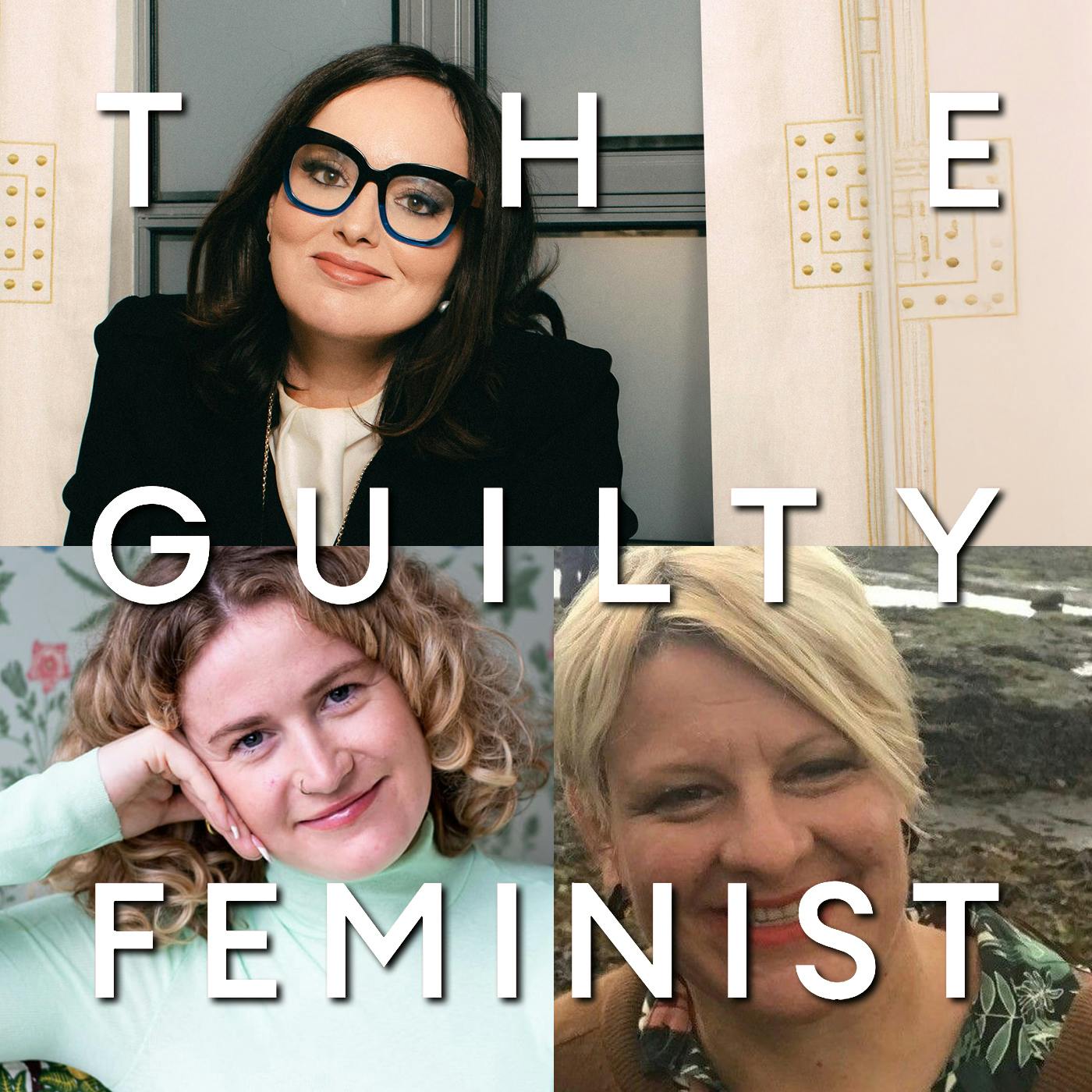
Presented by Deborah Frances-White and Grace Campbell with special guest Sarah Shaw
Recorded 2 March 2026 via Riverside. Released 8 March.
The Guilty Feminist theme composed by Mark Hodge.
Donate today to MSI Reproductive Choices https://www.msichoices.org/guiltyfeminist/
Instagram explainer on the Global Gag Rule https://www.instagram.com/p/DUIJpGLjCe1/?img_index=1
More details on the Global Gag Rule on the MSI website https://www.msichoices.org/latest/explained-the-us-global-gag-rule/
For more information about this and other Guilty Feminist episodes…
visit https://www.guiltyfeminist.com
tweet us https://www.twitter.com/guiltfempod
like our Facebook page https://www.facebook.com/guiltyfeminist
check out our Instagram https://www.instagram.com/theguiltyfeminist
or join our mailing list http://www.eepurl.com/bRfSPT
Come to a live show
31 March Bloomsbury Theatre. https://www.bloomsburytheatre.com/event/2026/03/guilty-feminist-live
30 April, Guilty Feminist x The Nerve. https://www.leicestersquaretheatre.com/show/guilty-feminist-x-the-nerve-road-to-gilead
10 April, 17 April, 14 May, 22 May Museum of Comedy. https://www.museumofcomedy.com/the-guilty-feminist
The Guilty Feminist is part of the AudioPlus Network. If you’d like to work with us, please get in touch at [email protected].
Learn more about your ad choices. Visit megaphone.fm/adchoices
Hosts & Guests

Transcript
Hello, Guilty Feminists. Happy International Women's Day!
I mean, it's really a week, you know, it's an international women's fortnight, in my opinion.
And welcome to this very special edition of the Guilty Feminist in Association with MSI Reproductive Choices.
Fighting for a future where everyone can access contraception and abortion.
My co-host for this episode is a stand-up comedian, author, actor.
Her first book, Amazing Disgrace, a book about shame, was described by the evening standard as an absolute riot and who are we to disagree.
Please welcome to the podcast, The Incredible Grace Campbell.
Hello, Grace, how are you? I'm good, how are you?
I'm very, very well. It's delightful to have you on the show. You haven't been on the show since the late 70s.
I know, it was the long time ago. That was when I started.
It was. It was. It was. You'll have to come back and do a live show.
Pre-COVID. I always say things as like pre-COVID or post-COVID. That was definitely not.
You're right. Absolutely. BC. BC. Before COVID.
You've been doing some incredible live work.
I mean, last time you came on the show, you were not a stand-up comedian and now you're playing the Hammer Smith Apollo.
Yeah. Yeah. It's true. I was like doing that.
I think I just started doing stand-up then, but I think lots of like activism work then.
Which I still do, but more via comedy.
That's how I knew you. But now you're a huge comic and doing some absolutely brilliant, brilliant staff.
And you did a show recently that really had abortion at its heart in some ways.
Can you just tell us a little bit about that, how you turned that into a show?
And what reactions you had from your audience when you spoke out in that way?
So, yeah, the show was called Grace Campbell's Unheigh.
And it's funny at the moment, I'm having to decide the name of my next show.
And you have to decide like the name of stand-up shows before you've even written the thing.
But I decided the name of that show because I'd just got on a dog who'd come on heat.
And so I was like, all right, I've show about my dog coming on heat and like maybe about me and my dog.
And then about six months later, I got pregnant accidentally and had an abortion.
And then was like, oh great, now the show title makes sense for like this, this is a show.
So then I wrote this show which was, it was kind of just like a post analysis of how I fell about the process from start to finish.
It was funny, it was sad, it definitely, it definitely ruffled some feathers.
And it also connected with so many women. I mean, when I wrote about it for the guardian, the observer, they're different on it now.
I think they were the same thing then.
When I wrote about it, the observer, the day I wrote an article about sort of like feeling like no one had prepared me for some of the emotional things I'd feel after an abortion.
And in one day I got something like 18,000 DM requests on Instagram, it was just crazy.
And just not like, I got like a few horrible messages from far right activists.
But mainly it was just women being like, I've never read something with someone describing how I felt.
So yeah, I mean, it was like a really intense show to write.
But it was amazing and cathartic and brilliant to connect with so many people.
I don't think I'd do it again.
I don't think I'd write something about something so intense, so soon after again.
Because it was so raw.
And you know, that article, anyone can look that article up in the guardian.
It's so raw and it's really, really honest.
And it's really about the fact that you can have very big complicated emotions.
And that decision to terminate pregnancy can be absolutely right for you.
And the right decision, it's a really beautiful piece of writing and a beautiful show.
Yeah, it's just basically, I mean, I'm so happy I had an abortion.
I feel so grateful, especially at the moment, like, we're so lucky.
It's such a low bar to have to state that, but we are so lucky to be able to practice that right.
But there's so much nuance about these things that just like a lot of the time we are deprived of being able to have, essentially.
Because we're so, we want to be so grateful and we are and we want to protect that right.
And so then it means that we sort of feel we have to be quite, you know, hardcore in our emotions about some of these things.
Which isn't fair.
We should be able to have access to these things that are only to do with us and our bodies.
And still have emotional feelings about them and be able to talk about them in, you know, really complicated, multifaceted ways.
That was something that I just, yeah, I really felt a lot of people connected with that was talking about the time.
We're seeing some terrible things going on in America now with various states saying that they're going to treat abortion like homicide, which of course means every miscarriage is a homicide scene.
And some states even talking about the death penalty for an abortion, which seems, you know, from the quote-unquote pro-life lobby, an extraordinary thing.
It's so traumatic.
And also other women who are just being denied abortion cake was doctors are too scared to do it unless it's a life saving.
And what does life saving mean?
Well, we have to really wait till we say, yeah, we're saving your life.
But in some cases it doesn't, it's too late.
They actually don't save the life.
So we are seeing some terrible things going on in the United States.
And that is a real sort of social and cultural thermometer for the rest of the world or the rest of the Western world and certainly English speaking world.
And we're seeing, you know, that big New York Times report about the links between the ADF who were very instrumental in overturning rivers as Wade.
And now the reform UK party having meetings and you can go and look that up in New York Times or you can listen to our podcast with Jane Bradley.
It's a two-parter one with Jane Bradley and one with Jane and Elizabeth, who were the journalists who did that work.
So we need to be extremely alert to what is happening in the wider world, how it's getting much, much harder in many parts of the world.
In some parts of Europe and what could happen here.
And so this seems like a really good time to bring on our guest.
Our guest today is the associate director for advocacy at MSI reproductive choices.
A charity providing and advocating for abortion and contraception in 36 countries around the world, including the UK.
She has worked in the sexual and reproductive health and rights movement for over 20 years and leads on MSI's global advocacy to advance reproductive rights and remove legal policy and clinical restrictions that can prevent people from accessing the abortion and contraceptive services they need.
Please welcome to the show Sarah Shaw.
Hello Sarah.
Hello Sarah.
Thank you for joining us. Can you introduce MSI and explain a bit more about what you do in the UK and also overseas?
So MSI is a charity that provides, we provide access to abortion and access to contraception in 36 countries.
So we have we have clinics in all of these countries and we often working partnership with the government as well to strengthen government services as well.
We provide abortion services, we provide contraception services, but we also do advocacy as well at the country level to advocate for improved policy around access to abortion and contraception and also here in the UK.
So we were really proud to be part of the movement that did the advocacy around access to telemedicine in the UK during COVID and then also buffer zones.
And then most recently they the work around decriminalization of abortion for the builders going to go to the Lord's next month.
Is that so that was the one that was passed in the comments? Yes. Yes. That's right.
And it's now very close to being passed. So for the first time abortion will be at least partially decriminalized in this country won't be decriminalized for medical staff.
But no woman or other person who can get pregnant can be criminalized for having an abortion.
Can I ask Sarah why are we talking about abortion today? Why is it so so important for gender equality?
Yeah, I think it's you know, Grace, before I answer that, sorry, Deborah before I answer that, I just want to acknowledge what Grace said because at the opening, you know, when you were talking about your abortion experience, you're doing incredibly bold and important work.
You know, is what your ex and I'm really sorry you you had such challenging experience.
But to talk about it really highlights what a deeply personal and individual decision having an abortion is.
And I still find it wild that nearly 50% of the world population of women of childbearing age nearly 50% of those women living countries that either completely prohibit access to abortion.
But legally restricted in some way or another.
And you know, it's so important that we talk about this on International Women's Day because restricting abortion doesn't stop women having abortions.
Women have had abortions since time immorium and will always need to.
All it does, it just drives it underground and it means that the rich women with means they can get in a plane and go to another country, poor women or those without access to good quality information.
They just end up seeking on safe services and risking their lives and in many cases, dying of what is something completely preventable.
In the last 25 years, we've seen 60 countries have passed laws that have increased access to abortion.
But in the last eight years, we've seen a handful of countries reverse that trend.
And prior to eight years ago, you know, the trajectory was increasing access. But in the last eight years, we've seen it go the other way.
And you know, we've seen the US with the reversal of row versus Wade, you know, countries within the European Union, Poland as reverse access.
So this pushback is, you know, it's global, it's also close to home for us in the UK.
And you know, in the countries in which MSI works where there is no, you know, gender equality, rates of gender equality are very low.
Women don't have access to information in the services.
A great example, actually, last week in Zimbabwe, where there's this disconnect in the law, where rape survivors can access an abortion service.
But if you were a rape survivor who's under the age of 18, you're considered a minor.
And therefore, I'm not old enough to consent to a service.
So you have to get your parents permission.
So exactly. And you know, this isn't a country where it's got some of the highest rates of sexual violence in the world.
Last week, there was, and this has been going on for quite a while.
There's been an effort to get some language in a piece of legislation that would remove that restriction.
So the adolescent didn't have to get their parents permission.
The Zimbabwe and Senate took that out last week.
Now, we know the resistance to that didn't come from nowhere.
You know, we know that there have been anti-choice groups from abroad mobilizing and advocating within Zimbabwe.
You know, for example, cities and go or a Spanish-based anti-choice group.
They had a big campaign in Zimbabwe. We saw other groups coming in as well.
So, you know, we're seeing this pushback is now global. It knows no boundaries.
And the second reason really is really fundamental.
Bodily autonomy is just the most basic prerequisite to having a safe and happy life that's filled with opportunity.
If you can't control your bodily autonomy, if you've got no way of fulfilling your bodily autonomy and your choice,
you can't make choices about, you know, where you live, who you love, what work you do, whether you travel.
All of these things will be limited by the fact that you don't have access to abortion or you don't have access to contraception.
Yeah, that there's a happiness index that says the health and wealth and overall success and flourishing of any country
is so closely linked to a woman's right to choose when and how and if she has babies.
How many and when she how she spaces them out.
It's so important because then women can have businesses that they run.
And they can say, OK, I'm going to have my next one in two years when this one's a little bit more independent.
And she can do that kind of thing. It's not just about not having babies.
It's also about when and how to have babies that liberates women that so that they are not in poverty.
Has your job been made harder because so much aid has been cancelled from the US for things like prophylactic.
Yes. And has that caused a lot of strain on it?
Yes, it has. And I think to be honest, Deborah, it started before, you know, last year when the US government brought in the global gag rule and dissolved US aid.
It actually started before then, you know, when Roe v Wade was reversed, you know, as horrendous terrible decision, which has, you know,
has, you know, have a massive impact on the lives of women in the US.
But I think is what people didn't really expect.
They didn't expect it to ricochet around the world.
And that summer, after it had happened, you know, our teams were reporting.
There was a lot of confusion at country level.
You know, a lot of folks were saying, well, what does this mean?
Does it mean that the Americans have said that they're going to stop funding health in our country?
And we also saw as well, all of a sudden, out of nowhere, a very aggressive, loud, anti-choice groups, mobilising at community levels, spreading misinformation around abortion.
You know, in Ethiopia, a country where amazing progress has been made.
Ethiopia used to have really, really high rates of maternal death, mainly due to unsafe abortion.
Our providers tell me that, you know, 20 years ago, there were just big hospital wards just packed with women with sepsis because of unsafe abortion.
So the government reversed the abortion law.
And now, 20 years later, the maternal mortality rate is much lower.
But, you know, even in Ethiopia, in a country where there's really strong political support for access to abortion, you know, there were groups directly lobbying the Prime Minister saying,
we need to do what the Americans have done and roll back the abortion law.
And that's now having an impact.
Our teams are now saying that they're meeting providers who are saying, well, you know, the maternal death rates really come down.
So, do we really need to be providing abortion services?
We don't think we need it anymore.
And providers are now, you know, some providers in government clinics are refusing to provide services because they're saying, if we don't need them, it's not important because the maternal death rate is down.
And the kind of missing the point, the reason why it's down is because women have access to safe services.
And then, you know, when, last year, when the US government brought in the global gaggle, which is a policy that restricts funding to organizations that provide abortion and then dissolved the world's biggest global health development program.
I mean, that sends a really clear message.
You know, it says to the rest of the world, we don't think this is important.
We don't think women's health is important.
And if you want to have a good relationship with us, if you want to trade with us, you want good visa rights for your citizens.
Well, then, show your loyalty towards by also restricting women's rights.
And, you know, we've seen that happening.
We've seen that have a knock on effect.
Well, so there's like global trade pressure.
There really is a lot of women and minority genders, isn't there?
Could you just explain Sarah the global gag rule?
Okay, the US government has never permitted any of its funding to be spent on abortion related work.
That restriction has been in place for like over 50 years.
But the global gag rule is a more recent restriction, which means that organizations that do work on abortion.
If they want to keep taking funding from the US government, they have to stop their abortion work.
Even if it's funded by another source, like say the Swedish government.
So it means organizations essentially have to make a choice.
Do I continue my abortion work or do I continue receiving my US funding?
And for organizations.
Okay, so say they get 50% of their funding from America and 50% of their funding from Scandinavia.
Scandinavia says absolutely, please spend this on abortions.
If for any women or other people who need them or want them.
And the America has for the last 50 years.
Well, by the way, while I had row said you can use it on contraception.
You can use it on other medical interventions, but you cannot use it on abortion.
Quite weird when they had right.
Yes.
Yeah.
Yeah.
God.
So they said that.
And then that.
So then you could get 100% of your funding spend the other funding on abortions that wasn't from the United States of America.
But the United States money could be spent on other things.
But the global gag rule.
So it comes in under every Republican administration, usually in the first week.
So if this time mounted came in a year ago.
So it came in last January.
Okay.
So a year ago, the US government.
And this has been other Republicans.
Yes.
It's 1984.
Wow.
So they say if you want any money from us, you cannot spend any other money, your own money, money that you got from someone else on abortions.
If we know that you are providing abortion care, we will not fund you at all.
Yeah.
Okay.
So MSI can't then take any US money.
No.
So whenever.
Whenever a Republican administration has come in, if we've had US funding, we've forfeited our US funding immediately.
So you've only been able to take money from America if the Democrats were in.
And only for our country.
That's fascinating.
Because obviously they're not able to fund abortion work.
So we even under the Democrats, they can have no fund abortion work.
No.
Why?
No.
It's a piece of legislation called the Helms Amendment.
And it was brought in the same year as Roe v Wade.
What?
That's incredible.
Yeah.
I mean, maybe it's an anti-choice pushback against Roe.
It's like, well, if we have to have this thing, let's make sure that federal dollars aren't spent on it.
Wow.
That is blowing my mind.
Yeah.
Blowing my mind.
I had no idea about that.
No, I can blow it over there.
Because last month, they issued what's called the expanded global gag rule.
So in addition to the restriction on abortion, they've now added two additional rules, one which restricts the use of US funding for LGBT work.
They also brought in a third rule, which prohibits working with trans people in that rule.
So there's two separate rules, one for any queer people other than trans people and one for trans people.
And it's the same rule.
If you're doing that, you can't take my advice.
Yeah.
And they've expanded the expansion as well.
You see, originally, the global gag rule only applied to foreign NGOs.
So, you know, an NGO in Uganda, an NGO in UK.
But now they've expanded it.
So it's all NGOs, including American NGOs.
So if you're an American NGO, you can't help gay people now.
No.
You can't help trans people.
Unless you forfeit your US funding.
But hold on a minute.
Is that say you're an NGO that's dealing with literacy?
Does that mean you have to exclude any known gay person from your literacy program?
Does that mean you can't do something that's specifically designed to help a queer population advance?
The way the ruling is written is, it's very poorly drafted.
And this is something that the lawyers are currently working out.
It's likely that it's probably going to land somewhere a little bit closer to
if you frame your work around, this is around the impacts of this work will be improving literacy outcomes.
And it's just coincidental that we're reaching parts of the LGBTQ community with that.
Then that will probably be permitted.
But the abortion providers experience of the global gag rule.
Because, you know, obviously this is something we've lived with for a lot longer than other groups working in development.
Is we know that generally when organizations are faced with this incredibly complex,
nuanced piece of policy, this thing called over what we call overreach kicks in,
where they just basically over implement to keep themselves safe.
So there is a cause they're scared.
Yes.
So there is a, we don't want a trans person on the literacy program in an African country.
Or in fact, in an American, in American state.
So they're like kicking young gay people for literacy programs,
overseas development assistance.
But so it's not the funding in the, it's not their funding in the US.
This particular rule just applies to the, you know, they're equivalent of the global development budget.
But they could literally take a teen off because they suspect them of being in the,
in one of the rules, there's actually this line that says that they're not allowed to use federal funds for the training of drag queens.
I mean, these are not serious people.
How is that even, how is that even appropriate to be in government policy?
Fuck.
It's just so ridiculous.
Disgusting.
It's just this.
But also, that means a child might have something wrong with their eyes.
But they say no, they're, they're visibly queer or they, we think they're queer or there's a rumor that they're queer.
So they get, because there's overreach, they don't get to help with their impending blindness.
I mean, this is horrible.
You know, I went to a boarding school here recently to talk to the feminist society, a very posh boarding school to talk to the feminist society.
And I was invited by a young gay man who was a gay teenager, 17.
And he said, when he was younger, he said, it's all right now.
But when he was younger, he was often excluded or not, you know, ignored by other boys because he was gay and he was out, he, he was out from the time he was 13.
And I said, well, that must have been really awful for you.
He said, oh, it's all right, because I had quite a gay, yes.
So I hung out with the other gay kids and the theater kids who were assumed to be gay, even though most of them weren't.
And I was like, what?
And he said, yeah, if you do theater, they're kind of just assumed you just did the same thing.
If you're not good at sport, you're gay until it proven otherwise.
And that's, you know, that is in an extremely intellectual, high fee paying school in the UK,
where you would think those boys would have more now about them than to assume that people who aren't good at rugby are gay.
Can you imagine in areas and those boys, none of those boys need an NGO.
I'll tell you that for nothing.
They've got very wealthy parents and a lot of access to everything.
If you need an NGO, I mean, firstly, more horrendous if you are gay or by or lesbian or trans or anywhere else on the spectrum on the rainbow.
But these programs often designed to help the most vulnerable teens or young people.
Some of those people are not queer and they are being no doubt excluded because, well, we can only fit 20 people, 100 people, a thousand people.
And let's not crash the whole program because this person looks a bit different.
So who's it going to be serving?
Who's it going to be serving?
It's going to be serving the most hetero-acting macho boys and the most femme girls.
And that, again, encourages everyone to a behaviour, to a homogenised behaviour.
That's a shocking thing to have learnt.
We should do a whole episode on the global gag rule, I think, because...
I think it's really important to me, because it's such a corrosive policy and nobody knows about it.
And we should get a US expert as well to talk about what's going on domestically.
I understand the distinction now.
So it's US NGOs, but the work they do abroad, I understand.
So how does this relate to mining?
So the US funding for global health was all dismantled last year, which meant, say, countries like Zambia's in Barbue,
who previously probably, you know, over 50% of their national health budget was funded by the US government.
They lost all of that funding last year.
So they've spent a year crisis managing, firefighting.
You know, they had no stocks of contraceptives that should have been donated by the US government didn't come in.
Anti-retro-birals, which they would have been reliant on from the US government didn't come in.
You know, there were warehouses of these essential medicines in Europe and the Middle East with stock that was stuck there.
And in some cases, in the case of the contraception, it is still stranded in a warehouse in Belgium.
And then at the start of this year, the US government came back and said, OK, then, we want to bring back some health funding.
Let's have a conversation about what this is going to look like.
And whilst we're negotiating that MOU that would set the parameters for this funding, they were also negotiating trade MOUs,
which would have been the US government access to rare earth minerals in Zambia and Zimbabwe.
And so the two negotiations were happening side by side and were being used to play off against each other.
If the US wanted access to the minerals in Zambia and Zimbabwe, the Zambian and Zimbabwe and governments wanted access to the health funding.
So you've basically got the US government using health as a bargaining chip to advance their own economic interests.
Wow, which is quite shocking.
And weirdly, while shocking, incredibly unsurprising.
That's a really sad thing about it.
Did you know about this grace?
No, I mean, it's, I'm finding it hard to process because it's like, it's just, I mean, once again, like these things get weaponized.
Yeah, totally.
You know, it used as negotiation tactics.
Yeah.
And it's just so beyond depressing that these men mostly are going around just using these as like a way to get what they want.
Yeah.
Yeah.
It's really shocking.
And the Americans are very clear about it.
And, you know, in the global, they released an American First Global Health Strategy.
And they're very clear.
They said, you know, the American First Global Health Strategy is a tool to advance US foreign policy interests and US economic interests.
Which certainly a tool.
And that is, you know, that's what's in their interests.
Yeah.
That's what, and that's what we have to be really aware of, you know.
But honestly, it's in no one's interest to not let women choose how and when they have children.
No.
It's in the interests of poverty.
It's in the interests of fear.
It's in the interests of chaos.
Well, and it's in the interests of men who want to control women.
That's the thing is, is wanting, you know, they're subject to a subjugated population.
There are a lot of men who do want to feel to control women.
But overall, globally, it's not in the interests of anybody's GDP.
No, no, no.
It's not the things they care about.
Yeah, yeah, yeah.
People and compassion and human beings and how they feel and children being raised in poverty.
I care about all that.
If they don't care about that, if they care about GDP, if they care about international trade, it is in nobody's interest interest.
But as you say, it's in the interests of some scared men who want a subjugated female population.
And that is a very, very sad thing that we must must fight.
Sarah, could you just tell me quickly why is it called the global gag rule?
It's just called the global gag rule because in addition to prohibiting you from providing abortion services,
it also stops you from advocating for or communicating about.
So you can't do like awareness raising campaigns about abortion rights.
So, you know, it seems to be, it gags you, takes away your freedom of speech.
So you can't even talk about it.
You can't say the word abortion or contraception.
The contraception is fine because the US government has always been a supporter of contraception.
But this is also, well, they're not well.
Well, they're not well.
And they're laid away for condoms.
Well, they're not a supporter of anything right now in terms of global development.
But historically, you know, until last year, they've always been the world's biggest donor to contraception programs.
And that changed.
Okay.
So global gag order is specifically because you can't talk about it.
Yeah.
And this is why historically, it never applied to US-based NGOs because bush senior tried to apply it to US NGOs.
And they took the government's core and the Supreme Court ruled that it's a violation of their freedom of speech.
So they could never apply it to US NGOs until now when they're trying again.
But can they take them to court again?
Or does that not really work anymore in this current climate?
I mean, they could.
But we have no confidence that the Supreme Court will deliver a sensible ruling.
Got it.
How now are you guys at MSI, like, functioning?
Like, how is it working with everything that's going on?
What are the, like, constrictions that you have and what are you worrying about? What do you need?
That's a really good question.
I mean, in terms of how MSI is functioning in some ways, we're kind of liberated right now.
Because, you know, the global gag rule, we knew that Trump would reinstate it if we won the election.
And in the past, you know, lots of US funding, we've had to, you know, his added massive impact on our programming.
We've lost a lot of money in the past.
We've had to reconfigure our programming.
After Trump won, we decided we're not going to put ourselves in that position again.
We will never comply with the global gag rule because we're an abortion provider.
Therefore, we can't.
It is what we have done.
We've spent the last four years diversifying our funding base.
So we're actually in quite a strong position.
And our teams at country level are still able to provide services and, you know, carry on providing contraception, providing abortion care, doing what they need to do.
Is what we're seeing now, though, is, you know, last month, the Trump administration expanded the global gag rule.
So, you know, a policy that was there to restrict abortion, now restricts services for LGBT communities.
It restricts services for trans people.
And it's also expanded the types of organizations that this applies to.
You know, that's causing a lot of chaos and confusion in global health right now.
A lot of organizations who've maybe not had to navigate this before because they've never been involved in abortion provision.
I suddenly haven't to navigate this.
And we are going to see probably a contraction, you know, in the way services are provided from some organizations.
But for MSI, you know, we're able to keep carrying on doing what we're doing.
But we're also, you know, a byproducts over all of this is increased levels of disinformation at community level.
So we're really having to fight against that, you know, our teams will have to fight against, you know, increase myths around abortion, increase myths around contraception.
You know, I remember in Uganda, when the US government stopped funding health and had therefore stopped funding contraceptive access.
Our teams reported that in one region in Uganda, there was a lot of women coming to have their implants and how you these removed because they'd heard on local radio.
And this was local radio show being put out by an anti choice groups that the Americans that banned contraception.
And they were worried that they would be breaking the law.
So I think that just illustrates like how, you know, these these big high level policy decisions really help fuel stigma and disinformation at grassroots level.
And in this world of social media, how that just spreads like wildfire.
Wow, how can the Americans ban things in other countries like I don't understand how they have the right.
Well, they can't, they can't, but it's what they can is what they can do is they just kind of throw out a very complicated, confusing policy.
And you know, our experience with the global gag rule is it's, it's a really complicated policy, you know, to actually apply the global gag rule properly and say, okay, we can do this.
We can't do this, but we can do this to actually navigate that is very complicated.
So a lot of they don't have any rights over other countries. So does it mean that like they say we won't give you funding unless they attach it to the funding.
So it's all comes with the money. And then, but now they're not giving them any money, they're not giving money, they give them some money, not money to come back on stream.
It's just in a very different shape and form.
So you know, we are seeing some countries start to negotiate health agreements with the US government.
Money will come back, but it will come with conditionality. And that's what we're seeing. And they're imposing these conditions.
So we can spend it on this, but you can't spend it on that.
And you know, for a lot of governments and also grassroots NGOs to navigate that is really complicated.
So generally, it's what we call a chilling where they just err on the side of caution and say, well, okay, then we're not sure if we can provide contraception services or not.
So maybe we just won't bother. We'll play it safe. So that's kind of how they do it. It's, it's, it's, it's, wow.
So, yeah, it's very manipulative.
So colonial.
Yeah.
So just going around imposing their own wavering value set on everybody everywhere.
And we know how bad this is for women and other people who can get pregnant.
We know how bad it is for children. We know how plungers people into poverty in the UK.
We referenced before this decriminalization bill making its way through the House of Lords.
How hopeful and happy are you feeling Sarah?
I mean, obviously, this is a really important piece of legislation because
women that were being prosecuted under this were often, you know, women in incredibly vulnerable circumstances.
You know, women who just had a miscarriage, women in abusive relationships.
And often, you know, the hardest, hardest personal circumstances to be in.
And they'd be dragged through these horrendous criminal investigations and court cases which would drag on for years and years in some cases.
So it's a really, really important piece of legislation.
I think we're optimistic. I mean, the UK is a relatively pro-choice society still.
So, yeah.
Thinking about the next few years and, you know, the influence of like certain groups in America.
Obviously, this conversations made me think that like, I need to be doing so much more.
There needs to be so much more counter pressure from these groups that clearly have a lot of money
and are really good at sort of infiltrating certain people who are vulnerable to having very anti-choice opinions.
But like, what, what could we be doing? What could I be doing to like mobilise people?
Yeah. I mean, I think, I think just do what, just keep on doing what you're doing already grace, which is talking about it.
And really highlighting this and, and Debra, the work you did last year with Amnesty International when they published their research on the anti-rice influence in the UK.
I think really just shining a light on that and getting that out there into public discourse.
It's no longer, you know, a geeky SRHR, a policy wonky thing to know about that actually is a thing that everybody knows about.
So the more we can make the message, so the video I did with Amnesty, for example, was a sort of kind of comic video where I started off like it was like a 1940s second World War video
I was dressed like a housewife with a basket of laundry and talking like this about the impositions of the far right on women and queer people and drawing attention to it.
So the more we can make it something entertaining, not that as an entertaining topic, but draw in at the top with something kind of magnetic, something easy to look at, something easy to listen to.
The more people can be on their guard because I think there are pressures in this country, they're going via freedom of speech by saying, oh, this freedom of speech, buffer zone, or trying to get the weeks down, which we know is the slippery slope that ended in the overturning of rovers as way.
It's like, you know, these too long, these weeks ridiculous, get the weeks down by two weeks by six weeks by 10 weeks until it's gone.
So I think we do need to be really, really on the alert here because we do not have a constitution in this country.
So we need to be working with MSI to be asking the right questions, giving out people in our WhatsApp group, our book groups, the right information, not just the people in our bubble.
But who else do we know who are our relatives who may not be talking about this, may not be thinking about this, maybe think, yeah, we have abortion in this country, we don't need to worry.
Who are the people outside our political bubble who don't follow us on Instagram?
And how are we communicating this to them? And I think this is something that we can perhaps look at the MSI website and find out our information and then find ways of sharing it.
Our listeners will, you know, want to know what they can do to help and, you know, great has a huge platform now.
And she can do these big shows at the Hammersmith Apollo. And I've got a podcast and, you know, work with Amnesty International.
What can somebody who doesn't have those platforms do? So some of our listeners have some money, but they don't have any time. What could they do?
So if you've got money and you've got no time, you can, you can donate money to MSI.
So if you donated 14 pounds a month, that would help prevent unintended pregnancy.
25 pounds a month would pay for contraception for a girl for the length of time in which she's in education.
So she wouldn't have to drop out of school because of unintended pregnancy because that's a really big issue in a lot of countries in Africa.
25 pounds would pay for one girl for have contraception the whole time she's in education.
Okay. Well, that's, that's, that's easy.
Because then you go one person who's sorted 25 pounds.
That's going to help me sleep at night. If I just, anytime I've got something extra, I can go, I could 25 quid, I could buy this top to go out on Friday night or I could help a girl get right to her education.
Yeah, that's, that's incredible.
And then, you know, if you've got a bit more money, 50 pounds a month would pay for someone to have a safer abortion, rather than, you know, risking their life with an unsafe method or having to carry on unintended pregnancy to term.
Okay, again, if anyone's got 50 quid and they think, look, I was going to buy this, but actually God, that's going to really, really change somebody's life.
Then that's an extraordinary thing. Any more Sarah?
I mean, if you don't have any money, but you've got time, like go to our website, follow us on socials at MSIchoices.org or at MSIchoices and just sign up to our newsletters as well.
Because that will give you updates on any up and coming campaigns. And if there are things that you can do, for example, you know, in the run up to the telemedicine vote thousands of people used our tool on our website to help write a letter to your MP asking for telemedicine.
And so, you know, if there's ever an opportunity like that, we will put resources on there that can then help you very quickly write a letter to your MP or provide you with social media content or whatever you need to amplify the advocacy messages.
That's great. So you can help us write letters directly to our MPs.
Okay, and that's really important because MPs need to be reelected. We've seen this now recently with the by-election in Gordon and Denton.
MPs need to be elected. They need to be reelected. If they're in power, they need to stay in power.
So if enough of their constituents are saying this really matters to me, it has to matter to them because otherwise they lose power.
So never think it's not worth doing. It is worth doing. It's worth doing and it's worth writing to political parties that you support.
All of that's worth doing. What if somebody's listening and they're going, oh, my God, I've got three children and two side hustles and I don't have time or money.
What can they do?
Can I jump in here and say something?
I think that obviously I spent a year promoting a show about an abortion so I did so much sort of press around it and was interviewed so much about it.
And something that came up on the podcast I did last year that I really can't stop thinking about is talking to men about these things.
So something that, great point. The way that in the aftermath or sort of the process of things that went a bit wrong with my abortion, you know,
the doctor showed it to me right before he did it, which was something that I know isn't really advised by like medical practitioners in this country.
But like that was a man that did that and then there was a lot of men in my life who sort of continued some of the like stigmas about the sort of fueled the shame that I was feeling about having abortion.
And so something I've made a really conscious effort to do is talk to men like friends, boyfriends, men that I've been dating in a non confrontational way,
we're just like opening them up to sort of, they don't know a lot of the things that that they should know because these things are,
we should have control over our bodies and our reproductive rights, but men also should have more education on what these things are like for us,
which I mean like cis men. And that's something that I think if you don't have money to donate or if you don't have time, talk to your partners, talk to your sons,
that's just a sort of soft power of influence that like we can all be exerting a bit more.
That's actually a really, really great point that we can find again persuasive magnetic ways of actually what would change the dial?
Because I think for too long, and I read a book about this called Six Conversations, we're scared to have, which is in part about this,
for too long we've told people off and then gone, why is it pushing them away? And I think we need to be much, much more skilled at going,
what would change someone's mind, what would move the dial, what would draw someone to the movement?
And there's lots of ideas in the book for how to do that, but I think that is a great one talking with openness and vulnerability
to the right men at the right time, you know, I don't want you to make yourself vulnerable.
But it's a really great point which men in your life might be open to that conversation.
It's basically like so many people, like so many people contacted me around that time saying that they hadn't even told their partners about how they felt like during or after their abortion.
I find that interesting and I'm kind of neither did I and because I sort of felt there was so much I didn't say at the time,
because you know, we're like a lot of the time we're conditioned to appease men and these are men you know,
make you feel safe that you are with, but still it's seen as this really private thing that you go through alone.
And that's something that I really like advocate for us not to feel, because you know, something in my life that I've really observed
is one of the reasons that men like aren't very accountable for contraception or like the consequence of these things,
because they don't know and they don't, you know, I'm not giving them any like light touches here.
I think men need to evolve so much in such a fast amount of time.
But I just think that like talking to them a bit more and helping the good men understand what it feels like to be scared
that you're not going to be able to access some of these things in a period of time.
What that actually feels like for us.
So we need some punctuated equilibrium from men and we can alter our bit there.
Sarah, anything else we could do for MSI specifically if we've got no time and money.
I mean, just talking about abortion, like Grace says, it's really critical.
You know, it gets buried in the shadows because there's so much stigma, there's so much social censure around it.
But if we want to get to a point where we want women to thrive rather than just survive,
we have to talk about it, we have to normalize it.
And this is how the anti rights, the anti choice groups and how governments like the US with their malign anti women actions,
how they get so much power is because all this happens in the shadows and people don't talk about it and people don't call them out.
So it's really important when we start doing that really important.
So I'm bringing up the website now.
It's MSIChoices.org.
And there's a really wonderful image at the top says choose freedom, choose power, choose hope.
Everyone should have the power to choose their own future on their terms.
But millions of women worldwide had denied that freedom without access to abortion and contraception.
So you can, the first thing you can do here is you can donate to choice.
And we've had a couple of examples of what your money can buy and your money can buy choice for women and other people of minority genders who otherwise would not have that choice.
I can't think of anything if I had 25 quid left over that I could buy that was more valuable than that.
MSI fights for a future where everyone can access contraception and abortion when we choose choice the whole world wins.
So go on there. It's a really, really educational website.
It's a website where you could do something really powerful today.
And if you don't have any time or money, but you've got a social media account, give MSI a follow.
What's your Instagram handle Sarah?
MSIChoices.
At MSIChoices.
Even if you give them a follow, that's really encouraging.
Even if you're not on there because you're too busy.
It's really encouraging when suddenly you get loads more followers.
So, you know, hopefully some people will follow because of today.
You could share it.
You could link it in a WhatsApp group that you've got and say, I just heard about this.
This is going to take you 10 seconds.
Everyone check it out.
And you could say one thing you learned.
Like I didn't know that abortion rights were in any way linked to mining rights.
Like that's extraordinary.
And just doing a little Google and 10 seconds research about that.
And sending that to a few people in your group who in your network who you know would go, what?
And then they'll pick up that ball and they'll run with her.
So even if you only had 60 seconds, but you could do that.
Or the next time you're meeting friends at a pub, you go, have you heard about this?
This global gag rule says, this is wild.
And you told those people that and you directed them back to MSI.
We could spread the word really, really quickly.
So those are some really super, super practical things you could do.
And as Grace says, don't just assume you should do that if you're sitting with a group of women.
Or other people of minority genders.
You could be sitting with a group of a very mixed gender group.
And it'd be interesting to see whether or not how the men in your life respond to that.
How does this gender men in your life respond to that?
I think those are all really, really great suggestions.
And I'm actually eager to try some of them.
The first thing I'm going to do when I come off is I'm going to donate 25 pounds.
Because I know then some girl somewhere can get through her education without fear, without worry, without feeling like she has no choice.
And I think that's just such a wonderful, wonderful gift.
And it's so much better than anything I could do with 25 quid.
Grace, have you got anything you'd like to take away from this that you're going to do?
Well, that definitely because it's the freedom that, you know, so many girls lose when they lose this power.
And I just want to do like all that I can to keep communicating that, you know, sometimes I think in the UK,
we look at what's happening in the US with like, oh, but we're fine attitude.
And I think we need to just keep communicating that that is not something we should be taking for granted.
And we need to keep energised and keep active.
And so that's why I'm going to take away from this conversation.
Is it okay, Sarah, even if people have one pound, can they donate that?
Absolutely, absolutely.
So you might, you might go, well, I've got a pub quiz group.
And we say, look, it's going to cost 25 quid.
So we all chip in, you know, four quid or something like that.
Or you're going to do, remember that COVID Zoom quizzes, you could throw up a Zoom quiz or a pub quiz and say it costs this to enter because I'm trying to raise money for MSI because I want one girl or two girls or three girls to have access to contraception for the length of their education.
Or I want somebody to have the choice of a termination.
So you could raise money that way.
And that's a great way to get the conversation started as well around MSI to do something.
If you're asked, sometimes you're asked to name a charity for something you're involved in a some situation and they say what charity would you like us to give this to keep MSI in mind because they're doing something super practical and really needed.
And the forces are pushing the other way at the moment.
The forces are pushing, but there's a real back draft.
So we need to push past that.
Yeah, and I think that's a really like important take away from this is that when, you know, for us to be armed with like facts and numbers like you are sort of saying that right.
It's like it's not in their best interest, but being able to have those in your back pocket when you are on the rare occasion having to talk to someone who, you know, is ignorant all of this.
It's like I want to be able to see that.
Well, I think we've learned some things here today that we can really actually shock people with because we've been quite shocked.
And those can create good conversations.
I think there could be some great conversations.
If you're someone who makes Instagram reels that, you know, get people's attention, the US global gag rule is a great one to get people's attention.
If you're down the pub having a chat with your friends and you say, if you heard about the global gag rule, I bet they'll be shocked by that.
And it'll start a really a really good conversation that can be directed to lead to action.
So Google the global gag rule, look up the MSI website and get talking about it because this is some pretty extraordinary stuff.
This isn't the same old, same old conversation. This is something new and interesting.
And look, I've been doing feminism for 10 years on this podcast and I did not know this.
Grace, you've been active in feminism for probably a similar amount of time.
And you had no idea about this. So Sarah, thank you so much for coming on today and sharing what you've shared with us because it's really blown our minds.
No, it's a pleasure. It's a pleasure. It's heartbreaking that, you know, that we have to have our minds blown by this.
That's the really heartbreaking thing.
Oh, yeah. I mean, I don't want my mind blown by this. Don't get me wrong.
But I want to know about that.
And also check out the MSI.
It really motivates me, it really motivates me to take action.
And if you check out the MSI website, we've got some medical social media content that breaks us down into like, what's the global gag rule in five easy stages?
So, you know, please go and have a look at that and share that.
We will be sharing that.
I'll be talking to Zaynab, who does the guilty feminist socials.
And she will be very, very interested to share that.
And I'll make sure that it comes out at the same time as this podcast because we want everyone talking about this.
This is some big headlines you've brought us today, Sarah, that we should know about it.
I'm so glad that we do.
I wish I'd met MSI before, but I'm glad I know you now.
So to say your website one more time.
MSIchoices.org.
MSIchoices.org. Get involved.
Thank you so much for coming to talk to us today.
Grace, is there anywhere we can see your stand-up special online or will there be soon?
I, people just follow me and disgrace Campbell.
It would be the best place to know anything that's going to be happening in the near future.
Okay, great. And when that show is available for streaming, please let us know.
And we'll put it on the guilty feminist socials too.
And we could even let our mailing list know because I know everyone would really, really like to see it.
Thank you very much.


