About this episode
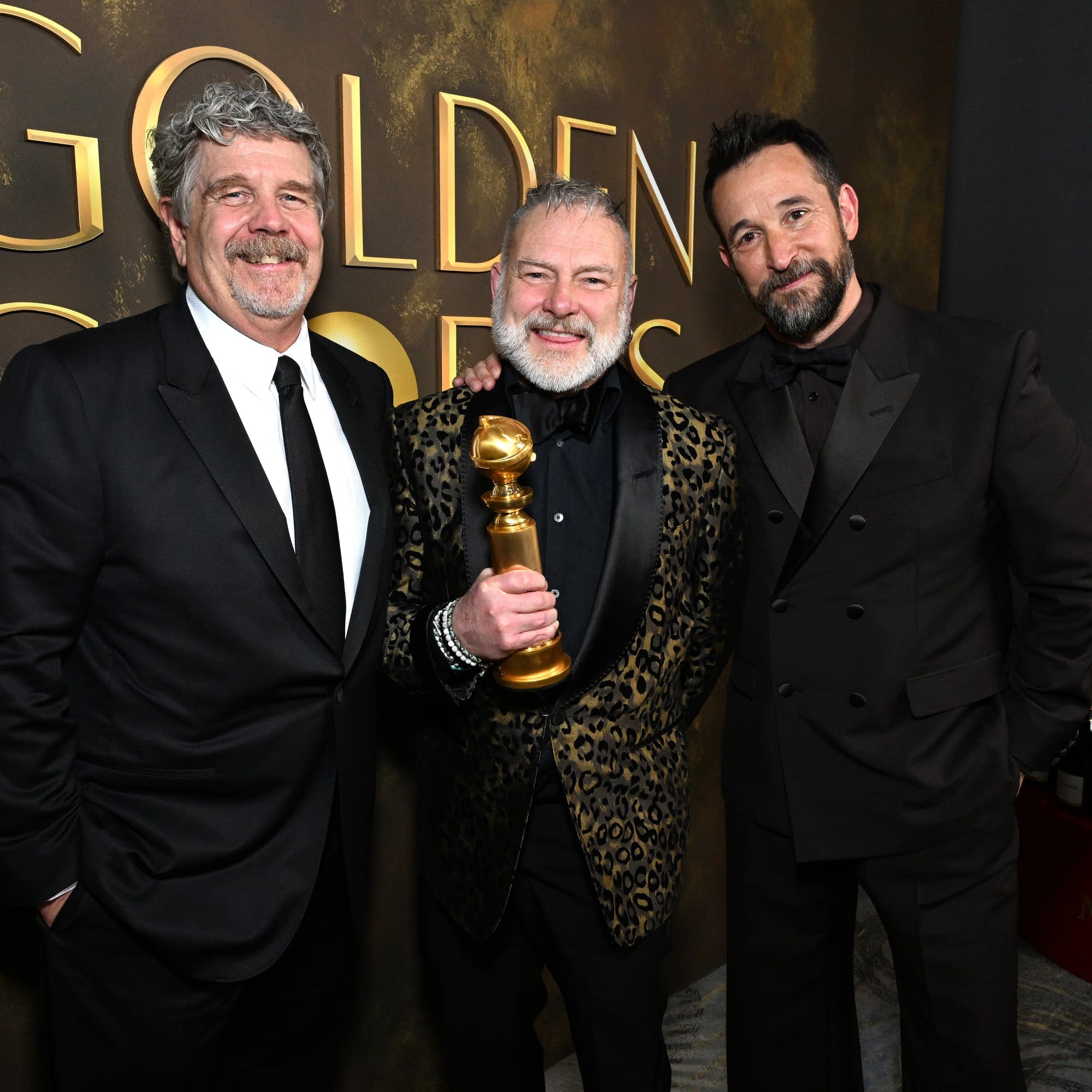
R. Scott Gemmill swore he’d never make another medical drama after “ER.” Good news: We’d argue his hit HBO Max series “The Pitt” is really a workplace drama, anyway. In this episode, “Marketplace” host Kai Ryssdal sits down with Gemmill as he preps to write the show’s third season. They discuss the job of a showrunner, medical minds in the writers room, streaming versus network TV, and more. Plus: Global investors seek safety in U.S. dollars amid Middle East conflict, drone attacks on data centers reveal digital infrastructure weaknesses, and private hiring data signals a moderate jobs bump.
Every story has an economic angle. Want some in your inbox? Subscribe to our daily or weekly newsletter.
Marketplace is more than a radio show. Check out our original reporting and financial literacy content at marketplace.org — and consider making an investment in our future.
Get every episode summarized
Each time Marketplace publishes, we email you a written briefing from the transcript — the topics, who appeared, and any specific claims, with the ad reads skipped.
Email me new episodesFree for 3 shows. No card needed.
Hosts & guests

Transcript ready
341 searchable segments. Every word is indexed and playable.
Full transcript
Marketplace — "The Pitt" is the ultimate workplace drama. Machine-transcribed; use the interactive transcript above to jump the player to any line.
Support for the show comes from public, the investing platform for those who take it seriously. On public, you can build a multi-asset portfolio of stocks, bonds, options, crypto, and now generated assets, which allow you to turn any idea into an investable index with AI. It all starts with your prompt, from renewable energy companies with high-free cash flow, to semiconductor suppliers growing revenue over 20% year over year. You can literally type any prompt and put the AI to work. It screens thousands of stocks, builds one of a kind index, and lets you back-test it against the S&P 500. Then you can invest in a few clicks. Generated assets are like ETFs with infinite possibilities, completely customizable, and based on your thesis, not someone else's. Go to public.com slash marketplace, and earn an uncapped 1% bonus when you transfer your portfolio. That's public.com slash marketplace. Pay for by public investing. Brokerage Services by Open to the Public Investing Inc. Member Finra and SIPC. Advisory Services by Public Advisors LLC. SEC Registered Advisor. Generated assets is an interactive analysis tool. Output is for informational purposes only, and is not an investment recommendation or advice. Complete Disclosure to the public.com slash Disclosures.
Programming is supported by Stole Reeves, a leading U.S. corporate and litigation law firm providing sophisticated business clients high-quality legal services with offices in seven states and Washington DC. Stole Reeves is a nationally recognized leader in project finance and natural resources industries. From deals and disputes to compliance and counseling, clients turn to Stole Reeves for their most complex business challenges. Learn more at STOEL.com. Just because it does bear repeating, the economy does not stop when headlines turn elsewhere, you know. Also, and completely unrelated, we're going to talk a little television on the program, Day From American Public Media. This is Marketplace. In Los Angeles, I'm Kyle Rizdal. It is Wednesday.
Today, this one is the fourth of March. Good as always to have you along, everybody. There are some things happening in this economy hours and globally that make good sense. Oil, for instance, spiking. We all know why. Gold though, off its highs right after the war started. Still up a lot. The U.S. dollars in Saturday morning very much in demand, which means it's been strengthening relative to other currencies. All of the above are par for the course when geopolitics goes haywire. Where things are getting strange, though, where that flight to safety paradigm that we are so very used to seems to be breaking down is in the market for U.S. Treasuries, the safest of safe havens. You would expect investors to want more of them, just like they want more dollars. But no. Marketplace's Justin Ho is on the, what the heck is going on here desk for us today? When investors want to pile into the safety of the U.S. dollar, they have plenty of options. You could find a money market fund. That's a relatively safe place to go to.
Brendan McKinnell, with Wells Fargo, says investors could also park their money in corporate bonds, which you need dollars to buy. Same with mortgage-backed securities. You could park it in just the savings account, right, and you're relatively safe there. Investors have been considering these options because they're not exactly thrilled about investing in U.S. Treasuries right now. Sebastian Malibi, senior fellow with the council on foreign relations, says between the president's tariffs, his attacks on federal reserve independence, his intervention in Venezuela, and now Iran. You just have a series of ad hoc policies that undermine the idea that there's a stable hand guiding the system. And when you don't believe that anymore, you're not going to want to hold U.S. government debt because you don't trust the U.S. government. But Malibi says investing in Europe or Asia is looking risky too, especially since the war is making energy more expensive. Both the East Asian economies and Europe are big energy importers. So it's spiking the cost of energy is very, very bad for them.
Compared to that, the U.S. economy looks relatively more stable. Christopher Vecchio, head of futures and FX with the research company Tasty Live, says investors are basically just sitting on their dollars. If you are someone who, for example, is in Europe and this really is more of a question for foreign investors and traders, I may sell out of my U.S. treasuries and instead of converting the money back into euros, I could just keep them in U.S. dollars. Vecchio says no matter what investors think of U.S. treasuries, the dollars always going to be in high demand because the global economy runs on dollars. I'm just in how, from marketplace. On Wall Street today, traders did what they do sometimes. When things go haywire, they're going to ignore anything that's not right in front of their noses. We will have the details when we do the numbers. Treasury Secretary Scott Besson said today that those tariffs that President Trump announced
after the Supreme Court ruling against him a couple of weeks ago, the 10% tariffs the President imposed. Besson said today that could go up to 15% as soon as this week. One hesitates to presume the Secretary of the Treasury isn't aware of this, but that tariff would be feeding into an economy already dealing with the inflationary pressures that war brings. We're going to talk about that and some other stuff. With Heather Long, she's the chief economist at Navy Federal Credit Union also comes by on Fridays from time to time. Hi, Heather. What is your inflation spidey sense, if you will, telling you right now? Well, it's certainly going to be going up. The question is how much? I certainly noticed the gas prices on my drive into work this morning already up about 20 cents and we're all wondering what's next. You just mentioned these tariffs that are now going to be hiked but presumably at the end of the week to 15% and a lot of the confusion that's going on around the world about whether there
will be some exclusions for Europe or UK or Australia. Are these still our friends or not? But look, the general sentiment here is there was already a lot of anxiety from American consumers about high prices and March is certainly not going to help. So let's talk transmission mechanisms. Oil and gas you mentioned and we can see that. We are seeing that at the pump. Eventually, all of that's going to show up in the cost of goods, right? Not just at the pump. That's right. I mean, we forget sometimes how much those oil prices flow through the entire economy and economy where we transport goods across the country, whether it's food products or whether it's cars. And so that's why when you really start to see oil prices get up, I would say the trigger dollar amount that I'm really watching is do we get to $90? Do we get into the $90 again? Because that translates to $4 gas and that's when you really start to see that psychological shift for both consumers and businesses to thinking that
this is a higher inflation regime that we're going back to. Not for nothing, but we're over 80 on Brent. I mean, you know, it's not far away. Exactly. Exactly. So we're not there yet and I think that's why you've seen this very muted market reaction so far. But the million trillion dollar question is how long does this last? Well, let's go there for a minute. I'm not going to ask you how long this is going to last, but I need an expert and you're the expert in this conversation to talk to me about the cascading effect the longer it does last. I mean, the president is talking about four to six weeks, you know? And that's I hate to use the word manageable, but every single analyst note in my inbox right now says that if it's four to six weeks, it's a manageable hit to the US economy. It's probably a different calculation for Europe and Asia. But you know, the question I think that begins to transition when we get to something like $90 oil is you get
these feelings that were back to that dreaded summer of 2022 when inflation really spiked. You know, that's the last the last time we really saw gas and oil in that, you know, $100 and a barrel mark. And so that's I think what you're really worried about whether you're the Federal Reserve or whether you're a corporation trying to assess this is if we get to a place where companies and consumers really start to change their assessment of what they think the next several months are going to be. It's not happening yet. Right. Right. Last thing and and then I'll let you get back to work. The phrase supply shock is being bandied about because it's not just oil and gas and it's not just the street of hormones insurance for shipping is going up. There's general unease out there that that's a real worry, right? This idea of a supply shock now into this economy. Yeah, that's a really good point. And you know, the goods the flip side of that is that we had an oversupply arguably of oil and gas in the market coming into this and that most other
parts of the economy were pretty well supplied. So you're starting from a much better base than say what happened in 2022 when we were coming off a period where there still wasn't enough supply of cabinets or toasters or auto parts or whatever. But you're right. Again, if this is something that lasts for months, then you're back to 2022. Heather Long and Navy Federal. Heather, thanks a lot. Always good to talk to you. Thanks, guy. As Heather and I were just talking about this war is already starting to be felt in this economy. But as we're also talking about, there are things that are going to hit right away and there are things that are going to take a while on that ladder list of things that are going to take a while is the labor market. The February jobs report comes out on Friday and we did get
something of a preview today, payroll processing company ADP says private company hiring jump last month, 63,000 new jobs also. And not for nothing pay was up about four and a half percent year over a year. Marketplace to Carla Javier reads the tea leaves on that one. All this jobs data is really important says RSM chief economist Joe Bruce wayless. The unemployment rate average hours worked, average hourly earnings. And what the median duration of unemployment is those are really key factors to understand the health of the American economy. He says ADP's numbers reaffirm a low higher low fire labor market and make him want to look closely at health care and private education in Friday's jobs report. Because it's been the primary driver of hiring for the past several months. The Bank of America Institute says its February data also show jobs growing. I think the story is a good one. That senior economist David Tinsley. The jobs growth at least at the start of this year had some real momentum behind it. But he says there's also a growing gap with higher
income households seeing wage growth of more than 4% year over year. While low income households have wage growth below 1%. He'll be looking for any indications of that in Friday's BLS data. Kathy Boschansik at Nationwide is expecting modest job gains for February and will be watching for any provisions to January's solid number. But in terms of what consumers, businesses and investors are focused on, it's probably going to be overshadowed by what is happening in Iran. And she says what impact oil and gas prices or even just uncertainty could have as the conflict continues. I'm Carla Javier from Marketplace. Coming up. You don't know what that doctor had for breakfast. You just show up and you hope
to God he's going to save you. And you hope the writers know what they're doing. But first, let's us do the numbers. Down dust rolls up 238 today about a half percent 48,739. The NASDAQ improved 290 points about 1 and 3 10th percent finished to 22,807. Yes and P500 added 52.8 10th percent ended things at 68 and 69 bond prices. Thanks for asking. They fell yield on the 10-year treasury up 4.10% you're listening to Marketplace. Running a business is hard enough, so why make it harder with a dozen different apps that don't talk to each other? Introducing ODO. The only business software you'll ever need. It's an all-to-one fully integrated platform that makes your work easier, from CRM, accounting, inventory, e-commerce, and more. And the best part ODO replaces multiple expensive platforms for a fraction of the cost. This is why over thousands of businesses have made the switch. So why not you? Try ODO for free at ODO.com. That's ODO.com.
This Marketplace podcast is supported by Fundrise. Billion dollar investors don't typically park their cash in high yield savings accounts. Instead, they often use one of the premier strategies for institutional investors. Private credit. Now, the same passive income strategy is available to investors of all sizes. Thanks to the Fundrise income fund, which has more than $600 million invested, and a 7.97% distribution rate. With traditional savings yields falling, it's no wonder private credit has grown to be a trillion dollar asset class. Learn more at fundrise.com Slash Marketplace. The Fund's total return in 2025 was 8%, and the average annual total return since inception is 7.8%. Pass performance is not guarantee future results. Current distribution rate has of 12.31.25. Carefully consider the investment material before investing, including objectives, risks, charges, and expenses. This another information can be found in the income fund's perspective at fundrise.com slash income. This is a paid advertisement.
This Marketplace podcast is supported by Wealth Enhancement, who understand that dreams don't happen by chance, it takes a plan. They're ready to build your wealth blueprint for retirement, investing, taxes, and everything else your financial life brings. It reveals gaps and highlights opportunities you may have missed at no cost to you. Find out more at wealthenhancement.com slash blueprint. This Marketplace podcast is supported by Viking, committed to exploring the world in comfort. Journey through the heart of Europe on an elegant Viking longship with thoughtful service, destination-focused dining, and cultural enrichment on board and on shore, and every Viking voyage is all-inclusive with no children and no casinos. Discover more at Viking.com. This is Marketplace. I'm Kai Rizdon. Amazon has confirmed that several of its data centers in the Middle East have been hit. There were service outages in that region, of course,
banking and payment apps included. But more to the point, there are increasing worries now about data center security, which, as you know, have become the backbone of the internet and the AI economy. Marketplace's Megan McCarty Carino has more on that one. The Computing Power in Data Centers is basically the new oil, says analysts Dan Ives at Wedbush. It's the essential resource that so much of our digital economy runs on. So it was only a matter of time until this critical infrastructure was targeted, like oil pipelines have been in war. They have to adjust to the new realities where they're going to have to make sure they protect their assets both abroad as well as in the U.S. The industry has been focused on the threat of cyber attacks, says Justin Sherman at Global Cyber Strategies. China, Russia, Iran, others trying to hack into cloud systems, data centers to steal data, disrupt training. Most of the cloud is run by Amazon, Microsoft, and Google, which Sherman says are well-resourced to defend against hacks. But the
average commercial facility isn't equipped to deal with physical threats like drones, says Matt Pearl at the Center for Strategic and International Studies. It's just not hardened in the same way that military infrastructure is, even though, in many cases, the military relies on it. And some of the same qualities that make data centers unpopular neighbors also make them easy targets. These data centers are becoming very large physically. They're above ground. It's all visible. He says even consumer drones can do a lot of damage, the kind that takes more than some lines of code to repair. I'm Megan McCarty, Corino for Marketplace. We're in the thick of Hollywood Awards season right now, movies and TV. And if you happen to have seen or read about the actor awards Sunday night, you know that in the world of television, the pit one big. I wish we could say we could plan it this way, but we got lucky that the very next morning,
we found ourselves on the Warner Brothers lot out in Burbank. I don't usually do this with Hollywood bigwigs. Well, you're not doing it today with Hollywood bigwigs either. That's R. Scott Gamel. He created the pit. He's also the showrunner and a writer and an executive producer of that show along with Noah Wiley and John Wells, both of whom he worked with on ER way, way back in the day. If you're not watching full disclosure, I am the pit is a medical drama on HBO Max. It happens in real time. Each episode is a single hour of a shift in the emergency room. New episodes drop on Thursdays, if you're looking for something to watch, by the way. Scott Gamel and I sat down in the show's writer room. There's so much in here I want to talk about. Let's talk about that thing behind you first of all. It looks for all the world like an architectural drawing like actual plans for a hospital ER except clearly it's for the show and you've got I guess characters and people in places and all sorts of things on on multi colored stickies up there. What's going on there? This is how we plan out our show. You know, we have to track everyone where they are. These are all patients.
You can see they've all got tags on them. I'll also tell what episode they're in so we can tell you know when they're coming when they're going. All of us have these at home. We all have really maps. Yeah. You like all the writers. All the writers. Okay. Yeah, you can't write without the map and then you have counters or players for all the actors and we just move them around like risk as you figure it out because our show is very kinetic and very and so in order to keep that going you have to know the set very well and you have to know that if I want to have Robby and Dana have a conversation you know starting in room 20 that ends at the hub I better make sure that dialogue covers that distance you know so you have to literally the time it takes to watch it. Absolutely. Yeah. So you'll see us down there all the writers talking to themselves you know as they walk the set. You've been in TV for a long time. You've been. Jagged and obviously yarn and NCIS. What was it about doing this project that got you to come back to a thing that
honestly you've mastered kind of right? Yeah. Ironically enough this came out of a conversation of why I would never do another medical show and I listed a bunch of reasons and thought of one maybe that I would do and then it just transformed into you know once sort of hit upon the real time aspect changed everything and what we wanted to do was we had the opportunity to create a new medical show from scratch and so that was exciting because you were inheriting nothing other than I had Noah and John. Did you know it was going to work? No. I didn't bring any of my writers from my other shows with me. I didn't bring anyone with me because I was afraid it wasn't going to work and I didn't want people to take on a job at my behest and then have it fail. And we wrote the hole and shot the hole for season without any air date so we didn't know when we were going to be on the air. We didn't know if people were going to like there was no feedback really. This is your first streaming thing. It is my first streaming show. What do you think? I think it's fun. Is it
working out for you? It works so far so good. Yeah no it's fun. I just wrote a pilot for a network show and it was one of the most difficult things I've done because I've been like just now recently. Yeah sorry aren't you busy enough? Yeah well I was a favor. I was a favor but it was so weird to be off. I've been off leash for a couple of years so it was better. Yeah I enjoy this. Yeah it's fun. Yeah it's very fun. About the show. A couple of things. Medical drama sure yes that's the way you guys are doing it and thinking of it. For my money, for the program I work on. It's a workplace drama, right? These people are doing a job. Yep. We never go home with them. Well that's the thing I wanted to ask you about. You only see them in the workplace. Yeah. How come? Because I think that's your experience when you're in the ER. You don't know where that doctor had for breakfast. You just show up and you hope to have God he's going to save you you know and I think it made it much more realistic, much more immersive. You know we really wanted to focus on the emergency department and not so much on the doctors of course but only in their work environment
because that's where we see them. Speaking of doctors, you have a lot of them. I do sit on staff. Well we have one on set every day but we rotate them out so we have four or five that rotate out because they're all working so they have to you know do the real medicine and they're not doing our fake medicine and then I have this year we'll have three doctors in the writer's room and that makes you know that's makes it so authentic is because we're working with real doctors all the time and we are also working with experts and other doctors especially this time of year we're just starting episode season three we talk to a lot of experts in the medical field about you know anything that's coming up. Are you writing in your shooting? We're done shooting and today we're our first writers meeting today for season three. Do you still write? Oh yeah. Yeah that's the best part of the whole job. I read somewhere that you sleep like eight at night to two in the morning and then you get up right in the middle of the night. Is that true? Yeah I do a biphaseic sleep cycle yeah. Really? Yeah. I guess it works. It works yeah it happened during hiatus I was
not sleeping well and I was getting really pissed off and so I was like if you're gonna be up you're gonna work and I actually got a lot of work done went back to bed woke up start my day had a whole days with the writing. I mean you look pretty good. I feel okay. I fall asleep driving here sometimes but other than that it's okay. Hold on a second. Part of what makes this show work is the versimilitude right. Obviously the medical stuff and the injuries and you see it all and you guys are gonna great job with prostheses and all that jazz but there's AI in season two and there's the Medicaid cuts in season two there's the measles outbreak right in season one which you guys where I think ahead of yeah happening in actual real life. Clearly you're thinking about real world stuff as you as you write this show right. Well what happens when we talk to the experts regardless of what field of medicine they're in you know we talk to them about what scares them what keeps them up at night and then when we extrapolate where things were going being in the head of the measles epidemic was not being overly prescient it was just nobody's getting vaccinated
eventually this is gonna hit a turning point tipping point and so I think we look at things like that Medicare Medicaid cuts you cut people's Medicare Medicaid they're not gonna have a primary care physician when they do get sick they're gonna be really sick and the only place they're gonna go is the ER so it's gonna put even more strain on the system which is gonna be even harder on the nurses and the doctors and so it's just about looking at the real world situations and then thinking about how they're gonna play out. You uh I watched your your uh Emmy speech from a year ago when you won Best Drama and you made a point at the end of that speech of of honoring and dedicating it to healthcare workers you said you know honor them trust them protect them I think is what you said um why well we wouldn't be here without them I mean I wouldn't be here without them and you know that thus sort of show is kind of a love letter I think to the healthcare workers for what they do a lot of my friends or doctors and um and nurses and I just think it's a wonderful
profession and we deserve to give them the credit they deserve did it start that way though because I mean you know you read about Noel Wiley and him actually going to Pittsburgh and going to medical centers there and people treating him I mean yes he's a star but treating him like an actual rock star you know and going crazy over him did was that the plan did that surprise you yeah that surprised me because I think our show was a slow build we kind of came out of nowhere and a lot of it was word-of-mouth and a lot of it was word-of-mouth from the healthcare professionals and if anyone embraced the show that's who we wanted because that's who it was sort of meant for and dedicated to and if we can do well by them then I half our job is done working on season three now yep you're gonna start writing it's gonna start shooting soon enough I suppose June 11th I think you're gonna ride this for a while oh yeah I mean I was on my last show for 14 seasons yeah for me part of my job I think a very important part of my job is to keep a show on the air as long as possible to keep people employed for as long as they want to work and so I stay with a job
until they turn the lights out talk to me about that ecosystem right because this now the show now and and you and Wellson and Noel Lee are kind of economic engines you're kind of economic drivers right yeah of the whole infrastructure of the show yeah you think about that sometimes I focus mostly on the storytelling the other parts are are gravy you know if the storytelling's good and people are enjoying it then everything else will fall into place I think a word here about the business of this business and you can dodge this one if you want to the the Paramount Netflix Warner Brothers goat rope for a want of a better word has now been resolved are you what's your worry factor of that or are you just keeping your head down and doing your job yeah I don't really worry about it um you know it'll change business the business side of it but it won't change what we do you know our job is to still tell stories that touch on the human condition and move people to me it's kind of like I said the other day it's kind of like a divorce you know it's coming you
just hope you get through it and and see what happens so you can move forward you know it's got camel thanks a lot thanks man I appreciate it appreciate it this final note on the way out today in which it's all over but the voting I guess the White House announces afternoon it has formally sent Kevin Worsh's nomination to the Senate both as a member of the board of governors of the Federal Reserve that is a 14 year term and as the new chairman thereof that is a concurrent four year job two things of note about the above number one at least one Republican member of the Senate banking committee has said he is a no on Worsh's nomination unless and until the Department of Justice drops its criminal investigation of the central bank and the incumbent chair speak of whom the incumbent chair that is this is thing number two Jay Powell's term as chair is indeed up in May but he's got another two years or so left on
his 14 year stint on the board itself and the parlor game among fed watchers right now is whether or not he is going to stick around our media production team includes Brian Allison John Fokey Montana Johnson Drew Jostett Garry O'Keefe and Charlton Thorpe Alex Simpson is the manager of media production and I'm Kyle Rizdal we will see you tomorrow everybody this is APM Hey David Brunch at you here I hope you're well and that your passport is up to date because I am hosting a trip to Italy this fall and you you are invited stay at a world class Tuscan villa and step into the world of the Medici the formidable family whose influence and power help give rise to the Renaissance and the art we still celebrate today not to mention the banking system we're going to visit the world's oldest bank swim in the thermal spa waters in Montecatini
and take in the art of the Ufizi all of this and then we'll try to put it all into context with great conversation over even better meals and wine tasting please join me and know this buying into this trip will provide essential support for public media discover more about this falls Tuscan adventure at marketplace dot org slash travel to reserve your spot today that's marketplace dot org slash travel
More episodes


