Get every episode summarized
Each time The Briefing with Albert Mohler publishes, we email you a written briefing from the transcript — the topics, who appeared, and any specific claims, with the ad reads skipped.
Email me new episodesFree for 3 shows. No card needed.
About this episode
On today’s edition of The Briefing, Dr. Mohler discusses the unspeakable heartbreak in Canada as it is reeling from one of the deadliest mass shooting tragedies in its history, the pattern of transgender identity in mass shootings, and the rainbow Pride flag and what it reveals.
Part I (00:14 – 03:34)
Unspeakable Heartbreak: Canada is Reeling From One of the Most Deadly Mass Shooter Tragedies In Its History
Part II (03:34 – 10:47)
There is a Pattern Here, and Many Press Reports are Complicit: The Canadian Shooter is a Male Who Claimed Transgender Identity
- Shooter in Canada kills 9 people and injures 25 others at a school and home by The Associated Press (Jim Morris and Rob Gillies)
- Canada Mourns Eight Dead in Mass Shooting by The Wall Street Journal (Jack Morphet, Paul Vieira, and James T. Areddy)
- Canada school shooter was transgender teenager by The Telegraph (Kieran Kelly, Andrea Hamblin, and Josh White)
- Police name Canada school shooting suspect and say six children among victims by BBC News
A Battle Over Symbols: The Rainbow Pride Flag And What It Reveals
- Pride Flag Is Removed From Stonewall Monument After Trump Directive by The New York Times (Liam Stack, Jonathan Wolfe, and Yan Zhuang)
- Trump administration removes Pride flag from Stonewall gay rights monument by The Washington Post (Tim Craig)
- Trump administration removes LGBTQ+ Pride flag from Stonewall national monument by The Guardian (Cecilia Nowell)
- Gary Bettman praised ‘Heated Rivalry’ and NHL Pride Nights. The leaguewide reality doesn’t match by The Athletic (Rob Rossi)
Follow Dr. Mohler:
X | Instagram | Facebook | YouTube
For more information on The Southern Baptist Theological Seminary, go to sbts.edu.
For more information on Boyce College, just go to BoyceCollege.com.
To write Dr. Mohler or submit a question for The Mailbox, go here.
Get every episode summarized
Each time The Briefing with Albert Mohler publishes, we email you a written briefing from the transcript — the topics, who appeared, and any specific claims, with the ad reads skipped.
Email me new episodesFree for 3 shows. No card needed.
Hosts & guests

Transcript ready
304 searchable segments. Every word is indexed and playable.
Full transcript
The Briefing with Albert Mohler — Thursday, February 12, 2026. Machine-transcribed; use the interactive transcript above to jump the player to any line.
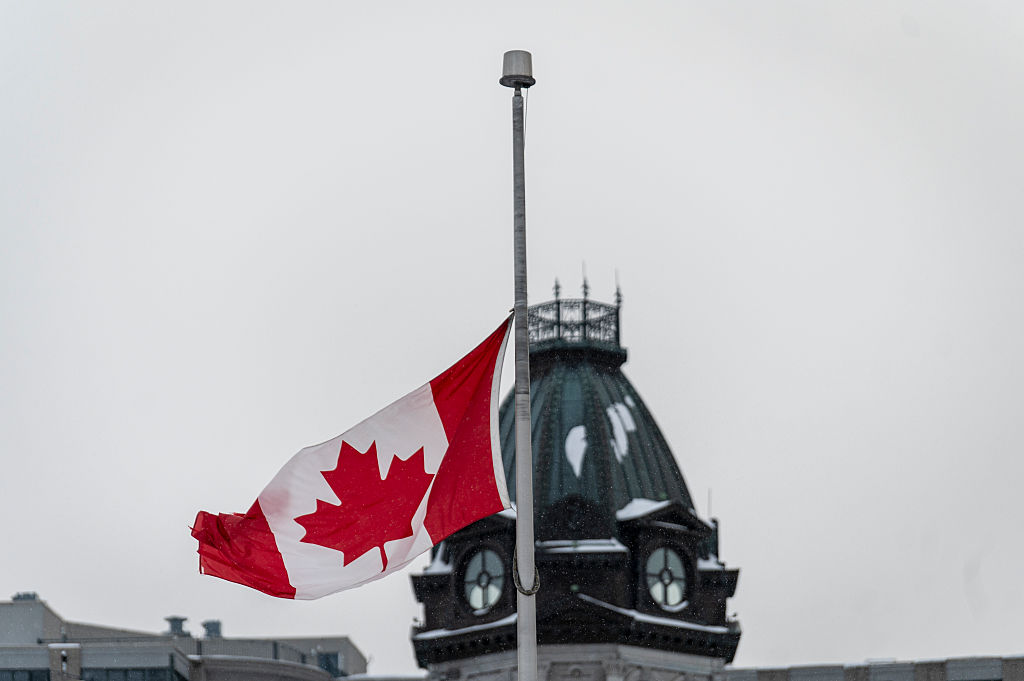
It's Thursday, February 12, 2026. I'm Albert Molar, and this is The Briefing, a daily analysis of news and events from a Christian worldview. We need to start with tragedy. This tragedy happened in British Columbia, one of the worst mass shootings in all of Canadian history. And the tragedy just builds upon tragedy when you understand that the primary victims in this case were school children. It is one of the bloodiest school killings in all of Canadian history. And we're also talking about a mass shooter here who shot his own mother and stepbrother before going to the school and shooting others, and some of these children were just very young. They were basically middle school, older elementary school students. And the death toll as of today is at least nine, and there are others who were seriously wounded. Now, one of the things that of course comes to the fore here is how any human being could
carry out any such act. It's one of the dark acts, evil acts that just raises the question, who could possibly do this? And yet it happens. And tragically, it happens repeatedly, and it's happened over history. And of course, it can happen in a different way with the development of new technologies. And honestly, we can know about the happenings. This is also a part of the context of mass shootings. It's a news spectacle, and that's a part of why it is believed some people do them. And so you have to have the modern news context. You have to have, in some ways, a digital coverage and mass media coverage. And you also have to have the technology of violence as well. But we're living in a world in which these things happen, and we should still be shocked as Christians. We need to understand where the people who know the moral stakes here. We know the moral evil here. And so our first response has to be a moral indictment of evil and the human experience of tragedy and then compassion. When we think about the families involved, when we think about the communities involved,
and when we think about the nation and beyond, this is just the unfolding of a tragic human story of violence. And in this case, a premeditated, strategically designed violence against children primarily. The horror of it is something we should never get over, must never get over. All of this, of course, raises the fact that when you look at a story like this, there's almost always more to the story. Of course, we are talking about something that gains headlines and necessarily so. So you can blame the news media for giving these shootings and other attacks the kind of media coverage they give. But on the other hand, it's virtually impossible that they would not cover such stories, because if you're not going to cover something like this, what in the world would you cover is legitimate news? And so it's a vicious cycle. It's a very difficult situation for journalists, for law enforcement, and of course, most difficult for those who are suffering loss, unspeakable, incalculable loss. But there's something else in this particular headline and in the story that is an escapeably
now part of the story. And it's not just we who have to talk about it. Frankly, the mainstream media are having to talk about it. And some of them are talking about it openly and some of them are using code. And until you get the open conversation, you don't really recognize what was going on with the code. And so we need to look first at the code and that means what's encoded messaging. And if you don't have the other part, you really don't see this, but once you have the other part, you can't not see this anymore. So let me go to an article from the Associated Press. So the Associated Press AP, one of the major news services, still very active and authoritative. Here you have a report from AP, quote, a shooting at a school in remote northern British Columbia left seven people dead, while two more were found dead at a nearby home. Canadian authority said Tuesday, a woman believed by police to be the shooter was also found dead, apparently from a self-inflicted wound, end quote, okay. Here you have the statement, here's the code, a woman believed by police to be the shooter. And you also have statements that an investigator said to identify a female suspect, but
would not release a name and that the shooter's motive remained unclear. You also have statements in which it is basically coded as, listen to this. This is from the Wall Street Journal. This may be the clearest example of how the coding works. Here it is. Wall Street Journal authoritative, quote, according to the Royal Canadian Mounted Police, they quote, believe the shooter was a woman with brown hair wearing a dress, but declined to give a name pending family notification, end quote, okay. That's a weird way. That's a very strange way to offer this primary report. There's not a name, but listen again, police said they believe the shooter was a woman with brown hair wearing a dress, but declined to give a name pending family notification. Let me put the emphasis in terms of reading that line again and see if you recognize the code. It comes down to this quote, police said they believe the shooter was a woman with brown
hair wearing a dress, but declined to give a name pending family notification. Okay. Once you see the code, you can't unsee it. And I think probably once you hear it, you can't unhear it. In other words, once you look at this, all of a sudden you see that even the mainstream media are giving you a clue when they say that the suspect is believed to be a woman. And what is the evidence wearing a dress? All right. So that's the code. That's the Wall Street Journal. And a part of this, by the way, may be time. Some of the early reports said that it was a female shooter. It was a woman who did the shooting. And in this case, you find out a teenager, a teenager, the same age as some of the kids in the school. But then you compare that to the telegraph again, major British newspaper. Here's the headline. Candidate school shooting attacker was transgender teenager, okay. A few in the media have been that straight forward. Okay. Let's go to the BBC, the British Broadcasting Corporation, one of the most venerable news sources on the planet.
We are told and remember the ties between Britain and Canada in that dominion relationship. So this is still something that's almost like a national story for the BBC. Quote, the suspect was named as Jesse Van Rutzelar, 18, born, quote, a biological male who approximately six years ago began transition to female end quote. So the quotes there are actually the the BBC quoting a police report. So again, the BBC is not staking its reputation on whether or not this is true. They are citing the authoritative police report. And thus you find out quote biological male who approximately six years ago began to transition to female. Now tragically, we have seen some kind of tie and you know, without a clear line of evidence, let's just put it simply and straightforwardly as we can. Honestly, there's some kind of tie. You take the mass shootings that have taken place. For instance, in St. Paul, Minnesota, in Nashville, Tennessee, and the assassination of Charlie
Kirk. In all those cases, there has been some kind of gender confusion, gender non-binary transgender aspect. As we said before, we understand that there's a deep confusion. By the way, the secular culture can't admit this is a deep confusion. And one of the interesting things is that several of the media sources, they went at the question as to whether this was the result of this shooter experiencing bullying, but at least some of the news reports had to come back, quote, the police and say, that is not reported at least to be any part of this picture. And so here's the thing, in a secular society that's losing its moral senses, then you have to shift the issue from the question as to how someone like this could be troubled to this trouble being forced on them by a heterosexual, dominated society marked by patriarchy and gender stereotypes and all the rest. So that is the way this is working these days. And I think Christians need to pay close attention to this. At one point, again, the Wall Street Journal says that the police say they believe the shooter was a woman.
Okay. You have another pattern and that is that many in the media aren't acknowledging that there's any problem with this story at all. They're just saying it was a female shooter or the shooter was a woman. All right. Now, let me tell you how a certain form of double-mindedness shows up in this. Okay. So I'm going to cite the British Broadcasting Corporation BBC story again. This is the one that does acknowledge there is a question and that it is believed this person is transgender, believed to be a woman, you know, typical kinds of stuff in the background here. But then listen to the reporting on the victims, the victims include first a 39-year-old female educator, three female students, all age 12, two male students, one age 12 and the other 13. The deceased in the residence and that is the shooter's home were one 39-year-old female, the mother of the suspect and 11-year-old boy, the stepbrother of the suspect, just a heartbreaking even to read this. But I want you to notice that the BBC's essential authoritative reporting on this is absolutely
gender specific in every single case. Again, a 39-year-old female educator, three female students, age 12, two male students, one 12, one 13, 39-year-old female, 11-year-old boy, in every case, evidently just to tell the story, just to report adequately on the story, just to be honest about the story, the BBC puts the sex in the identification of the victims. So it is not some kind of weird preoccupation of abnormally obsessed people to think that gender matters, that sex matters and that sex equals gender and that gender equals sex. Because otherwise, this entire report is incomprehensible. The only way the world makes sense is if male and female are determinative categories. That is the only way the world makes sense. Yeah, the BBC here, who I think reflects pretty much the liberal bias of the media in terms of covering a lot of these issues, when it comes down to reporting this horrific tragedy,
they can't tell the story without using the categories that elsewhere they subvert. We'll be tracking this with you. Let's pray for those families in Canada. Let's also pray for a society that can speak with moral honesty, even with biological honesty. And most importantly, for that moral honesty, about the true nature of what we're facing here. All right, I now need to turn to a front page article from the New York Times yesterday. Here's the headline at the Stonewall Monument, The Pride Flag is taken down. Okay, so I'm not really talking about this just because of the news controversy. Here, the Trump administration issued a policy that at national facilities, such as this site, there is to be the American flag and little else, by the way. And so it was not, at least in terms of the policy on its face, necessarily just about the gay pride flag. But I think honesty reminds us of this, at least a part of this. And by the way, these these flag controversies have flared up here and there. A lot of city halls, a lot of universities, a lot of other government adjacent or government
institutions have flown the pride flag infuriatingly. I was in London at one point when a gay pride flag was illuminated across the front of the US embassy there in London. I'll admit I was quite outraged by that. But we all know what that flag is supposed to mean. We know what it's supposed to mean. And so predictably, the New York Times is covering the fact that this is now a scandal. I mean, it's read to you how it's reported, quote, a large pride flag was quietly removed from the Stonewall National Monument in Manhattan after a directive from the federal government. The latest step in the Trump administration's nationwide assault on diversity initiatives and the second time in less than a year, it is targeted, the Greenwich Village site, which commemorates the birth of the LGBTQ rights movement. And that's of course what the Stonewall National Monument is all about. The Stonewall was a bar. It was a bar that had a lot of homosexual or lesbian clients. And it was rated. And of those who were in the bar rebelled,
or the Stonewall rebellion, as it's known by many people in the and writing history of the gay pride movement. This is one of the things they will underline. And that's why it's a national monument. It's a national monument because of the LGBTQ issues. And in particular, the gay liberation movement that came out of this, the the event itself took place back on June the 28th of 1969. The Washington Post lead was, quote, the Trump administration removed the rainbow colored pride flag from a flagpole outside the Stonewall National Monument, outraging local leaders who called the decision in a front to the gay rights movement. To see a knoll writing a piece in the guardian of London said, quote, they cannot erase our history. Our pride flag will be raised again citing the Manhattan borough president who made that statement. That that's Brad Holman Segal, who is identified as gay, posted in a social media post. Again, they cannot erase our history. Our pride flag will be raised again. End quote. So here's a battle over symbolism. And Christians
understand symbols are important. And the pride flag is a central symbol of the the gay pride movement, as it was originally known. And now the just the pride movement, they just used the word pride. And so we have pride week and pride celebrations and all the rest. I really want to talk about not only the transformation of the society and how this works. I want to talk about the character of this celebration referred to as pride. It's a pride flag. Now, by the way, an interesting sports story came along having to do with the National Hockey League. Here's the headline from the sports section, among NHL teams, agendas vary on pride. And this has to do with whether or not members of a team members of the league have to wear say gay pride in signature that the league may be or a team may be using in order to celebrate commemorate pride week. And a part of this is now the reason the NHL is is on the hot seat here is because of
heated rivalry, which is a soap opera, basically, about two gay men who are hockey players. That is becoming a major, major focus in terms of those who watch such things. In other words, it's crossing over. By the way, one of the most interesting things about the crossover and honestly, I didn't see this coming on the most interesting things about the the response to the program. The program is known as heated rivalry. One of the most interesting things is that the surprising market for it is straight women. For some reason, straight women are attracted to a series, which is quite explicit in terms of sex about two gay men. I'll just simply leave it to that and say I have no obvious explanation for that phenomenon. I guess I am going to say one more thing and that is that it would be even more shocking if it was an audience of heterosexual men who were interested in watching such a thing. That part of the equation at least does make sense. The pride issue, the gay
pride issue, the LGBTQ pride issues, but a big issue in corporate America. I've had lots of people in major American corporations. Some of them fortune 500 corporations, even in the capital 50 corporations who have just written me to say that they are they're confronted with a moral dilemma. They're their supervisor tells them to fly the gay pride flag to put the pride on their desk and to indicate support for the movement. Otherwise, they're really not with the program. I'm not going to mention the company, but I actually ended up in one situation talking to one of the major corporate leaders in America who had employees crying out for relief from the moral coercion to endorse the LGBTQ movement. I'll just simply say the meeting was respectful, but it didn't go all that well. Corporate America, and we're talking now, I guess, 15 years ago or so. Corporate America has been signed onto this program for a long time. The Trump administration has been pressing back on it, and there have been some incremental gains,
but some of it, I fear, could be put right back in place as soon as there's another administration in the Oval Office. But let's just hold on a moment and let's talk about what is most important about this, and that's biblically and theologically how we are to see this. I just want to point out the problem with the word pride. So it's very interesting that that's the word that came so early to be associated with what's now the gay pride movement or the LGBTQ pride movement, or just pride because they don't, you know, more or less claim to own the word. Okay, it's an interesting word to own. We need to understand that pride, biblically, is at the top of the list of the vices, not the virtues. And that is because in the Western Christian tradition, and this includes Roman Catholicism and Protestant Christianity. In the Christian tradition, particularly in the West, there is the understanding that the most basic sin is pride. When you look at Genesis 3 and you see what happened and what is condemned, it is human beings succumbing in the case of Adam and Eve,
in this case succumbing to the argument you shall be as God. And thus the central issue here, the most foundational sin is associated with pride. Thus in the Western theological tradition, no one represents this more clearly than a gustan in the early church. It is pride that is understood to be the root of all other sins. There are other other Christian traditions that have taken lust as the most basic of the sins. And by the way, you can also of course find that in Genesis 3, particularly in the condemnation of Eve, of the woman, by God himself when he speaks of sexual desire. And so that's in the judgment on Eve. I'm not going to go further. You can turn to Genesis 3 and find it yourself. But I just want us to step back. And first of all, let's confess something. We are all guilty of the sin of pride. Every single one of us, every single one of us is guilty of the sin of pride. And it's also a trap, a trap of sin from which
it's very difficult to escape. We can actually be proud of a moment in which we think we weren't proud. It's a very difficult thing. You know, we are exhorted in the New Testament to humble ourselves and similar exhortations in the Old Testament. And that is something we are called to do. It is very hard to do. And the problem actually gets even worse when we think we've done it. And that's because pride is is blinding. But there is something very deep in terms of the Christian moral instinct to know that we shouldn't be proud of pride. At the very least, if there's one thing we shouldn't be proud of, it's pride. And we also know that if you have to keep asserting pride, that's really pointing to a fundamental problem. And so I want to say this with a sympathy, actually, emotional sympathy, not with moral sympathy, but I do want to say with emotional sympathy, I can understand what is behind the claim that is essential to the gay pride
movement or the LGBTQ pride movement or pride, I say what I say now. And that is that we should find pride in who we are and what we do. And you know, in the Christian worldview, we are to understand the honor and dignity that is due to every single human being because we're making the image of God, not because of who we are, but because of who God is. And it is God who made us for his glory in his own image. But when we are proud of what we do, we need to be very careful. And the most important thing we must do is make certain that we find no pride in doing what God has commanded us not to do. There is no clearer definition of the problem of pride than the claim that something contrary to God's word and to God's creation order. Something that by definition as the apostle Paul says is rebellion against creation order. It is an attempt to subvert creation order to suppress the truth and unrighteousness to be proud of that is a massive problem.
It's a massive problem that diagnosis and we're basic problem. And that does not mean that what I'm saying here is that it proves that LGBTQ plus persons are sinners. No, human beings are sinners. Every one of us all have sinned and fall short of the glory of God. But when you take a sin, clearly can do in the Scripture. And then you declare your pride in identifying with it. That does seem to me to be a classic example of exactly what the apostle Paul is describing in Romans chapter 1 that which brings God's utter condemnation and should serve as an illustration to us. And I'm not just making that connection. The apostle Paul makes that connection. It becomes a picture of Genesis 3 recapitulated over again. And that flag as a pride flag becomes a graphic symbol of that very problem. Understood in this light, let me just say that we should see the pride flag as a very clear indication of precisely the wrong kind of pride and the sinful dimension of pride.
And in this case, we simply have to say this is what we see. This is exactly what we're presented with. When you actually go so far as to artistically create a flag to represent pride in a rebellion against creation order and clear defiance of the creative purpose of God and the clear teachings of God's word, it just becomes a parable unto itself that you want to fly a flag and call it pride. I can't leave it there though. And I think as believers, as people who know and love the gospel of the Lord Jesus Christ, we know we have to end by saying every one of us in our own way has gone astray. Every one of us in one way or another is tried to plant a flag of arrogance against God and His holiness and righteousness and justice. Every one of us in our own way has sinned against God. That is not to say that everyone has committed a sinned against creation order.
It is to say all of sinned and fall short of the glory of God. Every single one of us has no hope but the gospel of the Lord Jesus Christ. And I guess in final thoughts, I just want to say every time we see that flag, we need to be reminded not only of the moral crisis we face, but of the sin of pride and what it means. And just be humbled by the reality of the phenomenon of sin and the insidiousness of pride, lest we also fall. We'll end with that today. Thanks for listening to the briefing. For more information, go to my website at Albertmolar.com. You can follow me on xr twitter by going to x.com-forward-slash-albert-molar. For information on the Southern Baptist Theological Seminary, go to spts.edu for information on voice college. I'll meet you again tomorrow for the briefing.
More episodes
More from The Briefing with Albert Mohler

Friday, October 9, 2026
The Briefing with Albert Mohler

Thursday, October 8, 2026
The Briefing with Albert Mohler
Wednesday, October 7, 2026
The Briefing with Albert Mohler

Tuesday, October 6, 2026
The Briefing with Albert Mohler