Get every episode summarized
Each time The Briefing with Albert Mohler publishes, we email you a written briefing from the transcript — the topics, who appeared, and any specific claims, with the ad reads skipped.
Email me new episodesFree for 3 shows. No card needed.
About this episode
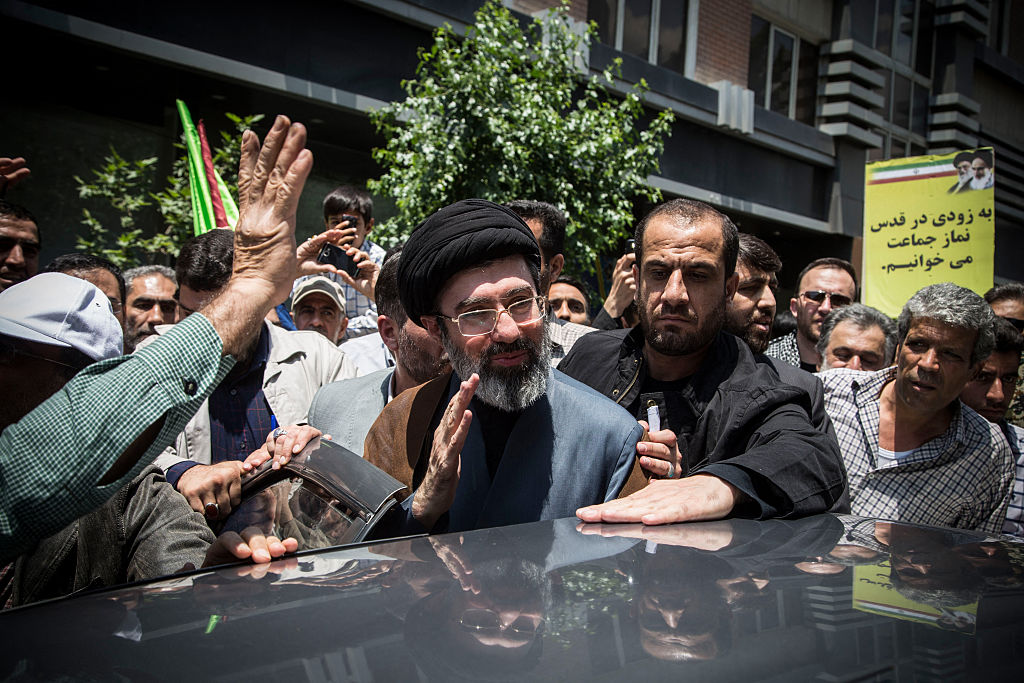
On today’s edition of The Briefing, Dr. Mohler discusses that the son of Ayatollah Khamanei might be Iran’s next leader, the influence of emotions on policy support, the armchair allies of the U.S., the theological and political problems of James Talarico, Cornyn vs. Paxton in Texas, and New Zealand’s former Prime Minister who is moving to Australia.
Part I (00:13 – 07:30)
Son of Ayatollah Khamanei Might Be Iran’s Next Leader: Even If the Regime Stays the Same, a Set Back to Iran’s Military Capabilities is a Win for the West and Israel
Part II (07:30 – 11:47)
Our Thoughts Should Order Our Emotions: Politics and Policy Ought Not Be Dictated Strictly By Our Emotions
Part III (11:47 – 14:41)
Armchair Allies: Allies of the U.S. are Scrutinizing U.S. Actions in Iran As They Watch and Do Nothing
- Friedrich Merz to meet Trump after justifying strikes on Iran by Financial Times (Anne-Sylvaine Chassany)
A Wolf in Sheep’s Clothing: The Theological and Political Danger of James Talarico
Part V (18:41 – 21:36)
Cornyn vs. Paxton in a Run-Off: Big John Faces Off with Morally Suspect Candidate Ken Paxton – Democrats are Hopeful for a Talarico and Paxton Race in the Midterms
Part VI (21:36 – 25:10)
New Zealand’s Former Prime Minister is Leaving New Zealand: Jacinda Ardern is Moving to Australia, and It is a Controversy
Sign up to receive The Briefing in your inbox every weekday morning.
Follow Dr. Mohler:
X | Instagram | Facebook | YouTube
For more information on The Southern Baptist Theological Seminary, go to sbts.edu.
For more information on Boyce College, just go to BoyceCollege.com.
To write Dr. Mohler or submit a question for The Mailbox, go here.
Get every episode summarized
Each time The Briefing with Albert Mohler publishes, we email you a written briefing from the transcript — the topics, who appeared, and any specific claims, with the ad reads skipped.
Email me new episodesFree for 3 shows. No card needed.
Hosts & guests

Transcript ready
386 searchable segments. Every word is indexed and playable.
Full transcript
The Briefing with Albert Mohler — Thursday, March 5, 2026. Machine-transcribed; use the interactive transcript above to jump the player to any line.
It's Thursday, March 5th, 2026. I'm Albert Mueller, and this is The Briefing, a daily analysis of news and events from a Christian worldview. Events continue to unfold in the Middle East, the United States, and Israel continue the military effort not only to destabilize the Iranian regime, but to topple it. Furthermore, when you look at what's happening on the ground from the air, and remember this is an air campaign. It's the Israeli Air Force and the United States Armed Forces, but it's by air, all of it. The President does not intend to put troops on the ground. But the effort is taken to undermine the Iranian regime, and of course, this led to the death of the Supreme Leader, the Second Supreme Leader. That would be Ayatollah Hamane, but now it is being argued that it may be the Sun of the Second Supreme Leader after the Iranian Revolution, the Sun of Ayatollah Hamane, who may be elected to be his successor.
Here's what's really, really interesting. We understand that leadership matters. We understand that if you're going to try to destabilize Iran's terrorist power, if you're going to try to return the Middle East to some status of peace, you're going to have to have different leadership. That doesn't always mean better leadership, but it is clear that Israel and the United States, and that means in particular, Prime Minister Netanyahu of Israel and Donald Trump, the President of the United States, have come to the determination that even the worst case scenario can't be much worse than what was the situation before the joint attacks began, which is to say, regardless of what happens and how in the world do you measure that? Perhaps two years after the war ends or five years, ten years, the point is that taking this action in the calculus of the United States and of Israel was absolutely necessary. It was justified by the fact that for 47 plus years, Iran has posed a major threat to world peace. Well, there's more to it than that.
When we think about it, have you been following all the criticisms of President Trump saying that the President and members of his administration have been giving conflicting and inconsistent rationales for why the war, why this war, why now? The interesting thing is that there are those who have said, for example, that the reason for the war is an imminent threat from Iran. Others have said, no, it is a long-term problem in terms of the potential of the regime to develop nuclear weapons. Others have said it is because of the allied terrorist threat coming from Iran through groups like Hezbollah and others. Others have said it was an effort to achieve regime change with a particular hope for what would follow. Others are saying, look, Israel was going to attack Iran and that would lead to attacks against the United States better to have a combined American-Israeli effort than to put Americans in the position of risk without taking the military initiative. There are those who are saying, and especially this is coming from congressional Democrats, but you also hear this in the media, many are saying, look, the administration needs
to get its house in order. It needs to have a consistent argument which among these, if any among these, is true. When I think what should be obvious to most is that all of them are true, all of them play a part in this situation. When you look at a complex issue like Iran and you look at the fact that it was developing nuclear weapons and you look at the fact that it had been seeking to undermine so many of America's interests, indeed American security and American allies all throughout the region, when you understand that Iran really showed who it is and what it is as a regime, a political regime, when it unleashed and continues now to unleash attacks on even the Arab states and the Gulf, what you have here is proof positive that this is an absolutely lethal, absolutely toxic regime. Now the president spoke to this in some of his first public comments in an exchange with the press as Sean Recreach of the New York Times reports. The president when asked what he might imagine would be the worst case scenario in Iran,
he said quote, I guess the worst case would be we do this and somebody takes over who's as bad as the previous person. He said quote, right, that could happen. We don't want that to happen. It would probably be the worst you go through this and then in five years you realize you put somebody in who's no better end quote, okay. So I take the president at his word there and I thought that was a very human, very honest response to the question. Yes, the danger is that someone is put in place as the next supreme leader or the next political regime who is practically speaking as bad as what came before. Here's the point though, Iran would still have been set back years, perhaps even decades, in terms of the ability to develop nuclear weapons and furthermore to create mayhem throughout the Middle East. Just look at the headlines over the last several days. You have at this point Iran increasingly defenseless in terms of its missiles at least to keep out the American and Israeli jets and missiles. You also have the entire Iranian navy destroyed according to joint military intelligence.
You have the fact that degrading of Iran's military capacity is a first rank aim of this effort that almost assuredly is happening. That doesn't mean that we'll change the hearts of people in Iran. It doesn't mean that there will be a regime in place that will be friendly to human rights and human dignity and to America and other interests around the world. It does mean, and I think the president's honesty in that exchange about the fact it could be more or less a continuation of what was still, if you set the Iranian regime back. Even you set the current regime back five, ten, fifteen years, you at least have an Iran that has been degraded and is not able to pose such an immediate threat either in the region or beyond. Now as Christians look at that, you recognize, well, wouldn't we like to have a major victory here, wouldn't that lead to a regime change that would be a government we think would be friendly to the Iranian people, would respect human rights and human dignity and might be a regime that would have the aim of living at peace with its neighbors and around
the world? The fact is, yes, we should hope for that, we should pray for that. But this is where something called Christian realism comes into play. This was crucial as a development in Christian ethical thought, theological thought in the 20th century. Christian realism comes down to this, in a world so degraded and so distorted by sin. When you have such sinful impulses that are now set loose in powerful nations with the development of incredibly powerful, unbelievably threatening weapons, when you have all that together, realism means that given the biblical worldview, you are right to pray for world peace, but there is not going to be any lasting peace until Christ himself comes to establish that peace. In the meantime, Christian realism means you do what you have to do to protect as much as you can protect, to preserve as much as you can preserve, to save as many lives as you can, to establish as much freedom and justice and democracy as is possible around the
world. But you also recognize utopian dreams are just that, utopian and dreams. All right. On the other side of that consideration, I want to point to something that we ought to observe as Christians. We need to understand that as human beings were made up of complex parts, and as a matter of fact, the Bible recognizes that were made up of complex parts. And so we could even speak of what it means to be made of complex parts that say that sometimes the mind doesn't understand the heart. The heart doesn't understand the mind. We understand what we mean when we talk that way. Well, if that's true, let's just think about heart and mind for a moment. God has created us in His image, such that we have a rational capacity. We also have an undeniable, emotive dimension. Why are we talking about this? Well, let's just consider the current military effort in Iran. Constantly, the media are asking the American people, what do you think? Do you support the war? Do you not support the war? Do you think the president did the right thing? Do you think he did the wrong thing?
What should we hope for in Iraq? We as Christians need to look at the pattern of responses to surveys and polls, and we need to just factor in that sometimes it appears these numbers are explained by the head. Sometimes they are explained by the heart. Sometimes we're not really sure how it all comes together. But my point is this. When you look at something like a democratic form of government, such as in the United States, a constitutional republic, then public opinion does matter. I mean, eventually everything comes down to the consent of the governed. Everything comes down to elections. Now, President Trump is not going to face another election, but Republicans are, and the Democrats, including those who are criticizing the president, they will face other elections. And so they are aiming at, yes, the heads of the American people, they're also aiming at their hearts. That's something we need to understand. Over time, in a democratic system of government, the people really begin to have a heart turn on many of these issues.
That's exactly what happened on Vietnam. That's what happened in many other situations. And this is where we have to maintain the fact that we should speak out loud about this. We should be speaking about this out loud in order to make clear our hearts and our heads need to be brought into some consistency. Now, I want to talk about how this plays out in other forms of policy. For example, immigration policy. You ask Americans what they think about immigration. There is an overwhelming consensus that borders matter, that citizenship matters, and that there should be legal controls upon immigration. There is also evidence that a clear majority of Americans believes that those who are here illegally should not be here illegally, okay? So in a rational analysis, the vast majority of Americans agree with those propositions. However, when you have the news of actions taken in terms of immigration control, when you have people arrested, when you have people deported, well, then immediately that speaks to the hearts of Americans. And this is a unique problem, not a problem, at least not such a direct problem where you
have an autocracy or you have a monarchy. It is a problem when you have a democratic form of constitutional government, which ends up in elections. Here's where we understand right now, when you look at the picture, you look at the debate over the current war in Iran, you look at the debate over immigration policy, you look at other issues all the way down to taxes and the size of government. Here's one of the interesting things. People's heads and their hearts are not always in the same place. I don't know exactly how to factor that into politics, but as Christians, at least we ought to note that that's a problem, which is to say, at least we as Christians need to understand that our hearts and our heads should be on common ground, aiming in the right directions committed to the same truth with our emotions ordered by the right thoughts derived from Scripture. Just pay attention to that because there's going to be a lot of coverage, an avalanche of coverage coming from the press and public conversation in days to come about what percentage
of the American people supports the president's military undertakings in Iran, how many oppose it, how many under this circumstance, this, under that circumstance, another, the reality is that that might tell us something. Then again, it might not. Okay, one final issue about the war. It's very interesting to look at foreign leaders, including the heads of government, especially of allied nations as they're responding to the American action here. So for example, the German Chancellor Friedrich Meritz has been pretty clear in his support of the White House. At the same time, Kira Starmer, who is the Prime Minister of Great Britain, well, he's had a very different response. As a matter of fact, he has warned in his own words that we should not expect, quote, regime change from the skies in having a much cooler response to the American action. And remember, Britain is historically our closest ally and we are their closest ally as well. The British Prime Minister said, quote, it is my duty to judge what is in Britain's national
interest. And that is what I have done and I stand by it, end quote, from the financial times in London, which remember is a very influential establishment newspaper there in London. We read this quote, Sir Kira Starmer has hit back at Donald Trump over Britain's failure to support the US offensive in Iran declaring this government does not believe in regime change from the skies. End quote. All right. So the question is what exactly does the British Prime Minister believe will bring about regime change? Where is where you have a very clear distinction taking place among Western governments? President Trump clearly determined and not just for a single reason, but as I would argue for a multiplicity of reasons to take this military action because after so many years of inaction, the world is becoming an ever more dangerous place. And it is really interesting to note how many foreign leaders who are unquestionably in some sense allies of the United States are now stepping back to say, you know, I wouldn't have done it that way. I would have done it a different way.
I wouldn't look to prosecute the war this way. I wouldn't have done it under these circumstances. The key distinction here is between the fact that history will judge, but America and Israel have done this. The other nations, many other nations standing by to wait and watch. The main thing to remember in terms of the morals of the situation is they didn't act. Now as this war has unfolded and as there have been attacks on other nations there in the Gulf, and of course, as even the national interests of nations like Britain and France and Germany are becoming involved in this, there may well be a change of heart and a change of policy on some of these situations. But the United States has thrust back in a role. It has basically worn uncomfortably and carried out awkwardly for the course of the last hundred years or more. It has often come down in world affairs to the fact that other nations decide whether or not under what circumstances they might potentially hypothetically act.
The United States is in the position of having to act. And then of course, take responsibility for it. All right, let's come back to the United States. Tuesday was primary day in the state of Texas, and there is a great deal at stake. You had a Republican primary and a Democratic primary, and of course, it has been decades Democrats have won a statewide election in Texas, but they think that 2026 may be their opportunity. The Democrats faced a primary between James Talleriko, a state legislator, and Jasmine Crockett, the United States representative. Representative Crockett has been one of the most well, let's just say, flamboyantly liberal figures in the U.S. House of Representatives, and she has a great deal of political support. Nationwide, it turned out that that wasn't enough to defeat James Talleriko, who is a legislator. It's very interesting to see how he is often described in the media, a legislator and seminarian. Okay, James Talleriko was a student, and as now we're told, a graduate of Austin Presbyterian
Theological Seminary there in the state's capital. And he has often tried to invoke his own understanding of the Christian faith, his own calling, his own sense of ministry, in terms of translating that into public service, and eventually into what he hopes to be serviced as the United States. Senator, there are many who are observing him, who think he is yet a new wave after another new wave of Democrats, and he represents something of a democratic hope for the future. All right, so here's what I want you to notice, yes, indeed. There is a religious left, there is a Christian left, that is to say, there are those who identify as Christians who hold to very liberal positions, even leftist positions. But most of them have not fared very well in terms of electoral politics, so I want to tell you why, it is because in the deepest blue states, it just doesn't matter anymore. In the deepest blue states, the elections are so ideological that they're only energy, for instance, in a state like California. For the most part, the only real energy is energy in the Democratic Party, and it's
the left, the further left, and the even further left. The really interesting aspect of the Tallarico candidacy, he's very young, he obviously has a gift of charisma, he obviously has ambition, and furthermore, he is really following a rather traditional liberal Protestant understanding of Christianity, and he's seeking to embrace what he calls his faith and bring that into public policy. But he is unquestionably a man of the left when it comes to, say, LGBTQ issues far left, when it comes to the abortion issue far left, when it comes to other aspects, even including some constitutional revisions, it appears he's far left, but he doesn't look far left. This is something that's really interesting, representative Jasmine Crockett. When you hear her speak, when you understand her approach to politics, she's very openly on the left. But when it comes to James Tallarico, it's a very different story, and again, he keeps using language related to Christianity and the Bible pretty predictably, like Kentucky
Governor Andy Beshear, basically we're talking about the golden rule and liberal interpretation of the Sermon on the Mel, but nonetheless, he speaks in theological terms, or at least in biblical terms, in ways that really don't happen much among Democrats these days. He also looks like, well, he looks like an American grandson, he speaks of his grandfather who was a Baptist preacher, and you know, that is a storyline that's a narrative, that's an identity that has some traction in Texas, not likely to get much traction in New Jersey, or in Massachusetts or even in California in the same way. The big question is whether a sufficient number of Texas voters will like the look and feel and charisma of this candidate, also at least buy in, to some extent, to the religious language he's using in a way that would lead the Democrats to the first statewide victory in decades. That's the democratic hope. Now here's where things get complicated. On the Republican side, here's another primary, and in that primary, you had three candidates,
but the most important were John Corning, big John, as he has been known in Texas for a long time, he served four terms in the Senate, he's seeking his fifth term, he has been very high in the Republican leadership, he is Texas. Republican establishment, he's also identified himself quite closely with President Donald Trump. He has been facing the fight of his life, especially against the current Texas attorney general, Ken Paxton, who has run basically as a very Trumpian candidate, and as a disruptor, he was considered the front runner in some of this race, but actually it was Senator Corning, the more establishment candidate, big John there in Texas, who came out with the most votes, but there is going to be a runoff, and it's going to come in just a matter of weeks between Senator Corning and Attorney General Ken Paxton. Things get really complicated because the situation on the Republican side made even more acute by this face off and runoff. The situation on the Republican side is not so much over politics as it is over character.
When it comes to Ken Paxton, there is no doubt that he's a conservative, or at least he has functioned in a conservative way, rather consistently in his political career, but his political career is also marked by the fact that he's a moral mess. And that moral mess is something that is extremely well documented. He's in a divorce proceeding now. His wife has made charges against him, and quite frankly, it's just mess after mess after mess. The question is, on the Republican side, how much does that matter? This is a different situation for Texas Republicans than they may have faced before for this kind of race. You have an establishment conservative with a long track record, John Corning, who also has a great deal of seniority in the Senate. You have an insurgent Republican Attorney General in the state who's running against the incumbent Republican Senator, but with an awful lot of personal baggage brought into the equation. Here's the thing. Democrats are openly hoping about the state level and the national level. They are hoping that James Tolerico will oppose Ken Paxton in the fall on the November
ballot. If it's going to be James Tolerico versus Senator John Corning, I think there's good reason to believe the Republican Senator can pull it through for a fifth term. If it's Ken Paxton, all bets are off. But what you have here is a liberal choir boy versus a very, let's just say morally complicated Republican. If it is James Tolerico versus Ken Paxton, it's going to present Texas voters with a very interesting conundrum. The Democrats clearly believe that faceoff would be to their advantage to Texas Republicans. That ought at least to be very informative. All right. Finally, we have gone to Iran. We've come back to Texas and now we're going to go to New Zealand. No, wait a minute. Maybe we're going to Australia. Here's the headline from the New York Times. Former Prime Minister of New Zealand moves to Australia. We are talking about none other than Jacinda Ardern, who was the former Prime Minister of New Zealand, very famous as a world figure, especially under the context of the COVID
controversies. And the former Prime Minister resigned after years in office saying that she was basically worn out. She was also a mom. But now the big headline is that it appears she and her family may be moving from New Zealand to Australia. Well, what exactly does that mean? What would it mean if a former president of the United States were to leave the United States for a different country? Well, when it comes to Australia and New Zealand, there is an amazing amount of commonality. But still, this is a big political news story. The fact that this headline landed in the United States tells us how big the headlines must be in both Australia and New Zealand. As the Times reports, quote, more and more New Zealanders lured by higher salaries, economic opportunities, and more sun are moving to neighboring Australia. Now one of New Zealand's most recognizable citizens, Jacinda Ardern, is among them. I continue, quote, a spokesman for Ms. Ardern, a former Prime Minister of New Zealand, said on Thursday that she and her family were basing themselves in Australia, quote, for the moment.
Ms. Ardern's family had worked there, the spokesman said, in a statement without giving details. End quote. Well, the details turn out to be a potential real estate purchase and a relocation of the family. Again, this is big political news. It does tell us something about the economics of the situation. Australia is a much bigger country. Its population is much larger, and it is seen as offering more economic opportunity. But that can't be the only explanation, right? If you're a former Prime Minister of a country, and in particular, so famous and central to its politics for a long time, leaving that country would seem to be sending a very clear message. There may be people in New Zealand who are as glad to get this message as some people in Australia might be on the other end. The reality is, however, it just points to the fact that the world is very, very complicated. It also points to the fact that populations are moving in ways that many Americans might not recognize. The Times tells us that more than 1% of New Zealand's population has left the country just in
the last calendar year. Half of those ended up in Australia. They refer to Australia from New Zealand as, quote, across the ditch. There are those who are arguing this is just a personal situation, it's just a personal decision. The response to that, of course, has to be when you are a former Prime Minister of the country. The political and the personal are inseparable. Thanks for listening to the briefing. For more information, go to my website at AlbertMolar.com. You can follow me on extra Twitter by going to x.com forward slash AlbertMolar. For information on the Southern Baptist Theological Seminary, go to spts.edu for information on Boyce College, just go to BoyceCollege.com. Today I'm at the Shepherds Conference, a Grace Community Church in Sun Valley, California. We've had the honor today of thanking God for the memory and the legacy of Dr. John McArthur. I'm speaking to you from Sun Valley, California, and I'll meet you again tomorrow for the briefing.
More episodes
More from The Briefing with Albert Mohler

Friday, September 25, 2026
The Briefing with Albert Mohler

Thursday, September 24, 2026
The Briefing with Albert Mohler

Wednesday, September 23, 2026
The Briefing with Albert Mohler

Tuesday, September 22, 2026
The Briefing with Albert Mohler