About this episode
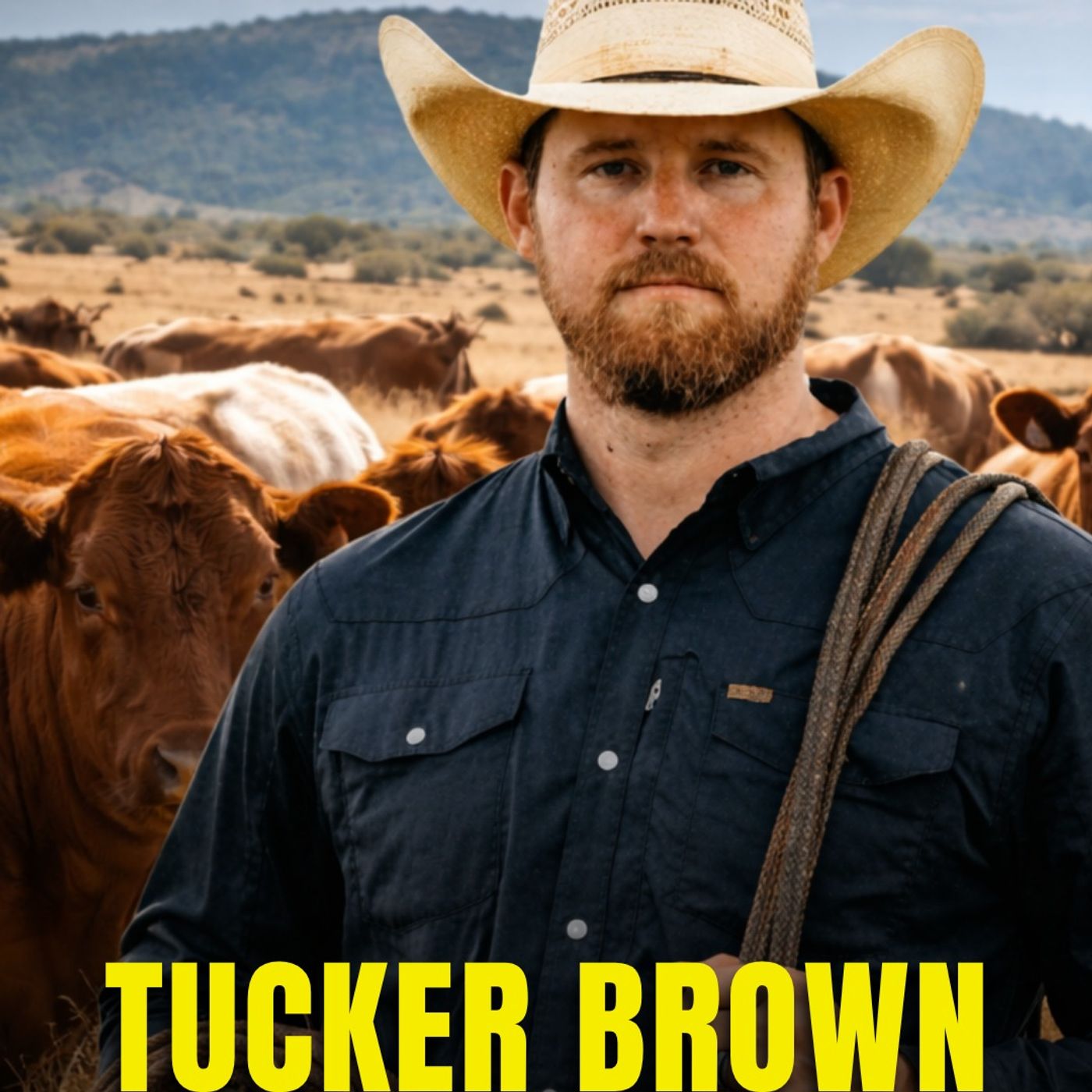
In this episode of the Farm4Profit Podcast, we sit down with Tucker Brown, a 6th-generation rancher from R.A. Brown Ranch in North Texas, an operation that’s been running since 1895.
But this isn’t just a story about history — it’s about evolution.
Tucker shares how their family has successfully blended tradition, technology, and storytelling to stay relevant and profitable in today’s cattle industry.
We dive into:
• The history of R.A. Brown Ranch and how it survived tough times
• The role previous generations played in building a lasting operation
• What a successful generational transition actually looks like
• How seedstock genetics and data-driven decisions drive profitability
• The use of DNA, EPDs, IVF, and embryo transfer in modern ranching
• Managing over 1,000 registered cows across multiple breeds
• The business behind selling 800+ bulls annually
• Sustainable ranching practices and pasture management
• How Tucker is using social media and podcasting to advocate for agriculture
• Bridging the gap between consumers and ranchers through storytelling
We also talk about the importance of faith, family, and leadership in building something that lasts beyond a single generation.
Tucker’s perspective highlights a powerful truth:
The operations that survive aren’t just good at production —
they’re great at adapting, communicating, and thinking long-term.
Whether you’re running cattle, crops, or building a business, this episode is packed with insights on how to create something that stands the test of time.
Want Farm4Profit Merch? Custom order your favorite items today!
https://farmfocused.com/farm-4profit/
Don’t forget to like the podcast on all platforms and leave a review where ever you listen!
Website: www.Farm4Profit.com
Shareable episode link: https://intro-to-farm4profit.simplecast.com
Email address: [email protected]
Call/Text: 515.207.9640
Subscribe to YouTube: https://www.youtube.com/channel/UCSR8c1BrCjNDDI_Acku5Xqw
Follow us on TikTok: https://www.tiktok.com/@farm4profitllc
Connect with us on Facebook: https://www.facebook.com/Farm4ProfitLLC/
Farm4Profit Media is not a financial, legal, or tax advisor. Content is provided for informational purposes only, and we serve solely as a platform for third-party opinions. Any actions taken based on this content are at your own risk.
Hosted by Simplecast, an AdsWizz company. See pcm.adswizz.com for information about our collection and use of personal data for advertising.
Get every episode summarized
Each time Farm4Profit Podcast publishes, we email you a written briefing from the transcript — the topics, who appeared, and any specific claims, with the ad reads skipped.
Email me new episodesFree for 3 shows. No card needed.
Hosts & guests
Transcript ready
1,617 searchable segments. Every word is indexed and playable.
Full transcript
Farm4Profit Podcast — Tucker Brown : How Their Ranch has Survived 130 Years. Machine-transcribed; use the interactive transcript above to jump the player to any line.
And now, a message from our friends from Brandt Agricultural Products. The Brandt High-Speed disc is built to manage residue, prepare seed beds, and level ruts in the toughest of conditions. With sealed disc hubs and minimal maintenance, it's designed to get the job done right. Plus, you get your choice of disc blades and finishing options to match your fields. And now it's backed by Brandt's new four-year warranty on those disc hubs and a five-year warranty on the frame structure. That's confidence you can count on. Talk to your local Brandt dealer or visit brandt.ca to learn more. You know those everyday changes that you're making to boost your yield? They're actually improving your bottom line in multiple ways. And that's right, our friends at Onshore here to help you grab the tax incentives that you qualify for, all while keeping your data right where it belongs onshore. They're here to help farmers identify and defend research and development tax credits using your real data. Learn more at onshore.com slash farm for profit. That's onshore.com slash farm for profit. We do AI. We do embryo transfer. We do a ton of that. And so because of that, we're investing more.
We're selling two-year-old bulls, 18 months old. They're on a no-corn diet and so they're ready to go out to the pasture. They're not corn fat and they're ready to work, right? With 800 bulls, we have the opportunity to get the caving ease, to get the growth, and then to get some that are just that awesome combination of marbling, motherability, fertility, and that's what we're shooting for, right? Got it. Never have the perfect cow, but with 800 of them, we have that opportunity to have a group of really high cavities bulls and a group of all like terminal growth bulls and into any of those breeds. Join, Corey. Two boys washing popsicles. David. So Tanner, what I really got to know is the juice worth the squeeze. The end Tanner. All right, it's about time to wrap this baby up. They're my favorite, like farm for fun. It's time to put aside the stress of the workboots, sit down, grab your favorite adult beverage,
and listen to the boys from farm for problems. Yeah, it says it pulls. Welcome back to the Fire for Ruff the Podcast. This is Tanner. This is Corey. And Dave's here. We are hanging out with one of our good friends. Long time guest list. Holder, spot holder. Spot holder. He's been on the bat. He has. He has. But it is an absolute pleasure to finally be able to catch up with him. It's one of those we didn't want to do over the computer. Like this is one that you need to do in person. Yep. Yeah, it, I mean, technology is great, right? We can reach everyone wherever they're out in the world, but there's just certain people that we need to have in person. What a man. He's got a problem with his watch. He must be blown up. He is. He is. Popular. We got to charge your form and everything. We'll get that Apple watch ready to go. It's that service full service here. At the show, but listeners, if you want to be a guest or you know, somebody that would be a good interview for us, uh, connect at farmforprofit.com. You can also text us 515-207-9640.
Love getting those messages. A couple of you down here at this conference have been doing that as well. Thanks for coming by and seeing us. We always love to shake your hand and get you to fill out one of our surveys. You're seeing this on, or if you're hearing this on Spotify, make sure to go to YouTube and subscribe. Got an intentional deal. We want you to subscribe. We need more YouTube subs. Absolutely. Let it happen. Excited to share with you this conversation, Cory. Why don't you get the guest fired up? All right. Today on the Farm for Fund and Show, we meet up with a rancher friend that we have been following for some time. He's a real horse riding cowboy, raising cattle in North Texas as a six-generation rancher. Please welcome with over three-quarters of a million social followers. Mr. Tucker. Brow. Wow. Wow. Sire me up. They're dancing. They're late, late. Change to the metrics there. We have the wrong Facebook. Yeah. Someone found his personal page. He uses for Marketplace. It's for Marketplace, yes. Yeah, just about that. Thanks, gentlemen.
Yeah, it's been so cool watching, you know, been a long time watcher of what you all do and the people you all have on. Yeah, I love it way better in person. Selfishly, because I get to be with you guys. Yeah, absolutely. Second guy in two days that has the vest on that Cory wants. Oh, egg gear. I have seen a couple of the egg gear vests and I'm like, man, that's pretty cool stuff. Yeah, they're, they look durable. They don't look too thick. We're not even, we're not even doing an advertisement. They just look good. Yeah, I'm an, I'm an egg gear guy. Then have been with them for like four or five years and, uh, yeah, I love it. So Tucker is a farm for fun show. This is where we're diving and just get your whole story. So let's wind it all the way back to Little Tucker. I mean, that's six-generation and obviously grew up on the ranch, right? I did. Yeah, grew up in Throgmorton on the ranch. Working with family, working with cousins, there's 17 in my generation. Whoa. And so it's really cool to be able to work with family and anybody who ever says it's easy, don't believe anything else they say. Yeah. But I wouldn't have it any other way. I love working with family, working at home and we work cattle and horses and we,
we find ourselves at our best. Some people find us too traditional. Some people find us too progressive. But that's where we are really our best is when we blend those two together. And then we get to come to conventions like this and see what's coming. Meet the, meet great people and have some time like this. And so, man, I love what I get to do. Throgmorton. Throgmorton text. It's the big city. Where is Texas is a big state? Yeah. Where's Throgmorton? Throgmorton's it's about two, three hours west of Dallas. Okay. So did you get the ice and snow? Yeah, yeah, that one's very fun. Yeah, I've always, I'm definitely built for the heat kind of guy. So yeah, I'm not as tough as those who live up north. So it was, it was a long, and it's only three days. It doesn't last very long. But yeah, we're not built for that. The old waters froze or our heat froze and Hey, we were supposed to fly through Dallas and we moved our flight because we knew it wouldn't be good.
Great idea. Yeah, great idea. Because we actually, Dave and I were on another flight. The next week and someone was just getting back like six days later. Yeah. Oh, God, Texas. Like we got, we got laid over. Oh, wow. So what's your earliest memory on doing something on the ranch? Oh, earliest memory. Most of my earliest memories tend to be, tend to be horseback with my dad. Yeah. And we're working like going fishing with my granddad or feeding mayors with my granddad. That's where most of my earliest memories come from. tend to be, tend to be there. I'm definitely more on the, on the cattle side. But most of my memories tend to have some kind of horse related to it. And my granddad was a big fisherman. He loved fishing more than anything. And so the two things I always did with my granddad were fish or feed mayors. Yeah. And those were, those were pretty special memories. What kind of fishing? Bass fishing. Bass. That's his favorite. Yeah, he, so we don't have any underground water at the ranch. We fully rely on catching rainwater.
And so we have, we call him tanks. So there's a column ponds. We have them all around the ranch. And so my granddad for years would stock those with he, we believe in crossbreeding cattle and fish. So he, he, he would crossbreed, crossbreed some different strands of largemouth bass. And yeah, it's pretty cool. So if he were horses way young, did Texas rodeo comes to mind? Did you get into any ranch rodeo? Or into anything collegiate or? I did. I didn't on the collegiate side. I did do, I did do a little bit of rodeo growing up. And mostly it was on the, you know, junior rodeo circuit, I guess is what you'd call it. But there are some really talented rodeo cowboys around our area. Wesley Thorps, a three-ton goldbuckle winner. And at the NFR, it is a healer. And I get to hold it over him that I beat him. Oh, yeah. We were 12, but I beat him. And I get, I like to hold net over it. Hey, that's all right. Is that people peak earlier than others? Yeah, you're right.
But in any small town, you know, you have to be involved in everything for the town to work. Drive, yeah. And so, you know, once, once junior high came around and then started playing all the sports and doing rodeo. And it was kind of like you had to pick which one you want to do. And we picked, we didn't pick rodeo. We love rodeo, but we didn't pick rodeo. I'm on the ranch rodeo team now. And my cousin, I have some of the 17 cousins. There's some really talented horse trainers, ropers, rodeoers. And so we do, we do quite a bit of ranch rodeo. I say quite a bit, a couple of years. But I don't have quite the, the itch on the horse side. I love a good horse. My brother and I, we work really well together. He needs cattle to work as horses and I need horses to work my cat. I got you. So we work pretty well together there. So you're ready to chose the sports side. What was the, what did you play? Man, everything. Golf track, tennis football, basketball, played it all, because you had to, to have the team.
Is high school football in Texas like they depicted on TV? Is it serious business? Well, if you've ever watched Friday Night Live, it's like that is so close, very correct. In the sports side of things. Now, the drama, like, is there some? Sure, yeah. But it was, it was really cool. We actually played six-man football. Got to win a state championship, which was super awesome as a, as a high school. Howdy. What was, because we've got two linemen. We've got eight men and I, well, yeah, very similar. But yeah, it's three linemen and three in the back field. Huh. I'd be fun to watch. Everybody's a eligible receiver. Every 15 yards for a first down, 80 by 40 field. Yeah, so the 80 by 40 is the same as eight man. Okay. But 15 yards for a first down. Yeah, a little different. There's a lot of wide open space. There is, yes. Probably high scoring games. Very much so. Yeah. Yeah, very much so. Yeah, it's really cool. And then now they play the state championships in the Cowboy Stadium. I didn't get to play there. Kind of ageing myself on that. But it was neat. And I'd played a little collegiate basketball.
And that's where I love sports. I love competition. And that kind of, once I figured out that I was very pale and like five-nine, then I kind of went more towards the media side and started broadcasting sports. Really? So I've been broadcasting since 2011. Which sport? I love it. Basketball and football mostly. Football is where I have the most fun. For high school or for high school? Yeah. Yeah. And then that's where all this media kind of merged into ranching and brought me to where I am today as a rancher content. So fast forward to tell our listeners where you're at today? Today I'm back at the ranch with a beautiful wife and three kids, three little girls. And every day I'm still working on the ranch. You know, creating good horses and creating better cattle. We sell bulls. That's our bread and butter. But over the past five years, I've been creating more and more content. Started out, just kind of having fun. And I've kind of accidentally
fell into the, I guess, influencing realm for lack of a better term. I don't like that term. But it's, uh, I work really hard at it and I really enjoy it. Just being able to share what we do on the ranch. It has taken me a whole lot of places that I never thought I'd be. That's a lot of fun to think about how many conversations we've had with people that just kind of fell into it. And it all just starts with telling your own story. Everybody, everybody's got a unique approach. But I don't know who doesn't like watching ranching content. Yeah, I'm riding the co-tail of the Yellowstone effect, right? And I, uh, whether, whether people like it or not, I'm going to take advantage of that. Yeah. And so if, uh, you know, there's a lot of people since COVID came around, people are worried about their food. Like to have some concerns and they hear things what's bad for you. What's good? And COVID kind of gave it the opportunity for people to learn where their food came from. And I want them to hear that from us. You know, I'd, I'd so rather than hear that from us than a new station there may not be telling the truth. Yep. What, what year was that that?
You actually thought, oh, I actually got something here. Well, it was actually here at NCBA in 2021 that, uh, uh, or is that like February of 22. I'd kind of been doing it for the ranch just like a couple of pictures. They gave a beef advocate of the year award in the, in February of 22. And I was like, oh, that's cool. Like, who's this girl that won it? And she was a first generation rancher out of Caledon, Northern California. Had 12 cows. And she did a phenomenal job of connecting with people who had, who like wanted to do that. Or were really interested in that. And then as, like, as she kept talking, I just kept being like hit in the face with why aren't, why am I not doing that? Like she, she is with, with 12 Herford cows and first generation rancher. And I'm like, I have this cold story about keeping the ranch in the family, family in the ranch, um, you know, 18, since 1895. And I'm a storyteller. I love media. And I was like, I how, how could I have not started this yet? So that was whenever I was like, okay, 2022.
I'm going to, I'm going to make a run at telling that story. Yeah. The common theme is everybody has to get consistent. Yeah. Right. You can do it. But if you want to do it well, you got to be consistent. You got to be there. Do you think there were social content creators slash influencers before COVID? Yeah. Oh, I do. I, I think there was. I, I bet there's a lot of home videos, a lot of VHSs, a lot of DVDs that have been made of, of content. And arguably probably a lot of them turned into TV shows. Yeah. Probably probably fall the same trajectory of, uh, realtors. Everyone became a realtor in COVID. Yeah. Yeah. Right. They had to tell you are realtors before. But now everybody, how everybody calls something to do from home is supposedly make your own hours. They say, right? Yeah. All several people that had two or three full-time jobs. And the county, our company didn't know that they did. Wow. It was like they're making fully-dipped salaries two or three times. Hey, that's hustling. Eventually they got caught up to. But like, yeah, when you're all virtual. Yeah. Yeah. So you can have hustling. How you, you do broadcasting for sports.
You've got your social media and the content creation side. And you're on the ranch. It sounds like two and a half full-time jobs. Boy, that is. And I like it that way. My dad or my grandmother going up. I love my grandmother to death. Peggy Brown. She is, she's amazing. Um, she would always tell my dad and then my dad passed it down to me. He's like, hey, the devil's playground is idle hands. And you will not have idle hands around here. So, and that's, that's kind of where we, we stay busy and we work. And one of the things, um, about coming back to the ranch is that you can come back in two ways. You either come back as an employee of the ranch. If there's a job open and you're the man for the job or you can come back and grow the business, bring something back that, uh, we'll be able to bring more income to grow the ranch rather than split it up again. Query, could you imagine having 18 siblings or relatives in your farm? Are they all involved? Of the, of the 17, 15 are quite involved.
Now we're not all and we're not all in the same. We're not all on the same ranch now. We did a generational transfer in 2013 from my granddad to my dad and his three siblings. And that was, um, you know, summer in the panhandle, summer around Throck, Morton. And so we each kind of manage our own. That was the best way we felt that we could keep the ranch moving. We saw a lot of people or they did. I, it's really cool with they did. I wasn't a part of it. But I want to hear the story because we talk about succession planning all the time. So keep going. I love this. Yeah, they're trying to figure out how can we keep the ranch in the family and the family in the ranch? And we, we saw a lot of ranches at that time that grandpa was dying. They didn't have a plan. The family didn't know the communication wasn't there. There's lots of, lots of fighting going on and it tore, you know, tore the ranch and a family apart. And we love the idea of, of keeping the ranch all together. But then we had four siblings who wanted to go four different directions. And so what they were afraid of is that we wouldn't go anywhere because we would have no chief. And if we selected a chief that it wouldn't be good
because three don't want to go that direction. My dad, he's the only one that wanted to do the seedstock side. I have an aunt and uncle that are great on the yearland side in farming. I have another one that didn't have any interest in genetics and just wanted to do the commercial side. And another one that was really involved in feeding cattle and yearlings and be horses. And so there's kind of four different directions there. And so the best way that they and I believe it was the best route is they did. I don't like the word split, but they did. They split it. We still all worked together. But we're ahead of, they are ahead of their part. And they make the decisions. And if they want to partner with another part of the family, we can. Just separated into specialty. It's all eggs though. I mean, it sounds like it's all cattle but different, different points of contact. Exactly. Exactly. You had to have a visionary for that. Someone had to have that plan. Yeah, and I think, I mean, my granddad definitely was. My grandmother was a big, big part of that of wanting to watch her kids
be able to do what they love because she got to do the same thing. So how did your granddad handle that after it transitioned, right? Because he's around and he's full of knowledge and probably still full of work, I think. Yeah, he was slowing down by that point. He would have been, he would have been in his 70s and was slowing down, wanting to be a little more involved on the horses in the fishing rather than the seedstock and the ranching. And so it was a perfect time to do that. And I didn't realize how cool it was that they were able to make that work at the time. Because now we see farms and ranchers split and family split over things like this all the time. And breaks my heart whenever they allow the tradition to kind of get in the way of success. It's like real-crowned farmers. Grandpa may not retire, but he may retire to the combine or to a truck. You're grandpa retired to horseback. If you ever needed an extra rider, I'm sure he was raising his hand.
Oh, yeah, he was all about still being there and kind of telling, they're like, well, I wouldn't do it that way. So you tell him to do it. It's just not the way I would do it. Exactly. You and your friend, we took over the seedstock side. Are you like an animal science major or go to college for that or genetics? Do you just do AI everything? We do a lot of AI and embryo transfer. Yeah. So whenever I went to college, I wanted to play basketball. And so I ended up going to Lubbock Christian University in the Panhandle and playing basketball. And I thought I would transfer to tech if I ever quit playing basketball, but I just I loved it there. I loved the people. You got it. So I did have a land management, basically a land management degree. Natural resources and ecology or something like that. But I knew I needed whenever I decided I wanted to come home. And I didn't know if I was coming home whenever I left. But once I went to a school that was non-ag and saw the difference in what had the, you know, the way that I got to be raised
and the connection to the land. And they were great people, like some of my best friends. But I was like, man, I would be, I would be a fool to not raise my kids the same way if I have this opportunity. Right. And you know, looking back, Lord's hand is all in it because I was trained for four years to see what people thought about Ag. Yeah. To see what they didn't know. And they're like, what do you mean, bulls have the horns, right? And so that was really eye-opening. Coming from Throck Morton, where everybody knew that. Yep. And I was going to love it. Who I thought everybody would know that. But I think it's funny. We all, if we go to college, we think we're getting an education on whatever our study is. But I think we all get an education on something completely different. Nice true. If you involve yourself and apply yourself, absolutely. There's so many life lessons, so much perspective gained. Yeah, absolutely. I wonder what it would have been if you did go to an ag school and you didn't have that perspective. Yeah, great. I mean, I don't know. I think about that a lot. Yeah. Because if I went to tech, I would have been around everybody who knew, right?
But I do love it. I figured when you said you went and played basketball, it seems like all those basketball players go and get like a sports medicine degree. You know, something that does. Business or, uh, yeah. An eCology or something. Yeah, we need to find a couple of those athletes that are in ag degrees. Get a little farm for profit in IO money. There you go. So I'm listening. Maybe that's you. Maybe NCBA can do that. They have an MBA program, you know, masters and beauty. Yeah, we see. Yeah, I took it. I wanted my MBA self. Then I could just say same. And I look, I do. That also does a great job of, I feel I've kind of making your, your brain think, what is, what do other people think? Yeah, or what, well, how do they see it? A lot of times what I've learned is that whenever we do post stuff in the ranching side of what we do, we're either palpating or castrating or vaccinating and. Looks like it's hurting. Yeah. And all we see, they're like, we're like, yeah, that's everyday stuff. We're weaning. And all they see is like taking the cap away. You're poking it with needles. You're putting your arm where in that cow.
And so like we can show those cool things that we get to do, but we never say why. And that's that's really where I've had a lot of success in the past few years is just simply saying why. Because the way of life is a little bit romantic and it's, it's neat. It's kind of trending at the moment. And so really all I have to do at the cool part is that whenever the truth is told like, agriculture wins, I like that. And so all I have to do is tell the truth in a way that our consumer can understand. If you're planning corn, you know that talc and graphite is crucial for your seed flow. Simplify your program, piggybacking on GrowPac AI, the brand new GrowPac CT from Ag Explore. Three parts, one package, biologicals, micronutrients, seed flow aid. And it's an EPA registered solution to defend against corn rootworm. It's powered by inception and intake technology that improves nutrient uptake and mobility all while protecting your yield potential. It's one system that's built for performance. You can learn more at agexplore.com.
Who do you think your audience is? Good question. I mean according to my analytics, they are mostly in like Houston, Atlanta, San Antonio, Dallas, and New York. New York City. Oh really, okay. And those are the main cities that pops up. But you know it reaches, it definitely reaches our bull customers too because as I was kind of starting it and getting rolling and I was taking more time doing that, there's a point where it was like, my parents were like, you know, it is like it's cute. I love that you're standing up for the industry. There's not a return yet. There's no, where's the value for us? It's great. I don't know if it's reaching our customers. Then we had a bull sale and a guy who buys like 15 bulls a year from us comes up and he congrats on a good sale. But I wanted to tell you like, I love your videos. Like keep doing them. All of our guys talk about them and my dad was like, I was just telling him that.
That he used to do more of those. That was like, you rascal, man. So ever since then, like even though I am reaching to people in the cities, as I'm reaching them, I'm reaching our bull customers and people and agriculture along the way is what I've seen. What are the genetics they got going? What breed and what are you breeding for? Black angus, red angus and semangus are three. Those are the ones that we mostly do. The black and red angus would be like our main. That's what we sell the most of. We sell about 800 a year. And so that's 800 bulls a year. And we have a phenomenal program with cooperators all across the country. And most of, I mean, of course, we have cattle of our own and bulls of our own that we sell. But what we do is if you had the cattle and you were the, we typically try to find the right person that has the cattle rather than the right cattle, and then maybe not the right person. But whenever we can add doctors, lawyers, nutritionists, feed salesmen, mineral salesmen,
coal miners, like all of these different types of people onto our team, we can, we have a, our network, we have a lot of value in our network. Or we, we see a lot of value. And so we just have so many people to ask these questions too that are in West Virginia, Florida, Oklahoma, Kansas, Texas. In Louisiana. In the seed stock that you're selling, you guys breed for a certain genetic disposition. Caving ease, our milk score, our gainability, six pounds a day. I mean, what, who are your customers? And what kind of cattle are you breeding? Yeah, a lot of our customers tend to be the ones that are willing to invest more or because they're keeping their calves longer. That's been the case. We do AI, we do embryo transfer, we do a ton of that. And so because of that, we're, we're investing more, we're selling two-year-old bulls, 18 months old. They're on a no-corn diet. And so they're ready to go out to the pasture. They're, they're not corn fat and they're ready to work, right? With 800 bulls, we have the opportunity to get the Caving ease, to get the growth, and then to get some that are just that awesome combination
of marbling, motherability, fertility, and that's what we're shooting for, right? I got it. Never have the perfect cow, but with 800 of them, we have that opportunity to have a group of really high Cavanese bulls and a group of all like terminal growth bulls and into any of those breeds. But we do love, how my dad challenges it all the time. And he may be a prick in some of the sides of some associations, but he really challenges them to make those EPDs more accurate, whether that makes some of the top bulls go down or not, like the goal is to make them more accurate. So at 800 bulls, are you using sex semen because the bulls are your target? I mean, otherwise, what's the percentage of calves that are born, yeah? Yeah, so some of our cooperators do, but we sell every four-year-old cow, which is something unique that we do, a lot of granddad cars do. Lots of turnover. So we need the females. And so we don't use it. And with embryo transfer,
we can use a lot of those top females to be the nucleus of our herd. We actually did more embryo transfer last year and this year than we have ever before, just really trying to make the right kind of cattle. And we're getting more information all the time than trying to understand that and making sure it's accurate and then making sure that their physical traits are good too. The otters are good that they're, you know, there's some feet problems in each of those breeds and making sure that that's not an issue for our customers. So that's a, we work really hard to do that. Well, you go ahead. Well, I think you might be back on it. Go for it. Do you feed no corn by choice? It's by choice. Do you go corn around you? Yeah, it's by choice. There is corn would be a cheaper feed for us to feed. And we can even add, you know, 4% end of the feed and it not be detrimental to the gut or and it can be really good for growth. But there's a lot of misconception about it. And so we just took it out of our feed. There are a lot of corn fat bulls out there
and it leaves a nasty taste and bires mouth whenever they buy one and all of a sudden it's just melting like butter out there. Because that looks good and then it goes out on pasture and yeah, if you get one or two of them, that's corn. Yeah. Yeah, whenever you get that corn in the diet and it ruins those bugs in a room and when they get to grass, they can't digest it. And so they just melt. And but with no corn, we're able to grow those cattle a little slower. We're getting them to 18 months old. Yeah. A little more of a regular pace. We're not really trying to hurry and yeah. Well, most of that's profitability. You know, I see a lot of guys right coming yearlings. They'll put them on a feed program, get them bulked up. Hope they seeming to test out okay. And then and then start selling them where you're holding them for two years. So you got a little bit of cost and time and money. It made me think, well, I think in Texas, I think a brown grass and I think I, well, we're at it's green grass, right? So like we can do cow calf pear for two acres. What's it take? You got to have some acres there. We do East Texas would be very similar to you,
but we're at we're kind of on the brink of West Texas and we're kind of in that north central area where neither side really accepts us. They're like, no, you're east. And the guys on the west, on the east side are like, no, you're west. So we're in a really cool spot because we get about 25 inches or any year, which is the perfect amount to be able to grow some really good grass, but not enough for that grass to get real washy. So we're, I mean, we are about one to 20, one cow to 20 acres. Okay, yeah. And there's some that like the heavy mesquite and cactus would bump it up to like one to 30 acres. But that's where that pasture management comes in and taking care of that. But it's gets, we're really working hard right now on efficiency and can we produce the cows that grow more on less or maintain on less? Easy keepers. Yeah, looking for those easy keepers. We do a lot of feed efficiency testing. And then there's more data on that coming out all the time.
There's some a couple tags here that are using this awesome new technology to be able to tell how much cows are eating and which ones are being more efficient. So we're really excited about that. But can we put more cows on the same pasture and get more calves per acre? Yeah. You gotta be putting some forage up don't you? For the ice storms and all that? We actually, we don't. You know, we rarely, we do have hay, but rarely do we feed hay. I mean, maybe we'll cut one out. I think we put four of them out during the snow storm, four bales. Really? But that kind of goes back to the rain part where our grass stays really strong. And we, as long as we are grazing correctly, if we were to graze it all the way down, we would have to bring in hay. But because we are grazing it correctly or more correctly, I guess, we still make mistakes. But when we leave that grass tall enough, that is the hay. If we don't graze it all the way down, we let it grow. But we do put up silage. We put up silage for the bulls, wheat silage.
So we do a little bit of farming, just not near as much as y'all. I like how he called that. Maybe a little bit of farming. Yeah. A little bit of farming on the wheat side. You got to be so big to be a rancher. You have to have livestock to be a ranch. Where's the differentiator between farm? Great question, ranch. That's a great question. You know, it seems like the further east you get, it's a little more farm country where they have both. But when I think of farming, I think of real crops and... And John Deere tractors. Things like that. The Whittaker Ranch is on 20 acres. Yeah, I know, right? We have some cows though. So if we didn't have cattle, we wouldn't say ranch. Yeah. And we didn't have row crops. You do now. Yeah, we know we have row crops. They're just cattle and hay. Yeah, that's a funny... It's very regional, because you'll go to Alabama and everybody's got the farm. And we're one of the only people with... I went down your way to go about pipe or something, I got a lot of the oil fields and went and got cattle guards.
I was like, where'd you get the cattle guards? I'm like one of the only guys in Iowa with cattle guards that would jack across. I wanted them heavy enough to put a semi-grossed them. So... How did you resist the ATV trend for... Because I feel like everyone went that way instead of horses, but you're still on horses. That we are. My granddad was... My great-grandfather was at the table, one of the original developers of the AQHA Association. And so we've had a... We're one of a few that have had a horse registered every single year. And we love horses, and especially my generation just has a disease, I call it, of just love training horses and producing really good ones. And we do have ATVs, we do have ATVs. Like, we realize that that's kind of that mesh of the... The wisdom is in knowing which one is the right one to use. At what time? And so, but we do love horses. It's kind of part of our marketing. It's part of our tradition and being able to raise and sell those horses. And then we do have the ATVs.
For our part of the world, the mosquito trees and the rocks and the ups and downs just really do make it impossible to do our job correctly. If we were on an ATV or a bike or... And the way that our registered cows are just so docile, they would look at those things and stay under the tree. If that we wouldn't be able to get to. And so, being horseback, it works pretty good. What's your favorite color horse? I like gray horses. I agree with that from my granddad. Yeah, I get a gray horse. I've got two gray horses right now that I love. And I'm even selling one of my gray horses for the first time on March 10th. We have a horse sale and bull sale. And Trump is his name. I get quite a bit of a social media flag for that. He gets good, yeah. I weird how my wife, she has a color that she wants and all the girls want buckskins and some of her chestnuts and so I had to learn all the colors on the award wars for sure. But Corey, when your daughters want one,
you're gonna be all over the house. La la la la la. And Iowa, they just cost money. They do the estate. Sounds like you're actually making them make money, so. Well, that's been a new thing. I mean, that goes back to that Yellowstone trend, really, because before it was a cost and it was an investment for us to do our job. But now we're able to make that a profit center. You guys have one of your 17 that's a horse barrier or do you hire that out or? We hire that out. We used to try to do all of that our own. But what we found is that if we stay in our lane and do what we do best, then we can bring in other experts that do that job extremely well and we can do what we do best. That's one thing you don't see in our farm stores where I'm from in Montana. Every time we go there, there's just shoes and failure equipment everywhere. And then clothing. And I, whether it's a whole lot more clothing and sprayers, et cetera, et cetera at the farm stores. So are you doing the horse breeding like you guys are on the cattle side? Not, we are, but probably not as much AI,
not as much ET, but we do some of that. My brother does really good job of blending like the old big ranch horses with more athletic, quicker cutting horses, Sterna. And that's he's he's walking a pretty hard line on that because it's really easy to just go one way or the other. But it's right. If you were, you said you were healer, right? If you're a rope and you try to make them shorter, does he breed them to be 15, 14 hands or less or try to get them closer to the ground or some people are really tall, big stout horses? Yeah, the older genetics we have are some bigger stouter horses. Yeah, and I'm not a healer. I just beat the healer. Oh, yeah, okay. Yeah, but I mean, most of the time, big ranch, whenever New World screw arm was around, and there's been a lot of conversations about that recently, but man, that's where a lot of good horses were made and they were big and stout had to last all day in rope calves and be able to hold them down. And whenever we lost that, there were a lot of good horses that weren't made because they didn't have to do that. But we've been able to mix those two of him being able
to show them in the ring, be athletic enough for the show arena and still be able to come out to the ranch and do the job. So you sell them all, is it one sale a year? We have two, two. On horses, we have one sale a year. We do, it's a three day event. We have a horse show, horse sale, and a bull sale. Okay, in March. Second Wednesday, March. And then second Wednesday of October, we'll sell 600 bulls and another 600 females and it makes for a long day. But all auctioned? All auctioned, yeah. Oh, yeah, auctioned. And we have some of the best ones in the business. One of them being dope. Some of the best in the dope Lambert being one of a, Steve Friskup helps us on the horse side. And I should, we kind of have one that always goes in and out. You're saying there's a chance. Yeah, no. Doke has been one of my mentors. He's actually one of the long term guys at the National Auction Years Association runs the auto world. If you're in Texas, anywhere in Mannheim,
you know Doke, a flat out sale. And he does a lot of bull sales too. A lot of guys see him as an auto guy, but he is a cattle guy through and through. So Wendy Lambert, his wife, they, she's been the international champion too. That's what I admire about the livestock sales. Is it seems like a lot in land or tractors or whatever it seems like? That's the auctioneer. Once you get into that, even like I know Red Angus guys, there's a Red Angus guy and you stay with Kyle. And if it's a Black Angus, you're going to go now. Because they know the breeds, they know the genetics, the nose aligns. And that's who you want to rip in your cattle. So yeah, yep. I think you should try to get in with some of that kind of. That would be fun. It'd be fun. It was a blast. I can do it really good if my wife's sitting next to me because she just laughs to me. She's like, Swarthmore, Swarthmore, keep going. Keep going. That's how the sale works. And she knows all the genetics and she's a geneticist for that sale. She geeks out on that and yeah, also online. It is. Yeah, it's online on DV auction. VV auctions, yeah. Horse sales on CCI. CCI live.
Yep. What does an average bull sell? What do you think? Oh, I mean, for us in October, our average was, I think it's 12,000, which is the best sale we've ever had. But again, you know, the price of a bull is worth, we say the price of a bull is worth the price of five wing calves or three finished steers. Well, if you guys are selling two-year-olds too, arguably worth a little bit more. They can serve us more animals than if you're selling yearlings. So yeah, that's the hope. And they've, even though we do have a cooperator system all around the country, they're all developed the exact same way for nine months. And so you cannot tell which ones are ours and which ones aren't. Because they're all ours is what happens. And so for nine months, they're all developed the same. They meet the same requirements. They got the same vaccinations. I guess that's the first time I've ever heard it. Have you ever heard of that, Tanner, the cooperator system in the cattle industry? Well, I went in and read yesterday. No, I wasn't on that one. I talked about that. There's a few. At the big bull sales, you would go to,
I mean, the gardeners would do it. There's, there's 44 farms would do it. And he was doing it on the, the commercial cattle side. And there was using that as the connection to be able to get better bids from them. Oh, nice. Well, we've seen guys do that all throughout the podcast from where they were sharing their marketing for beef. If you're direct to market or direct to table, they were doing it out to Montana and Nebraska. The people were talking without there. We're doing bull sales together. So yeah, it's smart. Spreads your ass and you don't have to manage quite as much. It's just selling your brand. More advertising all together too. I mean, you're getting your, they're getting the goodie off of your social media too. If you're out there, then you know, helps them. Yeah. Yeah, it's a cool group. It really is. I want to go back to the technology piece. We talked a little bit about the ATV compared to the horse side. You mentioned a little bit about your tags that you're excited about. But how else is the this generation brought tech into the range? All good question. I mean, more than ever, we have those softwares that help us manage, you know, which cows, when did they get pregnant? When did they care? When did they find out which ones are actually making this money or losing money?
And that gives the opportunity. It's pretty neat to see that opportunity come back to this generation that's managing right now. And they're like, well, if I had this 30 years ago, what I could have done. But that's what's so exciting is that now we can say that they're like, holy cow. If it's changed this much in four years, and 10 years from now, we're going to be able to tell so much more about the cow. Some of the collars and tags are going to be able to tell us when one's a cabin, when one's an estrus, when one gets bred, when one's getting chased by a wolf if you're in Colorado. And so there's so much of that that is really close to happening, like some of it is going on right now, but then there's some of it that's really being close to being actually sold nationwide. Are you guys doing anything feed management-wise technology that's different? You said you're geeking out on what they're getting, you know, for the room and the whole world. What are you doing any technology for that? Well, we're not an expert in nutrition, and we don't try to be. We did try to be for a while, and we are not.
And so that's another one of the deals that we hire out. We use livestock nutrition center, and they are the experts that come and help us make sure that the feed's right, and they send us the rations for us to mix. And that works really well for it. Do you think people try to stop being the expert and just trust the people that they use? I mean, I'm thinking back to seed salesman. I really don't even think about it. I just say, yep, that's what I'm using. You know, you're saying the same thing. Yeah, we tried it, we're not good at it. So tell you what, I'm going to just hire these guests. Exactly. I think the farmer way is normally, I got to do everything myself, but there's a little bit of a freedom when you know that you can just give that they are much better at it, and they're going to make, give me more time and make me more money. I think it's until I was 40 before I thought that I couldn't do it all myself, and then I just started hiring people. I mean, I think you can build a zone house and chop and whatever, you know, say, handyman. Don't need nobody, no. For which I did it too. I mean, when you don't have money, you just kind of, yeah, I think it's got to be what it was. It's now that I have more money, now I just, yeah, I'll just YouTube this. I'll just, yeah.
And there is a lot of that of like, where is our time most valuably spent, you know, and that's been a, that's been a changing thing for me. I've held every position on the ranch from feed manager to form and to cow manager to bull manager, and now I'm actually taking less of those roles and more into the marketing role because that's where I can be the most valuable. Yeah. Here's a clip for Cody. When's the best time to calf? Uh oh. It depends. It depends. When do you guys like to calf? We like to calf in January, February, March. There you go. I like it. That's when we like to calf. It's in Texas. We rarely have storms, except for last week. Yeah. That, you know, we had three days where it was really bad weather for calves. And I'm willing to work those three days to stay away from the extreme heat that those calves would be born in. If we did three months later. Yeah, the folks that were giving Cody a bunch of crap weren't necessarily talking Texas, but he else. He's hoping that March is terrible weather in, in all those folks get to eat
crow and we got to follow up. We dropped a couple on the ground. And it was the coldest day always. It's the coldest day of the year that they won't come. But you're probably doing it for a genetics program because you want to have a certain size when your bullsail comes around because you get into, you get into the first of the year where all the bullsails are going to start. Yeah. And everybody's going to be going. It is that way. And, you know, we can wean them earlier or we can breed when the cows have the best available grass, which is another good thing. We can breed in April, May, a little bit of June. And that helps us. That's when our grass is the best. So you Christmas at our house, you know, you get to December and it's Christmas presents and then January comes and it's Christmas in the mailbox because we get every flyer from every genetic sale. Yeah. I swear we have magazines like this high at our house and my wife is just sitting there just. Yeah, going through every one of them. That's awesome. How do you market or is it all just word of mouth? No, we market. We believe in marketing a lot. And we do it with our catalog. We invest a lot into our catalog. Oh, yeah. And taking really good pictures,
like we work really hard on taking good pictures of our cattle. We go to a lot of conventions. Go to a lot of conventions because we know that if no matter even if we have the best bull in the world, it wouldn't matter if nobody knew. Nobody knew about it. It wouldn't matter. And so word of mouth is great. And that's been since 1895, like that word of mouth has been able to grow, thankful to the people that you know, my ancestors for doing that. And my goal is that that doesn't end with me that I can just keep you guys going. Build your catalog. Are you the one that puts all the EPDs together? You got a team that's people that do that? Or do you make sale order? My dad makes sale order. And we go through every single bull. It's really annoying. But we do it. We make that sale order ourselves. And then my mom actually does the whole catalog. How do you do that? My father always wanted to put, he says, don't put the best one first. And he says, because half the guys in this room, if you told him which one you thought was best, they'll pick a different one. He says, don't ever tell him which one you think's the best. They'll just pick which one they think. Yeah, there is some kind of, there's some kind of special algorithm that needs to be made for there. Because everybody's sitting on their hands on them. And we even say it before the sale starts, okay?
This is a lot of number one. We believe this is the best bull in here. FYI, it's going to go cheaper than you think, because every one of you is going to sit on it. They're all going to wait until number, yeah. And then number three comes around and then soon. Yeah. Which is okay, like we even tell him it's going to happen and it does. Hmm, that's kind of neat when you, when you're looking to reflect back on that as well, but I know we don't have a lot of time left. Are you still hosting a podcast of your own? I am, man, it's been so fun. I mean, I love talking to people and loving on people and like in the 30,000-foot view, if I could get paid to talk to other people about the things I love, like I'm in. And so. That's why we're here. Exactly right. Yeah, we were getting paid. Wait. What? Yeah, I call it the registered ranching podcast. And I love entertaining. And if I can, if I can, I call it entertainment. If I can put some entertainment in there for people to want to watch it and then some education in there, that's where I have the most fun. Yeah, right. You know, he's smart, man. He's smart, man. He's smart, man.
We have education and entertainment. There you go, together. Yeah, that's, that's kind of neat. And then you're also on the radio? I'm much less on the radio now. The only game I called this year was the state championships in Cowboys Stadium, which if I could do one, that was it. That's a good answer. What's your sign? My sign. Like KVRP, QXR, 92.8. Oh, that's kind of weird. It is KVRP. So thanks for listening to KVRP, 97.1. I don't get how many credit for that. It's only, if you have a, if you have a raise it on it, that's funny. Do you have a radio name? I don't. I do need one. It's like Chuck Walgamer is some Chuck Wagon. Yeah, no, nothing there. I was thinking with all, even doing all these things, the next thing you need is an RFD TV show. And then he could Shark Rancher, because that's Shark Rancher. Oh, yeah, yeah. That's fun to make fun of Rob. It is. He'll never hear it. You're gonna send this show to him and say, hey, you got to listen all the way to minute 50 something.
Yeah. So we've got all this technology and genetics and data. What do you think's next? What are you excited for? What's next? I think the most exciting realm is gonna be the feed efficiency thing, and maybe the difference between feed efficiency and pasture efficiency. But once we start getting these collars on a lot more cattle or ear tags that are measuring those data points, it's really neat. I'm also excited about the talk that's going on about beef yield, about the yield scores, yield grades and how we're getting paid on a system that's from 12 herfern steers or something from 1958. But now there's been so much new data and talk that we actually may change that. Do you think we'll lose cattle husbandry? And the reason I say that is I'm a data guy. So I would love the collars to tell me when they're expecting, when we need to be breeding, et cetera, like that. But my wife is the true cattleman. She'll go out there and she's like, that one, and I'm like, how? I've been watching them for the last eight days
and that one is exhibiting signs that they're ready to be bred. And I didn't see it at all, but I'll use the technology. But then she's saying that's horrible. She doesn't want that because we're going to lose the husbandry part of it. Yeah, I'm thinking it goes back to the combination of being traditional and being progressive. And so we want our bulls to have the best EPDs and look the best as we can have both. And for some, it feels like you can only have an ATV or only have a horse. And whenever our pride gets in the way that it really holds us back. So again, I think it goes back to, will we probably lose some of that? Yeah, I don't think we already have. So I think having that combination of the both, combination of both. I could think of it. And finally, I mean, he knows where the soil, the seed, the et cetera. And I'm just trusting the computer to tell me exactly what I didn't know. And I would say. Which that goes back to YouTube University. Do we lose a little bit in YouTube University that we didn't have the old guy to tell us what our dad or we didn't learn that from the craftsman, a guy at church or something like that. We learned it from YouTube and whatever they said is now gold.
There's a difference between YouTube and chat GPT, though. Like your, your plan, your type and your whole, because we've all typed that thing into chat and go, it's close. Yeah, but it's not quite right, you know, right? Like it's just reading through the lippers between 600 pounds of pell gypsum and say 100 pounds of powder gypsum. Oh, we know, right? And it didn't know it. So yeah, now there's, I just wonder if we lose some of that that that I think we do. Yeah, I think we do lose it. I think we just have to adapt and get over it. It's said, it's happening whether we like it or not. Yeah. So for the record, you said you want the good looking kind of cattle. Are they the long, deep bodied or the short, squatty ones with the better EPDs? So Angus breed has changed over the year. And it used to be different. And it depends on what generation you are to what you say is the best looking kind of. It is, yeah, it really does. I mean, I, I really like a, I am less on the long and lean. Okay. I would like them to be, I don't want to give up length, but I do like them when they're pretty deep bodied and maybe, maybe a frame score of five, five or six.
I'm not, I don't want to go any higher than that, but that's what works for our country. Like our part of the world is that more moderate frame, animal that can travel. I mean, they need some leg sometimes to get those long acres around. But I don't know if I'm wanting to do, if I'm wanting to make one that can travel and do all of those things to be able to travel breed, the infertile, be good mom, be good bull, that we're always trying to find that best combination. That's great. Do you have a pick problems? We do, we got you, hunum, we do. Do you have a helicopter? I don't have a helicopter, but I got a guy. I got a guy. I got a guy. Can you come down and help you out there? Yeah. Yeah, I've always wanted to do it. They tear up the wheat, they're not as bad as they used to be because we did go to war with them and the coyotes. And so most of the coyotes right now, but with calving season. Yeah, but we do have some wheat. Give it thermal scoop. I don't, but I would love it. But he has an adapter for his cell phone. Oh, I knew it.
Yeah, is that one out there? Is that one out there? Sounds like a podcast at VanStanner. I could use a normal scope. Cody, we need to, we need to, we need to, Cody, we need a drone that just automatically goes out and thermals and shoots them and I want to get a whole part of it. I want to be a part of radic and I've always wanted to do that. When we're in Houston, I think we priced one and we're like, oh, yeah, they're not cheap. I've looked at it. Maybe not. So what it was like $4,500 to go up and at least got you a gun and ammo. But yeah, it's not cheap. Does the FSA or NRCS help with that USDA? Or are they, if you eradicate some of them, do they, do they, is there any cost share? I have not seen that part. Okay. I know there is some cost share like down in, in the San Angelo area for the goats and the sheep. I have not seen any for on the cattle side. They're okay. I hadn't looked into it though. Maybe I need to. If you were Crop Insurance guy, Tanner, I think you would want somebody, like we'd pay you to,
or I don't want you to show that we have less loss than Crop Insurance. So I think it would be a business model there to be had. We should start that by helicopter. TM. To get thermals, scopes, yeah. And have you seen some of those guys? Yeah. Oh my gosh. I'm like, you're gonna hit your blades on those trees. One of Duke's friends is Craig Meyer and he has hella hunter down in Texas and his Texas. And he started that. Yep. Well, we're unfortunately out of time. It's my fault for scheduling things way too close, but I've had a good time so far. Hey, me too. Do we miss anything that we should have shared? Oh, I don't know. We can, I can keep you up. We can fire you to cook. I'm talking, right? I do, I do speak all across the country. It's a blast. You know, the more we can tell our story from our side, I mean, like I said, when the truth is told Aguens and so I'm just trying to tell the truth. So do you have a Beth Dutton at home that tells the world how to? Not quite. Okay. My wife shout out to my wife for you the best. All right. I get to go do all these things and three girls. And I mean, that's, I love telling the story.
I just had a lot of fun with it. It is fun being a girl, dad. You do need to swing over to the ranch pot booth. Yeah, it's cool. Get your girls abandoned. Oh, yeah, yeah. The name of it. Yeah, I'm gonna do it. Yeah. Hand embroidery, pretty cool. Actually, he's starting right now. He's only there from 10 to 2 to 2. You have a rule. No, ain't you. See, I just don't listen that well. He just pays attention here. Thank you so much. If people want to find you online and they're not one of your 5,000 Facebook followers. Tucker Brown, RAB is Ferrari Brown Ranch is what the RAB is for. But Tucker Brown, RAB is where you'll find me on every platform except for Twitter. I'm not, or X or whatever. Probably. I'm not on that one. Yeah, check out their bowl sales and horse sales. Yeah, that'd be awesome. Absolutely. Cory, what do you tell listeners? Track hold one. You deserve it. Remember, if you aren't farming for profit, you won't be farming for long.
Farming comes with trade-offs. An extra pass means dinner in the cab. An early morning becomes a late night. Unnecessary restrictions turn into headaches. But when you make and list herbicides the foundation of your herbicide program, the trade-offs will be in your favor. Effective weed control that's ready to work when you are. Flexible tank makes options and neighbor-friendly applications all without the need to jump through hooves. See what you'll gain with America's most trusted herbicide system protecting your enlist E3 soybean fields at enlist.com.
More episodes
More from Farm4Profit Podcast

How Technology is Transforming Hay Production
Farm4Profit Podcast

The Evolution of Witte Beef: Generations, Trucking, and Prime Steaks
Farm4Profit Podcast

What's Working in Ag : Simplifying Farm Finances
Farm4Profit Podcast

Giving Farmers Tools to Save Lives: Mental Health Awareness in Agriculture
Farm4Profit Podcast