About this episode
Part I (00:13 – 05:49)
International Law, What Is It? Many Lay Claim to International Law, But Who is Defining It?
- In defence of hand-wringers and pearl-clutchers by Financial Times (Robert Shrimsley)
- ‘Might makes right’? Why experts have fears for rule of law by USA Today (Aysha Bagchi)
What About War in Iran—Does it Violate International Law? Who Gets to Say?
Part III (17:44 – 20:17)
How Should Christians Think About International Law? The Dangers and Limitations of a Global Governing Law
- How Good Intentions Helped Pave Trump’s Road to Iran by The New York Times (Amanda Taub)
Is This the Talarico Moment? David French Says So, But James Talarico’s Liberal Views Are a Reflection of His Character
- James Talarico Is a Christian X-Ray by The New York Times (David French)
Follow Dr. Mohler:
X | Instagram | Facebook | YouTube
For more information on The Southern Baptist Theological Seminary, go to sbts.edu.
For more information on Boyce College, just go to BoyceCollege.com.
To write Dr. Mohler or submit a question for The Mailbox, go here.
Get every episode summarized
Each time The Briefing with Albert Mohler publishes, we email you a written briefing from the transcript — the topics, who appeared, and any specific claims, with the ad reads skipped.
Email me new episodesFree for 3 shows. No card needed.
Hosts & guests

Transcript ready
422 searchable segments. Every word is indexed and playable.
Full transcript
The Briefing with Albert Mohler — Tuesday, March 10, 2026. Machine-transcribed; use the interactive transcript above to jump the player to any line.
It's Tuesday, March 10, 2026. I'm Albert Moller, and this is The Briefing, a daily analysis of news and events from a Christian worldview. Is President Donald Trump violating international law in terms of the military action against Iran? Is this a violation of the law of the nations? Is the President's action illegal in terms of international law? Well, we're looking at some really huge questions here. We're going to really take a close look at what's at stake. But I want to point, first of all, to the fact that a lot of people are talking about international law without ever telling us what it is. Now, if you're talking about law in the United States, well, you've got different jurisdictions, there is local law, there's going to be state law, there's going to be federal law, but you can pretty much figure out what the law is. Now, there are all kinds of complications, all kinds of situations, all kinds of judgments to be made, but it is a thing.
It is a body of law. In the old days, before the digital age, it was printed in massive volumes. There it is, black and white, in print. And the authority for those laws are very, very clear. The authority, the federal government, the government of the United States of America. The authority of the 50 states or the authority vested in local government, all of those in their own sphere, all of them have laws, and they are real. They're real things. And find them in a book. Nowadays, you can go online and find them. There's some problems with the complexities and all the rest, but that's a conversation for a different day. The point is, you can walk into a law library in the United States and look at the law. However, if you're going to talk about international law, well, there you're talking about something very different. There's no room to enter. There is no library to consult. There is no common body of what is known as international law. And that's a huge problem. Now, I want to point to the problem by looking at one particular column that just appeared
in the Financial Times. It's by Robert Schermsley, and it's entitled, In Defense of Hand-Ringing about the Law. So, of course, very interesting. This is the world affairs column of the Financial Times. One of the most influential newspapers in the world, certainly among the governing class. And he is concerned with the fact that there's not enough concern about the legal issues that are at stake here. And he sees this as an international crisis. He goes on and says, quote, Trump's second term is hastened the return of a global order dictated solely by the interests of the military powers. The entire concept of sovereign nations, voluntarily submitting to supernatural rules, is rejected by MAGA Republicans and their international analogs. Okay, hold on just a minute. That's a direct quote from the article. He says here that the entire concept of sovereign states voluntarily submitting to supernatural rules, well, okay, if that's supposed to be the status before Donald Trump's second term, well, where are those laws?
Where do I look for that law library? Where do I go to find out what those laws are? In this entire article, international law is cited without ever defining what it is or where you can find it. This writer, by the way, says that part of this is the deadlock at the United Nations. This writer, by the way, he definitely wants to contend for the existence of international law. And he clearly is arguing that what the United States and Israel have just done in Iran is a violation of that international law. He goes on to say that the demise of international law might not be a fair complete, but he says if it is, if it is, then why doesn't Donald Trump just seize Greenland? Okay. So he goes on to say, quote, many international laws were fashioned by those who witnessed the concentration camps and gouges. Their nation surrendered some sovereignty to bolster the protection of individuals, not in the naive belief that it would end all evil, but from the hope that it would restrain
it. War leaders standing trial in the hagg or facing curtailed travel to avoid that fate demonstrate the potential consequences of atrocities, in quote, okay, that's really important. So here you have this columnist at the financial times, obviously very bright, very much among those who talk in these terms about international law. I'm not questioning that he knows what he's talking about. It's just not clear that his reader has any idea what he's talking about, except he does kind of betray that where he says that many of these international laws were fashioned by those who had witnessed such things. And then he goes on to say that the idea here is that nations would surrender some sovereignty to bolster the protection of individuals. And did that happen? Well, you know, it did in a sense. And so you can look at some of the international agreements and some of the statements, especially those promulgated by the United Nations. And indeed, it's true oftentimes on the other side of some kind of real atrocity in war,
something like Serbia or Croatia, some of these things that have happened and of course all over the world such things have happened. It is often we could concede with you might say the best of interest, the best of ambitions that groups like the United Nations come up with these treaties and these acts. The problem is they're not binding upon anyone. And you know, the interesting thing is when you have nations you're giving up a little sovereignty, let me just point out something. And I'm going to look at this in the time frame of history. He says here the international law exists in the agreement or the system in which some nations quote, surrender some sovereignty to bolster the protection of individuals, etc. Well, the problem is that if you are a sovereign state, let's just follow the logic here. If you are a nation state and you're a sovereign nation and you give up some of your sovereignty in most situations, it's gone up with no actual expectation that such sovereignty will
be violated. It's also to say that it is clear from history, looking at the history and including of Russia, just say the invasion of Ukraine and the subversion of Western nations. It is clear that signatories to those supposed, you know, binding international agreements don't feel bound by them and you have a situation and this is just a matter of realism in terms of the world picture right now. You have many of the nations who have signed on to this being victimized by other nations who have signed on to this. Mr. Schrimsley later in the article says quote, of course, there is much in international law that can be reasonably lamented. He says its supporters can succumb to a rose-tented view that ignores how imperfectly it worked before. Too many avoid its reach, major powers too often break the rules when it suits them. Might will never be removed from the equation. Well, you know, that's realism. So again, I think that's a very honest statement. And so it comes down to asking again, where do I go and find that law?
And so Mr. Schrimsley clearly is invoking here treaties, acts and other legal documents and legal agreements that nations have intervoluntarily. But when you look to the United Nations in so many ways, you have a common nexus here where many people who talk about international law want to point to international organizations as ways of protecting and administering and enforcing international law. But as this article concedes, that's only so good as nations agree to this. It's only so good as major powers played by the same rules. But the major powers don't play by the same rules. And by the way, that is bipartisan in the United States. It's extremely well documented. An article on the front page of yesterday's USA Today is entitled White Experts Fear for the Rule of Law and how the U.S. has attacked Iran. Later in the article, you have a bipartisan analysis here or you might say an analysis of bipartisan violation of what's being cited as international law. Listen to this quote.
President Bill Clinton sent troops into Bosnia in 1995 as peacekeepers. President Barack Obama participated in a bombing campaign in Libya in 2011 to support the ouster of its leader, Momark Adafi. Trump sent American troops into Venezuela in early January to seize its leader. Nicholas Maduro, none of those military interventions were expressly authorized by Congress. Okay. So this turns out not to be so much about international law, but about the separation of powers and the United States. But you could look at those same incidents and recognize that in many cases, there was nonexistent or ambiguous or retrospective international action. Later in this article, USA Today declares quote international treaties that have been ratified by the U.S. Senate also carry the force of law within the United States. That includes the United Nations Charter, which was ratified by the Senate in an 89-2 vote 1945 quote. The Charter generally authorizes the UN Security Council to determine what to do, including
using military force in response to a threat to peace, but also allows a country to unilaterally use military force and defense quote if an armed attack occurs quote some legal scholars have interpreted that provision to allow for military action if there is an imminent threat of an armed attack, which by the way is the language that President Trump has invoked here. Of course, other presidents have cited basically the same. Some of the developments that are often referred to in terms of international law on these matters have to do with the lessons of history. But as you look at the UN Charter and you look at many of the treaties and other kinds of agreements internationally, at least to some extent in scope, one of the things you find is that, well, looking at the experience of the 20th century, it was clear that what was adopted in the UN Charter in 1945 and was the expectation of that time didn't last through the end of that century. So for example, let me give you two concrete examples that really do, let's just say, test the limits of this kind of understanding.
The first is when you have a rogue state building up a massive offensive capability, do you have to wait until it attacks in order to address that aggressive ability? And of course, the answer is no. Just war theory in the Christian tradition helps to explain that as well. But that's one of those boundary cases, clearly. There are people who, even at the time, might say that was justified and others might say it wasn't justified. The other issue is what about atrocities, even genocide carried out inside a country? Do other countries have the right to intervene militarily when you have just a massacre or, you know, obviously genocide going on here, is it lawful for states to intervene? And this is where, in the course of the last several decades, a principle known as R2P, which means responsibility to protect, entered into what's often discussed as international law. And the presumption behind this is that it is lawful. It is right.
It is justified to go into even a sovereign state with force if you are preventing some kind of genocide or massive affront to human rights and human dignity undertaken inside a state. So if you look at the original 1945 UN Charter, there is no such authorization. But it basically was developed because circumstances demanded it. But then then gets to some very, very interesting and, frankly, revealing situations when Vladimir Putin openly discussed its invasion of Ukraine, which was the beginning of the current war there in Ukraine against Russian aggression. Vladimir Putin cited this explicitly when he said he was sending in Russian forces to prevent basically human rights offenses, even he made reference to something like genocide. It gets Russian people there in the eastern areas of Ukraine. And so it was almost as if the argument he was making was crafted by an attorney in
order to cite R2P, the responsibility to protect in order to claim some kind of legal justification. Now I'll discuss the first to say that was false on its face. I think most people all around the world, including, well, I'd say even beginning in the Kremlin, understood that that was a fig leaf of an argument. But then again, that's the problem. Russia has not undertaken that action with any kind of approval from the United Nations Security Council because, of course, it wouldn't be coming and it wouldn't have happened. This was a blatant act of aggression by Russia against Ukraine. But you'll also notice that the else, the fact that Russia did this in direct violation of what is supposedly international law, well, it has led to many nations trying to help Ukraine, often at tremendous extent. And Russia has found itself in a situation that certainly it's not the quick war of victory that was promised in the beginning. But the bottom line is, all of this is not really happening by international law, whatever
it is. But this also takes us back to the fact that the United Nations Security Council is immobilized and has almost from the start been immobilized when the actor is one of the major powers. And that is because the major powers, and at this point, that includes the United States and Russia and China have veto power. So they're not going to allow an act which would correct themselves. And that's true, by the way, of all three. That's just realism. By the way, that idea of the responsibility to protect it was, as the New York Times note, unanimously adopted at the UN World Summit, a gathering over 170 heads of state that goes back to 2005. Again, is that international law? Maybe it is. But clearly, it doesn't mean what most people think it means. I want to look at this, however, also from the vantage point of Christian history and understand how Christians have thought through these issues. I mentioned this just in bare outline before. So let me just set the stage how Christians have thought about this.
Number one, we do believe in general revelation. Paul and Romans chapter one, these things are known. They are clearly revealed, even in the things that are seen so that they are without excuse. There's no one on planet earth who has the excuse that he or she did not know that genocide is wrong. And so we understand that just from a position of Christian theology, we understand that there's a morally binding law, the law of God. And this invokes, of course, also the reality of conscience, at least a part of what it means to be made in the image of God. Speaking of the Christian theological tradition, even going back to someone like Augustin, the towering figure, especially in the fourth century, you know, Augustin clearly understood there to be something like international law, but it really did more or less come under the situation of some kind of emperor or monarch. And so it was really more about territory than anything else. If there wasn't major change in this, it came in the medieval period with the rise of
what is known as the Holy Roman Empire. So there you're talking about the massive European empire that really was the great political fact of much of the medieval period. And there was developing law, even international law during that period, but the thing to recognize is that there was an emperor at the top of the Holy Roman Empire. And so you had an international organization that was monarchial and coercive. That's not to say it was easy to rule, it is to say. There was a ruler. Now, I'm going to have to cross a lot of history here, but let's just go to the 18th and 19th centuries where in the wake of the Enlightenment, European powers in particular thought that they could put together a political elite that would prevent war. And you have such things as a Congress of Vienna and the development of an understanding of what would be a cosmopolitan peace among nations there in Europe. Of course, that crashed, well, it crashed even before 1914, but it certainly crashed in terms of what became known as World War I, crashed even more tragically in World War II.
And so on the other side of that, you had nations that came together, and let's face it, most of them were the victorious nations when you look at World War II, and they tried to put together an international body. And as you know, by 1945, it became known as the United Nations, and it was headquartered in the United States because President Harry S. Truman was determined to not be too far from his ability for oversight. He believed from the beginning that it was likely the thing would be a great source of trouble, but it was also necessary with good intentions necessary at the end of something as horrible as World War II, hoping that at least some wars could be prevented by means of the deliberations and relationships of the United Nations. The problem with that theory is that the United Nations is not the Holy Roman Empire, which by the way, I'll beat you to it. By the 19th century, the joke was that it was neither Holy nor Roman nor Empire, but it certainly was the Holy Roman Empire for a very long time. When you look at the age of the United Nations, there's no secular counterpart for that.
There is no global government. If there is a global government, the instinct of Christians is that it will be a very dangerous thing. As a matter of fact, it will be something that is contrary to biblical wisdom and contrary to a basic principle like subsidiarity. And instead, it is more likely to be tyrannical than helpful. I just want to bring this up today in order to say Christians do understand that there is a binding moral law, binding upon all human beings and binding upon all nations, binding upon all institutions and organizations. And that's deeply rooted in God himself and in his law, and in the fact the Creator is even embedded his law in the creation itself. But it's also true that when you look at international law, unless you do have something like an empire with an emperor at the head, you really don't have any way to say, okay, this exactly is the law binding on all nations, nor do you have the ability to make it binding.
And so that also means that what you often end up with is you have the countries that are willing to sign such agreements and willing to live by them, doing so, and others signing and breaking the treaties are just outside of it altogether. Very interesting statement in an article by Amanda Talb that to ran in the New York Times yesterday, here's the headline, Trump jumps through humanitarian loophole. Here it is, quote, international law is a funny thing. With no real means of enforcement, it's essentially a set of reciprocal expectations. It only works if states believe others will follow the rules too, anything that departs from those expectations weakens the system, end to quote. Okay, so the bottom line, Christians believe that there is a law that is binding upon all. We do believe even that there is something like a law among nations, but we understand that the final judgment on such things will not come until it comes by the judgment of God. In the meantime, it is not wrong to try to do good and to restrain evil by the use of
such institutions, organizations and treaties, but by definition, they have severe limitations. And even as the course of the last several decades has demonstrated, those limitations are often nearly fatal. So Christians understand that God will judge the United States for everything the United States has done, but more importantly, we'll judge every single one of us as human beings on that great day of judgment when all things will be revealed. And so we as Christians can't say we should never say there's nothing like a binding law upon all, but we can say that in a fallen world and in a complicated world in which there are so many evil actors, there is no adequate international body now that has jurisdiction or enforcement over international law, whatever it is. But now we need to come back to the United States, very big, explosive controversy among American evangelicals, a lot of frustration with David French, New York Times columnist.
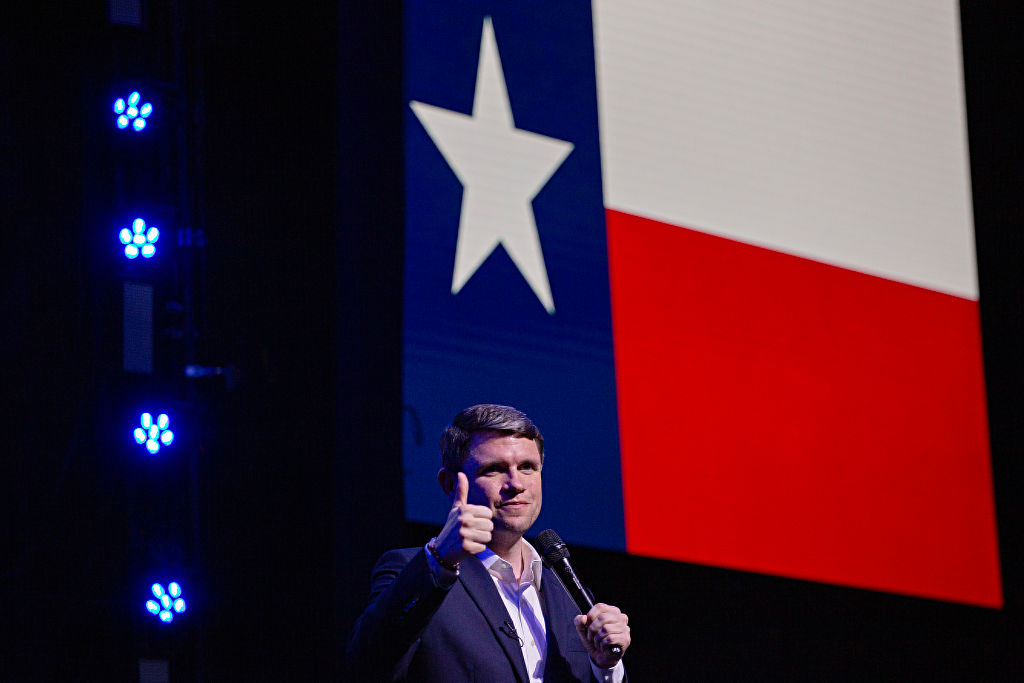
And of course, and this is not particularly new. Let's just say that since the election of Donald Trump in 2016, there have been some very clear strains. And again, it's almost like you're looking at a V with a American evangelicals going in one direction and David French going in another. But the point is he has now made a very clear argument. And that argument appears in an article published in the New York Times entitled James Tolerico is a Christian X-ray. Okay. So we've talked about James Tolerico. He is now the Democratic candidate for the US Senate seat currently held by Senator John Corinin. And he is running as a Democrat, of course, but he's running on the Democratic platform. And so far as I know, just about all of it, but he's really branding himself as a young attractive, moderate, and as a Christian. And he's often identified as a seminarian with a theological seminary, Austin Presbyterian seminary right there in Austin, Texas. He grew up there in Austin in a PC USA, this Presbyterian church, USA Church, that was
one of the first among those liberal churches to move in the direction of performing and recognizing same-sex relationships and same-sex ceremonies, even. And he's very leftist on all these things. That's the amazing thing. He doesn't cover that at all. And so he's pro-abortion, he's pro-LGBTQ plus just across the array. The interesting thing, the controversial thing, the thing that's gotten a lot of attention, is how David French basically argues that nonetheless, he is really asserting a new Christian identity into American politics, mentions his criticism of Christian nationalism, quote, he makes a specifically Christian argument to counter a poisonous Christian movement. Cal Rico said in 2023, quote, Christian nationalism controls Jesus saves Christian nationalism kills Jesus started a universal movement Christian nationalism is a sectarian movement based on mutual hate. End quote. Well, again, it's like international law, define it for me, show it to me. What in the world is Christian nationalism here? Christian nationalism he says wants to control.
Okay, you know what he's talking about here? That means something like pro-life legislation, which of course the Democrats have said for years, is about controlling women's bodies. And we would have to respond and say, no, it's about saving unborn lives. But you'll notice here the control issue. So here's the thing, he never defines Christian nationalism in this way, but he and David French are really sure the Christian nationalism is an awful thing, but it's never defined. So does this mean if you believe that the public policy and laws of the United States should recognize marriage as the union of a man and a woman, and that's based upon your Christian convictions, which you believe, by the way, are also a part of the natural law? Does that make you a Christian nationalist? Well, in the view of the folks making this kind of argument, clearly it does. It means you are about control. David French says he's not all on board when it comes to everything. James Talleriko believes he says, quote, when I hear Talleriko speak about faith, I alternate between agreement and disagreement. He says, quote, he spawned on about the dangers of Christian nationalism. Again, what is it?
And he goes on to say, quote, Talleriko is a political and religious progressive. He says, I'm a political and religious conservative. Well, you know, that gets into some real debate real quick about what in the world conservative means here, not on issues like same-sex marriage and many other things that I think for most evangelical Christians will be bottom line foundational necessities. But David French and his argument says to put it another way, Talleriko is one of the few openly Christian politicians in the United States who acts like a Christian. And by acting like a Christian, he reveals a profound contrast with so many members of the Maga Christian movement that's dominated American political life for 10 years. End quote. So you know, here you have a statement in which he says he's an openly Christian politician. I just want us to know his theology and his position on, I think, some very important moral issues that are closely identified with Christianity and with Christian voters in the United States. He is diametrically at odds with them, but you know what? He's friendly. He's an attractive candidate. And even though he doesn't say things that come across as mean, I just want to say, he
is, I think, bearing false witness against Christians, conservative Christians. He goes on to theological minimalism, comes down to the fact he's basically for the sermon on the Mount and the words of Jesus and the good Samaritan. And David French himself writes quote, if you were to crack open scripture today and start reading one of the first things you would notice is the Bible contains relatively few political mandates, you can read it from cover to cover and not know the definitive biblical tax rate, welfare program or foreign policy, okay, yes, that, that's true. I think that's pretty non-debatable among liberals and conservatives, by the way. But nonetheless, he holds up James Taleriko as the example that other Christians should follow. And you know, I think this is a major divide. There's so much more to be said, especially about James Taleriko and I will be covering this in far more detail as this race continues to unfold. This is a massive challenge. I don't know how the election is going to turn out, but I can tell you this. We are looking at the fact that there are attempts now to say that right-minded Christians
should vote for someone like James Taleriko because he's a nicer guy than at least one of the Republican alternatives. And of course that he's referring there to Ken Paxton, the attorney general who is running against the incumbent Senator John Cornyn, and you know, on the character issues there, I don't think it's even an open race. Ken Paxton, a very morally complicated person. But when you come to issues, and that includes something is basic, and I know people say we're reductionistic and you come back to it, but I'll just tell you for 50 years, this has been a significant lift mistest. If you are for the killing of unborn babies in the womb, and if you are for the subversion of marriage with the approval of the same sex marriage, that is really all you need to know. And by the way, what I reject is that that's not about personal character. I do think it's about personal character. I don't doubt that James Taleriko would make a good neighbor in terms of finiliness there in the neighborhood. But I think he would make an awful United States senator precisely because of the convictions he holds and about which he has been very honest.
And by the way, I just want to say one thing is I conclude this. There is the declaration here that those who voted for Donald Trump simply don't care about the character issue, you know? I just think that the policies themselves are a part of the character issue. And I don't know of any Christian with whom I have ongoing fellowship who has ever said anything like personal morality, personal character, doesn't matter. Obviously these issues deserve a lot of ongoing attention and we'll do that together. As if it's unfold. Thanks for listening to The Briefing. For more information good on my website at Albertmuller.com, you can follow me on extra twitter by going to x.com forward slash Albertmuller. For information on the Southern Baptist Theological Seminary, go to sbts.edu. For information on voice college, just go to voicecollege.com. I'll meet you again tomorrow for The Briefing.
More episodes
More from The Briefing with Albert Mohler

Monday, September 14, 2026
The Briefing with Albert Mohler

Friday, September 11, 2026
The Briefing with Albert Mohler
Thursday, September 10, 2026
The Briefing with Albert Mohler
Wednesday, September 9, 2026
The Briefing with Albert Mohler