Loading...
religionspiritualitychristianity
Tuesday, March 17, 2026
About this Episode
This is The Briefing, a daily analysis of news and events from a Christian worldview.
On today’s edition of The Briefing, Dr. Mohler discusses the death of Paul Ehrlich, the problems with population control ideology, if medical associations will backpedal from the transgender revolution, new legislation in California that would require insurance companies to cover female medical procedures that are biologically impossible for men, another woke ruling and its controversy in California, and what nudism in the headlines lays bare about our cultural moment.
Part I (00:13 – 09:36)
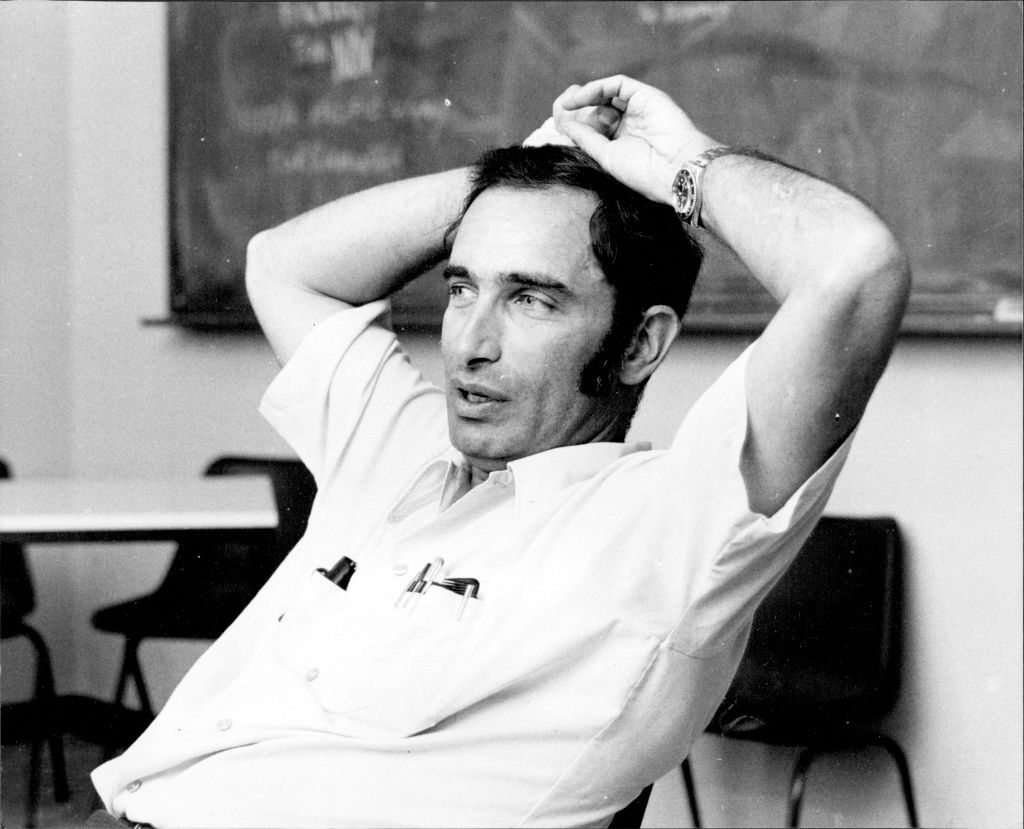
The Death of Paul Ehrlich: Author of “The Population Bomb” and Prophet of the Culture of Death Dies at 93
Part II (09:36 – 19:53)
Reality vs. the Population Control Worldview: Evidence Did Not Confirm Ehrlich’s Population Control Hypothesis – So as a Scientist, Why Didn’t He Change His Theory?
Population Control vs. Creation Order: By Definition, Population Control Cannot Be the Real Problem When the Creator Has Told Us to Be Fruitful and Multiply
Part IV (20:21 – 22:29)
Will Medical Associations Backpedal from the Transgender Revolution? Money and Ideology are Driving the LGBTQ Revolution
Part V (22:29 – 23:14)
The Transgender Revolution Rolls On? New Legislation in California Would Require Insurance Companies to Cover Female Medical Procedures That Are Biologically Impossible for Men
Part VI (23:14 – 25:10)
Another Woke Ruling in California: A 9th Circuit Ruling and Its Dissent Have Caused a Big Controversy
Rules For Nude Cruises? That Nudism is News Lays Bare Our Cultural Moment
Follow Dr. Mohler:
X | Instagram | Facebook | YouTube
For more information on The Southern Baptist Theological Seminary, go to sbts.edu.
For more information on Boyce College, just go to BoyceCollege.com.
To write Dr. Mohler or submit a question for The Mailbox, go here.
On today’s edition of The Briefing, Dr. Mohler discusses the death of Paul Ehrlich, the problems with population control ideology, if medical associations will backpedal from the transgender revolution, new legislation in California that would require insurance companies to cover female medical procedures that are biologically impossible for men, another woke ruling and its controversy in California, and what nudism in the headlines lays bare about our cultural moment.
Part I (00:13 – 09:36)
The Death of Paul Ehrlich: Author of “The Population Bomb” and Prophet of the Culture of Death Dies at 93
Part II (09:36 – 19:53)
Reality vs. the Population Control Worldview: Evidence Did Not Confirm Ehrlich’s Population Control Hypothesis – So as a Scientist, Why Didn’t He Change His Theory?
- Paul R. Ehrlich, Who Alarmed the World With ‘The Population Bomb,’ Dies at 93 by The New York Times (Keith Schneider)
Population Control vs. Creation Order: By Definition, Population Control Cannot Be the Real Problem When the Creator Has Told Us to Be Fruitful and Multiply
Part IV (20:21 – 22:29)
Will Medical Associations Backpedal from the Transgender Revolution? Money and Ideology are Driving the LGBTQ Revolution
Part V (22:29 – 23:14)
The Transgender Revolution Rolls On? New Legislation in California Would Require Insurance Companies to Cover Female Medical Procedures That Are Biologically Impossible for Men
Part VI (23:14 – 25:10)
Another Woke Ruling in California: A 9th Circuit Ruling and Its Dissent Have Caused a Big Controversy
- Olympus Spa vs. Armstrong by United States Court of Appeals for the Ninth Circuit
Rules For Nude Cruises? That Nudism is News Lays Bare Our Cultural Moment
- Yes, there are nude cruises. An insider explains what you should know by USA Today (Nathan Diller)
- Nudist Camp for Sale: The Rise and Fall of the Florida Naturist Park by The New York Times (Ronda Kaysen)
Follow Dr. Mohler:
X | Instagram | Facebook | YouTube
For more information on The Southern Baptist Theological Seminary, go to sbts.edu.
For more information on Boyce College, just go to BoyceCollege.com.
To write Dr. Mohler or submit a question for The Mailbox, go here.
Hosts & Guests

Transcript
It's Tuesday, March 17, 2026.
I'm Albert Moeller, and this is The Briefing, a daily analysis of news and events from
a Christian worldview.
The biggest news we can talk about today is the fact that Paul Erlich has died at the
age of 193.
He died on the 13th of March, and now we're just getting media coverage of the fact that
Paul Erlich, long-time professor, decades-long professor at Stanford University, has died.
Now why is that so important?
Well when you look at the history of the 20th century, one of the things that will become
glaringly apparent is that there were certain persons with outsized influence, and in
the case of Paul Erlich, a very malign, a very dangerous outsized influence.
He was a professor, as I said, for decades at Stanford University, and he was the author
of the 1968 book The Population Bomb, in which he made the argument that there were
too many human beings on the planet, and that the birth rate had to be brought down fast
and even by political coercion, and he had already warned in 1968 it is too late.
In that book, he began with this argument, quote, the battle to feed all of humanity is
over.
In the 1970s, hundreds of millions of people will starve to death in spite of any crash
programs embarked upon now.
This late date, nothing can prevent a substantial increase in the world death rate.
You'll notice he said it's already too late, but even as he says that, he wrote the book
because he wanted something to happen.
And he became the most famous worldwide advocate for population control.
And population control, of course, means having fewer babies.
And population control eventually is going to require government coercion.
And you'll notice that Paul Erlich was pretty bold about saying, yeah, that's going to
be inevitable.
It's already too late to avoid hundreds of millions of death by starvation, but at the
very least, we can address the problem and he called upon governments to seize control
and require couples.
Isn't it interesting?
There was a reference there to couples to have fewer or no babies.
Now, just to state the obvious, this is the direct contradiction to and repudiation
of the biblical worldview.
So as Christians, you already hear the problem.
The Lord's command in Eden was to be fruitful and multiply and fill the earth.
That was the assignment given to the first human couple, Adam and Eve.
And this was in order to increase and multiply the number of image bearers on the earth.
God's glory was going to be in every single new life.
And every single new life was to be welcomed, one of the strongest messages in the Bible.
It's clear in the Old Testament.
What's consistent in Scripture is that human life, every individual human life, is the
gift of the Creator and every single human being is made in God's image.
And you are to welcome every single baby into the world regardless of circumstances.
But when you think about this time, I said the book came out, the population bomb in 1968,
you'll notice it's tied to so many other developments in the culture.
You have the sexual revolution taking place and you know what?
You can't have a sexual revolution in which you try to overthrow the entire Christian
moral code on sexuality.
That is most importantly, sex reserved to marriage as the union of a man and a woman and
inside and only inside of that relationship is sex to be legitimate.
You can't have a sexual revolution without destabilizing marriage.
You can't have a sexual revolution without birth control.
And so one of the dark parts of the story is just how hard so many people were working,
especially after World War II to try to bring about workable birth control or contraception.
Now there's a distinction between those two.
But the most important thing is to recognize that the effort to try to avoid having babies
without avoiding sexual relations, that was a huge issue and it was coming from the political
left in the United States.
No doubt about it.
And I will be glad to trace that for you and have elsewhere.
But it also comes with, just think about 1968, the book, The Population Bomb in which
Paul Ehrlich is offering this dire warning.
We have to cut the birth rate immediately.
This is also just five years before the Supreme Court decision in Roe v. Wade striking
down all state laws against abortion, legalizing abortion, coast to coast.
The revolutionary spirit of these years is just unbelievable.
The progressive left, the secular left massively advanced during these years and population
control was a part of what they claimed as moral mandate.
Okay, the argument that was made by Paul Ehrlich was covering as a scientific argument.
In other words, another very interesting development in the period after World War II.
And you have the rise of the authority of scientists.
And so in the sexual revolution, one of the most important of these was Alfred Kinsey
with his so called Kinsey reports.
And Alfred Kinsey was not a medical doctor.
He was an entomologist.
His specialty was the gall wasp, that's just in case you don't know an insect.
And yet he catapulted into popular consciousness in the United States as the great scientific
profit of a sexual revolution.
And he was pictured in a white coat treated with scientific authority.
But again, he was a specialist in wasps, but he became one of the major agents for the
sexual revolution.
Similarly, Paul Ehrlich wasn't a medical doctor.
He wasn't trained, say, matters of geography and population.
He did his doctorate.
He wrote his dissertation in entomology also about butterflies.
And so you have a gall wasp specialist who is the profit of the sexual revolution and
a butterfly specialist who is the profit of massive human extinction and the population
bomb.
Okay.
So why was this so plausible?
Well, it was plausible in part because there had been a rapid increase in the world's
population given a couple of different developments.
And again, we see both of these as very, very good.
Okay.
But all right, one of the biggest advances was cutting the infant mortality rate and cutting
the infant mortality rate meant that if you look at certain times in human history, only
about half a children survived into the later teens.
Okay.
So with the advent of all kinds of things that came in the modern age, including not only
some drugs, but also just the notion of hygiene in some ways, germ theory, that led to the
fact that you have a cut in the death rate and the infant mortality rate or the children's
mortality rate.
So that means more children are growing into adulthood.
You also had the industrial revolution that led so many people into the cities.
And so all of a sudden, you have these cities teaming with people and that presented all
kinds of new sociological issues and pathologies that led to the rise of modern policing.
You really didn't need that kind of policing when everybody's living out on the farm or
in a village, but you create a modern city like, say, London in the 19th century.
Guess what?
You got to have a police force.
The other big issue here was the distribution of food.
And of course, throughout human history, one of the darkest developments has always been
famine, a shortage of food.
And over the course of human history, there is no doubt that one of the saddest things
have been not only plague and infectious disease and all kinds of different illnesses, but
also you have a shortage of food, starvation, and indeed famine.
And sometimes, of course, they come together.
But by the time you get to the 19th century, both of these are in retreat, at least worldwide.
You have modern farming, which is also coming into effect.
And of course, the big explosion wouldn't come until the second half of the 20th century
with all kinds of advances.
But nonetheless, you're looking at a booming population.
The other big issue here, and we just need to name this, was discrimination.
It was, there are too many of those people.
Some time ago, I just finished a book manuscript on this very issue.
And in it, I cite the fact that in the population bomb, Paul Early began his first chapter
by recalling a visit to Delhi in India.
And this is what he wrote, quote, the streets seem to live with people, people eating, people
washing, people sleeping, people visiting, arguing and screaming, people thrusting their
hands through the taxi window, begging, people defecating and urinating, people clinging
to buses, people hurting animals, people, people, people, people, people.
End quote.
Okay, you'll notice that there is a, there's a not too subtle discrimination that is
baked into that cake.
And by the way, people have since pointed out that the population density of Paris may
have been greater than the population density of Delhi at that time.
And at least one critic of that movement said the issue is not too many people in the
views of some of these academics.
It's too many Asians.
For Christians, we have to understand that all of this is just a reversal of the creation
order, it's a repudiation of, of creation order.
It is also a subversion of human dignity because you are declaring it to be a social good
that certain persons are never born.
So you get your sexual revolution, you get the redefinition of marriage, you get, you
get the personal autonomy.
And you have this ultimate utopia in which there are fewer and fewer people.
And you make the argument in economic terms.
And of course, the astounding thing is that so quickly after Paul Ehrlich made this argument,
all the evidence began lining up on the other side.
And I mean, even just the demographic and, and, and say food supply information, all
that data.
And the reason is because there was an enormous green revolution at about the same time.
And this was made possible by any number of factors, but it included, most importantly,
figures, especially in the worlds of agriculture, who came up with different ways of, of creating
strains that, of grains, for example, that were resistant to some of the diseases that
had wiped out entire crops.
And you had mass farming that enabled the growing of, of, of a quantity of food and a predictable
basis that had never been faced by human beings before.
And here's good news.
And it's something that Christians often don't pause to think about.
And that is that right now, there is no worldwide shortage net of food.
There is no net shortage of food.
If there is hunger, if there's any kind of famine anywhere in the world now, it is not
because the world itself is not producing enough food.
It is because for some reason, there is a maldistribution.
And that for some reason, most regrettably often comes down to war.
But here's another aspect of the Paul Ehrlich phenomenon, the population explosion, as it
was later called the population bomb in his original book in 1968.
High would picked up on it.
The American elite picked up on it.
It became a cultural preoccupation.
Now get this, when you talk about Paul Ehrlich, you're talking about an academic, but this
was in a day in which you had programs such as the tonight show with Johnny Carson that
routinely brought someone like Paul Ehrlich on.
And in particular, Paul Ehrlich himself, at one point, he became more or less the sole
guest in at least one of the programs.
According to the records at NBC, Paul Ehrlich was a guest on the tonight show, 20 times.
That's 20 times.
And you're talking about an artifact of mainstream American culture.
Americans began staying up later, watching these variety shows for entertainment at night.
And what's interesting is that they most often featured more Hollywood celebrities and
things like that.
To have an academic on a butterfly specialist on from Stanford University to talk about
the human birth rate, that was something unprecedented.
Clearly Johnny Carson, the entertainer, had something of a real interest in this issue.
Otherwise he wouldn't have invited Paul Ehrlich on again and again and again.
But here's the thing, large segments of the American population bought into the idea that
we were having too many babies worldwide and that meant too many babies here.
Now I want you to recognize that that is exactly in the face of what's claimed to be climate
change and an ecological crisis.
That is the same thing we're facing right now.
And there are so many people who are openly saying they're not going to have children.
And it's because who would bring children into this world?
Well, that was exactly what people were told to say back in the 1960s, you bring someone
into the world, some other child is going to starve because your child is born.
You have more than one child, you have more than two children, then you are a minister
society.
That is a direct violation of the scriptural logic.
And by the way, it turns out to be a direct violation of the agricultural reality as
well.
Let's just face the fact that worldwide right now, there are virtually no societies facing
a genuine threat of too many babies.
There may be too many babies at one point in one place and that requires some concentrated
attention, but worldwide there is no society that is threatened by having too many babies.
And there are many and eventually all societies that are going to be threatened by a following
birth rate to few babies.
And there are countries right now where the birth rate is so low that, for instance, as
we discussed on the briefing, you have some Asian countries talking about developing robots
to take care of people in nursing homes because there will not be enough young people to
take those jobs.
Is the inheritance of this false ideology.
But speaking of Paul Ehrlich who again died last Friday, I think it's really interesting
to note that reality did not bring about any major correction in his theories.
And so even as it became true that his dark predictions were untrue.
So again, let me just read that again.
The words from 1968 in the 1970s, hundreds of millions of people will starve to death in
spite of any crash programs embarked upon now.
Again, hundreds of millions of people will starve to death.
That, let me just, just state the obvious that did not happen.
Okay, so you would think that an author, a scientist at Stanford University who had predicted
that nothing could prevent a starvation of hundreds of millions of people in coming years.
And in fact, he said by the 1970s, you would think that if you had said that and
you'd stick to your academic reputation on that as a scientist and it didn't happen,
you might have to recalibrate your theory.
That's not at all what happened.
And this because in Christensen to recognize this, this was a basic and tipathy to humanity,
a basic hatred of humanity.
And it was an ideology and Paul Ehrlich and others with him were not about to abandon that
ideology in the face of facts.
Now I also mentioned something else and that is we need to notice this, Paul Ehrlich,
he was not reluctant to say the cutting of the birth rate may require government coercion.
He said this quote, we must have population control at home, hopefully through a system
of incentives and penalties, but by compulsion, if voluntary methods fail.
Did you notice that you have a professor at Stanford University saying that if voluntary
efforts fail, then governments should use compulsion to require couples to have fewer
children to cut the birth rate.
And you know who was listening.
And this is one of the things that Americans are going to have to take responsibility for.
It was the Communist Party in China that brought about the horrifying one child only program
that led to infanticide and it led to abortion and forced sterilization where you had the
Chinese Communist Party dictating that couples could have only one child.
That was one of the most horrifying ideologically deadly ideas and policies of the 20th century.
And China is bearing right now the results of that in a falling birth rate that threatens
the future existence of Chinese civilization.
But I want you to note something and that is that there were international organizations
and American foundations and others who were arguing that China needed to take such a stance
because you have people in the West who are afraid they're just going to be too many
Chinese people.
The kitchen of theme here Paul Ehrlich really showed his hand to many Indian people.
And the others are saying too many Chinese people.
And now you have some people who are saying, you know, you have too many babies being born
in places like Africa, let me just tell you, there is a basic racism that is fundamental
to the population control movement and it has been that way from the beginning.
Before leaving this, I want to look at what you see in the contemporary press, what you
see in meteor reports right now about Paul Ehrlich's death because this reveals a very
great deal.
So let me read to you the opening of an article that appeared in the New York Times, quote,
Paul Ehrlich, an imminent ecologist and population scientist who's best selling book The Population
Bomb was celebrated as a pressing warning of a coming age of food shortages and famine.
The leader criticized by conservatives and economic rivals what they called his sky is
falling rhetoric died on Friday in Palo Alto, California, he was 93.
Okay, no wait, just a minute.
So we're told that he was celebrated at the time for writing what was called a
prescient warning of a coming age of food shortages and famine.
Let me just point out again, it didn't happen.
It didn't happen.
But the New York Times says he was criticized by conservatives and academic rivals.
How about the fact that he was contradicted by history, reality?
Paul Ehrlich, by the way, was one of the co-founders of what was known as the zero
population growth movement.
It's now been renamed population connection.
That tells you a lot too.
They have to repackage it now because zero population growth is hardly, hardly a
theme that's going to gain much traction in a world in which the problem is too few.
Maybe it's not too many, but you'll notice they just kept up the ideology.
They kept up the political agenda as well.
And one of the most interesting and disappointing things is how many people in the political
and entertainment, the academic elites played along with him.
Right along to the end, they never came back and said, wow, that was massively wrong.
I was massively wrong.
This has led to all kinds of horrifying consequences.
They never acknowledged this really at all.
Paul Ehrlich came back and said it was true that some of his predictions turned out to
be too dire, but he kept on warning about an imminent ecological catastrophe.
Now, by the way, there are legitimate issues to raise in terms of our responsibility
and stewardship for the environment.
But when you really reduce his position, it's not only based upon lies,
it's also based upon a basic hatred of human reproduction.
That is to say, a baby's and that's just a horrifying thing.
It's the direct intentional reversal of the creation mandate.
I've given this more attention than usual simply because when you think of a world view
collision, it's hard to come up with one more graphic and important and deadly in the
20th century than what we've just seen.
And just recall, we're now reaping a lot of what was shown with this ideology.
You have many people today, even in the United States who say the problem is we're having
too many babies.
No, the problem is we're having too few.
There aren't enough babies being born.
The birth rate is not high enough.
We're going to have a death rate well above the birth rate.
And that's already true, by the way, in some societies, it's, it's very difficult,
by the way, evidently to reverse that.
And once people get used to not having babies, it turns out you have a pattern
ongoingly of not having babies.
And those babies grow up also to have fewer babies.
It is civilizational collapse.
And for Christians, it's a reminder, by the way, that we don't have to wait for historical
developments, such as what's taken place over the course of the last several decades to tell
us how we are to see these things.
We understand these things based upon biblical revelation and biblical authority.
The creator has not left us without the word as to how we are to understand these
things.
And it just begins with, be fruitful and multiply and fill the earth.
And by definition, that can't be the problem.
Meanwhile, on the cultural front, just a few things that I'll just put together
because they, they kind of fit together.
We now know the New York Times is reporting that Dr.
Oz, that's Dr. Mement Oz, who is the head of the Centers for Medicare and Medicaid
Services, actually called together representatives of the professional societies
and medicine to talk about the issues related to young people, that is to say children
and teenagers when it comes to trans care, transgender care.
And so you have had some announcements that have come out of late.
For example, the American Society of Plastic Surgeons came out with a statement that they
would no longer approve as routine treatment, so-called gender affirmation or gender transition
surgeries and treatments, including hormones, when it comes to children and teenagers saying
that there wasn't enough evidence to demonstrate that these were justified.
Now, I'll say that that language is too calm, but nonetheless, it is a significant
reversal of what had been really a pro LGBTQ argument, which was gaining velocity
even as it moved forward.
The T has become a major issue, simply because people are looking at the obvious
and recognizing the danger.
And of course, right now, the danger issue is concentrated on children and teenagers,
but the implication goes far beyond that.
The reason right now minors, those who are under age 18, the reason that's so important
right now is because the law has a clear path for protective legislation and policy.
When it comes to young people, it does not extend some of the same protections to those who
are recognized legally and morally as adults.
And it's going to be very interesting to see if other medical professional organizations
get in, in to step on this because right now their vulnerability is massive.
And we've seen that already in the United Kingdom, where the medical societies are going
full bore with a transgender agenda until all of a sudden they started seeing the devastation
that was wrought.
And of course, this comes in medical ease as then there's insufficient data to justify
these procedures on a widespread basis.
So let me tell you how to understand that in one very clear way.
And that is we're afraid we're going to get sued.
Speaking of things that just illuminate in California, there's legislation under consideration
that would make it illegal to tell a biological male who identifies as female that he can't
have a medical test, which only makes sense on a female.
And so now you're talking about the transgender identity being taken to the extent that insurance
companies and others are going to have to pay for and I guess play along as if medical
procedures are being done that actually are anatomically impossible.
This is really like Allison Wonderland kind of irrationality, but there's big money behind
it.
There's all kinds of political energy behind it as well.
And it's now coming as legislation.
Meanwhile also in California, the Ninth Circuit, generally a very liberal federal appeals court,
the Ninth Circuit handed down a ruling basically saying that Korean spas, okay, you've got to
follow this for just a minute.
And the spas could not segregate male and female to the extent that a biological and anatomical
male, claiming to be female, could be kept out of the shared nude spaces in the Korean
spa.
And the majority in this ruling from the Ninth Circuit said that it was unjustified discrimination
that there was no First Amendment protection for these Korean spas.
The reason that the Korean word is important here is because of the culture in those spas
which includes the nakedness as a part of the spa experience in some kind of communal
setting.
And so here you have again, you have the Ninth Circuit or at least a panel of the Ninth
Circuit Court of Appeal saying that it is not okay.
There's no constitutional protection for a Korean spa to protect women in women's only
spaces by keeping out people who are very clearly and obviously visibly anatomically male.
One of the descending judges, by the way, issued an extremely colorful descent that I will
not cite in terms of reading from it.
I'll just tell you that descent has also made news.
It's also interesting that little things come along such as an article The New York Times
about conservative activists upset about some of the animal experiments that have been undertaken
by the Centers for Disease Control.
One of them had to do a grants, quote, for hormone studies on mice that were described
as bizarre transgender animal experiments and quote, ear tax money at work with research
on transgenderism in mice, you know, what could go wrong.
Finally speaking of what could go wrong, I mentioned that the Korean spas and the issue
of nudity just along with the theme, don't worry, it's safe.
The USA Today recently had a major article that was entitled, quote, rules to follow on
a nude cruise, okay.
So that is the paper that builds itself as America's newspaper, you know, just make paper
it was called when it first came out.
And here you have the front page of the money section, again, the headline rules to follow
on a nude cruise.
I'm going to spare you the rules.
It's the very existence of the article that tells you a great deal, but what's going
on in this world?
In the USA Today, I don't think you would have seen a headline like that until very recent
times.
The New York Times real estate section also had an article, the headline, where a nudism
once thrived, will it again, this has to do with a nudist colony in Florida, Pasco County,
Florida.
And there are some who are trying to bring it back, but it turns out that that just might
be pretty difficult to do, given by the way, a lot of the ways that these things are now
legally defined.
The ideology of nudism we're told in the Times Peace quote, debuted in America to Manhattan
Jim in 1931, when German immigrants started a naked workout club, part of a European
wellness movement linking nudity to health, quote, in postwar America, nudism became a family
affair at rustic camps, but the insular retreats lost their appeal during the sexual revolution
in the 1960s, when many rejected discrete destinations in favor of more public places
like nude beaches.
One historian said, quote, many the older camps, the ones that are out of the way, they're
dying off very rapidly, end quote.
I don't know.
It just seems as we come to a conclusion that it is at least interesting that you have
major American newspapers who are treating these issues as headline news stories.
I'll just end with this and say, now you know.
Thanks for listening to the briefing.
For more information, go to my website at Albertmoor.com.
You can follow me on extra twitter by going to x.com forward slash Albert Moor.
For information on this other map to theological seminary, go to spts.edu.
For information on voice college, just go to voicecollege.com.
I'll meet you again tomorrow for the briefing.