Get every episode summarized
Each time The Briefing with Albert Mohler publishes, we email you a written briefing from the transcript — the topics, who appeared, and any specific claims, with the ad reads skipped.
Email me new episodesFree for 3 shows. No card needed.
About this episode
On today’s edition of The Briefing, Dr. Mohler discusses the timing of the attacks in Iran, the moral dimension of the spycraft of Israel and America, and SCOTUS’s ruling in favor of parental rights in California over LGBTQ issues in schools.
Part I (00:14 – 12:19)
We Now Know Why: The U.S. and Israel Took the Opportunity to Kill Iran’s Leaders at a Rare Gathering of Iran’s Leadership
- Why the U.S. and Israel Struck When They Did: A Chance to Kill Iran’s Leaders by The Wall Street Journal (Dov Lieber, Alexander Ward, Laurence Norman)
‘Social Network Analysis’ and ‘Pattern of Life’ Profiles: Moral Dimensions of Israel’s Spycraft — and America’s
- Inside the plan to kill Ali Khamenei by The Financial Times (Mehul Srivastava, James Shotter, Neri Zilber, and Steff Chávez)
California Parents Win on Massive LGBTQ Issue: SCOTUS Upholds Ruling that Schools Cannot Hide So-Called Gender Transitions From Parents
- Mirabelli v. Bonta by The Supreme Court of the United States
Parents, the Battle For Your Rights is Here: State by State, the Left is Seeking to Undermine Your Rights
Sign up to receive The Briefing in your inbox every weekday morning.
Follow Dr. Mohler:
X | Instagram | Facebook | YouTube
For more information on The Southern Baptist Theological Seminary, go to sbts.edu.
For more information on Boyce College, just go to BoyceCollege.com.
To write Dr. Mohler or submit a question for The Mailbox, go here.
Get every episode summarized
Each time The Briefing with Albert Mohler publishes, we email you a written briefing from the transcript — the topics, who appeared, and any specific claims, with the ad reads skipped.
Email me new episodesFree for 3 shows. No card needed.
Hosts & guests

Transcript ready
398 searchable segments. Every word is indexed and playable.
Full transcript
The Briefing with Albert Mohler — Tuesday, March 3, 2026. Machine-transcribed; use the interactive transcript above to jump the player to any line.
It's Tuesday, March 3, 2026. I'm Albert Molar, and this is The Briefing, a daily analysis of news and events from a Christian worldview. Wealth events continue to unfold, particularly in Iran and in the larger era, just a very quick update on where the war stands, even as President Trump and the Israeli leadership went forward on this on Saturday morning, local time there in Iran, the reality is that events continue to unfold and they unfold very quickly. There are other big developments, and as we think about those, it comes down to the fact we know a great deal more about the why of the timing. We understand why the decision was made to go forward in a rather daring daylight effort on Saturday morning. Okay, so let's just walk back and say one of the big developments over the course of the last several hours is that some of Iran's nefarious allies have joined in the effort.
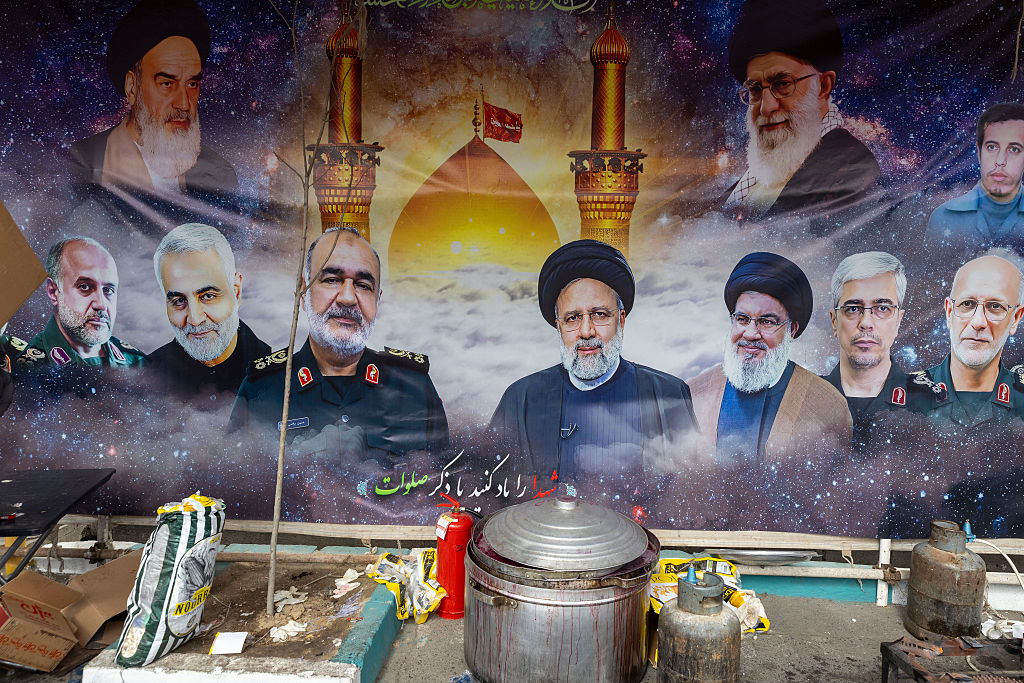
So as we're looking at the situation, President Trump himself has acknowledged this is a fast widening theater of war. So of course, most of the action is taking place in Iran. You have Israeli and American forces, both an incredible strength from the air. We're talking about no boots on the ground, so to speak, but an enormous amount of ordinance and aircraft in the air. We know more about what happened on Saturday morning. We know that it was a series of bombs that were directed towards the building where the Ayatollah and his senior military staff were gathered and also an ancillary gatherings around Iran. It now turns out to military intelligence and in particular, Israeli military intelligence understood that this was a unique opportunity. The Ayatollah and his senior leadership team, they were in one place and they were not in a bunker. They were there in Tehran in what they thought was a safe place. It turned out, of course, not to be so. You also had other gatherings of senior Iranian military and government officials.
And we now know that the joint attacks undertaken by Israel and the United States were devastatingly successful, at least to that round. Now the other surprise has come when President Trump has been very clear. This is not going to be over anytime soon. As of yesterday, the President was saying in public this could last for a matter of weeks. Given the fact that there has been a widening, not unexpected, a widening that includes Hasbelah and perhaps other of the allied groups, especially terrorist groups, and militias allied with Iran, we can expect further action. We also know that one of the crucial decisions that the Iranian military leadership made immediately after the onset of the attack was to have Iranian drones and missiles, Iranian rockets by some definitions, simply attack some of the allies there in the Gulf, the Arab states and the Gulf, allies to the United States. That turned out to be huge because what it accomplished was the opposite of what Iran had intended.
Iran, no doubt, was attempting to separate the United States from the Arab states and from political alliances. It had the opposite effect because even as these are places that had been largely spared in terms of this kind of combat activity, there were missiles arriving, there were bombs bursting, and all of this simply solidified the support for Israel and the United States in seeking to topple the entire Iranian regime, beginning with the Ayatollah. All right. So even as the Iranians are striking back, and they're striking back as I said in a multiplicity of ways, they're also striking back through a plurality of groups, ally groups with them for a long time. One of the main concerns has been Iran, not just in terms of the threat of Iran itself, all the way down to its development of nuclear weapons, but the terrorist groups and the Islamic groups in particular, they've been allied with Iran. So we are looking at an expansion of the theater of war, President Trump acknowledged that was likely to happen.
At this point, a couple of other interesting developments, when you're watching this, what should you look for? Well, for one thing, you need to look at the response of other nations. And this is where even the labor government in the United Kingdom has indicated that it's going to allow the United States have access to its bases, et cetera. That's a big story. And when it comes to Germany and France, the big story here is the fact that they have not come out opposed to the Israeli and American effort. That tells you a lot. For one thing, even if they are not willing to enter into the military effort directly, they clearly know which side they are on. Okay. Now, back just a moment to the nuclear weapons issue. It has been very interesting, in particular, to see how the political opposition to President Trump has come out and tried to say, you know, Iran wasn't that close to developing a nuclear weapon. Okay. So several things to watch here. And when you look at the Wall Street Journal, the Washington Post, the New York Times, other major American news media, it's very interesting that you have continual references
to military strategists, longtime military observers, experts. Those are the terms that are used, but almost no names are used. That in worldview terms should alert you. If people aren't using their names, if their names aren't in the article with attribution, that tells you that they are background sources in journalistic terms. And even as they may be quoted, they're not going to be cited. They're worth approximately whatever you just read into the story, because the definition of expert, national security advisor, et cetera, if that doesn't come with identity and with titles, and frankly, you don't know if they know what they're talking about at all. But predictably, the pattern is this. They have come out and said, you know, now that President Trump has taken this action, now that the Israelis have taken this action, maybe Iran wasn't so close to developing a nuclear weapon after all. Okay. So you just put that in a corner for a moment and consider this. This President of the United States decided to take action. The Prime Minister of Israel with the active support of his government decided to take
action. Why? Well, that turns out to be really interesting. But the point I want to make first is that had you had a very different headline, and the headline might be that Iran reaches unexpected threshold in the development of nuclear weapons, and this would be a completely different political calculation. Furthermore, we also know that just the observation of how Iran has behaved not just in the last several weeks, not even just in the last several months, but in the last several years, it is absolutely determined to achieve the status of having a nuclear weapon. The question is, when could this happen? And regardless of the experts put quotation marks around that, the reality is that both Israel and the American government knew that they could not allow Iran to come even close to that capacity. If they reached that capacity, then some people are saying it could be a matter of days before they could turn weapons-grade radioactive material into a nuclear weapon.
At that point, the effort would have been too late. If anything, an American President and Israeli Prime Minister understands that politically and morally, it's better to take the required action even when people say it wasn't necessary yet. Because when some of those people admit it's necessary, quite frankly, it's too late. Let me just put it this way. There is no way that the President of the United States was going to allow Iran to get its hand on the material or to further its process of uranium enrichment to where it actually posed a nuclear threat. And there are people who are saying, well, it wasn't there yet, well, that's only because of previous military efforts. And it's not because Iran wasn't absolutely determined to get there. Furthermore, as I said, there have been news reports that there was also a reach out from China in terms of delivery systems that would be made available to Iran. There's no surprise, really, that Israel and the United States decided to take action.
So okay, but why Saturday morning? Well, we know a great deal more now about why. For example, the Wall Street Journal headline for the story is this, US and Israel saw a chance to kill top officials. That's exactly what happened. And so this article in the Wall Street Journal from a team of reporters tells this quote, Israeli and US military intelligence had long watched and waited for a rare opportunity, senior political and military leaders in Iran holding a meeting where they could all be killed at once. The next line, the day finally came on Saturday. Here's the summary. Intelligence officers had identified not just one meeting, but three. This is according to Israeli officials, quote, and they had a fix on supreme leader Ayatollah Ali Hamanay, Iran's top decision maker and spiritual leader. It follows, quote, the moment was so unique that the US and Israeli warplanes struck in full daylight. Israeli jets dropped 30 bombs on Hamanay's compound, leaving it scorched and shattered,
end quote. So why? Well, it's because mostly in this case, military intelligence in Israel indicated that these leaders were exposed in these meetings. Of course, the big question is, how did they know that? For this, this part of the story, we are indebted to the financial times of London, one of the world's major and authoritative newspapers that comes out with a full report on how it happened. It's not clear that either the Israeli or the American government is particularly pleased the story is out, but the story is out. All right, let's go to the financial times. And what we find out by looking at the financial times is, quote, when highly trained loyal bodyguards and drivers of senior Iranian officials came to work near past your street in Tehran, where Ayatollah Ali Hamanay was killed in an Israeli air strike on Saturday, the Israelis were watching. Listen to this, quote, nearly all the traffic cameras in Tehran had been hacked for years.
Their images encrypted and transmitted to servers in Tel Aviv and southern Israel, according to two people familiar with the matter, quote, one camera had an angle that proved particularly useful, said one of the people, allowing them to determine where the men like to park their personal cars and providing a window into the workings of a mundane part of the closely guarded compound. The story continues. Listen to this, quote, complex algorithms added details to dossiers on members of the security guards that included their addresses, hours of duty, routes they took to work and most importantly, who they were usually assigned to protect and transport, building what intelligence officials call a pattern of life. OK, so the financial times tells us that the intelligence agencies observe, they've hacked into even the traffic cameras there in Iran and they're watching for what they call a pattern of life. And when the pattern of life is tied to, we'll say, the effort to try to see when people
are gathering together, you use the algorithms, a machine evidently, an information system. Perhaps even artificial intelligence has something to do with alerting those who are working the system to the pattern, but after that, you have to put the pattern together. In this case, the pattern became clear. It indicated that the ayatollah himself, the supreme leader, was going to be present at this meeting also because of the bodyguards and the vehicles and the traffic patterns. There was the determination that other senior military and political leaders were there. The same kind of activity was noted elsewhere in Iran. That's what triggered the attack on Saturday morning. It was a unique opportunity. And as we now know, the military intelligence turned out to be absolutely correct. All right. So now we're watching this. And of course, that pattern of life is a term, well, that's helpful for us to know. We can put that in our list of interesting terms from the world of espionage. But there's a second, and this is social network analysis.
Well, you look at that and your first thought might be social media. No, that's not it. This is watching social behavior, Israeli military intelligence, watching the patterns that these particular Iranian leaders were following. And when it comes together, and you can see all of these lines converging, you've got something major happening. Listen to this again from the Financial Times of London. Quote, Israel used a mathematical method known as social network analysis to parse billions of data points to unearth likely centers of decision-making, gravity, and identify fresh targets to surveil and kill, so that a person familiar with its use. All this fed an assembly line with a single product, targets, end quote. All right. So as Christians, let's ask questions about the morality of all of this. And we can't avoid these questions. We don't want to avoid those questions. We want to understand this and to analyze all of these reports in accord with a biblical Christian worldview. That worldview tells us that it is wrong to deploy violence except in very unique exceptional
circumstances. And most importantly, it is to defend the innocent. It is to protect life. And so as dangerous as this may be and as tragic as it may be in terms of the human story, it is right and righteous to take deadly action in order to prevent injury or death to fellow human beings. It's also right to defend one's country in that same light. It's right to defend one's family in that same light. An aggressive action is not warranted. Aggressive actions of war say to game territory or to steal somebody's material stuff. That's not legitimate. It's not legitimate to just act out of anger. It is legitimate, however, to go after state-sponsored terrorism. It is quite valid to go after an aggressor nation that has invaded another nation. It's quite right to use lethal force in these circumstances. That's exactly the extension of what has taken place in Iran, most importantly, with the effort to eliminate the senior Iranian leadership.
This was not undertaken merely as a political act. It was also not undertaken in haste. We're talking about a regime that is almost 50 years old that has been the largest and most significant state-sponsored of terrorism for a matter of decades, even now generations. We're talking about a man himself, the Ayatollah, the Supreme Leader, who had been in that office now for almost four decades. We're talking about a legacy of death all over the world, directed particularly at the United States, identified as the Great Satan, and at Israel, the non-existence of which the Iranian regime has pledged itself to accomplish. I am saying that in this context, I think a Christian ethical analysis says that what you're looking at is an extension of what in Christian ethical thinking and Christian theology is called just war theory. War is only just, it's only justified, it's only righteous. If it is undertaken as a defensive war, if it follows basic rules, for instance, trying
to preserve civilian life and especially targeting combatants or those who are, like the Supreme Leader, basically, the head of the entire evil operation. All of this is understood within a theological frame. It's also very interesting to note that this has to be a part of the natural law. In other words, this kind of knowledge, this kind of moral truth, has to be embedded in human beings revealed in the created order because even non-Christian civilizations, empires and kingdoms have come to the same understanding. And quite frankly, especially when it comes to defending those who would take human life, the equations actually very easy to understand, as is the moral principle. So it's interesting to note, along those lines, once again, who isn't complaining. In other words, when you have an action like this, and the United States has many adversaries around the world, you would think that at least some of them might decide to take political advantage by criticizing the United States.
Largely, that isn't happening, or it's happening in a way that in diplomatic terms is clearly understated. In other words, there are all kinds of people around the world who are probably sleeping better at night, simply because of the elimination of so much of the top leadership there in Iran. That doesn't settle the issue. And again, intellectual honesty means we don't know that the condition after this military effort is guaranteed to be better than this situation before. But I think it's also, in moral terms, a matter of honesty to say, it's also almost impossible that it could be worse. There are certainly big events to unfold, and we'll be following all of this very closely. But I think the calculation in which we are given, you know, now observer status as to why the timing, why the opportunity, why this happened on Saturday morning, I think you'll agree, all of this is very, very interesting. But beyond that, from a Christian perspective, it's also very important in moral terms. It's important that we think through these issues.
We'll be trying to do that as events continue to unfold. Now we need to come back to the United States of America, where yesterday the Supreme Court of the United States handed down what amounts to an interim decision, but a very considerable, very important decision. In this case, the court ruled for parents in particular, stating that the state of California through its public school system cannot deny knowledge to parents concerning their children, that means minors under age 18, who may be, for instance, at school using an alternative gender identity, or even using an alternative name, alternative pronouns. And here's where we need to see the giant clash that's coming, because observers now tell us there could be as many as 40 cases working through the federal courts, headed towards what will have to be an eventual settling of the issue by the Supreme Court of the United States. It's virtually impossible for Christians to overestimate the importance of what we're talking about here. Christian families, Christian parents, Christian leaders, you better pay close attention to
what's happening here. This was officially an unsigned ruling or decision handed down through the expedited process, the fast docket process of the United States Supreme Court. By the way, that was one of the complaints issued by the more liberal members, and in particular, Justice Elena Kagan complained, she said concerning the conservative majority on the court, quote, the court is impatient. It already knows what it thinks and insists on getting everything over quickly. Well, you know, that's interesting. But the fact is that some of these things have to be adjudicated pretty quickly. And that's because the events are unfolding in real time. We're talking about real young people, real children, real teenagers, real parents. They need answers quickly. They don't need a decade of argument at the United States Supreme Court or furthermore in the appellate courts. All this goes back to the state of California. No surprise here. The state of California is so progressive, so leftward on so many of these issues, pressing the transgender agenda, basically it's set up policies whereby children were told
or teenagers were told that they could come out more or less, claiming a transgender identity, even supposedly changing their gender identity at school without parents being told. And you have figures in California, political figures who have bragged about that policy. That's exactly the policy that basically is on hold. It's important to understand what this decision is and what it isn't. At this point, it's not final. Basically it returns the issue to the Ninth Circuit Court of Appeals. And that means the courts now going to have to consider the fact that the Supreme Court has relieved to stay. Basically, the nation's highest court has said that a decision by a local federal district court judge could stand saying that the schools were wrong in this case, ruling for the parents. The Supreme Court said that stands for now, but it has to go through further judicial process. That could be big trouble. Quite frankly, it's going to use up time, but at the very least, in a limited way, what the Supreme Court did was to hand a victory to parents saying, no, we're going to go ahead
and put a pause on that until such time as this will work further through the courts. So parents got good news in California, at least right now, the decision from that lower court stands saying that the schools are fundamentally wrong to forbid parents to have that knowledge or to allow students to have a different gender identity at school than at home without the parents' knowledge. Now I'm almost certain that listeners to the briefing already understand the basic moral issues at stake here. And furthermore, also understand the urgency and fundamental nature of parental rights. But we also need to understand the argument against parents in this case. The argument is, coming from school officials and other self-styled advocates for young transgender people, the argument is that parents can basically represent a danger to these young people because they would be a danger if they do not support the gender transition. Now that turned out to be crucial to the actual facts that appear before the Supreme Court
in this case. Because at one point, a 14-year-old girl had been posing as a boy at school, the parents were not told this. The child then reached a moment of some kind of crisis and attempted self-harm. At that point, and at that point only did the parents understand what was going on, school officials knew what the child or the teenager was doing in this case. But the parents didn't, and they've been hiding it from parents. The argument coming from the school officials is that the child could face harm if indeed parents were to find out, and the harm, by the way, is defined as an unwillingness to encourage the child in the transgender identity that tells you a whole lot about what's going on. Now, as I said, there could be as many as about 40 cases working through different levels in the courts. This is a five-volume fire for Christian parents. I mean, frankly, for all parents, but Christian parents understand at a more fundamental level what's at stake here. And it also tells us a great deal about the political realities in a state like California.
California is not alone in this regard. The fact is, however, that California has been pretty loud about messaging in this direction. Some of the other cases are arriving in other states, but they tend to be very blue, deep blue states, where the LGBTQ agenda has been a driving ideology for some time. The conservative majority could have gone further, at least a majority of those involved in the final decision, reached the point where they said that they were going to immediately put in this situation in which the ruling could go into effect, pending appeal. There were others who wanted to go ahead and take much more definitive action, predictably, that included justices Clarence Thomas and Samuel Alito. I think they see these issues very clearly. And in this situation, legally, it's a big win. It's a big win if nothing else, because it exposed what's going on there in the state of California and should alert parents to the fact that this could be happening at a school
very close to you. You understand what the stakes are. It also tells us that when you have these self-styled experts deciding that they, rather than parents, know what is in the best interest of the child, and thus parents can be kept in the dark, we really are looking at the redefinition of family law in the United States. And quite honestly, it puts family law and that respect in direct opposition to creation order. The concurring opinion that was handed down by the Chief Justice along with Justice Amy Coney Barrett, she wrote the document, and just as Brett M. Cavanaugh, they made the point that if parents are excluded, they're excluded in this case from, quote, participating in consequential decisions about their children's health and well-being. End quote. Now this case really began as legal action based upon the experience of some teachers who said that it violated their consciences to be put into a position of hiding this kind of information from parents. Because of developments in the case, eventually it was widened and parents, including the
parents of this particular teenager, entered the case. And this offers them some immediate relief, but quite frankly, no long term solution. Eventually, the Supreme Court of the United States is going to have to rule definitively on this and folks just understand what is at stake. As Christians, we need to understand that the issue at stake here is whether or not parents will be recognized as parents with the rightful authority and frankly, the powers that are invested in parents. Furthermore, will parents be basically kept in the dark about their own children and the welfare of those children? Will experts at the schools get to be the determining factor in this regard? These are huge questions. I think we all recognize it. This is an important decision. We need to be thankful for what the Supreme Court did, but honestly, we're going to need a lot more. And just as honestly, we need it fast. Thanks for listening to the briefing. For more information, go to my website at AlbertMolar.com. You can follow me on x or twitter by going to x.com forward slash AlbertMolar.
For information on this other map to the theological seminary, go to spts.edu. For information on voice college, just go to voicecollege.com. I'm speaking to you from Pasadena, California, and I'll meet you again tomorrow for the briefing.
More episodes
More from The Briefing with Albert Mohler

Friday, October 9, 2026
The Briefing with Albert Mohler

Thursday, October 8, 2026
The Briefing with Albert Mohler
Wednesday, October 7, 2026
The Briefing with Albert Mohler

Tuesday, October 6, 2026
The Briefing with Albert Mohler