About this episode
Get every episode summarized
Each time Science Weekly publishes, we email you a written briefing from the transcript — the topics, who appeared, and any specific claims, with the ad reads skipped.
Email me new episodesFree for 3 shows. No card needed.
Hosts & guests

Transcript ready
302 searchable segments. Every word is indexed and playable.
Full transcript
Science Weekly — Was Iran really building a nuclear weapon?. Machine-transcribed; use the interactive transcript above to jump the player to any line.
This is the Guardian. The future moves fast. AvPointsShift happens, podcast is your edge, where leaders unpack AI, data, modern work, and the mindset shifts that turn change into advantage. Hear what top innovators are trying next, and how to make it work. Visit AVPT.co slash shift today. Dreaming of getting the all-new iPhone 17 Pro designed to be the most powerful iPhone ever. Then stay in bed and let a boost mobile expert deliver and set it up for you. Oh, actually they will have to get up and open the door. Oh right. Delivery available for select devices for just at boostmobile.com in terms of play. When President Trump first announced Operation Epic Fury on Truth Social,
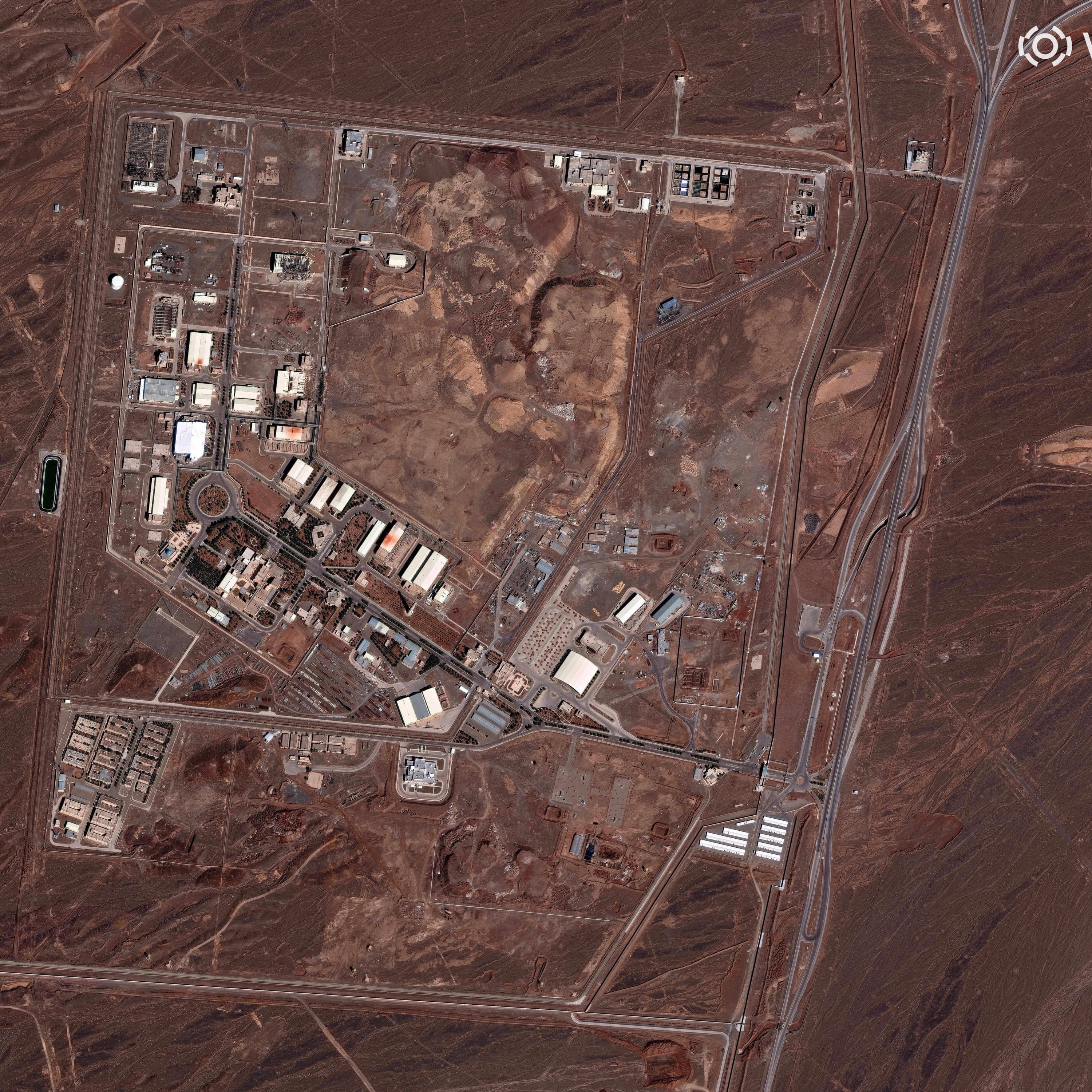
he offered a multitude of reasons for going to war with Iran. Defending the US, liberation for the Iranian people, the destruction of Iran's missile industry, and the elimination of an imminent nuclear threat. This terrorist regime can never have a nuclear weapon. I'll say it again, they can never have a nuclear weapon. Iran's key nuclear facilities were supposedly obliterated by the US and Israel last June. In Operation Midnight Hammer last June, we obliterated the regime's nuclear program at Fordal, Natance, and Isfahan. But according to the world's nuclear watchdog, the International Atomic Energy Agency, or IAA, Iran still has a stockpile of 440 kg of 60% enriched uranium, likely hidden in tunnels somewhere beneath Isfahan.
So how close was Iran to being able to build a bomb? Did they actually plan to? And what happens to Iran's uranium now? I'm the Guardian Science Editor, Ian Sample, and this is Science Weekly. Kelsey Davenport, your Director of Non-Proliferation Policy at the Arms Control Association. To start with, just give me a potted history of Iran's nuclear ambitions, as in what were their stated goals and were their actions consistent with those goals? So Iran's nuclear intentions have shifted over time. And in the 1950s, when countries began to be interested in civil nuclear power and the applications of nuclear for things like medical work, the Shah of Iran actually approached the United States
and the United States provided Iran with its first research reactor. Iran, at that point, wanted the capabilities to produce enriched uranium or separate plutonium. These technologies can be used for nuclear fuel, but also to provide the fissile material for nuclear weapons. Now, after the Shah was deposed, the first Supreme Leader Komani was not interested in civil nuclear power, but his thinking on nuclear began to shift during the Iran-Araq war, and Iraq's ability to target Iranian cities with its ballistic missiles, its decision to use chemical weapons against Iran, with very little international condemnation. That's when we really see the origins of the organized nuclear weapons program that Iran began to pursue in violation of its nuclear non-proliferation treaty commitments. And that organized program continued largely to 2003.
And at that point, it seems that Iran made the decision to abandon the organized nuclear weapons effort, which had been discovered. Iran was beginning to pay a price for having deceived the international community. And at that point, it appeared to view its nuclear program more as leverage. So it was interested in diplomacy through that period, but preserving its option to weaponize if the security situation shifted. So Iran was expanding its civil nuclear capabilities, but also clearly investing in technologies that meant it could move quickly towards building a bomb. We know they have this stockpile of 400 odd kilograms of 60% enriched uranium. Now, anything over 20% uranium 235 is known as highly enriched uranium, and then weapons grade uranium is enriched to about 90%. But is it possible to make nuclear bombs
of some kind of design with the 60% enriched material we know they already have? It is possible to use 60% enriched uranium to build a bomb, but there are a few caveats I would throw out. First, the material that Iran has enriched to 60% is almost exclusively in gas form. Now, that does pose more of a proliferation risk because it's the gas that's injected into centrifuges that can be enriched to weapons grade levels. So if Iran wanted to weaponize this 60%, it would need to convert it into a metallic form, shape it, fit it with the explosive package. But because the uranium is only enriched to 60%, it would require much more of the material itself. So the bomb would be bigger. It would be much more unwieldy and the reliability of that weapon would not be the same as if you were using the material enriched to 90%.
And before those attacks last June, what were weapons inspectors and intelligence services thinking about whether Iran had made that decision to go for a bomb? Well, when we assess proliferation risk, you have to look at both the technical elements. You know, does a country have the means to produce that pistol material, the explosive package, deliver it, and the political intention to do so? Now, from a technical perspective, it looked very much like Iran had made a decision to weaponize. They were on the threshold of nuclear weapons. They were very close. But nothing in the intelligence assessments, nothing in the IAEA reports suggests that that political decision had been made, that there was an organized effort to develop nuclear weapons. So that tells us that those technical advances could have been designed to try to provide some deterrent value by going all the way up to the threshold of nuclear weapons and threatening to cross that threshold. It's likely that Iran was trying to deter attack.
Ultimately, that proved not to be successful. But this was also likely about leverage, given that there was no decision to weaponize. ... Kelsey, when the U.S. and Israel attacked Iran's nuclear facilities last June, Trump said they had obliterated that country's nuclear program. What do we know actually about how much damage was caused during those strikes last year? It is impossible to obliterate capability. Now, the U.S. strikes did cause significant damage to key Iranian nuclear facilities. It is likely that the uranium enrichment facilities at Natanz and Fordo were destroyed because centrifuges are very delicate machines. So even the shock waves from significant explosions
can damage the centrifuge machines themselves. It's also likely that the U.S. destroyed the entrances to a key part of a third nuclear complex at Esfahan, where Iran was storing most of this uranium enriched to 60 percent, and where there is a third enrichment facility, the status of which is unknown. It's likely that some centrifuges survived. I mean, since 2021, the IAEA has made very clear that it cannot account for all of Iran's centrifuge machines. So the idea that the U.S. and Israeli strikes obliterated the program really doesn't hold water when you look at these details. There's been some confusing messaging that's come out since those attacks last year. As we mentioned back in June, Trump said that Iran's nuclear program had been set back permanently. And yet on Wednesday, he sounded like he was saying
that if the U.S. and Israel hadn't attacked Iran this time around, they would have had a nuclear weapon within two weeks. If we didn't hit within two weeks, they would have had a nuclear weapon. If we didn't do the B2 attack a number of months ago, they would have a nuclear weapon. And when crazy people have nuclear weapons, spare things happen. What do you make of that statement? Is that in line with any reliable assessment of Iran's capability and motivation? The United States has not presented any evidence or intelligence to suggest that Iran's nuclear program posed an imminent threat or that Iran could weaponize that quickly. And I think it's telling that the director general of the International Atomic Energy Agency, Rafael Mariano Grossi, has come out several times and stated that there was no structured nuclear weapons program. So this idea that a nuclear weapon was inevitable
attributes to Iran an intention to weaponize that simply wasn't there, particularly if you consider how the Iranian negotiating team pursued that third round of talks with the United States in Geneva just two days before the strikes. Iran actually put a proposal on the table, and this proposal showed some flexibility, showed some willingness to take concrete steps to roll back the nuclear program that Iran had been unwilling to take in the past. So again, if we look at the entirety of the picture, there is no good case to say that Iran posed an imminent threat that it could build a bomb in just two weeks. And frankly, it's absurd. Coming to these latest attacks that Iran has been enduring for the recent days, is there any assessment of how much damage those have caused to the nuclear program? Have they added an additional load of damage to that program?
It does appear that there have been some strikes near the Natanz complex that might make it more difficult to access that facility. There also have been some strikes around Isfahan, and there have been some strikes on what may be buildings that were occupied by scientists. But if we look at the overarching campaign, the nuclear program, nuclear infrastructure, has not been a focus of the US or Israeli bombing campaigns. We've talked about this stockpile of enriched uranium, particularly that 440 or so kilograms of 60% enriched uranium. How important do you think that material is in this latest conflict? What happens to it? Can it be put under inspectors control or what have you? I think at the end of the conflict, determining what to do with that 60% stockpile will be crucial.
Perhaps could even be negotiated as part of an agreement to end the conflict as part of a ceasefire. Because I think it will be very challenging politically for the United States to allow that stockpile to remain in Iran. But it's also very challenging to figure out what to do with it. Uranium enriched to 60%. You have to be careful how you transport it. The canisters themselves are quite small. Think about something about the size of a scuba tank. And they're relatively mobile. But if you have a lot of 60% material together, hitting that with an explosive could actually ignite a fission reaction. If the US is concerned about the 60% material in Iran now, it can't bomb it. That's quite risky. Any type of recovery option would be, I would envision a massive military presence on the ground to secure the site, excavate it.
Any boots on the ground is going to put American lives in danger. It's going to cost more. It's going to risk again the US getting bogged down. So there will be significant political opposition. Coming up, could the war push Iran to weaponize? The future moves fast. Av point shift happens. Podcast is your edge, where leaders unpack AI, data, modern work, and the mindset shifts that turn change into advantage. Hear what top innovators are trying next, and how to make it work. Visit AVPT.co slash shift today. After I spoke to Kelsey, Iran announced that Ayatollah Hamine's son,
Mataba, would replace him as supreme leader. It's an appointment backed by Iran's Islamic Revolutionary Guard Corps, or IRGC. The previous Iatollah was publicly at least against the idea of going for a bomb. So I asked Kelsey where his death leaves things. Will the strikes on Iran push them closer to going for a nuclear weapon? Because they see that not having one hasn't really served them well. There is a real risk that the new leader in Iran or a new government in Iran will choose nuclear weapons. This is one of the problems with Trump thinking that regime change is going to solve all of these issues that the United States has with Iran, including the nuclear issue. But regime change is not an effective non-proliferation policy. I think there is a real risk that Iran will decide that it needs nuclear weapons to deter further attack,
and that remaining party to the nuclear non-proliferation treaty no longer serves Iran's security interests. Now, I don't think it's likely that we're going to see any immediate dash for a nuclear weapon. But I do think it's going to be more likely down the road, particularly if this government is backed by the IRGC. And just finally, Kelsey, how do you see this latest round of attacks, impacting the wider goal of nuclear non-proliferation? Nuclear non-proliferation efforts are at a crossroads. And there is a perfect storm of political and technical factors brewing that are pushing a number of states closer to nuclear weapons. So the U.S. strikes now. I mean, dealt another blow to non-proliferation efforts. The U.S. demonstrated that it was not negotiating with Iran in good faith.
It did not exhaust the diplomatic process that gives countries far less incentive to negotiate with the United States over nuclear issues. And one of the most significant factors that can drive a state to develop nuclear weapons is if it does not feel that it has credible security commitments from partners. So I fear the U.S. and Israeli strikes are going to have ripple effects far beyond Iran when we're considering proliferation risk. We're going to be dealing with the consequences for decades to come. Kelsey, huge thanks for joining us. Thanks again to Kelsey Davenport. You can keep up to date with all the Guardians reporting on the war at TheGuardian.com. And that's all from us. Today's sound design was by Joel Cox and the executive producer was Annie Bury.
We'll be back on Thursday. See you then. This is TheGuardian. The future moves fast. AvPoints Shift Happens. Podcast is your edge where leaders unpack AI, data, modern work, and the mindset shifts that turn change into advantage. Hear what top innovators are trying next and how to make it work. Visit AVPT.co slash shift today. Visit AVPT.co.
More episodes
More from Science Weekly

Muons, massive waves and restored sight: the winners at the ‘Oscars of science’
Science Weekly

Mythos: are fears over new AI model panic or PR?
Science Weekly

The surprising value of boring chats, ‘super El Niño’ and Alzheimer’s evidence r...
Science Weekly

Helium: the invisible gas that powers AI, and why it’s in short supply
Science Weekly