About this episode
The Federal Reserve is focused on cooling inflation right now, which has stayed stubbornly above the 2% target. But price stabilization is just one half of the central bank’s dual mandate. In this episode, when will the Fed pivot to buoying the stagnant job market? After that, wholesale vegetables see huge price spikes, the imported seafood industry staggers despite easing tariffs, and your credit history could determine your mortgage rate.
Every story has an economic angle. Want some in your inbox? Subscribe to our daily or weekly newsletter.
Marketplace is more than a radio show. Check out our original reporting and financial literacy content at marketplace.org — and consider making an investment in our future.
Get every episode summarized
Each time Marketplace publishes, we email you a written briefing from the transcript — the topics, who appeared, and any specific claims, with the ad reads skipped.
Email me new episodesFree for 3 shows. No card needed.
Hosts & guests

Transcript ready
248 searchable segments. Every word is indexed and playable.
Full transcript
Marketplace — When will the Fed shift focus to the job market?. Machine-transcribed; use the interactive transcript above to jump the player to any line.
This message is brought to you by the Capital One Venture X card. Venture X offers the premium benefits you expect, like a $300 annual Capital One travel credit, for less than you expect. Elevator earned with unlimited double miles on every purchase, bringing you one step closer to your next dream destination. Plus, enjoy access to over 1,000 airport lounges worldwide. The Capital One Venture X card. What's in your wallet? Terms apply, lounge access is subject to change. See CapitalOne.com for details. This being the oil shock from the war in the Middle East. Fed chair Jay Powell on what we do and don't know about the economy. From American public media, this is Marketplace. In Denver, I'm Amy Scott in Forkai Ristall. It's Wednesday, March 18th. Good to have you with us.
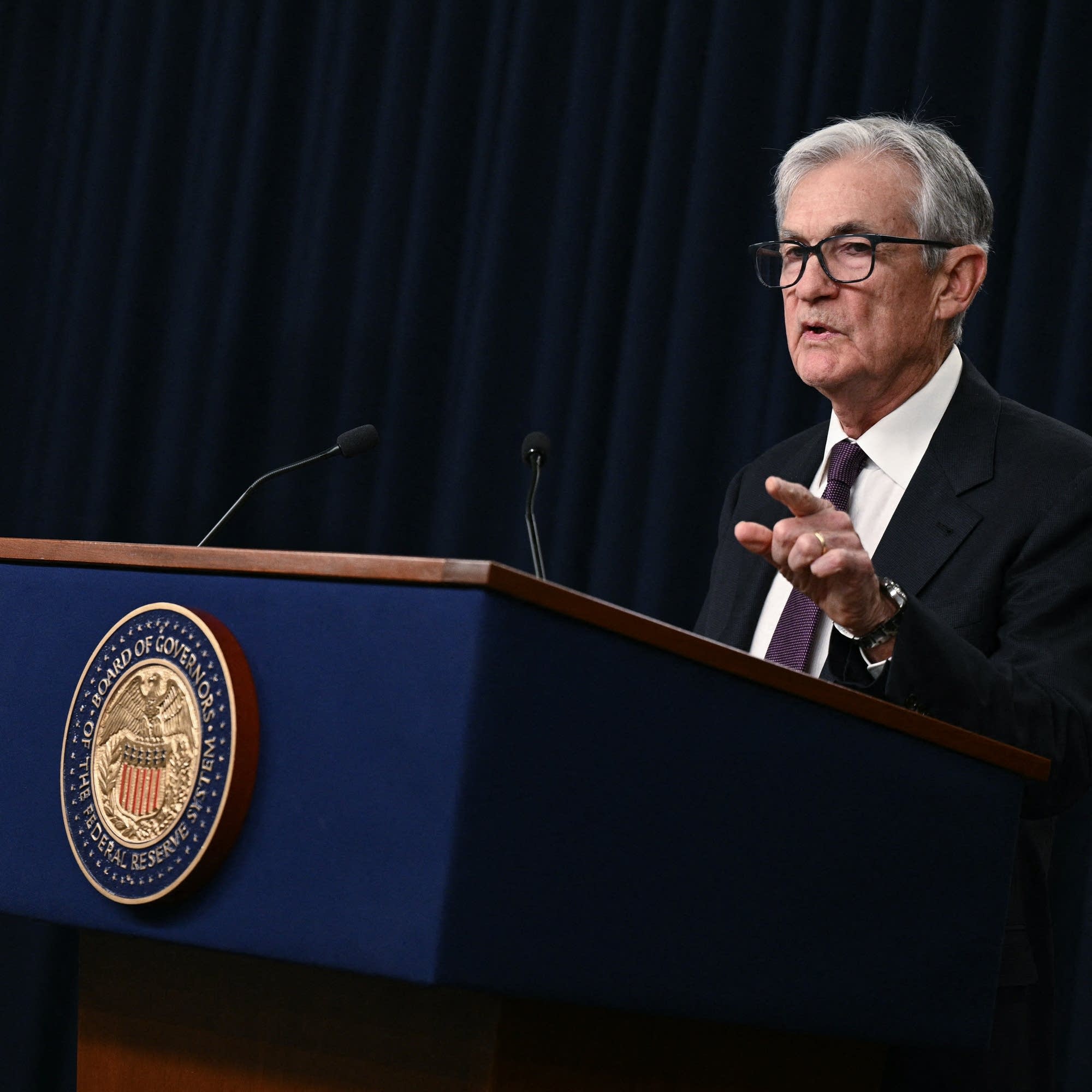
Today, the Fed surprised no one by keeping its benchmark interest rate steady at a target range of three-and-a-half, two-three-and-three-quarters percent. Also, no surprise, the shadow cast over the proceedings by the U.S. Israeli War in the Middle East. In his second-to-last scheduled press conference, as Fed Chair Jerome Powell said, economic growth is strong. Unemployment is still low. Inflation is still higher than the Fed would like, as one-time hits from tariffs continue to work their way through the economy. He said, it's too soon to know how the recent spike in oil prices will play out and whether the Fed will need to respond. If you look at total inflation, sorry, total core inflation, it's about three percent, and some big chunk of that between a half-and-three-quarters is actually tariff, so we're looking for progress on that. The question of whether we look through the energy inflation doesn't really arise until we have kind of checked that box.
The Fed has two primary goals, stable prices and maximum employment. So Powell talked about the Difficult Balancing Act between keeping interest rates high enough to tamp down inflation without hurting the job market. We are balancing these two goals in a situation where the risks to the labor market are to the downside, which would call for lower rates and the risks to inflation are to the upside, which would call for higher rates or not cutting anyway. So we're in a difficult situation and we feel like our framework calls on us to balance the risks. More on that Balancing Act coming up in the show, Powell also addressed questions about his future, while his term as Fed Chair ends in May, Republican Senator Tom Tillis has said he will block confirmation of Powell's successor, Kevin Warsh, until the Justice Department ends what Tillis calls a weak and frivolous criminal investigation into Powell's handling of renovations of the Fed headquarters. Powell says if a successor is not confirmed by the end of his term, he would serve
as Chair Pro Tem, as for whether he stays on as Fed Governor after that, which he can do until the end of 2028. I have not made that decision yet. All right, I will make that decision based on what I think is best for the institution and for the people we serve. So we stay tuned. Wall Street today, not like in what it's seeing, we'll have the details when we do the numbers. As promised, more now on that rock and a hard place, the Fed is stuck between. Lately, we've been hearing a lot about the stable prices part of its dual mandate, because they're not very stable right now. Consumer price inflation was still hovering above the Fed's target of 2% even before the latest oil shock from the war on Iran. But what about
maximum employment? Well, achieving that could also be a challenge for the Fed with a job market that's slightly been slowing down or maybe even stalling out. Marketplaces' Mitchell Hartman has that part of the story. Let's start with how is the labor market doing? Here's Jobor Swayla, said consulting firm RSM. For some time, it's been clear the market has weakened. Over the last 12 months, the economy added 156,000 jobs. Over the previous year, it added more than a million. But the job market has stabilized quite a bit recently, says Christine Cooper at Co-Star Group. You know, we had some job losses in February, we had job gains in January, some losses in December, and it seemed to kind of offset each other. Cooper says that with the Trump administration cutting immigration and baby boomers retiring, slower job growth might not be such a big problem. As we have fewer people in labor supply, I need fewer jobs to be added each month. But with little net job growth, John Lear at Pulling for Morning Consult says,
You continue to see people not being able to find jobs once they were laid off? Driving a sharp uptick in long-term unemployment. And workers are starting to fall behind financially, says Laura Ulrich at JobSight Indeed. Given the stagnancy we've seen across many sectors in the labor market, it's not surprising to me that we've seen wage growth decline. The wages employers are posting for new hires on Indeed are up just 2.1% from this time last year. Consumer prices are up 2.4%. And this brings us back to that dual mandate we started off with. Joe Bricellus at RSM says the Fed can't attack both ends of it at the same time. Given the oil and energy shop which is shaping up to be the largest since the 1970s, the Federal Reserve is going to find itself an intention between the price stability and maximum sustainable employment. He says getting control over inflation will be the first order of business for the Fed before it does anything to stimulate the labor market, however much it might be struggling.
Price stability is a precondition of maximum sustainable employment. Because without price stability, employers won't feel confident enough in the economy going forward or have the financial resources to ramp up hiring again. I'm Mitchell Hartman for Marketplace. One new data point the Fed would have weighed today was the producer price index out this morning from the Bureau of Labor Statistics, the PPI measures inflation at the wholesale level. Tracking prices producers receive for goods and services. Overall those prices were up 7% of a percent in February from the month before, mostly due to increases in service prices. Again, this was before the war added new pressure on prices. On the good side,
one kind of product stood out, vegetables, up almost 49%. Marketplace's Carla Javier has more. Vegetable prices can be quite volatile, since Joe Balagtas at Purdue. That's one reason why he says it's difficult to explain why veggie wholesale prices jumped. Maybe big winter storms sweeping through the southeast had something to do with it. That affected tomato production, sweet corn production. Labor shortages could have driven up costs for producers too, says Chris Barrett at Cornell. Foreign-born populations in the United States, especially those who are undocumented workers, are under a little bit of pressure, and that creates a lot of pressure for growers to be able to recruit adequate skilled workers. Barrett says that the US imports a lot of vegetables, especially in February. And that lets domestic producers ask for a little more,
because the competing suppliers are having a tariff added on to their prices. Whatever the reason, higher producer prices don't necessarily mean consumers will see higher prices immediately. In my kind of micro-politine rural area of Pennsylvania, I haven't been seeing big increases at the grocery store. That's Amelia Finare, a dietitian and food economist at Allegheny College. She says producer prices are generally more volatile than consumer ones. Final retailers and wholesalers, they really do try to buffer. They're not going to change prices at the grocery store, unless they kind of know that the increase to their own costs is kind of permanent or long term. Though she says there are a lot of things that could lead to continued increases from further impacts of tariff, labor, and other factors to the war in Iran. Because of the increased price of diesel. Which Finare points out vegetable farmers need to drive
their tractors. I'm Carla Javier from Marketplace. Got to have some protein to go with those vegetables. And seafood is another product getting more expensive. Unprocessed shellfish was up more than 10 percent from a year ago in the February PPI, prepared frozen fish more than 12 percent. Most of the seafood we eat in the United States is imported. And some of the biggest suppliers, including China and India, have seen some of the highest tariffs from the Trump administration in the past year. Though the Supreme Court struck down tariffs put in place under the International Emergency Economic Powers Act. Others remain in
place. Daniel Ackerman checked in with some suppliers gathered in Boston this week for the country's largest wholesale seafood expo. Walking into the Convention Hall, you can smell the seafood. Suppliers from around the world, doll out samples of fresh sashimi, crispy fish dicks, and seaweed salad. It's a lot of spicy and it's a compliment to meat or heavier stuff. Camille Zoo runs a seaweed company on the coast of Shandong province in northern China. She began selling to the US just last year. She says it's been hard with all the trade tensions and tariffs, but she's confident in her product. People are starting to accept seaweed as a source of nutrition, and they're looking for a healthy diet. And with the popularity of Japanese cuisine, so yeah, it's getting pretty big for us. Other Chinese seafood sellers were less upbeat. John Long Wang's company processes squid and scallops also in Shandong province. He says buyers in the US provided almost all his revenue. 90% of our products will be exposed to America.
But Wang says his customers, including US retailers, walked away when tariffs soared in the middle of last year. In maybe July, August, our company just stopped. Stopped, yes. It's a huge difficult for us. He's since been able to restart production, finding some buyers in Canada, but sales are still way down. I heard similar stories from sellers based in India, which is the biggest supplier of shrimp to the US. They say they lost around half their business, and that loss of supply is one reason the cost of shrimp has risen by more than 50 cents a pound, says Angel Rubio, an economist with expana. In the case of shrimp, we are the highest price at least five years to the consumer. Rubio says domestic producers simply can't meet demand. Trimp is the most consumed seafood in the US. There are more like land-based farms here in the US that are coming up, but they wouldn't be able to replace the volume from overseas. Meanwhile, many of those overseas producers have their fingers crossed for an easier year ahead.
John Long Wang, the squid and scallop producer in China, has his hopes pinned on one particular event. I know that Donald Trump will witness China next month. Wang says a one-on-one meeting between Trump and Chinese President Xi Jinping could ease tensions and stabilize the seafood trade, but as of this week, that summit has been delayed with no make-up data announced. In Boston, I'm Daniel Ackerman from Marketplace. Coming up. So the volunteer drove to the hotel and now they're at the Chuck E. Cheese. Sounds like a blast, but first let's do the numbers.
Dow Jones Industrial Average lost 768 points, one in six tenths percent, to close at 46,000 to 25, the NASDAQ dropped 327 points about 1.5% to finish at 22,152, and the S&P 500 gave up 91 points, one and four tenths percent, to end at 66, 24. We just heard from Daniel Ackerman about the status of seafood imports and from Carla Javier about the rising price of vegetables. Well, Cisco Corporation, a leading distributor of both seafood and produce, sank two and one tenths percent, dole PLC, purveyor of veggies and fruit dipped one and a half percent, lamb western holdings, specializes in potato products, they count as a vegetable right, lamb western added two and a third percent you're listening to Marketplace. This Marketplace podcast is supported by the University of Illinois Geese College of Business. Earn a world-class MBA degree completely online at your own pace.
Through their online MBA program, you'll learn from amazing faculty and network with classmates on a global scale without having to put your career on hold. Take your career to the next level by applying what you learn in real time. Get started at onlinemba.illinois.edu, that's onlinemba.illinois.edu. This message is brought to you by the Capital One Venture X card. Venture X offers the premium benefits you expect, like a $300 annual Capital One travel credit for less than you expect. Elevator earn with unlimited double miles on every purchase, bringing you one step closer to your next dream destination. Plus, enjoy access to over 1,000 airport lounges worldwide. The Capital One Venture X card, what's in your wallet? Terms apply, lounge access is subject to change. See Capital One dot com for details. This is Marketplace. I'm Amy Scott. What has three digits ranging from around 300 to 850 and controls so much of what we can and cannot do in our economic
lives? If you guys credit score, you're right. And that score can affect more than just whether you can get a loan or a credit card and how much interest you'll have to pay. Claire Brown is a climate reporter for the New York Times, where she wrote about how credit history can impact homeowners insurance costs. Claire, thanks for being here. Thank you so much for having me. You start your piece looking at two women living in the same neighborhood in Minnesota, but paying really different premiums for insurance. Can you tell me about them? Yeah, these two women lived in the exact same house. They were just a few blocks apart. They were the same layout. They were built at the same time. They're both purchased in December. But when they went to get their home insurance, which you have to do when you buy a house, they paid wildly different rates. One paid $1,272 and the other paid $2,898. And they could not figure out why these rates were so different other than that they have very different credit scores. Why would a credit score affect
your insurance premium? How does the industry defend this practice? The industry says that a credit history is highly predictive of whether or not someone will make future claims. So they're not saying, you know, this person's home is at risk, but they're saying we expect this person will cost money in the future. And it's not just happening in Minnesota, right? This is legal in most states. It's happening almost everywhere. A handful of states, including California and Massachusetts, have banned it. But in many cases, this insurance pricing gap means that people with worse insurance scores, which are not poor scores. They're more like a fair, if you look at the credit rating category, are paying up to double on average as people with excellent credit. So there's an interactive tool in the piece where you can look at different states. I looked at two where I've lived Maryland and Colorado. In Maryland, it's not legal to use credit scores in setting insurance premiums. And it's quite a bit more affordable. That's probably not the only
reason, but it was pretty striking. What do premiums look like in states where this practice is banned? You know, there's a really, really interesting case out of Washington state where it was banned for a few months in the pandemic. And you can see in the data for the same homeowners, people with low credit started paying less and people with excellent credit started paying more. And there's a graph in our piece that shows the the lines kind of converging for just a few months and then the ban was overturned in court and they go back to sort of the disparity that we've been reporting on here. But it's really striking data to just see the rates converge when a state bans the scores and then they go back to where they were as soon as that ban is overturned. As I mentioned, you're a climate reporter. How does climate risk play into all of this? Homeowners who live in areas that are more likely to be impacted by climate disasters are already paying higher premiums. What about those with poorer credit scores?
It seems like there is a compounding effect. So if you have a poor credit score and you live in the path of a hurricane, you are paying more per unit of disaster risk, which is an economist way of just saying you're paying a lot more than an excellent credit neighbor for that disaster risk. So what that means is just really, really high rates. I did some unrelated reporting in New Orleans last year and people were getting home insurance quotes of $20,000 or more. So it's really, really impacting people who live in vulnerable areas. Yeah, and there's even what you call a disaster credits loop where if you are affected by a disaster, your credit score tends to go down and making insurance even more expensive? Yeah, research has shown that in areas that are struck by a disaster, scores tend to go down. That makes intuitive sense, right? Like people lose income, people get behind on their payments and their credit scores tend to suffer. What happens then
is that they go to renew their insurance and all of a sudden their credit score has gone down in the insurance company that can then raise rates based on that new information. As we talked about, there are a lot of reasons that insurance is getting more expensive. But what do you think this means for the next generation of homeowners and their ability to buy, given that so many are saddled with student loan and other debt that could impact their credit scores? I think it's one other factor that makes it very hard to get ahead if you're not already ahead and makes it very expensive to live a life of homeownership if that's what you aspire to. I mean, the fact that you pay twice as much in some states just to have fair credit was really, really striking to me. And as you say, it makes things especially difficult for a new generation of homeowners for people who are trying to build credit and get on that ladder. Claire Brown had the story at the New York Times. Thank you so much. Thank you.
We talked on the show yesterday about how cost can be a barrier to receiving medical care, but money isn't the only obstacle for many Americans in a survey of reproductive aged women from Kaiser Health. A lack of child care was the most common reason for missing or delaying treatment. All week, we've been bringing you my economy stories about health care. This latest installment looks at a network of volunteers filling the child care gap. My name is Silke Knabo, I'm the founder and CEO of National Emergency Child Care Network and I'm based in Durham, North Carolina. I've never seen emergency child care where somebody just shows up at your front door and helps you with no questions asked. This idea just doesn't exist anywhere across the United States and I think as a a single mom of three young children, I really struggled. There were some weekends where I just cried, I cried in my closet, I cried in the car,
just desperate for help, even five hours of respite relief and I think that's really where the idea started coming from. It would have been just what I needed to kind of recharge and have the energy to just keep going. We get calls for very different reasons. You know, it could be a parents are in the ER and just have absolutely no resources to access child care or it could be the mom is she needs child care. She just moved into a local area because of a job she has to go to work and they're living in a hotel right now. So the volunteer drove to the hotel and now they're at the chucky cheese. So all the crisis calls vary but we want to help anyone who calls us and just needs help. We started in 2024 right after we started hurricane hulling hit and we kind of hit the ground running in really big natural disasters. Child care is in school shutdown and it leaves parents
and families with no options for child care during those weeks and maybe even months exactly what occurred during hurricane hulling and the LA wildfires. So within 24 hours we probably got 300 registrations. I was probably holding two to three trainings per day to try to onboard as many volunteers as possible to get them out as soon as possible to help families. We're volunteer-based and we're very grassroots. We don't have a lot of expenses and that's what's making us successful right now but we are in North Carolina and California and we want to scale every year to a new state and with just me alone it's not possible. I was hoping in 2025 we would have at least been able to hire a program officer. We need a team of 25 people to do what I'm doing. We do. It's so much work and I also I mean I have another job. So I'm raising money. I'm writing
grants and we are trying to find an earned revenue mechanism. A lot of hospitals contact us because their patients are going to surgery and they don't have child care and hospitals don't provide child care so they want to outsource it. So we're hoping that maybe through kind of contracts with hospitals we can find a way to earn some revenue. Where will we be in 10 years? I hope we're like the red cross. Honestly I mean I want to be that successful. I think it's going to take more than 10 years but that is my vision that is that's where I want to be. Silca Caneble Founder and CEO of National Emergency Child Care Network in Durham, North Carolina. We want to hear about what's going on in your economy. Hit us up. Marketplace.org slash my economy.
This final note on the way out today, Polly Market, the online platform where users can bet on all kinds of global events from Fed rate cuts to the Oscars announced it's opening up bar in Washington DC called the situation room. Here's how the company described it on X. Imagine a sports bar but just for situation monitoring live X feeds, flight radar, Bloomberg terminals and Polly Market screens only in DC. Our media production team includes Brian Allison, John Fokey, Montana Johnson, Drew Jostad, Gary O'Keefe, and Charlton Thorpe. Alex Simpson is the manager of media production. I'm Amy Scott. We will see you tomorrow.
This is APN. Maybe you've had this thought before. What if I turn this hobby into a side hustle? Attempting to turn painting into income may have been the worst idea I've ever had. I'm Marie Mechrez and this week on This Is Uncomfortable, the pressure to monetize what we love. Can we turn our passion into a paycheck without killing the joy? Listen to This Is Uncomfortable wherever you get your podcasts.
More episodes


