About this episode
The February jobs report isn’t out until Friday. Still, experts are all but certain the manufacturing sector will have lost jobs compared to last year. In this episode, a weak single-family housing market and chaotic tariff policy prevent U.S. manufacturers from bouncing back. Plus: Hiring managers don’t trust resumes in the era of AI, Americans are spending less of their income on food than ever before, and a sparse snow season in Colorado stresses all sorts of businesses.
Every story has an economic angle. Want some in your inbox? Subscribe to our daily or weekly newsletter.
Marketplace is more than a radio show. Check out our original reporting and financial literacy content at marketplace.org — and consider making an investment in our future.
Get every episode summarized
Each time Marketplace publishes, we email you a written briefing from the transcript — the topics, who appeared, and any specific claims, with the ad reads skipped.
Email me new episodesFree for 3 shows. No card needed.
Hosts & guests

Transcript ready
257 searchable segments. Every word is indexed and playable.
Full transcript
Marketplace — Why manufacturing employment continues to fall. Machine-transcribed; use the interactive transcript above to jump the player to any line.
This message is brought to you by the Capital One Venture X card. Venture X offers the premium benefits you expect, like a $300 annual Capital One travel credit, for less than you expect. Elevator earned with unlimited double miles on every purchase, bringing you one step closer to your next dream destination. Plus, enjoy access to over 1,000 airport lounges worldwide. The Capital One Venture X card. What's in your wallet? Terms apply, lounge access is subject to change. See CapitalOne.com for details. It can feel like we're at a bit of a standstill while we're digesting everything happening abroad. But the churn of the economy here keeps on churning. From American Public Media, this is Marketplace. In New York, I'm Kristen Schwab in Prokira's Doll. It's Thursday, March 5th, and it's good to be here with you. It's day 6 of The War with Iran. And there is a constant funnel of
information coming out of the Middle East. It's all over the news, and my social media feed. And it was on every lobby and elevator TV I passed coming into the office today. Naturally, there are a lot of questions early on. And we've spent much of the week so far on this show trying to explain what's explainable for now. But I don't want us to forget that as we wait for a clearer picture of what's happening, and whether we get it or not, the plain old regular economy here is still moving. And the biggest story of that plain old regular economy is the labor market. We'll get the latest jobs report from the Bureau of Labor Statistics tomorrow morning. It'll tell us which parts of the economy gained jobs in February and which lost. The jobs report always brings a few surprises, but one thing that's almost a guarantee is that year over year, employment and manufacturing will be down. The sector lost over 90,000 jobs in 2025. It was the third straight year of manufacturing employment decline according to the BLS.
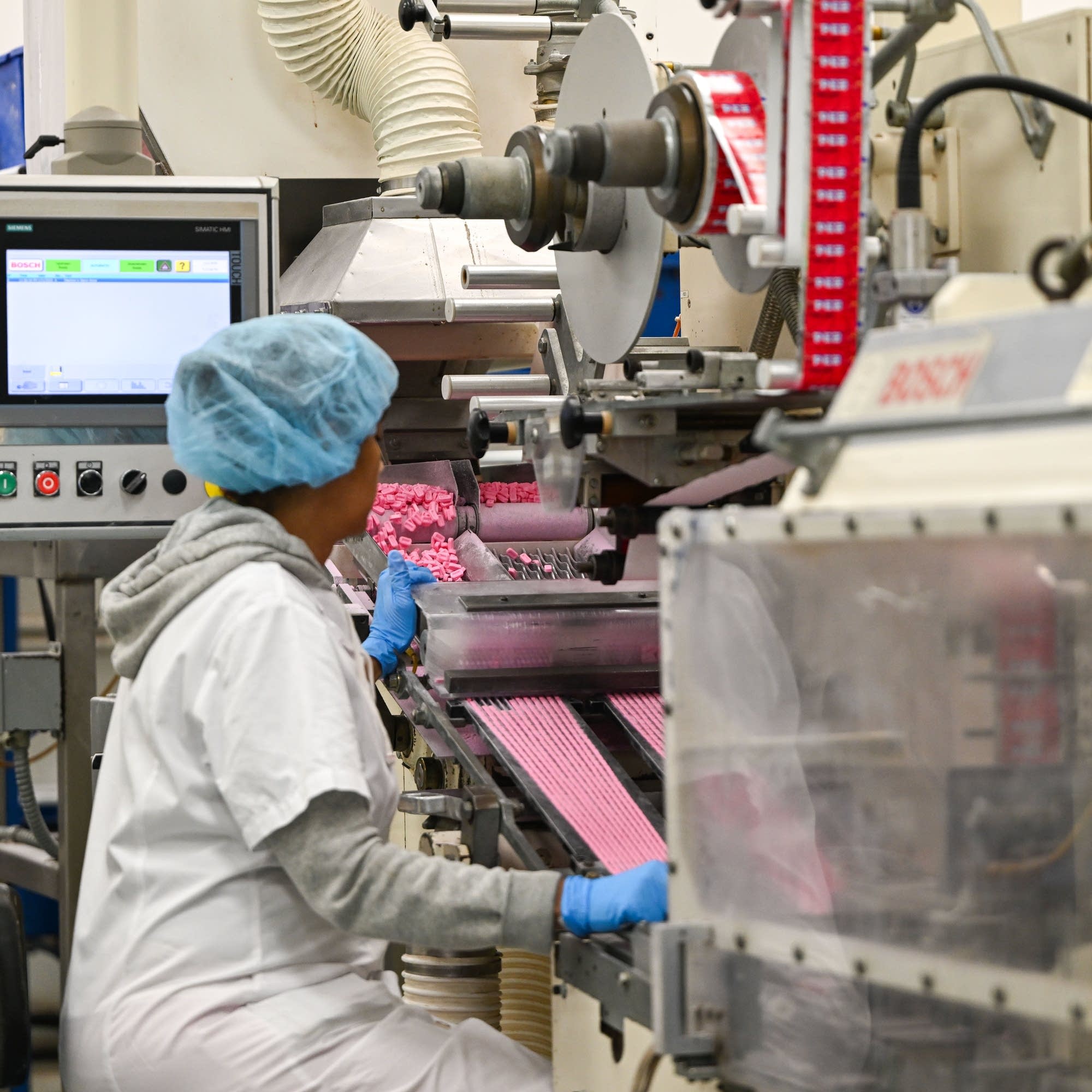
Marketplace's Daniel Ackerman looks at why that is and what, if anything, could turn the trend around. Manufacturing employment has been hit pretty hard in recent decades. Globalization has led to outsourcing. There's increased automation and the Great Recession. Our manufacturing payrolls have never recovered from the global financial crisis of 2008-2009. Jason Miller is at Michigan State University. We lost over 25% of our manufacturing during that recession. And while there was some employment growth in the 2010s, manufacturing has seen consistent job losses since 2023. Miller says there are a few reasons why. For one, a lot of it ties to the weakness in the single-family housing market. He says a good chunk of domestic manufacturing supports housing, think sawmills or furniture makers. So a slow housing market can be a drag on those factories. Another cause of the recent manufacturing decline? Teriffs. Theresa Fort of Dartmouth College says even though they might be aimed at boosting U.S.
manufacturers, they've ended up raising input costs for many. Maybe it helps steal a little bit, but all the sectors that are downstream from steal are hurt because now they have a crucial input that is more expensive. More expensive and just impossible to predict. With some tariffs struck down by the Supreme Court one day popping up under a different statute another day. There is no way for a firm to plan with any kind of confidence of what are its costs going to be? How long is it going to last? As a result, those manufacturers aren't doing much hiring. Says Susan Spence of the Institute for Supply Management, which surveys factory managers. These panelists are telling us we don't know even after Supreme Court what other tariffs are going to be lobbed and so our customers are ordering in very small increments because they just don't want to be ordering the higher price material. Spence says until manufacturers start getting those larger orders again they won't have much reason to staff up. I'm Daniel Ackerman for Marketplace.
Wall Street today, oil prices went up and the market went down. We'll have the details when we do the numbers. Sticking with the theme of jobs, tomorrow's jobs report will give us an update on how many people are looking for work. One of the first steps in finding a job of course is polishing up the old resume. As hiring markets and methods change, it's possible that resumes aren't as important as they used to be. Amanda Hoover is a senior correspondent at Business Insider where she wrote about the possible death of the resume. Amanda, it's good to talk to you again. It's good to be here.
So how dead is the resume really? I think it's a bit of a grand statement to make but what I was starting to see particularly in more technical jobs and particularly looking for software engineers, several of them were saying we don't require a resume. We don't really read them and I'm also hearing from recruiters as well that it's become so overwhelming to sort through all the resumes that they receive that were in a period where it's much more recruiters sourcing people, you know, going on LinkedIn, going through networks of people they know, then it is necessarily looking at a pile of resumes whether they be physical or digital in our current age. So they are still around but their importance and their ability to land you the job that you want is definitely decreasing. So this it sounds like this is more of a tech thing. It's definitely most prominent in tech but I'm hearing from recruiters that it's happening
across the board. It is just when you apply for jobs on a career portal or LinkedIn, so many people have started editing their resumes and cover letters with AI that recruiters are just really overwhelmed and they're just not popping. It's not a good way to get to know a candidate. So that's something that's happening in many industries, not just the tech world. Tell me more about what companies are turning to instead if not resumes. Yeah, I spoke to one company. They're a startup and they're very new but basically this is specifically for software engineers. They've created a tool where you can search for kind of something similar to what you might need coded for you and then that information, you know, you can find people that can have shown that they can do the work and go right to them and recruit them from there. It's very different from a traditional application process. I saw other companies saying, you know, here's a couple of questions. Please answer these and they're kind of like what have
you worked on? Why do you want to work here? What work makes you proud? And another thing that's happening as well is companies moving to a paid work trial. It's not just an interview process now. It might be anywhere from a couple of days to a couple of weeks that they want to see if you can really do the work and they care less about the big names or a fancy college on your resume. It's funny. You know, asking somebody to identify why they work, they want to work somewhere kind of just sounds like another way to write a cover letter. Yes, I think that I think that there's a movement right now where recruiters are trying to seize what was valuable in the past in a new format. But making people answer, you know, question by question, it takes a little bit more time or thought, even if you're still using Genai to answer question by question, it's a bit different than just spin up a cover letter for this job for me. So I think the idea is to get people that are at least being a bit more intentional. I'm wondering if this is working better than the old method. Our companies finding better candidates and our candidates able to still find companies
if they're not already maybe a part of that community. Who wins and loses here when it comes to finding the job? I think it's too soon to know. Obviously, there were problems with our old application process. We know that people of color and women tended to have additional hurdles or have AI tools rejecting their resumes based on learned biases. But with this new system, it's changing so quickly and not everyone, if you haven't looked for a job in five, 10 years, maybe you're not on LinkedIn all the time and you don't really know that the rules have changed. It's a really tough job market out there and it's quite possible that as these rules change, it's a whole big job to try to keep up with them and some people that aren't right on the cutting edge of the changes and kind of the secrets of getting a job could be left behind. Yeah, always a full-time job to be looking for a job. Amanda Cooper is a senior correspondent at Business Insider. Amanda, thanks so much. Thank you.
When we talk about businesses on this show, we tend to focus on big businesses, the ones that are publicly traded and a lot of private small businesses too. But don't forget, non-profits are an important part of the economy. According to the IRS in 2024, that's the most recent year of data we have. In 2024, there were more than two million non-profit and tax-exempt organizations in the US. And non-profits, they too need to make money. A tough task when an organization is just getting started. Here's today's installment of our series My Economy. So my name is Sheila Martin. I am the founder and director of Triple H Ranch and therapeutic horsemanship, our nonprofit in Milton Wisconsin. The services that we provide include therapeutic riding services for youth or adults with special needs or challenges to come up to
the barn and develop a relationship with the horse and learn how to handle them and ride. And the goal is to help them strengthen themselves physically, mentally, emotionally and socially. So I started as an LLC, and then as we expanded, decided to, in this past year, just dissolve, the LLC, all of the services, all those things can fall under the umbrella of hope and healing through horses and the community services that we offer. The fees that we incur for our services only cause for about 25% of what our operating budget needs to be. So the fundraising and grant rating is vital. Our cost per horse per month is $350 per horse. So that is $250 in fixed costs and $100 in variable costs. That is our goal to put aside into an emergency
bat fund because anyone that owns horses knows that if there's an emergency or horses hurt themselves in silly ways, that can really be a large ticket financial item for you to absorb as a business. There's no riding without a horse. Can't ride the goats. Right now, I am the only instructor in lead all the activities. So right now, we did have a grant to train two new instructors and they are in process. I mean, right now, I'm more than full time, 50, 60 or so week. Okay. And thinking back to my 30s, when I had young kids at home, I just see women like Polydine or Martha Stewart and they're starting these empire, you know, at 50 and I was like, are they tired? I mean, I'm tired. Why would you want to start something when you're 50? And now I really understand.
That was Sheila Martin, founder and director of Triple A Tranch in Milton, Wisconsin. Coming up, try to provide a really good product and to the phone when it rings and make sure your customers are well taken care of. The secret to success sounds pretty simple when you put it like that. But first, let's do the numbers. The Dow Jones industrial average lost 784 points, one in six tenths percent to close at 47,954. The NASDAQ dropped 58 points a quarter of a percent to finish at 22,748 and the S&P 500 fell 38.6 tenths percent to end at 68.30.
Oil prices hit their highest level since July 2024 today. Brent crude, the international standard climbed almost 5 percent to about $85 a barrel and a barrel of benchmark US crude increased eight and a half percent to above $80. Kroger exceeded earnings expectations in the fourth quarter and posted a profit of 861 million for the last year. The new CEO who comes from Walmart plans to use AI to help customers shop and increase productivity. Kroger jumped five and three tenths percent. Kroger declined three and a half percent. Costco wholesale corporation dipped two and four tenths percent. Bonsfeld, the yield on the 10-year T-note rose to 4.14 percent. You're listening to Marketplace. This message is brought to you by the Capital One Venture X card. Venture X offers the premium benefits you expect, like a $300 annual Capital One travel credit for less than you expect.
Elevator earn with unlimited double miles on every purchase, bringing you one step closer to your next dream destination. Plus, enjoy access to over 1,000 airport lounges worldwide. The Capital One Venture X card. What's in your wallet? Terms apply. Lounge access is subject to change. See CapitalOne.com for details. This is Marketplace. I'm Kristen Schwab. A trip to the grocery store these days can be a painful task. Everybody's got to eat and watching the price of rice or beef or your favorite sweet treat inch up makes that sweet treat not so sweet anymore. But even as food prices have risen over the last handful of years, so have our wages, generally speaking. Brian Walsh wrote about the cost of groceries and why maybe we shouldn't feel so bad about them in Vox the other day. Brian, it's great to talk to you. Hey, it's great to be here. So let's start with the good news. You crunch some numbers from the USDA. And it turns out we're spending way less on food than we did 100 years ago.
Yeah, it's true. So we are spending Americans about 10.4% of our disposable income on food as of 2024. And yeah, that is down a whole lot historically. It's down from about 42.5%. That was only half of people's disposable income as of 1901. 947 is down 23%. 15% or so with the 60s. It's just been one of these long-term really consequential economic trends in US history as we just spend less and less of the money we actually have on the food we need to survive. You'll take me into the history a bit. How is this even possible? So this actually comes from a really interesting kind of economic backstory in 1857. A German statistician named Ernst Engel who was not that Engels, not the Frederick Engels of Marx at different angles. He began studying working class families in Belgium and noticed something really striking, which is that poor families would spend 60, 70% of their income on food. Well, wealthier families would spend under 50%. So the richer you got, the less of the share went to eating. Even as you were eating better in absolute
terms, that eventually became known as Engels laws, probably one of the most established empirical regularities in all of economic sense. At the same time, I assume how we farm, how we get our food by it has changed. Tell me what goes into that. Well, that's really what's behind this whole thing. So, you know, American farm productivity has just exploded over the past 100 years or so. So, I mean, if you go back actually to like 1940, one American farmer would feed the equivalent of about 19 people, you flash words today, that one farmer is feeding nearly 170 people, you know, and that's really what kind of, I think, drills down to the rest of the economy. At the same time, of course, we're getting richer and that means we have more money to spend on other things beyond food. Back to that Engels law idea. Exactly. So, we're saying the average American spends about 10% of their earnings on food. But, you know, average is never tell the full story. There are plenty of people spending much more, right? There are. Yeah, I mean, in fact, the lower you go terms of like
socioeconomic status, lower you go in income, the more of that income does tend to get eaten up by food. That's the case in the US. It's also the case internationally. So, poorer countries, Nigeria, for instance, you know, you spend nearly 60% of your income on food. So, yeah, that average definitely hides a lot of variability. And I don't want anyone to think that like this means everyone has no trouble bouncing a budget when it comes to food. It's really more just the fact that like on the whole, we're seeing a situation where, you know, we can do more of money to something else, other than food, even with food prices feeling and actually going up. Yeah, well, we've had all this progress on the cost of food. So, then why does it feel like everything is so darn expensive? Well, for one thing, I think it's a lot of it has to do with how people actually feel about prices, right? Like, we're often not thinking when we're spending money, like, well, what percentage of this is coming out of my paycheck, right? Like, we just look at the sticker price. And, you know, food spikes really have grown. I mean, grocery prices are up, I think almost 24% on average since 2020. I think it's more of a matter of people looking at that
being like, I just see the sticker price. I don't know that like, I've been making more money over the long term. Therefore, I don't have to devote as much of my income to this. I just see like, what, what, how did my grocery go get so high? Yeah. You know, I don't know how you feel when you go to the grocery store, but I'm curious after you've parsed through all this data, how, I mean, do you feel differently about the prices you see when you shop? I'd love to see that I think that I could just like put this entire thing in my head and be like, exactly, it's fine. You know, like, my paycheck's, so what they're going to use to you, therefore, it really isn't that bad. That's not really the case. Every time I like it's ordered or dash, I'm like, how did it somehow add up to, there's three of us at home, like, how did it add up to $80 or, you know, you go to Whole Foods and somehow you get a three-digit bill. And I'm, you know, I think prices are getting higher. I forget that sometimes wages get higher as well. And you don't really make that connection when you're at the grocery store, staring at your bill. Brian Walsh is the senior editorial director at Vox. Brian, it was good to talk to you. It's a great talk to you, too.
Raise your hand if you're tired of the cold snowy winter. I know you can't see me right now, but as a New Yorker, my hand is very much raised. If you did not raise your hand, you either love winter, live down south, or actually maybe you live out west. Parts of the mountain states are starved for snow right now. Whether dependent businesses in cities like Denver, which benefit from snow tourism are reporting low snow totals and even lower revenue. Colorado Public Radio's Haley May has more. Even as a dusting of snow touched the peaks surrounding Denver in recent weeks, in the city, snow shovels have been sitting idle, gathering dust instead of drifts. In a normal year, the area gets about 27 inches of snow by the end of January. This year, it was less than half that. And while ski resorts tend to get the spotlight and years like this, the economic ripple is hitting other weather dependent businesses that may not be top of mind.
A lot of people don't really understand, but the car wash business is busiest from like September to March. Matt Fisher owns green car wash. For him, snowstorms typically mean a good bottom line. Snow means roads get salted. Salt on the roads means mag chloride on your car. And that gritty white crust that drives people to the car wash? Well, that's job security. But not this year. You know, not seeing that many dirty cars is definitely affecting things. I was running some numbers. It looks like we're down about 10% from the 24 25 season for the September through January time frame. Now 10% may not sound huge, but combine that with rising costs for his business. It's tied to tariffs. It's tied to a lot of things. My primary soap manufacturer is in Canada. And we've had some holdups on imports and delays and deliveries as well as increased in prices and things like that. Fisher's had to tighten his belt this winter. For some businesses, though,
the impact is far steeper than 10%. We calculated that we're about 70% down. Amy Campbell manages Bear Creek Tree Service, a company specializing in snow removal. In a normal winter, crews are out every other week. Without snow, they're making tough decisions. We decided last week we were going to close one day a week just until the beginning of March to we pick up again. Even when the snow has fallen, Campbell said some customers have declined services altogether. We actually did have two locations that said we barely have two inches. We really don't need you to come out. Right now it's also a money thing. You know, people are kind of tightening the purse strings a little bit. Summer-based businesses in the region are also starting to sweat. They know the financial impact won't melt away with the season. You know, if it stays on this track, we're looking at, you know, not a lot of water to work with, the rafting. Jonathan Stodgrass co-owns downstream adventures and says in low snowpack years
like this one, summer rafting seasons can end weeks early. Lower snowpack means less snow melt and thus lower water levels and rivers used for tourism. And those lost weeks? Well, they're usually the busiest. That's like the peak season. So you're missing a lot. I would think you could lose 50 percent if not more if you're ending in the middle of July. But it's not just the rafting companies who will be impacted. We bring in a lot of people to these mountain towns that probably wouldn't have came otherwise. So, you know, restaurants and other attractions lose out as well. For all these businesses, the hope is simple. That there's still time for the weather pattern to change in the last few weeks of winter. But even if it doesn't, you just keep going, right? Try to provide a really good product, answer the phone when it rings and make sure your customers are well taken care of. Fisher and his peers in the weather dependent business world also hope
their customers will stay loyal even through these warmer years. In Denver, Colorado, I'm Haley May for Marketplace. This final note on the way out today, I'm going to squeeze in some more news we didn't get to. The tariff tit for tat is still very much on. The latest is a federal judge has ruled that companies that paid tariffs that were struck down last month by the Supreme Court are indeed due refunds. That's something like $130 billion owed. Meanwhile, two dozen states filed a lawsuit today, saying President Trump did not have the authority to instate his 10% global tariff after the Supreme Court ruling. Our daily production team includes Livy Burdett, Andy Corbin, Maria Hollenhorst, Sarah Leeson, Sean McHenry, Michaela Sia, and Sophia Tarenzio. Will's story is the supervising
senior producer, and I'm Kristen Schwab. We will see you again here tomorrow. This is APM. Hey everyone, it's Rima Chrase, and this week on Repo, this is uncomfortable. I'm talking with someone a lot of us screw up watching. Steve Burns from Blues Clues. Steve opens up about stumbling into the job in his early 20s and suddenly becoming a household name. But behind the scenes, things were more complicated, especially when it came to money, and figuring out who he was outside the show. Steve Burns. And there was no Steve Burns anymore. Be sure to catch my conversation with Steve on this is Uncomfortable wherever you get your podcasts.
More episodes


