3316: Which Exercises are Best for Strength Training and How to Perform Full Range of Motion Reps on Effective Strength Exercises
About this episode
Get every episode summarized
Each time Optimal Health Daily - ARCHIVE 1 - Episodes 1-300 ONLY publishes, we email you a written briefing from the transcript — the topics, who appeared, and any specific claims, with the ad reads skipped.
Email me new episodesFree for 3 shows. No card needed.
Hosts & guests
Transcript ready
130 searchable segments. Every word is indexed and playable.
Full transcript
Optimal Health Daily - ARCHIVE 1 - Episodes 1-300 ONLY — 3316: Which Exercises are Best for Strength Training and How to Perform Full Range of Motion Reps on Effective Strength Exercises. Machine-transcribed; use the interactive transcript above to jump the player to any line.
Spring starts at the Home Depot and we are bringing the heat to your backyard this season. Fire up the flavor with our wide variety of grills for under $300, like the next grill for burner gas grill that's perfect for hosting your spring cookout. Then set the scene and turn your outdoor space into the go-to spot the patio sets for every budget. Bring it this season with grills that deliver flavor and patios that set the vibe from the Home Depot. Start your spring with low prices guaranteed at the Home Depot, exclusive supplies at Home Depot.com slash price match for details. From athletic stuff like a full-core pickup game, swish to athletic-ish stuff like a half-mile stroll. Get those steps in! Head to Sierra or Sierra.com for the brands you want at the prices that let you do it all. From athletic to athletic-ish, Sierra's got it. It's another Q&A edition of Optimal Health Daily, and I'm Dr. Neal, your host of the show. As I always say, I want this to be a space where you can find relevant and good information. Why might I be qualified to give this type of information? In case you're wondering about my credentials and my education,
when I'm not here recording these shows, I spend a lot of my time as faculty within the California State University System. I've published peer-reviewed studies and have been interviewed by over 70 different media outlets for my expertise on, basically all the stuff I talk about on this podcast. So all of this to say that when I provide my commentary after each episode and answer the questions you send in, I hope you feel as though it's coming from a place of truth. My only intention is to help you feel your best. So let's hear today's question as I help you optimize your life. Hi, Dr. Neal. My name is Linda from Wisconsin, and I have a question in the fitness genre. I recently started resistance training at the gym using the machines, and I noticed that on the machines there is a diagram as to how to do a wrap from start to end. And I'm wondering if that's considered a full wrap?
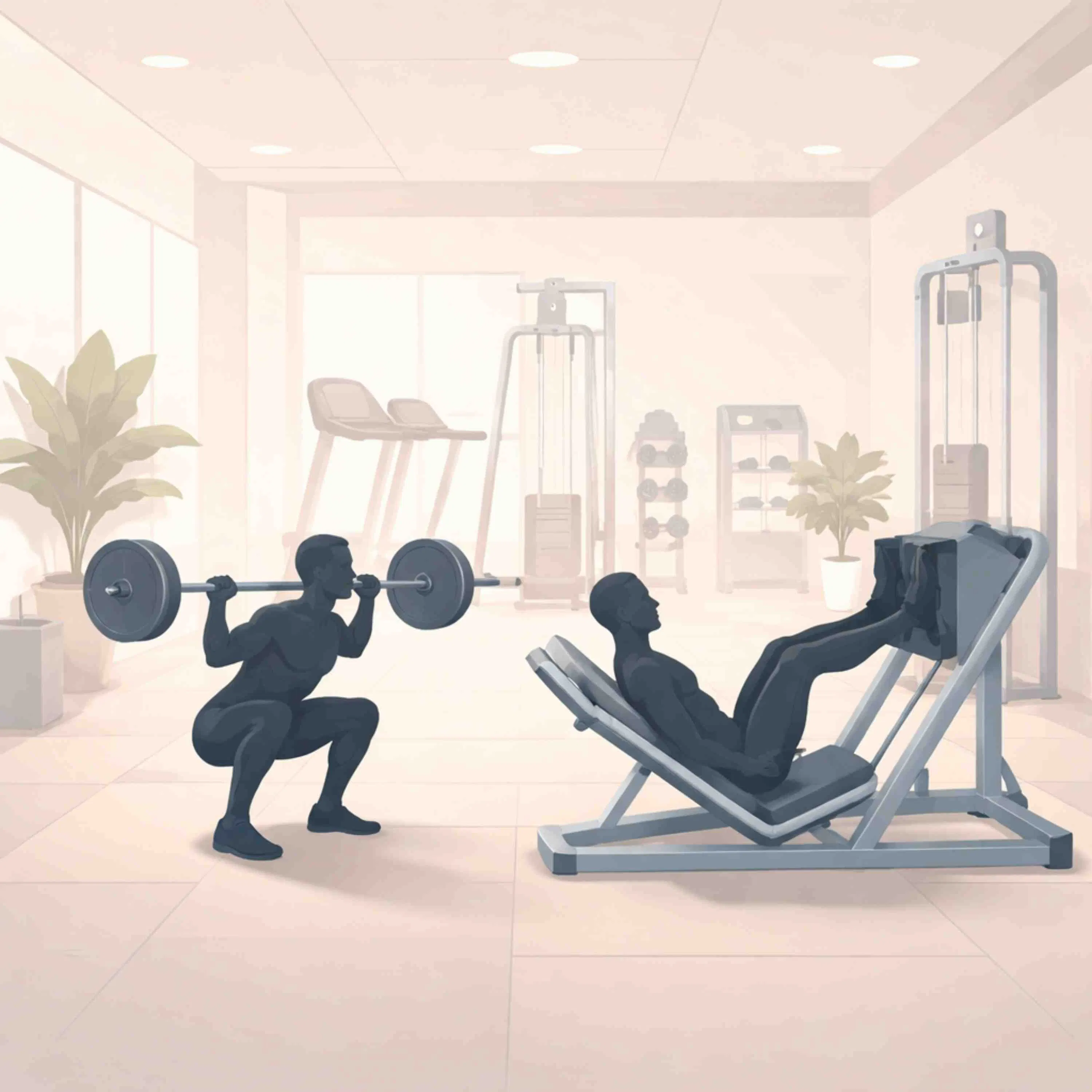
I often see people doing quick bursts where they aren't doing a full wrap. For example, on a leg press, they will not fully extend their leg. They'll maybe keep the legs bent halfway and do quick bursts of maybe 10 to 20, and then they'll stop and rust and then repeat. If you could clarify for me, what is the correct way to do a wrap? Thank you. Thank you for your question, Linda. I hope you're enjoying resistance training so far. For me, it's one of my favorite parts of my workout. Now I'm willing to guess that your observation of others at the gym is shared by many. On any given day, if you really take a moment to notice what everyone else is doing in the weight room, you'll find folks performing a variety of routines using different numbers of repetitions and sets, different exercises, and of course, as you mentioned, Linda, different form. What's so interesting about exercise and, well, actually, nutrition for that matter is that some exercises go in and out of favor.
For example, think back to the 1980s when aerobics were in style. Think jazz or size and spandex, or maybe not, that's not an appealing visual. Moving into the 1990s, fitness videos like Tai Bo and home gyms like Bo Flex were all the rage. The early 2000s brought us P90X and insanity, which emphasized functional high intensity training. And now we have spinning yoga, CrossFit, Baray, Zumba, and the list goes on and on. Between all of these training styles, we often find mutations of sorts, where folks will follow the general premise of the style of training they prefer with some modifications. So my long-winded point is this. It's hard to keep up with all of these trends, so the fact that you're seeing more and more folks not performing reps at their fullest range of motion is not surprising. And this is because this has gone in and out of favor since bodybuilding was all the rage back in the 1970s. So trends come and go. And this seems to be a trend that's kind of researching at the moment.
Now I'll start by saying there may be good reasons why folks only perform partial reps. Sometimes performing a movement through its full range of motion can be painful. For example, when I first trained someone to perform a standing squat just using their body weight, I may not have them perform a deep squat so that their bottom touches the ground before they stand back up. Instead, I may have them stop halfway so that their bottom is parallel to the ground as if they were attempting to sit in a chair. This is because it may be too painful or too much stress on their knees to perform a full deep squat. The same goes for performing bench press or chest presses. I often don't have folks lower the barbell or the dumbbells all the way down to their chest because it may place too much strain on their shoulders and elbows. So, partial reps can be a nice way to ensure safety and prevent injury or further damage. But let's say you do have the ability to use your full range of motion without any aches and pains. Would it provide you with similar strength gains?
What's unfortunate is that there aren't many published studies examining the effects of partial reps versus full reps and how it affects strength. Much of what we know is anecdotal, meaning you'll get so-called experts talking about the benefits of partial reps based on their experiences training others. But because this was not a systematic analysis, all sorts of biases can pop up. Some exercise physiologists believe that performing partial repetitions is ideal because it forces you to engage your muscles through the entire repetition. So, for example, when you use the full range of motion, the argument is that you're not engaging your muscles at the very top or very bottom of that movement. So, using my example of performing a squat, if we were to perform squats using the full range of motion so that our bottoms have to touch the ground with each rep, would be really be engaging our muscles at that moment when our bottoms actually touch the ground. Some say no, that at that point when your bottom touches the ground, you're no longer engaging your leg muscles, more specifically the quadriceps.
But I will say that this is a bit short-sighted. Performing repetitions through their full range of motion, when it's safe to do so, can potentially prevent injury and promote flexibility. When it comes to whether strength gains are comparable using partial reps as opposed to full reps, again, the data are limited. First, there aren't many published studies, and second, those that have been published used only a few individuals and looked at them just for a short period of time. Add to this the fact that they only examine one or two moves, like bench press and squats, for example. They don't necessarily study how it affects shoulder presses or one arm rows or bicep curls or lat pull downs or tricep extensions or exercises performed using machines. So we really can't say with any confidence how effective partial reps can be. So what's the bottom line then? If you are willing and able, aim to perform exercises using the full range of motion. If it's uncomfortable to do so, go as far as you can through the range of motion but stop before you feel discomfort.
Then gradually see if the discomfort goes away with time and practice. If it does, increase your range of motion again but stop when it feels uncomfortable. Really, the key is to concentrate on the work you're doing. Imagine going through that full range of motion and your muscles getting stronger as you perform each rep. Think about how this exercise is going to help you feel your best. This way, you're going to be in tune with your body as you perform every single repetition of every single set to minimize injury, maximize your gains and help you feel your best. A thoughtfully built wardrobe comes down to pieces that mix well and last. That's where quince shines. Premium fabrics, consider design and everyday essentials that feel effortless to wear and dependable, even as the seasons change. Quince works directly with top factories, no middlemen, no brand markup. Their cashmere is 100% Mongolian, the same grade luxury brands use and I'd highly recommend checking it out.
Like their cashmere polo, it's incredibly soft and feels expensive but it's actually affordable. Stop over complicating your wardrobe. You need a few pieces that actually work. Right now, go to quince.com slash OHD for free shipping and 365 day returns. That's a full year to build your wardrobe and love it. And you will. Now available in Canada too. Don't keep settling for clothes that don't last. Go to q-u-i-n-c-e.com slash OHD for free shipping and 365 day returns. Quince.com slash OHD. If you're a small business, the right hire can be make or break. Hoping the right people see your job posting isn't the best growth strategy. When the pressure is on and you need the right hire, this is a job for sponsor jobs. Join the 3.3 million employers worldwide that use indeed to connect with quality talent that fits their needs.
Spend less time searching and more time actually interviewing candidates who check all your boxes. Less stress, less time, more results. When you need the right person to cut through the chaos, this is a job for indeed sponsor jobs. And listeners of this show will get a $75 sponsor job credit to help get your job. The premium status it deserves at indeed.com slash podcast. Just go to indeed.com slash podcast right now and support our show by saying you heard about indeed on this podcast. Indeed.com slash podcast terms and conditions apply need to hire. This is a job for indeed sponsor jobs. Thank you again for the question Linda. Now if you want to send your questions in and get a copy of our optimal living daily workbook for doing so, you can email them to health at oldpodcast.com. That's health at oldpodcast.com.
Or if you want your voice played on the show, come by oldpodcast.com slash ask. Or you can do it the old fashioned way and call in your question. The number is one 61. I love OHD. That's one six one four five six eight three six four three. Thank you so much for sending me your questions answering them is one of my favorite parts of this show. All right, that's another Q&A edition of optimal health daily. Thank you so much for listening every day and all the way through. I hope you have a great start to your weekend and I'll see you back here tomorrow where your optimal life awaits.
More episodes
More from Optimal Health Daily - ARCHIVE 1 - Episodes 1-300 ONLY

3328: Resistant Starch - The Things You Need to Know by Aidan Muir of Ideal Nutr...
Optimal Health Daily - ARCHIVE 1 - Episodes 1-300 ONLY

3327: What I've Gained From Exercise That's Way Better Than Abs by Josie Michell...
Optimal Health Daily - ARCHIVE 1 - Episodes 1-300 ONLY

3326: 3 Utterly Obvious Ways To Build Wealth by Jeff Rose of Good Financial Cent...
Optimal Health Daily - ARCHIVE 1 - Episodes 1-300 ONLY

3325: Creativity as a Wellness Practice by Kathy Robinson of Athena Wellness on...
Optimal Health Daily - ARCHIVE 1 - Episodes 1-300 ONLY