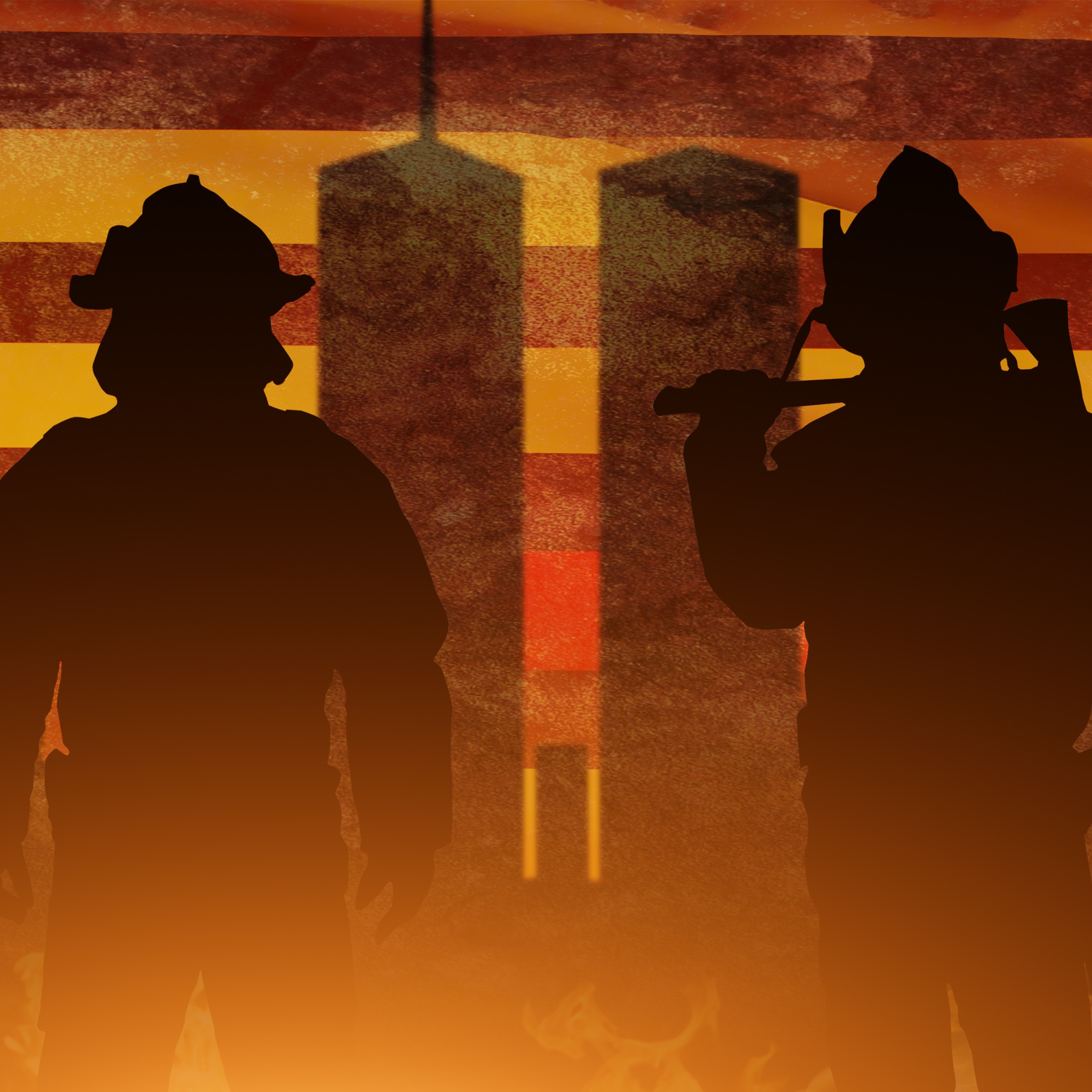
A NEW ORLEANS FIREFIGHTER’S 9/11 STORY: When America was attacked, four New Orleans firefighters headed straight for Ground Zero
About this episode
Get every episode summarized
Each time Newell Normand publishes, we email you a written briefing from the transcript — the topics, who appeared, and any specific claims, with the ad reads skipped.
Email me new episodesFree for 3 shows. No card needed.
Hosts & guests
Transcript ready
150 searchable segments. Every word is indexed and playable.
Full transcript
Newell Normand — A NEW ORLEANS FIREFIGHTER’S 9/11 STORY: When America was attacked, four New Orleans firefighters headed straight for Ground Zero. Machine-transcribed; use the interactive transcript above to jump the player to any line.
A lot of people jumped into action in the wake of the 9-11 terror attacks, including Billy Shanks, who joins us now on the live line. Billy is a retired district chief from the New Orleans Fire Department. Hey Billy. Hey, how's it going? You know, I'm more in my thoughts and emotions and feelings today than I thought I was going to be. I don't know what it is about the 25th, but it's really gotten me. How you doing? Hey, well, I'm doing fine, you know, 25 years ago, just like everybody else, I saw what was going on on television. And being a firefighter, it was devastating to see fire and walking in that building as it was coming down. And that's when me and some of the guys on rescue, David Nick, Joe Canfield and Robert
Tour has decided we needed to go to New York to go do whatever we could to help our brothers out. And so we made the trip up there. You know, it was a few weeks after because we had to make arrangements to get up there. It was it was an unbelievable trip. So here you are watching it unfold. Were you on duty or off duty on 9-11? I was off duty that day. I was getting ready to go on my side job and my wife came outside and called me and said you got to come see what's going on in New York on the news. And I didn't go on my side job that day. I just stayed glued to the TV and then I just started making phone calls about, you know, I told my wife at that time I said I got to go up there.
So you and your co-workers develop this idea that becomes a plan that you then you put into action. Then I really you're going to go up there, but you're going to take fire apparatus and you're going to go up there because obviously they had lost so much of what they had in New York because all companies responded to the towers as they were being attacked and before they came down. So suddenly now they are not just personnel, but equipment too. We're very compromised for the New York fire department. So tell us how that unfolded and what you guys did and what the trip was like getting there and what happened when you got there. Well, I reached out to Chef Emma LaGasse because I had a personal friend of mine and he had ties with the New York fire department with them coming on his show.
So he gave me a phone number to a gentleman in the union up there who I reached out to and the first thing out of his mouth was thank God you call. We need you up here. Now what they wanted us to do was to stand in at funerals because you know he said usually we have five to ten thousand men at a fireman. He only said we had 343 men die and so we would like y'all to come up here and stand in for the funerals. We would like you to go visit firehouses and that's what we did. You know just us four guys that feel like we made a big impact up there because we would go to these funerals and after these funerals they would have like a like a celebration of life and we didn't talk to these guys about 9-11.
We talked to them or any other subject and if they wanted to open up they would open up. That we had these guys laughing and smiling probably for the first time in weeks and it was amazing. It was to the point where these guys were asking us hey can y'all come stay at our firehouse and just because they wanted somebody there to support them and something other than the devastation. Talk about something other than devastation and that's what we did and so you know I was happy we could make an impact on these guys. You know if anyone knows how to turn a funeral into a celebration of those who have died it's New Orleans. I mean we have the tradition here of the jazz funeral that begins as the dirge but ends
in the second line of dancing and celebrating and what a great gift that you could bring from New Orleans to New York to help these firefighters, their families and their fallen brothers and sisters to realize that it's okay to celebrate their lives not only more in their deaths. Exactly. Exactly. You know we brought things up there to these guys we cooked for them. We helped out in any kind of way. You know the biggest impact was like about a week after we got back I had one of the union guys called me up and he said out of the thousands of people that came up here he said I don't know what you four guys did.
He said that we've gotten more phone calls about the New Orleans guys. He said I said we didn't do anything. We just went into the friend of these guys and gave them a hug and sat down and just talked to them about anything they wanted to talk about. We were an ear to them and we would add to support and give them a hug and that impact lasted to four years later when we had like 700 New York firemen that signed up to come to New Orleans after Hurricane Katrina. They remembered you guys. Oh yes. Yes. I had guys from the fire department calling me up the night before Hurricane Katrina telling me that they want to come down and help in any kind of way.
And this was the night before Katrina and you know how New Orleansians are. We're going to be alright. Just a storm. But they all came down here and supported us. Yeah. Some great, great stories of friendship, camaraderie and just doing the little things in the aftermath of an unbelievable tragedy. Billy Shanks, thanks. Thank you to you. Are the other three guys still with us? Yes they are. One of them is still on a job. Wow. Which one is that? David Nick. Alright. And what are the other two names? Tell me again. Robert Torres and Joe Canfield. Well thank you to Billy, David, Robert and Joe for being the New Orleans guys. Or even though you packed your gear and thought you were going to go up there and help them fight fires, you helped them fight far better causes than that.
And you really clearly, the New Orleans guys, as you said, they referred to you played in a very important role in helping the men and women of the fire department up there in New York. I'm glad that we could talk to you on this anniversary. 11. You're very welcome. Anything else you want to share before we let you run, Billy? Yeah, I just want to share with everybody. I just want everybody to remember the lives that will last that day. The first responders, the police department. I want you all to remember that we were together at that point in time as a country. And we need to come together again and go give a, go give a firefighter or a policeman or a hub today. And I think that'll go a long way with the first responders. Billy, thank you so much for what you did and what you've done. And for joining us here 25 years later, you know, I thought for the last several years,
9-11, it felt like a distant memory. It felt like a piece of history. But for some reason today, and I don't know about for you, but for me, the brain has brought everything right back to the forefront. It feels like it was just yesterday. Yes, it has. It's hard to believe who's 25 years ago. Thank you, Billy. We appreciate you. You're welcome. All right. I'm Dave Cohen, Infra Newell Norman, 2,977 people died in the September 11, 2001 terror attacks. And the 19 hijackers. And thank God for the people on that plane that they took down in the field in Pennsylvania, because otherwise that number would be even higher, whether they were going to the White House, the US Capitol, the Sears Tower, wherever they were headed. Those passengers on that plane having learned what had happened to the others
made the ultimate sacrifice and made sure that plane could not be used as a weapon, even though they knew they would die in taking it down. I'm going to open up the lines after this. 504-260-1870. Let's just talk. Like Billy said, he did with the firefighters up in New York. Let's just talk on this 25th anniversary. If you want to tell me where you were, what's your thought? Where we are now, we'll begin the conversation after this. On this anniversary of the 9-11 terror attacks on WWL.
More episodes
More from Newell Normand

Full Show 9/11/2026: Remembering the attack on September 11, 2001, 25 years late...
Newell Normand

The New Orleans Saints are gearing up for their first preseason matchup against...
Newell Normand
LSU fans have to adjust to the fast-paced offense Lane Kiffin has cultivated
Newell Normand

Hour 2: The WWL Callers Remember 9/11 25 Years Later
Newell Normand