About this episode
Get every episode summarized
Each time Newell Normand publishes, we email you a written briefing from the transcript — the topics, who appeared, and any specific claims, with the ad reads skipped.
Email me new episodesFree for 3 shows. No card needed.
Hosts & guests
Transcript ready
438 searchable segments. Every word is indexed and playable.
Full transcript
Newell Normand — Hour 2: The WWL Callers Remember 9/11 25 Years Later. Machine-transcribed; use the interactive transcript above to jump the player to any line.
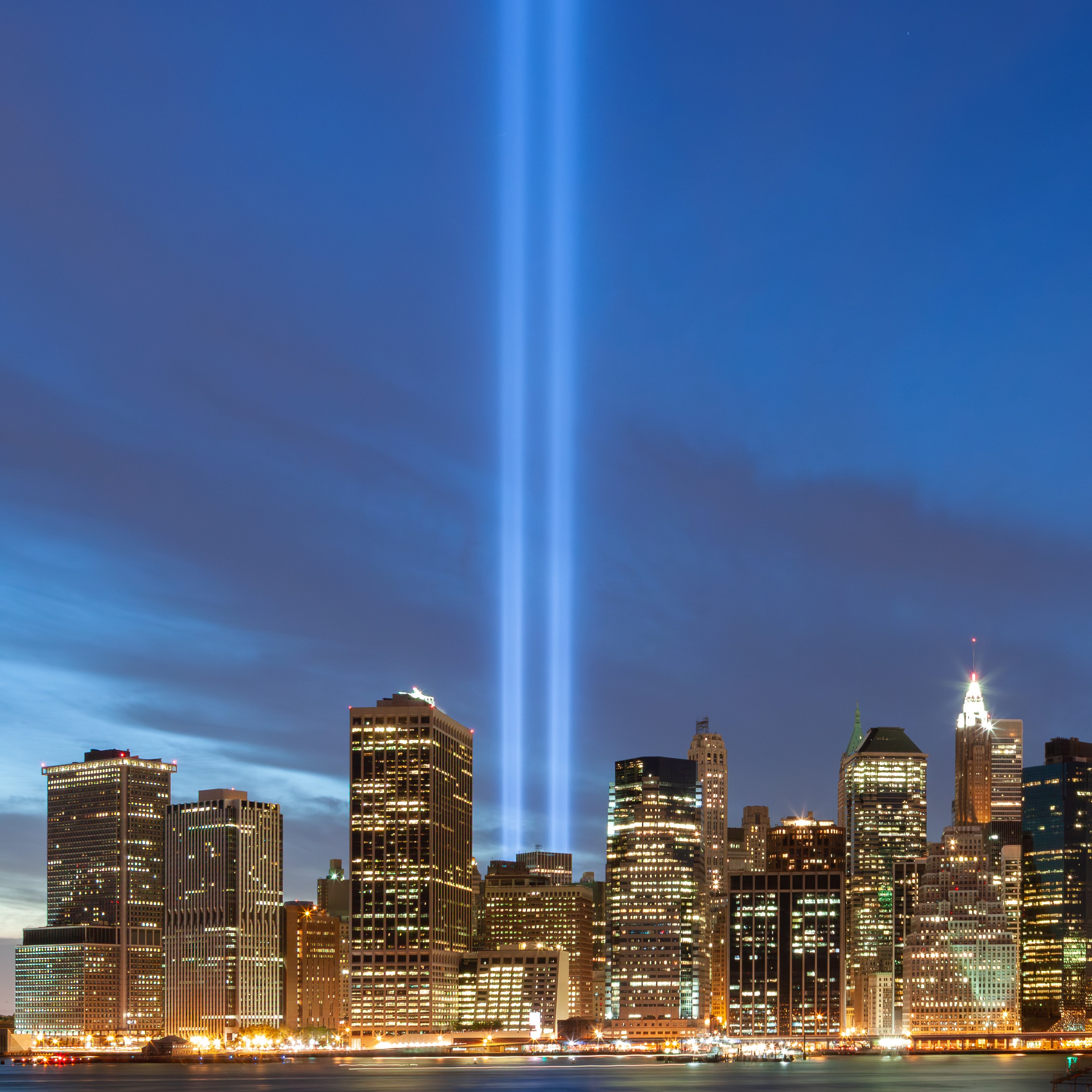
25 years ago today, I remember vividly, being on the radio as part of the morning show, and starting to do updates on the breaking news that an airplane had crashed into one of the twin towers of the World Trade Center in New York. As we were on the air covering this breaking story, we watched in horror as a second plane crashed into the other of the twin towers. In that moment, our lives dramatically changed. We knew right then. We had considered it. We had thought about it after the first plane hit. But I wanted to believe it was an accident. I wanted to believe that an air traffic controller or a flight control system or a pilot had just made a horrible, unbelievable mistake.
But when the second plane hit, as we saw it live on television, we knew we were under attack. It was difficult to continue to do this job. It was difficult to continue to deliver the news because I felt the way I had never felt before. I didn't know what it was like for someone to successfully attack America. I didn't know what it was like to live in a place where you never knew what was coming next. To live in a society where now we had to fear, attack explosions or worse at any moment. People around the world knew what that was like. People across the globe had been living like that. But we never lived that way in the United States.
It had never happened before. I remember as time allowed getting my wife on the phone, she had called me and the newsroom told her, well, Dave can't come to the phone right now. And she said, well, why not? And they said, turn on the radio. She had been getting the kids ready for school. She had been going through her normal routine. She didn't know. But a few minutes later, I was able to talk to her. I was able to call her back. And we didn't know what to do because we didn't know sleeper cells had come awake, come and did ear aircraft and we're killing Americans by the thousands by the hundreds at least. And we were going to be able to get to the end of the day.
Were there more sleeper cells? Were they going to start bombing more places and more things? Were more planes going to come crashing down? We had a quick discussion on whether or not she should go pick the kids up from school. We had a baby at home, a preschooler and two kids in school. Were schools about to become targets? Were there sleeper cells in a matter? We didn't know. But suddenly our brains had to go places they had never gone before. Every aircraft in the world was being grounded, ordered to land immediately at the closest airport. We had a lot of people in some places that were unbelievable. Talk to someone today whose boss was forced to land in a tiny town in Canada and stay there for a week. Others were forced to land in countries all across the globe, cities and states across
the US with no way to leave those places once they got there and no idea what would happen next. I've heard from people who were on helicopters going to and from oil rigs in the Gulf that suddenly fighter jets were next to their choppers and they were being told to land immediately and if they diverted from the path to the nearest landing, they would be shot down. Our world was so different so fast and maybe it had been coming and we should have seen it. Maybe the warnings from Osama bin Laden and others fell on mostly deaf ears but I never thought that would happen here. But it did. We had no idea what was next. My brother was in school in New York at the time.
I didn't think he was at the World Trade Center but I didn't know and it was hours and hours before I was able to get him on the phone and find out he was okay. They had stopped all the buses, all the trains, all the subways, all the ferries in New York. He described to me how people were literally climbing out of the subways up ladders through manhole covers and it looked like ants coming out of an ant pile and then people buy the tens of thousands just walking down roads and across bridges to try to get home. Phones weren't working because the circuits were overloaded and we were under attack for the first time in any of our lifetimes. Here we are 25 years later. Many of those fears have faded. Many of those concerns have been calmed but should they be?
Are we as vigilant now as we should be? Or are we vulnerable to it all happening again? Let's talk about it. Where were you on 9-11 and how do you feel about it now? Dan, thanks for calling you're on WWL. Morning Dan. Good morning, how are you? It's getting me harder than I thought it would but I'm alright. What's your story? My story is, Dave, I'm from a superintendent of fire and Jefferson Parish, chief of the NASA's materials division. As a matter of fact, I started the NASA's materials division which was one of the first in the country. I was on the Agent track with the National Fire Academy in Emma Square of Maryland. I came with content expert in writing a class of NASA's material and taught there for
a number of years. 9-11 must have changed your job, didn't it? Dave had changed my job and I really put a light on the exposure of the emergency services in our country. When I was teaching, we would do exercises and I would constantly preach that one day, especially the small apartments around the country, one day you're going to run into an incident that is going to exceed the capabilities of your department and never dreaming that that would happen in New York City, that they would have an incident that would exceed their capabilities. We had incidents before that that it did, the Livingston Train to Railman, you may recall
over near Ham and it exceeded their capabilities. It trained the railman a couple of years ago in Ohio that incident exceeded their capabilities and Katrina here exceeded our capabilities. So, going back to the World Trade Center, initially that was a, has a materials call, it was a plan into a building. Generally protocols for ASMAT, or you identify the problem and isolate them, unlike one of a structure fires, pulling in and putting the wet stuff on the red stuff as quick as possible. But it was also a high-rise, protocol for high-rise established command operations in the lobby. And one that never collapsed on top of them before?
Well, you know, the building had an explosion, they tried to blow it up several years before that. And they were in the parking garage. And whoever thought that building would come down like it did, but when you think about the fuel heating that metal and the metal weakening from the heat, once that building starts coming down, that's it. It's going to go as it did. The pilot performance took the biggest hit, as far as losing members, ASMAT took the biggest hit of a specialized unit. What had happened that day, they were having a drill. And they had extra guys that come in to take part of the drill.
And the call came in, they all went. And they were in the building and when it came down. So it was more than 300 of them. That was stating. Yes, it was devastating. I think for every fire instructor in this country, it opened our eyes and said, you know, what? I think we really need to look at our protocols and there may be a time to change. I'm not sure that the change has taken place. Hopefully it has. But a lot of money came to the emergency services following the World Trade Center incident. Yeah, let me ask you this, Dan. I know. My fear is we talk about Hurricane Abnesia down here that it's been 20 years since Katrina.
Do people forget? And now it's been 25 years since 9-11. Are people going to forget or not have any memory of? And are we going to let our guard down and not be as prepared from a first responder standpoint? A lot of changes were made in the light of 9-11. But have we now in this day and age forgotten why we made those changes? And do you think that first responders are as prepared now as they should be in the event of another mass casualty event like 9-11 or something different that we haven't even thought of? Dave, that's a great question. And I'm finishing a book now that deals with a lot of that. If I answer your question, let me say this first. The fact that we have made an emergency service die with the generation. For some reason it's not passed on.
We forget. As a society, we forget. And we don't remember why we made the changes we made. Even though they may see it in a manual or they may read about it in a policy or they may not understand it from history, I guess it's human nature that we just go through these cycles. Well, I don't think we forget. I don't think we'll ever forget this incident in our generation. With the next generation, let me back up. That's what I meant as a society we forget, not as individuals, but as a society. Right, that's correct. That's a society that went through this and made advances, fails to pass it on. It makes sense. And it dies with the generation. So those advances that we made were not passed on.
So that brings us to this point when we're vulnerable again. I'm not sure. Now, how does this happen? You know, you go to fire parments and now and other organizations and their instructions and classes going on. A lot of these classes or canned classes, the group sits there and walks as a tape presentation with no live instructor, answer questions. When you get into the emergency services, you need someone there that stays a breath of everything that's taken place and advances into the next generation. I hear you loud and clear, Dan, and I think that we do have that societal ebnesia problem.
You couple that now with the bigger problems of shrinking workforces and more and more computers, robots, automation, whatever, artificial intelligence, having to take the place of humans. And I think you make some very strong points that it is on us to make sure the next generation fully embraces understands and appreciates what happened before so it cannot happen again. Although the other's argue history is doomed to repeat itself. I'm Dave Cohen-Daron Nick. Your calls are up next on WWL. My emotions, one person text us at 504-2601870 on the Aquinar Jewelers talk in text line. My emotions about 9.11 now are the same as they were 25 years ago. I was furious then and I am furious now.
Now it says I was a security guard on 9.11. My job included checking several buildings near MSY. I was used to seeing and hearing jets all the time. It was surreal and eerily quiet in that area. A lot of people forget that every plane in the world was grounded once it was clear what was happening. It was no flying anywhere until they could make sure that they could identify any more threats and not take any chances. Darren thanks for calling you on WWL. Hey Darren. Hey Dave how's it going? Alright how you doing? I'm doing well Dave this is one of the best shows you have ever put on because I believe some people have forgotten what happened to our country on 9.11.
I was a branding and when I say branding I was days out of school. I have a network engineer and I was installing some equipment at the FBI office in Jackson, Mississippi. Oh goodness. And the ASAC walked in, the special agent in charge walked in and he said who are you and what are you doing? And I told him he says get out. So at that point I'm thinking oh god I did something wrong I'm going to be fired and I called my boss and I told him about it and my boss said go find a TV and then head home because you're fixing to go to Washington. And for the next 10 years I traveled between airports across the country and Washington DC and home here in South Louisiana to install networks with the TSA and do all this
computer work to keep our country safe. And today 25 years later I still support our first responders in a different capacity to go remains the same is to make sure this never happens again. Darren you have a unique perspective on this being that your employer obviously was contracted by the federal government before and after 9.11. So let me ask you this. Were you well evaluate for us what was the status of airport security before 9.11 and then as they created this new agency the transportation security administration and you got to see firsthand by installing the gear they would use to keep us safe. How much did we advance that security and do you think it's adequate today to prevent another 9.11? We have advanced it.
We have in the majority of our airports I'd say 99% of our airports. We have advanced using technology using best practices from places like Israel, the place of legs Japan. We have made these advances. However as soon as this was put in the hands of politicians it became chaotic. Why do I need to take off my belt buckle at an airport check point? You're patting me down. Why do I need to undress at the airport? Your ex-murray machines can tell you everything you need to know.
Now on the flip side of that we did have what the Richard Reed incident where he stuffed the folds of his shoes with explosives. But those are few and far between. Today I think while we do have good security we need to upgrade the people, some of the people at the check points. Some of these people have no idea what 9.11 was about. They have gotten a little lost in the security measures. Do I feel safe that today they absolutely feel safe enough? I don't think we should ever feel safe enough because it can happen again.
We know that there are sleeper cells. They just busted one down here in Oma. Not anything big. But these were people that were being radicalized. And it does scare you. It scares me from my grandchildren. I have a six and four year old grandson. I think they are experiencing what they are going to be like. You know Dave from your coverage of everything over your years. If you put anything in the hands of politicians they are going to mess it up. Darren I appreciate the gods. That's the scary part is that it's in the hands of politicians. Thank you Dave. I enjoyed our conversation.
Glad you called in. Thank you for sharing your unique perspective with us on this 25th anniversary of 9.11. And something else I think we should point out is all the attention that the 25th anniversary is getting now. All of the documentaries, all of the posts on social media, all of the radio talk shows, all of the news coverage. We don't know if that's not going to inspire someone to say, let's go do that again. Or come up with some very different but equally as impactful plan to try and outdo or bring a new wrinkle or expose a new vulnerability. So I'm kind of having some of those feelings. I haven't had in many years like I had on that day of feeling like we'd never felt before in this country, at least not in any of our lifetimes.
Knowing what it felt like to live somewhere where you had to wander if at any moment something or someone could explode and kill us or those people we love. Arty, thanks for calling you're on WWL. Hey Arty. I used to work for a very large insurance company and I lived in DC and I would have to go to number two world trade because that's what we had on office. And I absolutely hated it because the building had a sway in the towers and I've got labrenthitis so I always get dizzy and have to take breaks to go outside. How high up in the tower were you? 26th tower two. Well we moved the February before over to Wall Street and a lot of insurance companies
worked in the tower and there was a woman I did international insurance. A lot of insurance people died in the towers but there was a woman that I was proselytizing to about the Lord and she turned me in in human resources and said I shouldn't be doing that because I was a boss and on 9-11 a man jumped and part of the splatter of the body was on her and she lost the ability to speak and several weeks after that she gained her ability to speak and she called me and asked me to pray for it. It was kind of strange but it was really weird big in DC living in a city they got attacked and you're seeing the smoke from the Pentagon because the smoke took it three days after the fire. But people were nice doing that period because up there they're not really nice up there.
That's honest but they were very very nice. You know we've lost even in places where people are more civil and nicer we've lost some of that in our society today and you know I've talked in the past about how sadly when we don't have someone else to fight with when we don't have an Osama bin Laden or we don't have Hitler or we don't have a foreign enemy. Often we see and we've seen this throughout history here in the US we start fighting amongst ourselves and that was the only silver lining of course to 9-11 is that it did bring out unity in people across America. It did bring out the best in people. It did make people want to help each other and come to the aid of others and I'm not
saying we want another 9-11. I'm not saying we want to be in another full-fledged war with anybody but I think you make a good point that it's sad that it takes tragedy or war or common hate to make us get along here at home. Yeah, you're right about that but that's just my story and it's a sad day. Never forget it. Are you do you feel like we are doing enough now to protect our America and to protect our cities and our and keep terrorists from being able to do something like this or different again? Absolutely not. I've got friends who still work in the Pentagon and they're scared to death that I don't want to quote the numbers but they said they know that there's a lot of people that walked over the border that want to do harm to the US and they can't find them where they're at. There's a lot of fear off the record up there in Washington and the Pentagon.
I appreciate the call and you're joining us on this 25th anniversary of the September 11th terror attacks. I want to hear from you at 504-260-1870 and the Oakland Heart Jewelers talk in tax line. It's good sometimes that we just talk about something like this that we remember and we share where we were and what we felt and we look at where we are and what we're feeling now. We're remembering 25 years ago today the feelings we had, the thoughts we were thinking and the emotions that were going through us as terrorists attacked the United States of America, killing 2,977 people on 9-11. Anymore would die afterwards as a result of 9-11. What are you thinking? What are you feeling? And do you think that we remember it enough that we have imparted our memories on the next generation enough so that we are vigilant enough so this does not happen again?
James, thanks for calling you on WWL. Hey James. Good morning, my name is Great Conversation. I want to see if I can lighten it up but also enlighten people. In 2019, as a lady I think her name was really murky. She was 82 years old, looked 82. I hope you don't listen to this because I don't want to retaliate. Someone broke into the house. I think the guy was about 24 years old and it's 82 year old woman who ripped his dudes butt. He didn't know she had been working out and was awake left out. That is kind of what we've been doing lately. We look around and we in the last 18 months or so I think we've bound by seven or eight countries, one even on Christmas day because Nigeria. On this continent that we share with other countries, we've pissed off every country on this continent and some of the nicest people in the world.
These kind of things that make us not get along with people didn't start yesterday. Just like what's going on in the Middle East, some people were saying it started in 1948 when we recognized Israel. I would say it started in 1948 DC when Israel and Isaac couldn't get along. I was going to say I think that in the Middle East it started not hundreds, not dozens, not scores of years ago but thousands of years ago. Sadly that part of the world has been filled with hate and conflict as long as humans have walked the earth it feels like. That is my point. That's part of our DNA so to speak. So to get to my major point, I don't think we remember enough and we seem to be lying to ourselves.
One of the other things that's going on today is REN. And I hear I was talking about what this happened 47 or 50 years ago. No, no, no. We've been in these people's business and we've admitted that we've overthrown their government 1954, 1953 or whatever and caused them pains from the 50s until the 1970s. We need to look at how we're treating people. And don't be surprised that like how you felt and how I felt on 911, they just want to give us a taste of what we've been given them for years. Well, I'll tell you this James, I had a guest on not long ago who was actually a hostage in Iran. And during his time being held captive got to learn a lot about Iranians. And what he told me was that Iran has wanted the war that is now underway since the 1950s.
That they have waited for this moment since then that they have never forgotten and will never forget and have been damned and determined to at some point unleash their revenge on America. So while I understand your concern, while I get what you're saying that we are picking at a festering sore while we are putting salt in a wound while we are maybe awakening more hatred. What he told me is that hatred has never gone away. And so on one level, I agree with you that we should only engage in these conflicts when they're absolutely necessary because there will be intense retaliation.
But on the other hand, as soon as I finish, we got a few minutes. On the other hand, if they were really trying and they were really close to developing a nuclear bomb, I have no doubt based on what I've learned. From this gas and others that as soon as they have it, they won't hesitate to use it on America. And that's probably true. So I don't know. That's probably true. So it's just determining is now the time to stop them or not. I don't know. But I know that we did. And that's this is where we are. Go ahead. I agree with you. It is time to stop them. But my point is there's a way to do that. Is it continually to do what we did to cause this or help look at what we did to help create this or to do like what a guy named Insok Rebeam did? Most people would consider Israel as one of the strongest military forces in that region.
But Insok decided that he wanted to help peace. And he gave up a whole lot to give peace because he and I wish I could get this quote right. He said it is a lot cheaper or easier to talk for years than to be at war for three days. And they killed this man for that type of attitude. It's all people killed him. So my question to most people who think they know is going on over there is how many hot digits do we have in Iran today? We don't even talk about that. This people in Iran that we've left there since we first bombed them last June. But they don't get mentioned in a whole bunch of things. We just not learning from the incidents about history. James, I appreciate the call and I appreciate your concern. I really do. And I think one thing that resounds with me from what you've just said is that we don't understand people in the Middle East.
And I think you're right. I don't know that we ever will. I don't know that we as Americans living in a place where we have not had generational institutionalized hate against others for thousands and thousands of years. We're only 250 years old as a country. But we don't still hate the Germans because of World War II. In just a couple of generations, we stopped doing that. But over there, they hate people that they're great, great, great, great, great, great, great, going back forever. Grandparents hated because they are made to hate. And whether it's religion or territorial boundaries or whatever it is, that hate is so ingrained and so apart of who they are as a society.
That I don't know we can ever really appreciate and understand it. And it really is like two different worlds. And I don't know that we can ever effectively figure out how to keep ourselves safe from that because we can't ever really understand what that part of the world is like. 25 years after 9-11, I'm Dave Cohen. We're back after this. Someone texts us and says, for the past 25 years, we have a nation of struggled to find the sweet spot when it comes to security and defending against attacks like 9-11 and personal securities. And I think you're right. We don't want over-invasive. We don't want to be denied our freedoms, but we don't want another 9-11 either. I'm Dave Cohen. We're going to lighten things up and look ahead at the weekend in sports snacks, the voice of the Tigers. Chris Blair joins us after the news.
More episodes
More from Newell Normand

Full Show 9/11/2026: Remembering the attack on September 11, 2001, 25 years late...
Newell Normand

The New Orleans Saints are gearing up for their first preseason matchup against...
Newell Normand
LSU fans have to adjust to the fast-paced offense Lane Kiffin has cultivated
Newell Normand

Hour 1: TERRORISM THEN AND NOW: The intelligence failures that taught us painful...
Newell Normand