About this episode
Jessica Gould, education reporter for WNYC and Gothamist, talks about the newly announced NYC AI policy for schools, plus other back-to-school issues.
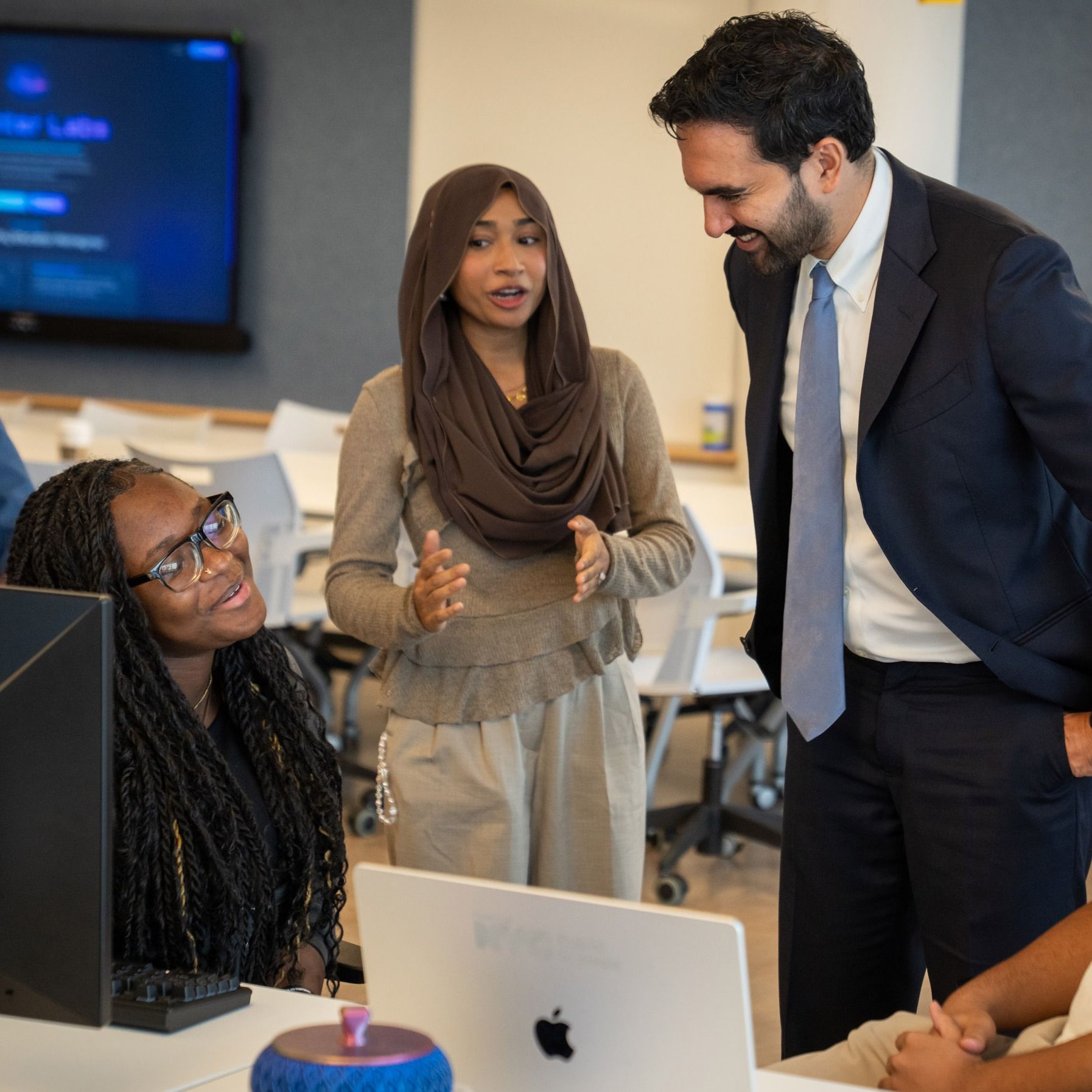
Photo: Mayor Zohran Kwame Mamdani and Schools Chancellor Kamar H. Samuels announce a moratorium on student-facing generative Artificial Intelligence (AI) use in schools. Brooklyn STEAM Center. Wednesday, September 2, 2026. Credit: Ed Reed/Mayoral Photography Office.
Hosted by Simplecast, an AdsWizz company. See pcm.adswizz.com for information about our collection and use of personal data for advertising.
Get every episode summarized
Each time The Brian Lehrer Show publishes, we email you a written briefing from the transcript — the topics, who appeared, and any specific claims, with the ad reads skipped.
Email me new episodesFree for 3 shows. No card needed.
Hosts & guests
Transcript ready
234 searchable segments. Every word is indexed and playable.
Full transcript
The Brian Lehrer Show — Back to School Report. Machine-transcribed; use the interactive transcript above to jump the player to any line.
Meet Craig. Craig manages the local haunted house. He's got a lot to juggle. Tangled cobwebs, flickering lights, and scheduling vampires. Count, it's time for your break. I'll break when I'm dead. You are dead. That's like your whole thing. You're out of Kit Kat. Hmm. Five. 15 minutes, but no longer. Good. I'm grabbing a Kit Kat too. Nobody should have to wait until they're dead to take a break. Have a break. Have a Kit Kat. It's the Brian Lair Show on WNYC. Good morning, everyone. I'm Kusha Navidar, filling in for Brian today. Coming up on today's show, we will, of course, talk about the life and giant legacy of glorious
mortgage rates and more. My guest will be former Planet Money Co-host Mary Childs. We'll also talk about the real shift in youth sports into something that might seem unfamiliar to people who played a generation or two generations ago. Travel and private leagues have been supercharged, even in just the past decade. It's now way more expensive and consuming with regular trips for tournaments, costing families thousands of dollars. I know a lot of the parents listening are probably nodding your heads right now. So we'll get into this in the next hour and we'll wrap today's show with a pre-labor day quiz with the historian Kenneth C. Davis. This one is not that easy. I'm going to be real. So here's a little hint. Maybe read an article on the history of Labor Day. Now if you want a shot at doing well on our quiz, that'll be near the end of today's show. But first, we're just one week out from the first day of school and New York City public schools is turning in its biggest assignment right of the buzzer.
Yesterday, eight days before students walk in, the city released its long awaited rules on artificial intelligence in the classroom. The city is putting a one-year pause on all student use of artificial intelligence through eighth grade. That's about 600,000 kids, two thirds of the system. High schoolers will be allowed limited use for things like AI literacy and career readiness. There are screen time rules too. Most students from preschool through second grade won't use individual devices in class at all. And there are time limits on laptops from third through eighth grade. Teachers can still use AI for lesson planning and some communication. But they can't use it for grading or for decisions about whether a student moves up. We'll also check in on the rollout of the mayor's free 2K program where providers say they're still waiting to get paid. We'll check in on his legal fight with the teachers union over paraprofessional bonuses.
And of course, how families are surviving in almost 11 weeks summer. And here to talk to us about all of it is Jessica Gould, education reporter for WNYC and Gothamist. Jess, welcome back. Thank you. So let's dive into AI. How was AI being used in classrooms through eighth grade before this policy? Well, one thing that we as education reporters have learned through this process of considering whether there should be AI and how much in schools is that it's a bit of the wild west. You know, the city when chat GPT came out, they under the Adams administration, first they banned all use of AI, then they allowed it. And then it's been in this gray area for a long time where it wasn't banned and different schools and different teachers had different practices and different ways of using it. In some cases, there were the student facing AI and teachers also use it on the back end, which as you said will still be permitted. But there's been a huge ground swell in the past year among parents and some educators and policymakers to pause, to have a moratorium, to reconsider and think about all the potential downsides there are for children in their exposure to AI on their learning on the environment.
And that ground swell against AI, which we've seen across the country, really hit in your card. And when the schools chancellor first introduced this under Mamdani, first introduced an AI playbook in the spring, which allowed more use of AI and kind of left it up to teachers about how students should use AI. There was so much pushback that he said we're going to take it back, reconsider, and now we have the rules that you just mentioned. Okay, so it's kind of like going from the Wild West to reaching a fever pitch and now they're responding to demands, kind of that movement there. Yeah, but there are of course still a lot of questions about how this is going to be rolled out as you said, it's right against the buzzer, this is kind of cramming the night before. And so pulling all this technology back is going to be hard. Yeah, let's go to a clip from Mayor Mamdani. This is at a press conference at Brooklyn Steams Center on September 2nd. The tech industry wants us to believe that AI in early education is not only inevitable, but that it is necessary. We do not see it that way.
I have yet to see a study showing that AI is beneficial for students in elementary and middle school with the exception of course of research sponsored by the very corporations that stand to profit. So beginning this school year, we will implement a one year moratorium on generative AI for students in 2K through eighth grade. Jess, that's a pretty different tone from March, kind of what you were hinting at when Chancellor Samuels rolled out the traffic light approach and student use Scott, like a yellow light. Yeah, you report that policy was criticized as vague. Tell us about the earlier policies and how we got here. Yeah, well, I think you know the yellow light was vague. It was up to teachers to use discretion about when to use AI. And I think a lot of critics felt that that left things far too open. There's a lot of concerns about cognitive offloading. You know, students not learning how to evaluate hard questions, how to write paragraphs and essays.
And so that's the pushback that led to where we are now. I think it's interesting to hear Mayor Mamdani kind of speak out against the tech industry and the tech industries influence within schools. That's a popular more popular sentiment, particularly among progressives right now against ed tech in schools in general. So it's been a real shift in course. Can you tell me more about why you find that positioning interesting? Is it interesting from a political perspective of like getting people on board with it or something else? Well, I just think that the backlash against the AI industry has been so significant in the past, you know, year. And I think that you're seeing this take place in you know schools and classrooms just as it's taking place, you know, against data centers. So from a, you know, progressive democratic socialist mayor to talk about, you know, pushing back against the tech industry.
It's interesting, especially for one who is so sort of digitally savvy as he is. That's a great point. Yeah, the social media game is high in that in that office. Listeners, we want to hear from you teachers, parents who wants to weigh in on the new AI policy. Give us a call send us a text. We're at 212433 WNYC. That's 212433 9692. Or if you want to share how you dealt with child care for this last week before school begins, we're going to talk about that in a moment. Summer was a week longer than usual because of how late labor day is. Give us a call. We're at 212433 9692. Are there any paraprofessionals listening who want to talk about the bonuses or did anyone snag a 2K spot for their two year old? We're here for all of it. We're at 212433 9692. So thousands of parents petitioned for the moratorium on AI use.
Do you have any sense of how the parents are reacting to what we got? Well, that coalition had a press call yesterday. The message was that this is a step in the right direction, but it doesn't go far enough. They're concerned about exceptions and exemptions. There are exceptions for students with disabilities who need assistive technology as part of their individual education plans. And also for students learning English, for translation. There's also questions about how much assessments that use AI or digital like I readies, one of them that's used broadly will still be allowed. Initially we heard that assessments were also exempt that you would still be taking these tests digitally. So that's a question. There are questions about these high school pilot programs and career readiness. You know, the activists who wanted a total AI moratorium wanted a total AI moratorium.
And so there are concerns about that. But you know, Mayor Mamdani and the officials say that it is important to teach students about these tools. And they're going to be giving these AI literacy courses that are new across the system as well. Do you know what age the literacy classes are for? I know it's for high school. High school, okay. Yeah. And then on the teacher's side, there is some use that's allowed to, right? Like in lesson planning, things like that. Lesson planning and you know, preparatory work, some communications. It all has to follow data privacy laws. You know, some of the activists wonder about how those data privacy laws and protections are going to be enforced and whether they'll be enforced well enough. There's also ambiguity about, you know, the programs that are already in woven into the fabric of classrooms. The school's chancellor, Samuel said there's almost 40 that they are planning to pull that they say use AI. 40 programs that were being used on the high school level that they were going to pull.
So first of all, that has to happen fast, you know, within a week. And also, the city has not, and you know, the chancellor and the mayor have not been able to say that they have a full handle on all the programs that are out there and being used. And they say that they're going to be, you know, trying to get that in the weeks and months to come and that anything that doesn't meet their standards will also be pulled. I found it interesting that chancellor, Samuel's told principals to pause software purchases until this came out. So we've got eight days and I'm sure there's a lot of stuff that needs to get bought. What does that look like to happen but week before school? Yeah, even less than eight days. I was actually talking to a principal about that and the software purchase has been hard because they do need some of this technology, including stuff that doesn't, you know, have AI, right? That will be allowed and I asked if it would be enough time. The principal I talked to said, yes, it will still have enough time, but it's really cutting it close.
In some ways, this rush on AI on a much smaller scale and also the 2K payments has reminded me a little bit of the kind of scramble to get things ready in classrooms post COVID. Since you mentioned 2K, let's go to the younger kids 2K launches next week and providers say they haven't yet been paid on Monday. The mayor called the delays unacceptable and promised $43 million and 200 new hires. You've been talking to providers. Here's here's one clip. I'd like to play Camila Farouki who runs 3K and pre K programs in Manhattan. This year because of the lack of contract registration, those advanced payments were did not come through. So we are relying on bridge loans so that we can use those bridge loans to open the schools and not just that many of the programs have taken their own loans to operate for July and August.
That's a 3K provider, but you report some 2K centers have the same problem. Will it be fixed by the first day of school? I want to explain what's been happening here because it's been hard to wrap your mind around. What happened is that all contracts for community-based organizations that provide 3K, 4K and to some extent 2K, the new 2K program is small, just 2,000 spots. But contracts were up just in the cycle of how contracts operate in June when the city's fiscal year ended. The city had not processed the paperwork. They had not solicited or in some cases just not processed what they'd already received. The paperwork from these providers need to get their contracts in. As a result, because they don't have contracts, they can't be paid. So there's no money flowing for the start of school. We've seen this happen before. We saw this the last time the contract was up.
There's something wrong with the way that the paperwork is handled and they can't seem to get it together. As a result, preschool providers and childcare providers do have to take out their own loans or their staff who are already very low pay. Go without their pay. They need money for rent, for insurance, for snacks, for kids, for paints and pencils. All these things. That money hasn't been flowing. Even when the city said, because we have this log jam with the contracts, we'll get you these bridge loans from the city. Those didn't come through either. That's why a lot of these programs are on the brink and are clamoring. I have heard in the recent days from a couple of programs who were waiting for money didn't have any who got their agreement signed just like yesterday, a couple days after this announcement.
So it's possible that things are starting to move. But this is a longstanding problem that needs to be fixed. The mayor says he's going to fix it. But a lot of these providers say that they've been through this before and some of them say that they don't want to work with the city anymore because of this. We've got some callers about AI it looks like. So if we can, let's just shift gears a little bit back to that since we just touched on it. Let's start with John in Manhattan. Hi, John. Welcome to the show. Hi, thanks. I have to take my call. I wanted to call and just say that there's a first of all that this is absolutely the right move by the city. I work in for a very large tech company and I've been working in big tech for maybe almost 20 years now, I think. And the perception that kids are going to miss out because they don't know these tools is absolutely false. I mean like absolutely false. I work with these tools very intensely almost every day and they are very dangerous for your mind like the brain drain that happens almost immediately is pretty incredible.
And they're also the kind of thing where they can do a lot of stuff, but the reality is that they're just basically an amplifier of what you know and what you don't know. So if you don't really know anything and you start using them, what you get out is garbage. You have to know a lot in order to use these tools effectively. It's like imagine that it's almost like imagine a gun that can shoot like a million bullets all at once in a giant cloud. I mean, it's very powerful, but also like, you know, really, really dangerous. John, I really appreciate that. I want to ask a quick follow up for you as somebody who works in the industry and to be clear, it doesn't sound like you're a child psychologist or in education, but do you in your opinion have a moment or a way or an age where you feel like it is appropriate to start introducing these tools to people. Well, the reality is, I mean, I'm maybe I'm a little extreme in this, but like I'm watching like my friends and my colleagues and whatever lose their ability, lose their ability to reason.
You see what I'm saying? Like these are these are adults who are professional, who are using these tools every day and already they can't do these things without the tools. So it's, it's just like, it's just like the companies, AI companies inserting themselves between us and what we know how to do and just sort of rob us of our ability to do stuff. It makes me furious because like, you know, eventually and that time is going to come soon. These tools will come so prohibitively expensive that no one will be able to actually afford to use them anymore. And at that point, these companies will be like, well, we start employees know how to do things and they won't. Thank you so much for that call. We really appreciate it. Let's move to Mike in Dittmiss Park, who's a high school teacher. Hey, Mike, welcome to the show. Hi, thanks for taking Michael. Sure. Yeah, so I teach, I teach high school seniors and I my reaction to the policy is that it's a good start. I don't really understand ending the policy at eighth grade or ninth grade, I guess. I think that high schoolers are, sorry, are on their devices the most they have the most screen time. And I think particularly the limits on screen time in in class, like school issued or school devices that kids are using.
I feel like they would really benefit for them. Also, I don't totally understand why an eighth grader would benefit from those limits, but a ninth grader would not. So for you, it sounds like having a pause and figuring it out is the right move for everyone or would you go even further than that, saying I just don't want it in my classroom in any way and you've already landed there. I don't want it in my classroom. I don't use it, but I think my understanding of the policy is that there's. That the middle schoolers have much stricter limits on just any any screen time period, not just not just the use of AI technology. Yeah, and I feel like I still would benefit from that. Also, they're on their screens a ton when they're at home and when they're out of school. And I feel like at the very least school should be a place where they don't have to deal with that. They don't have to engage with the technology that's distracting them and they can be in a different mode for, you know, six hours of the day. Mike, thanks so much for that call. Really appreciate it. I want to go to one more caller before I turn it back to you, Jess, to kind of put this into context for us. Katie from Queens. Katie, hi. Welcome to the show.
Hi, thanks so much for taking my call. I totally agree with the last few callers and I just wanted to add I'm a doctoral student in education and I study writing and reading comprehension and I, you know, the idea of AI literacy courses being a thing that exists now that they're a best practice behind is just not true. You know, there's not even agreement on what AI literacy means for high schoolers. Some people think it means protecting yourself, protecting your data, understanding how algorithms work. Other people think of it in a career readiness sense. There's just not even agreement across the board on what we should be amplifying. So I think that to just kind of toss that in for high schoolers. I agree with the last color. I don't fully understand why that was included for high schoolers, honestly. Thanks, Katie. We really appreciate that call. Okay. So Jess, we have three different callers. We had John from the industry, Mike teaches seniors, Katie getting her doctorate all kind of seem like they're saying take down screens, pause or don't include AI.
Anything you want to point out from those calls? Yeah, I mean, I wanted to, you know, mention that the screen time, they're not restrictions, they're recommendations, which is already something that some of them more, you know, anti-screen activists have said doesn't go far enough that it should be actual restrictions and, but it's, you know, no one to one devices from 2K to 2 and then recommended limits for 3 to 5 and 6 to 8. And then it's true. We don't have the same thing for high school. So it's interesting to hear that groundswell for that as well. Listeners, if you have more opinions on AI or if you want to talk about some of the other topics we're covering, which includes the bonuses that paraprofessionals are still waiting for the 2K program, the long summer vacation that has happened this summer for parents out there that are trying to figure out what to do with their kids. Give us a call or send us a text. We're at 2124339692. That's 212433WNYC.
It seems like we just got a caller who might be on the opposite side of this. I'd love to bring them down just so we can get a full picture here. Amy from Manhattan. Hi, Amy, welcome to the school. Welcome to the school of thoughts. Go ahead. Hi, how are you today? Thanks for putting me through. I am a local public school teacher. I teach STEM, so science, technology, engineering and math. I've been a part of this program for 12 years now. One of my big concerns about this announcement is, again, extremism. Moving from unlimited screen time to now no screen time to second grade. What happens to a Barack Obama's initiative of computer science for all? I understand there's plenty of things we can teach kids with computer science that doesn't involve a screen time.
But I agree with limited time, but now we're taking away. So how are we setting our kids up for success? And are we still doing a state test online now? So how are my second graders going to be able to professionally take an exam if we can't teach them how to use a computer? Amy, thank you so much. Where I stand. Yeah, yeah, we really appreciate that. Just this is not a black and white issue here. We hear Amy saying, you know, screen time can play an important role. Go ahead. Yeah, well, one thing that I think is interesting is when we had I was on the show just several weeks ago talking about the decline in reading test scores on the state tests. And one of the issues that came up was that for the youngest kids, it was the first time that the state tests were on computer only. And they have issues with typing. They don't know how to type as well. So, you know, we're getting mixed messages and mixed requirements from different parts of the education system.
Not to mention that there are a lot of teachers out there who've told me that AI2, you know, they say they can do some creative work with it that's thought provoking. That's something that, you know, I want to drill into more and better understand in terms of specific examples about that because certainly there's a lot of concern about, you know, shortcuts and not using your brain. But some teachers say that they've found ways to use it to be creative. We want to have AI continue to be part of the conversation here. So keep bringing in your calls. I do want to touch on some other important elements, though, with the time that we have left. So we'll hop back to AI in a second. But just I want to bring up another mom, Donnie move that we covered on the show, which was the bonuses for paraprofessionals. And the mayor sued to block them. You caught up with Michael Mulgrugh, president of the teachers union, the UFT. Here's what he told you about starting the year in the middle of that fight. But at the same time, we can't be naive, you know, we are going to start school year, show thousands of paraprofessionals, which really adds to the stress and the challenge overall for us through this school year.
So he says thousands of parapositions are vacant going into the year. What's the latest on that lawsuit and what does that shortage look like on the first day of school? Well, the lawsuit is going through the courts and each side is so far sticking to their sides. I think that the shortage is not new. It's been here for years, which is part of why the UFT is pushing for higher wages. For paraprofessionals who make between $34,000 a year and $54,000 a year, often working with a student or students because of often because that students with disabilities to help them in the classroom. And it's often part of a legally binding agreement in their individual education plan. So the fact that there aren't enough paraprofessionals really affects those students and the entire classroom, you know, when those students don't have the support that they need.
And it's not consistent with the law. But neither, you know, the city is arguing that neither is raising wages outside of the collective bargaining process. So does that mean there's no option there? Well, you know, Michael Mulgar, the president of the teachers union says that the way they've written these bonuses with city council is consistent with the law. The city is challenging that. That's the sort of nut of the issue here. The broader problem is that there's a workforce that is primarily women, primarily black and brown who make very little money. It's hard to keep people in these jobs. They're really important for students and for schools. And so, you know, the teachers union, I believe the contract is up in 2027. And so the city is arguing that that's when we should be having these conversations about wages.
But then that's a year away. Right. And we don't have the staff. But that's been the way it has been for years now. So a kid will get a paraprofessional one day and then go weeks without one. Yeah. Let's go to Mike in Flatbush. Hi, Mike. Welcome to the show. Hi, thanks for taking my call. I know I'm going to sound maybe like Milton Friedman saying this and not what I intended all, but you know, if the collective bargaining process led us to this point of what uses collective bargaining. It's not on the paraprofessionals to shoulder the load of the sanctity of collective bargaining when they're trying to make ends meet or not or exiting the field altogether. I think that GSA and Mamdani and all the walks advising him are missing a real coffee, you know, table issue or lunch table or whatever you want to call it. And I just think they're missing the forest for the tree. I think that they're completely off $10,000, you know, even before taxes makes a big difference.
And I'm not saying I'm on the side of the UFT. I think that they've, you know, really deprioritized powers and it's been a shame. But if this sets a precedent that like destroys the whole system, I mean, you have to question the entire process. Thank you so much. Mike, thank you so much for calling. So it seems like this is going to be an ongoing deliberation between the schools between the UFT. And in the meantime, kids are not going to be guaranteed paraprofessionals that they need. Is that fair to say? I think that that will be true for for many of them. Many of them will have them and many of them will not. Let's turn back to AI with the time we have left because we have a lot of callers there justifiably. So let's go to Dominic in Van Quortland Park. Hi, Dominic, welcome to the show. Hi, thank you for taking my call. So I teach, well, I used to say I help students learn how to work on their writing, but now I have to teach them how to write with pen and paper.
I'm old enough to know life before the internet. And a lot of our students are used to using tablets and using all this AI stuff. It's there everywhere. And even if they're just sending an email, there's a stupid AI component that suggests phrases and words. So I get all these wonderfully written but not emails that all start with I hope you're doing well because AI fits that in and it sounds right. And what we're doing is we're destroying the human voice and writing. Dominic, are you teaching the way that you grade like, is it blue books? What are you turning back to? You know, I'm very lazy and the blue books are very bulky. So I just have these sheets of paper with lines on them that I collect, but it's all handwritten. Revision is by hand. And when I have, we all feel like we're ready to start typing, then we start typing. But I insist on no technology in the classroom to the best of their ability.
We take breaks so they can make sure that the world is still functioning on their phones. And then we go back to the work in class. And there's more conversation now in the classroom and eye contact. And all those crazy things that makes us stand out as almost safe and safe as. Dominic, thank you so much for that call and for sharing your experience. I'd love to go to Jane on the upper east side as well. Hi, Jane, welcome to the show. Hi, thank you for taking my call. I'm an AI literacy advocate and work in policy. I'm working in this space for over three and a half years. I think the New York City public schools generate AI policy. Mrs. the market and two in a few significant ways. One, it doesn't address a positive vision for how we will integrate AI. The fact remains that it is ubiquitous in order for students to be college career and civic ready. They have to be AI literate.
The world economic forum just released the six hour course and that's not enough on AI literacy. There are many coasts and there are many organizations that have courses on AI literacy. But regardless, so one, our students need to be AI literate in order to do that. They need to be able to use these tools in safe ethical, responsible ways with guidance and with clear policies use policies. The other area which the so the moratorium to me makes no sense to students are using it and so wouldn't you rather than use them in our five the classroom and informed safe ethical and pro social ways. Jane, can I ask you as a person who works in policy again, understanding that you are on the policy side, not a child psychologist, child development expert is there an appropriate time in school in terms of age that you think is the right time to introduce AI then.
I understand age restrictions in early childhood for sure, but I even then not using the tools, but understanding certain AI and media literacy concept can be introduced. Youth I think middle school is again with guard rails with clear policies that students also should be engaging in designing. Part of the issue is also that our teachers have had insufficient professionals that don't. Pew Brookings I can name so many institutions and have done research on this in terms of the extent of these by students nationally, internationally and teachers without sufficient direction and professional development and guidance. Jane, thank you so much for that call really appreciate it and just I want to turn it back to you because it sounds like on the policy side there is a significant number of people talking about how ubiquitous AI is and how you can't do that. I can't ignore it so how do you think and I'm asking you to look at a crystal ball but just how does that play into your reporting as you're thinking about the direction of schools.
Well I think one of the big unanswered questions is how to handle student AI use on homework and assignments. We heard from the teacher who's doing you know loose leaf paper and writing by hand. Dominic. Yes a lot of a lot of teachers have had to completely retool how they assign homework and essays and projects. Because of this and yet I'm also hearing from teachers that it's very hard on written work when it's not done in front of you in class on pen and paper to determine if something is AI the software that is supposed to catch AI gives you a sense but you can't prove it necessarily and then I've heard from students who say that they've been accused of using AI on their work and and then they feel like they have a scarlet letter that they don't deserve so I think that how to handle the way that the tentacles of this have already gotten into all of you know the school work and homework world for teachers and students and the relationships that are between them and how those have suffered as a result.
I think the city we asked the mayor and the chancellor about this yesterday and they said you know they're working on it it's about having conversations with your kids at home and you know they'll be working with kids in school on how to you know not cheat. But but these are hard questions you just mentioned something that perked my ears especially which was the relationships suffering can you talk more about that yeah I was talking to a bunch of students in the spring. Who said that you know teachers have accused them of using AI when they haven't and they also said that they know kids who do use AI on their assignments it's just not them the ones that I was talking to of course and so they're wrongfully accused and that showers the relationship with the teacher and that there's just like mistrust that has become very prevalent between teachers and students because of this. Well we'll have to leave it there my guest has been Jessica Gould education reporter for WNYC and gothymist Jessica thank you so much is always for coming on it's always such a pleasure to talk to you thank you.
WNYC's journalism and storytelling is heard by millions of passionate listeners sponsors of our programming gain our listeners attention and their respect learn about how your organization can support WNYC and WNYC studios at sponsorship.wNYC.org.
More episodes
More from The Brian Lehrer Show

Tuesday Morning Politics: State of Iran War; Home Stretch to Midterms
The Brian Lehrer Show

The CDC and Measles Deaths
The Brian Lehrer Show

History of the War on Terror
The Brian Lehrer Show

Labor Day: Working Class; White Collar Unions; Supermarkets; Summer Songs
The Brian Lehrer Show