Labor Day: Working Class; White Collar Unions; Supermarkets; Summer Songs
About this episode
For Labor Day, we've put together some of our favorite recent interviews, including:
- As the Democratic Socialists of America rack up electoral wins during primary season, the group is pushing an expansive definition of who counts as working-class. Gothamist and WNYC reporter Elizabeth Kim and Christopher Maisano, editor of New Labor Forum, a labor journal from the Murphy Institute at the CUNY School of Labor and Urban Studies, discuss who counts as working class and why the definition matters.
- Noam Scheiber, New York Times reporter focusing on white-collar workers and the author of Mutiny: The Rise and Revolt of the College-Educated Working Class (Farrar, Straus and Giroux, 2026), talks about the conditions leading young college-educated workers to lead unionization efforts.
- Ann Larson, a fellow with the Economic Hardship Reporting Project and the author of Cleanup on Aisle Five: Essential Work, Poverty Wages, and the View from Behind the Supermarket Register (One Signal/Atria, 2026), talks about what she learned about the economy and workers when she went from reporting on low-wage work to taking a job during the pandemic at a local supermarket
- On Labor Day, listeners weigh in to answer what is 2026's "song of the summer."
These interviews were lightly polished up and edited for time, the original versions are available here:
Who Counts as Working-Class? (July 23)
White-Collar Workers Unite! (April 15)
What's Unseen at the Grocery Store (July 13)
Song of the Summer 2026 (July 20)
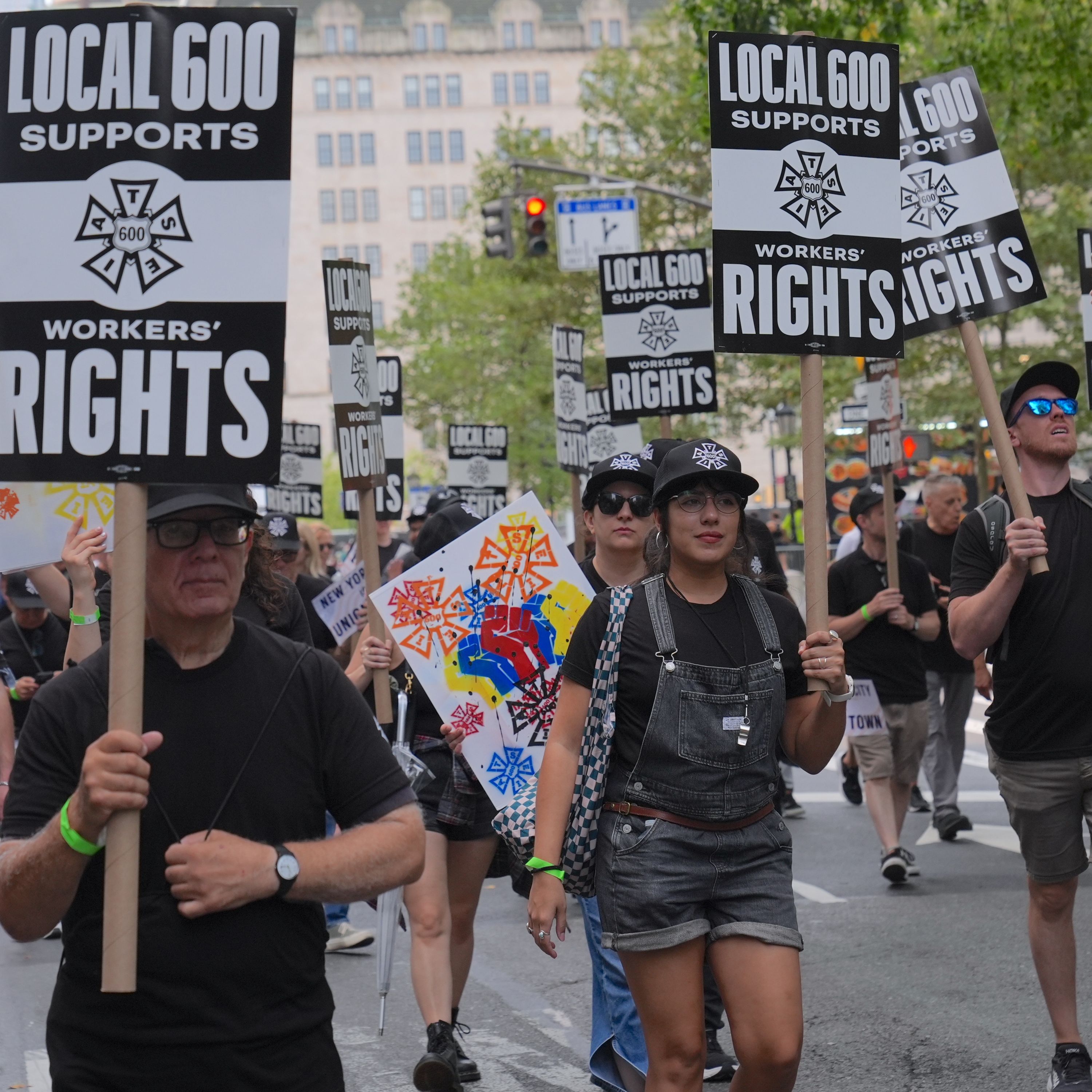
Photo: Thousands of New Yorkers and laborers march during the New York City Labor Day parade, America's oldest Labor Day Parade, along with members of more than 200 unions and organizations, on Saturday, September 6, 2025, in New York City, USA (Photo by Selcuk Acar/Anadolu via Getty Images)
Hosted by Simplecast, an AdsWizz company. See pcm.adswizz.com for information about our collection and use of personal data for advertising.
Get every episode summarized
Each time The Brian Lehrer Show publishes, we email you a written briefing from the transcript — the topics, who appeared, and any specific claims, with the ad reads skipped.
Email me new episodesFree for 3 shows. No card needed.
Hosts & guests
Transcript ready
567 searchable segments. Every word is indexed and playable.
Full transcript
The Brian Lehrer Show — Labor Day: Working Class; White Collar Unions; Supermarkets; Summer Songs. Machine-transcribed; use the interactive transcript above to jump the player to any line.
Meet Craig. Craig manages the local haunted house. He's got a lot to juggle. Tangled cobwebs, flickering lights, and scheduling vampires. Now it's time for your break. I'll break when I'm dead. You are dead. That's like your whole thing. You're out of Kit Kat. Hmm. Five. 15 minutes, but no longer. Good. I'm grabbing a Kit Kat too. Nobody should have to wait until they're dead to take a break. Have a break. Have a Kit Kat. Here's the Brian Lerishow on WNYC. Good morning everyone and happy Labor Day. And on this Labor Day, we've gathered and lightly edited some recent segments appropriate to the holiday, including New York Times Report and Known Shiber, on unionization among white collar workers. And inside look at the work going on in our supermarkets, plus on this Labor Day, we look back at your songs of summer.
But let's start here today at the intersection of this year's midterm primaries and 175 years of political philosophy. Like Eskender, Yorker, what class they belong to, and you'll almost always get the same answer. I think middle class, right? The lawyer says it, the bus driver says it. Okay, Michael Bloomberg probably wouldn't say it. But for the most part, pretty rich or pretty poor middle class is practically the New York and the American default. But the Democratic Socialists of America, the political home of mayors around Mamdani, of course, want a lot of us to start saying something else. WNYC and Gothamists Elizabeth Kim reported this summer that new DSA members are taught in orientation sessions to think of anyone who works for a living, works for a living, whatever that means, as working class. Restaurant workers, firefighters, nurses, sure. But also people like doctors and Google programmers. Compared to billionaires, the argument goes, they're all in the same boat. Here's NYC DSA co-chair Grace Mauser, when I asked her here on the show about that quote that she gave to Liz Kim.
Did Liz get it right? She did, yeah. I agree with what I said. The point I was trying to make with Liz is that it benefits billionaires and mega-capitalists to divide people who are middle income or even lower upper income from working poor. When in fact what we need to do to actually redistribute the massive wealth that the 1% holds is to come together as a broad working class movement and fight back. And in fact, historically, labor movements and large social transformations have often been led by relatively skilled workers who are facing deteriorating working conditions. I think this is a big reason why we're now seeing healthcare workers, even doctors, start to think about unionization as more and more practices are being bought up by private equity.
It's why we're saying educators, teachers who are in some ways white collar workers like thought workers, not manual laborers, lead union movements, why we're saying graduate workers do the same thing. These are skilled workers who are facing just increasingly untenable labor conditions and we're seeing them at the front of the labor movement for just that reason. NYC, DSA, Co-Chair, Grace Mauser, now we should say not everyone buys it. The head of the city's largest municipal union, for example, told Liz that someone making $400,000 a year does not share the life experience or therefore a perspective with someone making 18 bucks an hour. And even the mayor asked to define the term in a New York Times interview, the term working class said he hasn't asked where working class starts and stops. We will play that clip coming up. But this isn't just political philosophy in the abstract. It might actually matter to who wins elections and how New Yorkers and other Americans define ourselves.
So we will begin today's show with the definitions where they came from, how they've evolved literally since Karl Marx and what this all might mean for politics in New York and for Democrats nationally in these current primaries and with the midterm general elections coming this fall with me now are Elizabeth Kim, reporter here at WNYC and Gothamist who wrote the story. And Chris Misano, editor of New Labor Forum, a Labor Journal from the Murphy Institute at the CUNY School of Labor and Urban Studies. He's also a member of DSA but not here on their behalf. So Liz, Hi and Chris, welcome to WNYC. Good morning, Brian. Good morning. Liz, why did this question, who counts as working class become a story on your city hall beat right now? Well, Brian, I will tell you that I first became interested in this question, not because of a local political figure, but one that I think a lot of Democrats and people who follow politics have been obsessed over in recent months and that's Graham Platner.
Now, just to remind listeners, he was the former presumptive Democratic Senate nominee from Maine. He was forced to drop out because of sexual misconduct allegations. But prior to that, kind of what I saw at the heart and other people have talked about this too, the heart of his rise to stardom was his identity. And it was his identity as this oyster man and him being the self identified working class manor. And he himself talked about what it meant to be working class. And he had defined it in interviews. And one of them was actually a really lengthy interview he gave to the New York Times as part of their weekend podcast, the exact same form that the mayor recently did. And he was asked, you know, he was asked about how he defines working class. And he said that it was as long as you were making your living from a paycheck, meaning that you're not making your living off a large stock portfolio or some kind of existing wealth that that makes you working class.
And that just kind of really stuck and resonated with me. And I remember coming back to the newsroom after listening to that interview and talking about it with people. The way it re-emerged was because of the New York Times story that Emma Goldberg did. And I really want to hat tip her on this. She wrote a story about how economic anxiety was driving surging membership in the DSA. And within that story, there was that bit about members who were being newly recruited and given an orientation and taught that anyone who works for a living can be working class. And in that story, she interviews Gustavo Gordillo, who tells her that a lot of tech workers are working class. We're trying to build a broad movement. And we think most DSA members are working class. And as soon as I read that line, I, you know, I went to my editor and, you know, we talked about it. And we said, we said to each other, we have to unpack this. This is so fascinating.
Well, that's why Chris Mazzano is with us as well, editor of New Labor Forum. But before we bring him in as the labor studies expert here, Liz, what's the point of DSA trying to define working class so broadly? Is this just political philosophy? Or are they aiming for an outcome of some kind with this? It's both. It's a political philosophy that is outcome driven, you know, in a city where people are frustrated with the growing cost of living and feeling as if the life they want is out of reach. This expansive definition of working class, which which I see is really about struggling people who feel they are struggling. If that's this common sentiment, that's really effective for organizing and building a broad coalition. So Chris, for you as the labor studies expert here, you heard in the clip and in Liz's explanation, the argument, the doctor and the waiter, same boat, because neither one is Jeff Bezos, basically.
Is this the first time you've heard this? Is this new? I mean, we're going to do some reference here that references that go all the way back to Karl Marx and the actual communist manifesto. But in contemporary terms, is this new to you? No, I wouldn't say that it's new. My own conception of the working class and who fits into it is very indebted, for example, to the work of the late Eric Olin Wright. And Wright was probably the preeminent sociologist of class of his generation. And for him, the working class consisted at a very general level of wage earners selling their labor power in the market in the labor market. Now, of course, as we've talked just referenced a little bit, if you define it at that level of generality, that ends up being a very large group of people. And what that means is that there are many differences and experience that make a common class identity as we've been talking about across this very large group of people difficult to forge.
So to list only a few of those sorts of differences that right and other people would have identified, you know, we have the level and security of earnings per cariousness of employment autonomy within work skill levels and education required within work opportunities for creativity at work, the amount of supervision that you experience so on and so forth, you know, the list just goes on and on. So, you know, while I think it's true to say that well, most of us have to work for a paycheck to live this doesn't therefore automatically translate into some sort of collective class identity or social solidarity. And that's the work of organization and political action. And that's what labor unions and political organizations and other groups try to do. Yeah, but I could see just from your listening of those various criteria, how somebody might flip and start identifying more as working class in those terms, like let's say the $400,000 software engineer, right, who all of a sudden feels instead of being on top of the world, then, you know, they went to engineering school or took a boot camp or something like that.
And they're the ones who are so in demand that their job might be replaced by AI next year. And suddenly they develop these job security concerns and how they're treated by management, ownership, concerns that they might not have had two months ago, right. So somebody could flip around conditions like that. Is that a good example? Yeah, I think that is definitely a good example, you know, to talk about our journal, new labor forum a bit. We have an article that will be appearing in our fall issue, where we talked to somebody who worked in the video game industry. So somebody with pretty rare skills, you know, at one point probably enjoyed a fairly decent income and some level of job security, but with the introduction of things like AI and other changes to the industry, you know, the level of precariousness that somebody like that experiences in that particular kind of field or that particular kind of labor market has really gone up.
And yeah, people in that kind of situation can often find themselves feeling, you know, in ways that probably at the end of the day are not that different from somebody who, you know, hasn't had the same level of education, hasn't necessarily had the same level of income or job security isn't a different kind of field. So I think, yeah, the sort of dynamic that you were laying out there, Brian is definitely a real dynamic that people go through and I think factors into some of these decisions that are made in terms of trying to approach people when you want to organize them either into a labor union, a political organization or something else. So in that example scenario that I gave suddenly they become more concerned about benefits and severance pay and government benefits if they lose their health insurance or suddenly have no income. And Liz, we should say here that you also did hear from people who reject this broad definition. I mentioned it in the intro, but Henry Gerito of DC 37 to go a little deeper here, told you someone earning $400,000 doesn't have the same perspective of somebody barely making $18 an hour.
What's the case that he and others made to you and why do they care what the definition is? Well, he feels that there's nuance to it and he believes that life experience matters. And the example that he gave me which I thought was very compelling was he talked about himself because I actually asked him how did he start up in the union and he said he came up as a cafeteria worker where they did cafeteria inspections in Queens. And he said that irrespective of the conditions they had to show up. He said it would be 100 degrees in the summer and they were there. They had to prepare 3,000 lunches. And he told me that when he was at that job, he had the opportunity to meet people who in his words didn't have a right to say I quit. They didn't have a right to say I quit because it's hot. I quit because I don't feel well today.
And that was because that job was the only source of income for them and that they had others who were depending on not only that income but also benefits, the possibility of a pension that that job might bring. And what he argued to me is that's just not the same kind of economic desperation that someone who works at Google feels because in his mind someone who works at Google maybe they lose their job but they can go work at Microsoft. So it's about the number of economic opportunities that are available to different types of people. So does that hurt the traditionally defined working class union member who Henry Gerrito of DC 37 might represent in a practical sense. He acknowledges that he represents as you said it's the largest municipal union in New York City and he acknowledges that he has a wide variety of members who make incomes across the spectrum.
He has those cafeteria workers, he has parks workers, but he also does have people who do make six figures. And at the end of the day they are, you know, he is as the head of the union, he is trying to keep them unified. I think to him, this is these life experiences are an important distinction that he wants to be recognized and that he does, he is drawing the line in some ways. Cindy and Jersey and Long Valley are at WNYC. Hi, Cindy. Hi, Brian. Thanks for taking my call. So I worked in the healthcare industry for a very long time and it has shifted. And I wanted to say that for physicians now, especially young physicians, if you're making $350,000 a year versus what I made when I first started $9 as a nurse's aid,
there's a point where if you can't control your working environment, you do want to become unionized because if you have to work 18 hours a day, anywhere from 12 to 18 hours a day, frequently 40, 14 hours a day, and you have to pay for increasing malpractice costs, what you are becoming weary during your day and your patient is at risk. This is the thing people don't talk about. If there's not proper staffing because of the CFO CEO, especially if it's a private equity firm hospital, doesn't want to put more physicians on, you're at a much higher risk for you and your patients. And then it becomes I need to become unionized because of my working environment. Yeah, really interesting example about doctors in particular there. Thank you very much. Cindy, great way to start off the caller section of this. But Joan, a story has a different take. I see Joe, you're on WNYC. Hello.
I just want to say I really don't identify as one of these people that thinks that establishment Democrats are doing well for the city. So I don't want to act as if I'm siding with that side, but I'm very critical of the DSA efforts to try to water down meanings and identities because there's a very big difference between being working for in New York and being middle class. There are very real differences. And by just having this big tent strategy where we're all the same, it's actually the issues and the priorities of the working poor. They're going to get lost in the shuffle. There are very big differences. There's some of us that have issues with NICHA or that issue is with poverty. That doesn't matter to us whether there's bike lanes or there's outdoor dying. So you can't lump all of our issues in together. And when they do that, they kind of erase the issues and priorities of the people who are most disadvantaged and victimized by the system. Joe, thank you very much. Christmas, I don't know what do you think as a labor studies expert, a cuny of that critique that if the definition is too broad, the people who are really making low incomes are going to get lost in the politics.
Yeah, I can see where the caller is coming from for sure. But as I was saying before, pitching the kind of basic working definition here of what constitutes membership in the working class at that level is not actually I think an attempt to flatten people out or imply that there are no differences. I don't think that's the case at all. You know, as I was saying before, just because two different people find themselves at some level facing that same basic condition of being reliant on selling their ability to work in the labor market to live. But does it mean that that therefore erases any potential differences that they got in their outlook or what is particularly important to them or whatever the case might be. And if you've worked in, you know, if you've been a labor organizer or if you've been a member of a union or something like that, you know, that'll really come through. So it's, you know, members of the same bargaining unit in the same workplace oftentimes can agree on, you know, what it is that they should prioritize in their bargaining or for their contract and things of that nature.
So it's not really that there is no difference between the working poor or higher income workers or anything like that. They basically have similar sets of interests and that they need to come together to fight for the sorts of policies that can benefit people across the board to the extent that that's possible. And also to address the other caller who called in about working in healthcare, I think healthcare is a really, really interesting example of this. And I think it points towards why, you know, relying strictly on income or education types of definitions of who's in a class and who's not, you know, it can tell you something, but it can often easily lead you astray. So, you know, let's take a unionized registered nurse in New York City, for example. So that register nurse because in many cases they're going to have a strong union is going to have a good union contract that has won them a pretty good salary.
In some cases, you know, that's going to get you a starting salary that's in the six figures, right. To get that job, you're also going to need a degree to get it. So if you leave out people with, you know, pretty decent salaries or with college or even advanced degrees out of the definition that you're working with, you've done something like leave a unionized nurse out of your definition of who counts in the working class. And, you know, I don't know if we, if we want to do that or if that seems to make sense for people on the flip side of that, you know, take a small business owner with little or no formal education and maybe not that great of an income, which is something that you'll find it. In any case, in any case, so, you know, if you're only looking at things like income or education, you might want to slap that person into say a working class definition. But would that really make sense in that person's case? Maybe it does. Maybe it doesn't. Yeah. And here's a text from Melissa writes, the crux of this conversation is the inherent flaw in the language it relies on working class as a euphemism that belies the fact that a majority of labor happens at the bottom.
We need new language. And Chris, almost nobody in this country caused themselves working class unprompted. Well, some that's probably not right. So many people do, but Richard poor Americans traditionally and there's a lot of polling on this say middle class. So historically, where did that happen come from? And what work is that phrase middle class doing? Yeah, historically, you know, that's a very strong tradition here in the United States in particular. You know, you don't necessarily find that in many other countries that are at a similar level of wealth or income. And yeah, I think it really reflects our particular historical development and the sense that this is in some sense something of a classless country that there's a lot of social mobility. And it's not supposed to be a country that where you're defined by the conditions of your birth.
So the self conception, I think that many people have had over time as being part of the middle class is a nod towards actually that idea that there isn't a hard and fast class structure in the United States that people can move up and can move down. So that I think that that term of middle class becomes sort of a catch all term that anyone can identify with. And, you know, to a certain extent, I also think it reflects just sort of a basic sense that like being in the middle is kind of where you want to be, right? You know, being too high is not great. Being too low is not great either. You want to you want to hit that that golden medium, which is a concept that goes back all the way to ancient Greek times if you want to take it back that far. In a sense, I think like identifying with middle class in a sense is a way to kind of get at this concept of classlessness that I think has been really endemic to American society and culture really since the beginning for a very long time.
When we come back from a break, we're literally going to bring Karl Marx and the Communist manifesto into this as we continue on the Brian Lairshow. The Brian Lairshow is on tape today, so we won't be taking your calls. Brian Lairshow on WNYC as we continue our conversation on the DSA's interest in very broadly defining work in class as anyone who works for a living and not just the traditional categories of maybe restaurant worker firefighter, nurse, but also people like doctors and software engineers compared to billionaires. The argument goes they're all in the same boat. Our guests are WNYC's Liz Kim who wrote the article on this after hearing what's happening at DSA orientations for new members and Christmas,
Chris Muzano who publishes a labor studies journal under the auspices of CUNY and Paris and Brooklyn you're on WNYC. Thank you for calling in. Long time, fans, long time communists. I think this conversation is a bit of a red herring without mentioning that the original definition of working class was made by Karl Marx and that had nothing to do with salary or wage or how rich you were or everything to do with who owns the means of production versus who have to sell their labor, whether that's their body or their mind in order to make a living. So whether you're a doctor or a basketball player or a McDonald's worker, whatever you're selling your body or mind to the people who own the actual economic system, IE factory owners, basketball team owners, people who can actually influence the economy who basically control the economy and pass down that control to their children for generations generation. So it's not about who's making what amount of money. It's about who owns the means of production and therefore basically control their entire society.
Well, as somebody who's obviously thought about this and defined yourself as a communist, what do you, what would be your reaction to this? Karl Marx wrote in the actual communist manifesto in 1848, the bourgeoisie has stripped of its halo every occupation, hitherto honored and looked up to with reverent awe. It has converted the physician, the lawyer, the priest, the poet, the man of science into its page, Wade laborers. So he didn't say working class there, he said bourgeoisie, but it's almost like Karl Marx said in 1848 what Grace Mauser from NYC DSA said last month. Yeah, it's exactly. He's saying that they're all part of the same class of people that, you know, these people that are highly skilled are selling their labor and even if they're bourgeoisie, they're made into essentially wage laborers. I think he also talks about how the bourgeoisie is convinced that they're not the working class by the capitalist in order to kind of provide a vote between the working class or like the poor working class and the actual owning class.
So, you know, richer people now, even if they are working class or convinced that they don't have the same interest as as poorer people and that's why I think this DSA definition is important because they actually are all in the same book. Paris, thank you for your call. We appreciate it. Chris, for you as the expert in the room, what's the difference if you think there is a difference between the way we're debating the word working class today or discussing it and the way Marx used the word bourgeoisie. Well, first let me say, you know, I grew up listening to the fan in the car with my dad driving around. So like sports talk. Yeah, so like being on the line here with people calling in is like, being come true from me. I feel like I feel like the mad dog, but like a much nerder version of the mad dog. It was a point where I think the phrase, long time first time, jumped the shark from sports radio to here. But I'm glad it did. So anyway, go ahead.
Yeah. So in that context, when he uses that term bourgeoisie, he's mostly talking about the people as the caller was saying, who would be owning and operating the means of production. So what does that mean? That's basically a highly technical, somewhat abstract term to talk about things like factories, workplaces, the buildings, the tools, the implements, et cetera, et cetera, that you would need to run a business, make a product, run an organization that's also service, so on and so forth. So that's really the basic concept that he is employing there in that text and which, you know, not only socialists and Marxists who followed him would use it, but also people who would not consider themselves as a person. But that brings brings us back, I think, to the sort of gray area that you cited before, which is people who are owners of the means of production, quote unquote, but they're owners of small businesses.
Right? So, I mean, we've been, so one other thing that the caller was also getting into and then also that you mentioned in the selection that you quoted was that, you know, in the sort of economic system we have, there's a constant tendency to de-skill or to degrade or deteriorate the conditions that people live under and that doesn't just go for people who are at, you know, for lack of a better word, the lower ranks of the labor market who may have less education, don't necessarily have like scarce skills that give them a leg up in the labor market, things like that. But, you know, also apply to workers who may have some of those things, for example, doctors, doctors keep coming up here. And one of the big changes that have happened to doctors in particular is that some decades ago, doctors used to, in many cases, own their own practices, either by themselves.
Or with a small number of fellow doctors, partners who would run this basically small business. What's happened over time in the earlier caller who said that they had worked in the healthcare industry got at this a little bit is with changes in that industry. At this point, a very large and growing share of that group of people are now employees. They don't run their own businesses. They're not bourgeois in that sense. They're employees in many cases of hospitals. And those hospitals, in many cases, these days are not independent. They become part of these large conglomerates, these large health systems that tend to dominate a market in whatever place they happen to be operating in. Yeah. And the larger context of the United States and Liz, by the way, thanks for your patience. We're going to bring you back in here in a minute as a city hall reporter who focused on how DSA is trying to broaden the term working class. And we're going to play a clip of Mayor Mamdani that you brought.
But Chris, I read a history article recently that had marks and angles musing about why class consciousness and therefore socialist politics did not take hold in the United States in their day as compared to Europe back in the 19th century. And their analysis was largely about American sense of class mobility compared to Europeans. The American worker saw themselves as a potential small business owner and potentially prosperous down the road more than over there. Do you understand history that way at all? In part, and another big thing that angles in particular recognized in some very obscure letters that he wrote to German Americans living here was the fact of the West people could go out west, set themselves up on a plot of land, so on and so forth, and that these sort of physical mobility. Yeah, would act as something like safety valves, letting off social steam, social pressure that might otherwise have blown up.
Of course, that condition of the open frontier, et cetera, et cetera, is long gone. Frederick Jackson Turner wrote his famous essay about the closing of the frontier, what I think in the 1890s. And that's the physical frontier. And I wonder if the rise of the DSA right now is largely because that sense of economic mobility, the multi-generational upward mobility of what we call the American dream. It is just objectively less available than it was in past generations. The capitalism is failing Americans in a not totally unprecedented way because we had the Great Depression, but an almost unprecedented way. So Americans don't want government to own the means of production generally, and that's not what any DSA actually candidate around the country that I've heard is campaigning on, even if it may still be in the national platform on paper. But they do want Americans do want more government intervention to guarantee a decent standard of living.
That's not to say DSA necessarily has all the right solutions, but capitalism is failing Americans in a largely historically unprecedented way. Yeah, I think that there's quite a bit to that. And I think that that sense is reflected in many things, but I think when we're talking about, if we want to talk about DSA candidates in particular, and their relative success at the polls recently, I think that really comes through very clearly in what is starting to be a very kind of recurrent thing that we're seeing in election results, which is a very clear gap, age split in the electorate. Around roughly age 45ish or so, which is right around where I'm at at this point in time. I'm not going to give you my exact age because it makes me a little sad. But we're seeing that time after time in election after election. And I think that yes, if you talk to people who are turning out voting for DSA candidates or joining a group like DSA who are organizing labor unions at their place of employment,
that's what they will tell you. And I think that's a big difference between people who are generally under that kind of age cuts and those above it. People above it, I think, lived at a different time where owning a home in particular was much, much easier for them, even if you didn't have a particularly high income, even if you didn't have particularly scarce skills. Even if you didn't have a higher education, so on and so forth. A big part of that, I think, is because some decades ago, we had a much higher rate of unionization that took in a much broader swath of the working population and therefore allowed them to fight for and win a larger share of the pie, which allowed them to do things like by homes and move up as you put it. Today with private sector unionization under 6% in this country, it's higher in a place like New York, but nationally it's under 6%. It's so much harder, I think, for people to do that these days.
And I think that it's driving that sense of frustration and I think it's making them look to places that they may not have looked before. So, Mayimam Donnie himself got this question about how broad the definition of working class should be in an interview for the New York Times podcast, the interview with Lulu Garcia Navarro. Listen to how he handled it, that starts with her question. How do you define the working class? Because there's also been a lot of debate around what is the working class now? And who is welcome at the table of the working class? I think if you have to work to pay your bills, I think that that is one definition of being a part of the working class. So is that like anyone with a, oh my goodness, and it's okay. It's just a bad cough. Have you had it checked out? I have. Okay. That's why I believe in Medicare for All. Everyone can check it out.
So that's everyone with the W2. Is that kind of 1099s too? I think it's, it's, I'm less interested. So someone making $250,000 a year's working class? I mean, I haven't sat at home and asked myself where it starts and stops. What I would say is for those who are working to try and afford the basic dignities of life and aren't able to do so, I think that that is also a working class. So Mayor Mamdani, who I gather is feeling much better by now. But Liz, for you as a City Hall reporter, what does that answer to Lulu Garcia Navarro, who many listeners will recognize as a voice from NPR? Now working for the New York Times and doing that interview, what does that answer tell you? I think what he's saying to Lulu there more or less matches the spirit of what the DSA has said about being working class. I think in his answer to Lulu, I would have said, you know, the dignities, someone who is trying to afford the basic dignities of life.
I think that a follow-up is like, what do you mean by that? And I think he would probably say something like healthcare, childcare. But I think that that's a question. How do we define what are the basic essentials that we, as a society, believe that everyone should be entitled to? Is it housing? Is it healthcare? I do want to bring back the conversation because I've heard a lot of, you know, the caller who called this a red herring and a lot of people in response to my story saying, you know, why does this even matter? And I would like to bring us back to the other caller. I think it was Joe from Astoria who said to him, it does matter because he feels that if we're not recognizing the people who live in public housing, for example, that there's a kind of a racer going on. You know, the way I think about it as a politics reporter is I think about how policymakers, like the mayor, the mayor is both a politician and a policy maker, right?
Have to make decisions based on a budget. The city has $126 billion budget, but even with the vastness of that budget, he still has to decide how does the city prioritize its spending? And I think one excellent example is, you know, the mayor wants to pitch free buses on the other side, or it's not even two sides, but there is another alternative that people have talked about, which is the fair fairs program. That is a program that gives discounted fairs to people making a certain threshold of income, right? A percentage of the federal poverty line, and there has been, for years, this ongoing effort to expand that and make it available to a greater percentage of people, right? And they did that just with this budget, but I think that that's where the conundrum comes, right?
Should we spend money to make it free to everyone, that would mean, you know, that would mean everyone from the waitress, the waiter, to the Google programmer, or do we decide we spend less, but let's give it to people who make less. And this is another political philosophy conversation that we're going to do a separate segment on, the means testing versus universalism debate. We had Senator Andy Kim on the show on his proposal for what he calls medics to go with Medicare, right? And Medicare is so politically popular, we could argue, because it's universal for every American over 65. And he wants medics to automatically enroll every child born in the United States, and that that might be more politically popular, I think part of his argument would go, than what we have now, you know, the children's health insurance program or Medicaid, with its particular qualifications that you need to meet in order for even a child to get benefits.
So there's a political philosophy segment that we're going to do on that. But you did take this whole question of working class to flat-bush Avenue. Did the people you talk to see themselves the way DSA sees them? How did that person on the street segment of your report in Goff? Well, what's remarkable, Brian, and I agreed with what you said at the top, is that, you know, I think, you know, going into the interviews, my sense was that most people would volunteer themselves as middle class. But that was actually not what happened. I would ask people, you know, the same question that Lulu asked, mayor, how would you define working class? And the person would most often go ahead and define their own lives, and you would be someone who was working multiple jobs. You know, there would be someone who was saying, well, I'm part of the gig economy, and I don't have benefits. And if I don't work, you know, I'm basically not earning money.
But I think it would be someone who was just young in the city and trying to make it and trying to find their way and find a path to a career. They were even a pair of densest that I interviewed. And the sense from them was like, well, you know, in a few years we aspire to be, I would hope to be part of the middle class. But that depends on whether I could pay back my loans. You know, I think this sense of- And though they own their own practices. Yes, and I would say that what the common thread, it's this word that Chris brought up, which is precariousness, right? This financial precariousness that was, I thought, a common theme among a lot of people. And what was even more interesting is when I asked people to then define the middle class, that really stumped them. And this last thought for today, and you know, we could go on all day with this. Maybe we should come back to it and do some four hour special or something.
Oh boy. But that means testing versus universalism debate. Do you, as a labor studies expert, have a quick take on it yourself? You know, I was giving one of the political arguments for it. When something is universal, it tends to be more politically acceptable. Whereas when something is for quote unquote the poor, then people start asking, oh, do they really deserve it? Are they just sloughing off and living off my tax time? But an argument against it is, why should Jeff Bezos' kids be eligible for Medicaid, Medicaid's that everybody else is paying for, and that sort of thing? Yeah, no, the way that you framed it, Brian, is exactly how I would tend to understand it. That's basic. Those are basically the terms of the argument. You know, both in terms of political strategy or expediency, but they're also kind of like the moral aspect of it, the question of dessert.
The only thing I would kind of add to that in this moment that we've got is it's also recognized that if you add means testing to a program, you therefore can actually increase the cost of it, at least to some extent, because now you've added additional administrative and bureaucratic requirements, people need to fill out forms. People need to determine whether someone's eligible to receive the program, et cetera. So, you know, in that sense, a more kind of universal program that has fewer eligibility requirements and things like that is simpler, administratively can save some money and some respects. So, I guess one other thing I would want to say before we wrap is that I think, in a lot of ways, this conversation that we're having over what it means to be part of the working class is really, it's really getting at something. And I think that something is that there's been a really significant recomposition of the American workforce and our economy's employment structure since the mid-20th century.
And I think a lot of our mental maps and cultural conceptions haven't really caught up with those changes. And those changes I think are defined at a very broad level by a big shift away from routine, blue, and white collar work that doesn't necessarily require much in the way of formal education. Towards forms of work that are more professional or technical in nature, which require some degree of formal education, including higher education. And I don't think that this means that the working class has shrunk, although it certainly is the case that, for example, manufacturing employment in this country used to be 40% of the total workforce and now it's down to only just about eight. What I do think it means, though, is that the composition of what we think of as the working class has changed. And I think we're still trying to figure out what exactly that means. And I think that this conversation, this debate is really a reflection of that.
Chris, my son is editor of New Labor Forum, a labor journal from the Murphy Institute at the CUNY School of Labor and Urban Studies. And I'll say at the end, as I did in the beginning, he's also a member of DSA, but was not here on their behalf. WNYC and Gothamists Liz Kim wrote the article and did the radio report on DSA's definition of working class that they are advocating and discussing with new members at their orientations. Liz started this discussion with that piece. Liz Chris, thank you very much. Thank you, Brian. Thank you, Brian. Brian Lara and WNYC, much more to come. It's the best of Brian Lara's show on tape today, so we won't be taking your calls. Brian Lara, I'm the director of WNYC. Brian Lara, I'm on WNYC. Are you in the union?
10 years ago, that question was mostly for autoworkers, teachers, electricians, some others, but something has shifted. It's not just where people are organizing. It's who? When we think of union members, maybe you pitch a workers on a factory line or longshoreman at a shipping port, but nowadays union members were Apple store t-shirts and white doctors, lab coats, yes, even some doctors are unionizing. Baristas, video game designers, Hollywood writers, and even resident doctors, yes, have decided to unionize. Noam Shiber is a labor reporter at the New York Times and his new book, Mutiny, The Rise and Revolt of the College Educated Working Class, is about the generation of college graduates who were promised a certain kind of life, or so they thought, didn't get it and decided to do something about it at work. Noam, it's been a minute. Welcome back to WNYC. Thanks for having me. Great to be here.
There are many places we could enter, but let me enter here. You described the first half of 2022 as the most significant moment in U.S. labor history in the last 40 years. Why the first half of 2022? Well, we just had this explosion of union organizing among people who didn't typically try to organize a union and that companies that were not unionized. So this kind of starts in the fall of 21 actually with a few Starbucks stores in Buffalo and two of these three stores win and then that union campaign just spreads like wildfire across the country. And half a dozen in January of 22, then a dozen and then by March, it's literally dozens and by the end of the year, hundreds are trying to unionize. We have workers at Apple Store, as he mentioned, the first Amazon warehouse in the country was unionized in April of 22. We have workers at Trader Joe's and REI. So we just had this explosion of union activity again among people that had not traditionally done this.
As this was happening kind of in real time, I tried to reach out to people and understand why they were doing this and who they were. And it turned out that a very large number of the people who were doing this were young college grads. They typically had a lot of debt. They were not on the trajectory that they thought that they would be on when they graduated from college. And the pandemic for them was just kind of the breaking point. It was just the last straw after years of frustrations with their post college trajectory. So that was really what caught my attention and then kind of stepping back to think about why this happened and ultimately led to the book. And to use another historical marker, you use David Brooks concept of the Bobo. I remember his book, Bobo is in paradise. He was on for that at the time. Bobo, the bourgeois Bohemian as a before picture. And you say this new generation looks similar on the surface, but you write that they have the bank accounts and the politics of the proletariat.
First remind us what the bourgeois Bohemian is supposed to mean. Yeah, so David Brooks wrote this with the written terrific book in 2000 about the bourgeois Bohemians. And these were people who were often kind of knowledge workers. You know, they were lawyers and software engineers and management consultants and even tenured professors. And so they had these, you know, these kind of very intellectually demanding jobs. They were very creative often. But they were not, you know, they were not liberals. They were kind of sort of moderates. Third way people in their politics was very much in the vein of the sort of late Clinton era. They favored things like trade agreements and globalization and lower taxes and lower regulations. But they also have this sort of Bohemian aesthetic, you know, they liked sort of reclaimed wood furniture and Brooks talks about how they liked sort of nubby fabrics.
And so they had this sort of Bohemian aesthetic even as even though they had the kind of politics of the bourgeois. And so they had this kind of alternative in their aesthetics, upper middle class in their political interests. Exactly, exactly. And so I talk about how this younger generation of college grads, you know, kind of superficially looks like they have some of the tastes and habits of the bourgeois. You know, they have all these fancy devices, you know, they have powerful smartphones. They watch prestige television on demand. But their politics are very, very different from the boba. You know, they tend to have pretty far left politics. If you look at pulling the portion of college grads who approve of socialism, it doubles in the 2010s from about 20% to over 40% by the end of the last decade. So very, very different politics, even though superficially they kind of look, you know, not too different from the boba's that Brooks was writing about.
So tell us, tell our listeners the story and brief of one of your two main characters. You have Teddy, a Grinnell grad who ended up organizing his Starbucks in Chicago. And Shia, am I saying her name right? Yeah, Kaya, Kaya Barrett. So yeah, Kaya Barrett is a fasting person. She grew up in Baltimore County and her parents had gone to college, but not graduated from college, but college was very, very important to them. And they really emphasize the importance of going to college to their children, including Kaya. Kaya went to predominantly black high school in Baltimore County. But again, college was extremely important. Kaya talks about how every year the seniors were told to put their acceptance letters, you know, to tape them to the office window of her call of her high school because they wanted to sort of celebrate all the students who were going to college. Kaya ends up going to Towson University in Maryland, a pretty good state school in Maryland. She studies communications. In college, she works part-time at an Apple store and she loves Apple. She's been, she's kind of a self-described Apple nerd who's been super into Apple gadgets since she was a little girl.
So she loves this job as a college job, but she thinks that she is going to get a job, you know, kind of a grown-up job in her mind. So she applies to dozens of jobs and kind of marketing, communications, professional development doesn't get any of those jobs. So finally, when she graduates in 2018, she ends up just taking her college job as a full-time job. And that is a bit disappointing, but, you know, Apple had been a place that had traditionally been like a pretty good resting spot for college grads who did not kind of end up in a job that required a degree. Kaya actually got a job called a creative. And these are the people at Apple stores who kind of teach classes. They, you know, may help you edit a video that you made on your computer or help you edit a podcast. And so this was a kind of sought-after job, but the problem is in addition to these broader forces that I'm writing about, you know, higher unemployment among college grads rising debt. Apple itself was kind of degrading this creative job. And so it used to be this sort of high status job with an Apple, but by the time Kaya got there, it was already sort of losing some of its luster.
And then over the next few years, Apple actually starts rolling back some of these classes that the creatives taught and just pulling them on to the sales floor to sell, you know, iPhones and Macs. And Kaya is just getting extremely frustrated thinking like, okay, it was already a compromise that I ended up taking my college job as a grown-up job. But now I'm not even doing the job that was described, you know, it was supposed to do this sort of elevated, you know, something that wasn't just ordinary retail. But now increasingly, I'm just selling iPhones like everybody else in the store. And that was really frustrating for her. Here's a text that's come in already. You know, it says, I'm waiting for freelancers to actually unionize because the massive rise in gig workers, at least in creative industries, has been a complete detriment because once a freelancer's rate is set, it's almost impossible to increase it despite years of increased inflation. Do you write about freelancers in the book? You know, I don't write a ton about freelancers. I have written about them in the past, but I do think this dovetails with actually a broader trend that we see at these companies, which is the rise of contractors, temps, contingent workers.
So, you know, 20 years ago, when, or 25 years ago, when Steve Jobs created the Apple Store, he was very adamant that we had to have employees, we had to, you know, extensively train them, we wanted to give them good benefits because we knew that if they were happy and they felt good about their relationship to Apple, then they would, in turn, make customers feel really good about the product and the company. And so, that was the kind of founding principle of the Apple Store, but over the past 15 years or so under Tim Cook, the company has gradually relied more and more on this sort of contingent labor force. You know, they hire a lot of temps, especially in the fall and through the holidays when, you know, they release new iPhones and obviously there's a lot of business around the holidays. And so, now you get this kind of labor force that sort of waxes and wanes as needed and these are temps, they don't get the same benefits, they don't get the same training. And it really is kind of like hiring freelancers, you know, the company doesn't feel the same responsibility and, you know, relationship that they do to their permanent employees.
And so, what the person who wrote the text is describing, I think is actually very true of freelancers, but it's something we've broadly seen in corporate America where we've gone to, you know, kind of more of a freelance, you know, contingent gig working workforce. And that's one of the things that I think has really increased the level of frustration. It's created this sense of precariousness that workers feel like they just never know if they're going to get enough hours to pay their bills, they don't know if they're going to have health care. And so, that's very central to the story that I tell in the book. Here's Daniel and Manhattan calling in who I think identified very much with the story of the woman Kaya from your book, who's story you were telling before. Daniel, you're on WNYC. Hello. Hi, I wanted to see you. I can't believe the kind of story because I had the same experience graduating college working as a family room specialist at Apple, which was also supposed to be an elevated role. But in 2009 during the housing crisis when I graduated college, but I want to say it gets better.
You know, I leverage that job into a support role at a big tech company and then moved into a product job at that same tech company and then had a sort of a pretty serious career after that. So it gets all of it easier. Daniel, thank you. No, I'm just going to point you know, so I think one interesting development of the past 20, 25 years or so that I flick it in the book is there used to be a class of jobs that you might call them like good non college jobs. So people would graduate from college. Maybe they didn't end up with the job that they really wanted that they, you know, in the field that they majored in. But they got a job that was was pretty good. It was, you know, relatively interesting, you know, pretty good paying these are jobs like insurance agents or real estate brokers or, you know, a lot of people in HR or, you know, office managers.
The jobs didn't require a degree, but a lot of college graduates did them and they paid them pretty well. And what we see from data from the Federal Reserve Bank of New York is that right around 2003 those good paying non degree jobs start to go away. And then they really collapse in the recession in 2008, 9 and then they just never come back. And so this thing that had been a kind of safety valve, you know, good non college jobs, you know, you can think of certain jobs at the Apple store as these jobs. They had really been away for people who, you know, again, didn't get their first choice job, but to, you know, make a good enough living and have a good enough job that kept them engaged. This over the past 20 years, we've really seen these these erode and disappear. And that's left people, you know, in some cases in the situation with the first person who wrote the text was was in, you know, in more enough freelancing kind of job or a gig kind of job. Or just taking, you know, kind of more traditional retail or customer service or hospitality restaurant industry job. And so I think that's been, you know, kind of one of the under appreciated stories of the past 25 years that has has reinforced the frustration among these graduates.
Well, here's kind of a push back text reacting to your Kaya story. Listen to rights. Can you explain how a union could help someone like Kaya and her predicament on losing the practical element person rights of why someone would want to unionize and what the union could actually accomplish, particularly for a company who has the right to restructure and reorganize. Interesting, right? Yeah, so I think it's it's a very fair point and very important to point out, you know, some of the the classes and minuses. So the union that Kaya and her co-workers organized at the Apple store in Towson. It took them, you know, took them a long time, you know, over a year, almost a year and a half to negotiate a contract. They finally did. They got raises that amount to about 10% for the typical worker over three years. And to your caller's point, this is nothing special Apple, you know, Apple can then turn around and just give every employee at every retail store who's not in a union the same 10% raise. So in a way, you could argue that these folks are just kind of running to stand still, you know, they're just running in place.
They put a lot of effort into this union and they got basically what Apple could turn around and give every other Apple employee. But there are a few wrinkles, I think, that actually make it a little more complicated of a story. And maybe, you know, demonstrate that there is some value to unionizing and one specific provision of the contract at Towson was that the store could never have more temps than 25% of the full time employees. So if they're a hundred full time or a hundred permanent employees at the store, they could have no more than 25 temps at any given time. And this was really important because, as I said, over the past 10 years or so, Apple has relied on more and more temporary and kind of seasonal workers and fewer permanent workers. So the workers at that store really felt like this kind of shift to temps was eroding, you know, and kind of moving in on the jobs that they had traditionally had. And so even though, you know, they didn't necessarily get a bigger wage bump or a bigger bump in benefits, they got certain protections like that cap on temps that really made them feel better about the stability and reliability of their jobs.
And there are a few other provisions like that in the contract that I think, you know, don't get the same headlines as a, you know, as a big wage increase, but really do give workers peace of mind that they didn't have before. Really interesting. By the way, reacting to the freelancer who wrote in some other people are writing in with advice, I guess, or examples of things that do exist. One says there's been an artist's guild in New York City for years. I was a member as an illustrator in Manhattan. Another just says, please let your listeners know about freelancersunion.org. We've had guests from there in the past, freelancersunion.org. So that's a thing that the listener who wrote in or others could contact and see if what they do specifically is relevant to your work. A few more minutes with Noam Shiber, Labor Reporter for the New York Times, with his new book Mutiny, The Rise and Revolt of the College Educated Working Class. And one of the chapters in your book is dedicated to a union tactic called Salting.
The main Salting your story is somebody named jazz Brissac if I'm saying that right. A road scholar who went straight from that at Oxford to a Starbucks in Buffalo. So what is Salting and what did that look like in jazz's case at Starbucks in Buffalo? Yeah, so Salting is a kind of tradition, a labor-organizing tradition that dates back more than 100 years. And the idea is to kind of go undercover as an organizer. So you had people usually with kind of left-wing politics who decided that they wanted to go and help organize workers. So they would get hired as a truck driver or a factory worker. And the key to Salting is to be a really good worker. So you roll up your sleeves, you work really hard, you establish yourself as a good worker. And then you kind of very discreetly start talking to your co-workers after earning their trust about the potential of unionizing. So this was a tradition again that dates back to the early 20th century. It had gone kind of out of fashion or just sort of been a lost art for many decades.
But it starts to kind of come back a bit in the 90s. And then in the last decade or so, I think there's been a renewed push for it. And I think in line with some of these trends that I alluded to, just a kind of growing interest among college grads and socialism and left-wing politics since the great recession. And so jazz was someone who did incredibly well in school. They graduated from the University of Mississippi. They want a road scholarship. They want to study intellectual history at Oxford. But their real passion was organizing. So they came back to Buffalo. They actually were involved in a organizing a local coffee chain that they succeeded in doing. And then they kind of set their sights on this, you know, on this, on the whale, you know, of the industry, which was Starbucks. And so, yeah, jazz gets hired in, let's see, it would have been December of 2020. And goes, you know, essentially undercover at Starbucks while working with a union in the area called Workers United.
You know, goes about it the way that salts had been doing for decades, you know, works really hard, establishes themselves as a good employee starts making connections with other workers. And, you know, ultimately persuades them to join in this unionization effort. And, but I want to say that I think this salting effort was very important to getting the union campaign at Starbucks off the ground in Buffalo. But after that, what was interesting is that it spread extremely organically. There were not salts at all these other locations around the country. It was just people in their stores in Chicago, in Boston, in Phoenix, looking at what happened at the stores in Buffalo and deciding that they wanted to do it on their own. So they would just kind of jump on a zoom with the people in Buffalo. People in Buffalo would kind of send them a little instruction manual and checklist. And they would be off to the races. So while this thing was sort of set in motion by a very dedicated salting effort, it actually spreads incredibly organically. And that's actually what led me to write the book. And I sort of, as this was happening in 22, I was wondering like, okay, how is this thing spreading so quickly to dozens and then hundreds of stores.
And it turned out that it was these sort of, you know, downward lead mobile college grads who just had a real hunger to do this once they saw kind of proof of concept in Buffalo. By the way, a little more pushback on that apple anecdote that you gave. Listen to writes, isn't that Apple store one of the ones that Apple is closing because it is unionizing? Yeah, so it is illegal to close a store because it unionized that's that's directly a violation of the National Labor Relations Act. But it is, you know, I would say the timing is suspect, you know, Apple closes very, very few stores. It's only closed a small handful over the years. And it did announce recently that it closed the Towson store. I think the union, you know, I think they're unsure of how they're going to respond. But it is entirely possible that this will get litigated, you know, as a violation of law if Apple can't demonstrate that there were other reasons for closing the store. So it's this is like very actively contested or being looked into at the moment. Listen to writes, for decades, the architectural industry has been really harsh on their workers long hours, low pay, considering what another profession can make within the same amount of hours. Have any architectural unions popped up? Do you happen to know about that?
Absolutely, yes, very glad you asked. I've written about a union campaign among architects and the writer is exactly right. For decades, this was very much a non-unitized workforce. These are folks who go to school for a very long time. They come out with a ton of debt. They're incredibly skilled, but they work very long hours for low pay. So, you know, you get off in 60, 70 hours a week, but no overtime. And so yes, beginning in 22, I think there began to be some organizing campaigns that some very prominent architecture firms in New York City. And there's actually one that succeeded. It was called Bernheimer and Associates. It's a smaller architecture firm, but that was the first one, first private sector architecture firm that we know of. You know, and at least I think there were some maybe in the 30s that were unized, but in many, many decades, Bernheimer was the first private sector firm that that unionized. There have been a few others. I wrote a piece a couple months ago about a firm called Snowheada, which is a very prominent, you know, highly respected firm.
The organization campaign there, the union lost by just a couple of votes. And then there was actually a group of people involved in the campaign who Snowheada fired or sorry laid off Snowheada said it had nothing to do with the union, but the union filed what's known as a charge with the National Labor Relations Board and the board, then issued a complaint saying that these people were basically retaliated against for trying to unionize. So that's still being litigated. But yes, this is a very active area of organization and, you know, architects are really in some ways kind of very much fit the profile of the person I'm writing about, you know, very skilled, a lot of debt. And very tough working conditions. And I think in the last, you know, five, 10 years architects have really been radicalized. One more doctors, you write in the book about doctors forming unions. I think a lot of people listening will still think really doctors in a union. Yeah, no, doctors is a fascinating case. I actually first wrote about a doctor, a group of doctors unionizing in Oregon at a medical system there called Peace Health in 2015. And this was so far as I could tell the first group of private sector doctors
to organize in the country for, you know, for at least decades and possibly forever. Certainly we've had doctors who work for cities, hospitals and state hospitals in the public sector, unionized. But this I think was the first group in the private sector in 2015. And then, yeah, in the last few years, we've seen a huge increase. There was a big, a big union campaign at a health system in Minnesota called Alina, where about first in early 23 of at 100 hospital doctors known as hospitalists, unionized. And then in the fall of 400 primary care doctors, unionized, which was the biggest private sector union of doctors we've ever seen. And what's really interesting about doctors is, as you say, we think of doctors disease highly skilled, highly trained professionals, you know, typically they would own their own practice. They would kind of be the boss. But in the past 15, 20 years, we've just seen this huge consolidation in the healthcare industry. And so doctors who for generations had been in the past 15, 20 years. And so patients had been, you know, their own boss, you know, maybe they had a relationship with the hospital and they had privileges, but they basically called the shots.
Over the past 15, 20 years, they've become the employees. And I think what you've seen is a lot of frustration, them thinking that, you know, the MBAs and the bean counters who run these health systems are suddenly telling them what to do, how long they can spend with their patients, you know, what they have to ask them, how long they can keep them in the hospital. And so there's just been this huge backlash to that, which I think has driven a lot of the organizing among doctors. By the way, is there any implication from this for national politics, you know, if the former college educated bourgeoisie is now increasingly the college educated working class, it's already college educated people who are the core of the democratic parties voters. So does this change national politics in any respect when we think about midterm congressional elections, 2028 presidential? Do you think real quick? I do. Yeah, I actually talk about this in the final chapter in the epilogue of my book and you're absolutely right. It used to be in the 80s and 90s that college grads were to the right of working class people on economics, but since about 2004, we've seen them drift left and kind of, you know, really favor higher taxes, you know, more regulation, more of a government role.
And I do think that there is this potential coalition, you know, of college grads and non college folks who could come together and, you know, form a kind of super majority on economic issues. And the one example I would point to perhaps not surprisingly is the mayor's or on Mamdani, who really did kind of, you know, talk, you know, very extensively about economic issues and affordability. And if you look at the way the college educated folks voted for in this election, 84% of college grads under 30 voted for Mamdani, even though, you know, he's a self described democratic socialist and a generation earlier, you would have never seen college grads do that. So I think it is really striking to see the potential coalition that someone like Mamdani flicked at in his campaign. Noam Shiber, New York Times, Labor Reporter, focusing on white collar workers, and now the author of Mutiny, the rise and revolt of the college educated working class. Thanks for an interesting conversation, Noam. Thank you. Really enjoyed it. Thanks for having me.
The Brian Lair show is on tape today, so we won't be taking your calls. It's the Brian Lair show on WNYC, Good Morning again everyone. You know, unless you work at one, the supermarket might be like the most ordinary place in American life that you take the most for granted. You go a couple of times a week, maybe you barely think about it, and part of the comfort is not having to think about how any of it works. But if you ever worked in a grocery store, you'd know that a supermarket is really an ecosystem, and the people keeping it alive are working harder for less than many of us pushing a cart with guests. My next guest spent a year on the other side of the register and wrote a book based on notes she took after each shift in the fall of 2020. Writer Ann Larson took a job as a cashier at a grocery store in Utah. What you found is a job that's physically brutal, badly paid, and far more skilled than you probably give it credit for it.
With me now is Ann Larson, fellow with the Economic Heart Ship Reporting Project, and the author now of Clean Up on I-O-5, essential work, poverty wages, and the view from behind the supermarket register. And thanks for coming on. Welcome to WNYC. Hi, Brian. Thanks for having me. It's a pleasure. WNYC, out of all the things you could have undertaken, as should we call it, an undercover act of journalism, why this? Well, like a lot of people, I found myself unemployed during the pandemic. So while I eventually wrote a book about my experience on the job, and after a few months there, I realized that I needed to write about what I was experiencing and observing. At first, I just got the job because that was what was available in my community. I had been living in New York City for about 20 years. I moved there to attend the City University of New York, actually, to go to graduate school. But after a while, my professional class jobs kind of dried up, and I was facing unemployment.
So I moved back to my home region. I'm from the mountain states, and I moved back to Utah. And my timing was really poor because I moved back right as the pandemic was getting underway. And so my city was shutting down. People weren't hiring. I sent out a lot of resumes to white collar jobs and didn't hear much back. And so at the time, I was living near a supermarket that I started shopping in. It was a very, very large store. I would go there to shop, and I would see all of these employees. And here they were. They were showing up to work every day, punching a clock. They were still smiling and offering great customer service. And while many other businesses were closed, and schools were closed here for these people, here to make sure that rest of us could buy groceries. And I was super impressed by that. And I also think I felt a little bit guilty that I wasn't there with them. And so I thought, why not? I can get a job in the store. I will earn some money. I can get help insurance because I didn't have that at the time. And I'll sort of wait this pandemic out. See how long this lasts. And ended up being about 13 months. And by the end, I definitely knew what I had seen was so troubling and enlightening that I wanted to write a book about it.
So you didn't go in with the intent of writing a book or doing journalism necessarily about your experience, mostly just fill that weird time during the pandemic with some employment. Exactly. Exactly. You've said that in supermarkets, there are two versions of community happening at once. What are they? So the supermarket, I describe my book as kind of a split screen on the one side, the supermarket is a really wonderful place. If you think about your neighbor, a grocery store, it's hard to imagine living without it. It's a pillar of the community. It's almost always open. You can go in anytime and find, you know, thousands of products on sale, day or night. My store was certainly that way. It was a community for shoppers, especially during the pandemic. People came in just to see other people to be around community, to get their basic needs met, to chat with each other, to chat with workers for workers to the supermarket could be a community.
There was a lot of solidarity there, workers who helped each other, who gave each other rides home from work. There was all sorts of positive effects of being in the supermarket and of the supermarket just being open during that time. Then I think that's true for supermarkets all the time. But then on the other side of the split screen is a very dark place where workers are earning very low wages, where they aren't able. Well, imagine you are working in a supermarket and you are surrounded by food all the time, but you can't afford to buy it. Many of my colleagues earn so little that they couldn't afford their own grocery bill. There was a study done a few years ago that said the country's second largest grocery company, its workers, three quarters of its workers said they had been food insecure, what people call food insecure in the past, meaning they're going hungry. So this is a huge problem where you have on the one side a community center, happy smiling workers on the other side of the split screen, people are really suffering from economic precarity.
There's also a lot of injury in the supermarket. We may think of cashiering as kind of light, easy work, but what I discovered on the job is there is nothing further from the truth. Virtually everyone I worked with who had been at the job very long suffered from physical injury. Think about a cashier who's scanning groceries all day long, thousands of times over months and years, cashiers develop carpal tunnel and other injuries that help professionals call MSD's muscular skeletal disorders. And these are extremely common in the industry. In fact, MSD's are one of the most common injuries in the workplace. So again, the split screen, there's this community, a really positive place, a wonderful place, but on the other side, it's pretty dark. Yeah, I saw where you wrote about Irene, a cashier working through a serious back injury who got reported as rude because she was in too much pain to smile. And I think we have an injury on the supermarket job story on the phone here, Sheryl and Port Washington, you're on WNYC. Thank you for calling in.
Good morning. So I started working as a supermarket cashier as a way to earn some money when I was a kid and I started in my father's and grandfather's small supermarket. And even you stand all day, there's no stool. And if there are a while, I developed a broken blood vessel in my leg and it is exosping work. Did you report the broken blood vessel and did you get any kind of either sympathy or accommodation from the manager? The manager was my grandfather and I don't know that I reported it, but that was how I was able to earn some money. We're going back into the 60s and 70s. You know, before they made change for you on the machine, you had to do the math and count up from the amount that the groceries cost and you had a pull the groceries towards you. There was no electronic belt.
Sheryl, thank you very much. The days even before the electronic belt. John and Manhattan, you're on WNYC. Hi, John. Oh, hey, Brian. I'm John from Manhattan. I worked in a local market during COVID as well for about four years in their online shopping department. And I worked with probably a couple of hundred employees, big business. Just wanted to say, well, New York City, the pay is not bad. I live in the neighborhood and it's been saved by my apartment. So I could pretty much kind of afford to live and work nearby for one. So maybe it's different out in the cutting. You know, outside of New York, we're at $7 an hour, which is probably virtually impossible to live. But it's really hard work. Everyone there was an immigrant, either from West Africa or from South of the border. I don't know any of their statuses, but the owners were kind. I'm sure they all got paid well, but it's really hard, especially out of sight of the customers physically, a big business, a big business, a lot of petty things.
That's all I really wanted to say is that, you know, the pot banging was deserved. It still is deserved. Anyone who works in the hospital or a supermarket or a fireman, whatever. The pots banging, thanking the essential workers who who showed up to work every day when other people were able to stay home and get sort of John, thank you for that. And yeah, I mean, that must have been a part of your experience. And because you talk about taking this job during the pandemic. And while almost everybody else was being encouraged to stay home in 2020, other people were told that they were essential and basically had to go to work. And that included a lot of supermarket workers, right? Yes, I really, one of the reasons I wrote this book is I don't want us to forget what was revealed about the important jobs in our society during that moment. This is this phrase that you get that you used essential workers was spreading at that time. And the people that could stay home and do their jobs from their laptops were safer.
You know, they got to feel more secure, but there were there was a class of people warehouse work obviously health care workers, but there were warehouse workers meet packers and also retail grocery workers who showed up to the job. And so these are essential jobs that society can't live without. And it doesn't make sense that they are paid so little. I want to just comment on a couple of things that your that your collars have said that are really important. The woman with the blood vessel broken blood vessel in her leg. This was a very common injury standing all day behind a register. People who have been to Europe and other countries will recognize that grocery cashiers sit in other places in the world because many of them are unionized. And so they've negotiated a more comfortable serving position. But cashiers in the US generally do stand all day long for eight hours. And the reason I was told when I got the job is that a standing cashier looks more ready to serve my manager said nobody wants to feel like they're having to rouse a sitting cashier from a chair in order to be served.
So it really is a position of servitude and that I'm standing as a way of showing you that I want to perform good customer service in a way of flattering the customer. The same thing goes with bagging. You mentioned a woman I write about in my book named Irene who struggled with the back injury. That injury was was exacerbated because she had to bag groceries for customers. And you go to a supermarket in the US the cashier will often put your your items in the bag. And this is this opening the bag putting things in and moving the bag over time thousands of times a day for months and years. This creates back pain. And this is also a customer service issue because in the US we're used to having cashiers bag our groceries for us while they're standing. So I want customers to understand that customer service is not inherently demeaning. There were many wonderful. I had a wonderful experience in the store in a lot of ways. Customers could be very kind, could be very generous. They expressed a lot of gratitude to us for working during the pandemic. But there's this structural problem where this idea of customer service and of being kind of flattering the customer and doing all this work for them creates injury.
And this is something that we have to deal with as a society. One more thing I want to mention that the woman who's talked about having to add up your purchases before the age of sort of digital scanners and things like that. This raises another important issue. We may think of grocery workers on the skill that's kind of the slur that we hear that cashiers are just this is unskilled job. That is not the case at all. As the woman mentioned back in the day she had to actually do the math to add up the items that a customer brought to the checkstand while cashiers don't do that anymore. They have plenty of other skills. One of the themes of the book is how long it took me to learn to use the register. These are complicated machines that require a lot of technical skills that are not necessarily easy to learn. Cashiers have to have lots of communication skills. A hundred people are coming through your register a day and you have to be able to communicate with them. Is this somebody who wants to chat with me about sports and the weather? Is this somebody who's in kind of a bad mood and just wants to be ignored? Customers ask you about where's the applesauce or where are the nine vote batteries? You have to have extensive knowledge of your store's inventory to be able to do your job well.
One of the reasons I wrote the book again the injuries are just deplorable and also this is a highly skilled work that should be better respected, better paid and their contribution to our society acknowledged. Listeners if you're just joining us our guest is Ann Larson, a fellow with the Economic Archive Reporting Project and the author now of Clean Up on aisle five essential work poverty wages and the view from behind the supermarket register. We're getting some really interesting text. One asks are different supermarket chains different and some examples that they give all the cashiers are seated. Could you please talk about trader Joe's and other texts the employees there seem happy and well paid so talk about a spectrum if there's a spectrum that you see here. There are only about three or four very large conglomerates that sell most of the groceries we buy in in America.
We have an incredibly concentrated retail grocery industry so most stores that you shop in are owned by one of these big four so you may think that you are shopping in a different store that's maybe a smaller chain or even a mom and pop. But if you do the research you will often find that that stores owned by a larger company like Kruger Costco and trader Joe's is actually owned by a giant German conglomerate it's it kind of the marketing of Trader Joe's makes look a little bit like a boutique store but that is definitely not the case it's one of the largest and most profitable corporations in the world. So one of the things I talk about in the book is that is this kind of illusion that when you walk into a store in your neighborhood you may think it's a neighborhood store but it's actually it's actually a large company and the reason why this is a problem is because this is harmful for both shoppers and workers because what it what it means for shoppers is that the companies can raise prices.
We saw this during the pandemic prices went up on things like eggs and meat and other goods and corporations said that they were because of the pandemic that they were passing along their extra costs you know from supply chain problems and all of that and you know that seemed kind of like on that on that specific point I think a lot of people might say wait as a shopper as a consumer one of the advantages of the chains is that you know because they are not going to be a big deal. You know because they can purchase in such bulk the prices are lower and that can be a problem too because you know I don't know Walmart or whatever that also sells a lot of groceries and can buy at a big discount and therefore sell lower prices pushes out local mom and pop grocery stores but that the big chains can have lower prices because of that scale that they can buy at. The chains can buy at high volume and that gives them authority over prices and if you look historically when I research the book what I found is that concentration of the grocery industry has pushed up prices for consumers if companies want to raise prices they can because shoppers as shoppers we don't have anywhere else to go the store down the street is owned by the same company and so they have the same you know shelf prices as the what's the other store so if you look historically companies want us to think that the
bigger they are and the more higher volume that they purchase in the prices are better for shoppers but it just has not proved true historically and I think the pandemic revealed this studies after the pandemic from the Roosevelt Institute and other places showed that corporations were gouging shoppers they were using the pandemic to reap a windfall they were taking advantage of this of the crisis to make a profit you know one way you can also tell what was going on is that corporations right now are doing buy back. So they are making a huge profit and what did they do they didn't raise wages for workers or lower prices for shoppers they sent the money to their shareholders and so that's another sign that this just simply isn't true we actually need to enforce our antitrust laws in this country we need to break up these large giant these giant companies that have so much power over wages and they are going to be able to do that.
So I think that's a great deal of money and over prices and that's one of the things that I learned while working in the store. Here's kind of a push back text listen to rights this is the kind of liberal elite story coast playing labor that infuriates the working class my immigrant parents put me to work in their small business stocking cashiering dish washing etc and what I learned is humility customers don't see you as a person. And I think at the end of that text the person is backing up one of your main points customers don't see you as a person and yet they're criticizing you is having written a liberal elite story that infuriates the working class curious your reaction. Well the person is exactly right that on the job in the supermarket it can feel very thankless and invisible I've already mentioned how difficult the work is and how much injury is a factor but what I would say is there's nothing inherently demeaning about the fact that I'm not going to do that. So I think that's the kind of demeaning about customer service work I was very proud many times to work in my store and there were many positive relations between workers and shoppers.
I mean I think there's nothing wrong with humility what I have a problem with is that the low wages that these jobs pay and the physical injury that they make likely. You know a lot of people that I worked with could not afford health insurance so we're working in these very difficult physical jobs and health insurance at my store I paid $40 a week to be on my company plan for many of my colleagues that was simply too much that's the kind of margins that we're talking about. So people couldn't even go to the doctor when they got sick or became injured there were very very few people that could afford to take vacation days we have what one scholar called a no vacation nation where people are working in these very difficult jobs for months and years and they can never take a paid day off about one in four US workers can't take a paid day off. I totally agree with the with the texture that that these jobs are difficult people don't see you as human but that isn't a function of customer service inherently it's a function of the of the precarity that these workers are laboring under.
Because you're talking about the this issue of dignity and spoiler alert that's the last word in the book dignity Gordon and Douglas then I think has a first person story along these lines Gordon you're on WNYC high. Hey thank you Brian you might recall I sang my song well off on the summer solstice a few years ago Brian on the great Gordy how the NHL superstar said he sat down every chance he had which allowed him to play into his 40s in the NHL so your guest is absolutely right about getting off your feet but I was in the grocery store and a very nasty customer was abusing the cash here. And I called the manager over and I said you should be trained your people to say excuse me in a loud voice you're being inappropriate let me help you solve your problem or should I should I call security and I was trained that you don't have to take care of every customer.
Gordon thank you very much I bet that sounds familiar and it does it does back to the my metaphor of the split screen they were meeting wonderful customers very kind and gracious and they're also there is plenty the colleagues is exactly right there's plenty of abuse of customer service workers I think I did some research on this it the instances of in the researchers call it in civility on the job are going up instances where retail worker service workers complain about customer treatment it's getting worse that there are more conflicts and stores and one of the things that researchers think might be causing this is just general economic inequality in society in general when people feel like they're working and I'm talking about people in the store and also shoppers people feel like they're working too hard for too little and they're unable to get ahead they become depressed and frustrated and people take out their frustrations on somebody who's available and that is often the person who's checking you out at the supermarket register that's just a big
fact that as people become more frustrated and and depressed and angry in their own lives they look for ways to to you know release their frustrations and sometimes we're the closest thing. Here's Joe and Stanford who says he's in a four generation retail grocery family Joe you want to win when we see high. Yeah well my father owned two food stores one you'd call it about day or they didn't call it that back then and a medium size supermarket and I can tell you that in the in the North Sea there's another risk. To supermarket employees especially in small stores which is crime I mean I worked at a store on university every in the Bronx and while I was there there are two my knowledge there were two armed robberies. And the second time one of the owners was killed so yeah it's dangerous business and for a lot of reasons and I can tell you that it's a low margin business too which really accounts for a lot of problems with the pay and I can understand your previous call is point that you know the disability of the public my mother was a cashier in one of my father's stores and she wound up hating the public.
Joe thank you very much what would in response to Joe or or all the callers as we start to run out of time. What would dignity look like to take the last word of your book would it I mean are there policies should there be something in the law. What what would dignity look like what would make you think your book accomplish something. Well let me first tell you why the word dignity is the last word in the book and why it's an important part of the conclusion is that I'm really inspired by the civil rights movement and Martin Luther King just a little while before he died he was in Memphis Tennessee and he was standing in solidarity with striking sanitation workers and he gave a speech where he talked about these garbage collectors and he said I'm paraphrasing the person that collects garbage is just as important to society as the doctor who cures disease. And to me this is a really powerful vision for society where everybody counts he said in that speech the kind of that the famous line from that speech is all labor has dignity.
And I think that that is a mission statement for the supermarket as well as our society. Another thing I'll say is that one of the reasons I wrote the book is to challenge this idea that we've heard from the last couple of callers and I certainly understand where people are coming from when it comes to rude customer service experiences. But I want to challenge this idea that people on opposite sides of the check stand have have kind of opposing concerns and that there are like enemies in this war over the grocery store. This is absolutely false. It's just simply not true that we can't have a supermarket where workers earn a living wage where they're not injured where they have unions you mentioned which policies we'd like to see grocery workers are not unionized right now and they really should be that's one way they can have authority in the workplace. And we really can have supermarkets where workers are well paid where they're unionized where they're not being injured on the job or where if they are they can get help and we can have good customer service where shoppers are well treated where prices are fair where wages are fair. This is totally possible if we if we come together and realize that we have these shared concerns and shared interests and our enemy is corporate power on these corporate you know these these leeches who take and take and take.
As much as they can from all of us. If we have more time I would ask you to tell the story of how self checkout which a lot of people consider recent development goes back to 1916 but people are just going to have to get the book if I want to know that story because we're at a time. And Larsson a fellow with the economic hardship reporting project is now the author of cleanup on aisle five essential work poverty wages and the view from behind the supermarket register thank you for sharing it with us. Thank you. Brian Lera on WNYC more in a minute it's a best of Brian Ler show today so we won't be taking your calls. Brian Ler on WNYC now your song of the summer nominations for summer 2026 it can be a new song from this year or it can be a classic that you found yourself going back to but going back to it this year particularly the summer a summer winds down what have you been listening to in your car.
Every time you go out dancing or running errands what's your song of the summer of 2026 and why here is one clear contender as an example at least according to the billboard top 100. From choosing Texas the song that's been sitting atop the billboard charts for 38 weeks straight country pop ballot by L Langley anybody listen to that in the New York area it's about an ephemeral romance it's easy to imagine taking place in those fleeting summer months what do we think is this the song of the summer or we choose in choosing Texas. Another one with the summer being so much about soccer maybe the earworm you would choose is one of the official songs for the 2026 FIFA World Cup here's a bit of die die from Shakira and Bernaboy.
Yeah it's much more New York than the Texas ballot right Shakira told billboard by the way that the song is quote a message for every child who's been told that their dream is too big and to remind us that every champion started out as a kid who perhaps went through hardship and struggles but there was someone. Who believed in them and that's why they didn't give up on quote great message with an infectious beat. One more according to the legendary music magazine Rolling Stone this hit from 1979 is their number one pick on their list of best summer songs of all time. It might not seem like a seasonal tune at first but that disco classic which dominated the summer of 79 as the song provided the groove for the very first hip hop hit the Sugar Hill gangs rappers delight.
It stands tall for many people as the proud parent of more subsequent summer jams than any song in history says Rolling Stone okay let's see what some of your songs of the summer are and if I said. Ella Langley who sang chosen Texas in the clip we played might not be so much for New York I guess I was wrong because a bunch of people are calling and say yeah Ella Langley but Abby and Providence has a different Ella Langley song right Abby Hioran W and my C. Hey Brian I do I love Ella Langley be her it's my new face. Thank you very much and Joe and Brooklyn you're on W and my C. Hi Joe what's yours. My song of the summer is Olivia Rodrigo but not her radio hit dropped dead I want to shout out what's wrong with me her collaboration with Robert Smith of the cure. The first meeting of the song is you know how love can make you feel sick but I think it also might be a comment on society in some way I think that you know there's a lot of generational warfare.
It vibes in the political system right now and I feel like Olivia and Robert have the right solution which is a find a way to work together. Very nice one and Olivia Rodrigo yeah definitely huge with her album this summer and she's she's done a few really good collaborations with people so that's a good one to shout out Jean and Newark you're on W and my C. Hi Jean. Hi Brian I gotta tell you I've heard Brian Andrews who is a country western singer and I've never listened to country western in my life but this song popped up on the radio and it's the lyrics of it are I vote the same color as my color because I know it ain't the immigrants feeling my dollars the billionaire profit from the war overseas. And I was so stunned that I I mean I listen to all song and I I looked him up and he's amazing I can't get it out of my head. Nice we'll check that one out Brian Andrews did not know that one Millie and Mawa you're on W and my C. Hi Millie.
I forgot to artist the lady killer or time. Lady killers. Yeah G easy lady killers featuring hoodie Allen I think is the one you're you're thinking of yeah what do you like about it can you say. It is a big hit in like 20 like 2022 and it reminds me a lot of like summer and that's how. Hello do you Millie. 12 so you're remembering 2022 you're nostalgic for when you were eight it sounds like. Thank you very much and Millie's dad I guess in the background as well thank you to how about the Lars and Massa Pico you're on W and my C. Hi Dolores. Yes hi so I heard for the first time the song count on me by Bruno Mars from my grandson fifth grade moving up class and I can't get that out of my mind because I had never heard it before maybe I'm a little old fashioned but very nice very sweet classic can make it.
Part of this country and I just love it and now I listen to a lot of Bruno Mars that's very happy about it. Love Bruno Mars and that's that's definitely a classic let's see some texts coming in for me the closest thing to a song of the summer the Taylor Swift song. I knew it I knew you which is features at the end of toy story five to good song and my daughter has been playing it a lot another one I have felt from any months that Sarah larcence midnight sun is a great summer song that was under appreciated another one. Best summer song will always be rock away beach by the Ramones we did invite you to shout out deep cuts or classics that you come back to and Leo from sunny side writes Charlie puts love and exile which features Michael McDonald and Kenny logons Robert and Rosalind Heights you're on W and my C. Hi Robert my song is the new Rolling Stones album which is called far and time and it's the song in the stars.
The whole album is reminiscent of an album the stones put out called some girls which had a new York undercurrent to it and so this one is just like a throwback and I'm thinking wow summer Rolling Stones a decent album and it's like has an impact on making things feel a little better a lot of genres on of the stone. But in the stars I think it's a pretty great song amazing that they just released a new album after all these years the Rolling Stones I saw Mick Jagger looking pretty good at one of the England games of the world cup in the stands there so thank you very much and Nicole and Pitsfield you're on W and my C. I think you're going to get the last word here hi. Oh great hi oh man this song my song in the summer right now it's this new song called I'm Kelly by gentlemen brawlers I saw them at summer on the Hudson last weekend and like they're just like the epitome of like oh man dancing outside in the summer they have like bubbles blowing and like the conga line and everyone was just like so like it was yeah I was just like the feeling of summer bottled and.
Not only the performance but it's gotten into the jelly. I'm Kelly by the gentleman brawlers Nicole thanks for chime it in by the way I'm reminded that not only Rolling Stones but Madonna has a new record too as some of the classic artists continue to roll but there you go thank you everybody enjoy what's left of your labor day even if you're working we'll be back live tomorrow stay tuned for all of it. W and my C's journalism and storytelling is heard by millions of passionate listeners sponsors of our programming gain our listeners attention and their respect learn about how your organization can support W and my C and W and my C studios at sponsorship.w and my C dot org.
More episodes
More from The Brian Lehrer Show

Tuesday Morning Politics: State of Iran War; Home Stretch to Midterms
The Brian Lehrer Show

The CDC and Measles Deaths
The Brian Lehrer Show

History of the War on Terror
The Brian Lehrer Show

Brian Lehrer Weekend: El Niño; NYC Schools & AI; Jeff Spurgeon
The Brian Lehrer Show